Disclosure: Some links in this guide are affiliate links. If you book or buy through them, we may earn a small commission at no extra cost to you — it helps keep our guides free.
20+ Best Things to Do in Tokyo 2026: Temples to teamLab
The best things to do in Tokyo in 2026 come down to five kinds of day: a temple morning, a skyline sunset, a digital-art trip, a neighborhood crawl, and one clean escape out of the city.
Tokyo rewards a plan more than most capitals, because the good stuff is spread across a metro area of roughly 14 million people and dozens of train lines. Get the order right and you can pack four or five headline experiences into a single day without feeling rushed.
You are not the only one who wants to. Japan drew a record 42.7 million foreign visitors in 2025, up more than 15 percent on the previous high of 36.9 million in 2024, and Tokyo pulled in a visit rate of 51.5 percent, which works out to roughly 20 million international arrivals (Japan National Tourism Organization, 2026).
This guide covers what to actually do with your days: the observation decks, the temples, teamLab, the neighborhoods worth walking, and the day trips that are genuinely worth leaving Tokyo for. Prices and hours below are current for 2026.
Key Takeaways
- Senso-ji, Tokyo’s oldest temple (founded 628), is free and its grounds stay open 24 hours, though the main hall runs 06:00 to 17:00 (japan-guide.com, 2026).
- Shibuya Sky costs 2,700 yen online for entry before 15:00 and 3,400 yen after, with the deck open 10:00 to 22:30 and last admission at 21:20.
- teamLab Planets in Toyosu is 3,800 yen on weekdays and 4,200 yen on weekends, and it is scheduled to close at the end of 2027, so 2026 is one of your last full years to see it.
- A Kamakura day trip is 57 minutes and 940 yen each way from Tokyo Station on the JR Yokosuka Line, with the Great Buddha at Kotoku-in costing 300 yen to enter.
- The weak yen (around 150 to the US dollar through 2025) keeps Tokyo affordable, which is a big reason spending hit a record 9.5 trillion yen last year (JNTO, 2026).
We have run this city on both a tight three-day loop and a slow week, and the pattern that never fails is temples early, neighborhoods midday, decks at sunset. On our last trip we hit Senso-ji at 07:00 with the arcade nearly empty, then watched the sky turn orange from Shibuya Sky twelve hours later, and both felt like different cities.
Get above the skyline: Shibuya Sky and Tokyo Skytree
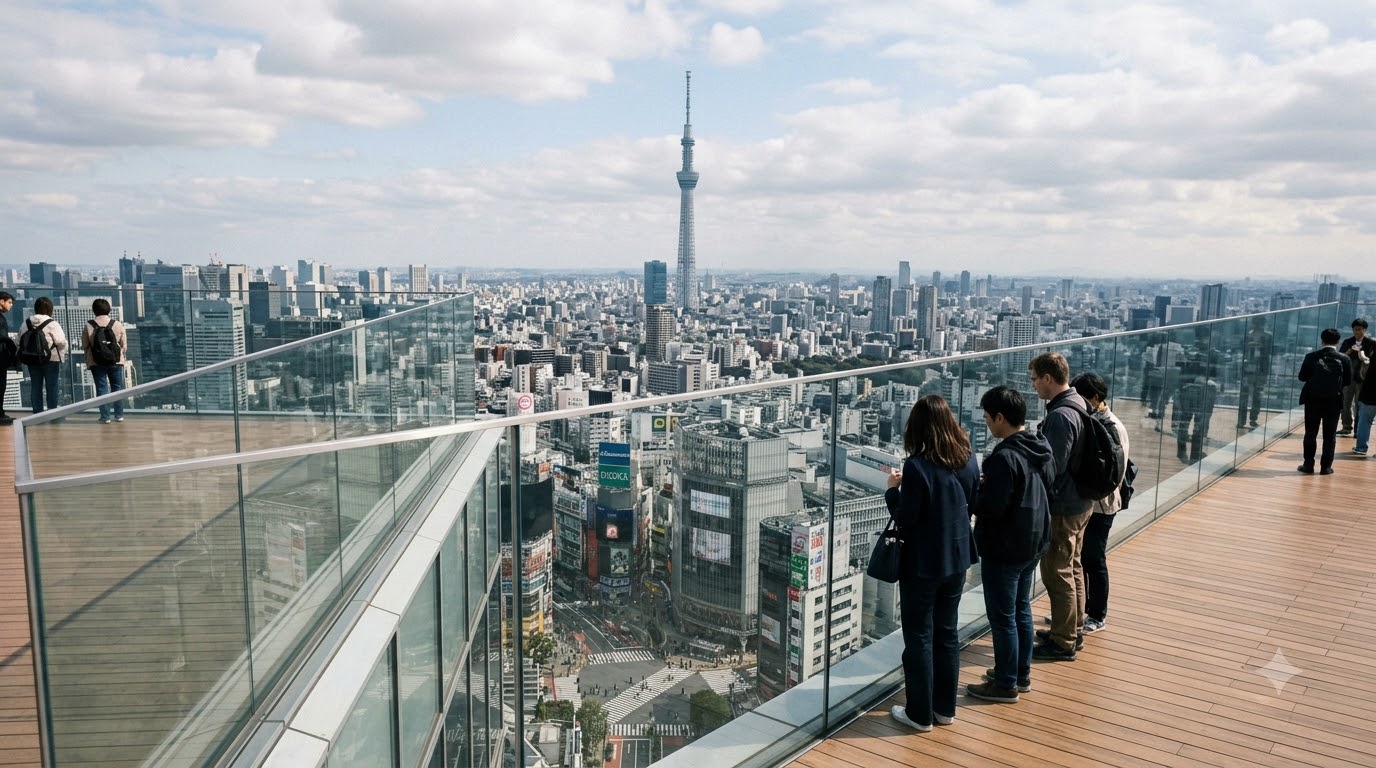
Start with a view, because Tokyo makes more sense once you have seen how far it sprawls. The two decks worth your money are Shibuya Sky, a rooftop open-air platform over the Shibuya Scramble, and Tokyo Skytree, the 634-meter broadcast tower in Sumida that is the tallest structure in Japan.
Shibuya Sky is the one to book for sunset. Online adult tickets are 2,700 yen for entry before 15:00 and jump to 3,400 yen for the 15:00-and-later slots, and the deck runs 10:00 to 22:30 with last admission at 21:20 (Tokyo Cheapo, 2026).
The rooftop is timed-entry and sells out on weekends and during cherry blossom and autumn foliage weeks, so grab a slot in advance.
Tokyo Skytree is the bigger, higher option: the Tembo Deck at 350 meters is 1,800 yen on weekdays and 2,100 yen on weekends, and the combo up to the Tembo Galleria at 450 meters runs 2,700 yen weekday and 3,100 yen weekend (Tokyo Skytree official, 2026). Same-day counter tickets add a 500 yen service fee.
| Observation deck | 2026 adult price | Height | Hours (typical) | Best for |
|---|---|---|---|---|
| Shibuya Sky | 2,700 yen (pre-15:00) / 3,400 yen (after) | ~229 m | 10:00-22:30, last entry 21:20 | Open-air sunset over the Scramble |
| Skytree Tembo Deck | 1,800 yen wd / 2,100 yen we | 350 m | 10:00-22:00, last entry 21:00 | Highest views, clear-day Mt. Fuji |
| Skytree + Galleria combo | 2,700 yen wd / 3,100 yen we | 450 m | Same as above | Going as high as you can |
If you only have time for one and you love a golden-hour photo, choose Shibuya Sky. If you want the single highest vantage point in the city, Skytree wins.
Walk into old Tokyo at Senso-ji and Meiji Jingu
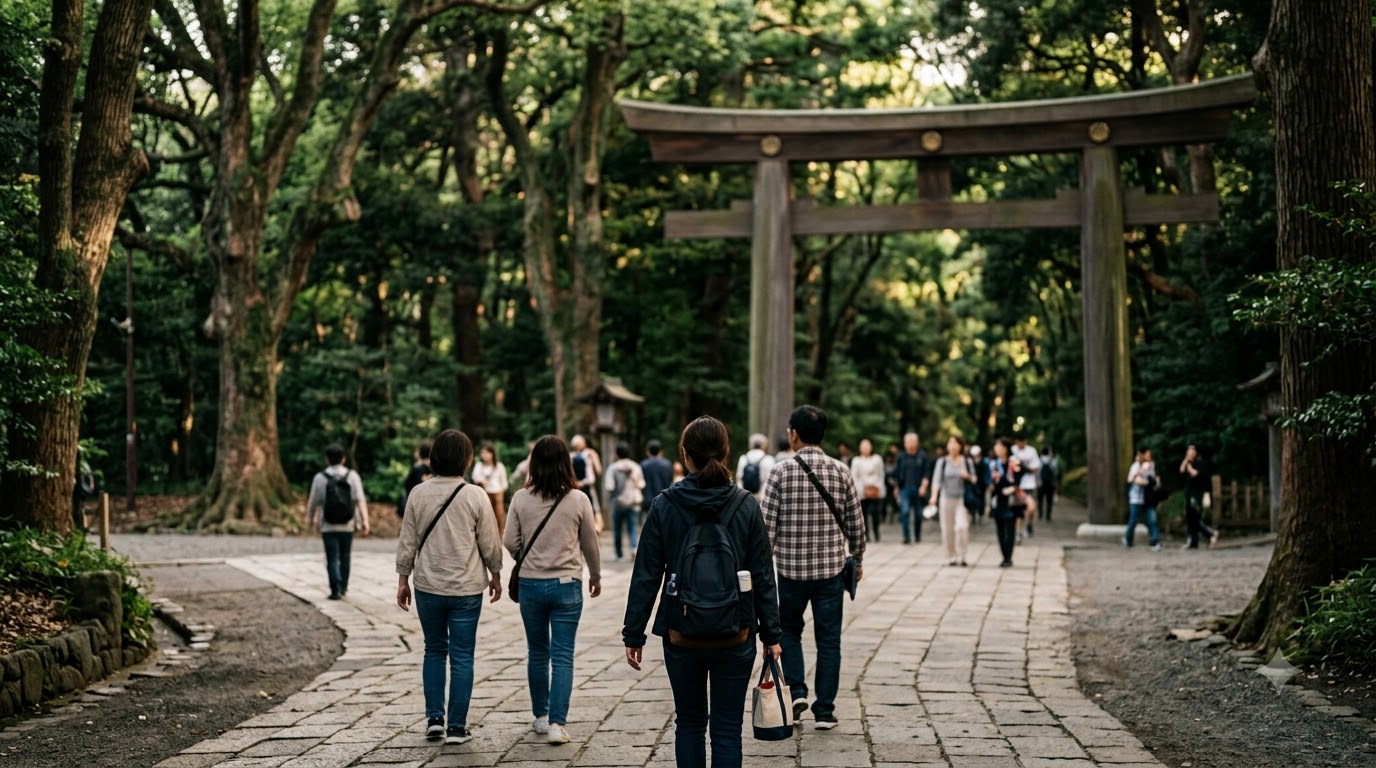
For the calmest hours of the day, go to a temple or shrine before 08:00. Senso-ji in Asakusa is Tokyo’s oldest temple, founded in 628, and it is completely free to enter (japan-guide.com, 2026). The grounds are open around the clock, while the main hall and amulet stalls run 06:00 to 17:00 (06:30 in winter).
Come at dawn and you get the giant Kaminarimon lantern and the Nakamise shopping street almost to yourself; come at noon and you get a river of people. Asakusa Station is a five-minute walk away on several subway lines.
The other essential is Meiji Jingu, the Shinto shrine dedicated to Emperor Meiji and Empress Shoken, set inside a planted forest beside Harajuku Station. It opened in 1920, admission is free, and the wide gravel approach under towering torii gates is one of the quietest walks you can take in central Tokyo. Pair it with Yoyogi Park next door.
For a full sense of when the shrine forest and the city parks look their best, our best time to visit Tokyo breakdown covers the seasonal trade-offs month by month.
Temple and shrine essentials:
- Senso-ji, Asakusa: Tokyo’s oldest temple (founded 628), free, grounds open 24 hours, main hall 06:00 to 17:00 (06:30 in winter).
- Meiji Jingu, Harajuku: Shinto shrine opened in 1920, free entry, set in a planted forest beside Yoyogi Park.
- Best time: arrive before 08:00 to walk the Kaminarimon lantern and Nakamise street nearly empty.
- Access: Asakusa Station is a five-minute walk on several subway lines; Meiji Jingu adjoins Harajuku Station.
See Tokyo’s digital art: teamLab Planets and Borderless
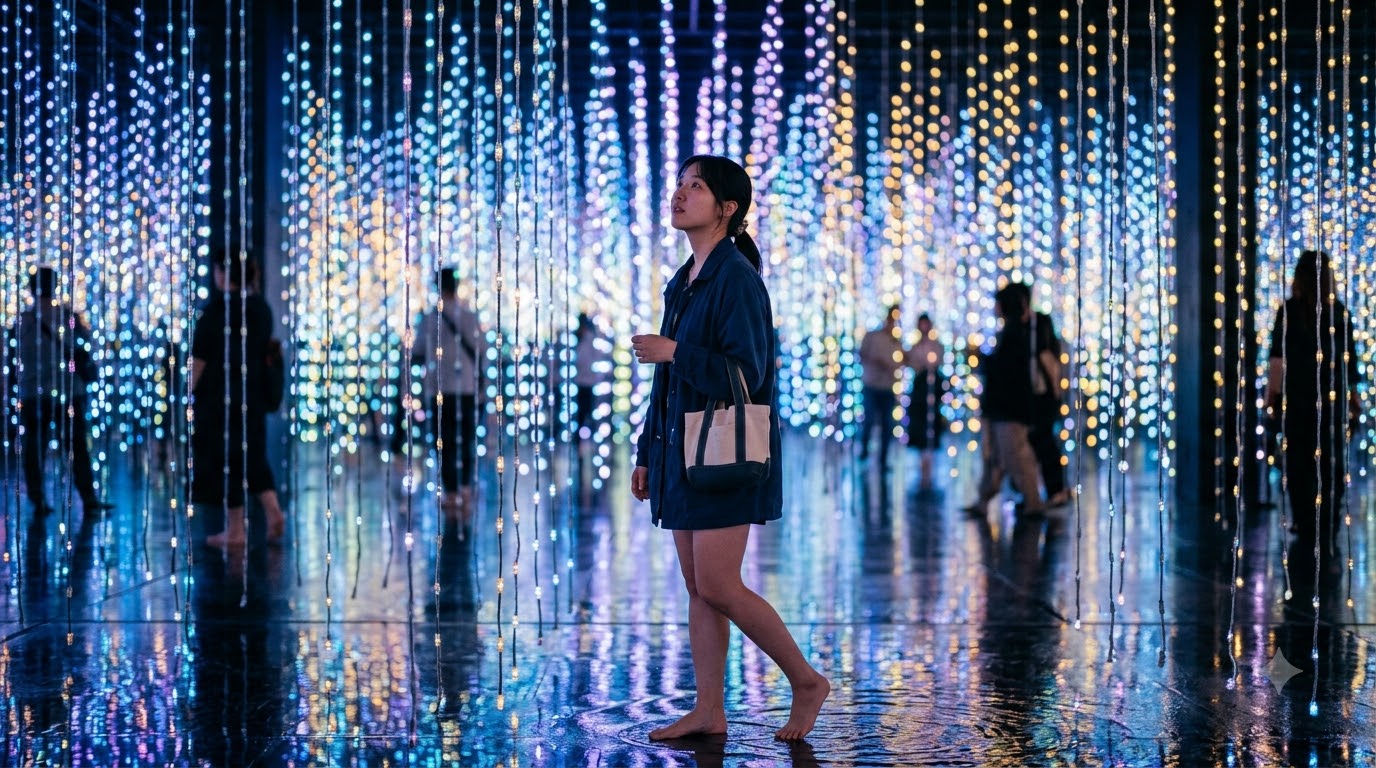
Tokyo runs two separate teamLab digital-art venues, and they are not the same visit. teamLab Planets in Toyosu is the barefoot, wade-through-water experience, priced at 3,800 yen on weekdays and 4,200 yen on weekends and holidays for adults (teamLab, 2026).
It is scheduled to close at the end of 2027, so 2026 is a shrinking window to see the mirrored water rooms everyone photographs. teamLab Borderless, the newer permanent venue inside Azabudai Hills, uses dynamic pricing that starts around 3,600 yen and climbs to roughly 5,600 yen on the busiest dates.
Both sell timed slots that disappear fast, so book directly through the official teamLab pages days ahead. If you have to pick one, Planets is the more physical, memorable trip and the one on a deadline; Borderless is the more sprawling maze of rooms. Wear shorts you can roll up for Planets, because you will walk through knee-deep water.
teamLab at a glance:
- teamLab Planets (Toyosu): 3,800 yen weekdays, 4,200 yen weekends; barefoot, wade through knee-deep water; scheduled to close end of 2027.
- teamLab Borderless (Azabudai Hills): dynamic pricing from about 3,600 to 5,600 yen; a sprawling maze of rooms.
- Both sell timed slots that disappear fast, so book directly on the official teamLab pages days ahead.
- Wear shorts you can roll up for Planets.
Find your Tokyo hotel on the map
Live prices from Booking & Airbnb — tap a pin to compare stays around Shinjuku and Shibuya and beyond.
Neighborhoods worth a whole afternoon
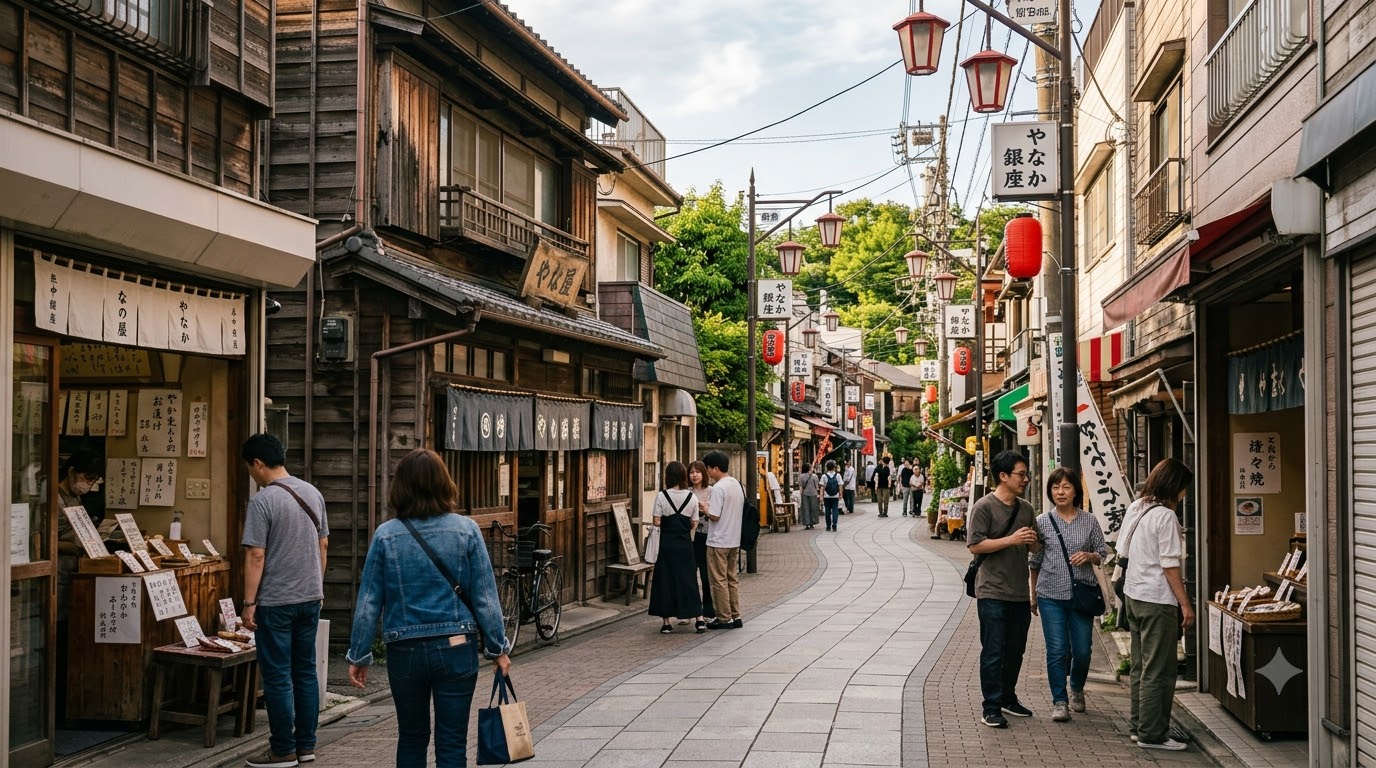
The most underrated thing to do in Tokyo is simply pick a district and walk it for three hours. On a slow week we spent two whole afternoons just wandering Yanaka before the day-trippers arrived, and it stayed our favorite corner of the city.
Shibuya gives you the Scramble Crossing, the busiest pedestrian intersection on earth, plus record shops and the loyal-dog Hachiko statue. Shinjuku splits into the neon canyons around Kabukicho and the tiny bars of Golden Gai, where roughly 200 postage-stamp drinking spots pack into a few alleys.
Harajuku’s Takeshita Street is teen fashion and crepes; a two-minute walk south, Omotesando turns into a tree-lined avenue of flagship architecture.
For quieter afternoons, Yanaka in the northeast is old-Tokyo lanes, cats, and low wooden houses that survived the twentieth century mostly intact. Akihabara is the electronics-and-anime capital, dense with arcades and hobby shops stacked eight floors high.
Shopping and eating your way through these areas is half the trip, and our best food in Tokyo guide maps the specific ramen counters, sushi bars, and depachika food halls worth planning a district around. To thread these neighborhoods into a coherent route, the 5-day Tokyo itinerary sequences them so you are never backtracking across the city.
Neighborhoods worth a whole afternoon:
- Shibuya: the Scramble Crossing (the world’s busiest pedestrian intersection), record shops, and the Hachiko statue.
- Shinjuku: neon-lit Kabukicho plus Golden Gai, where roughly 200 tiny bars pack into a few alleys.
- Harajuku: teen fashion and crepes on Takeshita Street, with flagship architecture along Omotesando two minutes south.
- Yanaka: quiet old-Tokyo lanes, cats, and low wooden houses that survived the twentieth century mostly intact.
- Akihabara: the electronics-and-anime capital, dense with arcades and hobby shops stacked eight floors high.
Traditional Tokyo: sumo, gardens, and the fish market
If your dates line up with a Grand Sumo Tournament, prioritize it. Tokyo hosts three of the year’s six honbasho at Ryogoku Kokugikan, in January, May, and September, each running 15 days. Cheaper unreserved balcony seats sell for a modest price on the morning of each day, while ringside box seats cost far more and sell out weeks ahead.
Even a morning session, when the lower-ranked wrestlers fight to a near-empty hall, is worth it, and across our visits we have found that quiet early block the most rewarding way in.
For calm, Tokyo’s landscaped gardens are some of the best-value things to do in the city. Shinjuku Gyoen (a small entry fee) mixes Japanese, English, and French garden styles across 58 hectares. Hamarikyu, a former shogun’s garden on Tokyo Bay, lets you drink matcha in a teahouse on a saltwater pond.
Foodies should get to the Toyosu Market, the wholesale fish market that replaced Tsukiji’s inner market, for the early tuna auction viewing, then eat breakfast sushi in the surviving Tsukiji Outer Market stalls nearby.
Traditional Tokyo, at a glance:
- Grand Sumo: three of the year’s six tournaments run at Ryogoku Kokugikan in January, May, and September, each 15 days.
- Shinjuku Gyoen: Japanese, English, and French garden styles across 58 hectares, small entry fee.
- Hamarikyu: a former shogun’s bayside garden where you can drink matcha in a teahouse on a saltwater pond.
- Toyosu Market: the wholesale fish market that replaced Tsukiji, best for the early tuna-auction viewing.
Pop culture, kids, and rainy-day picks
Tokyo is a strong family and pop-culture city, which helps on wet days. Warner Bros. Studio Tour Tokyo (The Making of Harry Potter) opened in 2023 in Nerima and is now one of the most-booked indoor attractions in the country.
The Ghibli Museum in Mitaka and the larger Ghibli Park (a day trip toward Nagoya) need tickets booked well in advance through the official lottery-style system. Add the Pokemon Centers, teamLab, and the aquariums at Sumida and Shinagawa, and you can fill any number of gray afternoons.
Tokyo Disneyland and Tokyo DisneySea sit just outside the city in Chiba, and DisneySea’s Fantasy Springs expansion has made it the harder ticket of the two since 2024. Book park tickets and any priority passes through the official app before you fly, because same-day availability is unreliable in peak season.
Pop-culture and rainy-day picks:
- Warner Bros. Studio Tour Tokyo (The Making of Harry Potter), Nerima: opened 2023, one of the country’s most-booked indoor attractions.
- Ghibli Museum (Mitaka) and Ghibli Park (a day trip toward Nagoya): book well ahead through the official lottery-style system.
- Pokemon Centers, teamLab, and the aquariums at Sumida and Shinagawa all suit gray afternoons.
- Tokyo Disneyland and DisneySea (Chiba): DisneySea’s Fantasy Springs has made it the harder ticket since 2024.
Day trips: Nikko, Kamakura, Hakone, and Mount Fuji
The best day trips from Tokyo are close enough to do without an overnight bag, and each gives you something the city cannot. Kamakura is the easiest: 57 minutes and 940 yen on the JR Yokosuka Line from Tokyo Station, delivering coastal temples and the 13th-century Great Buddha at Kotoku-in, which costs 300 yen to approach.
Nikko trades the coast for mountains and the lavish Toshogu shrine complex; the Tobu Limited Express from Asakusa reaches Tobu-Nikko in about 1 hour 50 minutes.
Hakone is the hot-spring-and-Mount-Fuji option, reached by the Odakyu Romancecar from Shinjuku to Hakone-Yumoto in roughly 85 minutes, then looped by mountain railway, ropeway, and pirate-ship cruise across Lake Ashi. Clear winter days from December to February give the best odds of seeing Fuji from the ropeway. All three work as a single day out of Tokyo.
| Day trip | Travel time (one way) | Route and fare | Signature sight |
|---|---|---|---|
| Kamakura | ~57 min | JR Yokosuka Line, 940 yen | Great Buddha, Kotoku-in (300 yen) |
| Nikko | ~1 h 50 min | Tobu Ltd Express from Asakusa | Toshogu shrine complex |
| Hakone | ~85 min | Odakyu Romancecar from Shinjuku | Lake Ashi, Mt. Fuji views |
Leave by 08:00 on any of these and you will be back in Tokyo for a late dinner.
First-timer picks: how to spend three days
First time in Tokyo? Do this three-day loop:
- Day one: Senso-ji at dawn, Asakusa breakfast, Tokyo Skytree, then Akihabara.
- Day two: Meiji Jingu and Harajuku in the morning, teamLab Planets in the afternoon, Shibuya Sky at sunset.
- Day three: a Kamakura or Hakone day trip. That covers temples, a shrine, both signature decks, the digital-art headliner, two great neighborhoods, and one escape from the city, which is a complete first visit.
Get an IC card (Suica or Pasmo, now easy to load on most phones) for tap-and-go trains, and buy the timed-entry attractions, Shibuya Sky, teamLab, any Ghibli or Disney tickets, before you arrive. For the wider planning picture, from where to stay to how the neighborhoods connect, start with our full Tokyo travel guide, which links out to every part of this cluster.
Frequently Asked Questions
What are the top things to do in Tokyo for first-time visitors?
For a first trip, prioritize Senso-ji temple in Asakusa, the Meiji Jingu shrine near Harajuku, a sunset visit to Shibuya Sky, and one teamLab digital-art venue. Add the Shibuya Scramble Crossing and one day trip to Kamakura or Hakone, and you have covered Tokyo’s headline experiences in about three days.
How many days do you need in Tokyo?
Three days is enough for the essentials, four to five is comfortable, and a week lets you add day trips and slower neighborhoods without rushing. Our 5-day Tokyo itinerary shows how to pace it so you cover temples, decks, and an out-of-city escape without backtracking.
Is Tokyo expensive to visit in 2026?
Less than you might expect. The yen has hovered around 150 to the US dollar, which is a major reason record numbers of visitors came in 2025 (JNTO, 2026). Temples like Senso-ji and Meiji Jingu are free, gardens cost a few hundred yen, and paid attractions like Shibuya Sky (2,700 yen) and Skytree (from 1,800 yen) are moderate by big-city standards.
What is the best free thing to do in Tokyo?
Senso-ji, Tokyo’s oldest temple, is free and open 24 hours in its grounds. Meiji Jingu shrine and its forest are also free, as is standing at the Shibuya Scramble Crossing and walking neighborhoods like Yanaka, Harajuku, and Shinjuku’s Golden Gai alleys.
When is the best time to visit Tokyo?
Spring (late March to April) for cherry blossoms and autumn (November) for foliage are the most popular and most crowded windows, while winter offers the clearest Mount Fuji views on day trips. See our best time to visit Tokyo guide for a full month-by-month comparison of weather, crowds, and prices.
Tokyo is the rare megacity where a temple at dawn and a rooftop at dusk can bookend the same day, and where a mountain hot spring is under two hours away by train. Pick a few of the things above, lock in the timed tickets early, and let the rest of the city fill the gaps between them.