Disclosure: Some links in this guide are affiliate links. If you book or buy through them, we may earn a small commission at no extra cost to you — it helps keep our guides free.
The Perfect 5-Day Tokyo Itinerary for 2026 (With Daily Costs)
Five days is the sweet spot for a first Tokyo itinerary. It gives you two full days in the central wards, one immersive art-and-waterfront day, one day trip outside the city, and a slower final morning for markets and shopping, without the rushed feeling of a three-day sprint.
Tokyo welcomed a record wave of foreign visitors in 2025, with Japan passing 36.8 million international arrivals for the year (Japan National Tourism Organization, 2026), so this route also plans around the crowds by pairing early starts with timed-entry attractions.
This guide walks through each day in order, Asakusa and Ueno first, then Shibuya, Harajuku and Shinjuku, then teamLab and Odaiba, then a day trip to Nikko, Kamakura or Mt Fuji, and finally Tsukiji and Ginza. Every stop lists a real 2026 price in yen so you can build a working budget. For deeper background on neighborhoods, seasons and etiquette, keep our complete Tokyo travel guide open in another tab.
Key Takeaways
- Budget roughly 38,000 yen per day for a mid-range solo traveler, split as about 25,000 yen for a hotel plus 6,000 to 10,000 yen for food, transport and tickets.
- The Tokyo Subway Ticket is the single best transport buy, at 1,000 yen for 24 hours, 1,500 yen for 48 hours and 2,000 yen for 72 hours across all Metro and Toei lines.
- teamLab Planets costs 3,800 yen on weekdays and 4,200 yen on weekends, and it sells out three to four weeks ahead in peak season, so book Day 3 first.
- The best day trip depends on your legs and budget: Nikko runs about 3,000 yen return by Tobu pass, Kamakura about 1,900 yen return by JR, and Mt Fuji about 4,200 yen each way by the Fuji Excursion train.
- Many highlights are free, including Senso-ji, Meiji Jingu grounds, the Shibuya Scramble, Takeshita Street and the Tsukiji Outer Market lanes.
We have run this exact five-day loop twice, once in cherry-blossom April and once in a humid late June. The lesson that stuck: front-load the timed tickets and treat mornings as sacred. On our June trip we reached Senso-ji by 7:30 am and had the temple approach almost to ourselves, then watched the same lane fill shoulder-to-shoulder by ten.
What a 5-day Tokyo trip actually costs in 2026
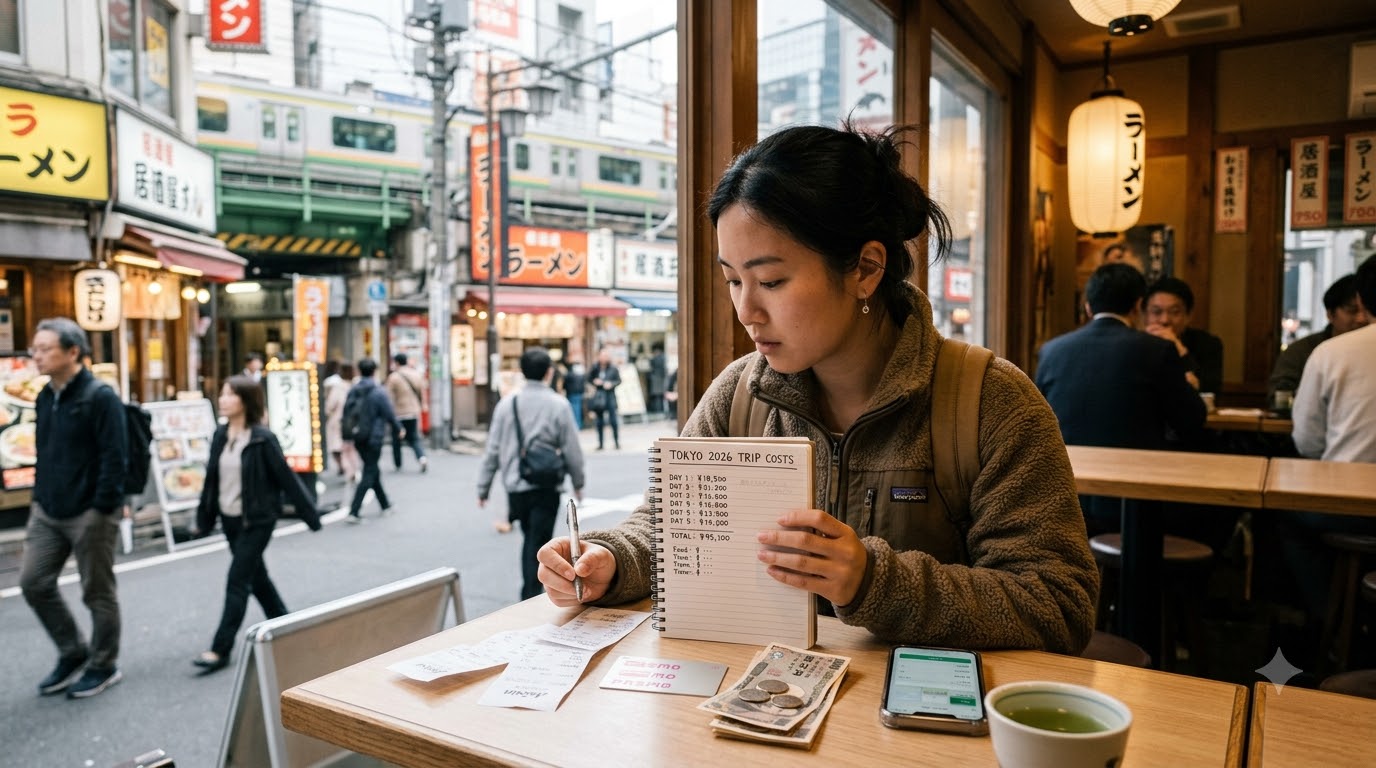
A mid-range five-day Tokyo trip costs roughly 190,000 yen per person before flights, or about 1,270 US dollars at the mid-2026 rate of around 150 yen to the dollar. Accommodation is the biggest line: the average mid-range Tokyo hotel runs about 25,000 yen per night, with Shinjuku properties at 15,000 to 25,000 yen and Asakusa business hotels 15 to 25 percent cheaper for similar quality (Radical Storage, 2026).
The table below estimates a typical day for one person, covering food, local transport and one or two paid attractions. Accommodation and flights sit outside these numbers.
| Day | Focus | Est. food + transport + tickets |
|---|---|---|
| 1 | Asakusa and Ueno | ~6,000 yen |
| 2 | Shibuya, Harajuku, Shinjuku | ~8,000 yen |
| 3 | teamLab and Odaiba | ~8,500 yen |
| 4 | Day trip (Nikko / Kamakura / Fuji) | 8,000 to 11,000 yen |
| 5 | Tsukiji and Ginza | ~7,500 yen |
You can trim this considerably. Convenience-store breakfasts run 400 to 700 yen, a standing-bar ramen is 900 to 1,200 yen, and several of the best half-days on this plan cost nothing but transport. If you want a full breakdown of eating cheap versus splurging, our Tokyo food guide covers price tiers by dish.
Getting around: passes, IC cards and airport transfers
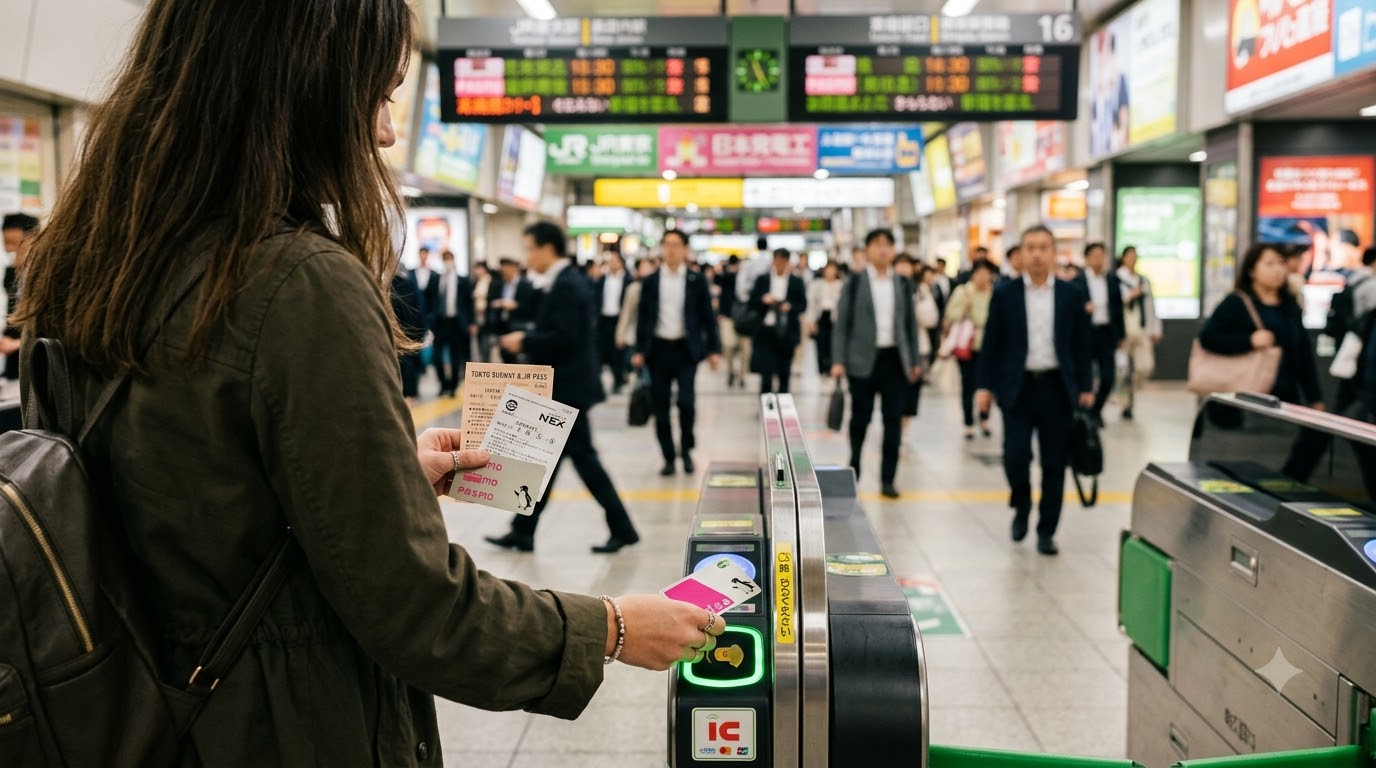
Buy a rechargeable Suica or Pasmo IC card on arrival and add a Tokyo Subway Ticket for your two heaviest sightseeing days. The Subway Ticket gives unlimited rides on all Tokyo Metro and Toei Subway lines for a fixed window, 1,000 yen for 24 hours, 1,500 yen for 48 hours and 2,000 yen for 72 hours (Tokyo Metro, 2026).
A single Metro ride is 180 to 210 yen, so the 24-hour pass pays for itself in about six trips, which is easy on a museum-and-market day.
For the airport run, your choice depends on the airport. From Narita, the Narita Express reaches Tokyo Station in about 53 minutes for 3,070 yen one way, while the Keisei Skyliner reaches Nippori in 41 minutes for 2,570 yen.
From Haneda, the Tokyo Monorail to Hamamatsucho is about 20 minutes for 500 yen, and the Keikyu Line to Shinagawa is about 13 minutes for 310 yen. Haneda is dramatically cheaper and faster, so pick it if your flight schedule allows.
Transport at a glance:
- Suica or Pasmo IC card: buy on arrival for tap-and-go on JR lines and day-trip trains.
- Tokyo Subway Ticket: 1,000 yen (24h), 1,500 yen (48h), 2,000 yen (72h) on all Metro and Toei lines; a single Metro ride is 180 to 210 yen.
- From Narita: Narita Express to Tokyo Station in about 53 minutes for 3,070 yen, or Keisei Skyliner to Nippori in 41 minutes for 2,570 yen.
- From Haneda: Tokyo Monorail to Hamamatsucho in about 20 minutes for 500 yen, or Keikyu Line to Shinagawa in about 13 minutes for 310 yen.
Day 1 — Asakusa and Ueno: old Tokyo on foot
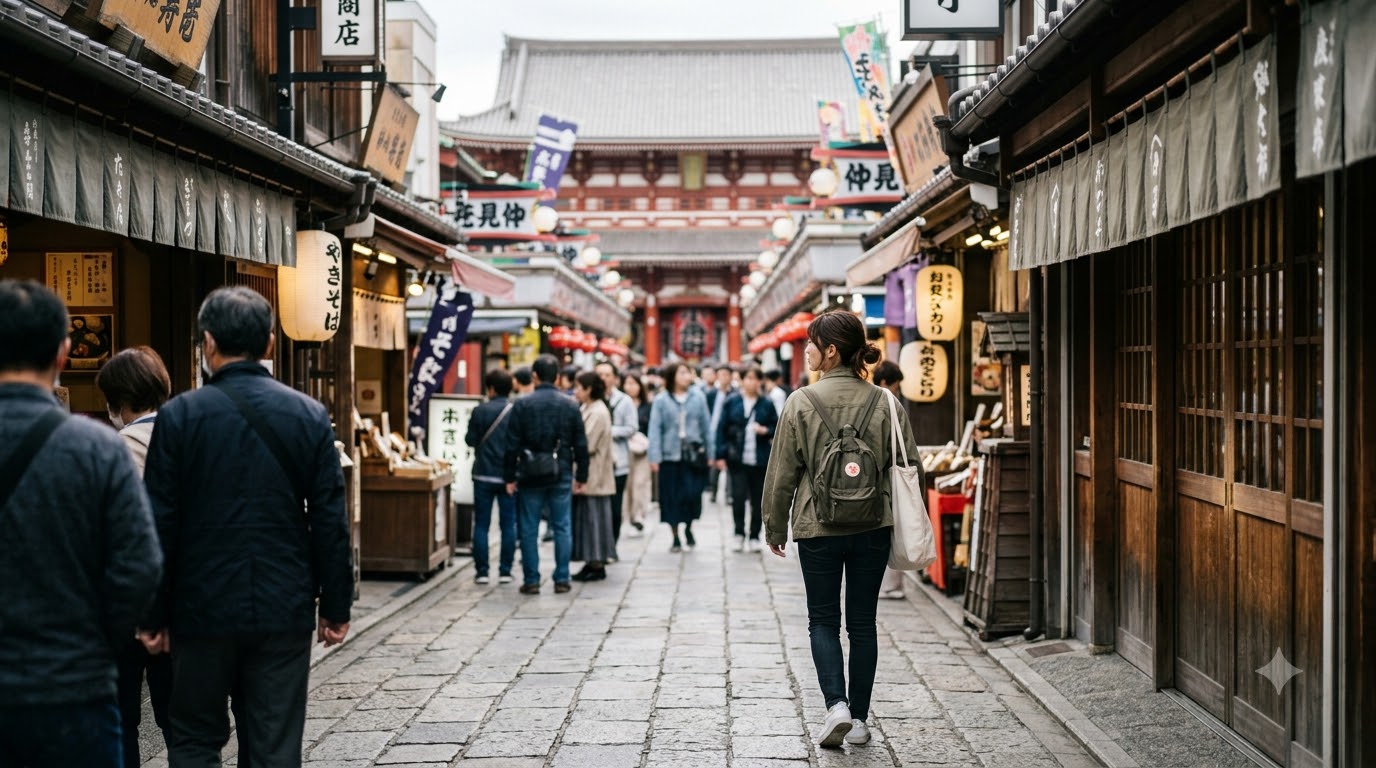
Start with the city’s oldest quarter, because jet lag makes early mornings easy and Asakusa is at its calmest before nine. Senso-ji, Tokyo’s oldest temple, is free to enter, and the Nakamise shopping street leading to it dates back centuries. Walk the temple grounds, then browse the side lanes of Kappabashi, the kitchenware district where plastic food samples and hand-forged knives make durable souvenirs.
After lunch, ride two stops to Ueno. Ueno Park is free and sprawling, and it holds several of Japan’s flagship museums. The Tokyo National Museum charges 1,000 yen for its general collection, a fair price for the largest hoard of Japanese art in the world.
If you are traveling with kids, Ueno Zoo is 600 yen. Close the day with a bowl of something hot in the Ameyoko market lanes under the train tracks, where skewers and standing bars keep dinner under 2,000 yen. For more first-day options near this area, see our roundup of the best things to do in Tokyo.
Day 1 stops and prices:
- Senso-ji, Tokyo’s oldest temple: free to enter, with the centuries-old Nakamise shopping street leading up to it.
- Kappabashi kitchenware district: plastic food samples and hand-forged knives make durable souvenirs.
- Tokyo National Museum, Ueno: 1,000 yen for the general collection; Ueno Park itself is free.
- Ueno Zoo: 600 yen, an easy add if you are traveling with kids.
- Ameyoko market: skewers and standing bars keep dinner under 2,000 yen.
Day 2 — Shibuya, Harajuku and Shinjuku: the modern core
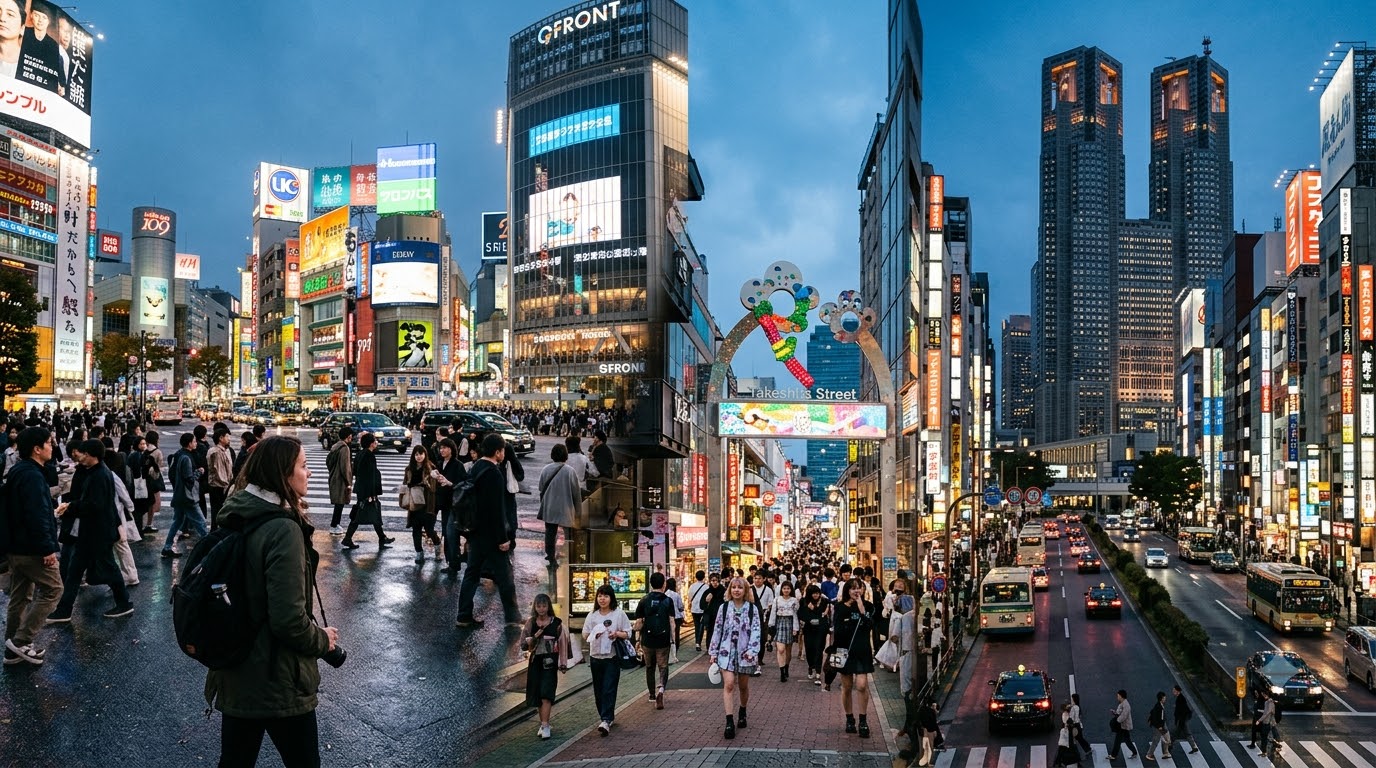
Day two is the neon triangle, and it works best north to south then back up for sunset. Begin in Harajuku: Takeshita Street is free to wander and best before the afternoon crush, and a short walk away, the forested approach to Meiji Jingu costs nothing (the inner garden is a separate 500 yen).
This pairing of teen fashion and quiet shrine forest, ten minutes apart, is one of Tokyo’s sharpest contrasts.
Move south to Shibuya for the Scramble Crossing, then time your ascent of Shibuya Sky for late afternoon. Advance online tickets are 2,700 yen before 3 pm and 3,400 yen after, while same-day counter tickets are 3,000 and 3,700 yen; the open-air rooftop deck is the standout, so aim for a slot about an hour before sunset.
Finish in Shinjuku after dark, threading the lantern-lit alleys of Omoide Yokocho for grilled skewers and the six-floor arcades around Kabukicho. A yakitori dinner with a drink runs 2,500 to 4,000 yen.
Day 2 stops and prices:
- Takeshita Street, Harajuku: free to wander, best before the afternoon crush.
- Meiji Jingu approach: free; the inner garden is a separate 500 yen.
- Shibuya Sky: 2,700 yen online before 3 pm, 3,400 yen after; aim for a slot about an hour before sunset.
- Omoide Yokocho, Shinjuku: a yakitori dinner with a drink runs 2,500 to 4,000 yen.
Day 3 — teamLab and Odaiba: digital art and the bay
Anchor day three around a timed teamLab ticket, because the two Tokyo venues sell out weeks ahead. teamLab Planets in Toyosu, where you wade barefoot through knee-deep water rooms, costs 3,800 yen on weekdays and 4,200 yen on weekends for adults, with children 4 to 12 at 1,500 yen.
The alternative, teamLab Borderless at Azabudai Hills, uses dynamic pricing from 3,600 to 5,600 yen for adults. Book whichever you choose the moment your travel dates are firm; we reserved our Planets slot the day our flights were confirmed and two of our preferred evenings had already sold out.
Pair the morning art session with the Odaiba waterfront, a reclaimed island reached by the driverless Yurikamome line, which is a scenic elevated ride in itself. Odaiba’s beaches, the life-size Unicorn Gundam statue and the seaside malls are all free to enjoy, and the Rainbow Bridge view back toward the skyline is the best free sunset in the city. Keep food casual here, as the mall food courts run 1,200 to 2,000 yen.
Day 3 stops and prices:
- teamLab Planets (Toyosu): 3,800 yen weekdays, 4,200 yen weekends; children 4 to 12 at 1,500 yen.
- teamLab Borderless (Azabudai Hills): dynamic pricing from 3,600 to 5,600 yen for adults.
- Odaiba: reached by the driverless Yurikamome line; beaches, the Unicorn Gundam statue, and Rainbow Bridge views are all free.
- Mall food courts on Odaiba run 1,200 to 2,000 yen.
Day 4 — Day trip: Nikko, Kamakura or Mt Fuji
Pick one day trip based on your energy, budget and what you want to see. All three are doable as returns from central Tokyo, but they differ sharply in cost, travel time and terrain, so the table below lines them up before we break each one down.
On our two loops we tried Kamakura once and Nikko once: Kamakura got us back for an easy Tokyo dinner, while Nikko’s forest shrines rewarded the longer ride.
| Day trip | One-way time | Return transport | Best for |
|---|---|---|---|
| Nikko | 1h50 to 2h30 | ~3,000 yen (Tobu pass) | Shrines, waterfalls, forest |
| Kamakura | ~1h | ~1,900 yen (JR) | Great Buddha, coast, easy pace |
| Mt Fuji (Kawaguchiko) | ~1h55 | ~8,400 yen (train return) | Iconic mountain views |
Nikko: shrines and mountain forest
Nikko is the richest cultural option, home to the UNESCO-listed Toshogu Shrine complex and its gold-leaf carvings. The Tobu train from Asakusa is 1,400 yen one way on the express (about 2.5 hours) or 3,050 yen by limited express (1 hour 50 minutes).
The smart buy is the Nikko Pass World Heritage Area at 3,000 yen for two days, which bundles the round-trip train and unlimited local buses. Entry to the Toshogu grounds is a separate ticket of around 1,600 yen.
Kamakura: the Great Buddha by the sea
Kamakura is the lowest-effort choice, a seaside town of temples just an hour south. The JR Yokosuka Line runs Tokyo Station to Kamakura for 940 yen one way, keeping the round trip under 1,900 yen.
Once there, the single-track Enoden tram trundles past the coast; buy the Enoden one-day pass for 800 yen to hop between the Great Buddha of Kotoku-in (300 yen entry), the Hase-dera temple gardens and the beach at Enoshima.
Mt Fuji: the classic mountain view
For the postcard mountain, ride the direct Fuji Excursion limited express from Shinjuku to Kawaguchiko, 4,200 yen one way for about a two-hour journey. The lakeside town frames Fuji beautifully on clear mornings, though the mountain often hides behind cloud by midday, so go early and check the forecast.
A cheaper highway bus from Shinjuku starts around 2,000 yen but takes longer and sits in traffic. Reserve the train seat the moment booking opens one month ahead, as it sells out fast.
Day 5 — Tsukiji and Ginza: markets and a slow finish
Save Tsukiji for your last morning, when an early market breakfast makes the perfect send-off. Although the wholesale auctions moved to Toyosu years ago, the Tsukiji Outer Market lanes are still free to walk and packed with stalls selling grilled scallops, tamagoyaki skewers and fresh sushi. Grazing a breakfast across several stalls runs 2,000 to 3,500 yen, and it is some of the best-value eating in the city.
From Tsukiji it is a short walk or one subway stop to Ginza, Tokyo’s grand shopping district. Window-shopping the flagship stores costs nothing, the Ginza Six rooftop garden is free, and the Sunday afternoon pedestrian street (Hokosha Tengoku) turns the main avenue car-free. This is a fitting last afternoon: unhurried, walkable, and easy to cut short for the airport.
Day 5 stops and prices:
- Tsukiji Outer Market: free to walk, with grilled scallops, tamagoyaki skewers, and sushi; a grazing breakfast runs 2,000 to 3,500 yen.
- Ginza window-shopping and the Ginza Six rooftop garden: free.
- Hokosha Tengoku: the main Ginza avenue goes car-free on Sunday afternoons. When you are deciding which neighborhood to base all of this from, our guide to where to stay in Tokyo compares Asakusa, Shinjuku and Shibuya on price and transport.
Find your Tokyo hotel on the map
Live prices from Booking & Airbnb — tap a pin to compare stays around Shinjuku and Shibuya and beyond.
Where to base yourself for this route
Stay near a major hub on the Yamanote loop or a Metro interchange, because this itinerary criss-crosses the city daily. Asakusa suits travelers who want the old-town atmosphere of Day 1 on their doorstep and direct Tobu trains to Nikko, and it runs cheaper than the west side.
Shinjuku and Shibuya cost more but put you in the middle of Day 2 and closest to the Fuji Excursion departure point. Ueno is a quieter middle ground with fast Skyliner access from Narita. Any of the three keeps every day on this plan within a 40-minute ride, and you can compare more options in our Tokyo travel guide.
Best base for this route:
- Asakusa: old-town atmosphere on your Day 1 doorstep and direct Tobu trains to Nikko, cheaper than the west side.
- Shinjuku or Shibuya: pricier but central for Day 2 and closest to the Fuji Excursion departure point.
- Ueno: a quieter middle ground with fast Keisei Skyliner access from Narita.
Frequently Asked Questions
Is 5 days enough for Tokyo?
Five days is enough for a strong first visit to Tokyo itself, covering the central wards, one art-and-waterfront day and a day trip, without feeling rushed. It is not enough to add Kyoto or Osaka comfortably; those deserve their own days. If you have a sixth day, spend it on a second day trip or a slower revisit of a district you liked.
How much should I budget per day in Tokyo in 2026?
Budget roughly 38,000 yen per day for a mid-range solo traveler in 2026, of which about 25,000 yen is a hotel and 6,000 to 10,000 yen covers food, local transport and tickets. Backpackers can cut the daily total to 12,000 to 15,000 yen by using hostels, convenience-store meals and the Tokyo Subway Ticket.
What is the best transport pass for a Tokyo itinerary?
The Tokyo Subway Ticket is the best value for a sightseeing-heavy Tokyo itinerary, at 1,000 yen for 24 hours, 1,500 yen for 48 hours and 2,000 yen for 72 hours on all Metro and Toei lines. Pair it with a Suica or Pasmo IC card for the JR lines and day-trip trains it does not cover. A nationwide JR Pass rarely pays off for a Tokyo-only trip.
Should I do a day trip to Nikko, Kamakura or Mt Fuji?
Choose Kamakura for the easiest and cheapest day (about 1,900 yen return, one hour each way), Nikko for the richest shrines and forest scenery (about 3,000 yen with the Tobu pass), and Mt Fuji for the iconic mountain view (about 4,200 yen each way by the Fuji Excursion train). Kamakura is the safest pick for a first-timer short on time.
When should I book teamLab tickets?
Book teamLab Planets or Borderless three to four weeks before your dates in peak season, because both use timed entry and regularly sell out. Planets is 3,800 yen on weekdays and 4,200 yen on weekends; Borderless uses dynamic pricing from 3,600 to 5,600 yen. Lock in your teamLab slot first, then build the rest of Day 3 around it.
Tokyo rewards a plan that respects mornings and lets afternoons drift. Follow this order, book the timed tickets early, and keep a Subway Ticket in your pocket, and five days will feel full rather than frantic. Adjust the day trip to your own pace, swap a museum for an extra market hour if the mood takes you, and let the city’s contrasts, ancient temple to neon crossing, do the rest.