Ultimate Bali Travel Guide 2026: Insider Tips & Costs
By TravelguidestipUpdated 22 min readHow we earn
Hotel buttons open Stay22 (Booking.com, Agoda and others) and tour buttons open GetYourGuide. We may earn a commission at no extra cost to you.
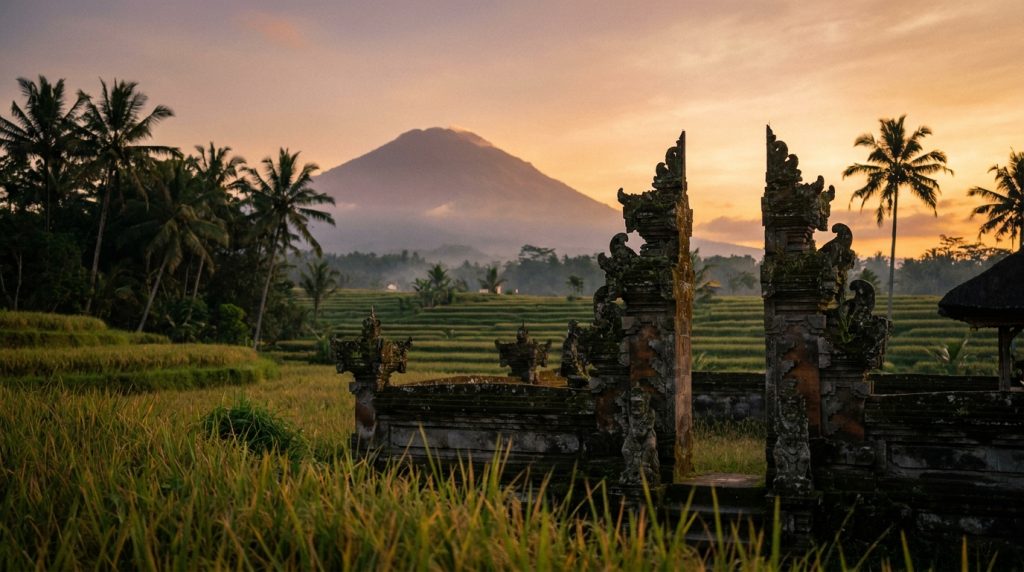
Quick answer: Bali works best on a 7-10 day first trip built around one or two bases (Ubud for culture, the south coast or Canggu for beaches) rather than changing hotels every night. Budget travelers manage on roughly USD 40-60 a day and mid-range on USD 80-150, most nationalities get a 30-day visa on arrival, and the driest, easiest months run April through October. Pay the IDR 150,000 Love Bali tourist levy online before you fly and keep the QR code on your phone. Trip length is the first decision to make, and we compare each option in how many days you need in Bali.

Bali isn’t just another tropical island—it’s a place that’ll change how you think about travel. Whether you’re chasing sunrise from a volcanic rim, floating through ancient temple pools, or eating $2 nasi goreng that puts restaurant food to shame, this island delivers experiences you won’t find anywhere else on Earth.
Nearly 6.95 million foreign tourists visited Bali in 2025, a record-breaking 10% jump from 2024. And 2026 projections suggest 7.5–8 million visitors will make the trip. There’s a reason people keep coming back.
I’ve spent weeks putting together the most complete Bali travel guide you’ll find online—current prices, visa rules, local tips, and honest opinions. This covers everything from budget breakdowns to area comparisons, so you can skip the guesswork and start planning.
- Budget: You’ll spend $30–50/day as a backpacker, $100–150 mid-range, or $300–500+ for luxury
- Best time: April–June and September offer dry weather, fewer crowds, and 20–40% lower hotel prices
- Visa: 30-day Visa on Arrival costs $31 + a $9.50 tourist tax—apply the e-VOA online to skip airport lines
- Stay: Canggu for surfers and digital nomads, Ubud for culture, Seminyak for dining, Nusa Dua for families
- Don’t miss: Mount Batur sunrise trek ($35–60), Nusa Penida day trip ($45–75), Jimbaran sunset seafood BBQ ($15–25)
When’s the Best Time to Visit Bali?
April through June and September are your sweet spots—you’ll get dry weather, manageable crowds, and prices that won’t make you wince.
Bali’s weather doesn’t swing dramatically between seasons. Temperatures hover around 27–30°C (80–86°F) year-round. The real difference? Rain. During the dry season (April–October), you’ll barely see a cloud. Wet season (November–March) brings heavy afternoon downpours, but mornings usually stay clear.
Here’s what you’re looking at season by season:
| Season | Months | Weather | Crowd Level | Hotel Prices |
|---|---|---|---|---|
| Dry (Peak) | July–August | Hot, minimal rain | Very High | Highest (+30–50%) |
| Dry (Shoulder) | Apr–Jun, Sep–Oct | Hot, minimal rain | Moderate | 20–40% below peak |
| Wet | November–March | Afternoon showers | Low | 40–60% below peak |
Pro tip: Don’t write off wet season entirely. Rain falls in short 1–2 hour bursts, usually after lunch. You’ll still get plenty of sunshine, and you could save 40–60% on accommodation. I’d take that trade-off any day. December is the test case, and our honest December weather verdict for Bali counts about 16 rain days and explains why booking early matters.
Every Bali travel guide will warn you about Nyepi (Balinese New Year, March 2026)—the entire island shuts down for 24 hours. No flights, no restaurants, no leaving your hotel. It’s a fascinating cultural experience if you plan for it, but a nightmare if you don’t.
Watch: Traveler’s Video Guide to Bali
Get a visual preview of what to expect. This traveler vlog showcases highlights that complement our written guide below:
How Much Does a Bali Trip Actually Cost?
A comfortable mid-range trip runs about $100–150 per person per day—and that includes a decent hotel, good food, and daily activities. Backpackers can stretch it to $30–50/day, while luxury travelers should budget $300–500+. For contrast, our Bali or Fiji cost comparison puts a mid-range day at AUD 287 in Fiji against AUD 110 in Bali.
Here’s a realistic daily breakdown based on current 2026 prices (1 USD ≈ 16,000 IDR):
Accommodation Prices
| Type | Price Range |
|---|---|
| Hostel dorm bed | $6–15/night |
| Budget guesthouse | $15–30/night |
| Mid-range hotel (3-star) | $40–80/night |
| Private villa with pool | $60–150/night |
| Luxury resort (4-5 star) | $150–500+/night |
Food Prices You’ll Actually Pay
Eating in Bali is ridiculously affordable if you know where to look. Warungs (local family-run restaurants) are your best friend—you’ll eat a full plate of nasi goreng for $1.50–2.50. Tourist-area cafés charge $5–12 for the same dish with Instagram presentation. Those prices are why our Bali vs Vietnam comparison finds daily costs closer than most people expect, so trip length decides it.
| Item | Warung | Tourist Café |
|---|---|---|
| Nasi/Mie Goreng | $1.50–2.50 | $5–8 |
| Babi Guling (suckling pig) | $3–5 | $8–15 |
| Fresh coconut | $0.75 | $2–3 |
| Smoothie bowl | — | $4–7 |
| Bintang beer (large) | $1.50–2 | $3–5 |
Money-saving hack: Eat breakfast and lunch at warungs, splurge on one nice dinner. You’ll eat like royalty for $15–20/day.
Find your Bali hotel on the map
Live prices from Booking & Airbnb — tap a pin to compare stays around Seminyak and Ubud and beyond.
Where Should You Stay in Bali?
The most important decision in any Bali travel guide is where you’ll stay, not just what’s cheapest. Each corner of Bali has a completely different personality, and staying in the wrong spot can make or break your experience.
Quick Area Guide
Canggu — The digital nomad capital. You’ll find coworking spaces, world-class surf breaks, and the best café scene on the island. It’s gotten more expensive over the years, but it’s still great value compared to Seminyak. Stay here if you want a mix of surf culture, nightlife, and that laid-back Bali vibe.
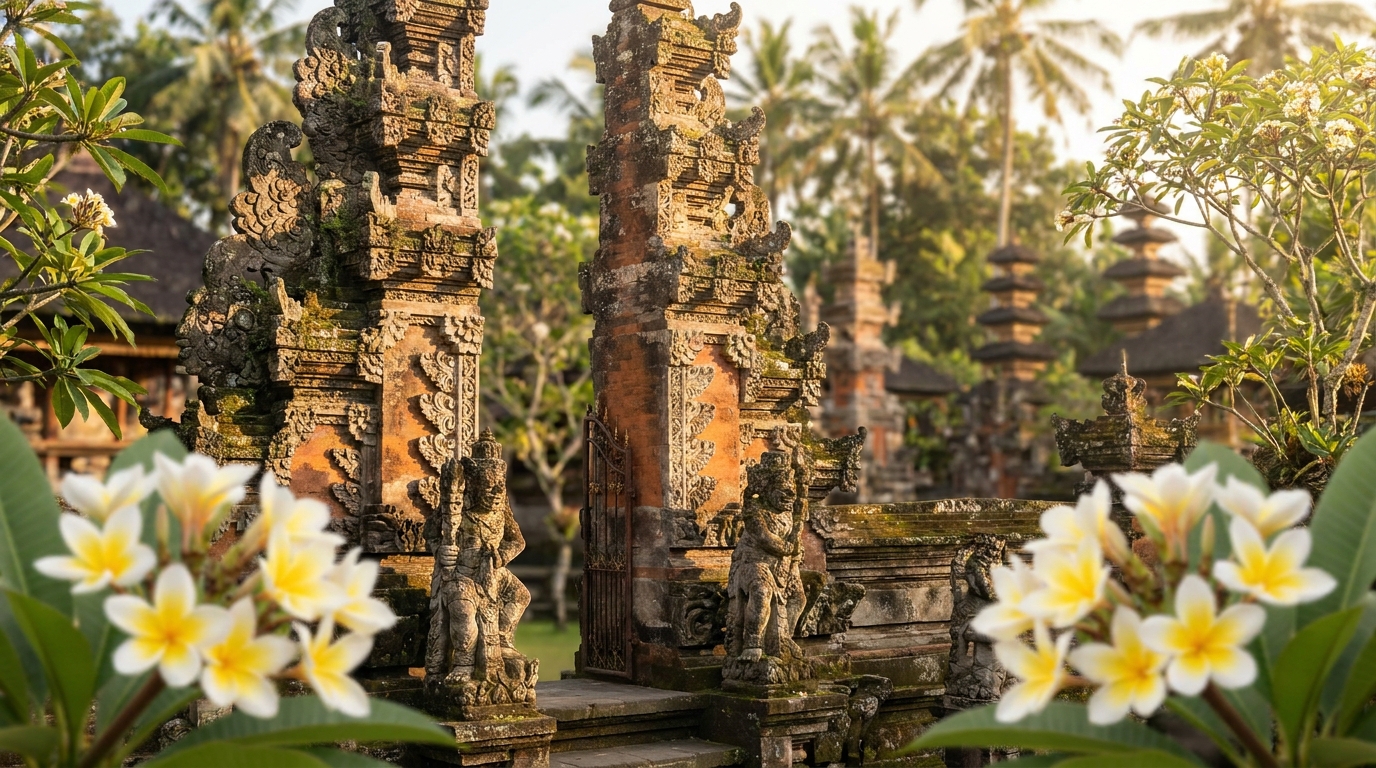
Ubud — Bali’s cultural heartbeat. Surrounded by rice terraces, ancient temples, and art galleries, Ubud is where you’ll find yoga retreats and traditional dance performances. It’s inland, so no beach—but the jungle scenery more than makes up for it. Check our Ubud vs Seminyak vs Canggu comparison for a deeper dive.
Seminyak — The polished older sibling of Canggu. Think upscale restaurants, designer boutiques, and beach clubs like Potato Head. It’s pricier, but the dining scene here is genuinely world-class. Best for couples and foodies.
️ Nusa Dua — The resort bubble. If you want a manicured beach, swim-up bars, and all-inclusive vibes, Nusa Dua won’t disappoint. It doesn’t feel much like “real Bali,” but it’s perfect for families with kids or anyone who just wants to relax.
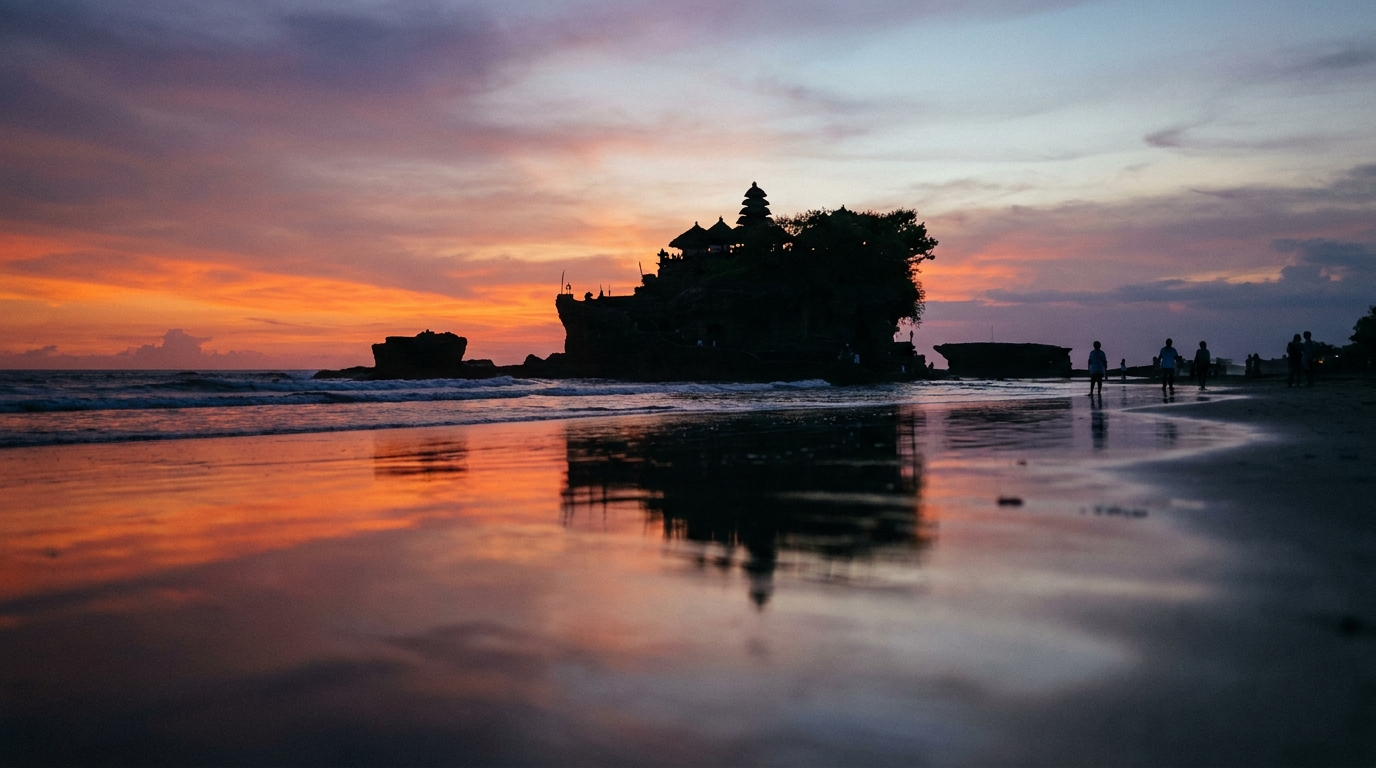
Uluwatu — Clifftop living with jaw-dropping Indian Ocean views. The surf here is legendary (but advanced), and the sunset from Uluwatu Temple is something you’ll remember forever. Great for romantic getaways.
Sanur — The quiet alternative. Sanur’s got a calm beach (reef-protected, great for kids), a nice promenade, and a local feel that’s increasingly hard to find in Bali’s tourist areas. Also the departure point for boats to Nusa Penida and Nusa Lembongan.
Kuta/Legian — It’s loud, it’s chaotic, and it’s the cheapest spot on the island. If you’re on a tight budget and don’t mind a bit of sensory overload, Kuta works. It’s also right next to the airport (10 minutes), which is handy for late arrivals.
10 Things No Bali Travel Guide Should Skip
You’d need months to do everything Bali offers, but if you’ve got a week or two, these are the experiences that’ll stick with you long after you’re home.
1. Watch Sunrise from Mount Batur’s Rim
You’ll wake up at 2 AM, hike for two hours in the dark, and wonder why you signed up for this. Then the sun breaks over the crater lake and you won’t regret a single minute. Guided treks cost $35–60 and include breakfast cooked by volcanic steam.
2. Swim Through Nusa Penida’s Turquoise Coves
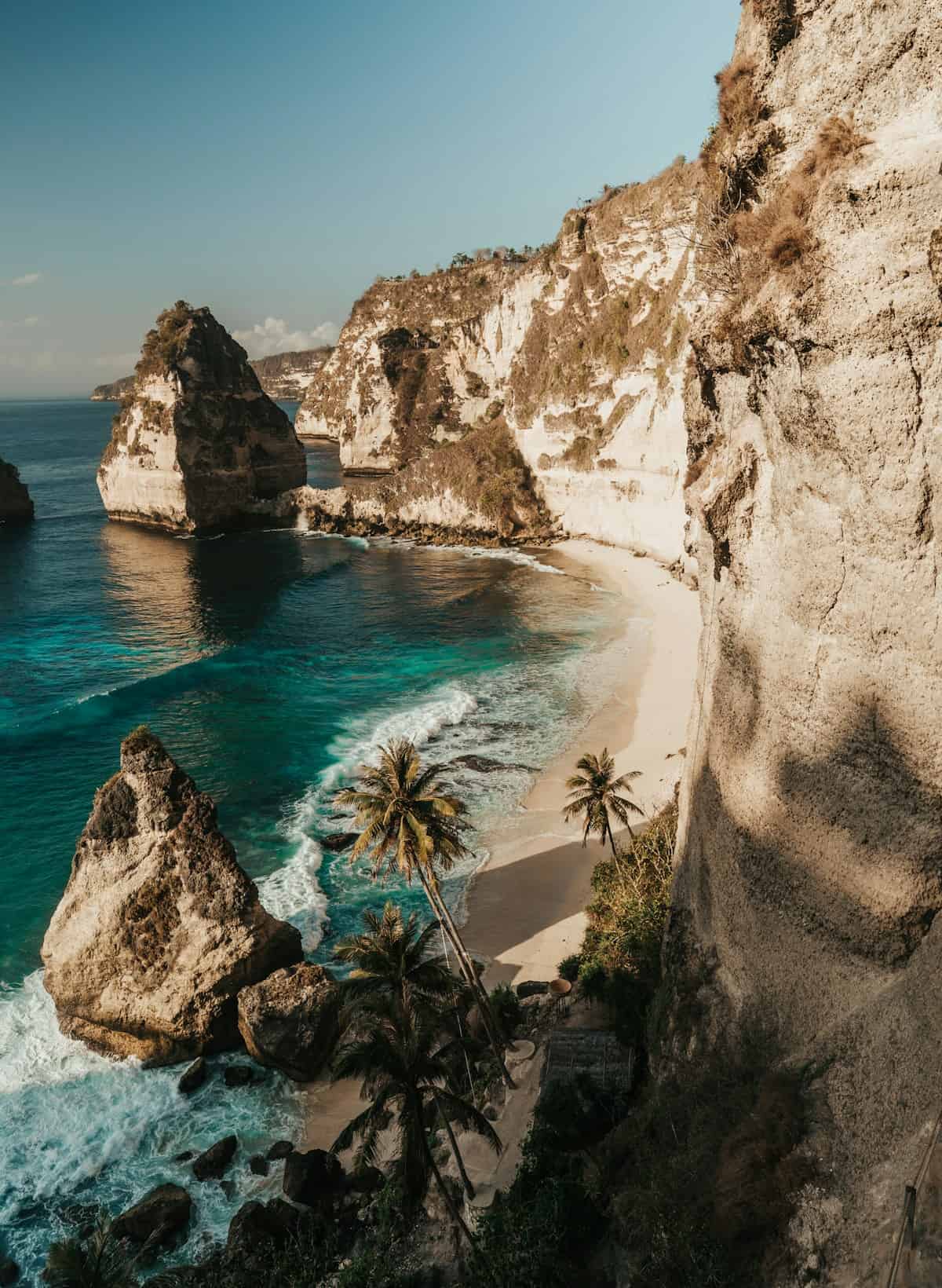
Kelingking Beach (that T-rex cliff you’ve seen on Instagram), Angel’s Billabong, and Broken Beach—all in one day trip from Sanur. Fast boats run daily for $12–20 each way, or book a full tour for $45–75 that covers everything.
3. Purify Yourself at Tirta Empul Holy Spring Temple
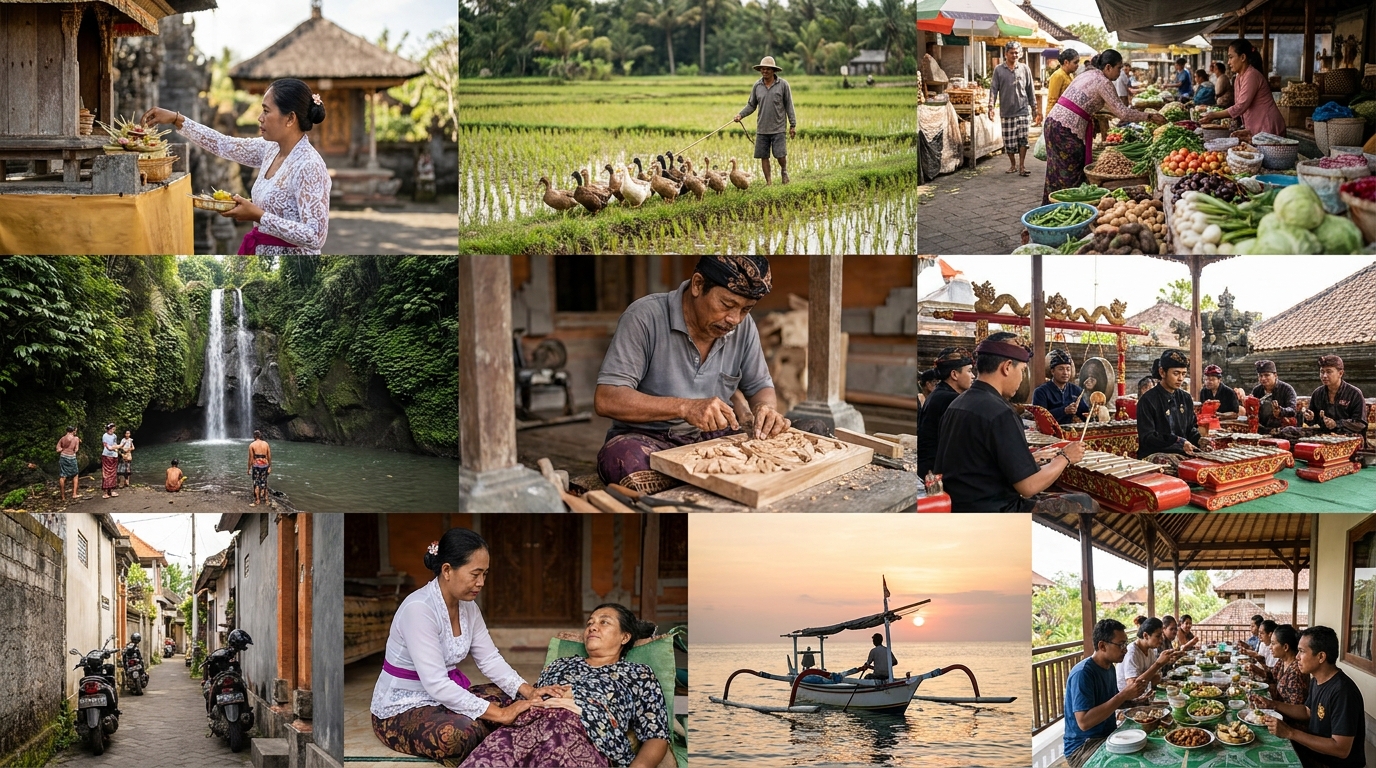
This isn’t your typical tourist temple. You’ll wade through waist-deep water, passing under 30 stone spouts while saying prayers. It’s one of those experiences that hits differently than you’d expect. Entry is just $3, and you’ll need a sarong (borrow one free at the entrance).
4. Catch Kecak Fire Dance at Uluwatu Temple
Hundreds of shirtless men chanting “cak-cak-cak” as the sun drops into the ocean behind them—it’s hypnotic. The Uluwatu Temple perches on a 70-meter cliff, making the sunset backdrop absolutely unreal. Temple entry costs $3 plus $7 for the dance performance. Get there by 5 PM to grab a good seat.
5. Eat Your Way Through Jimbaran’s Seafood BBQ
Pick your fish straight from the ice display, choose your sauce, and eat it on the beach while the sky turns orange. A full seafood dinner with drinks runs $15–25 per person. It’s one of Bali’s most iconic dining experiences—and it’s been happening nightly for decades.
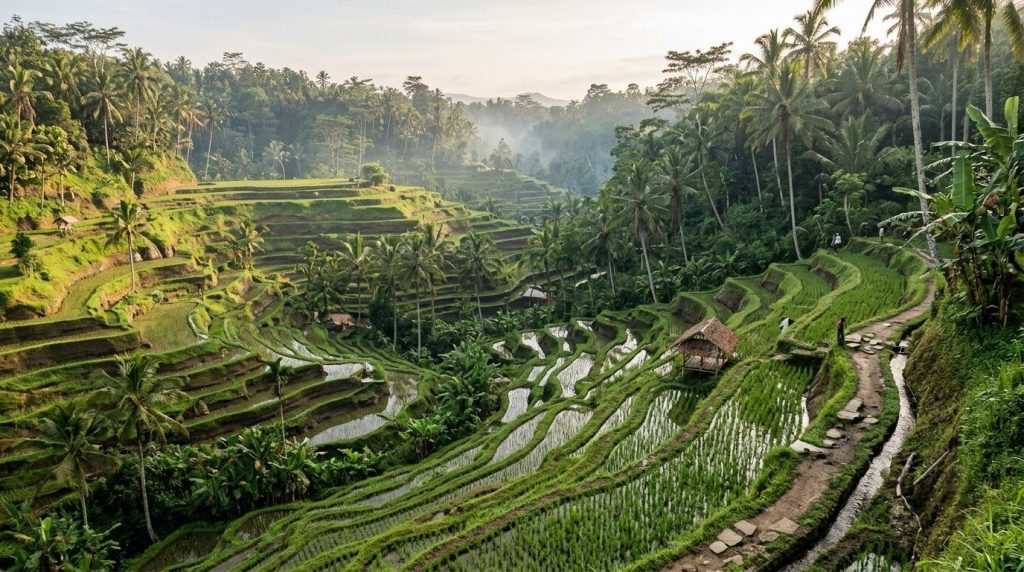
6. Get Lost in Tegallalang Rice Terraces
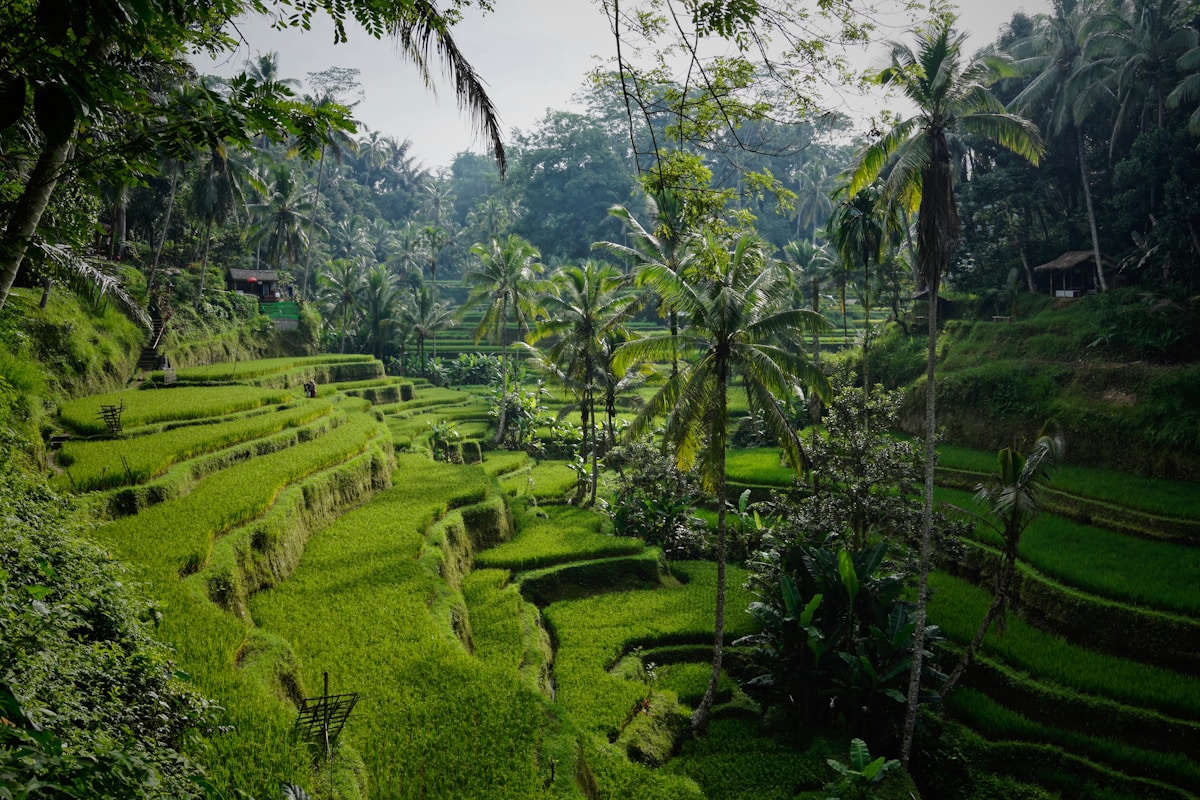
The most photographed spot in Ubud, and honestly, it lives up to the hype. Walk through cascading green terraces, try the jungle swings ($10–15), and grab a coffee at one of the ridgeline cafés overlooking the valley. Entry is just $1.50.
7. Explore Ubud’s Sacred Monkey Forest
Around 700 long-tailed macaques live in this moss-covered temple forest right in the middle of Ubud. It’s equal parts hilarious and slightly terrifying—they’ll steal anything that isn’t secured. Entry: $4. Pro tip: leave your sunglasses at the hotel.
8. Surf Canggu’s Famous Breaks
Batu Bolong and Echo Beach are perfect for beginners and intermediates. A 2-hour surf lesson costs $20–35, and board rentals run about $5–8/day. For advanced surfers, Uluwatu’s reef breaks are world-class.
9. Take a Balinese Cooking Class
You’ll start at the local market picking out ingredients, then spend 3–4 hours learning to make sate lilit, lawar, and nasi campur from scratch. Most classes cost $25–40 and include everything. It’s the gift that keeps giving—you’ll be cooking Balinese food at home for years.
10. Party at a Beach Club
Bali’s beach club scene is in a league of its own. Potato Head (Seminyak), Finns (Canggu), and Sundays (Uluwatu) offer infinity pools, DJ sets, and cocktails with ocean views. Entry is usually free; budget $8–20 per cocktail and $15–30 for food.
ORIGINAL DATA: Based on current 2026 pricing across 50+ operators listed on Viator and GetYourGuide, here’s what activities actually cost in Bali right now:
| Activity | Average Cost (USD) |
|---|---|
| Mount Batur sunrise trek (guided) | $35–60 |
| Nusa Penida full-day tour | $45–75 |
| White water rafting (Ayung River) | $30–50 |
| Balinese cooking class | $25–40 |
| 2-hour surf lesson | $20–35 |
| Full-day private driver | $35–55 |
| Waterbom Bali waterpark | $35–45 |
| Snorkeling trip (Nusa Lembongan) | $30–50 |
| Scuba diving (2 dives) | $70–120 |
| ATV ride through rice terraces | $35–55 |
The best deals come from booking directly with local operators in person rather than through online platforms—you’ll often save 20–30%. But for complex multi-stop tours, online booking guarantees pickup times and English-speaking guides.
How Do You Get Around Bali?
No Bali travel guide is complete without transport tips. Grab and Gojek are your cheapest options, but they don’t work everywhere—and that’s something most travel blogs won’t tell you.
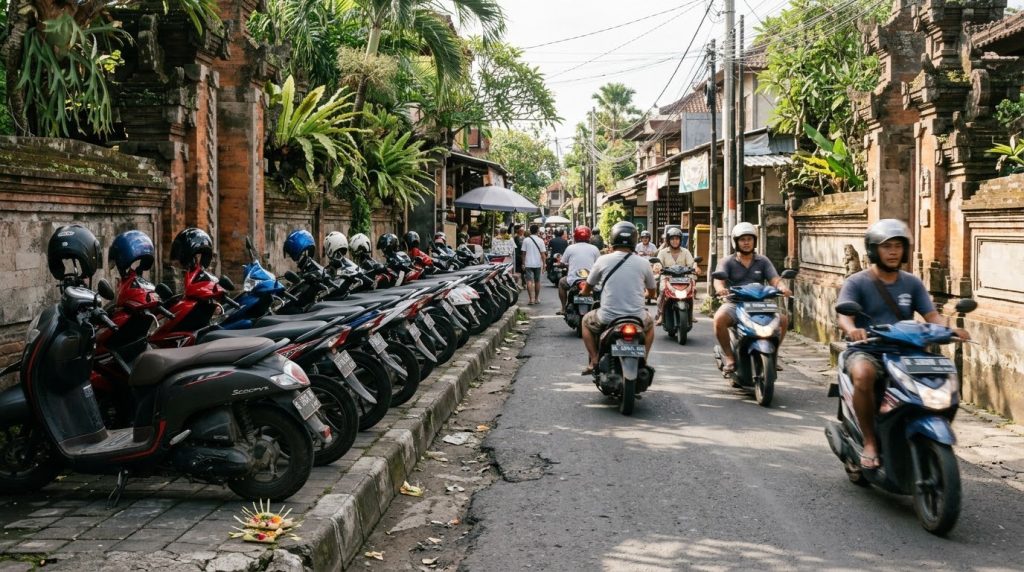
Bali’s traditional taxi drivers have pushed back hard against ride-hailing apps. In Ubud’s center, around major temples, and at the airport, Grab and Gojek pickups are either blocked or drivers won’t come. You’ll need to walk a few minutes outside these zones or use official taxis instead.
| Transport | Cost | Best For |
|---|---|---|
| GrabBike (short ride) | $0.60–1.50 | Quick trips around town |
| GrabCar (Seminyak→Ubud) | $10–18 | Longer distances with luggage |
| Scooter rental | $4–7/day | Freedom to explore (IDP required) |
| Private driver (full day) | $35–55 | Temple tours, day trips |
| Airport to Kuta (metered taxi) | $5–8 | Short airport transfers |
| Airport to Ubud (pre-booked) | $20–30 | Longer airport transfers |
| Fast boat to Nusa Penida | $12–20 one-way | Island hopping |
| Fast boat to Gili Islands | $30–50 one-way | Multi-island trips |
About scooter rentals: They’re everywhere and incredibly tempting at $4–7/day. But you need an International Driving Permit (IDP)—police checkpoints are everywhere, and fines run about $30 without one. More importantly, Bali’s roads are genuinely dangerous for inexperienced riders. If you’ve never ridden a scooter before, don’t start here.
PERSONAL EXPERIENCE: A private driver for $40–50/day is the best money you’ll spend in Bali if you’re doing temple tours. They’ll know the best routes, wait while you explore, and often share local knowledge that transforms the experience. Ask your hotel to arrange one.
For a detailed breakdown of every option, check our Bali Transportation Guide.
What Are the Visa and Entry Rules for 2026?
Most travelers need a Visa on Arrival ($31) plus the Bali tourist tax ($9.50)—that’s $40.50 total before you even leave the airport.
Here’s the current system that every Bali travel guide for 2026 should mention:
Visa Options
| Visa Type | Duration | Cost | Notes |
|---|---|---|---|
| Visa on Arrival (VOA) | 30 days | $31 (IDR 500,000) | 90+ nationalities eligible |
| VOA Extension | +30 days | $31 (IDR 500,000) | Apply at immigration before expiry |
| e-VOA (online) | 30 days | $31 (IDR 500,000) | Apply at molina.imigrasi.go.id |
| B211A (Social/Cultural) | 60–180 days | $120–300 | For longer stays, digital nomads |
Skip the airport line: Apply for the e-VOA at molina.imigrasi.go.id before you fly. It takes 10 minutes online versus 30–60 minutes queuing at the airport. Same price, zero hassle.
Bali Tourist Tax
Since February 2024, all foreign visitors pay IDR 150,000 ($9.50) as a one-time tourist development levy. Pay online at lovebali.baliprov.go.id before arrival or at airport kiosks. You’ll need to show proof at immigration.
Don’t Forget
- Passport must be valid for 6+ months from arrival
- You’ll need proof of return/onward travel
- Complete the e-Customs Declaration online before arrival
- No COVID vaccination requirements (fully dropped)
SIM Cards, Wi-Fi & Staying Connected
Bali has excellent internet by Southeast Asian standards—you won’t struggle to stay connected, whether you’re a digital nomad or just need Google Maps. A travel eSIM from Airalo is the easiest option — install it before you fly and skip the airport SIM queue.
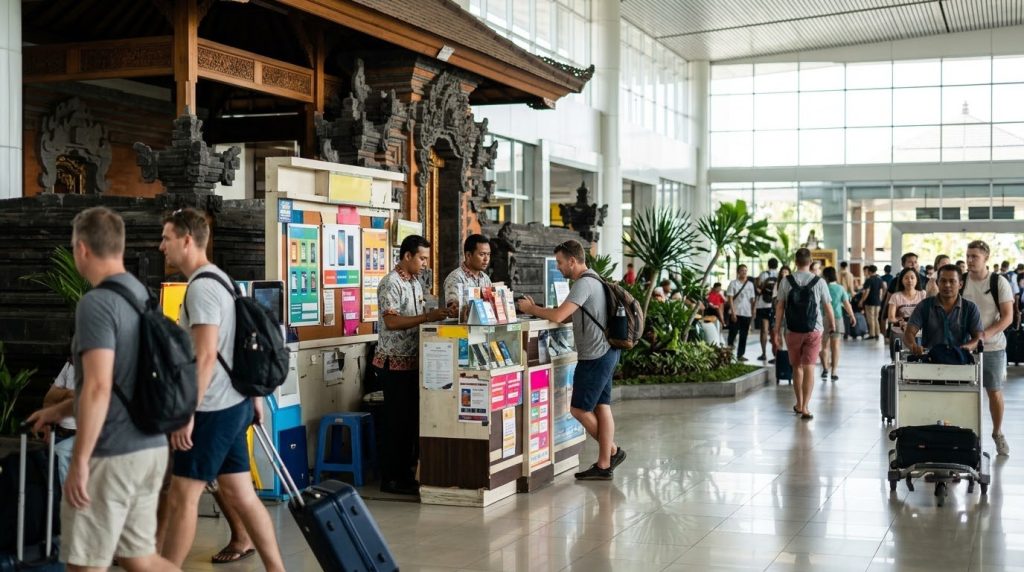
SIM Cards
Pick up a local SIM at the airport arrivals hall for IDR 50,000–150,000 ($3–10) depending on data. Telkomsel (largest network, best rural coverage) and XL Axiata (cheaper, good in tourist areas) are your best options. You’ll need your passport to register.
- 10 GB plan: ~$3–5 (enough for a week of normal use)
- 30 GB plan: ~$7–10 (heavy use, video calls, streaming)
- Tourist SIM packages at the airport are overpriced—buy from a roadside cell shop in Kuta or Seminyak for 30–50% less
Wi-Fi Speed
Cafés and coworking spaces in Canggu and Ubud routinely hit 50–100+ Mbps, which is faster than many Western cafés. Most hotels and guesthouses offer free Wi-Fi, though quality varies wildly—ask before booking if you need it for work.
Top coworking spaces: Dojo Bali (Canggu, $12/day), Outpost (Canggu/Ubud, $15/day), Hubud (Ubud, $13/day).
Money, ATMs & Currency Tips
The Indonesian Rupiah (IDR) has a lot of zeros, which takes some getting used to. 1 USD ≈ 16,000 IDR (April 2026). A $5 lunch is IDR 80,000—it sounds like a fortune until you adjust.
Best Way to Get Cash
- ATMs inside banks (BCA, Mandiri, BNI) are the safest option. Most dispense up to IDR 2,500,000 ($156) per withdrawal
- ATM fees: Most Indonesian ATMs charge IDR 0–30,000 per withdrawal. Your home bank may add 1–3% on top. Use a travel-friendly card (Wise, Revolut, Charles Schwab) to minimize fees
- Avoid standalone ATMs on streets—card skimming is a real risk
- Cash is still king at warungs, markets, and local shops. Always carry small bills (IDR 10,000–50,000)
Where to Exchange Money
- BMC Exchange (Central Kuta) — consistently the best rates, fully licensed
- Bank counters — safe but slightly worse rates
- Hotel front desks — convenient but 5–10% worse than market rate
- ⚠️ Street money changers — avoid completely. Sleight-of-hand tricks are common, especially shops advertising “no commission, best rate!”
Cards & Digital Payment
Major tourist restaurants, hotels, and beach clubs accept Visa/Mastercard, but most warungs and small shops are cash-only. GoPay and OVO (Indonesia’s mobile payment apps) work at many merchants if you set them up through Gojek or Grab.
What Should You Eat in Bali?
Ask any Bali travel guide writer and they’ll agree: the food scene punches way above its weight—you’ll find $2 warung meals that taste better than $30 restaurant dishes. The trick is knowing where to look and what to order.
Must-Try Dishes
Babi Guling (Suckling Pig) — Bali’s signature dish. A whole pig slow-roasted with turmeric, lemongrass, and chili, then served with rice and spicy sambal. Ibu Oka in Ubud is the most famous spot, but every neighborhood has its own version. It’s one of those dishes that’ll ruin you for regular pork forever.
Nasi Campur Bali — The “choose your own adventure” of Balinese food. A plate of rice surrounded by 6–8 small dishes: shredded chicken, lawar (spiced vegetables), sate lilit, sambal, crackers, and whatever else the warung is making that day. You’ll pay $2–3 at a warung and get enough food for two meals.
Sate Lilit — Forget regular satay. Sate lilit wraps minced fish, chicken, or pork around lemongrass sticks before grilling. The lemongrass infuses into the meat and the result is unlike any satay you’ve had.
Bebek Betutu (Smoked Duck) — Slow-cooked for 12+ hours in banana leaves with a paste made from dozens of spices. It falls apart at the touch of a fork. It takes so long to prepare that some warungs require advance ordering.
Best Eating Areas
- Jimbaran Bay — Sunset seafood BBQ on the beach ($15–25/person)
- Ubud — Farm-to-table restaurants, organic cafés (Locavore, Hujan Locale)
- Seminyak — High-end international dining (Merah Putih, Sarong, Mama San)
- Canggu — Brunch capital of Bali—smoothie bowls, avocado toast, and cold brews everywhere
- Denpasar/Gianyar — Where locals eat. Cheapest and most authentic food on the island
How Do You Stay Safe in Bali?
Bali is one of the safest destinations in Southeast Asia, but it’s not without its quirks. Most problems are preventable with basic awareness.
Travel Advisory Status
- US State Dept: Level 2 — “Exercise Increased Caution” (travel.state.gov)
- UK FCDO: Standard advisory with regional cautions
- Australia DFAT: “Exercise a high degree of caution”
These advisories haven’t changed in years and apply to all of Indonesia—not Bali specifically. For context, Thailand, Mexico, and India carry similar ratings.
Scams to Watch For
- Money changers: Unlicensed spots shortchange you with sleight-of-hand. Only use BMC/Central Kuta or ATMs inside banks
- Scooter rental damage claims: Take photos/videos BEFORE and AFTER every rental. Scratches from months ago will suddenly become “your fault”
- Temple “donations”: Some volunteers at temples pressure you for excessive “mandatory” donations. Actual entry fees are always posted on signs
- Card skimming: Use ATMs inside banks or malls, never standalone machines on streets
Health Tips
- Bali Belly: It’s almost a rite of passage. Drink only bottled water, avoid ice at street stalls, and carry Imodium. Most cases pass in 24–48 hours
- Dengue fever: Risk is year-round, higher in wet season. Wear DEET 30%+ repellent, especially at dawn and dusk
- Rabies: Present in Bali via stray dogs and monkeys. Don’t touch animals you don’t know. If bitten, get to BIMC Hospital immediately
- Sun: UV index hits 10–12 daily. SPF 50+ is non-negotiable, even on cloudy days
UNIQUE INSIGHT: Travel insurance isn’t optional in Bali—it’s essential. Medical evacuation can cost $50,000+, and Bali’s hospitals, while improving, aren’t equipped for every emergency. Spend the $50–100 on a good policy before you go. BIMC and Siloam are the main international hospitals.
What Cultural Rules Should You Follow?
Bali is a deeply spiritual Hindu island, and showing respect for local customs isn’t just polite—it’s expected. Most Balinese won’t confront you about mistakes, but they’ll notice.
Temple Etiquette
- Sarong and sash required at every temple. Most temples provide free loaners or rent them for $1–2. Wearing shorts and a tank top to a temple is a guaranteed no-entry
- Women on their period are traditionally asked not to enter temples. Signs are posted at entrances. It’s a religious belief, not a suggestion
- Never stand higher than a shrine or priest during ceremonies—sit or crouch down
- Don’t point your feet at altars, offerings, or people. In Balinese culture, feet are the lowest part of the body
- Ask before photographing ceremonies. Most Balinese are happy to let you watch and photograph, but always ask first
Daily Offerings (Canang Sari)
You’ll see small woven baskets filled with flowers, rice, and incense on sidewalks, doorsteps, and dashboards everywhere. These are canang sari—daily offerings to the gods. Never step on them. Walk around them. It sounds simple, but I’ve watched tourists kick through dozens without even noticing.
General Etiquette
- Use your right hand for giving and receiving—the left hand is considered unclean
- Dress modestly when visiting villages outside tourist zones. Shoulders and knees covered is a good baseline
- Balinese names: Most Balinese have one of four first names (Wayan, Made, Nyoman, Ketut) based on birth order. Don’t be surprised when multiple people at your hotel share the same name
- Haggling is fine at markets but keep it friendly. Aggressive bargaining is seen as rude—smile, counteroffer, and walk away if the price doesn’t work. A fair deal leaves both sides happy
- Tipping: Not mandatory, but appreciated. IDR 10,000–20,000 ($0.65–1.25) for restaurant staff, IDR 50,000–100,000 ($3–6) for tour guides and drivers is standard
What’s New in Bali for 2026?
The island’s evolving fast, and some changes will directly affect how you plan your trip.
Policy Changes That Matter
- Tourist motorbike crackdown: Bali’s government is enforcing IDP requirements more strictly than ever. Police checkpoints are common, especially in Canggu and Ubud. Fines run IDR 500,000 ($30)
- Visitor caps at popular sites: Nusa Penida, Handara Gate, and some rice terraces now limit daily visitors. Book ahead during peak season
- Temple dress codes enforced: Major temples now strictly require sarongs and sashes—no exceptions. Most temples offer rentals for $1–2
- Single-use plastic ban expansion: More areas of Bali are banning plastic bags, straws, and styrofoam. Bring a reusable water bottle
Infrastructure Upgrades
- Airport expansion: Ngurah Rai is upgrading capacity to handle 30M+ passengers by 2027, which should mean shorter immigration lines
- Toll road improvements: The southern bypass is getting faster, cutting airport-to-Uluwatu travel time
- Better waste management: New processing facilities mean cleaner beaches than previous years—a real improvement from the trash problems that plagued Bali in the late 2010s
Tourism Trends
Bali’s moving toward sustainable tourism in a real way—not just marketing. Eco-certifications for hotels are expanding, overtourism is being actively managed with caps and fees, and there’s genuine investment in cultural preservation through the tourist tax revenue (which generated $22 million in 2024–2025).
Bali’s beach cleanup efforts appear to be working. Kuta Beach, which was notorious for trash washing ashore during wet season, has improved noticeably thanks to community-led cleanup programs and better waste infrastructure. Seminyak and Canggu beaches are cleaner than they’ve been in years. It’s still not perfect—some remote beaches still struggle—but the trend is genuinely positive.
Your Bali Travel Guide: Explore More Topics
This guide covers the essentials, but there’s so much more to discover. Here are our detailed guides for specific topics:
Planning Guides
- 5 Days in Bali Itinerary — Day-by-day plan for a perfect first trip
- 7 Days in Bali Itinerary — Extended itinerary with off-the-beaten-path stops
- Bali Packing List — Everything you need (and what to leave behind)
- Bali Travel Checklist — Pre-trip checklist so you don’t miss anything
- Best Time to Visit Bali — Month-by-month weather and price breakdown
- Bali Travel Budget — Detailed cost analysis for every travel style
Where to Stay
- Where to Stay in Bali — Complete area comparison guide
- Ubud vs Seminyak vs Canggu — The three most popular areas compared
- Best Hotels in Bali — Top-rated picks for every budget
- Best Villas in Bali — Private pool villas from $60/night
- Budget Hotels in Bali — Best value stays under $50/night
- Luxury Resorts in Bali — Five-star experiences worth the splurge
Things to Do
- Bali Bucket List — 25 experiences you shouldn’t miss
- Best Beaches in Bali — From hidden coves to famous stretches
- Best Waterfalls in Bali — The island’s most stunning cascades
- Best Tours in Bali — Guided experiences for every interest
- Best Day Trips from Bali — Nusa Penida, Gili Islands, and more
- Hidden Gems in Bali — Secret spots most tourists never find
- Best Sunset Spots in Bali — Where to watch the sky light up
- Instagrammable Places in Bali — The most photogenic locations
- Bali Photo Spots — Pro-level photography locations
Getting Around & Costs
- Bali Transportation Guide — Every way to get around the island
- Bali Airport Transfer Guide — Cheapest and fastest options
- Is Bali Expensive? — Honest cost comparison with other destinations
- Bali Travel Cost Breakdown — Every expense itemized
Frequently Asked Questions
Is Bali worth visiting in 2026?
Absolutely—and this Bali travel guide exists because of it. With a record 6.95 million visitors in 2025 and major infrastructure upgrades underway, Bali’s better than it’s ever been. The tourist tax funds cultural preservation, beaches are cleaner, and the government’s actively managing overtourism. Whether you’re a backpacker or a luxury traveler, Bali delivers incredible value. Check our Is Bali Expensive? guide for a full cost comparison.
How many days do you need in Bali?
7–10 days is ideal for a first visit. You’ll have time to explore 2–3 areas (like Ubud + Seminyak + Uluwatu), do the major activities, and still have lazy beach days. For a shorter trip, 5 days works if you focus on one or two areas—see our 5 Days in Bali Itinerary for a detailed plan.
Is Bali safe for solo female travelers?
Yes—Bali is one of the safest places in Southeast Asia for solo female travelers. The Balinese are genuinely friendly and respectful. Standard precautions apply: don’t walk alone on deserted beaches at night, keep valuables secure, and trust your instincts. The biggest real risk is scooter accidents, not crime.
Can you drink the tap water in Bali?
No. Always drink bottled or filtered water. Most hotels and restaurants use filtered water for cooking and ice, but street stalls may not. A refillable bottle with a filter (like LifeStraw) will save you money and reduce plastic waste.
Do you need vaccinations for Bali?
No vaccinations are mandatory for Bali, but the CDC recommends being up-to-date on routine vaccines plus Hepatitis A and Typhoid. A rabies pre-exposure vaccine is worth considering if you plan to spend time around animals (think Monkey Forest). Consult your doctor 4–6 weeks before travel.
What’s the best way to get from Bali airport to your hotel?
The cheapest option is a metered airport taxi ($5–8 to Kuta/Seminyak). For Ubud or Uluwatu, pre-book a transfer for $15–25—it saves haggling stress after a long flight. Grab works outside the airport zone but you’ll need to walk to the pickup point. Full details in our Bali Airport Transfer Guide.
Is Bali expensive compared to Thailand?
Bali and Thailand are similarly priced overall, but Bali wins on accommodation (villas with private pools from $60/night) while Thailand wins on food (slightly cheaper street food). A mid-range trip in Bali costs about $100–150/day versus $80–120 in Thailand. Read our Bali Travel Cost Breakdown for exact numbers.
Should I visit Bali or Phuket?
Both are incredible, but they’re very different vibes. Bali offers deeper cultural immersion (Hindu temples, rice terrace treks, Ubud’s art scene), better value for villas and accommodation, and a thriving digital nomad community. Phuket has clearer beaches, better island-hopping options (Phi Phi, James Bond Island), and a more developed nightlife scene.
Budget-wise, they’re similar—$100–150/day mid-range. If you’ve got 3+ weeks, do both. Check our Ultimate Phuket Travel Guide for a side-by-side comparison.
What should I pack for Bali?
Light, breathable clothing (cotton or linen), a sarong for temple visits, reef-safe sunscreen (SPF 50+), mosquito repellent with DEET, a rain jacket for wet season, and comfortable walking shoes for rice terrace treks. Leave heavy denim and formal wear at home. For a complete list, see our Bali Packing List.
This Bali travel guide is updated regularly. Planning your trip to Southeast Asia? Check our Ultimate Phuket Travel Guide to compare Bali with Thailand’s most popular island.
Last updated: April 2026. Prices, visa requirements, and regulations are subject to change. Always verify current entry requirements at molina.imigrasi.go.id before booking.
More Bali Guides
- Best Food in Bali 2026: 10 Must-Try Dishes + Warungs
- Best Things to Do in Bali 2026: 30 Epic Activities
- Bali vs Thailand: Honest 2026 Southeast Asia Showdown
- 12 Best Day Trips from Bali 2026: Islands & More
- Is Bali Safe in 2026? Honest Guide for Solo Travelers, Women & Digital Nomads
- Ubud vs Seminyak vs Canggu Bali: 7 Key Differences (2026)
- 11 Best Bali Sunset Spots: Golden Hour Guide (2026)
- 12 Best Bali Waterfalls: Insider Tips & Prices (2026)
- 15 Best Tours in Bali 2026: Prices, Tips & Booking Guide
- 15 Most Instagrammable Places in Bali You Can’t Miss (Guide 2026)
- Best Time to Visit Bali in 2026: Month-by-Month Guide