Best Time to Visit Tokyo 2026: Weather, Seasons & Crowds
By TravelguidestipUpdated 11 min readHow we earn
Hotel buttons open Stay22 (Booking.com, Agoda and others) and tour buttons open GetYourGuide. We may earn a commission at no extra cost to you.
In short
- Best overall: Late October to November delivers 17–22°C highs, low rainfall, and autumn leaves without the sakura crowds or summer heat.
- Cherry blossoms: Tokyo’s 2026 sakura is forecast to open around March 19–20 and hit full bloom near March 27–28 (Japan Meteorological Corporation) — the single busiest, priciest travel window.
- Avoid if possible: Golden Week (late April to early May) and Obon (mid-August) spike domestic travel, hotel rates, and train congestion nationwide.
- Hottest and wettest: August averages 31.4°C highs with high humidity; September–October are the rainiest months (225–235 mm) and peak typhoon season.
- Cheapest: January to early March and June (the rainy tsuyu weeks) bring the lowest hotel prices and thinnest crowds outside Chinese New Year.
The best time to visit Tokyo is late March to early April for cherry blossoms and mid-October to late November for clear, comfortable weather. Both windows land around 15–23°C daytime, dodge the summer humidity, and give you long stretches of dry days.
If you specifically want sakura, the Japan Meteorological Corporation forecasts Tokyo’s 2026 first bloom around March 19–20 with full bloom (mankai) near March 27–28, a touch earlier than the long-term average of roughly March 24 after a warmer-than-usual February.
Tokyo has four genuinely distinct seasons, and picking the right one changes your trip more than any hotel or itinerary decision. Summer highs hit 31.4°C in August with punishing humidity (climatestotravel.com), while January barely reaches 10°C.
This guide breaks down every season, gives you a month-by-month temperature table with real 2026 sakura dates, and flags the crowd-and-price traps like Golden Week and Obon so you know exactly when to go and when to stay home.
We’ve timed Tokyo trips across every season, and our honest favorite is the first week of November — warm enough for a light jacket, ginkgo trees glowing yellow along the Meiji Jingu Gaien avenue, and none of the shoulder-to-shoulder Ueno Park sakura scrum. Our worst call was an early-August visit: we drank two vending-machine drinks before lunch and still felt wrung out by 2 p.m.
What Is the Single Best Time to Visit Tokyo?
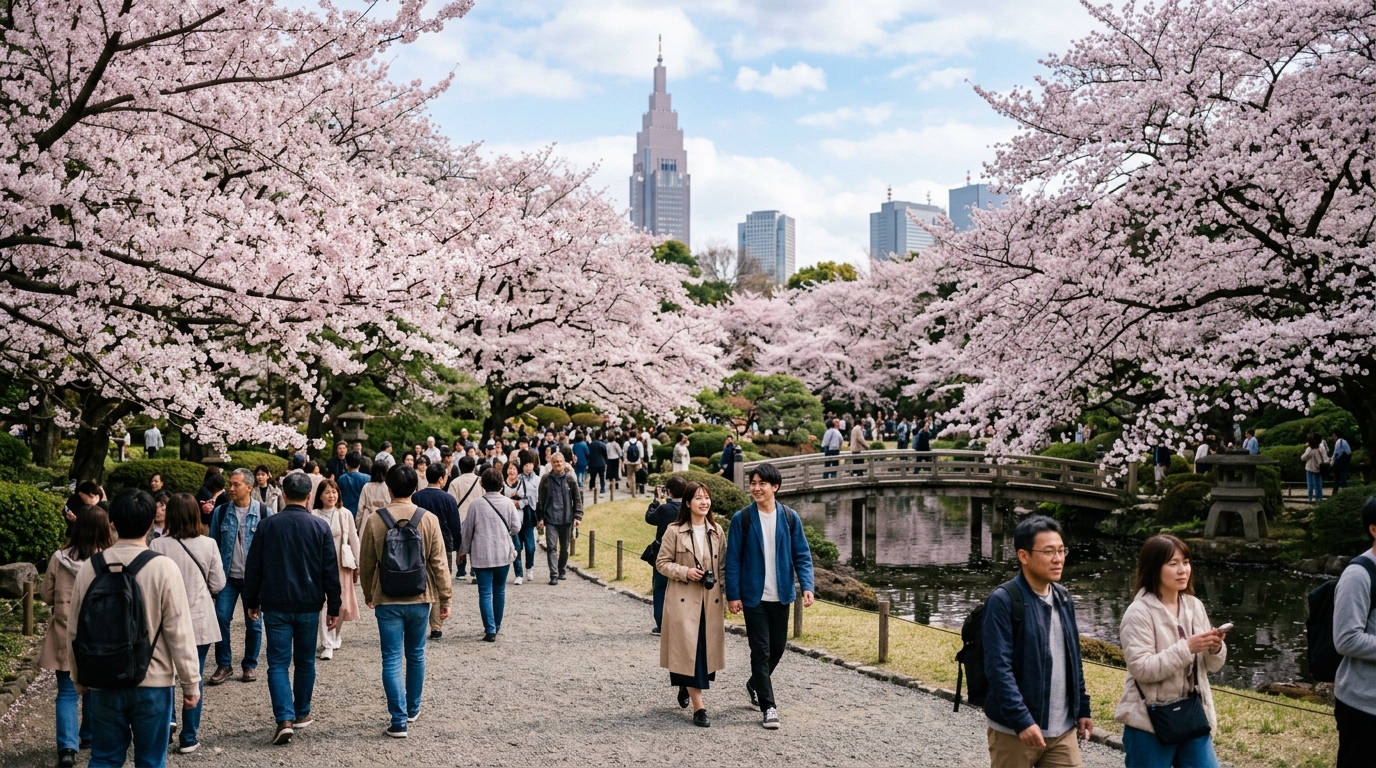
For most travelers, the best time to visit Tokyo is autumn (mid-October through November), followed closely by spring (late March to early April). Autumn wins on balance: daytime highs sit near 17–22°C, humidity drops sharply after the September typhoons, and the colored leaves peak in Tokyo’s parks through late November and into early December. You get the visual payoff of a “signature season” without spring’s crowds and price surges.
Spring is the more famous choice, and for good reason — cherry blossoms are a bucket-list sight. But sakura season is short (the full-bloom peak lasts only 5–7 days), unpredictable, and expensive. If your dates are locked and can’t flex around a shifting bloom forecast, autumn is the safer bet.
Budget travelers should look at winter and June instead, when you trade weather perfection for the year’s lowest hotel rates. For help slotting these seasons into a real trip, see our complete Tokyo travel guide for planning fundamentals.
Spring in Tokyo (March–May): Cherry Blossom Season
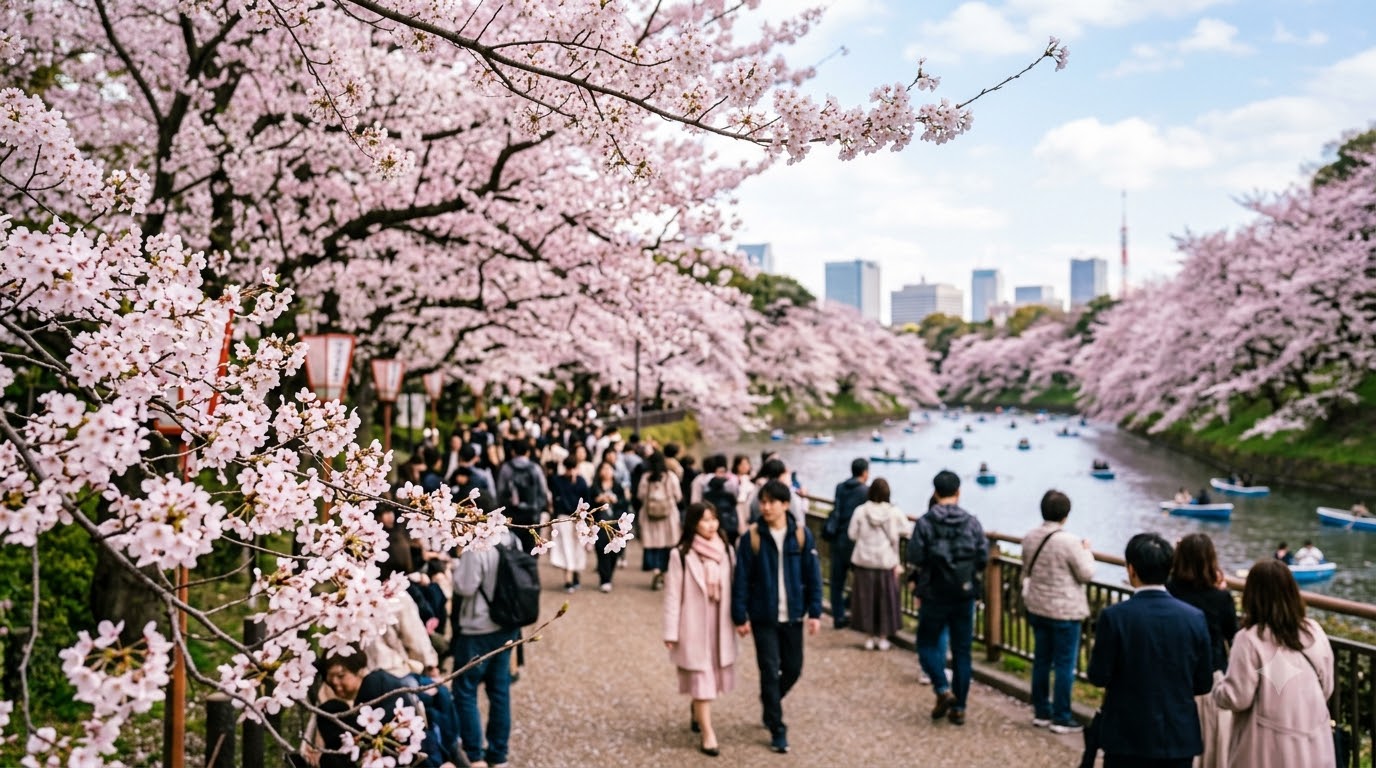
Spring is Tokyo’s marquee season, and the cherry blossoms are the reason. In 2026, the Japan Meteorological Corporation forecasts Tokyo’s first blossoms opening around March 19–20, with full bloom near March 27–28 — slightly ahead of the roughly March 24 long-term opening average because of a warm February.
The bloom window is narrow: it takes about a week from opening to full bloom, and mankai itself lasts just 5–7 days before wind and rain scatter the petals.
March starts cool (highs around 13.9°C, lows 5.4°C) and April warms nicely to 19.1°C highs. May is arguably spring’s most comfortable month at 23.5°C highs and 15.3°C lows, with clear skies once the pollen eases. The catch in May is Golden Week (roughly April 29 to May 5), a cluster of national holidays that empties Japanese offices and fills every train, hotel, and highway.
Where and When to See the 2026 Sakura
Plan to be in Tokyo between roughly March 24 and April 3, 2026, to hit peak bloom with a safety margin. Classic spots include the Meguro River’s lantern-lit canal, Ueno Park, Shinjuku Gyoen (which has late-blooming varieties that extend the season), and Chidorigafuchi near the Imperial Palace, where you can rent a rowboat under the branches.
Because the forecast shifts, check the Japan Meteorological Corporation update a week out before committing to specific dates. The one April we chased full bloom, we reached Chidorigafuchi at opening and still queued twenty minutes for a rowboat by nine.
If you’re building a spring trip around the blossoms, our 5-day Tokyo itinerary shows how to pace hanami spots without burning a whole day in park queues.
Cherry blossom facts and top spots:
- 2026 forecast: first bloom around March 19-20, full bloom (mankai) near March 27-28.
- Peak window to target: roughly March 24 to April 3 for a safety margin.
- Meguro River: a lantern-lit canal lined with cherry trees.
- Shinjuku Gyoen: late-blooming varieties that extend the season.
- Chidorigafuchi: rent a rowboat under the branches near the Imperial Palace.
Summer in Tokyo (June–August): Heat, Humidity & Festivals
Summer in Tokyo is hot, humid, and split into two moods. June opens with tsuyu, the rainy season, which typically runs from early June to mid-July and brings roughly 170 mm of rain — grey skies, high humidity, and fewer crowds.
Then July and August turn into full heat: July averages 30°C highs and August peaks at 31.4°C highs with 24.3°C lows (climatestotravel.com), and the humidity makes it feel worse than the numbers suggest.
This is also typhoon season. Tokyo can be affected by typhoons from June to October, especially August through early October, which occasionally cancels flights and trains. So why come at all?
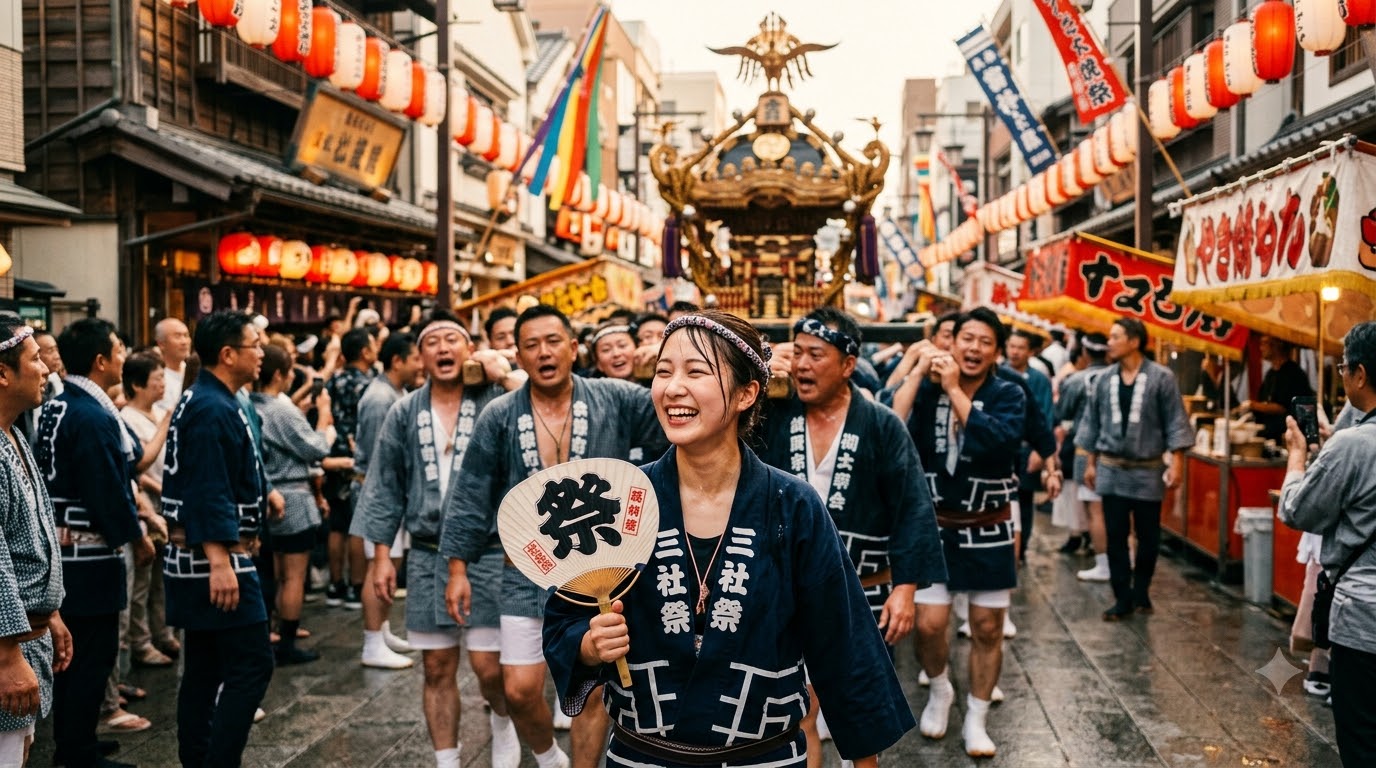
Summer is festival season. Sumida River Fireworks, neighborhood Bon Odori dances, and matsuri like Mitama fill the calendar, and the energy is electric after dark once the sun drops. Just build your sightseeing around early mornings and air-conditioned museums, and carry water everywhere.
For indoor-heavy summer days, our roundup of the best things to do in Tokyo leans on aquariums, teamLab digital art, and department-store food halls that shrug off the heat.
Tokyo summer at a glance:
- June: tsuyu rainy season, roughly 170 mm of rain, grey skies, fewer crowds.
- July and August: heat peaks, with August highs of 31.4C and 24.3C lows plus heavy humidity.
- Typhoon risk runs June to October, worst August to early October.
- The payoff: festival season, from Sumida River Fireworks to neighborhood Bon Odori dances.
- Plan sightseeing around early mornings and air-conditioned museums, and carry water.
The Obon Warning
Avoid mid-August if you can. Obon, the Buddhist ancestral holiday around August 13–16, triggers one of Japan’s largest domestic travel waves. Shinkansen trains sell out weeks ahead, hotel prices climb, and returning to a normal weekday rhythm in the city can be strange as many small shops close. Early July or the last week of August are calmer summer windows.
Find your Tokyo hotel on the map
Live prices from Booking & Airbnb — tap a pin to compare stays around Shinjuku and Shibuya and beyond.
Autumn in Tokyo (September–November): Mild Weather & Fall Foliage
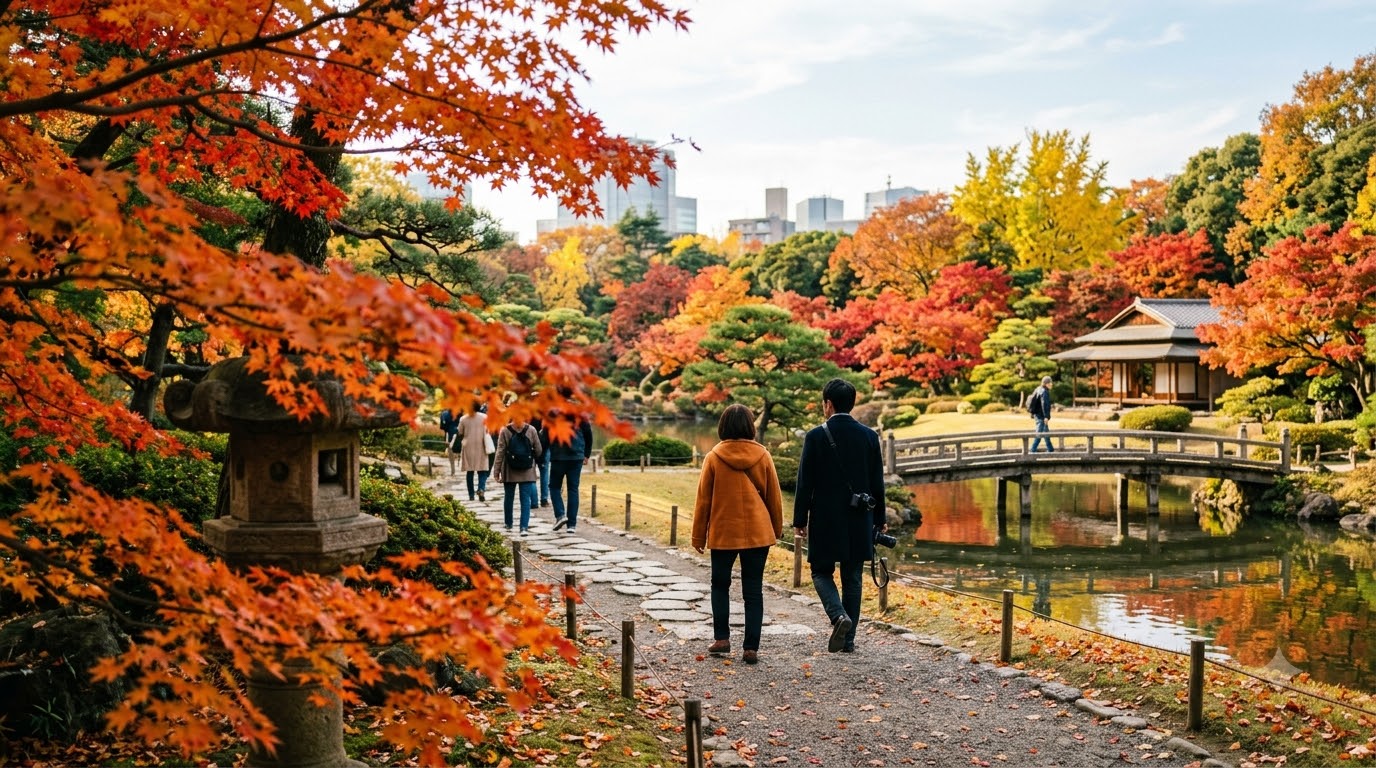
Autumn is the sweet spot, but it has a rough start. September is still warm (27.6°C highs) and the rainiest month of the year alongside October, with 225–235 mm of rain driven partly by typhoons. Once those systems pass in early-to-mid October, the weather turns reliably pleasant: October highs settle near 22.2°C and November drops to a crisp 17.1°C with 9.6°C lows and low rainfall.
Fall foliage peaks later than most people expect. Tokyo’s ginkgo and maple color runs from mid-November into early December, later than the mountains around Nikko or Kyoto. The ginkgo avenue at Meiji Jingu Gaien, the maples at Rikugien Garden (which holds evening illuminations), and Koishikawa Korakuen are the standout city spots.
Autumn also carries fewer crowds than spring and thinner queues at big attractions, which makes it our top pick for first-timers who want good weather without the sakura frenzy. Book accommodation early regardless — our guide to where to stay in Tokyo breaks down which neighborhoods stay walkable when the evenings cool off.
Tokyo autumn at a glance:
- October highs settle near 22.2C; November drops to a crisp 17.1C with 9.6C lows and low rainfall.
- September is the rainiest month (225-235 mm) with typhoon risk, so aim for mid-October onward.
- Fall foliage peaks mid-November into early December, later than Nikko or Kyoto.
- Standout leaf spots: the Meiji Jingu Gaien ginkgo avenue, Rikugien Garden, and Koishikawa Korakuen.
Winter in Tokyo (December–February): Clear Skies & Low Crowds
Winter in Tokyo is cold, dry, and underrated. Daytime highs run 10–12.4°C from December to February with lows near 2–4.5°C, and snow in the city is rare — most days are bright and sunny, which makes for excellent photography and clear Mount Fuji views on the western horizon. December brings elaborate winter illuminations across Roppongi, Marunouchi, and Shibuya, and the city stays lively right up to New Year.
The one period to watch is the New Year holiday (roughly December 29 to January 3), when many restaurants and small businesses close and shrines like Meiji Jingu draw millions for hatsumode, the first shrine visit of the year.
Outside those few days, mid-January to early March is the cheapest, quietest stretch of the entire year to visit Tokyo — ideal if budget and elbow room matter more than warm weather. On a February visit we had Shinjuku Gyoen nearly to ourselves and paid the lowest room rate of any of our Tokyo trips. Pack layers and a proper coat; the wind off Tokyo Bay bites.
Tokyo winter at a glance:
- Daytime highs run 10 to 12.4C December to February, with lows near 2 to 4.5C and rare snow.
- Most days are bright and sunny, giving clear Mount Fuji views on the western horizon.
- December illuminations light up Roppongi, Marunouchi, and Shibuya.
- Mid-January to early March is the cheapest, quietest stretch of the whole year.
- Watch the New Year holiday (about Dec 29 to Jan 3), when many shops close and shrines fill for hatsumode.
Tokyo Month-by-Month Weather Table (2026)
The table below shows average daily high and low temperatures and typical monthly rainfall for Tokyo, based on long-term climate normals (climatestotravel.com). Use it to match your priorities — warmth, dryness, blossoms, or budget — to a specific month.
| Month | Avg High (°C) | Avg Low (°C) | Rainfall (mm) | What to Expect |
|---|---|---|---|---|
| January | 10.0 | 2.1 | 60 | Cold, dry, sunny; lowest crowds after New Year |
| February | 10.8 | 2.6 | 55 | Cold and clear; plum blossoms begin late month |
| March | 13.9 | 5.4 | 115 | Warming; cherry blossoms open ~March 19–20 (2026) |
| April | 19.1 | 10.4 | 135 | Peak sakura early month; Golden Week begins late |
| May | 23.5 | 15.3 | 140 | Warm and pleasant; Golden Week crowds early |
| June | 26.0 | 19.2 | 170 | Rainy tsuyu season; humid but low crowds |
| July | 30.0 | 23.1 | 155 | Hot, humid; festivals and fireworks begin |
| August | 31.4 | 24.3 | 155 | Hottest month; Obon crowds mid-month |
| September | 27.6 | 20.8 | 225 | Warm, wettest month; typhoon risk |
| October | 22.2 | 15.3 | 235 | Mild after typhoons; excellent all-round |
| November | 17.1 | 9.6 | 95 | Crisp, dry; autumn leaves peak late month |
| December | 12.4 | 4.5 | 60 | Cold, dry; illuminations; New Year rush late |
Crowds and Prices: When Tokyo Gets Expensive
Tokyo’s crowds and hotel prices are driven less by weather than by a handful of predictable holiday spikes. Four periods reliably push rates up and availability down: cherry blossom season (late March to early April), Golden Week (late April to early May), Obon (mid-August), and the New Year holiday (late December to early January).
During these windows, hotel prices commonly jump well above off-peak rates and the best-located rooms sell out weeks or months ahead.
Peak price-and-crowd windows to plan around:
- Cherry blossom season (late March to early April): the single priciest, busiest window.
- Golden Week (late April to early May): domestic travel and rates spike nationwide.
- Obon (mid-August): Shinkansen sells out weeks ahead and many small shops close.
- New Year holiday (late December to early January): rooms scarce, shrines packed for hatsumode.
- Cheapest and calmest: mid-January through early March and the rainy weeks of June.
The cheapest, calmest stretches are mid-January through early March and the rainy weeks of June. Shoulder periods — early April after peak bloom, late May, and early December — offer a middle ground of decent weather and moderate prices.
One extra flag for international travelers: Chinese New Year (late January or February) raises demand from regional visitors even though it isn’t a Japanese holiday, so factor it in if you’re chasing winter’s low-season deals.
Quick Rule of Thumb
Pick your season by the trade-off you care about most:
- Best weather: late October to November.
- Cherry blossoms (and don’t mind paying): the last week of March 2026.
- Lowest prices: February or June.
- Festivals and can handle heat: July.
Every season works; it just depends on which trade-off you’d rather make.
Frequently Asked Questions
What is the cheapest month to visit Tokyo?
February and June are typically the cheapest months to visit Tokyo. February is cold but dry and sees the year’s thinnest crowds outside the New Year rush, while June’s rainy tsuyu season keeps hotel demand low. Both routinely offer noticeably lower room rates than the spring and autumn peaks, provided you avoid Chinese New Year in February.
When exactly will Tokyo cherry blossoms bloom in 2026?
The Japan Meteorological Corporation forecasts Tokyo’s cherry blossoms opening around March 19–20, 2026, with full bloom (mankai) near March 27–28. That is slightly earlier than the long-term opening average of about March 24. Forecasts shift with late-winter temperatures, so check the latest update roughly one week before your trip, and plan to be in Tokyo between about March 24 and April 3 for the best odds.
Is summer a bad time to visit Tokyo?
Summer is the most challenging season for weather but not a bad time overall. August highs reach 31.4°C with heavy humidity, and it is peak typhoon season, so sightseeing takes planning around the heat. The upside is festival season — fireworks, Bon Odori, and matsuri fill July and August. Come prepared for heat, use air-conditioned indoor attractions midday, and avoid the crowded Obon week in mid-August.
How many days do you need in Tokyo?
Most first-time visitors need four to five full days to cover Tokyo’s core neighborhoods without rushing, plus a day trip to Nikko, Kamakura, or Hakone. That gives you time for the major districts, a few museums or gardens, and one evening of unhurried food-hall or izakaya wandering. A structured five-day plan maps this out comfortably with room for one out-of-city excursion.
What should I pack for Tokyo’s weather?
Pack for the season: light, breathable clothing and a portable fan for summer’s 30°C-plus humidity; layers and a warm coat for winter’s near-freezing 2–4°C lows; and a light jacket plus a compact umbrella for spring and autumn, when rain and mild temperatures alternate. A foldable umbrella is worth carrying almost year-round, since Tokyo sees meaningful rain in most months.
Final Thoughts
There is no single “perfect” month to visit Tokyo — only the season that matches what you value most. If you want reliable, comfortable weather and lighter crowds, aim for late October through November. If cherry blossoms top your list, target the last week of March 2026 and accept the crowds and cost that come with them.
Budget-focused travelers will find the best deals in February and June, and festival lovers will thrive in the summer heat. Whichever window you choose, Tokyo rewards a little timing homework — and now you have the numbers to make the call.