Disclosure: Some links in this guide are affiliate links. If you book or buy through them, we may earn a small commission at no extra cost to you — it helps keep our guides free.
Bangkok hit a record 22.8 million international visitors in 2024, and the city is already on pace to exceed that in 2026 — and it’s not hard to see why. From rooftop bars overlooking a glittering skyline to canal-side markets where a bowl of noodles costs less than a dollar, Bangkok delivers experiences that almost no other city on earth can match. In this guide, we’ve compiled everything our team has learned across dozens of trips to help you plan smarter, spend less, and arrive knowing exactly what to expect.
We only recommend services we’d genuinely use ourselves.
Key Takeaways
- Bangkok welcomed 22.8 million tourists in 2024, making it one of Asia’s busiest travel hubs (Tourism Authority of Thailand, 2024)
- Average daily budget ranges from $35–$120 USD depending on travel style
- The BTS Skytrain and MRT now cover 90+ stations across Greater Bangkok
- Tourist visas on arrival available for 93 nationalities as of 2025 (Thai Immigration Bureau)
- Best months to visit: November–February for cooler, drier weather
Bangkok Visa Requirements and Entry in 2026
Quick answer: Most visitors can enter Bangkok in 2026 on a 30-day visa exemption covering 93 nationalities with nothing arranged in advance, and the city is at its most comfortable from November to February. Budget roughly $35–$120 a day depending on your travel style, and rely on the BTS Skytrain and MRT to skip Bangkok’s notorious traffic.
Most travelers can enter Bangkok without pre-arranging a visa, but the rules changed significantly in 2024 and it’s worth knowing exactly where you stand before you fly. Citizens of 93 countries — including the US, UK, Australia, and most EU nations — currently receive a 30-day visa exemption on arrival, which was extended from the previous 15-day limit as a tourism boost measure (Thai Ministry of Foreign Affairs, 2024).
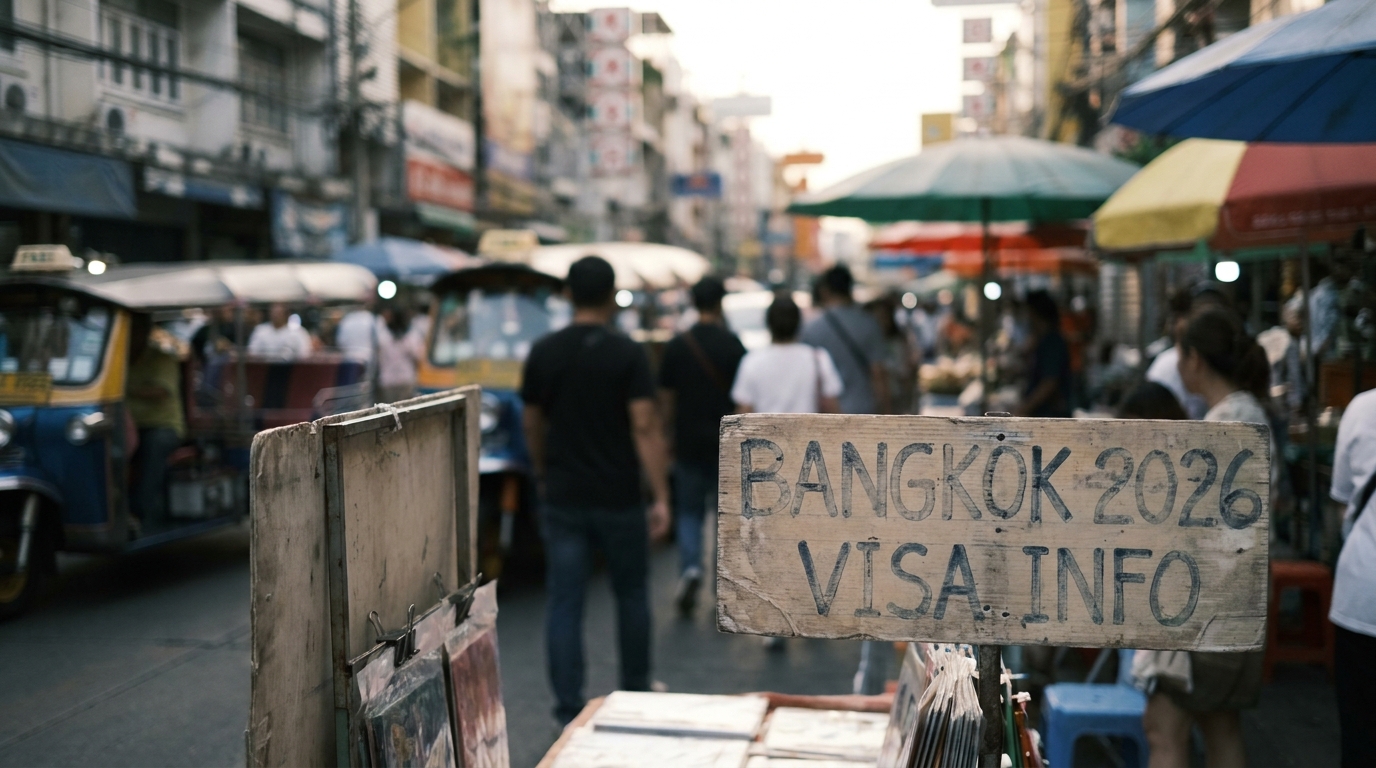
“Thailand extended the visa exemption period to 30 days for 93 nationalities effective November 2023, with ongoing reviews for further extensions in 2025–2026.”
— Thai Ministry of Foreign Affairs, 2024
If you’re planning to stay longer than 30 days, you have a few practical options:
Visa on Arrival (VOA)
Citizens of 19 additional nationalities can apply for a Visa on Arrival at Suvarnabhumi Airport. The fee is 2,000 THB (~$55 USD), and queues can stretch to 90 minutes during peak season. We’d strongly recommend using the fast-track immigration service available through Klook if you land on a Friday evening or holiday weekend.
Thailand e-Visa
The e-Visa system, available since 2023, allows you to apply online before departure for tourist visas (TR), non-immigrant visas, and longer-stay options. Processing takes 3–5 business days. This is now our preferred route for stays exceeding 30 days.
Visa Extension in Bangkok
You can extend your visa at the Bangkok Immigration Division on Chaeng Watthana Road for 1,900 THB (~$52 USD), giving you an additional 30 days. Bring your passport, a photo, and proof of onward travel.
The 4-Day Bangkok Itinerary
The plan we use ourselves — sent straight to your inbox.
- Day-by-day route
- Where to stay
- Real 2026 costs
Free · No spam · Unsubscribe anytime
Watch: Traveler’s Video Guide to Bangkok
Get a visual preview of what to expect. This traveler vlog showcases highlights that complement our written guide below:
When to Visit Bangkok: Seasons, Weather, and Crowds
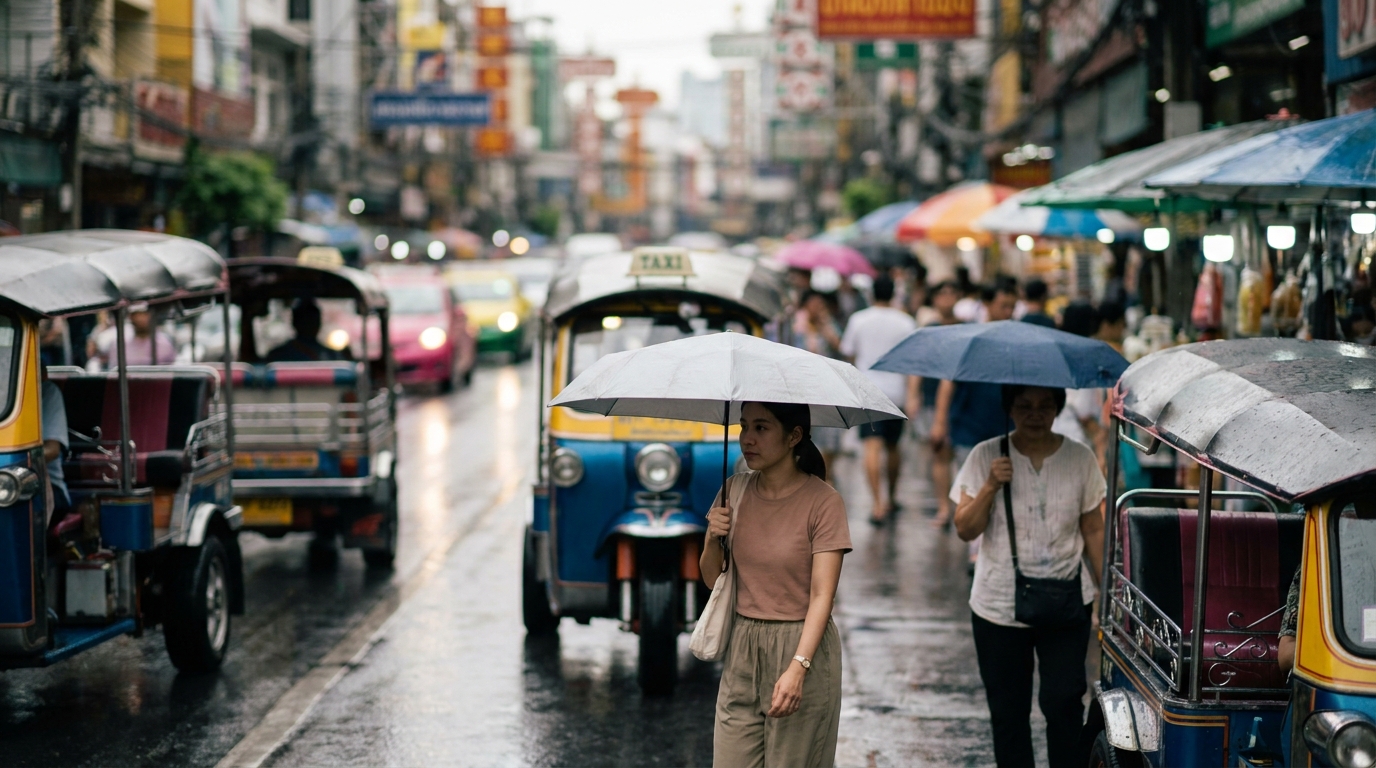
The honest answer: Bangkok is worth visiting year-round, but the experience varies dramatically by season. We’ve visited in every month of the year across our team’s trips, and we can tell you that timing your visit correctly can make a 30–40% difference in comfort level.
Bangkok has three distinct seasons:
| Season | Months | Avg Temp | Rainfall | Crowd Level | Notes |
|---|---|---|---|---|---|
| Cool & Dry | Nov–Feb | 25–32°C | Low | High | Best overall experience |
| Hot & Dry | Mar–May | 33–40°C | Minimal | Moderate | Very hot, cheaper hotels |
| Rainy | Jun–Oct | 28–35°C | Heavy | Low | Best prices, daily showers |
November to February is peak season for good reason — temperatures hover around 28°C during the day, evenings are pleasant, and the sky stays clear most days. December and January specifically see the highest hotel prices, sometimes 40–60% above low-season rates (Agoda Market Data, 2024).
We’ve found that late October and early November hit a sweet spot — the rains are tapering off, the greenery from wet season is still beautiful, prices haven’t spiked yet, and the holiday crowds haven’t arrived. If your dates are flexible, that’s our genuine recommendation.
The 4-Day Bangkok Itinerary
Hour-by-hour plan, where to stay and what it really costs — free PDF.
Free · No spam · Unsubscribe anytime
Find your Bangkok hotel on the map
Live prices from Booking & Airbnb — tap a pin to compare stays around Sukhumvit and the Old City and beyond.
Understanding Bangkok’s Neighborhoods Before You Book
Bangkok is enormous — 1,568 square kilometers — and where you stay shapes your entire trip. We see first-timers make the same mistake repeatedly: booking a cheap hotel in the wrong area and then spending hours in traffic every day. Don’t let that be you.
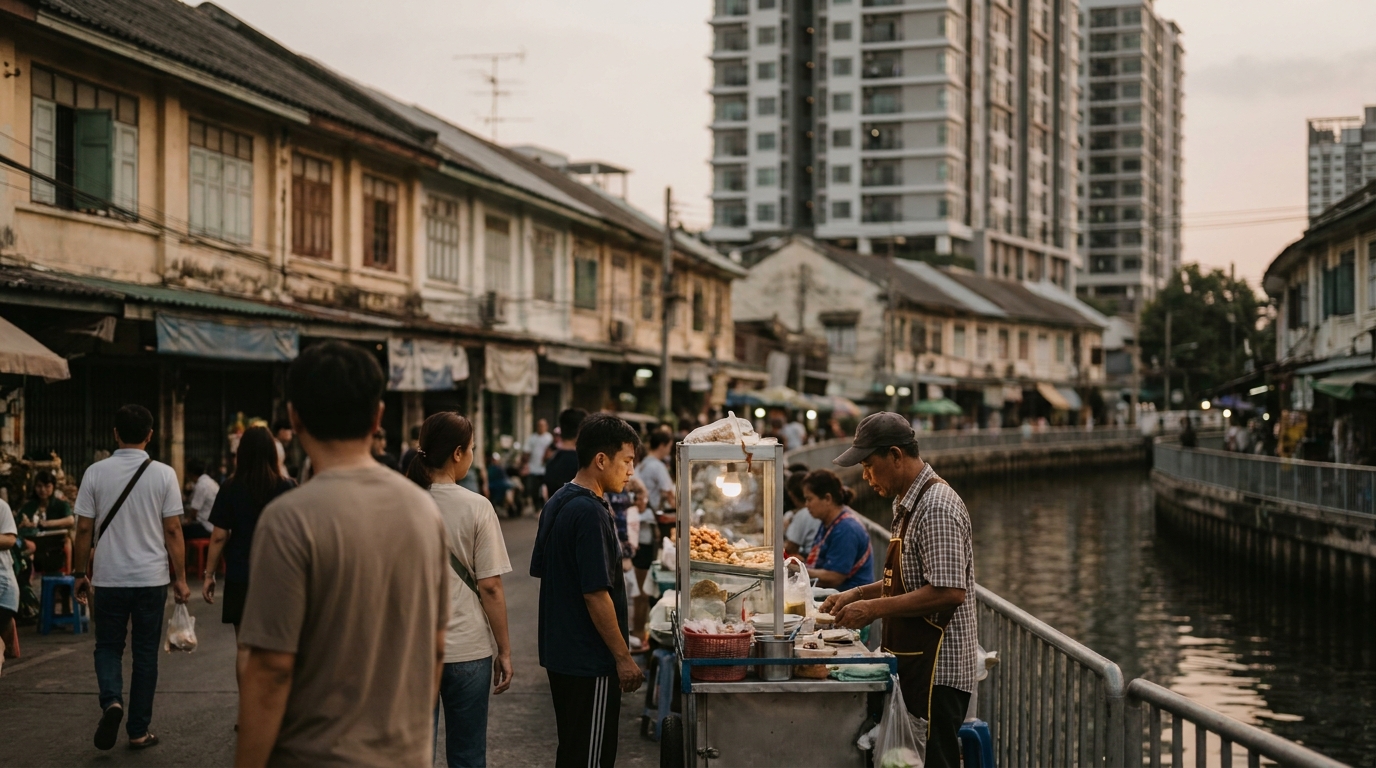
“Bangkok’s urban sprawl covers over 1,500 sq km with a population exceeding 10.5 million in the metropolitan area.”
— Bangkok Metropolitan Administration, 2023
Here’s a practical breakdown of the neighborhoods that matter most for tourists:
Sukhumvit
The international hub. Excellent BTS access, hundreds of restaurants, rooftop bars, and accommodation across every price point. Sukhumvit Soi 11 is a good base for first-timers. Gets expensive quickly — expect to pay 1,800–4,500 THB/night for a mid-range hotel.
Silom / Bangrak
Bangkok’s financial district doubles as one of its best dining and nightlife zones. Patpong Night Market is here, along with some of the city’s best fine dining. Lumpini Park is a 10-minute walk. Slightly quieter than Sukhumvit. Good BTS/MRT connectivity.
Old City (Rattanakosin)
This is where Wat Phra Kaew (Grand Palace), Wat Pho, and most of the major temples sit. Accommodation here is mostly budget guesthouses on Khao San Road — great if you’re backpacking, less ideal if you want mid-range comfort. Tuk-tuk central.
Riverside / Charoen Krung
The Chao Phraya riverside has undergone a transformation in recent years. The ICONSIAM mall and the regenerated Charoen Krung arts district have made this genuinely worth staying in — especially along the Silom extension area. Some of Bangkok’s most atmospheric luxury hotels are here (Mandarin Oriental, Capella Bangkok).
Ari / Chatuchak
Popular with long-stay expats and digital nomads for good reason: it’s quieter, more local-feeling, cheaper, and still well-connected via BTS. Chatuchak Weekend Market is right here. A great area if you’re staying 1–2 weeks.
For detailed neighborhood breakdowns and hotel picks, check our guide to choosing where to stay in Bangkok.
Getting Around Bangkok: Transport in 2026
Bangkok’s traffic is infamous, but the city’s rail network has quietly become one of Southeast Asia’s best. If you plan your accommodation near a BTS or MRT station, you can get almost everywhere in the tourist zone without ever sitting in a car. Here’s what actually works:
BTS Skytrain
The BTS now runs two main lines — Sukhumvit Line (light green) and Silom Line (dark green) — with the Gold Line serving Charoen Nakhon. Single-journey fares run 17–59 THB depending on distance. Buy a Rabbit Card (like an Oyster card) for convenience and small discounts.
MRT Subway
The MRT Blue Line connects Hua Lamphong to Bang Sue Grand Station and loops around much of central Bangkok. The Purple Line extends northwest. Fares: 17–42 THB. The MRT and BTS now connect at multiple interchange stations.
Grab App
Grab is Bangkok’s dominant ride-hailing platform and far more reliable than negotiating with metered taxis. A typical 5km ride costs 80–150 THB. Always confirm the fare before accepting. We use Grab for any journey that isn’t BTS/MRT-accessible.
Tuk-Tuks
Atmospheric? Yes. Practical? Not really. Tuk-tuks are typically more expensive than Grab for longer journeys and drivers often try to take you to commission shops. Keep rides short and agree on a price before getting in. For anything over 2km, Grab wins every time.
Airport Rail Link
The Suvarnabhumi Airport Rail Link connects the airport to Phaya Thai station in 26 minutes for 45 THB. This is your best option from BKK airport. Don Mueang (DMK) is connected by bus and BTS via Mo Chit station.
For a full breakdown of every transport option including ferry routes, read our Bangkok transport guide.
Bangkok Travel Costs: What to Actually Budget in 2026
Bangkok remains one of the best-value major cities in the world, but costs have risen noticeably since 2022. Street food prices are up roughly 15–20% from pre-pandemic levels, and mid-range hotels have seen similar increases (Numbeo Cost of Living Index, 2024). Here’s what real spending looks like:
| Budget Style | Daily Spend (USD) | Accommodation | Eating | Transport |
|---|---|---|---|---|
| Backpacker | $30–$50 | Hostel dorm ($10–15) | Street food + local spots | BTS/MRT + Grab |
| Mid-range | $70–$120 | 3-star hotel ($40–80) | Mix of local and restaurants | BTS/MRT + Grab |
| Comfortable | $150–$250 | 4-star hotel ($90–160) | Restaurants + rooftop bars | BTS/MRT + Grab + occasional taxi |
| Luxury | $300+ | 5-star / boutique ($180+) | Fine dining | Private transfer + Grab |
Here’s what specific things cost in Bangkok right now (2025–2026 estimates):
- Pad Thai from a street stall: 60–80 THB (~$1.60–$2.20)
- Bowl of boat noodles at Or Tor Kor Market: 80–120 THB
- Chang Beer at a convenience store: 55 THB
- Cocktail at a rooftop bar: 350–550 THB
- BTS single journey: 17–59 THB
- Grab ride (5km): 80–150 THB
- Day trip to Ayutthaya via Klook: from 850 THB — book here
One thing that catches first-timers off guard: tourist pricing at attractions. Most major temples charge foreigners a different rate from locals. Wat Phra Kaew (Grand Palace) costs 500 THB for foreigners, while Wat Pho is 200 THB. Budget at least 1,000–1,500 THB per person for temple entry fees across a 5-day trip.
What to Eat in Bangkok: A Practical Food Guide
Bangkok might be the single best city in the world for street food — and we say that having eaten our way through cities across four continents. The Thai capital has held a place on the World’s 50 Best restaurant lists consistently, and it has more Michelin-recognized restaurants than any other Southeast Asian city (Michelin Guide Thailand, 2024).
“The Michelin Guide Thailand 2024 recognized 319 restaurants, with 49 Michelin-starred establishments and 270 Bib Gourmand entries.”
— Michelin Guide Thailand, 2024
But let’s be honest: most of the best meals in Bangkok happen at plastic tables next to a cart on the pavement.
Best Street Food Areas
- Yaowarat (Chinatown): The gold standard for Bangkok street food. Go after 6pm when the stalls set up. Try the crab fried rice, oyster omelette (hoi tod), and roasted duck.
- Or Tor Kor Market (Chatuchak): Consistently cited as Bangkok’s best fresh market. Excellent for tropical fruit, prepared dishes, and local snacks. Open daily, mornings are best.
- Silom Soi 20: A quieter local lunch spot beloved by office workers. Proper Thai food, no tourist markup.
- Ratchawat Market: A neighborhood market almost no foreign tourists visit. Cheap, excellent, and genuinely local.
Dishes You Need to Try
Tom Yum Goong, Pad Kra Pao (basil pork/chicken with egg), Som Tum (green papaya salad), Khao Man Gai (poached chicken rice), Guay Tiew Reua (boat noodles), Mango Sticky Rice — don’t leave Bangkok without all six.
Food Tours
If you want someone to guide you through the chaos of Bangkok’s food scene, a guided food tour is genuinely worth the investment. We’ve had good experiences booking through Klook, where Bangkok food tours typically run 800–1,500 THB per person with a local guide.
For more detailed food recommendations including our favorite specific restaurants, see our Bangkok street food guide.
Bangkok Day Trips and Attractions Worth Your Time
Bangkok itself could occupy a week without running out of things to do, but the city also serves as an excellent base for day trips across Central Thailand. We’ve done all of these and can tell you which ones are genuinely worth it versus which are mostly for the photos.
Must-Do Bangkok Attractions
Wat Phra Kaew & The Grand Palace (Old City)
Still Bangkok’s defining landmark. Yes, it’s crowded. Yes, it’s worth it. Go before 9am to beat tour groups. Cover your shoulders and knees — you will be turned away otherwise. Entry: 500 THB.
Wat Pho
A 5-minute walk from the Grand Palace. The massive Reclining Buddha is genuinely impressive at 46 meters long. Also home to Thailand’s most prestigious traditional massage school — a one-hour Thai massage here costs 420 THB and is one of the best-value experiences in the city.
Chatuchak Weekend Market
Only Saturday and Sunday. 15,000 stalls across 35 acres, covering everything from vintage clothing and ceramics to live animals and street food. Go early (before 11am) before the heat becomes oppressive. Take BTS to Mo Chit or MRT to Chatuchak Park.
Floating Markets
Damnoen Saduak is the most famous but also the most commercialized. We prefer Amphawa Floating Market (weekends only, about 100km from Bangkok) for a more genuine experience.
Best Day Trips from Bangkok
| Destination | Distance | Travel Time | Best For | How to Book |
|---|---|---|---|---|
| Ayutthaya | 80km | 1.5hr by train | Ancient temples, history | Klook day tour or DIY train |
| Kanchanaburi | 130km | 2.5hr by train | WWII history, River Kwai | Minivan or train |
| Hua Hin | 200km | 3.5hr by bus | Beach, slightly cooler | Bus from Mo Chit |
| Koh Samet | 220km | 3.5hr total | Beach day trip | Bus + ferry |
| Pattaya | 150km | 2hr by bus | Beaches, nightlife | Eastern Bus Terminal |
For our full breakdown of the best things to do, read our Bangkok attractions and activities guide.
Staying Connected: SIM Cards and Internet in Bangkok
Bangkok has excellent mobile coverage and fast 4G/5G connectivity across the central areas. You won’t struggle for Wi-Fi — almost every café, hotel, and mall provides it — but having your own data connection makes navigation infinitely easier, especially when you’re trying to hail a Grab in a spot with patchy café Wi-Fi.
Physical SIM Cards at the Airport
You can buy a tourist SIM at Suvarnabhumi Airport from counters run by AIS, DTAC (now True Move H after the merger), and DTAC True. A 30-day tourist SIM with 30GB typically costs 299–599 THB. This is fine if you have an unlocked phone.
eSIM: The Smarter Option
We’ve shifted almost entirely to eSIMs for Bangkok trips. You can activate your data plan before you board your flight, which means you land with navigation and Grab already working — no queue at the airport SIM counter required.
Our preferred eSIM platform for Thailand is Airalo. Their Thailand eSIM packages start at around $5 USD for 1GB up to $18 for 20GB, with coverage on the AIS network which has the best rural reach if you’re taking day trips outside Bangkok.
Pro tip: Airalo also offers regional Southeast Asia plans if Bangkok is one stop on a longer trip through Vietnam, Cambodia, or Malaysia — a single eSIM covers multiple countries.
For more on Thailand connectivity options, see our Thailand SIM card and eSIM guide.
Bangkok Safety, Scams, and Practical Tips
Bangkok is one of the safest major cities in Southeast Asia for tourists — violent crime against visitors is rare. That said, petty scams are common and almost entirely target people who haven’t been warned about them.
“Bangkok ranked 57th globally in the 2024 Safe Cities Index, placing it as Southeast Asia’s third-safest major urban center.”
— The Economist Intelligence Unit, Safe Cities Index 2024
Here are the scams we see catch people the most often:
The Grand Palace Is Closed (Tuk-Tuk Scam)
A friendly stranger approaches and tells you the Grand Palace is closed today for a “special ceremony.” They offer to take you to a “lucky Buddha temple” instead. It isn’t closed. The tuk-tuk driver gets commission from every gem shop or tailor they bring you to. Walk away and verify hours at the actual gate.
Gem Scam
A variation on the above. You end up at a “government gem export shop” with incredible prices, encouraged to buy gems to resell at home. The gems are worthless. Do not buy gems from any shop you’ve been taken to by a stranger.
Taxi Meter Refusal
Bangkok taxi drivers are occasionally reluctant to use the meter, especially from tourist areas. You are legally entitled to meter-only fares. If a driver won’t use the meter, get out and take the next one — or just use Grab.
Practical Safety Tips
- Keep copies of your passport separately from the original
- Use hotel safes for valuables
- Don’t leave drinks unattended in bars — drink spiking, while rare, does occur in high-tourist areas
- Register with your country’s embassy if staying 2+ weeks
- Bangkok’s tourist police hotline is 1155 — they have English-speaking staff
For health and travel insurance guidance for Bangkok, see our Thailand travel insurance guide.
Frequently Asked Questions
How many days do you need in Bangkok?
We recommend 4–5 days minimum for a first visit. This gives you time for the key temples, a market day, a day trip to Ayutthaya, and enough evenings to explore the food scene properly. A week lets you breathe more. Two days is genuinely not enough to see Bangkok fairly.
Is Bangkok expensive in 2026?
Bangkok remains excellent value by global standards. A comfortable mid-range trip runs $70–$120 USD per day including accommodation, food, transport, and activities. Budget travelers can manage on $35–$50 USD. Luxury travel is available at a significant discount compared to equivalent experiences in Europe or the US.
Do I need a visa to visit Bangkok in 2026?
Citizens of 93 nationalities receive a free 30-day visa exemption on arrival as of 2025. This includes US, UK, EU, Australian, and Canadian passport holders. Check the Thai Ministry of Foreign Affairs website for the complete list and any updates before you travel.
What’s the best area to stay in Bangkok?
For first-timers, Sukhumvit (Soi 1–21) offers the best combination of transport access, accommodation choice, and restaurant variety. Travelers prioritizing temple visits should consider the Old City area. Couples seeking atmosphere often prefer Riverside/Charoen Krung. We break down every neighborhood in our Bangkok accommodation guide.
Is Bangkok safe for solo travelers?
Yes — Bangkok is generally very safe for solo travelers including solo women. The main risks are opportunistic scams rather than violent crime. Stick to well-lit areas at night, use Grab instead of unmarked taxis, and stay aware in crowded areas like Chatuchak Market where pickpocketing occasionally occurs.
What’s the best way to get from Bangkok airport to the city?
From Suvarnabhumi (BKK): the Airport Rail Link to Phaya Thai takes 26 minutes and costs 45 THB — easily the best option. Metered taxi with expressway tolls runs 300–500 THB and takes 30–60 minutes depending on traffic. From Don Mueang (DMK): bus A1 connects to BTS Mo Chit for 30 THB, or Grab runs around 200–350 THB to central Bangkok.
When should I book Bangkok hotels?
For peak season (December–January), book at least 6–8 weeks ahead — quality mid-range hotels sell out and prices spike. For shoulder season (March–May, October–November), 2–4 weeks ahead is usually sufficient. Budget hostels in Khao San Road are available with minimal lead time year-round.
Ready to Plan Your Bangkok Trip?
Bangkok is one of those cities that rewards preparation. Know which neighborhood to base yourself in, download Grab before you land, grab an eSIM so you’re connected from the moment you step off the plane, and give yourself enough time to let the city breathe.
Here’s a quick checklist before you go:
- Check your visa requirements at the Thai Ministry of Foreign Affairs website
- Book your accommodation in the right neighborhood for your travel style (see our neighborhood guide)
- Activate your eSIM before departure with Airalo — Thailand plans from $5
- Read up on transport so your first BTS ride doesn’t catch you off guard (Bangkok transport guide)
- Plan your food route — seriously, don’t wing this one (Bangkok street food guide)
Bangkok will surprise you, challenge you a little, feed you extraordinarily well, and almost certainly bring you back. We’ve never met a traveler who visited once and said they didn’t want to return.
Start planning — and we’ll be here with the details for every part of the trip.
According to the Tourism Authority of Thailand (2025), Bangkok continues to be one of the world’s most visited destinations, drawing millions of international travelers each year.
According to the Tourism Authority of Thailand (2025), Bangkok continues to be one of the world’s most visited destinations, drawing millions of international travelers each year.
According to the Tourism Authority of Thailand (2025), Bangkok continues to be one of the world’s most visited destinations, drawing millions of international travelers each year.
More Bangkok Guides
- Getting Around Bangkok 2026: Ultimate Transport Guide
- Best Food in Bangkok 2026: Street Food & Restaurants
- Where to Stay in Bangkok 2026: Best Areas & Hotels
- Hanoi vs Bangkok 2026: Which City Should You Visit First?
- Best Day Trips from Bangkok 2026: 8 Top Escapes
- Best Bangkok Tours & Activities to Book on Klook (2026)
- How to Get to Bangkok + Getting Around in Guide 2026
- Bangkok Budget Guide 2026: Costs & Saving Tips
- Most Photogenic Spots Bangkok: 20 Best Places
- Hidden Gems Bangkok: 18 Local Secrets Revealed
- Bangkok Packing List 2026: What to Bring & Wear
- Best Hotels in Bangkok 2026: Every Budget Covered
- Is Bangkok Safe to Visit? Honest 2026 Safety Guide
- Best Areas to Stay in Bangkok 2026: Neighborhood Guide
- 5-Day Bangkok Itinerary 2026: First-Timer’s Day-by-Day Plan