Best Food in Tokyo 2026: What & Where to Eat + Real Prices
By TravelguidestipUpdated 4 min readHow we earn
Hotel buttons open Stay22 (Booking.com, Agoda and others) and tour buttons open GetYourGuide. We may earn a commission at no extra cost to you.
In short
- Conveyor-belt sushi starts at ¥110 to ¥150 per plate at chains like Sushiro and Kura Sushi, and a filling meal runs ¥1,000 to ¥3,000 per person (Tokyo Tour / Real Japan Guide, 2026).
- A standard bowl of ramen costs ¥900 to ¥1,300 in Tokyo, rising to about ¥1,200 to ¥1,400 once you add an egg or extra chashu (MATCHA / Japan Ramen Guide, 2026).
- A casual tendon (tempura rice bowl) is about ¥1,000 to ¥1,500, while a Ginza specialty dinner course can pass ¥30,000 (JapanTripCost / SavorJapan, 2026).
- A typical izakaya night is ¥2,500 to ¥5,000 per person including drinks, plus a ¥300 to ¥500 otoshi cover charge you cannot skip (Mile Asia / Machu Picchu Travel, 2026).
- Depachika bento boxes run ¥600 to ¥2,500, and many get 20 to 50 percent half-price stickers in the last hours before the 20:00 close (Yen Finder / Tokyo Cheapo, 2026).
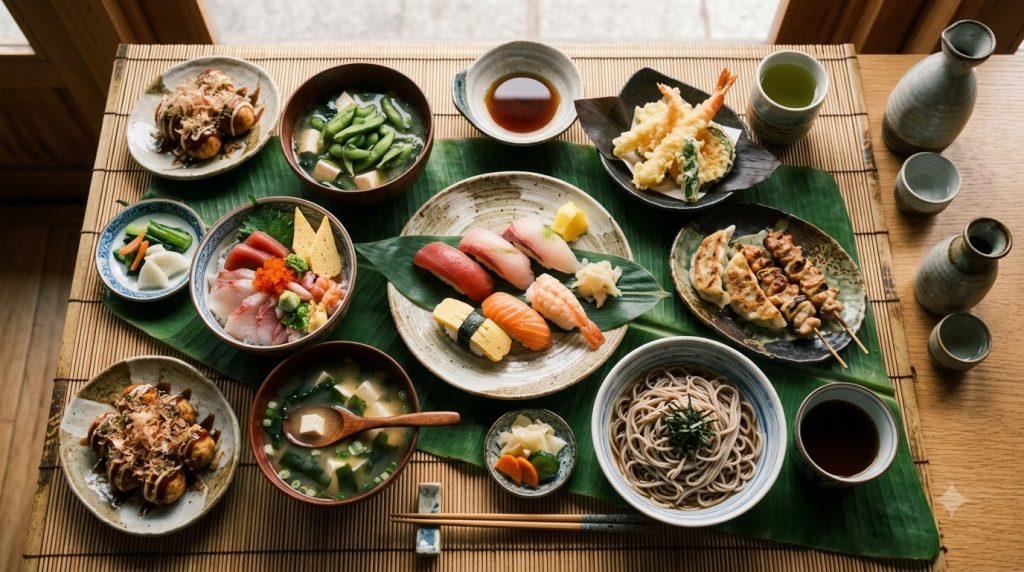
The best food in Tokyo is not one dish or one price. It runs from a ¥110 plate of tuna spinning past you on a conveyor belt to a ¥20,000 omakase counter where the chef hands you each piece by hand.
Japan drew a record 42.7 million foreign visitors in 2025, and roughly 20 million of them passed through Tokyo (Japan National Tourism Organization / Nippon.com, 2026). Most of them ate very well without spending much, because Tokyo rewards curiosity more than budget.
This guide covers the six things worth eating first: sushi, ramen, tempura, izakaya small plates, department-store food halls (depachika), and convenience-store (konbini) meals. For each one you get what it actually is, a real 2026 price range in yen, and the neighborhoods where locals go. Prices below are current 2026 figures from Japanese food and travel sources, not rounded guesses.
We ate our way across Tokyo for eight days in spring 2026, and the meal we still talk about was not the expensive one. It was a ¥980 shoyu ramen in a seven-seat shop off Yaesu, ordered from a ticket machine we could barely read, slurped elbow-to-elbow with salarymen on their lunch break. The ¥18,000 omakase two nights later was extraordinary, but the ramen is what made the city feel like ours.
How much does food cost in Tokyo in 2026?
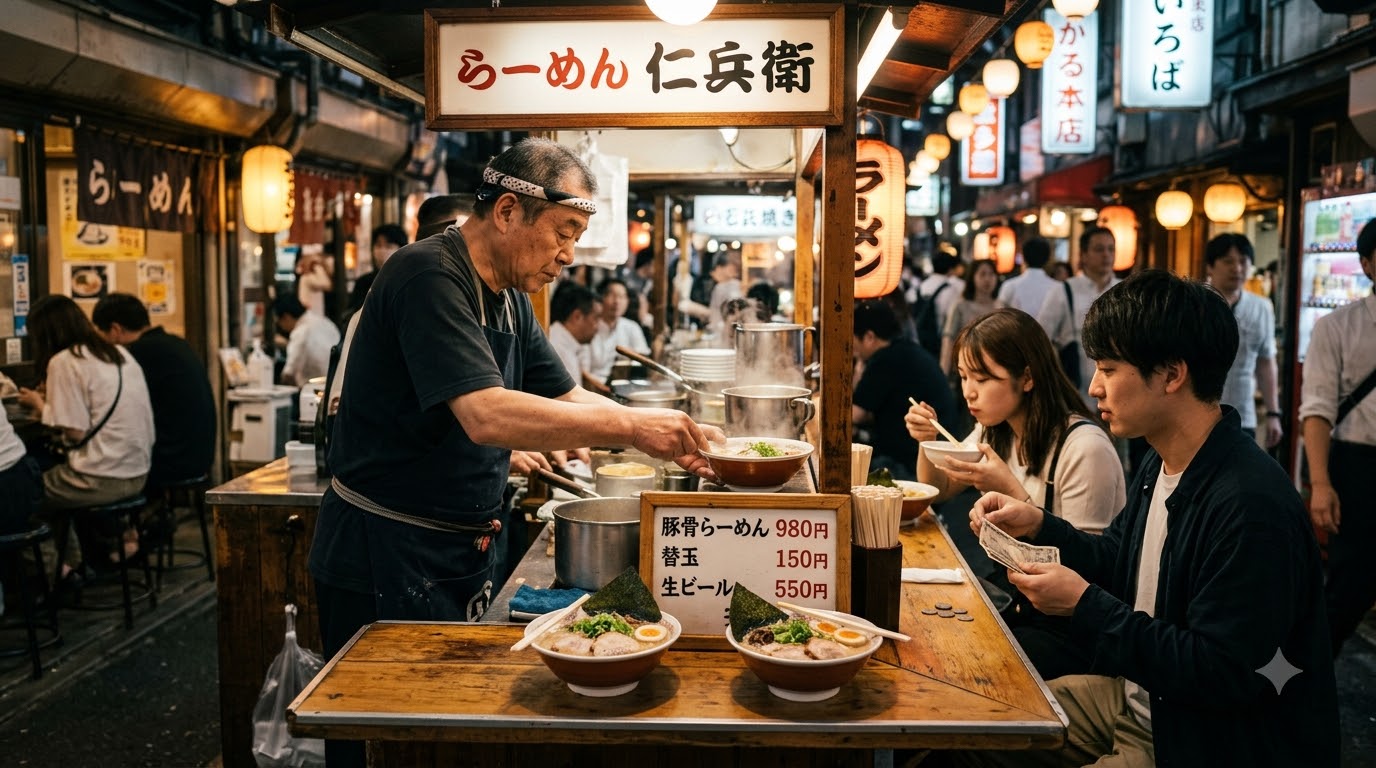
Eating in Tokyo is cheaper than most first-time visitors expect. A satisfying meal costs ¥500 to ¥800 at a convenience store, ¥900 to ¥1,500 at a ramen or tendon counter, and ¥3,000 to ¥5,000 at a mid-range izakaya with drinks (JapanTripCost, 2026). You only reach eye-watering numbers when you choose to, at an omakase counter or a Michelin-listed tempura specialist.
Prices did climb through 2025 and 2026. The national average ramen bowl hit an all-time high of ¥736 in 2026, and konbini onigiri nudged up too (What Makes Japan Smile / SoraNews24, 2026). Even so, the value stays high because portions are honest and quality is consistent across price tiers. Here is a quick map of what your money buys.
| Meal type | Typical 2026 price (per person) | What you get |
|---|---|---|
| Convenience store (konbini) | ¥500 to ¥800 | Onigiri, sandwich, hot side, drink |
| Conveyor-belt sushi | ¥1,000 to ¥3,000 | 8 to 15 plates, self-paced |
| Ramen shop | ¥900 to ¥1,400 | One bowl, often with a topping |
| Casual tendon / tempura set | ¥1,000 to ¥2,500 | Rice bowl or lunch set |
| Mid-range izakaya | ¥2,500 to ¥5,000 | 4 to 6 small plates plus drinks |
| Omakase sushi | ¥10,000 to ¥30,000+ | Chef’s tasting, counter seating |
Sources: JapanTripCost, Real Japan Guide, Mile Asia, 2026.
If you want the wider trip picture beyond meals, our Tokyo travel guide breaks down daily budgets, transport passes, and neighborhoods in one place.
Sushi: from ¥110 conveyor plates to the omakase counter
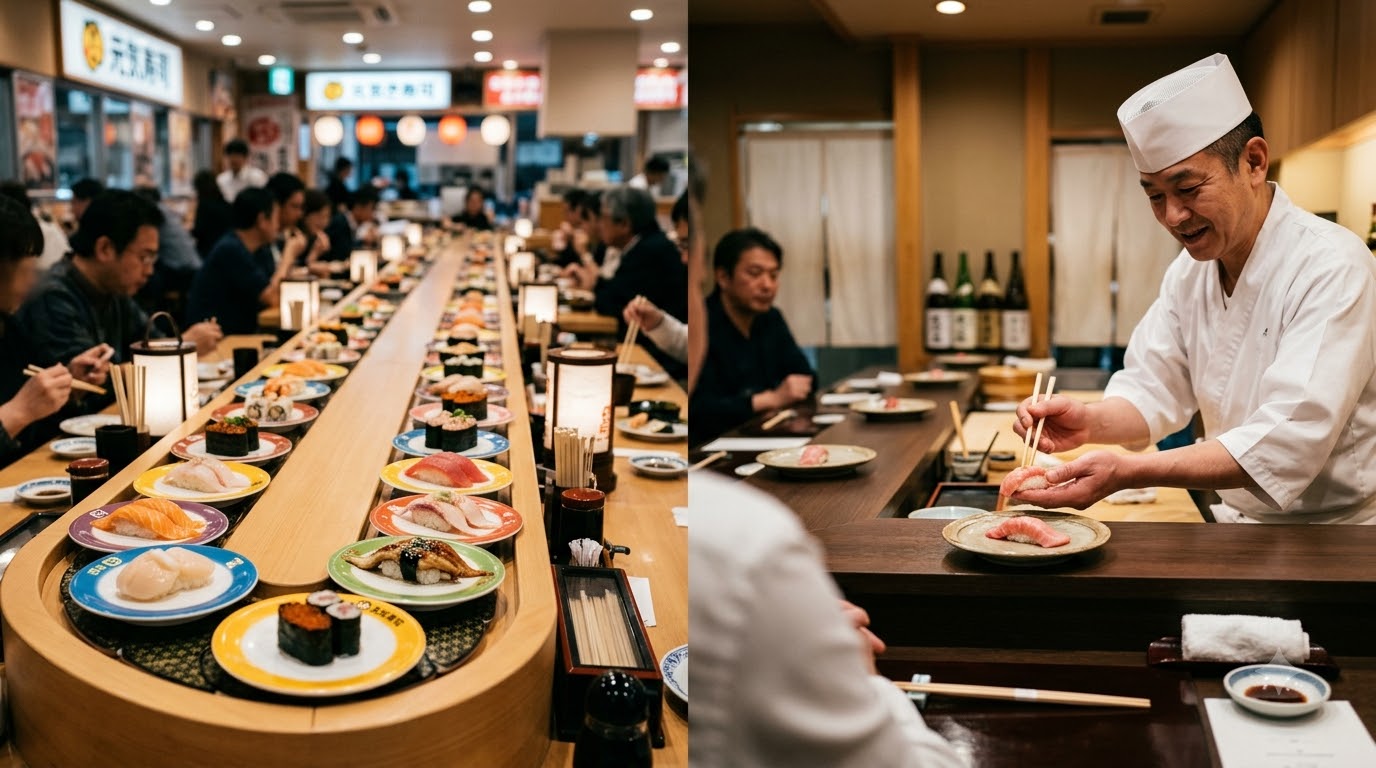
Sushi in Tokyo splits cleanly into two experiences, and both are worth having. Conveyor-belt sushi (kaiten-zushi) is the cheap, fun, self-serve end. Budget chains such as Sushiro, Kura Sushi, and Hama Sushi start at ¥110 to ¥150 per plate, and most people leave full for ¥1,000 to ¥3,000 (Tokyo Tour, 2026).
Note that 2026 pricing crept up at some chains, with tuna moving from ¥120 to ¥140 and salmon from ¥110 to ¥130 per plate.
The step up is a proper sushiya. Mid-tier counters like Nemuro Hanamaru or Midori Sushi charge ¥2,500 to ¥4,000 for a generous set, and the fish is a clear grade above the conveyor belt (Real Japan Guide, 2026). At the top sits omakase, where you eat whatever the chef decides in whatever order he thinks best.
Omakase starts around ¥10,000 and climbs past ¥20,000 at renowned Ginza and Roppongi counters, with the most famous rooms reaching well beyond that.
Sushi at every price tier:
- Conveyor-belt sushi (kaiten-zushi): ¥110 to ¥150 per plate at Sushiro, Kura Sushi, or Hama Sushi; ¥1,000 to ¥3,000 to leave full.
- Mid-tier sushiya (Nemuro Hanamaru, Midori Sushi): ¥2,500 to ¥4,000 for a generous set.
- Omakase: from about ¥10,000, climbing past ¥20,000 at renowned Ginza and Roppongi counters.
- Where to go: Toyosu Market for the freshest cuts, Ginza and Shimbashi back streets for accessible omakase.
Where to eat sushi in Tokyo
Toyosu Market, the successor to old Tsukiji, is the obvious morning pilgrimage for the freshest cuts near the source. For accessible omakase without a months-out reservation, the counters tucked around Ginza’s back streets and Shimbashi are your best bet. If you just want cheap, excellent conveyor sushi with the family, chain branches near Shibuya and Shinjuku stations rarely disappoint.
A sushi breakfast pairs naturally with a morning of sightseeing, and we mapped those routes in our guide to the best things to do in Tokyo.
Ramen: Tokyo’s best-value hot meal
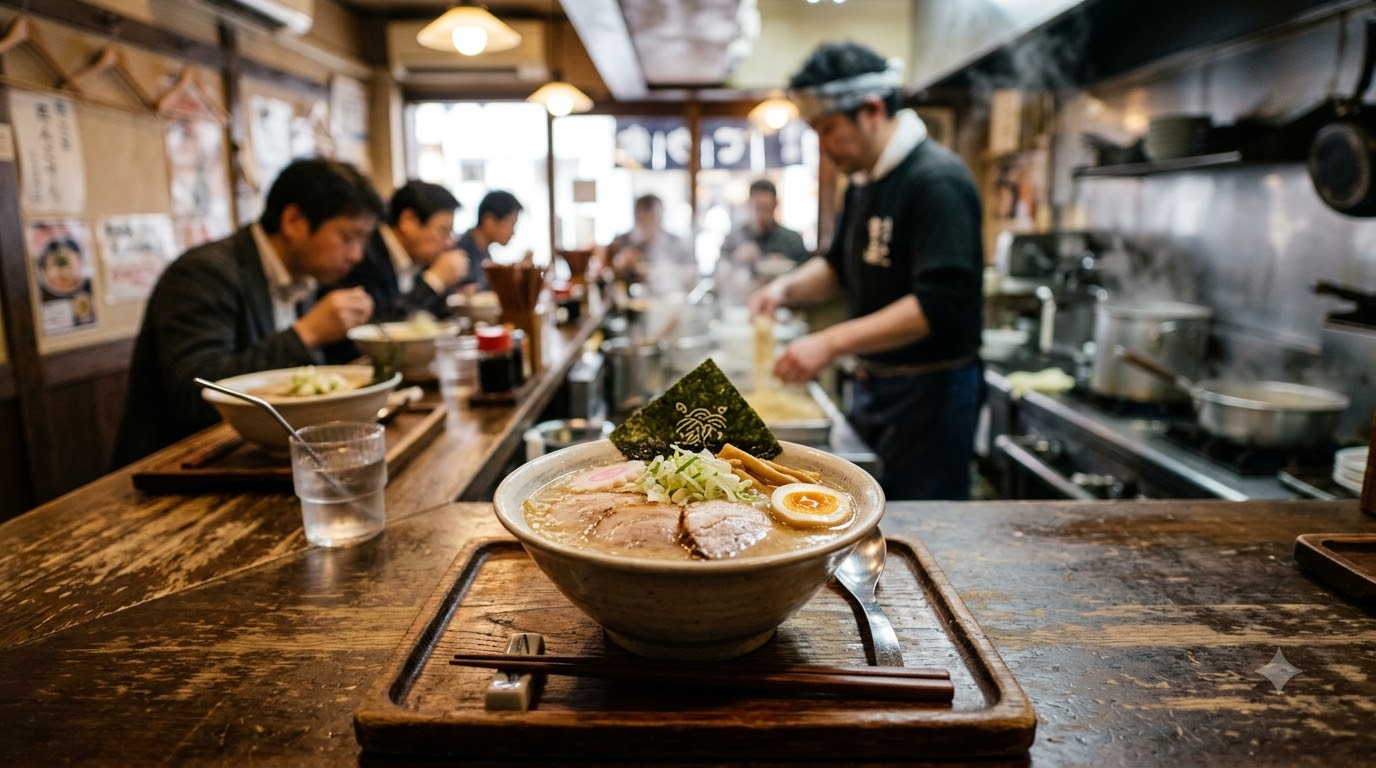
Ramen is the single best-value serious meal in the city. A standard bowl costs ¥900 to ¥1,300, and adding a marinated egg or extra chashu pork brings it to roughly ¥1,200 to ¥1,400 (MATCHA / Japan Ramen Guide, 2026). Budget chain bowls of plain chuka soba can dip as low as ¥390 to ¥590.
Tokyo actually ranks as one of Japan’s cheaper ramen cities despite its size, sitting near the bottom of an 81-city price survey (What Makes Japan Smile, 2026).
The ordering ritual is half the fun. Most independent shops use a vending machine at the door: feed it cash, press the button for your bowl and toppings, hand the ticket to the counter, and wait. Tokyo’s signature style is shoyu (soy-based) ramen, clear and restrained, though you will find every regional style transplanted here. Tonkotsu (pork-bone), miso, and the thick dipping-noodle style called tsukemen all have devoted specialist shops.
For neighborhoods, the alleys around Ikebukuro and the ramen-dense stretch near Ogikubo are local favorites, while the museum-like Shin-Yokohama Ramen Museum lets you sample regional styles under one roof. A hot bowl is also the perfect anchor for a cold-weather day, which is why it appears on so many stops in our 5-day Tokyo itinerary.
Ramen quick facts:
- A standard bowl of ramen costs ¥900 to ¥1,300, or ¥1,200 to ¥1,400 with an egg or extra chashu.
- Budget chain chuka soba can dip to ¥390 to ¥590 a bowl.
- Ordering: most independent shops use a door vending machine; feed it cash, press your bowl, hand the ticket to the counter.
- Tokyo’s signature style is shoyu (soy-based); tonkotsu, miso, and tsukemen all have specialist shops.
- Where to go: the alleys around Ikebukuro and the ramen stretch near Ogikubo are local favorites.
Tempura and tendon: crisp, fast, and underrated
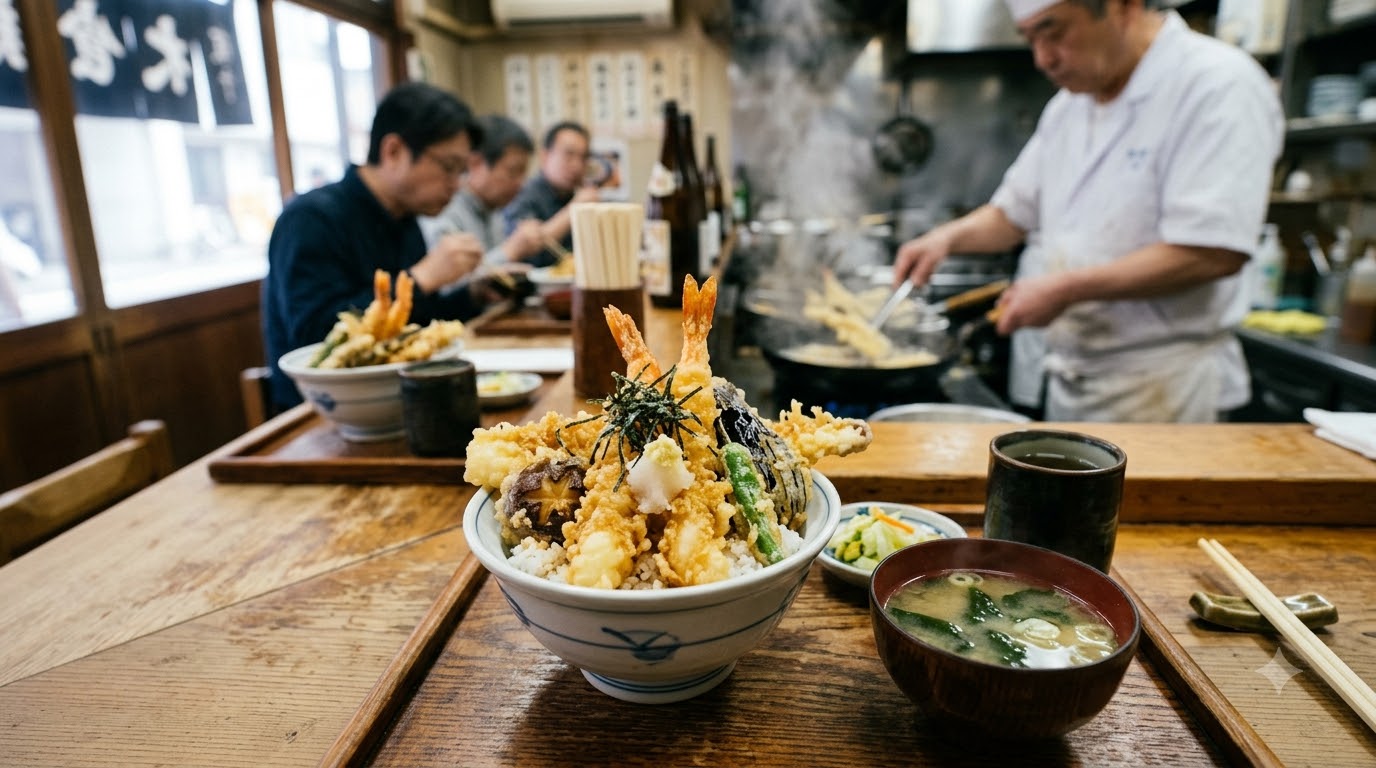
Tempura is more than a side dish in Tokyo, and it comes at every price point. The casual version is tendon, a bowl of rice topped with tempura shrimp and vegetables, and it costs about ¥1,000 to ¥1,500 at a shop like the Tenya chain (Tokyo Candies / JapanTripCost, 2026). A slightly nicer sit-down set lunch at a dedicated tempura restaurant averages ¥1,400 to ¥2,500 per person.
At the far end is specialist tempura as fine dining, where a chef fries each piece to order in front of you and hands it over at its peak. A dinner course at a famous Ginza tempura counter can exceed ¥30,000 per person (SavorJapan, 2026). That gap, from a ¥1,000 bowl to a ¥30,000 course, is the same dish taken to two completely different places, and both are legitimately good.
If you are choosing one, a lunchtime tendon is the smart move: you get the crunch and the flavor without the dinner markup. Look for tempura counters around Nihonbashi and Asakusa, where the style has deep roots.
Tempura and tendon prices:
- Tendon (tempura rice bowl): about ¥1,000 to ¥1,500 at a chain like Tenya.
- Sit-down tempura set lunch: ¥1,400 to ¥2,500 per person.
- Specialist tempura dinner course in Ginza: can exceed ¥30,000 per person.
- Smart pick: a lunchtime tendon gives you the crunch without the dinner markup; look around Nihonbashi and Asakusa.
Izakaya: how to eat and drink like a local
An izakaya is Japan’s answer to the pub, and it is where you should spend at least one Tokyo evening. You order a run of small plates, yakitori skewers, karaage fried chicken, sashimi, grilled fish, alongside beer, sake, or highballs, and share everything. A typical night runs ¥2,500 to ¥5,000 per person including three or four drinks (Mile Asia / Machu Picchu Travel, 2026).
Prices sort neatly by type. Chain izakaya such as Torikizoku, Watami, and Shirokiya land at ¥1,500 to ¥2,500 per person with drinks. Mid-range neighborhood spots run ¥2,500 to ¥4,000, and upscale or specialty izakaya reach ¥5,000 to ¥8,000.
One thing to expect on every bill: the otoshi, a small compulsory appetizer that functions as a table charge, usually ¥300 to ¥500 per person. It is not a scam, just how the system works.
| Izakaya type | Price per person (with drinks) | Example brands |
|---|---|---|
| Chain izakaya | ¥1,500 to ¥2,500 | Torikizoku, Watami, Shirokiya |
| Neighborhood mid-range | ¥2,500 to ¥4,000 | Independent local shops |
| Upscale / specialty | ¥5,000 to ¥8,000 | Craft sake or seafood-focused |
Source: Mile Asia, 2026. Add ¥300 to ¥500 otoshi cover per person.
For atmosphere, the lantern-lit lanes of Shinjuku’s Omoide Yokocho and the Golden Gai bar warren are the classic picks, while the arches under the tracks at Yurakucho hide dozens of smoky, cheerful spots. Where you sleep changes how easy the late night is, so it is worth reading our guide on where to stay in Tokyo before you book.
Depachika: the department-store food halls locals love
The best cheap dinner in Tokyo is often in a department-store basement. Depachika are the food floors beneath big stores like Isetan Shinjuku, Mitsukoshi, Takashimaya, and Daimaru at Tokyo Station, packed with counters selling bento, tempura, wagashi sweets, imported cheese, and prepared dishes.
Bento boxes run ¥600 to ¥2,500, with premium wagyu or makunouchi boxes at ¥3,000 to ¥5,000 (Yen Finder / Tokyo Cheapo, 2026). At Daimaru’s Tokyo Station branch, commuter lunch bento sit in the ¥600 to ¥1,200 range.
The insider move is timing. In the last one to two hours before the 20:00 closing time, staff slap half-price stickers on unsold fresh items, and a ¥1,500 bento can drop to ¥750. Show up around 19:00, circle the prepared-food counters, and you can assemble a restaurant-quality dinner for the price of a fast-food combo.
It is also a rare chance to try many small things at once, from a single piece of high-end tempura to a slice of fruit tart that cost as much as a whole meal. We now plan at least one depachika dinner per Tokyo trip, timing our arrival for around 19:00 when the half-price stickers start to appear.
Depachika, at a glance:
- Depachika bento boxes: ¥600 to ¥2,500, with premium wagyu or makunouchi boxes at ¥3,000 to ¥5,000.
- Daimaru at Tokyo Station: commuter lunch bento in the ¥600 to ¥1,200 range.
- Timing trick: in the last one to two hours before the 20:00 close, staff add 20 to 50 percent stickers, so a ¥1,500 bento can drop to ¥750.
- Found beneath Isetan Shinjuku, Mitsukoshi, Takashimaya, and Daimaru.
Depachika are ideal on a travel evening when you want to eat well in your hotel room without another restaurant reservation.
Convenience-store gems: konbini food is genuinely good
Do not skip the convenience store, because konbini food in Japan is a real cuisine, not an emergency fallback. Across a week we ate a konbini breakfast most mornings and never once felt shortchanged. At 7-Eleven, Lawson, and FamilyMart, a filling meal costs ¥500 to ¥800 (Kanko-Map / Yen Finder, 2026).
Onigiri rice balls run ¥130 to ¥180 for salmon or tuna-mayo, with premium fillings like mentaiko or ikura reaching ¥200 to ¥350. Lawson Store 100 even cut five popular onigiri to a flat ¥100 in April 2026.
The items worth trying first are specific. The 7-Eleven egg sandwich (tamago sando) at ¥250 to ¥320 is the benchmark, so pillowy that it went viral years ago and still delivers.
Add hot fried chicken from the counter (FamiChiki at FamilyMart, Karaage-kun at Lawson), a cup of drip coffee for around ¥120, and a chilled dessert, and you have a legitimately good ¥600 lunch. Konbini are open around the clock, accept cash and cards, and sit on nearly every corner, which makes them the quiet backbone of eating cheaply in Tokyo.
Konbini picks worth trying:
- A filling konbini meal at 7-Eleven, Lawson, or FamilyMart: ¥500 to ¥800.
- Onigiri rice balls: ¥130 to ¥180 for salmon or tuna-mayo, ¥200 to ¥350 for mentaiko or ikura.
- The 7-Eleven tamago (egg) sandwich at ¥250 to ¥320 is the benchmark.
- Add counter fried chicken (FamiChiki at FamilyMart, Karaage-kun at Lawson) and a ¥120 drip coffee for a solid ¥600 lunch.
Find your Tokyo hotel on the map
Live prices from Booking & Airbnb — tap a pin to compare stays around Shinjuku and Shibuya and beyond.
Where to eat by area: a quick Tokyo food map
Match the neighborhood to the craving and you eat better. Below is a fast reference for the districts most visitors pass through, and each pairs naturally with a day of sightseeing from our Tokyo travel guide.
| Area | Best known for | Price feel |
|---|---|---|
| Toyosu / Tsukiji Outer Market | Sushi, seafood breakfast | Mid to high |
| Shinjuku (Omoide Yokocho, Golden Gai) | Izakaya, yakitori, late-night | Low to mid |
| Shibuya | Conveyor sushi, ramen, casual chains | Low to mid |
| Ginza | Omakase sushi, fine tempura | High |
| Asakusa / Nihonbashi | Tempura, traditional sweets | Low to mid |
| Tokyo Station / Yaesu | Depachika bento, ramen street | Low to mid |
Prices are directional; every area has budget and splurge options.
Ginza is the splurge district, Shibuya and Shinjuku are where you eat cheaply and late, and the market districts are for early risers. If you only have limited days, the 5-day Tokyo itinerary sequences these areas so you are never doubling back.
Frequently Asked Questions
What is the best food to eat in Tokyo for a first-time visitor?
Start with sushi, ramen, and one izakaya night, in that order. Conveyor-belt sushi at ¥110 to ¥150 a plate is a low-risk, high-fun introduction, a ¥900 to ¥1,300 bowl of shoyu ramen shows you Tokyo’s everyday comfort food, and an izakaya evening at ¥2,500 to ¥5,000 per person teaches you how locals actually eat and drink. Add a depachika dinner and a konbini breakfast and you have covered the range.
How much should I budget per day for food in Tokyo in 2026?
Plan on ¥3,000 to ¥6,000 per person per day for good eating without holding back. That buys a ¥600 konbini or depachika breakfast, a ¥1,200 ramen or tendon lunch, and a ¥3,000 to ¥4,000 izakaya or sushi dinner (JapanTripCost, 2026). You can eat well on ¥2,000 a day using convenience stores and chains, or spend ¥15,000-plus on a single omakase night if you want a splurge.
Is it cheaper to eat at convenience stores or restaurants in Tokyo?
Convenience stores are cheaper, but the gap is smaller than you would guess. A filling konbini meal is ¥500 to ¥800, while a ramen or tendon counter runs ¥900 to ¥1,500 for a hot, made-to-order dish (Kanko-Map, 2026). The smart approach is to mix them: konbini or depachika for breakfast and quick lunches, sit-down shops for at least one proper meal a day.
Do I need reservations to eat well in Tokyo?
For most meals, no. Ramen shops, conveyor sushi, tendon counters, konbini, and depachika are all walk-in, and lining up briefly is normal. Reservations matter mainly for omakase sushi counters, famous tempura specialists, and popular izakaya on weekend nights, some of which book out weeks ahead. Aim to reserve those a few days to a few weeks in advance depending on prestige.
Is tipping expected at Tokyo restaurants?
No. Tipping is not part of Japanese dining culture and can even cause confusion, so the price you see is the price you pay. The one thing to expect instead is the izakaya otoshi, a ¥300 to ¥500 compulsory appetizer that acts as a seating charge, and occasionally a table charge at bars. Neither is a tip; both appear on the bill automatically.
Final thoughts
Tokyo is one of the few cities where the ¥110 plate and the ¥20,000 counter both deserve your attention, and where a convenience-store lunch can be genuinely great.
Eat across the price range rather than fixing on one tier, time your depachika run for the evening discounts, and do not be shy about the ticket machines and pointing at the menu. The best food in Tokyo is not hidden behind money or fluent Japanese. It is on the next corner, waiting for you to walk in.