Disclosure: Some links in this guide are affiliate links. If you book or buy through them, we may earn a small commission at no extra cost to you — it helps keep our guides free.
18+ Best Things to Do in Tulum in 2026 (Ruins, Cenotes, Beach Clubs, Sian Ka’an and a Coba Day Trip)
The best things to do in Tulum in 2026 are the cliffside Mayan ruins, the region’s freshwater cenotes, the Sian Ka’an Biosphere Reserve, and a day trip to Coba, where the Nohoch Mul pyramid reopened for climbing on December 8, 2025 after a six-year closure (INAH).
Most travelers spend three to five days here and still leave with a list of cenotes they never reached. This guide covers 18+ specific things to do, with 2026 entry fees, opening hours, and the practical details that decide whether a day runs smoothly or ends in a two-hour parking queue.
Tulum sits on the Caribbean coast of Quintana Roo, about a 90-minute drive south of Cancun and now served directly by Tulum’s own international airport, which opened in December 2023. The dry season runs December to April, with an annual average temperature around 26°C (INAH/CONANP climate data), and that window also brings the clearest water and the least sargassum seaweed.
Below we rank the attractions by what actually fills a well-planned trip, starting with the two things almost nobody skips.
Key Takeaways
- Tulum ruins entrance dropped to about 265 MXN (~$14 USD) per foreign visitor as of July 2026, split across INAH, CONANP, and Parque del Jaguar; the ruins and museum open 9am to 3:30pm.
- Coba’s 42-meter Nohoch Mul pyramid reopened for climbing on December 8, 2025, the only major Maya pyramid in the Yucatan you can still climb, via a new wooden staircase over the original 120 stone steps.
- Gran Cenote costs 500 MXN (~$25 USD), cash only, and includes a life jacket and snorkel gear; arriving before 9am is the single best crowd-avoidance move.
- The Sian Ka’an lagoon float at Muyil is a fixed 1,000 MXN (~$50 USD) boat fee run by the local Maya community, with full guided tours from Tulum running $150 and up.
- November through March is the best time to visit, with dry weather, minimal seaweed, and temperatures of 21-30°C; sargassum peaks June-July.
We spent five days in Tulum on our last visit in March 2026, splitting time between the beach zone and Tulum Pueblo. We reached Gran Cenote at 8:50am to an almost-empty pool, then watched the parking lot fill by 10:30am, and that timing difference shaped every day that followed.
What are the best things to do in Tulum?
The best things to do in Tulum combine ancient Maya sites, natural swimming holes, and a protected biosphere within a 60-minute radius of town. Here is the full shortlist we recommend, ranked by how consistently travelers rate them worth the time and money.
- Tour the Tulum Mayan ruins inside Jaguar National Park, the only Maya city built on a Caribbean cliff.
- Snorkel Gran Cenote, a connected cavern-and-pool system with turtles and shallow caves.
- Swim Cenote Dos Ojos, one of the world’s most famous cave-diving cenotes, 22 km north of town.
- Cliff-jump at Cenote Calavera, nicknamed the “Temple of Doom” for its three-hole ceiling.
- Climb the Nohoch Mul pyramid at Coba, reopened for climbing in December 2025.
- Float the freshwater canals of the Sian Ka’an Biosphere Reserve from Muyil.
- Spend a day at a beach club on the Tulum hotel strip.
- Snorkel with sea turtles at Akumal Bay, 25 minutes north.
- Swim at Casa Cenote, an open jungle lagoon connected to the sea.
- Rent a bike and ride the flat coastal road between town and the beach.
- Take a day trip to Chichen Itza, a UNESCO World Heritage wonder about 2.5 hours away.
- Explore the Muyil ruins and jungle boardwalk before the lagoon float.
- Relax on Playa Paraiso, one of the free public beaches near the ruins.
- Eat tacos al pastor and cochinita pibil in Tulum Pueblo, the town center.
- Photograph the “Ven a la Luz” wooden sculpture at the Ahau hotel.
- Snorkel or dive the Mesoamerican Reef, the second-largest barrier reef on Earth.
- Cool off at Cenote Zacil-Ha or Cenote Carwash on the road to Coba.
- Take a sunrise or sunset SUP paddle on the lagoon at Casa Cenote.
- Ferry from Playa del Carmen to Cozumel for a reef-diving day trip.
We could not fit all 19 into five days, and you will not fit them into three. Pick two ruins sites, three cenotes, one biosphere day, and leave the rest as reasons to return.
Explore the Tulum Mayan ruins above the Caribbean
The Tulum ruins are the top thing to do in Tulum, and the only walled Maya city set on a cliff over the sea. The site is now managed as part of Parque del Jaguar (Jaguar National Park), and the ticketing changed twice in the past year. As of July 2026, foreign visitors pay roughly 265 MXN (about $14 USD) total, collected by three separate entities at the gate.
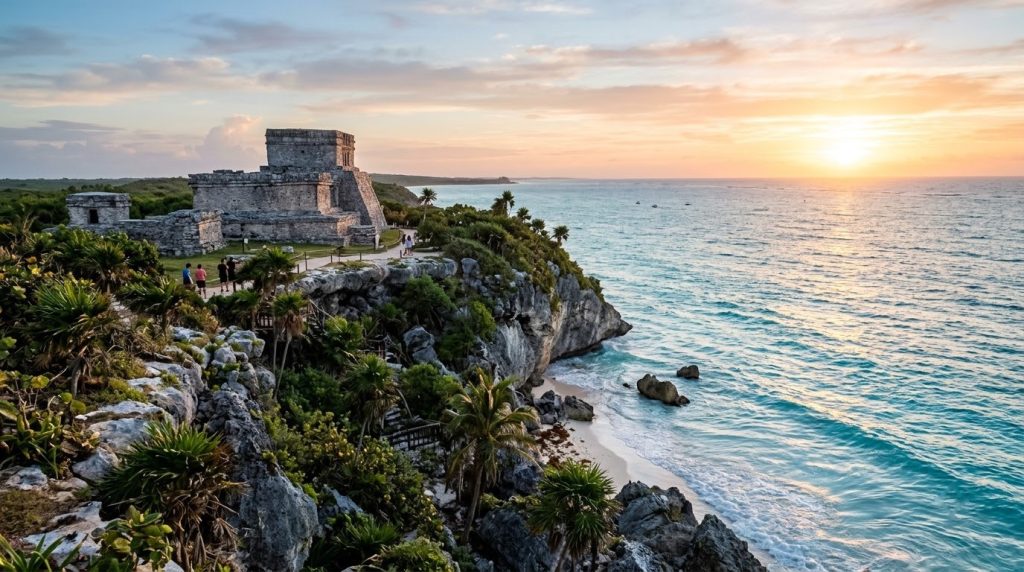
- Tulum ruins entrance: about 265 MXN (~$14 USD) per foreign adult as of July 2026, split among INAH, CONANP, and Parque del Jaguar; children under 12 enter free.
- Opening hours: the ruins and museum run 9am to 3:30pm, while the park’s beach access and trails open 8am to 5pm, with last admission at 3:30pm.
- Best arrival time: the gate at 8am, so you reach El Castillo before the tour buses from Cancun land around 10am.
- What to bring: pesos in cash, water, reef-safe sunscreen, and shoes you can walk the limestone paths in.
- The small beach below the temples is a genuine swimming spot when the sargassum is low, so pack a swimsuit.
On our last visit we walked the full loop in about 90 minutes, then climbed down to the cove beach that sits directly beneath the main temple. For a deeper history brief on the site and the surrounding coast, our complete Tulum travel guide covers logistics, transport, and neighborhood breakdowns in one place.
Swim the cenotes: Gran Cenote, Dos Ojos and Calavera
Cenotes, the collapsed limestone sinkholes filled with filtered groundwater, are the second reason people come to Tulum, and the area has hundreds within a 30-minute drive. Water sits around 24-25°C year-round, and the three below are the ones we send everyone to first.
| Cenote | Foreign entry (2026) | Approx. USD | Best for | Distance from Tulum |
|---|---|---|---|---|
| Gran Cenote | 500 MXN | ~$25 | Snorkeling, turtles, first-timers | 4 km (10 min) |
| Cenote Dos Ojos | 350 MXN basic / 700 MXN tour | ~$19 / ~$38 | Cave snorkeling and diving | 22 km (25 min) |
| Cenote Calavera | 250 MXN | ~$12 | Cliff jumping, photography | 3 km (8 min) |
| Casa Cenote | ~250 MXN | ~$13 | Open lagoon, paddleboarding | 10 km (15 min) |
Practical notes we learned the expensive way:
- Gran Cenote is cash only; entry includes a life jacket and snorkel, and lockers cost an extra 30 MXN.
- Cenote Dos Ojos basic admission is 350 MXN, but the 700 MXN tour package adds a guide, gear, parking, and the Bat Cave cavern.
- Cenote Calavera charges an extra 200 MXN if you bring a professional camera, so leave the DSLR unless you plan to shoot.
- Rinse off all sunscreen before entering any cenote; most sites strictly enforce this to protect the water.
We reached Gran Cenote just before 9am and had the shallow cavern almost to ourselves for 40 minutes. If you want a full cenote-by-cenote breakdown with maps and swim conditions, our dedicated guide to the best cenotes near Tulum compares more than a dozen sites by depth, crowds, and price.
Find your Tulum hotel on the map
Live prices from Booking & Airbnb — tap a pin to compare stays around the Beach Zone and beyond.
Climb the Coba ruins and the reopened Nohoch Mul pyramid
Coba is the best half-day trip from Tulum in 2026 because you can climb again. INAH reopened the 42-meter Nohoch Mul pyramid, the tallest Maya temple in the Yucatan, on December 8, 2025 after six years closed, installing a wooden staircase over the original 120 stone steps. It is now the only major Maya pyramid in the region you are allowed to climb.
- Coba entrance: about 210 MXN INAH fee plus a 120 MXN ejido community fee (~330 MXN / ~$18 USD total) for foreign visitors.
- Opening hours: daily 8am to 5pm, with last admission at 4pm; the climb runs 8am to 3:30pm.
- Climbing rules: groups of 15 at a time, with a 15-minute limit at the summit.
- Getting around the site: Coba is spread out through jungle, so rent a bicycle or hire a bici-taxi at the entrance.
- Drive time: about 45 minutes northwest of Tulum on a good paved road.
We climbed Nohoch Mul the week it reopened and the view over the unbroken jungle canopy is the single best panorama in the area. Go early; by noon the staircase queue can add 30 to 45 minutes.
Float through the Sian Ka’an Biosphere Reserve
The Sian Ka’an float is the most memorable slow experience in Tulum, and a UNESCO World Heritage Site covering more than 650,000 hectares of wetland, mangrove, and reef. From the Muyil archaeological site, a boardwalk leads to a lagoon where you drift the same freshwater canals the Maya once used as trade routes, carried by a gentle current.
- Muyil lagoon boat float: a fixed 1,000 MXN (~$50 USD) per person, set and run by the local Maya community, with no group discounts.
- Full guided tours from Tulum: typically $150 and up, running 5 to 6 hours with hotel pickup, gear, guide, and often lunch included.
- DIY option: bus to Muyil, pay the ruins fee plus the boat float, and the day totals roughly 1,193 MXN (~$70 USD) per person.
- What to pack: a dry bag, reef-safe sunscreen only, water shoes, and a hat, since shade is limited on the water.
- Best season: December to April, when the water is clearest and mosquitoes are fewer.
The current does the work; you simply lie back in a life jacket and float. We spent a full morning here and rated it the calmest half-day of the trip.
Spend a day at a Tulum beach club (or a free beach)
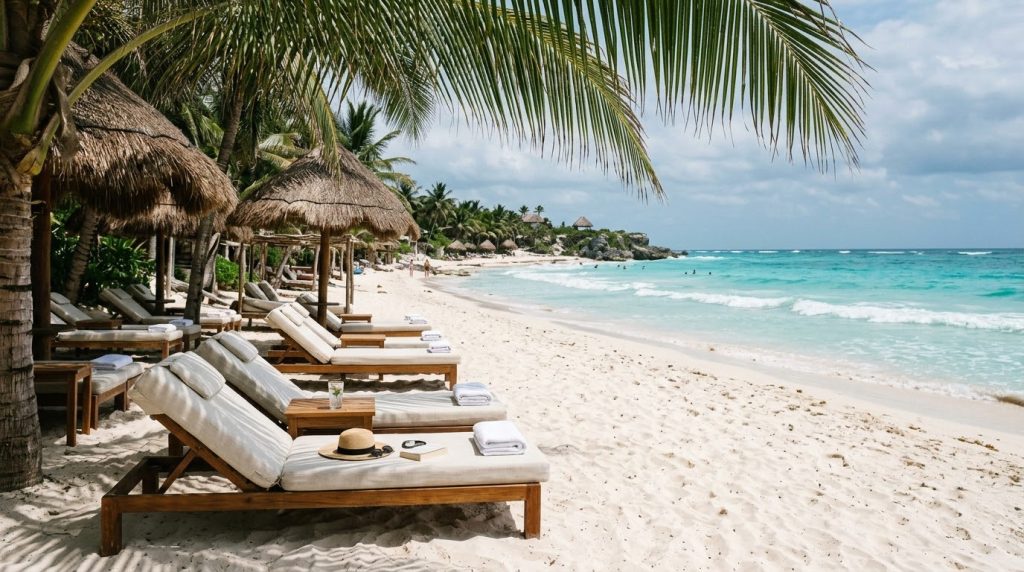
Tulum’s hotel-zone beach clubs are the classic way to access the powder-sand strip, and in 2026 the pricing splits sharply between paid day beds and newly guaranteed free access. Expect to pay for the setup, not just the sand.
| Access type | Typical 2026 cost | What you get |
|---|---|---|
| Beach club day bed | $40-200 per person | Lounger, service, pool; minimum spend applies |
| Average minimum spend | ~$100 (2,000 MXN) | Redeemable on food and drinks |
| Amansala beach pass | ~$55 | Beach access with $50-100 minimum spend |
| No-minimum clubs (Ikal, Lula) | Day pass from $50 | Simple access, fewer frills |
| Public/free beaches | Free | No cover, no minimum spend |
Useful things to know before you pick a spot:
- In 2025 the Tulum municipality partnered with 15 hotels and clubs to guarantee free public beach access with no cover or minimum consumption.
- Playa Paraiso and the beach below the ruins are free public options with genuinely good sand.
- Minimum spends rise on weekends and during December-to-April high season, so a weekday visit stretches the budget.
- Bring cash and a card; some clubs add a service charge on top of the minimum.
For where to base yourself relative to these beaches, our Tulum accommodation guide breaks down the beach zone, Tulum Pueblo, and the Aldea Zama neighborhood by price and vibe.
A day trip to Chichen Itza and other side trips
Chichen Itza is the biggest day trip from Tulum, a New Seven Wonders site and one of Mexico’s most-visited ruins. It sits about 2.5 hours west by car, which makes an early start essential.
- Chichen Itza entrance: about 697 MXN (~$40 USD) for foreign visitors, split into a roughly 105 MXN federal INAH fee and a 592 MXN Yucatan state CULTUR fee.
- Opening hours: daily 8am to 5pm; arrive at opening to beat both the heat and the crowds.
- Combine it with a swim at the nearby Cenote Ik Kil, a photogenic open cenote often paired with Chichen Itza tours.
- Closer alternatives: Akumal Bay (25 minutes) for turtle snorkeling, or the Cozumel ferry from Playa del Carmen for reef diving.
Because Chichen Itza eats a full day of driving, we suggest it only on trips of four days or longer. On shorter stays, Coba delivers a comparable ruins experience 90 minutes closer to Tulum.
How many days do you need, and when should you go?
Plan on three to five days in Tulum: three covers the ruins, two cenotes, and a beach day, while five adds Coba, Sian Ka’an, and a Chichen Itza run. Timing matters more here than in most Caribbean destinations because of sargassum seaweed, which peaks in summer.
| Season | Months | Weather | Seaweed | Crowds |
|---|---|---|---|---|
| Peak dry | Dec-Mar | 21-30°C, dry | Minimal | High |
| Best value | Nov | Warm, dry | Minimal | Moderate |
| Shoulder | Apr, early May | Hot, building humidity | Rising | Moderate |
| Low/wet | Jun-Sep | 31-33°C, humid | Peaks Jun-Jul | Low |
- November is the best overall month: dry-season weather, minimal seaweed, and pre-holiday prices.
- January through March offers the most reliable clear water but the highest crowds and rates.
- June through September carries the highest sargassum, humidity, and storm risk, so skip it if the beach is your priority.
- The annual average temperature is around 26°C, so pack for heat in every month.
For a full month-by-month breakdown including hurricane odds and hotel pricing swings, see our guide on the best time to visit Tulum.
Frequently Asked Questions
How much does it cost to enter the Tulum ruins in 2026?
As of July 2026, foreign visitors pay about 265 MXN (roughly $14 USD) total to enter the Tulum ruins inside Jaguar National Park. That fee is split at the gate among three entities: INAH, CONANP, and Parque del Jaguar. Children under 12 enter free, and payment is easiest in cash pesos.
Can you climb the pyramids in Tulum or Coba?
You cannot climb the temples at the Tulum ruins, but you can climb the Nohoch Mul pyramid at Coba, about 45 minutes away. INAH reopened it for climbing on December 8, 2025 after a six-year closure, using a new wooden staircase over the original 120 stone steps. Climbing runs 8am to 3:30pm in groups of 15.
Which cenote near Tulum is best for first-timers?
Gran Cenote is the best cenote for first-timers, at 500 MXN (about $25 USD) with a life jacket and snorkel included. It has shallow, clear pools, resident turtles, and easy cavern access. Arrive before 9am, bring cash since it is cash-only, and rinse off all sunscreen before entering.
Is Tulum worth visiting in summer?
Tulum is worth visiting year-round, but summer (June to September) brings the year’s worst sargassum seaweed, peaking in June and July, along with 31-33°C heat and high humidity. If your trip centers on cenotes and ruins rather than the beach, summer still works and prices drop. For clean beaches, visit November through March.
How many days do you need in Tulum?
Most travelers need three to five days in Tulum. Three days covers the ruins, two cenotes, and a beach day. Five days adds a Coba climb, a Sian Ka’an lagoon float, and a Chichen Itza day trip. Fewer than three days forces you to choose between the ruins and the cenotes.
Final thoughts
Tulum rewards planning more than most beach destinations. The single biggest lever is timing: reaching the ruins, Gran Cenote, or Coba’s pyramid within the first hour after opening turns a crowded slog into a quiet morning.
Pair the two ruins sites with three cenotes and one slow day floating through Sian Ka’an, watch the sargassum calendar if the beach matters to you, and carry enough pesos in cash to cover the gate fees that cards so often can’t. Do that, and even a short trip here feels unhurried.