Disclosure: Some links in this guide are affiliate links. If you book or buy through them, we may earn a small commission at no extra cost to you — it helps keep our guides free.
Best Tulum Cenotes 2026: Prices & How to Get There
The best Tulum cenotes in 2026 are Gran Cenote for easy snorkeling, Dos Ojos for cave diving, Cenote Calavera for cliff jumping, Casa Cenote for open-air mangrove swims, and Cenote Zacil-Ha for a relaxed family pool.
Entry fees run from about 150 to 500 Mexican pesos (roughly $8 to $25 USD), every cenote is cash only, and most sit within a 30-minute drive of Tulum town.
Gran Cenote and Dos Ojos are both part of the Sac Actun system, which National Geographic measured at around 347 kilometers when the two cave networks were confirmed as connected in 2018, making it the longest flooded cave system on record (National Geographic, 2018).
This guide covers exactly what you pay at the gate in 2026, the hours, the depth and type of each cenote, and how to reach them by colectivo, taxi, or bike.
We visited all five over two trips and timed the routes ourselves, so the prices and directions below reflect what you actually hand over at the entrance, not an old brochure figure. For the wider trip, pair this with our Tulum travel guide and the round-up of things to do in Tulum.
Key Takeaways
- Gran Cenote costs 500 MXN (about $25 USD) in 2026, includes a life jacket and snorkel gear, and sits 5 km from town on Highway 109.
- Dos Ojos runs 350-400 MXN for basic entry or around 800 MXN for a guided snorkel tour with Bat Cave access, and it is the top pick for cave divers.
- Cenote Calavera charges 250-300 MXN and is the closest to town, roughly 2-3 km along the road to Coba, famous for its cliff jump.
- Casa Cenote is the cheapest at 150-250 MXN, an open lagoon 20 minutes north where brackish water meets the mangroves.
- Every Tulum cenote is cash only with no on-site ATMs, so carry pesos and expect a 30-50 MXN locker or gear surcharge at most gates.
We spent three mornings hopping between these cenotes and learned fast that arriving before 10am changes the whole experience. On our last visit in February we had Gran Cenote almost to ourselves for the first hour, then watched two tour buses empty out by 10:30. We also got caught short once with only card in hand at Zacil-Ha and had to ride a colectivo back into town for cash, so we never travel to a cenote without pesos now.
How much do Tulum cenotes cost in 2026?
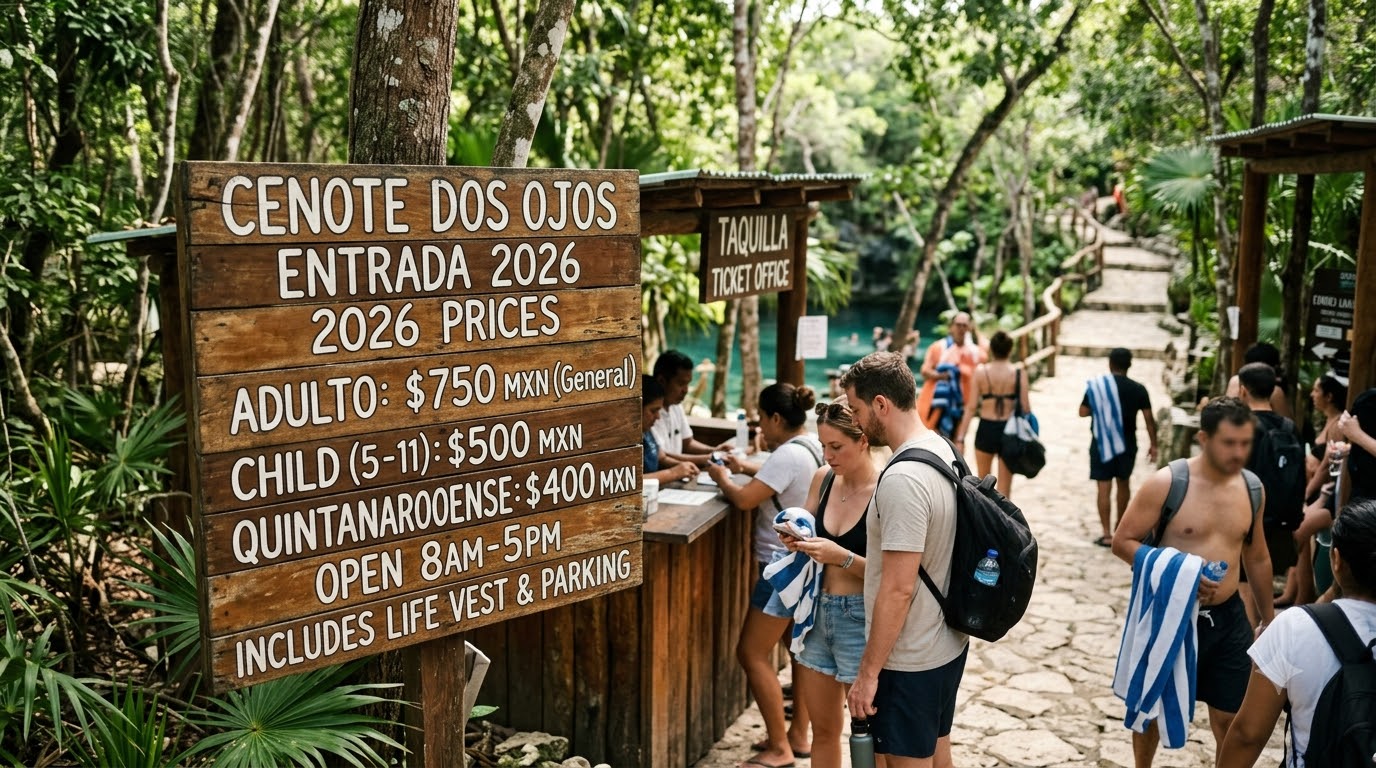
Tulum cenote entry fees in 2026 range from 150 to 500 MXN per adult, and prices have crept up steadily over the past few years. The most famous cenotes charge the most: Gran Cenote and Dos Ojos sit at the top of the scale because they include gear and draw the biggest crowds.
Smaller or less-developed cenotes like Casa Cenote stay cheaper. Children usually pay roughly half the adult rate, and life jackets are mandatory at most sites, sometimes included and sometimes an extra 50 MXN.
Here is how the five compare at a glance. Every figure below is the 2026 gate price we confirmed against current listings; carry a little extra for lockers, gear, or a guide.
| Cenote | 2026 entry fee (adult) | Approx. USD | Type | Best for | Hours |
|---|---|---|---|---|---|
| Gran Cenote | 500 MXN | $25 | Cave + open pool | Snorkeling, turtles | 8:00am-4:45pm |
| Dos Ojos | 350-400 MXN (800 guided) | $18-24 | Cavern system | Diving, cave snorkel | 8:00am-5:00pm |
| Cenote Calavera | 250-300 MXN | $12-15 | Deep sinkhole | Cliff jumping, diving | 9:00am-5:00pm |
| Casa Cenote | 150-250 MXN | $8-12 | Open lagoon | Mangrove snorkel, kayak | 9:00am-5:00pm |
| Cenote Zacil-Ha | 200-300 MXN | $10-15 | Open pool | Swimming, zipline | 10:00am-6:00pm |
A quick budgeting note: if you visit two cenotes in one day plus a colectivo each way, expect to spend roughly 700-1,000 MXN per person all in. That still makes cenotes one of the best-value activities in the Riviera Maya.
Gran Cenote: best for easy snorkeling and turtles
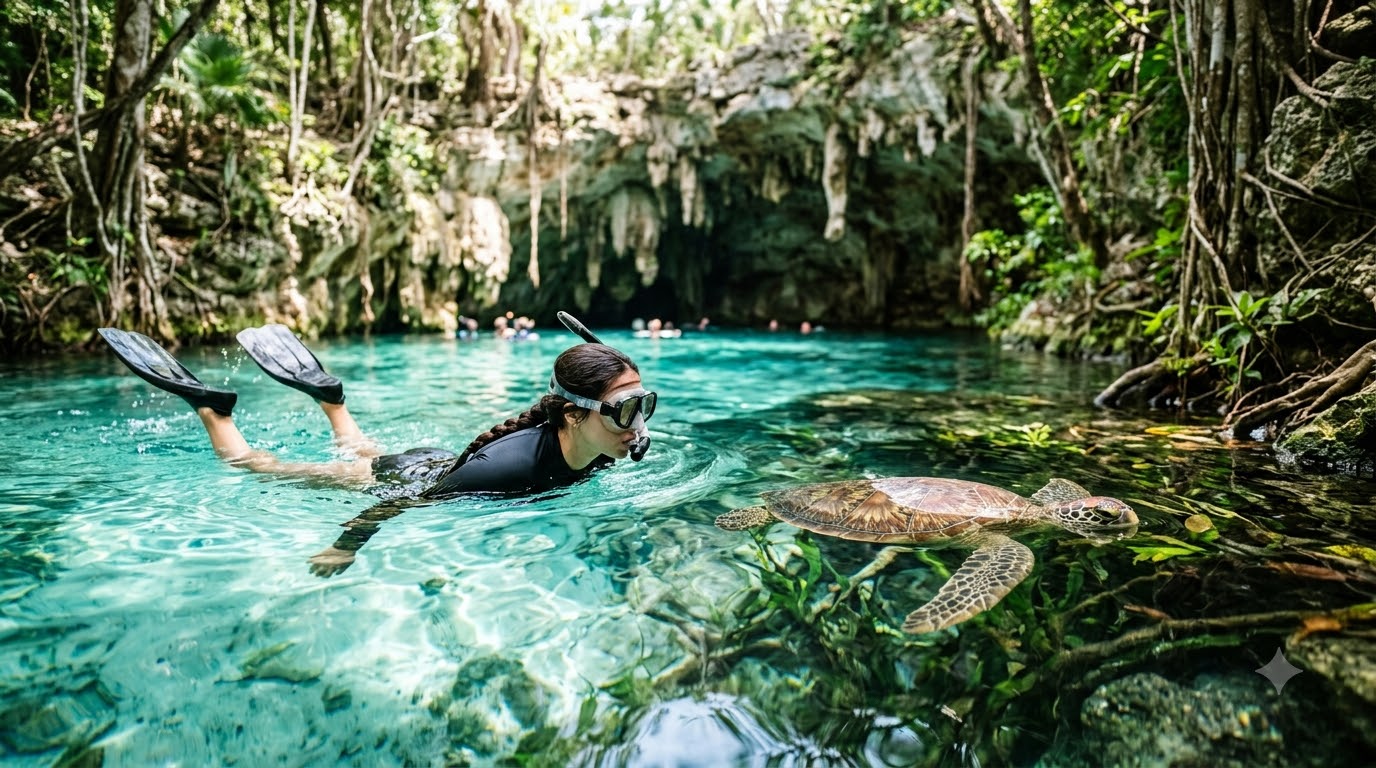
Gran Cenote is the best Tulum cenote for first-timers because it combines a shallow open pool with easy cavern passages, and the 500 MXN fee already covers a life jacket and snorkel gear. It sits about 5 km northwest of Tulum on Highway 109, the road toward Coba, so it is a quick colectivo or 15-minute bike ride from town.
Freshwater turtles glide across the shallows here, and small bats roost in the darker cave sections, which makes it a favorite for families and snorkelers who want caverns without needing a dive certification.
- Gran Cenote: 500 MXN entry, includes life jacket and snorkel gear, 5 km from Tulum on Highway 109, open 8:00am-4:45pm, cash only.
- Type: Connected pools and swim-through caverns, part of the Sac Actun cave system.
- Best for: Beginner snorkelers, turtle sightings, families with kids over five.
- Extra costs: Locker rental around 30 MXN; there are showers and a required rinse before you enter to protect the water.
We rate this the strongest all-rounder. Arrive at opening and you can snorkel the main cavern before the platforms fill up. If you want more low-effort water time nearby, we cover the calm beach clubs in our things to do in Tulum roundup.
Find your Tulum hotel on the map
Live prices from Booking & Airbnb — tap a pin to compare stays around the Beach Zone and beyond.
Dos Ojos: best for cave snorkeling and diving
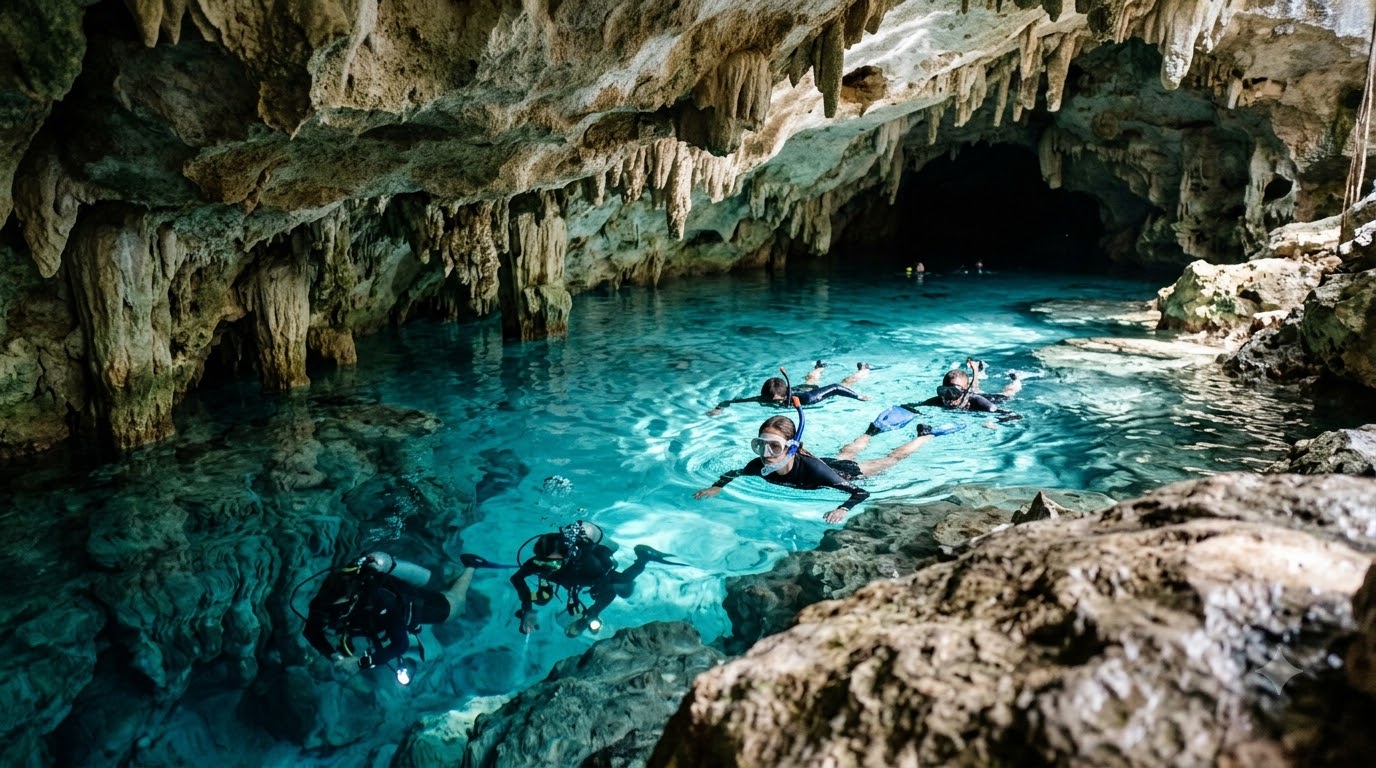
Dos Ojos is the best Tulum cenote for diving and serious cave snorkeling, built around two large sinkholes, the “two eyes,” linked by a flooded passage. Basic entry runs 350-400 MXN, while a guided snorkel tour that opens up the Bat Cave costs around 800 MXN and is worth it if you want the full cavern experience with a guide.
It lies about 24 km north of Tulum, roughly 30 minutes off Highway 307 toward Playa del Carmen. Certified divers come here for the famous cavern lines through crystal-clear freshwater, and snorkelers float above the same formations near the surface.
- Dos Ojos: 350-400 MXN basic entry, around 800 MXN for the guided snorkel tour with Bat Cave, snorkel gear rental about 100 MXN.
- Location: 24 km north of Tulum off Highway 307; last entry is 3:00pm even though the gate stays open to 5:00pm.
- Best for: Cavern divers, confident snorkelers, underwater photographers.
- Type: Two connected cenotes with a maze of shallow cavern lines and stalactite formations.
The water here stays a steady 24-25 degrees Celsius year-round, so a rash guard is enough for snorkeling. We found the light beams strongest between 11am and 1pm when the sun sits high over the openings.
Cenote Calavera: best for cliff jumping (Temple of Doom)
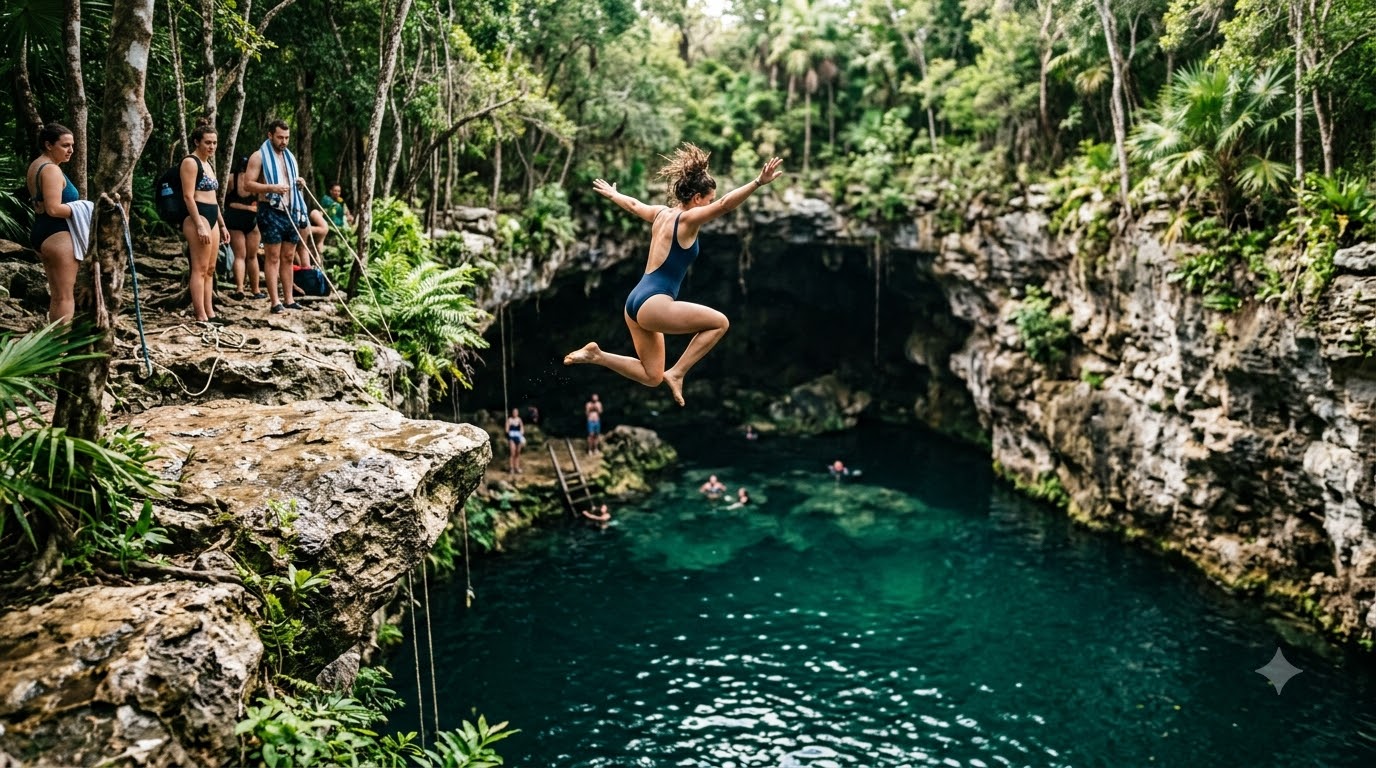
Cenote Calavera, nicknamed the Temple of Doom, is the best Tulum cenote for a thrill because you enter by jumping through a hole in the ground into a deep sinkhole. It charges 250-300 MXN, sometimes with a 50 MXN life vest add-on, and it is the closest cenote to town, only 2-3 km along Highway 109 toward Coba.
The name comes from the three openings in the limestone that form a skull shape. Below the surface it drops well past snorkel depth, so it doubles as a popular cavern dive site.
- Cenote Calavera: 250-300 MXN entry, life vest around 50 MXN extra, 2-3 km from Tulum on Highway 109, open 9:00am-5:00pm, cash only.
- Signature feature: A roughly 3-meter drop from the main hole into deep water; a wooden ladder gets you back out.
- Best for: Cliff jumpers, cavern divers, travelers short on time who want a cenote near town.
- Note: No shallow shelf to stand on, so weak swimmers should wear the life vest.
This is the one we send people to when they only have an afternoon. You can bike out from Tulum Pueblo in under 10 minutes. For where to base yourself for quick cenote runs like this, see our where to stay in Tulum breakdown.
Casa Cenote: best open-air mangrove snorkel
Casa Cenote, also called Cenote Manati, is the best open-air cenote near Tulum for a relaxed snorkel because it is a long, shallow lagoon winding through mangroves rather than an enclosed cave. Entry is the cheapest of the five at 150-250 MXN, and it sits about 8-10 km north of town near Tankah, just off Highway 307.
The water is brackish here, where fresh cenote water meets the sea, so you can sometimes spot a shimmering halocline and small fish. Kayak rentals run about 100 MXN if you would rather paddle than swim.
- Casa Cenote: 150-250 MXN entry, kayak rental around 100 MXN, 8-10 km north of Tulum off Highway 307, open 9:00am-5:00pm.
- Type: Open mangrove lagoon connected to the Caribbean, shallow and sunlit throughout.
- Best for: Easy snorkeling, kayaking, travelers who prefer open sky over enclosed caves.
- Wildlife: Small fish, occasional a resident crocodile named Panchito that guides monitor closely, so follow staff instructions.
We like Casa Cenote for a slower afternoon. Because it is open water and shallow, it is the least intimidating of the five, and the mangrove edges feel more like a nature reserve than a swimming hole.
Cenote Zacil-Ha: best for families and swimming
Cenote Zacil-Ha is the best Tulum cenote for families and simple swimming because it is a clear, open pool that looks and feels like a natural swimming bath, with a small zipline over the water for 10 MXN per ride. Entry is 200-300 MXN and usually includes a life jacket.
It sits 8.5 km from Tulum on the Coba road, a 15-minute drive, right next to the well-known Cenote Carwash, so you can pair the two. The shallow, easy-access design makes it the friendliest option for young kids and non-swimmers.
- Cenote Zacil-Ha: 200-300 MXN entry, zipline 10 MXN per ride, 8.5 km from Tulum on the Coba highway, open 10:00am-6:00pm.
- Type: Open, walled swimming pool cenote with steps and a shallow end.
- Best for: Families, non-swimmers, travelers who want a calm swim over cavern exploring.
- Bonus: Pair it with neighboring Cenote Carwash on the same trip for a two-in-one day.
On our visit the zipline was the highlight for every kid there, and the pool stays warm enough to linger. It is the most low-key stop on this list and a good closer after a busier cenote in the morning.
How do you get to Tulum’s cenotes?
The easiest way to reach Tulum’s cenotes is by colectivo, the shared vans that run constantly along Highways 307 and 109 for 20-45 MXN per person. Tell the driver which cenote you want and they drop you at the turnoff. Taxis are faster but unmetered and pricey, so always agree on the fare before you get in.
Bikes work well for the cenotes closest to town, like Calavera and Gran Cenote, with rentals around $8-10 USD per day.
- Colectivo: 20-45 MXN each way; catch northbound vans on Highway 307 for Dos Ojos and Casa Cenote, and Coba-bound vans for Calavera, Gran Cenote, and Zacil-Ha.
- Taxi: No meters in Tulum, so confirm the price first; expect 150-400 MXN one way depending on distance.
- Bike: Best for Calavera (2-3 km) and Gran Cenote (5 km); rentals cost about $8-10 USD per day.
- Rental car: Handy if you want to chain three or four cenotes in one day; parking at each is free or a few pesos.
Timing matters as much as transport. Cenotes open early and the tour groups arrive around 10:30am, so we always aim for the first hour. For choosing the right season overall, our best time to visit Tulum guide breaks down the crowd and weather patterns month by month.
Tips for visiting Tulum cenotes
The single most important rule for visiting any Tulum cenote is to rinse off all sunscreen and bug spray before you enter, because the chemicals damage the fragile cave ecosystem and staff will turn you away if you skip the shower. Beyond that, a few habits make the day smoother and cheaper.
- Bring cash in pesos. Every cenote on this list is cash only with no on-site ATM.
- Skip chemical sunscreen. Use only reef-safe, biodegradable products, or cover up with a rash guard and hat instead.
- Arrive at opening. The 8-10am window means clearer water, better light, and no tour buses.
- Pack your own snorkel gear. Rentals cost 100 MXN or more per cenote and add up fast across a trip.
- Carry a dry bag and a small towel. Facilities vary; the smaller cenotes have basic changing areas only.
We also keep a printed list of gate prices on our phone, because staff sometimes quote different figures for gear or guides. Knowing the base fee ahead of time makes it easy to see what is a genuine add-on and what is not.
Frequently Asked Questions
Which is the best cenote in Tulum for first-timers?
Gran Cenote is the best Tulum cenote for first-timers. The 500 MXN fee includes a life jacket and snorkel gear, the water stays shallow and calm in the main pool, and easy cavern passages let you see stalactites and turtles without any diving experience. It is also close to town at 5 km on Highway 109.
How much does it cost to visit cenotes in Tulum in 2026?
In 2026, Tulum cenote entry fees range from about 150 MXN (roughly $8 USD) at Casa Cenote to 500 MXN (about $25 USD) at Gran Cenote. Most cenotes charge 250-400 MXN per adult, children pay roughly half, and every site is cash only with occasional extra charges for lockers, gear, or guides.
Can you visit Tulum cenotes without a car?
Yes. Colectivos run constantly along Highways 307 and 109 for 20-45 MXN each way and stop at the cenote turnoffs. For cenotes close to town like Calavera and Gran Cenote, a rental bike at $8-10 USD per day works well. Taxis are available but unmetered, so agree on the price before you ride.
Which Tulum cenote is best for diving?
Dos Ojos is the best Tulum cenote for diving, with famous cavern lines through two connected sinkholes and clear freshwater year-round. Cenote Calavera is a strong second choice for certified divers who want a deeper sinkhole close to town. Both require an open-water certification for the guided cave dives.
Do you need to bring your own snorkel gear to Tulum cenotes?
You can rent gear at most cenotes for around 100 MXN, and Gran Cenote includes it in the entry fee. If you plan to visit several cenotes, bringing your own mask and snorkel saves money quickly and guarantees a proper fit. A rash guard doubles as sun protection so you can skip chemical sunscreen.
Final Thoughts
Tulum’s cenotes are the reason many travelers come to this stretch of the Riviera Maya, and the five here cover every style of visit, from Gran Cenote’s beginner-friendly snorkeling to Dos Ojos for divers and Casa Cenote for a lazy mangrove float.
Carry pesos, rinse off before you swim, and get there early, and you will have the clear water mostly to yourself. Plan the rest of your days around them with our full Tulum travel guide.