Best Time to Visit Tulum 2026: Season by Season
By TravelguidestipUpdated 11 min readHow we earn
Hotel buttons open Stay22 (Booking.com, Agoda and others) and tour buttons open GetYourGuide. We may earn a commission at no extra cost to you.

In short
- Best overall window: November to April (dry season) with highs of 27-29°C (81-84°F) and the driest months being February through April at ~35-40 mm rain.
- Lowest sargassum seaweed: January, February, November and December carry the least risk; June to August are the worst for seaweed on the beach.
- Cheapest and quietest: September and October see the lowest hotel rates and thinnest crowds, but they are also the wettest and the hurricane peak.
- Most crowded and priciest: March, when Spring Break pushes hotel occupancy above 90% and beachfront mid-range rooms hit $250-400 per night.
- Hurricane season: June 1 to November 30, 2026, with peak risk from mid-September through October; NOAA forecasts a below-normal season (8-14 named storms).
The best time to visit Tulum is the dry season from November to April, when daytime highs sit around 27-29°C (81-84°F), rainfall drops to roughly 35-40 mm a month between February and April, and the Caribbean is at its clearest (Weather Atlas, 2026).
If you want the calm weather without the peak-season squeeze, November, early December and February are the sweet spots: reliable sun, thin crowds, and the lowest sargassum seaweed risk of the year.
This guide breaks Tulum down season by season so you can pick a month with your eyes open.
We cover 2026 weather month by month, the sargassum seaweed season (typically April to October, and forecast to be heavy in 2026), the Atlantic hurricane season (June 1 to November 30), and how crowds and hotel prices swing from a quiet September to a jam-packed March Spring Break. Everything here is cross-checked against tourism-board climate data and 2026 forecasts, not guesswork.
We have timed three Tulum trips deliberately: one in early February, one in late June, and one in October. February gave us clear reef water and empty cenotes; June was hot, humid, and the beach in front of our hotel was buried under a metre of sargassum by mid-morning. October was cheap and quiet, but we lost a full afternoon to a tropical downpour. The pattern held every time, so we now only book the November-April window unless price is the only thing that matters.
When is the best time to visit Tulum?
Quick answer: The best time to visit Tulum is the November-April dry season, with February the single strongest month for warm days, low rain, and the clearest water for cenotes and snorkelling. If you can only travel in summer, aim for late May or early September to dodge the wettest weeks and the highest hurricane and sargassum risk.
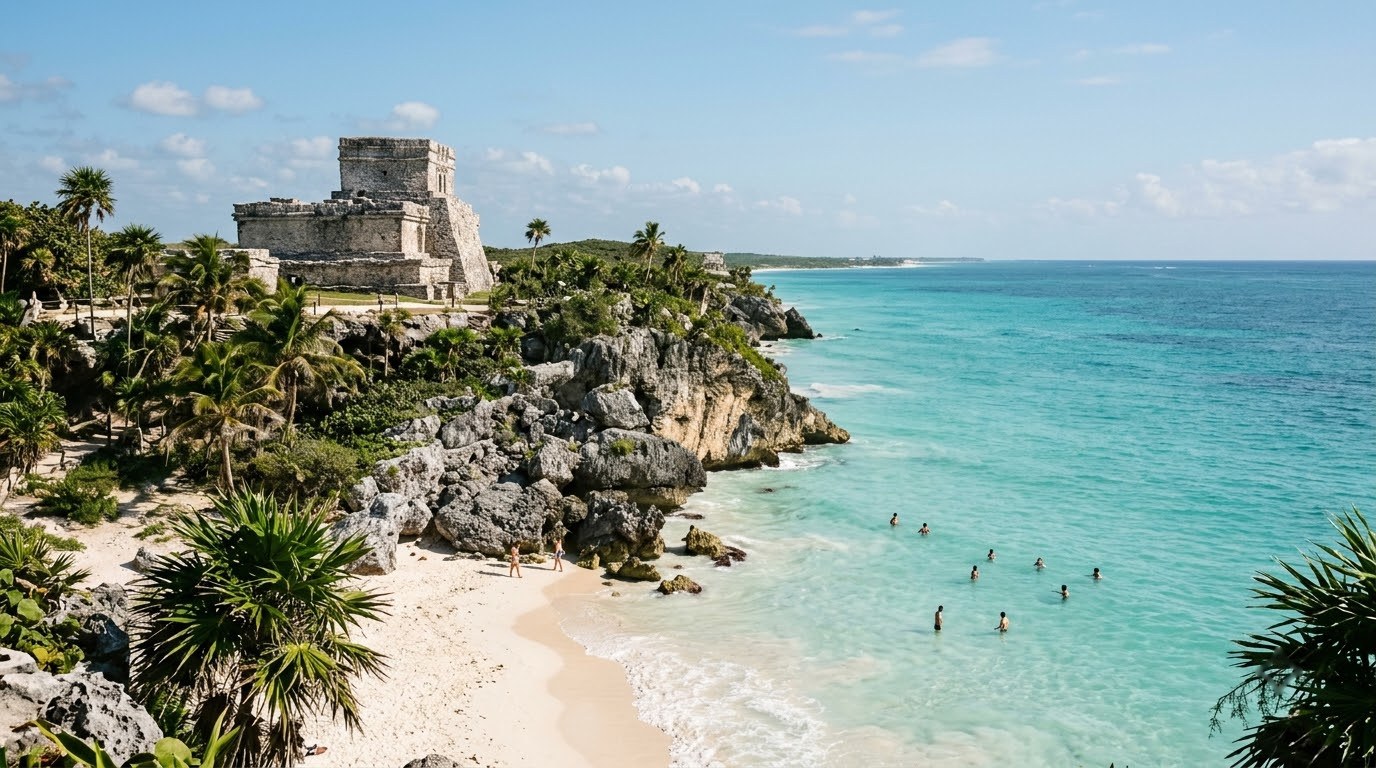
The best time to visit Tulum is between November and April, the dry season, and the single strongest month for most travellers is February. This window pairs comfortable heat with low rain and the clearest water for cenotes and snorkelling, and it sits just before the March crowd surge.
If you can only travel in summer, aim for late May or early September to dodge the wettest weeks and the worst hurricane risk.
Tulum has two clear seasons rather than four. Here is the quick shape of the year:
- Dry season (November-April): Highs of 27-29°C (81-84°F), low humidity, and rainfall as low as 35-40 mm per month from February to April. Best water clarity and lowest seaweed risk.
- Rainy season (May-October): Highs of 31-32°C (88-89°F), heavy humidity, and Tulum’s wettest month, October, averaging around 207 mm (8.1 in) of rain (Weather Atlas, 2026).
- Sargassum peak (roughly April-August): Seaweed lands heaviest in the summer as water temperatures rise; conditions can change day to day with the trade winds.
- Hurricane season (June 1-November 30): Peak activity mid-September through October, though most days stay sunny with short, intense storms.
- Crowd peak (December-April, worst in March): Spring Break and the northern-hemisphere winter escape drive occupancy and prices to their annual high.
For the wider trip, our Tulum travel guide sets out how these seasons interact with getting around, budgeting, and where the town’s three zones (Pueblo, the beach strip, and the ruins) sit.
Tulum weather month by month (2026)
Tulum’s temperature barely moves across the year; what changes is rain and humidity. Daytime highs run from about 27°C (81°F) in January to 31-32°C (88-89°F) in July and August, and the sea stays warm enough to swim in every month. The real decision is rain: the dry months from December to April deliver day after day of sun, while June through October carry the year’s heaviest downpours.
| Month | Avg high | Rain level | Sargassum risk | Crowds |
|---|---|---|---|---|
| January | 27°C / 81°F | Low (~50 mm) | Low | High |
| February | 28°C / 82°F | Very low (~35-40 mm) | Low | High |
| March | 29°C / 84°F | Very low (~37 mm) | Moderate | Peak (Spring Break) |
| April | 30°C / 86°F | Low (~40 mm) | Moderate-High | High |
| May | 31°C / 88°F | Rising (~100 mm) | High | Moderate |
| June | 32°C / 89°F | High (~140 mm) | Very high | Low |
| July | 32°C / 89°F | High (~130 mm) | Very high | Moderate |
| August | 31°C / 88°F | High (~90 mm) | Very high | Moderate |
| September | 31°C / 88°F | Very high (~180 mm) | Moderate | Low |
| October | 30°C / 86°F | Highest (~207 mm) | Moderate | Low |
| November | 29°C / 84°F | Falling (~90 mm) | Low | Rising |
| December | 28°C / 82°F | Low (~70 mm) | Low | High |
Rainfall and temperature figures are drawn from Weather Atlas and climate-data.org 2026 climate normals; sargassum and crowd columns reflect 2026 forecasts and on-the-ground seasonal patterns. Rain in the wet season usually arrives as short, heavy afternoon storms rather than all-day grey, so a “very high” month still delivers plenty of morning sun.
Sargassum seaweed season in Tulum: when to avoid it
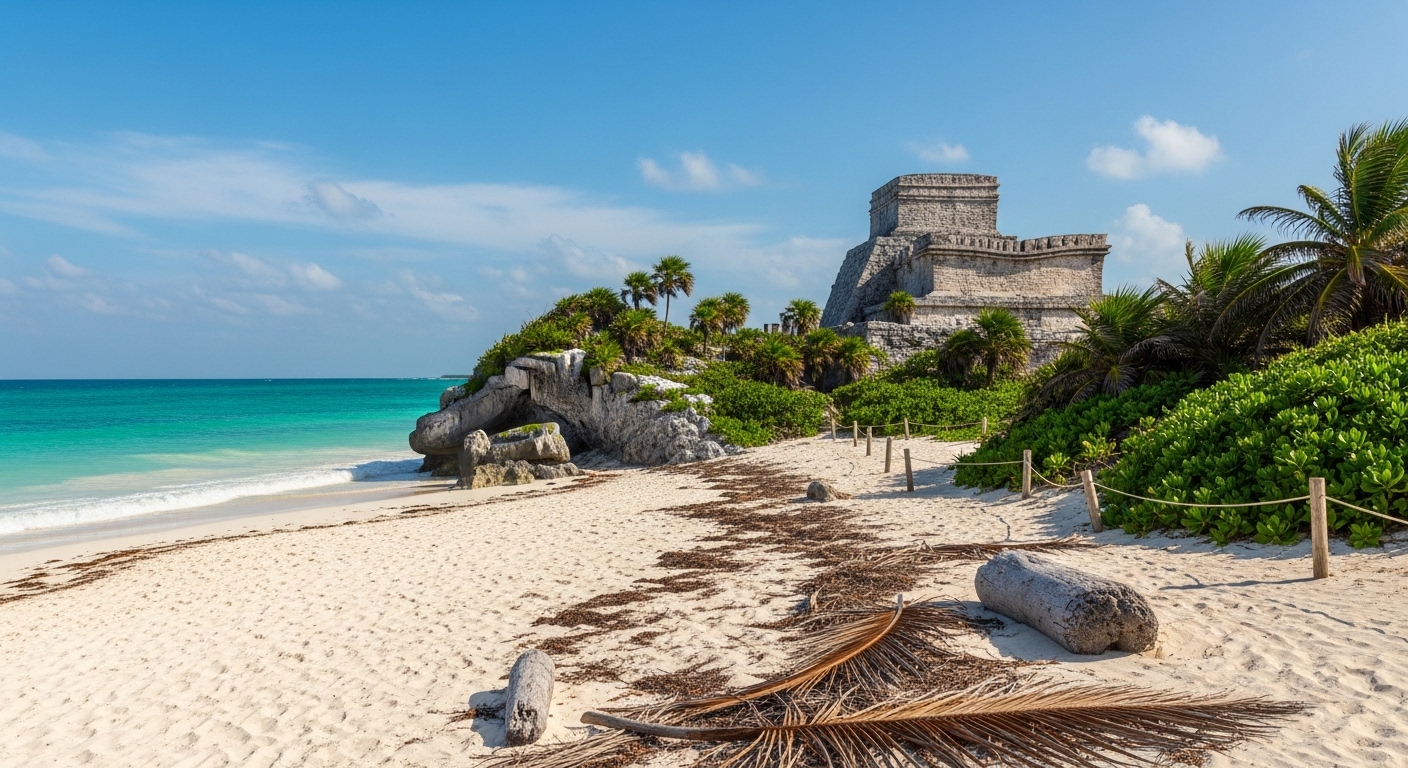
Sargassum is the make-or-break factor for a Tulum beach holiday, and it peaks in summer. The seaweed season generally runs from April to October, with the heaviest landings between June and August as Caribbean water warms. For 2026 specifically, the University of South Florida has forecast a record or near-record year, with unusually early arrivals already confirmed in January and March. That makes month choice more important than in an average year.
| Sargassum risk | Months | What to expect |
|---|---|---|
| Lowest | January, February, November, December | Mostly clear white-sand beaches, best water clarity |
| Moderate / unpredictable | March, April, September, October | Clear one day, covered the next; depends on wind |
| Highest | May, June, July, August | Thick brown mats, murky water, strong odour near shore |
On our June trip the seaweed was worst between about 9am and midday, and the beach crews cleared patches by early afternoon. A few practical rules we now follow:
- Book November to February if a clean, swimmable beach is your priority; these months carry the lowest sargassum risk in Tulum.
- Check a live forecast within 48 hours of travel because trade winds can shift conditions from clear to buried overnight.
- Favour hotels with active beach-cleaning crews, which tend to be the larger beach-strip properties rather than small cabanas.
- Have a cenote backup plan for high-sargassum days; freshwater sinkholes are unaffected by seaweed and are covered in our Tulum cenotes guide.
- Avoid June through August for the beach unless you are travelling on a tight budget and can accept murky water.
If the beach is off the table on a given day, the inland cenotes and ruins carry the trip, and our list of things to do in Tulum leans heavily on options that do not depend on clean sand.
Hurricane season in Tulum: how risky is it?
The Atlantic hurricane season runs from June 1 to November 30, 2026, and the highest risk for the Yucatan falls from mid-September through October.
That said, a named storm making a direct hit on Tulum in any given week is uncommon, and NOAA’s 2026 outlook predicts a below-normal season of 8 to 14 named storms, of which 3 to 6 become hurricanes, driven partly by a developing El Niño. Most rainy-season days bring short storms, not evacuations.
Here is how we weigh the risk when booking summer or autumn:
- June and July: Season is open but activity is usually low; the bigger annoyance is heat and daily rain, not storms.
- August: Activity begins climbing; still bookable with travel insurance in place.
- September and October: The statistical peak. Cheapest prices, but the real chance of a storm disrupting flights or closing beaches.
- November: Risk drops sharply as the season winds down, and this month often delivers dry-season weather at shoulder-season prices.
Two habits that have saved us money and stress: buy travel insurance that covers weather disruption for any trip between August and October, and book flights with flexible change policies. A hurricane rarely lands on your exact dates, but a nearby storm can still cancel a flight or shut a beach club for a day.
Find your Tulum hotel on the map
Live prices from Booking & Airbnb — tap a pin to compare stays around the Beach Zone and beyond.
Crowds and hotel prices by season
Tulum’s high season runs December to April, and it climaxes in March. During Spring Break, hotel occupancy pushes above 90 percent, beach clubs fill by late morning, and the Tulum ruins can carry 60-90 minute entry waits at peak times.
Prices track the crowds closely: beachfront mid-range rooms that sit lower in the off-season climb to roughly $250-400 per night in March, with luxury resorts commanding $500-900 and Pueblo (town) rooms around $150-220.
| Season | Months | Crowd level | Beachfront mid-range room (per night) |
|---|---|---|---|
| Peak | March (Spring Break) | Very high | $250-400 |
| High | December, January, February, April | High | $200-320 |
| Shoulder | May, November | Moderate | $150-250 |
| Low | June-October | Low | $120-200 |
Prices are 2026 seasonal ranges and vary by property and booking window. A few crowd-and-cost rules we rely on:
- Skip March unless a party-heavy, high-energy scene is exactly what you want; it is the most expensive and most crowded month of the year.
- Target February for the best balance of dry weather, clear water, and prices below the March peak.
- Book September or October for the lowest rates, accepting more rain and the hurricane peak in exchange.
- Choose November for shoulder value: dry-season conditions arrive while many hotels still hold off-season pricing.
- Stay in Pueblo to cut costs any month, since town rooms run well below beachfront rates; our where to stay in Tulum guide breaks down the trade-offs between the beach strip and town.
Best time for cenotes, diving, and the ruins
For cenotes and diving, the dry season from November to April wins because rain runoff is minimal and freshwater visibility is at its clearest. Cenotes stay a steady 24-25°C (75-77°F) year round, so temperature is never the issue; water clarity is, and heavy summer rain can cloud some open cenotes.

The Tulum ruins are best visited early on a dry-season morning, both for cooler air and to beat the tour buses.
- Cenote diving and snorkelling: November-April for peak visibility; February is a local favourite for clarity.
- Reef snorkelling and the beach: November-February, when sargassum is lowest and the Caribbean is clearest.
- Tulum ruins: Any dry-season morning, ideally at the 8am opening, before heat and crowds build.
- Avoid for water clarity: Late September and October, when the heaviest rain of the year can muddy open cenotes for a day or two after storms.
Timing your cenote days for the dry season made a visible difference for us; the same sinkhole we snorkelled in February looked noticeably greener when we returned after October rain. For a full list of the region’s best sinkholes, see our Tulum cenotes guide, and pair it with the wider things to do in Tulum for rainy-day alternatives.
Cheapest time to visit Tulum
The cheapest time to visit Tulum is the low season from June to October, and September and October are the two least expensive months of the year. This is when hotels discount hardest and crowds are thinnest, because it overlaps with both the rainy season and the hurricane peak. If your budget is the deciding factor and you can accept rain and possible seaweed, these months deliver the biggest savings.
- Absolute cheapest: September and October, with the lowest hotel rates and thinnest crowds.
- Best cheap-but-dry compromise: Early November, when rain eases but many low-season rates still apply.
- Budget beach caution: June to August are cheap but carry the highest sargassum risk, so the beach may disappoint.
- Save regardless of month: Stay in Pueblo, travel midweek, and book at least two months ahead for the best beachfront rates.
Frequently Asked Questions
What is the best month to visit Tulum?
February is the best single month for most travellers. It sits in the dry season with highs around 28°C (82°F) and rainfall near 35-40 mm, carries a low sargassum risk, and comes just before the March Spring Break crowds and price spike. November is a close second for shoulder-season value.
When is sargassum seaweed worst in Tulum?
Sargassum is worst from June to August, when warm water drives the heaviest landings and beaches can be buried by mid-morning. The season broadly runs April to October, and 2026 is forecast to be a record or near-record year, so January, February, November and December are the safest bets for a clean beach.
Is it safe to visit Tulum during hurricane season?
Generally yes. Hurricane season runs June 1 to November 30, 2026, with peak risk in September and October, but a direct hit on any given week is uncommon and NOAA forecasts a below-normal season. Buy travel insurance covering weather disruption and book flexible flights if you travel in the August-October peak.
What is the rainy season in Tulum?
The rainy season runs May to October, with October the wettest month at around 207 mm (8.1 in). Rain usually falls as short, heavy afternoon storms rather than all-day grey, so mornings often stay sunny even in the wettest months.
When is Tulum the cheapest?
Tulum is cheapest in September and October, its low season, when hotel rates and crowds hit their annual low. The trade-off is the year’s heaviest rain and the hurricane peak. Early November offers a middle path with easing rain and still-low prices.
Pick your month around your top priority: February for the best all-round conditions, November for shoulder-season value, or September and October if price is what matters most. Whatever the season, pair a beach plan with a cenote-and-ruins backup so a rainy afternoon or a seaweed morning never costs you the whole day.