
Disclosure: Some links in this guide are affiliate links. If you book or buy through them, we may earn a small commission at no extra cost to you — it helps keep our guides free.
The best time to visit Thailand is the cool dry season from November to February, when Bangkok’s average high sits near 33°C against an April peak of 37°C. That single verdict hides a coastal split worth knowing before you book, because Thailand’s Andaman and Gulf coasts run on opposite rainy-season calendars and rarely turn stormy at the same time.
Fitting the regions into a longer trip is set out in our Thailand 2-week itinerary.
| Month | Andaman (Phuket/Krabi) | Gulf (Koh Samui) | North (Chiang Mai) | Bangkok |
|---|---|---|---|---|
| January | Dry, peak season | Dry | Cool, dry | Cool, dry |
| February | Dry | Dry | Cool, burning season starts | Warming, dry |
| March | Dry, heating up | Dry, heating up | Hot, burning season peak | Hot, dry |
| April | Hot, dry | Hot, dry | Hot, smoke easing after Songkran | Hottest month |
| May | Rain increasing | Dry, low season | First rains, air clears | Rain begins |
| June | Wet | Mostly dry | Rainy | Rainy |
| July | Wet | Light rain | Rainy | Rainy |
| August | Wet | Light rain | Rainy | Rainy |
| September | Wettest month | Light rain | Rainy | Rainy |
| October | Wet, tapering | Rain increasing | Rain tapering | Rain tapering |
| November | Drying out | Wettest stretch | Cool, dry | Cool, dry |
| December | Dry, peak season | Rain tapering | Cool, dry | Cool, dry |
The cool dry season (November to February) — the all-round best
November through February is Thailand’s best all-round window, because both coasts stay dry at the same time and the north is still clear of smoke. Skies are mostly clear from the Andaman coast to the Gulf, humidity drops from its wet-season high, and Bangkok’s evenings turn genuinely pleasant rather than sticky.
Chiang Mai and the wider north are at their most comfortable too, with clear air that makes temple visits, market trips, and hikes up Doi Suthep worth planning around before the burning season starts in mid-February.

The trade-off is cost and crowds. This is Thailand’s peak season, and resort rates commonly run 30-80% above low-season pricing through December, January, and into March.
The last week of December through the first week of January is the single most expensive stretch of the year, when flight and hotel prices often double or triple and many beach resorts set five to seven night minimum stays. Booking three to six months ahead is the standard workaround for this window.
For day-by-day detail on the capital’s own seasonal pattern, see the best time to visit Bangkok guide.
Why the two coasts have opposite rainy seasons
Whenever one Thai coast is drenched, the other is usually dry, because the Andaman and the Gulf sit on opposite sides of two separate monsoon systems, and this is the single fact that should decide a beach trip.
The southwest monsoon drives into the Andaman coast — Phuket, Krabi, Phi Phi — roughly from May to October, peaking around September, and brings the heaviest rain and roughest seas of the year. The Gulf coast, sheltered on the other side of the peninsula, stays comparatively dry through those same months.
That split is why our 10-day Thailand itinerary picks between Chiang Mai and Krabi by month instead of cramming in four bases.
The pattern flips later in the year. The northeast monsoon picks up moisture crossing the Gulf of Thailand and dumps it on Koh Samui, Koh Phangan, and Koh Tao roughly from October to December, right as the Andaman side is drying out and heading into its own dry season. If Samui and Tao are both on your list, our Samui versus Tao verdict suggests basing on Samui and giving Tao three or four nights.
Practically, a traveller fixed on beach dates in July has a better shot at sunshine on the Gulf side than the Andaman side, and a traveller stuck with November dates should lean the opposite way.
The Andaman side gets a full monthly breakdown in the best time to visit Phuket guide.
The hot season (March to May) — and the Chiang Mai burning season
March through May trades comfort for heat, and around Chiang Mai it also trades clear skies for smoke. Bangkok’s hottest month is April, with average highs near 37°C and humidity building steadily ahead of the first rains, so this window suits travellers who prioritise dry weather over comfort and don’t mind the heat.
The bigger issue sits in the north. Chiang Mai and the surrounding provinces run a burning season roughly from mid-February through April, driven by agricultural fires and forest burning during the driest stretch of the year.
Air quality commonly passes an AQI of 150 and spikes above 300 on the worst days, with the smoke typically peaking in the second half of March.
This is a genuine health concern for anyone with respiratory issues, not just a haze that spoils photos, and it is the main reason a blanket “cool season is always best” recommendation falls short for northern Thailand. Conditions usually ease after the mid-April Songkran holiday, and the first rains in May clear the air further.
The best time to visit Chiang Mai guide covers the burning season week by week, with specific dates to avoid.
The green season (June to October) — cheaper, wetter, still workable
June through October is Thailand’s cheapest and quietest season, and the rain rarely lasts all day. Showers typically arrive as short, heavy afternoon downpours rather than continuous rain, which leaves most mornings clear enough for sightseeing, day trips, and boat rides booked around the forecast. That is when our 7-day Thailand plan swaps the beach for Chiang Mai, keeping just two bases and one domestic flight.
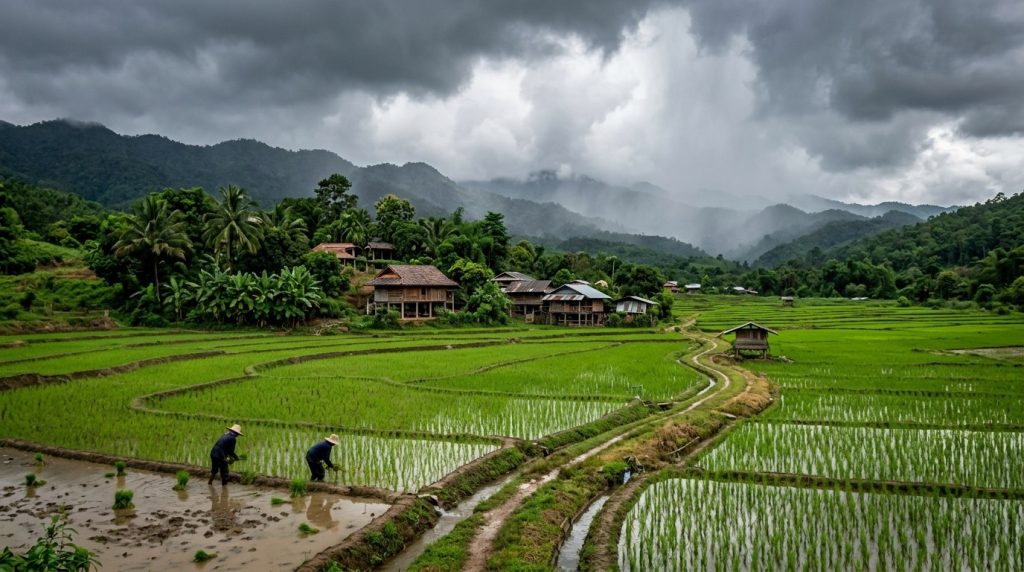
Hotel rates fall sharply once the peak season ends. A mid-range Phuket beach resort priced at AUD 190 · USD 137 (THB 4,500) a night in January can drop to AUD 93 · USD 67 (THB 2,200) in May, a saving of roughly 51%, and similar discounts run through Krabi and Koh Samui.
Because the Gulf coast stays comparatively dry into the middle of the year, as explained above, green-season beach seekers get a better weather trade-off leaning toward Koh Samui and Koh Phangan rather than the Andaman side.
Bangkok and the north see regular rain through this stretch too, but it’s rarely severe enough to disrupt a short city stay, and the lower prices can make a Bangkok-and-north combination trip good value despite the odd downpour.
When NOT to visit Thailand
Skip Chiang Mai in March, skip the Andaman coast in September, and skip Bangkok over Christmas and New Year unless the trip is booked months ahead. March in Chiang Mai brings the worst air quality of the year, with AQI regularly topping 300 on bad days, and outdoor plans, hikes, and even flights can be affected by the smoke.
September is the wettest month on the Andaman coast, bringing the heaviest rain and roughest seas of the year, and boat trips to Phi Phi or the Similan Islands are the most likely to be cancelled or cut short.
The last week of December through the first week of January carries the steepest price spikes anywhere in the country. Hotel and flight costs often double or triple compared with the rest of the cool season, and many resorts require five to seven night minimum stays over the holiday, which rules the window out for anyone travelling on a tight budget or a short itinerary.
Best time to visit Thailand by travel style
The single “best” month changes once the trip is built around a specific activity, and divers, surfers and honeymooners end up picking almost opposite windows on the calendar.
Divers and snorkellers should plan around the Similan Islands National Marine Park, which opens to visitors only in mid-October and closes again in mid-May each year – the 2026 season runs from mid-October 2026 to mid-May 2027. Outside that window the park is closed completely and liveaboard operators stop running trips there altogether.
Conditions can be changeable in the first and last weeks of the season, so the steadier middle months are the safer bet for a first dive trip; one specialist dive guide points to the final two weeks of April as a sweet spot, when conditions are already settled but the crowds of December and January have thinned ahead of the season’s close.
Surfers want close to the opposite calendar. The southwest monsoon that floods the Andaman coast with rain from roughly May to October also builds the only reliable swell on Phuket’s west-coast beaches, and September and October are generally rated the strongest months for size and consistency. It’s one of the few good reasons to book an Andaman beach stay during the months every other guide tells travellers to avoid.
Honeymooners and anyone chasing good weather without peak-season pricing should look at the handful of weeks either side of the main cool-season rush – late October into early November, or February once Chinese New Year crowds clear but before the Chiang Mai burning season builds.
Both windows generally still land on dry or mostly dry conditions on at least one coast, with meaningfully less competition for rooms than December and January bring.
Families working around school terms usually end up travelling in the hotter or wetter months by necessity, since the cool season lines up with the northern hemisphere’s winter holidays and commands the highest prices of the year.
Where dates are flexible, pairing a Gulf coast stay – Koh Samui or Koh Phangan – with a Bangkok or Chiang Mai leg earlier in the year keeps most of the itinerary out of the heaviest rain while avoiding the priciest weeks of the cool season.
| Traveller priority | Best window | Why |
|---|---|---|
| Diving/snorkelling | Mid-October to mid-May; late April for calmer crowds | Similan/Surin parks are closed the rest of the year |
| Surfing | September-October | Southwest monsoon swell peaks on the west coast |
| Value with good weather | Late October-early November, or February | Mostly dry, well below peak cool-season demand |
| Fixed school holidays | Hot or green season, by necessity | Cool season lines up with northern winter holidays |
Thai festivals and public holidays that affect timing
Four dates are worth marking on the calendar before booking, because each one shifts prices, availability, or both, in the specific places where it’s celebrated – and because three of the four follow the lunar calendar, the exact dates move every year and need rechecking rather than assumed from a previous trip.
Songkran, the Thai New Year water festival, is an official public holiday nationwide from 13 to 15 April 2026, though street celebrations in Bangkok, Chiang Mai and other major cities commonly run for extra days either side of those official dates.
It lands deep inside the hot season and close to the tail end of Chiang Mai’s burning season, so travellers get the festival atmosphere alongside the year’s heaviest heat and, in the north, the last of the smoke.
Chinese New Year falls on 17 February 2026. It doesn’t shut the country down the way Songkran does, but it draws a wave of regional visitors into Bangkok’s and Phuket’s Chinatown districts and adds extra pressure onto hotel availability that is already tight during the cool-season peak.
The Phuket Vegetarian Festival runs for nine days, from 10 to 18 October 2026, built around processions and rituals centred on the island’s Chinese temples, opening at midnight on the 10th at Jui Tui Shrine and closing on the 18th at Kio Thian Keng Shrine.
It sits inside the wetter months on the Andaman coast, but it’s one of the few reasons to time a Phuket trip specifically for October despite the rain risk described earlier.
Loy Krathong, and Chiang Mai’s related Yi Peng lantern release, both fall on 24 to 25 November 2026.
The timing lines up almost exactly with the start of the cool dry season in the north, which makes it one of the most heavily booked weeks of the year to be in Chiang Mai specifically – accommodation there needs to be locked in well ahead if the lantern festival is the goal.
Best time to visit Thailand for budget travel
Price and weather don’t move together in a straight line, and the cheapest calendar windows generally sit just outside the wettest patches rather than inside them.
May and June are usually the best combination of lower prices and still-workable weather, landing after the cool season’s peak rates have dropped but before the Andaman coast moves into its wettest stretch around August and September.
The Gulf coast – Koh Samui, Koh Phangan, Koh Tao – is the stronger choice for a budget beach trip in September specifically, since it stays comparatively dry while the Andaman side is at its wettest, as outlined above.
It’s worth avoiding stacking a budget trip onto any of the festival dates above. Songkran (13-15 April), the Phuket Vegetarian Festival (10-18 October) and Loy Krathong/Yi Peng (24-25 November) all push demand – and room rates – up in the specific cities where each is celebrated, on top of whatever the broader season is already doing to prices.
Booking the week before or after one of these festivals, rather than during it, keeps the lower shoulder-season rates intact while still landing on reasonable weather.
Bangkok and the north are generally the most forgiving cities for a budget trip in almost any month, since the short, heavy afternoon downpours typical of the rainy season rarely wash out a full day the way a cancelled boat trip can on the islands.
Travellers who have to travel during the wetter months and still want value are usually better off building the itinerary around Bangkok, Chiang Mai and a Gulf coast island than gambling on Andaman boat trips that carry a higher chance of being cancelled or cut short.
| Priority | Cheapest workable window | Coast to favour |
|---|---|---|
| Lowest prices, still dry-ish | May-June | Either; Andaman just starting to turn wet |
| Lowest prices, September | September | Gulf (Koh Samui, Koh Phangan, Koh Tao) |
| Avoid festival price spikes | Week before/after 13-15 Apr, 10-18 Oct or 24-25 Nov | Depends on destination city |
Plan your Thailand trip
Once the season is picked, the next decision is where to sleep and how to string the stops together. Travellers landing in the capital first can pair this seasonal guide with a 3-day Bangkok itinerary to plan the opening days before heading to whichever coast matches the month.
Find your Thailand hotel on the map
Live prices from Booking, Airbnb and more — move the map or change dates to compare stays across Thailand.