Disclosure: Some links in this guide are affiliate links. If you book or buy through them, we may earn a small commission at no extra cost to you — it helps keep our guides free.
Yes, 7 days is enough for a first Thailand trip if you stick to 2 bases: 3 nights in Bangkok, then 3 nights on the Andaman coast (Phuket or Krabi) or in Chiang Mai, joined by a domestic flight of 1h10 to 1h25. Add a third stop and you lose most of a day to airports. With three extra days, a ten-day version of this route keeps the same two bases but doubles the second stop to 6 nights.
The month you travel decides the second base: beach from November to April, Chiang Mai when the Andaman monsoon is running.
| Day | Base (night) | Beach version (Nov–Apr) | North version (May–Oct, or Nov–Jan) |
|---|---|---|---|
| 1 | Bangkok | Land, river ferry, Chinatown dinner | Land, river ferry, Chinatown dinner |
| 2 | Bangkok | Grand Palace, Wat Pho, Wat Arun | Grand Palace, Wat Pho, Wat Arun |
| 3 | Bangkok | Market morning, free afternoon | Market morning, free afternoon |
| 4 | Phuket/Krabi or Chiang Mai | Fly south, beach afternoon | Fly north, Old City temples |
| 5 | Same | Phi Phi or Railay day | Doi Suthep, Sunday or night market |
| 6 | Same | Phang Nga Bay or a slow beach day | Cooking class or elephant sanctuary |
| 7 | Fly home via Bangkok | Morning swim, fly out | Morning cafe, fly out |
Which version for which month: Andaman vs Gulf monsoon
Thailand’s two coasts have opposite wet seasons. The southwest monsoon runs roughly mid-May to mid-October and hits the Andaman side (Phuket, Krabi, Phi Phi) hardest. The Gulf islands (Koh Samui, Koh Phangan, Koh Tao) are wettest from October to December, peaking in November. Chiang Mai is cool and clear from November to January, but February to April is burning season, with hazardous smoke worst in March.
| Month | Andaman (Phuket, Krabi) | Gulf (Samui) | Chiang Mai | Pick for 7 days |
|---|---|---|---|---|
| Nov–Jan | Dry, calm seas | Wettest (Nov peak) | Cool, clear | Beach or north |
| Feb–Apr | Dry, hot | Dry | Smoky, avoid | Beach |
| May–Jun | Monsoon starts | Mostly dry | Rain begins, green | North |
| Jul–Sep | Wet, rough seas | Mostly dry | Wet, green | North (Samui as an alternative) |
| Oct | Monsoon easing | Rains start | Wet tail-end | North |
For Australians: September–October school holidays point north; January and Easter suit the beach. Our month-by-month guide to the best time to visit Thailand breaks this down by region.
Days 1–3: Bangkok in 3 nights, not 4
Direct flights from Sydney take 9h20 with Thai Airways and about 9h50 with Qantas, so an evening arrival is normal. From Suvarnabhumi, the Airport Rail Link reaches Phaya Thai in 26 to 30 minutes for AUD 1.85 · USD 1.35 (THB 45).
Since 15 September 2026, Australians get 30 days visa-free instead of 60 (ABC News), plenty for a week. Fill in the free Thailand Digital Arrival Card within 72 hours before landing, and sort data first: our Thailand eSIM guide compares plans so Grab works from arrivals.
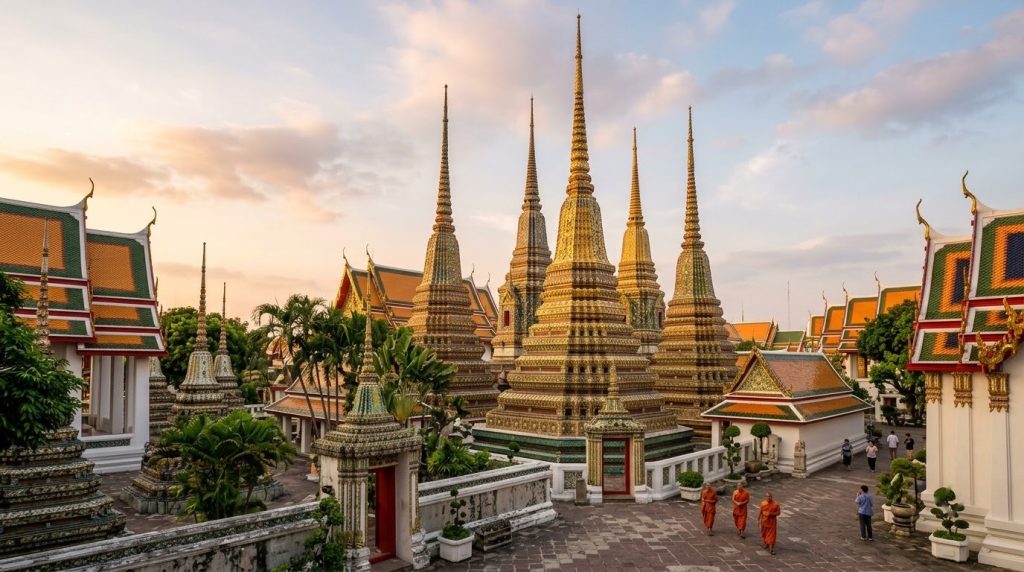
– Day 1: River ferry and a Chinatown dinner. Keep it light. – Day 2: Be at the Grand Palace for the 8:30am opening; entry is AUD 21 · USD 15 (THB 500). Walk to Wat Pho, then cross to Wat Arun for late afternoon. – Day 3: A market morning (Chatuchak on weekends), then a free afternoon for a massage or rooftop drink.
Day 4: The one flight that makes this work
Fly from Don Mueang. AirAsia’s fare pages, checked 1 October 2026, showed these one-way October fares:
| Route | Flight time | October one-way fares |
|---|---|---|
| Bangkok (DMK) to Phuket | about 1h25 | AUD 42–51 · USD 30–37 (THB 1,006–1,228) |
| Bangkok (DMK) to Krabi | about 1h20 | AUD 46–60 · USD 33–44 (THB 1,115–1,464) |
| Bangkok (DMK) to Chiang Mai | about 1h10 | AUD 46–70 · USD 33–51 (THB 1,104–1,700) |
Peak weeks cost far more: Bangkok to Chiang Mai topped AUD 231 · USD 167 (THB 5,600) for late-November dates. Book it with your international flight, and take a morning departure so the afternoon is yours.
Food to try in Bangkok and your second base
Bangkok rewards a mix of street stalls and sit-down meals. Boat noodles, a dark, concentrated broth originally sold from canal boats, are a classic first-night order in Chinatown alongside the dinner already on your schedule. Mango sticky rice is sold everywhere from carts to department-store food halls, and it is worth trying more than once since ripeness varies by stall.
On the Andaman coast, the food shifts toward fresh seafood: grilled prawns and whole fish sold by weight at beachfront grills in Ao Nang and Patong, and southern-style curries that run hotter than Bangkok’s.
If you head north instead, Chiang Mai’s signature dish is khao soi, a coconut curry noodle soup topped with crispy noodles, found at small shops around the Old City moat rather than at hotel restaurants.
Night markets in all three places are the easiest way to sample several dishes in one sitting without committing to a full restaurant meal, and they double as the cheapest dinner option on a trip where domestic flights and tours already take a share of the budget.
Days 4–7, beach version: Phuket or Krabi
Krabi means limestone cliffs and a quieter feel; Phuket means more beaches, restaurants and flights.
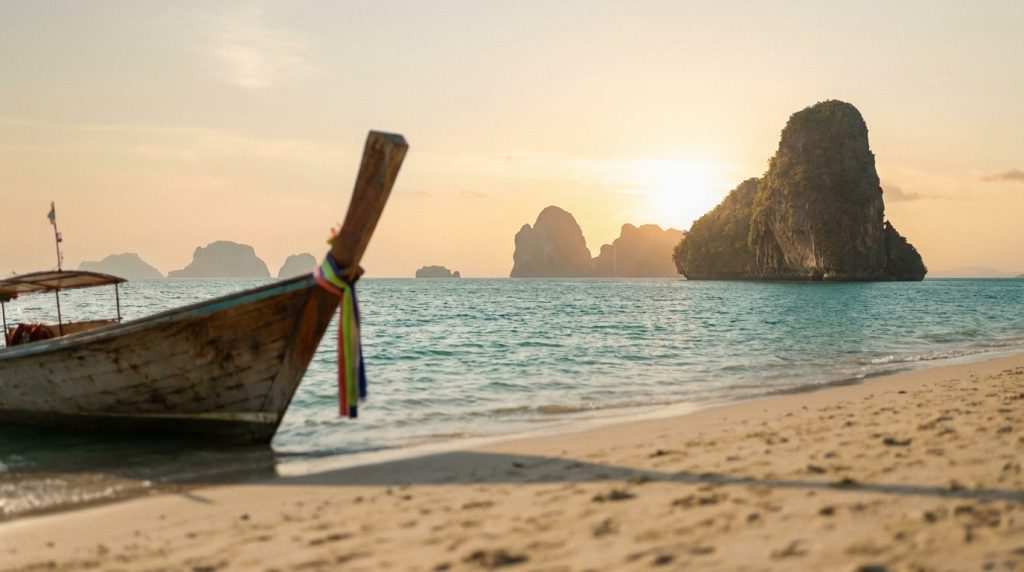
– From Krabi: The Ao Nang to Railay longtail costs AUD 4 · USD 3 (THB 100) each way, takes 10 to 15 minutes and leaves once about 8 passengers board. Give Railay a full day. – From Phuket: Rassada Pier to Phi Phi ferries take about 2 hours at AUD 17–25 · USD 12–18 (THB 400–600) one way.
Phang Nga Bay tours run 7 to 9 hours for AUD 58–145 · USD 42–104 (THB 1,400–3,500), longtail to catamaran; check the AUD 17 · USD 12 (THB 400) park fee is included.
Do one boat day, not two, or the week becomes pickups and sunburn.
Days 4–7, north version: Chiang Mai
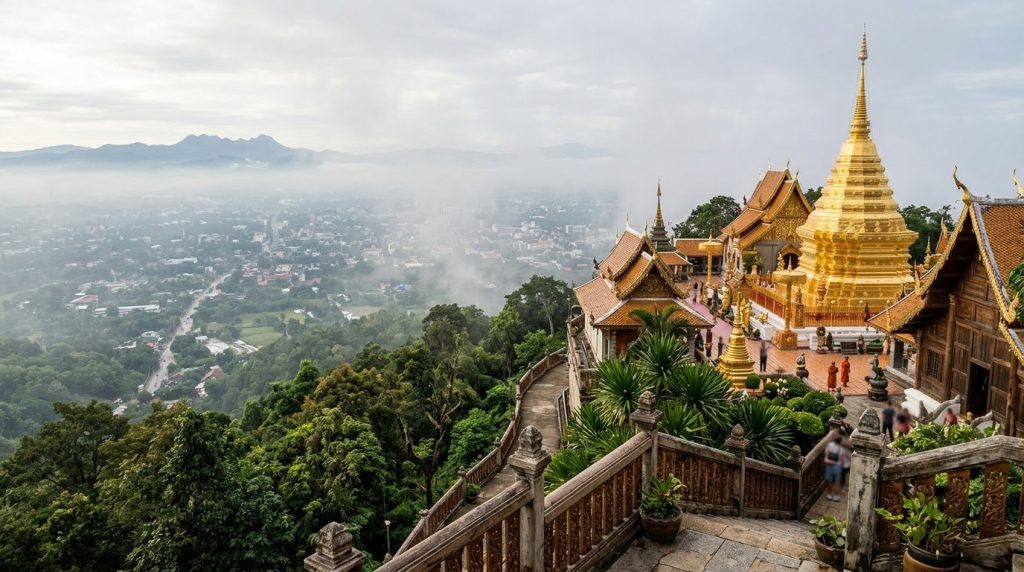
Chiang Mai wins from May to October and is lovely from November to January. Stay by the Old City moat to walk to most temples. Day 5: Doi Suthep early, before the tour vans, then the Sunday Walking Street or night bazaar. Day 6: a cooking class or an elephant sanctuary with no riding or bathing. On Day 7, leave at least 3 hours in Bangkok before your international flight.
Getting around once you land
Bangkok’s BTS Skytrain and MRT subway cover most of what a short-trip visitor needs, from Siam and Sukhumvit to the river piers for Wat Arun and Chinatown. Fares are distance-based, running from about AUD 0.70 · USD 0.50 (THB 17) for one stop up to about AUD 2.70 · USD 1.95 (THB 65) for the longest single trip.
Buy a token at the machine for a single ride, or get a Rabbit Card at a station counter if you expect to use the trains most days; both work at the gates without a baht note changing hands each time.
Grab, the regional ride-hailing app, shows the fare before you confirm the ride, which matters most straight off an international flight, when a tired traveller is an easy target for a quoted taxi price that is not on the meter.
Download it and add a card before you land, since Bangkok’s airport taxi queue moves faster for app users who already know where they are going.
The same app covers Grab Bike motorbike taxis for solo travellers who want to cut through stopped traffic, and Grab Food for a night when room service or a walk to the night market does not appeal.
Once you reach Phuket, Krabi or Chiang Mai, the BTS card stays in your bag.
Shared songthaews, pickup trucks fitted with bench seats, run fixed routes in all three and collect a flat fare on board; locals in Chiang Mai call the red ones rot daeng, and they are the default way to reach Nimman or the night bazaar without a private driver.
Longtail boats, tuk-tuks and private drivers are not metered anywhere in Thailand, so agree the fare before you get in, not after the engine starts.
What to cut if your week is really 6 days
Most “7-day” trips from Australia lose a day to flights, so plan the cuts:
– Cut Day 3 in Bangkok before a beach or Chiang Mai day; the second base is where the week slows down. – Leave out Pattaya, Ayutthaya and Kanchanaburi. Each costs most of a day you do not have. – Don’t add Koh Samui to a Phuket week. The coasts face opposite seas and the transfer eats a day.
If you can stretch to 14 days, our two-week Thailand itinerary adds the north and the coast together without rushing.
What a 7-day Thailand trip costs
Outside your flights and hotel, daily spending in Thailand splits into three rough tiers. These cover food, local transport, entry fees and the odd souvenir, not accommodation.
| Daily budget | What it covers |
|---|---|
| AUD 42–62 · USD 30–45 (about THB 1,000–1,500) | Street food and markets, public transport, free or low-cost temples |
| AUD 111–208 · USD 80–150 (about THB 2,700–5,000) | Restaurant meals, a cooking class or boat tour, air-conditioned transport, a mid-range hotel top-up |
| AUD 278+ · USD 200+ | Hotel upgrades, private drivers, higher-end dining |
Multiply the daily figure by seven, then add your domestic flight and hotel costs on top, since those are booked separately and vary by season. A couple travelling mid-range for the week should budget for both people at the mid-range line, not one combined total, since street food vendors and most tour operators price per person. Prices in this guide are converted at USD 1 = AUD 1.388.
Card acceptance is patchy outside malls and chain hotels, so carry enough cash for markets, songthaews and small guesthouses. ATMs are common in Bangkok, Phuket, Krabi and Chiang Mai, though most charge a withdrawal fee on top of whatever your home bank adds.
Restaurant and hotel bills generally already fold in a service charge, so tipping is not the ritual it is in some countries; rounding up for a Grab driver or leaving loose change at a street stall is read as generous rather than expected.
At markets and with longtail or tuk-tuk drivers, a little polite haggling on anything that is not food is normal practice, though the first price quoted is rarely far off a fair one for a short holiday visit.
Where to stay in Thailand, base by base
– Bangkok riverside or Old Town: First-timers, with the Grand Palace a walk or ferry away. Sukhumvit suits those wanting the BTS and nightlife. – Ao Nang or Kata/Karon: Ao Nang is the easy base for Railay longtails; Kata and Karon suit couples and families wanting a calmer beach than Patong. – Chiang Mai Old City or Nimman: Old City for temples on foot, Nimman for cafes.
Find your Thailand hotel on the map
Live prices from Booking, Airbnb and more — move the map or change dates to compare stays across Thailand.
What to pack and the temple dress code
Thailand’s Buddhist temples and the Grand Palace enforce a real dress code, not a suggestion. Shoulders and knees need covering for everyone, and sheer or see-through fabric is turned away at the entrance.
Men need long trousers and a sleeved top; women need a long skirt, trousers or a dress that covers at least to the knee, with sleeves rather than a singlet.
This applies at Wat Pho and Wat Arun just as it does at the Grand Palace, so pack one modest outfit you are happy to wear on repeat rather than assuming it only matters for the big-ticket site.
Shoes come off before you step inside most temple buildings, so slip-on sandals save time over laces at every stop.
Away from temples, dress for heat and sudden rain rather than cold: lightweight, breathable fabric, a compact umbrella or rain shell if you are travelling in the wetter months, and a hat or cap for the markets and the Peninsula boat days.
Add reef-safe sunscreen and insect repellent, since both are harder to find in your preferred brand once you land, and a portable charger for the inter-city flight day, when your phone will be running maps, boarding passes and photos back to back.
Pack light rather than full: most hotels and guesthouses offer same-day or next-day laundry cheaply enough that a week’s wardrobe in a carry-on is realistic, and it saves you checked-bag fees on the domestic AirAsia leg.
If your second base is the beach, add a rash guard or light cover-up for the longtail ride out to Phi Phi or Railay; sun exposure on open water is harsher than it looks from the sand, and a cover-up also keeps you decently dressed when the boat stops at a village pier.
On Thai beaches away from resort pools, brief swimwear away from the main tourist strips can draw unwanted attention, so pack one slightly more modest swimsuit alongside your usual beachwear for the quieter spots.
Frequently Asked Questions
Is 7 days enough for Thailand?
Yes, as long as you limit the trip to 2 bases. Three nights in Bangkok and three in Phuket, Krabi or Chiang Mai give you temples, food and either beaches or mountains, with one domestic flight of about 1h10 to 1h25. Three regions in a week means more time in airports than anywhere else.
Should I choose Phuket or Chiang Mai for a one-week trip?
Go by the month. From November to April the Andaman coast is dry and calm, so pick Phuket or Krabi. From May to October the southwest monsoon brings rough seas there, so Chiang Mai is safer. Avoid Chiang Mai from February to April, when burning-season smoke peaks.
How much do domestic flights in Thailand cost?
On AirAsia’s fare pages for October 2026 dates, one-way flights from Don Mueang cost AUD 42–51 · USD 30–37 to Phuket and AUD 46–70 · USD 33–51 to Chiang Mai. Peak weeks cost several times more. Budget fares include only a 7 kg carry-on, so add checked baggage when you book.
Do Australians need a visa for a 7-day Thailand trip?
No. Since 15 September 2026, Australian passport holders can stay up to 30 days visa-free for tourism, down from 60. You still need to submit the free Thailand Digital Arrival Card online within 72 hours before arrival. Smartraveller has the current safety advice, and our guide to whether Thailand is safe covers scams and regional risks.
What is the best first day after flying in from Australia?
Keep it gentle. Flights from Sydney take about 9h20 to 9h50 and often land in the evening, so take the Airport Rail Link into town, eat nearby and save the Grand Palace for Day 2’s 8:30am opening, before the crowds and heat.