Best Zermatt Travel Guide 2026: Matterhorn Views & Swiss Alpine Charm
By TravelguidestipUpdated 9 min readHow we earn
Hotel buttons open Stay22 (Booking.com, Agoda and others) and tour buttons open GetYourGuide. We may earn a commission at no extra cost to you.
In short
- Zermatt is a car-free village. You arrive by train or electric taxi. The silence is the first thing you notice. The Matterhorn, visible from every street, is the second.
- The Riffelsee is the best Matterhorn reflection spot. An alpine lake at 2,757 meters that perfectly mirrors the mountain on windless mornings. Take the Gornergrat Railway (50 CHF one-way with Swiss Travel Pass covering 50%) and walk 10 minutes down from the Rotenboden station.
- The Gornergrat Railway is Europe’s highest open-air cogwheel railway (since 1898), climbing to 3,089 meters in 33 minutes. The viewing platform at the summit faces the Matterhorn and 28 other 4,000+ meter peaks. Round-trip costs 110 CHF.
- The Matterhorn Glacier Paradise is the highest cable car station in Europe at 3,883 meters, with a viewing platform, an ice palace carved into the glacier, and a panorama spanning Italy, France, and Switzerland.
- Zermatt is one of the most expensive destinations in Switzerland, a country already known for being expensive. Budget 250-400 CHF ($275-440 USD) per person per day including a mid-range hotel, meals, and one mountain excursion. The hotel view of the Matterhorn from your balcony is a line item on the bill and worth it once in your life.
Quick answer: Zermatt is a car-free Alpine village at the foot of the Matterhorn, reached by rail or by parking in Tasch and taking the 12-minute shuttle train up. Plan your days around the two big lifts — the Gornergrat cog railway and Matterhorn Glacier Paradise, Europe’s highest cable-car station — and book peak tickets and lift days weather-flexibly, since clear Matterhorn views are never guaranteed and everything here runs expensive (a Swiss or regional travel pass helps).
Zermatt sits in a high Alpine valley at 1,620 meters, surrounded by 38 peaks over 4,000 meters, and the most famous of them — the Matterhorn — rises above the village like a pyramid drawn by a child who imagined what a mountain should look like. At 4,478 meters, the Matterhorn is not Switzerland’s tallest peak.
It is not even the tallest in the Pennine Alps (that is Monte Rosa at 4,634 meters). But its isolated, four-sided pyramid shape, visible from every angle in Zermatt simply by looking up, makes it the most recognizable mountain silhouette on Earth.
This Zermatt travel guide covers why this car-free village is worth the trip, the best Matterhorn viewing spots, the best things to do, skiing in winter, and summer hiking. The village banned combustion-engine cars in 1961, and arriving here by train or electric taxi still feels like arriving somewhere that chose silence over convenience.
We only recommend services we genuinely trust. Learn more.
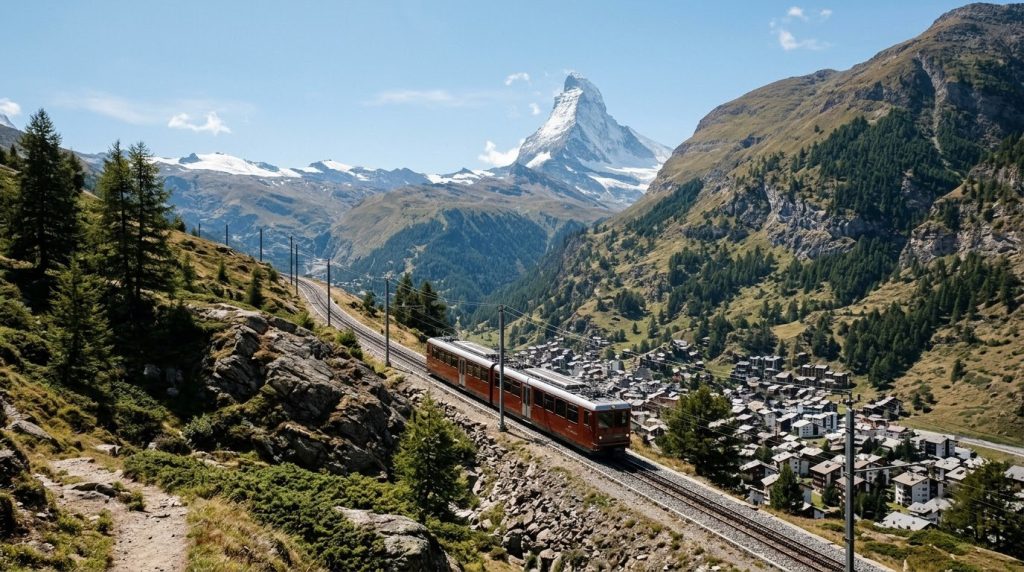
We arrived in Zermatt by train from Visp on a clear October morning. The Matterhorn appeared through the train window 15 minutes before the station, impossibly sharp against a cobalt sky, and every passenger on the right side of the carriage simultaneously reached for their phone. The mountain does this to everyone. It never gets old.
Why Zermatt Is Worth the Trip
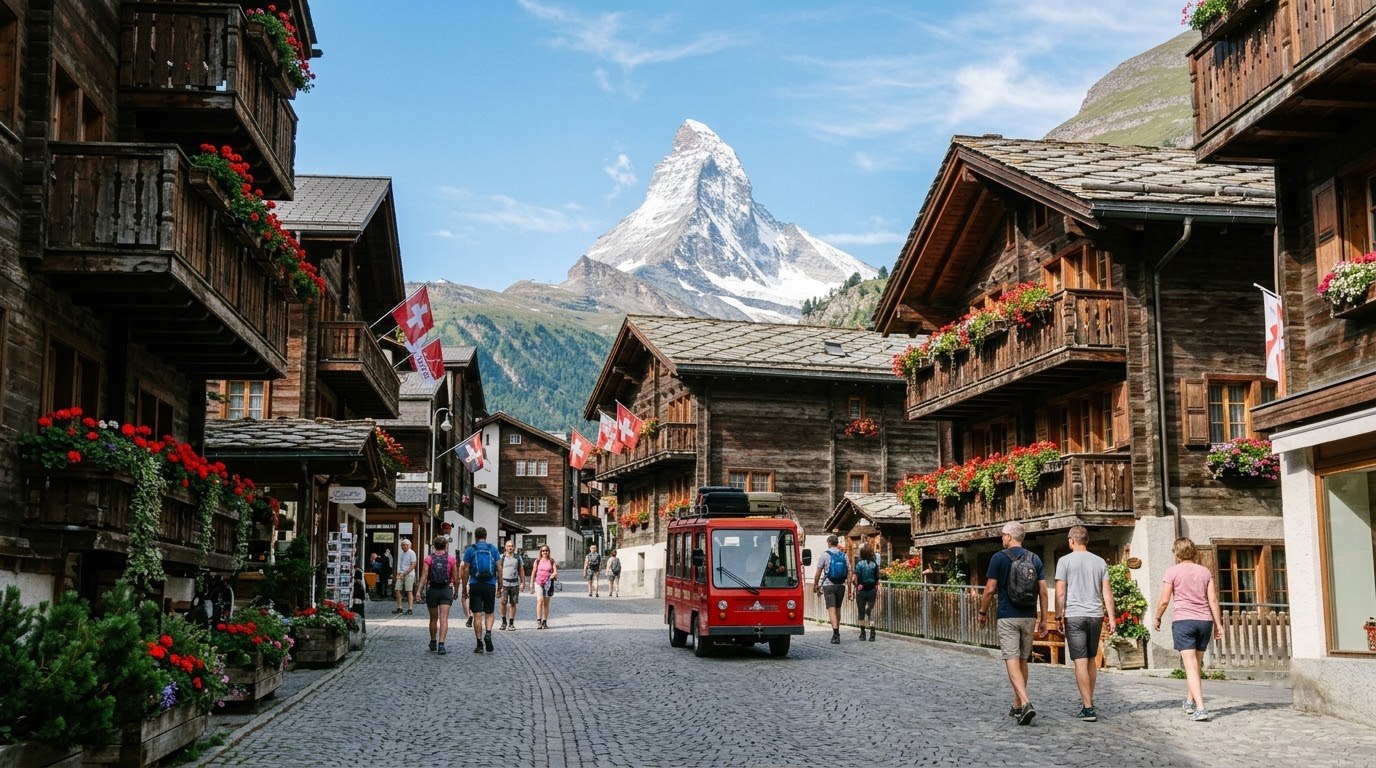
Zermatt is not conveniently located. It sits at the end of a spur railway line from Visp, 3.5 hours from Zurich and 3 hours from Geneva. There is no road connection from the north (the road ends in Tasch, 5 kilometers away, where you park and take the train). The valley was deliberately kept car-free by a local vote in 1961, and the ban has been maintained ever since.
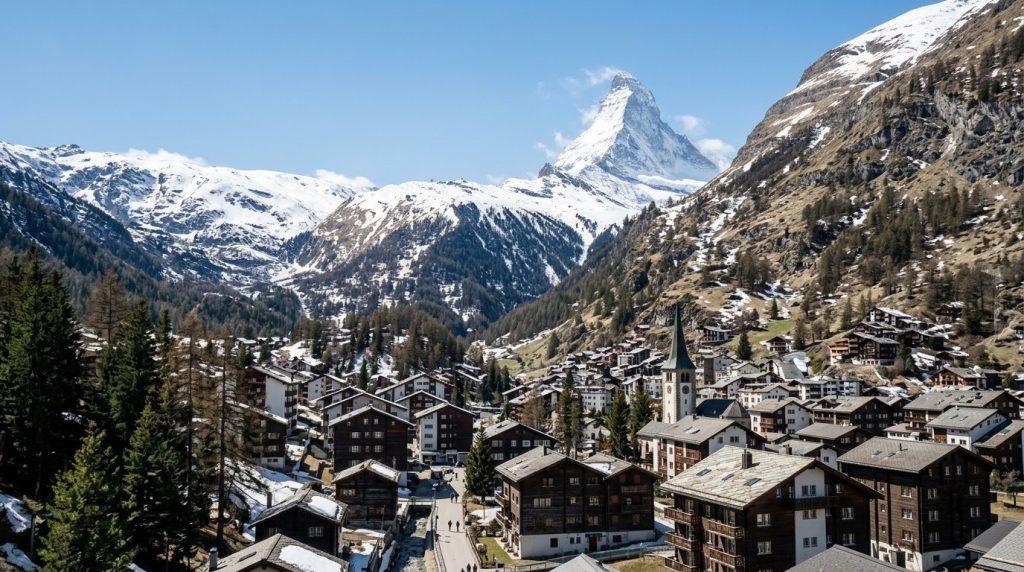
The result is a village that smells of woodsmoke and fresh mountain air rather than diesel. Electric taxis and hotel shuttles glide silently through streets lined with traditional chalets and luxury hotels. The matterhornspitze (Matterhorn peak) is visible from every angle, appearing and disappearing between the buildings as you walk, like a mountain playing peek-a-boo.
Zermatt has roughly 5,500 permanent residents and accommodates roughly 16,000 guests on a peak winter night (Zermatt Tourism, 2026). The tourism infrastructure is immense but largely invisible, tucked into the valley walls with the same Swiss precision that anchors everything in the Alps.
Best Matterhorn Viewing Spots
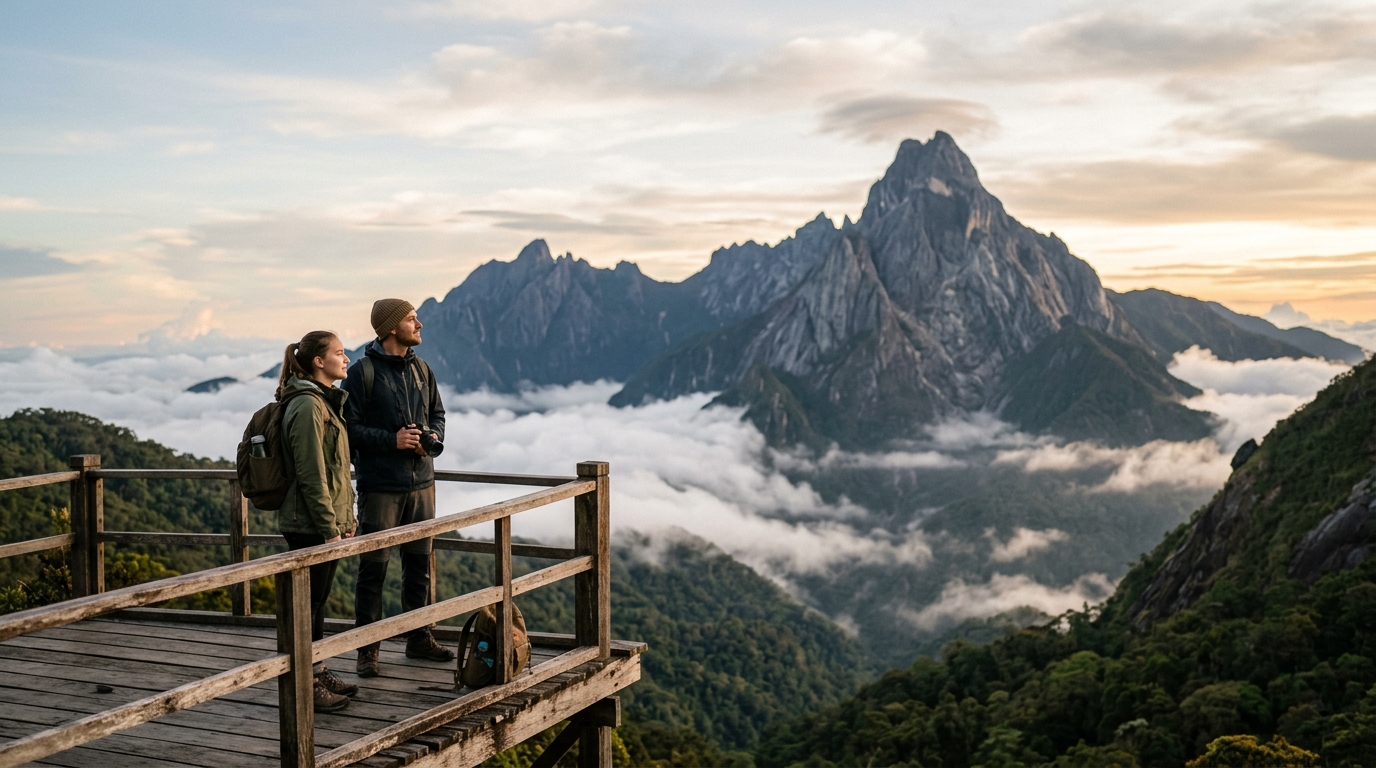
The Riffelsee Reflection
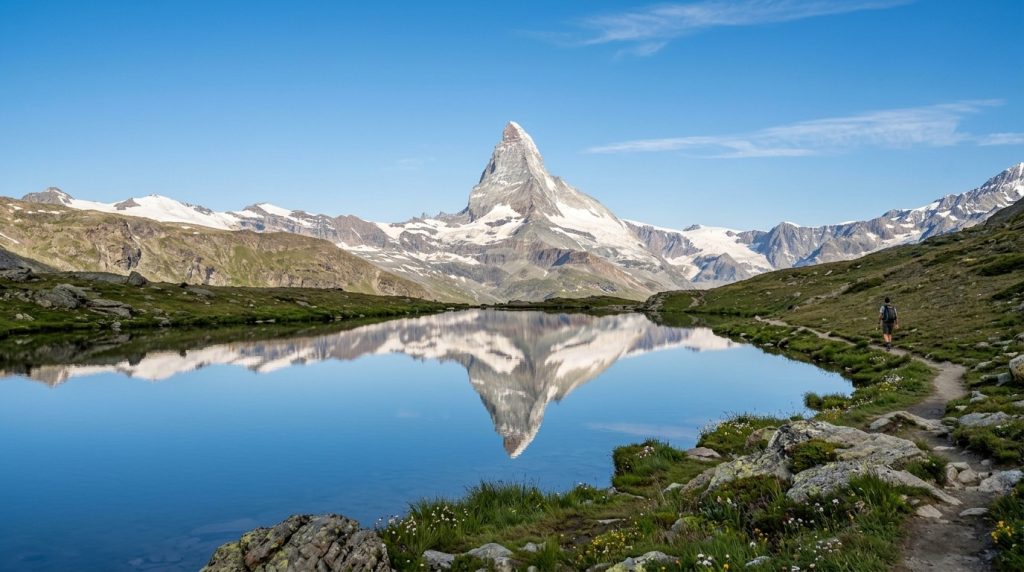
The Riffelsee is a small alpine lake at 2,757 meters that perfectly mirrors the Matterhorn on windless mornings. The reflection is the most photographed Matterhorn image in existence. Take the Gornergrat Railway from Zermatt to Rotenboden station (30 minutes), then walk 10 minutes downhill to the lake.
Arrive before 9:00 AM. By 10:00 AM, the wind typically ruffles the surface. By 9:30 AM in summer, 50 photographers with tripods form a semicircle along the shoreline. The photograph is worth joining the semicircle for.
The Gornergrat Summit
The Gornergrat viewing platform at 3,089 meters faces the Matterhorn and the Monte Rosa massif across the Gorner Glacier, which flows 12.5 kilometers down the valley, the second-longest glacier in the Alps. The platform has a 360-degree panorama of 29 peaks over 4,000 meters.
The Kulmhotel Gornergrat (3,100 meters, from 350 CHF/night) is the highest hotel in Switzerland, with rooms facing the Matterhorn. The sunrise from the summit, with the first light hitting the east face of the Matterhorn, is the single best Matterhorn experience you can have without climbing the mountain itself.
The Kirchbrucke Bridge
In Zermatt village itself, the small bridge over the Vispa River on Kirchstrasse frames the Matterhorn above the rooftops of the old chalets. This is the spot for the classic “Zermatt village with Matterhorn” photograph. Morning light (before 10:00 AM) illuminates the Matterhorn directly.
Sunset alpenglow (the last 30 minutes before the sun drops behind the western peaks) turns the Matterhorn orange-red. The bridge is a 2-minute walk from the train station.
The Sunnegga Terrace
The Sunnegga funicular (an underground train that climbs inside the mountain) reaches 2,288 meters in 4.5 minutes. The terrace at the top faces the Matterhorn directly across the valley, with a restaurant serving rosti and lake fish on a deck where the mountain fills the entire view. The funicular costs 28 CHF one-way.
Leisee, a small lake 5 minutes’ walk from Sunnegga, reflects the Matterhorn on still mornings and is warmer for swimming than the higher-altitude Riffelsee.
Best Things to Do in Zermatt
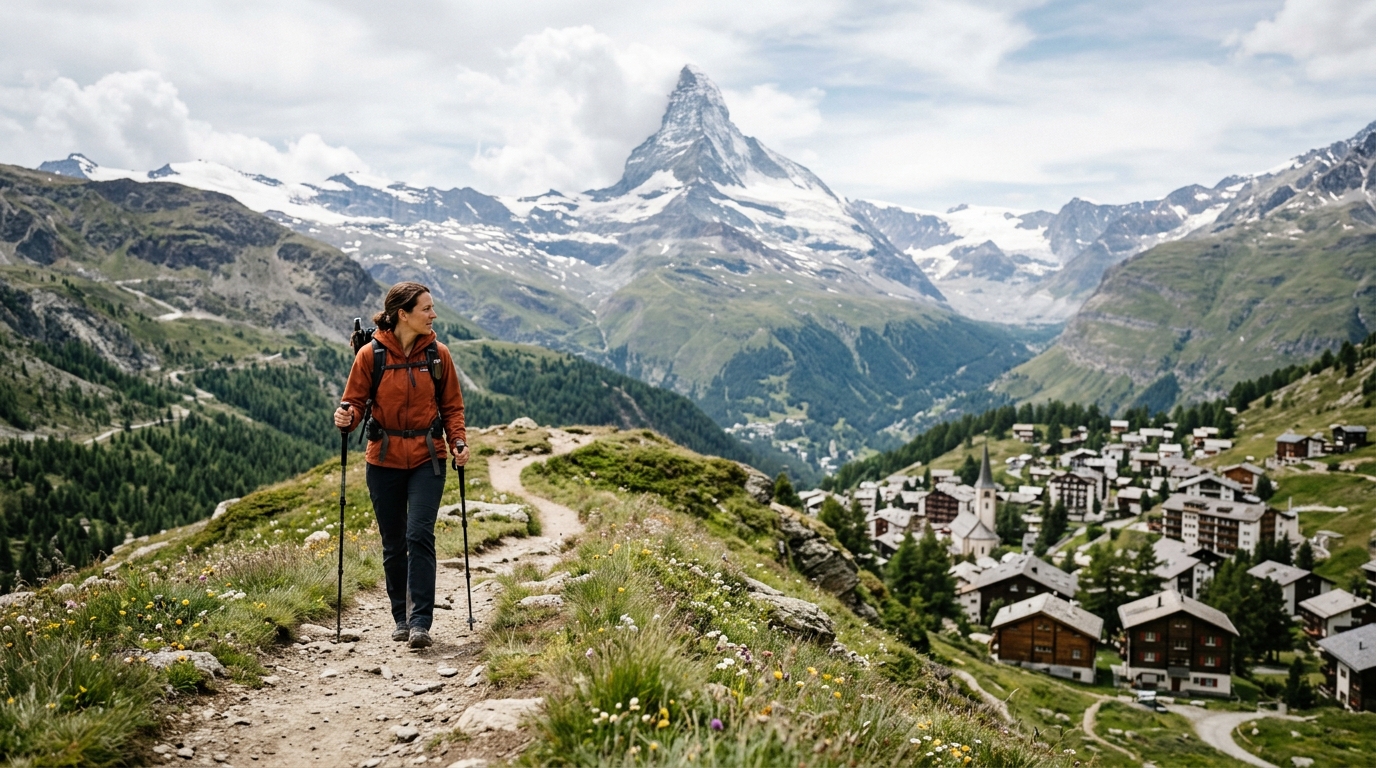
The Gornergrat Railway
Europe’s highest open-air cogwheel railway has climbed from Zermatt to the Gornergrat summit since 1898. The journey takes 33 minutes and climbs 1,469 vertical meters through larch forest, alpine meadow, and finally glacier views. The train runs year-round and departs every 24 minutes in summer. Sit on the right side facing forward for the best Matterhorn views during the ascent.
Cost: 110 CHF round-trip, covered 50% by Swiss Travel Pass. Book at gornergrat.ch. The first train departs Zermatt at 7:00 AM. Take it. By 9:00 AM, the viewing platform fills.
Matterhorn Glacier Paradise
The highest cable car station in Europe sits at 3,883 meters on the Klein Matterhorn, and the panorama from the viewing platform spans 38 peaks over 4,000 meters across Switzerland, Italy, and France. The ice palace, carved 15 meters into the glacier, contains ice sculptures, frozen tunnels, and an ice slide. The temperature inside stays around -4 degrees C (25 F) year-round.
Cost: 109 CHF round-trip. The cable car from Zermatt ascends in three stages (Furi, Trockener Steg, Klein Matterhorn). The journey takes 40 minutes each way. Combine with a ski run back down in winter (the Klein Matterhorn is the highest ski area in Europe, open 365 days a year on the glacier).
The Matterhorn Museum
The underground museum (10 CHF) beneath the village square traces Zermatt’s history from a remote farming valley to a global mountaineering destination. The centerpiece is the broken rope from the first ascent of the Matterhorn in 1865, when four of the seven climbers fell to their deaths on the descent. The museum covers mountaineering history, village life, and the geology that created the Matterhorn.
Skiing & Snowboarding in Zermatt
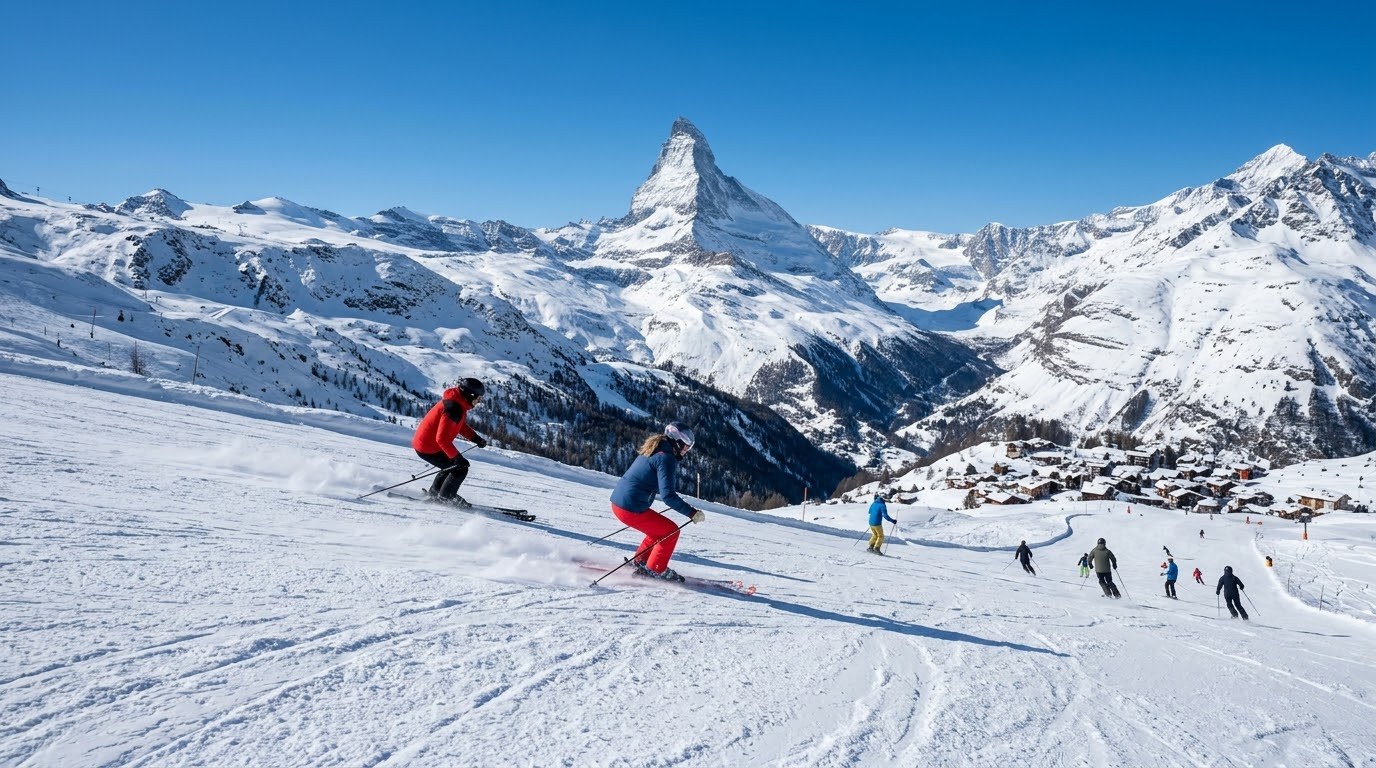
Zermatt is one of the few ski resorts in the world with year-round skiing (on the Theodul Glacier) and the highest winter ski area in Europe, reaching 3,883 meters. The ski area spans 360 kilometers of pistes across Zermatt and the connected Italian resort of Cervinia, with the border crossing at the Theodul Pass (3,295 meters). You can ski from Switzerland into Italy and back in a single day.
The international ski pass (108 CHF/day) covers both the Swiss and Italian sides. Ski over to Cervinia for lunch (pasta costs roughly half what it costs in Zermatt, 12-18 EUR vs. 25-35 CHF). The ski back takes roughly 45 minutes depending on lift queues.
The best ski runs include Matterhorn Ski Safari (a full-day circuit circling the Matterhorn counterclockwise, roughly 50 kilometers of varied terrain), the Gornergrat red runs (wide, scenic, intermediate-friendly), and the Stockhorn black (steep, north-facing, often with powder). The season runs late November through late April on the main area, year-round on the glacier.
Zermatt in Summer: Hiking & More
Summer in Zermatt (June-September) opens 400 kilometers of marked hiking trails across the valley. The best include:
The Five Lakes Trail (5-Seenweg): A 9-kilometer loop from Sunnegga passing five alpine lakes, each reflecting the Matterhorn from a different angle. Moderate difficulty, 2.5 hours. The Grindjesee, Stellisee, Grunsee, Moosjesee, and Leisee each offer a distinct Matterhorn composition. The Stellisee has the best reflection.
The Europaweg: A 2-day high alpine trail from Zermatt to Grachen along the eastern wall of the Matter Valley, with the Matterhorn dominating the western view for nearly the entire route. The trail is one of the most dramatic multi-day hikes in the Alps. The Europa Hut (2,220 meters) at the midpoint offers dormitory beds and Matterhorn sunset views. Moderate-to-difficult. Book the hut at least one week ahead.
Hohbalm: A less-visited alpine meadow above Zmutt (a hamlet of traditional chalets 20 minutes’ walk from Zermatt), with a head-on Matterhorn view and roughly 1% of the crowds of the Gornergrat. The trail climbs 700 meters from Zermatt over 2 hours. The meadow in July is carpeted in wildflowers.
Frequently Asked Questions
How many days do I need in Zermatt?
Three full days is the minimum to justify the journey and cost. Day one for the Gornergrat and Matterhorn viewing. Day two for hiking or skiing. Day three for the Matterhorn Glacier Paradise or a longer trail. Two days feels rushed. Four days allows the Europaweg hike or a day skiing into Cervinia.
Is Zermatt worth the cost?
Yes, for the Matterhorn experience. The mountain is genuinely as dramatic as the photographs suggest, and the combination of the car-free village, the Gornergrat Railway, and the multitude of viewpoints creates a complete destination that justifies the expense at least once.
How do I get to Zermatt?
Take the train to Visp, then the Matterhorn Gotthard Bahn spur line to Zermatt (1 hour 10 minutes from Visp). The journey from Zurich takes 3 hours 15 minutes. From Geneva, 3 hours. The Swiss Travel Pass covers the entire journey. Cars must be left in Tasch; the train from Tasch to Zermatt takes 12 minutes.
Is Zermatt better in summer or winter?
Both are spectacular and completely different. Winter for skiing, the Christmas market, and snow-covered Matterhorn views. Summer for hiking, wildflowers, and the Five Lakes reflection trail. If you must choose, summer offers more for non-skiers. The Matterhorn is visible in both seasons and looks more dramatic with snow on the peak (which it has year-round).
Is Zermatt only for skiers and hikers?
No. The Gornergrat Railway, the Matterhorn Glacier Paradise cable car, and the Sunnegga funicular are accessible to all fitness levels. You can experience the 4,000-meter panorama, the ice palace, and the Matterhorn reflection at Riffelsee with zero hiking or skiing required. The village itself, with its traditional chalets, boutiques, and restaurants, rewards a multi-day stay even if you never put on hiking boots.
Can I see the Matterhorn without going to Zermatt?
Yes, from the Italian side in Cervinia, which is cheaper and less crowded. But the classic Matterhorn pyramid shape is most dramatic from the Swiss side. The mountain looks symmetrical from Zermatt. From Italy, it appears broader and less pyramid-like.
The Matterhorn at sunrise, when the first light hits the east face and turns the peak from grey to gold to blazing orange over the course of 15 minutes, is one of the great natural spectacles of the Alps. It has been photographed billions of times and appears on a chocolate bar wrapper. Neither of these facts diminishes it.
Some things are famous because they are beautiful. The Matterhorn is beautiful regardless of its fame.
Continue your Swiss Alps journey with our guides to Interlaken, Lauterbrunnen, and Grindelwald.
Sources: Zermatt Tourism (2025-2026), Gornergrat Railway (2026), Matterhorn Group lift company (2026). Book: GetYourGuide for mountain excursions, Booking.com for hotels, Airalo for Switzerland eSIM from $6.
Find your Zermatt hotel on the map
Live prices from Booking, Airbnb and more — move the map or change dates to compare stays around Zermatt.
More European Travel Guides