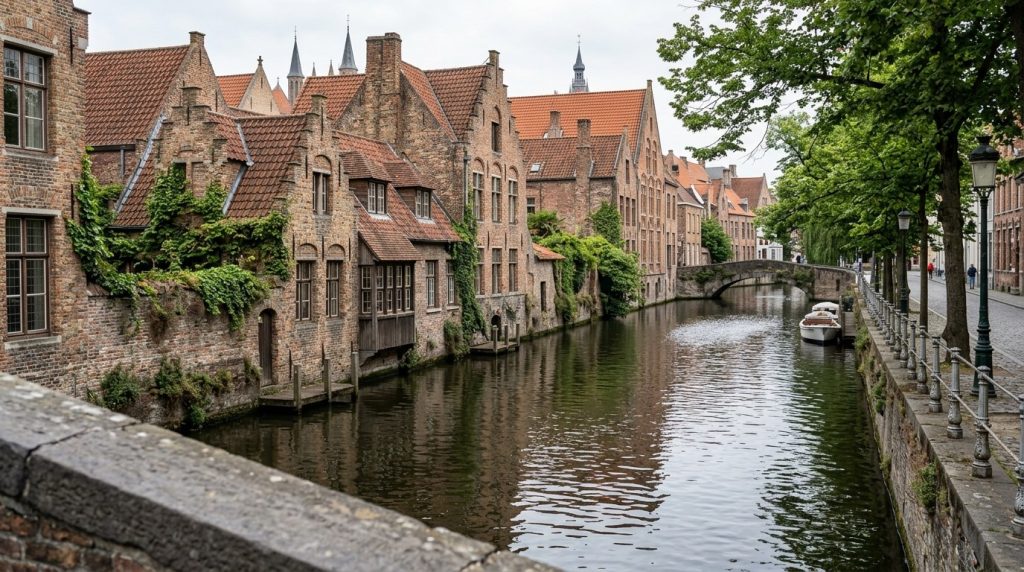
Best Bruges Travel Guide 2026: Canals, Chocolate & Medieval Magic
By TravelguidestipUpdated 8 min readHow we earn
Hotel buttons open Stay22 (Booking.com, Agoda and others) and tour buttons open GetYourGuide. We may earn a commission at no extra cost to you.
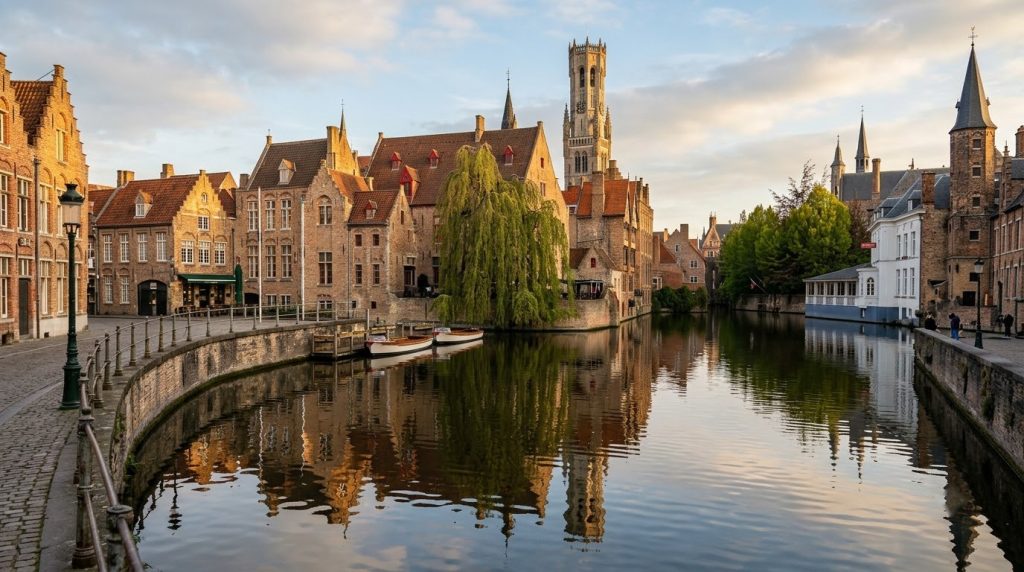
In short
- Climb the Belfry (15 EUR) for 366 steps and a 360-degree city view. Go at 9:30 AM when it opens. By noon the queue stretches 45 minutes for a staircase barely wide enough for one person.
- A canal boat tour (14 EUR, 30 min) is the best introduction to the city. Departures from five docks every 15-20 minutes. Take the first boat for the calmest water and the best reflections.
- The best chocolate costs 6-8 EUR for a small box. Skip the chains. The Chocolate Line on Simon Stevinplein and family-run Dumon Chocolatier on Eiermarkt are the two worth crossing Belgium for.
- The Begijnhof is a 13th-century courtyard garden where Benedictine nuns still live. Entry is free. Silence is mandatory. Most visitors never find it.
- Day-tripping works if you arrive by 9:00 AM and leave after dinner. Bruges at 8:00 PM has empty canals and lit bridges. Bruges at 1:00 PM has neither.
Quick answer: Bruges is a compact, walkable medieval UNESCO canal city best experienced as an overnight stay rather than a rushed day trip. One to two unhurried days cover the Belfry climb, the canal-side lanes, and Belgian chocolate and beer, and staying past the last train to Brussels leaves the Markt and canals near-empty at dawn and after dusk.
Bruges looks like a film set for a medieval fairytale that someone forgot to strike. Step-gabled houses in shades of terracotta and gold lean over canals threaded with swans. The Belfry tower has been ringing out over the Markt square since 1240. Roughly 8.3 million visitors walked these cobblestones in 2025 (Visit Bruges, 2026), making it one of Europe’s most visited small cities.
This Bruges travel guide covers everything you need to plan your 2026 visit. When the last day-tripper boards the last train back to Brussels, the canals fall silent and the street lamps flicker on across the water. The city belongs to itself again, and to those who stayed.
We only recommend services we have experienced or thoroughly researched. Learn more.
The recommendations below come from multiple visits and a genuine conviction that this city at 7:00 AM is one of the finest travel experiences in Europe.
Best Things to Do in Bruges
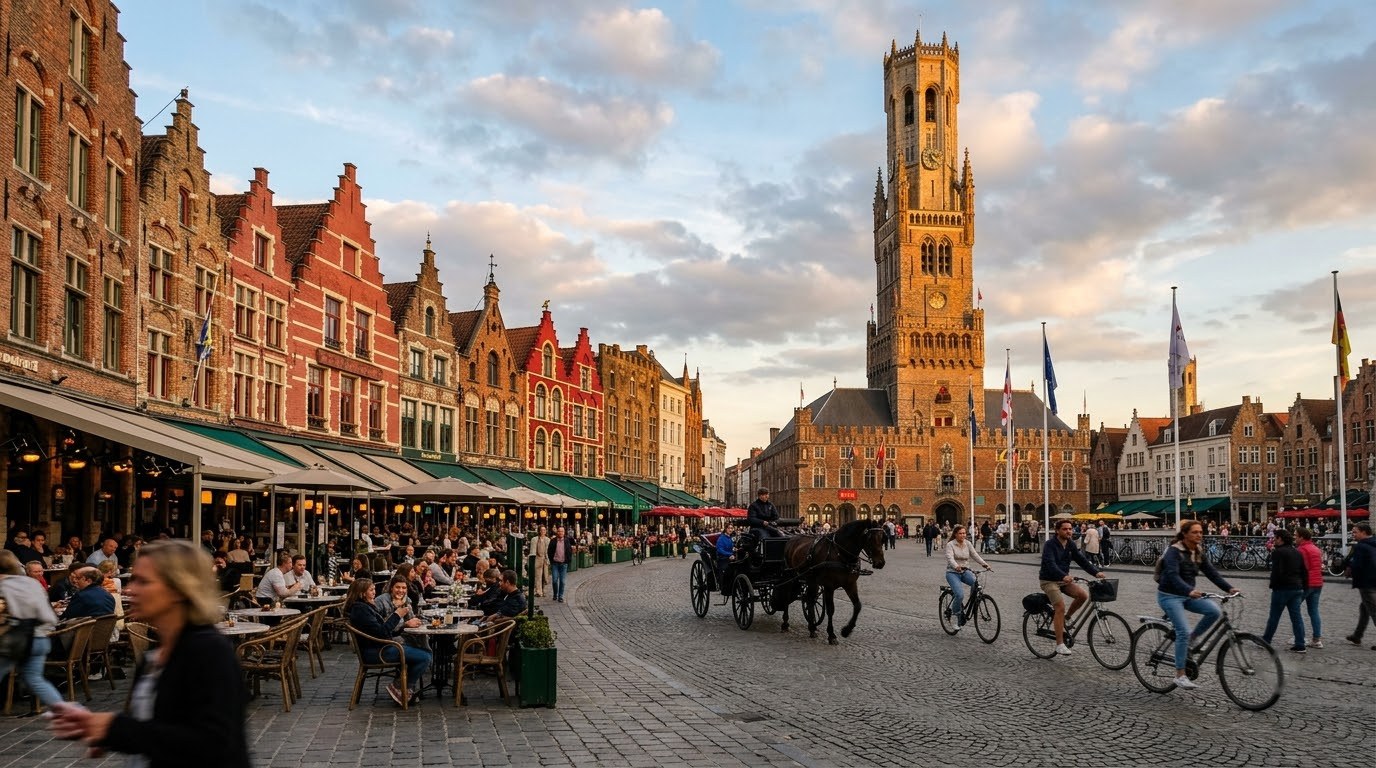
Bruges packs more UNESCO-listed architecture per square meter than almost any city in Europe. The entire historic center earned World Heritage status in 2000, and the density of sights means you can walk between the top five in under ten minutes (UNESCO, 2000).
The Belfry Tower
The Belfort has stood over the Markt since the 13th century, and its 47-bell carillon still plays every 15 minutes. The climb is 366 steps of narrow, spiraling stone that rewards the committed with increasingly spectacular views at every window. The final platform at 83 meters delivers the classic Bruges panorama: red-tiled rooftops, the Church of Our Lady spire, and the green Flemish countryside beyond the canals.
Cost: 15 EUR. Open 9:30 AM-6:00 PM daily. The staircase is single-file for most of the climb — there is no passing, no stopping, and no turning around once you commit. Go at opening time.
The Groeningemuseum
The finest art museum in Bruges holds seven centuries of Flemish painting in a compact, manageable collection. The stars are Jan van Eyck’s Madonna with Canon van der Paele (1436) and Hieronymus Bosch’s nightmarish Last Judgment. Unlike the massive museums of Brussels or Antwerp, the Groeninge can be fully appreciated in 90 minutes. Entry costs 14 EUR, closed Mondays.
The Church of Our Lady
The 122-meter brick spire is the tallest structure in Bruges and the second-tallest brick tower in the world (Switzerland Tourism, 2026). Inside, Michelangelo’s Madonna and Child (1504) sits in a side chapel — the only Michelangelo sculpture to leave Italy during his lifetime, purchased by Bruges wool merchants. The museum section costs 8 EUR. The main church is free.
Most Beautiful Canal Views & Photo Spots
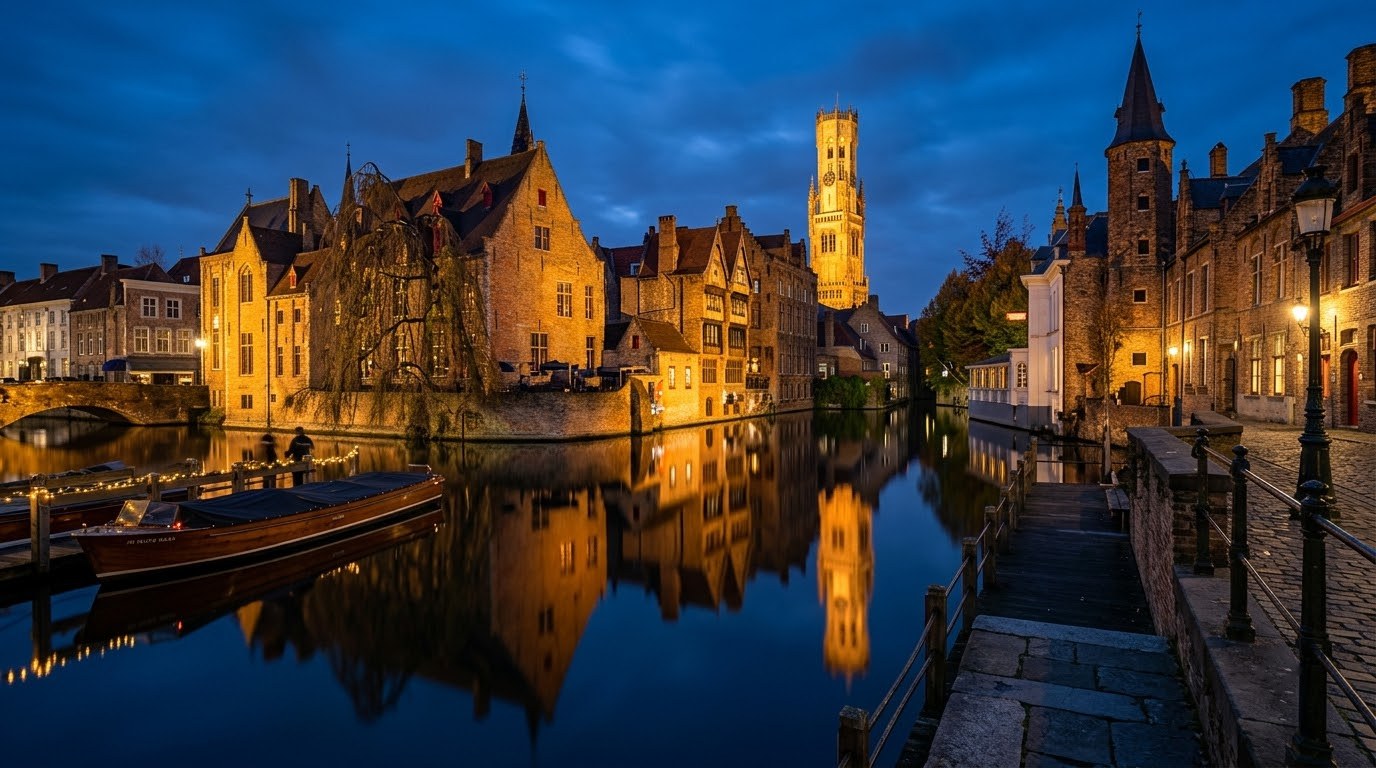
Rozenhoedkaai
The most photographed spot in Bruges is the corner where the Dijver and Groenerei canals meet, looking back toward the Belfry. Go before 8:00 AM in summer for the best morning light and zero crowds. By 10:00 AM, tripods form a queue at this corner.
Groenerei from Meestraat Bridge
Walk five minutes north to the Meestraat bridge on the Groenerei canal. This angle looks south toward the Belfry with weeping willows framing the water and no crowds. In autumn, the willows turn gold and the reflection doubles the color.
Minnewater Lake
Minnewater sits at the southern edge of the historic center in a park that feels miles from the Markt crowds. The stone bridge crossing the lake reflects perfectly on still water. Swans congregate here year-round. A bench beneath the willow tree at the lake’s eastern end is the spot to sit, not photograph, for fifteen minutes.
The Belfry Panorama
From the top, shoot directly down onto the Markt square where gabled guildhalls form a colorful perimeter. A 24mm wide-angle captures the full scope. The clock mechanism room, one level below, has open windows on all four sides without the protective grille.
Find your Bruges hotel on the map
Live prices from Booking & Airbnb — tap a pin to compare stays around the Historic Centre (Markt) and beyond.
Where to Find the Best Chocolate
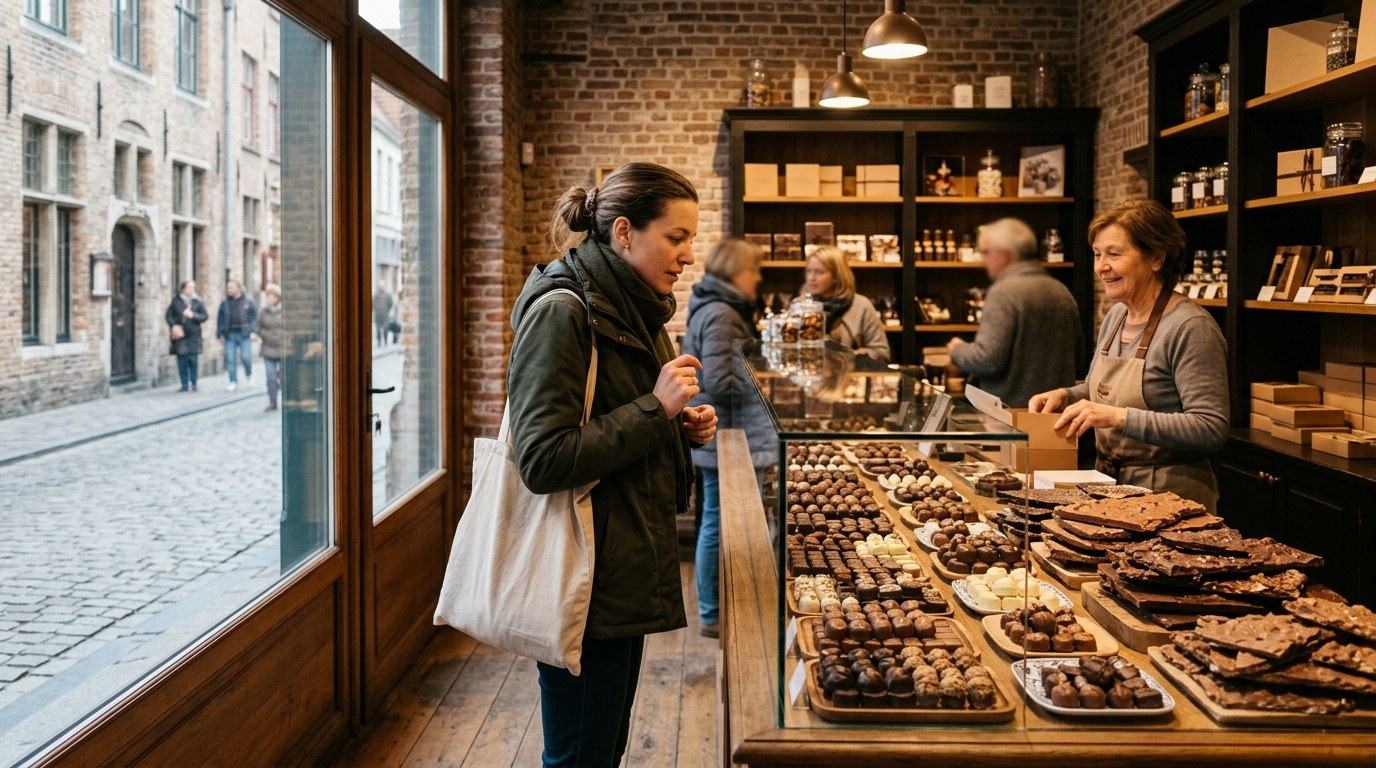
Bruges has over 50 chocolate shops (Visit Bruges data, 2026). Roughly 40 sell the same mass-produced truffles. The other 10 are worth crossing Belgium for.
The Chocolate Line
Dominique Persoone runs the most adventurous chocolate shop in Belgium on Simon Stevinplein. His flavors include wasabi, bacon, fried onion, and sake alongside traditional pralines. A chocolate-making machine visible from the counter produces fresh pralines throughout the day. A small box of 6 pieces costs 6-8 EUR.
Dumon Chocolatier
The Dumon family has been making chocolate in Bruges since the 1990s, and their tiny shop on Eiermarkt has no website, no social media, and a line out the door on Saturdays. The pralines are traditional: hazelnut, coffee, orange, rum, all handmade in a workshop visible behind the counter. A small box costs 5-7 EUR.
**** The hazelnut praline at Dumon wraps a whole roasted hazelnut in dark chocolate ganache, coated in milk chocolate. One is never enough. A box of a dozen pralines disappears fast between two people — the bench overlooking the Groenerei is a good spot to eat them.
Hidden Corners of Bruges
The Begijnhof
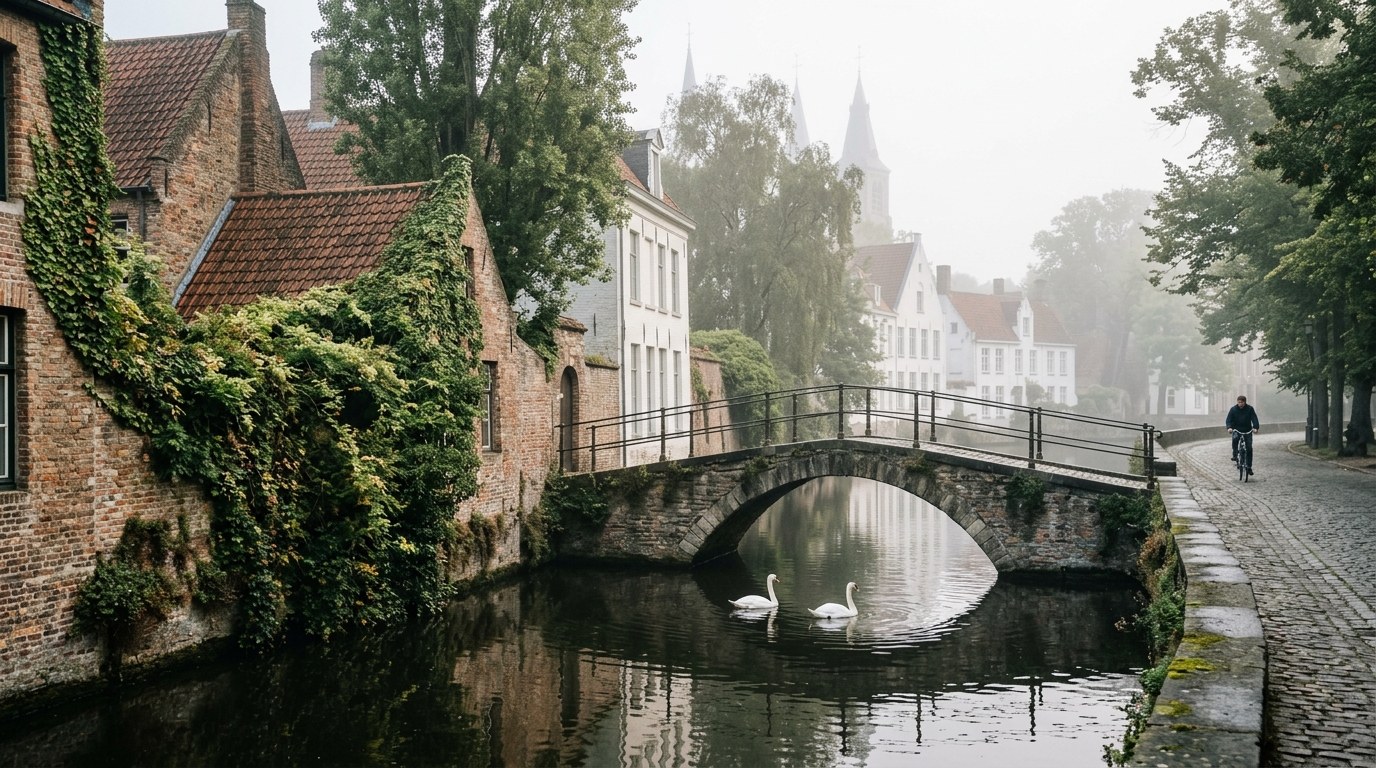
The Princely Beguinage Ten Wijngaarde was founded in 1245 as a community for lay religious women, and Benedictine nuns still live in the whitewashed houses surrounding the central courtyard. Enter through the arched stone gate past the sign that reads “Silence.” The courtyard is planted with poplar trees. Free entry. The only sounds are birds and the distant chime of the Belfry.
Sint-Anna Quarter
The Sint-Anna quarter northeast of the center has cobblestone streets, antique shops, and zero tour groups. The Jerusalem Church on Balstraat is a 15th-century private chapel modeled on the Church of the Holy Sepulchre, complete with a macabre altarpiece and a crypt. Entry is 8 EUR.
The windmills along the Kruisvest park, four of which still stand along the old city ramparts, grind grain on weekends. The Sint-Janshuismolen (1770) is open to visitors on Saturdays. The view from the rampart path looks across the canal toward the Damme countryside.
The Adornes Domain
The Adornes family, a Genoese merchant dynasty, built their private chapel and almshouses in the 15th century and still lives in the adjoining mansion. The Jerusalem Chapel holds a replica of Christ’s tomb. The small museum traces six centuries of one family’s history. Entry: 8 EUR, open Tuesday-Sunday. This museum receives roughly 0.5% of the Belfry’s annual visitors.
How to Plan the Perfect Day in Bruges
Getting There
Bruges is 1 hour from Brussels by train (15.80 EUR one-way, Belgian Rail SNCB 2026), 30 minutes from Ghent (7.60 EUR), and 1.5 hours from Antwerp. The station sits a 20-minute walk from the Markt. Bus 1 or 2 runs every 10 minutes. Walking through Minnewater Park is the better introduction.
The Ideal Timeline
8:00 AM: Arrive by train. Walk through Minnewater as morning mist hangs over the lake. Continue to the Begijnhof. Sit in the courtyard.
9:30 AM: Belfry tower. First in line. Climb 366 steps. Descend and reward yourself with a Liege waffle from the Markt food truck (4 EUR, caramelized and dense).
10:30 AM: Rozenhoedkaai for the canal photo. Walk to Meestraat bridge for the second angle.
11:30 AM: Chocolate tasting. Start at The Chocolate Line, walk to Dumon, then BbyB for a minimalist tasting experience.
1:00 PM: Lunch at De Halve Maan Brewery on Walplein. The Flemish beef stew in Brugse Zot beer (19 EUR) is served in the brewery courtyard. A tour (16 EUR including beer) climbs to the rooftop.
2:30 PM: Groeningemuseum for van Eyck and Bosch. Then walk through Sint-Anna to the windmills.
5:00 PM: Canal boat tour. The afternoon light is warm on the buildings. The crowds thin.
7:00 PM: Dinner at a restaurant with candlelight. Try De Koetse on Oude Burg for Flemish classics in a 16th-century dining room.
9:00 PM: Walk the canals one last time. The bridges are lit. This is the Bruges they cannot print on postcards.
Frequently Asked Questions
Is Bruges worth visiting?
Absolutely. Bruges is one of the best-preserved medieval cities in Europe with the entire historic center as a UNESCO World Heritage site. Over 8.3 million visitors in 2025 (Visit Bruges, 2026) confirms its appeal, but Bruges still rewards early risers who stay late.
How many days do I need in Bruges?
Two days is ideal. Day one for highlights (Belfry, canals, chocolate). Day two for Sint-Anna, the windmills, and a bike ride to Damme along the canal. One day covers the essentials but feels rushed. Three days allows a day trip to Ghent.
Is Bruges expensive?
Mid-range. Budget 120-170 EUR ($130-185 USD) per day per person including hotel, meals, museum entries, and a canal boat tour. Hotels are the biggest expense at 120-200 EUR/night in the old town. Food prices are moderate. Museum entries range 8-15 EUR.
What is the best time to visit Bruges?
April through June and September through October are ideal with mild weather and manageable crowds. December brings Christmas markets in the Markt. July and August are busiest. Winter fog with the Belfry disappearing into low cloud has its own magic.
Can I visit Bruges as a day trip from Brussels?
Yes. The train takes 1 hour each way (15.80 EUR, Belgian Rail SNCB 2026). Arrive by 9:00 AM and stay until after dinner to experience the city with empty canals and lit bridges. Day tripping Bruges works if you stay late.
Bruges is not a city that demands active exploration. It is a city that rewards stillness. Stand on a canal bridge at dawn. Sit in the Begijnhof courtyard and listen to nothing. Eat a hazelnut praline from Dumon while leaning against a 600-year-old stone wall. The Belfry will ring the quarter hour as it has done since 1240.
Continue your European journey with our guides to Interlaken in Switzerland, Lauterbrunnen valley, and Menton on the French Riviera. For more Belgian destinations, explore our upcoming Ghent and Brussels guides.
Sources: Visit Bruges (2025-2026), Belgian Rail SNCB (2026), UNESCO (2000). Book: GetYourGuide for tours, Booking.com for hotels, Airalo for Belgium eSIM from $6.
More European Travel Guides