Disclosure: Some links in this guide are affiliate links. If you book or buy through them, we may earn a small commission at no extra cost to you — it helps keep our guides free.
Best Ljubljana Travel Guide 2026: Why Europe’s Greenest Capital Should Be on Your List
Quick answer: Ljubljana is a compact, car-free capital you can cover comfortably in one to two days on foot, with the pastel old town, Triple Bridge, Dragon Bridge, and the funicular up to the castle all within a short riverside walk of each other. Its real strength is as a base: Lake Bled sits only about an hour away by direct bus, making Ljubljana one of Europe’s greenest and most affordable capitals to slow-travel from.
Ljubljana is the capital of a country that most Europeans could not place on a map, and that is precisely the point. While Prague, Vienna, and Budapest absorb the Central European tourist overflow, Slovenia’s capital of roughly 295,000 people (Statistical Office of Slovenia, 2026) quietly gets on with being one of the most livable small cities on the continent. The Ljubljanica River winds through a car-free old town lined with willow trees, baroque facades, and outdoor cafes that fill by 10:00 AM and stay full until midnight. A castle watches from the hill above. Dragon statues guard the bridges.
This Ljubljana travel guide covers why this green capital deserves your attention, the best things to do, the castle, the best day trips, and where to eat like a local.
Key Takeaways
– Ljubljana’s old town is car-free and compact enough to walk end-to-end in 20 minutes. The entire historic center spans roughly 1 square kilometer. The absence of cars creates a calm that cities ten times Ljubljana’s size cannot match.
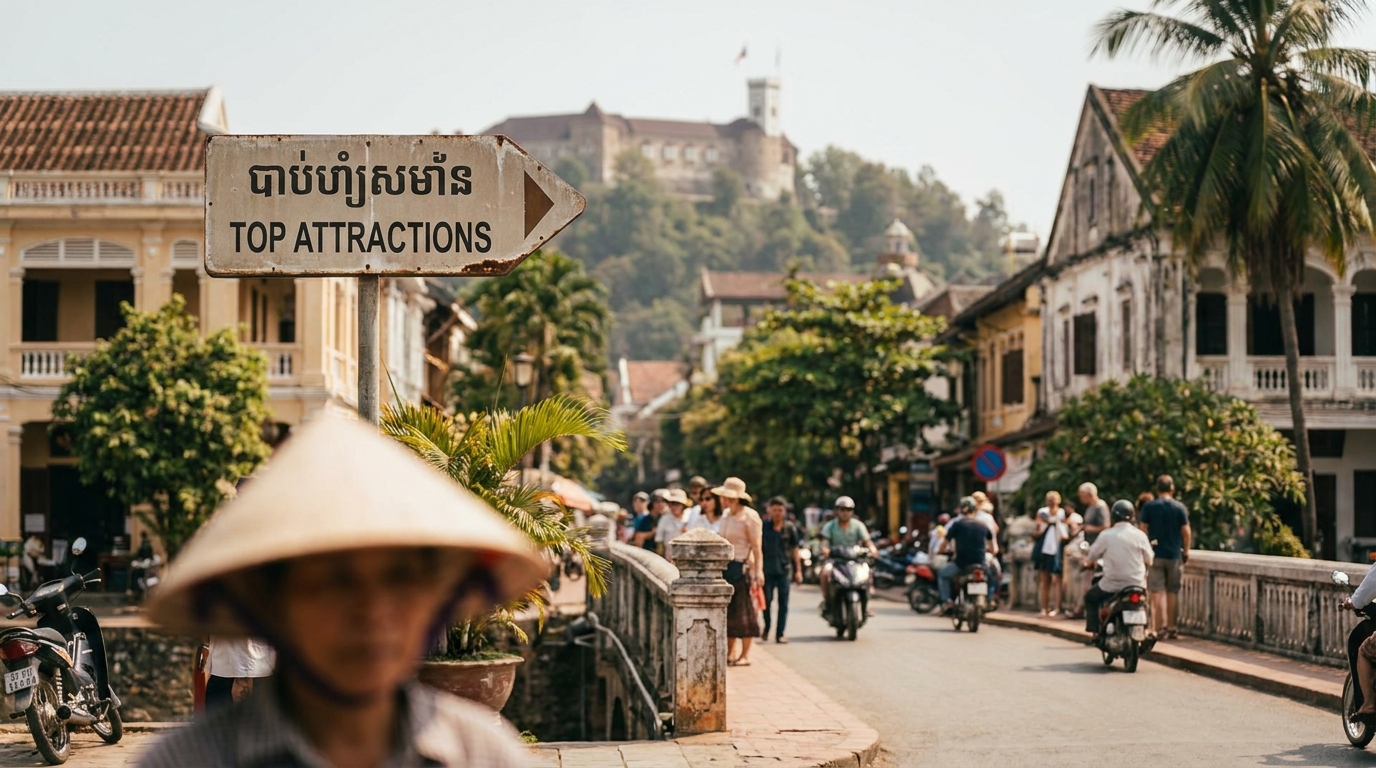
– The Ljubljana Castle (10 EUR funicular + entry, or free to walk up) dominates the hill above the old town. The view from the tower spans the entire city, the Kamnik Alps to the north, and the Julian Alps to the west on clear days.
– Lake Bled is a 45-minute bus ride (6.30 EUR one-way) and the most photographed destination in Slovenia. The island church, the clifftop castle, and the turquoise lake framed by the Julian Alps justify every postcard ever printed.
– Dragon Bridge (Zmajski Most) is guarded by four copper dragon statues, the symbol of Ljubljana since Jason and the Argonauts supposedly founded the city after slaying a dragon in the Ljubljana marshes.
– Slovenia is one of the best value destinations in Central Europe. A three-course dinner for two with wine costs 40-55 EUR. A coffee at a riverside cafe costs 2 EUR. The country uses the Euro and prices feel roughly 30-40% below Austria or Italy.We only recommend services we genuinely trust. Learn more.
**** We spent a long weekend in Ljubljana in May, and the city revealed itself slowly: a morning coffee by the river, an afternoon in the Tivoli Park, an evening at an open-air restaurant where the waiter recommended a Slovenian orange wine that cost 4 EUR a glass and tasted like summer. Ljubljana does not demand your attention the way Paris or Rome does. It simply rewards the time you give it.
Why Ljubljana Is Europe’s Hidden Gem
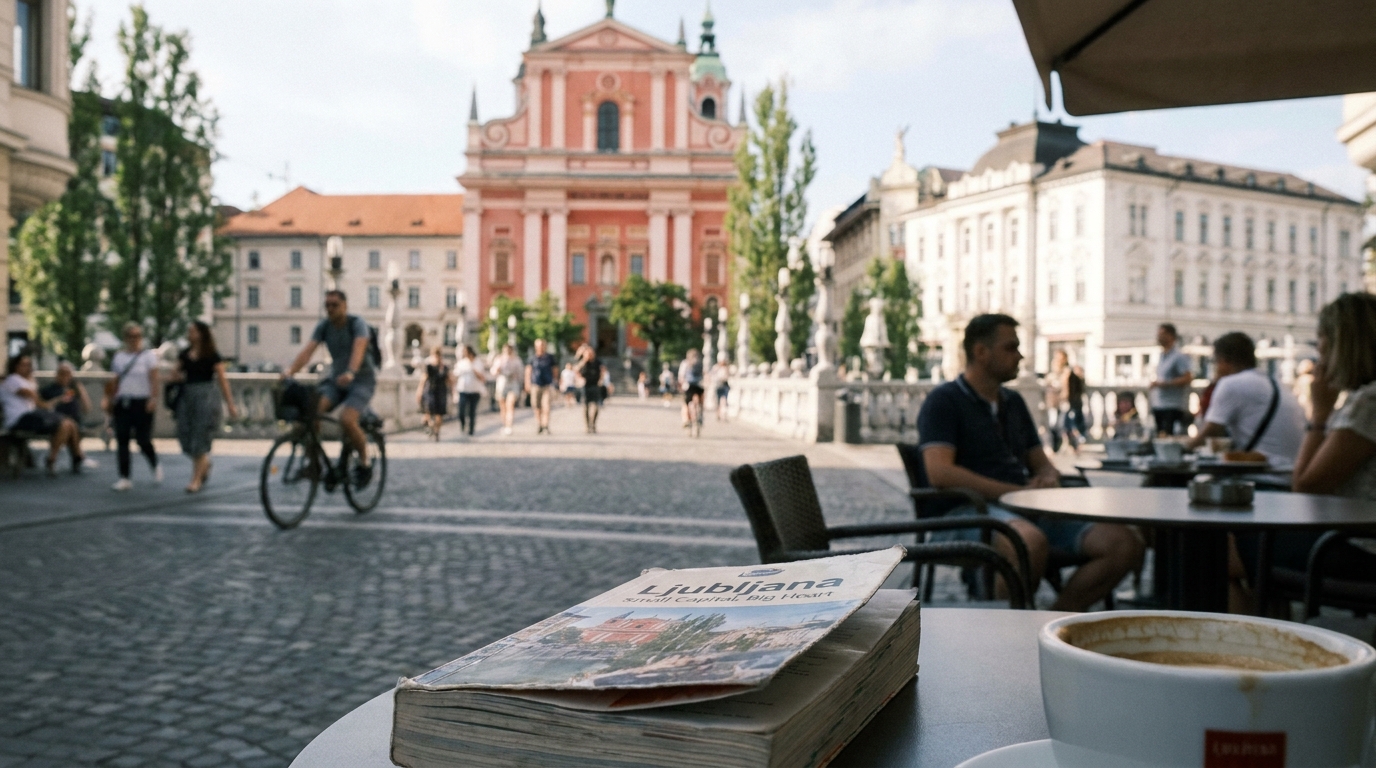
Ljubljana became the European Green Capital in 2016, and the title was not a marketing exercise. The car-free old town, the 542 square meters of public green space per resident (one of the highest ratios in Europe), and the city-wide bicycle-sharing system are genuine achievements. The architect Joze Plecnik reshaped the city between the world wars, adding colonnades, bridges, and public spaces that feel like a Central European Gaudí working in stone rather than ceramic.
The Triple Bridge (Tromostovje), three bridges spanning the Ljubljanica at the same point, is Plecnik’s most famous work. The outer two bridges were added in 1931 for pedestrians, leaving the central bridge for traffic. Today, all three are pedestrianized, and the steps leading down to the riverbank cafes from the bridges are where Ljubljana’s social life concentrates after sunset.
The city’s symbol is the dragon, which appears on the coat of arms, the Dragon Bridge, and roughly half the souvenir merchandise in Slovenia. The mythological connection traces to Jason (of Argonaut fame), who supposedly killed a dragon in the marshes where Ljubljana now stands. The dragon statues on the Dragon Bridge, cast in 1901, are the most photographed objects in the city.
The 3-Day Ljubljana Itinerary
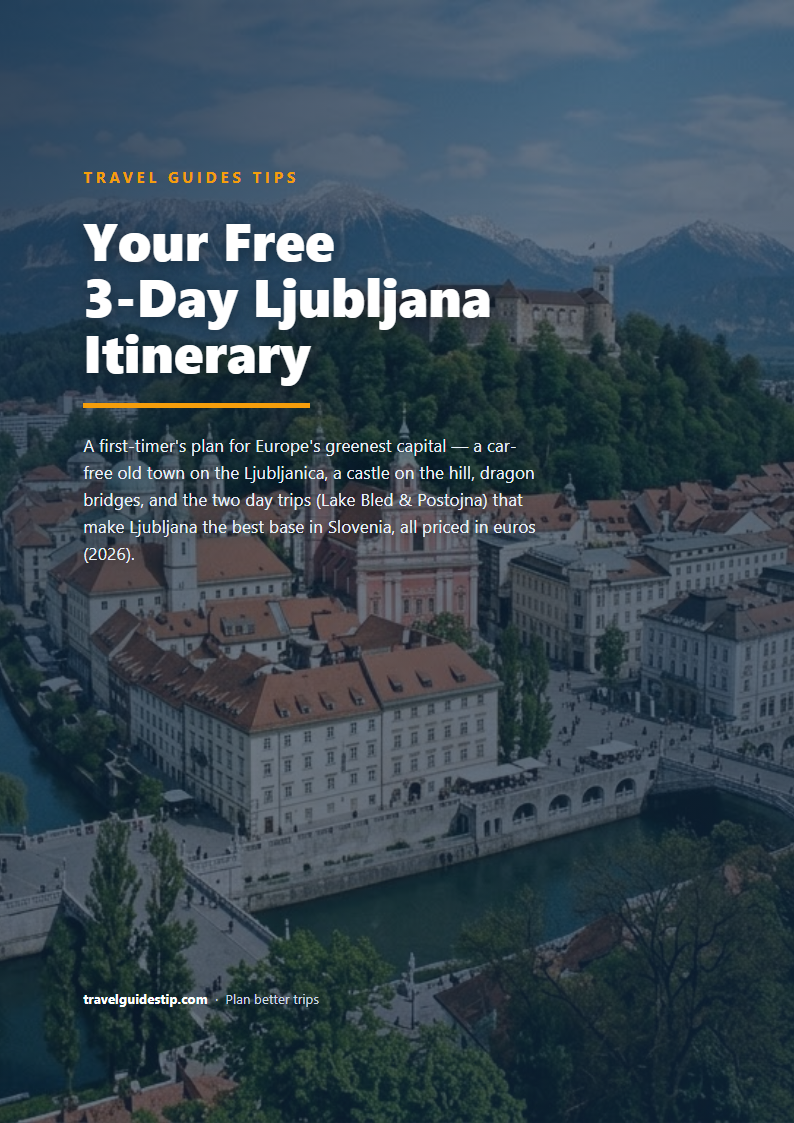
The plan we use ourselves — sent straight to your inbox.
- Day-by-day route
- Where to stay
- Real 2026 costs
Free · No spam · Unsubscribe anytime
Best Things to Do in Ljubljana
The Old Town Riverside
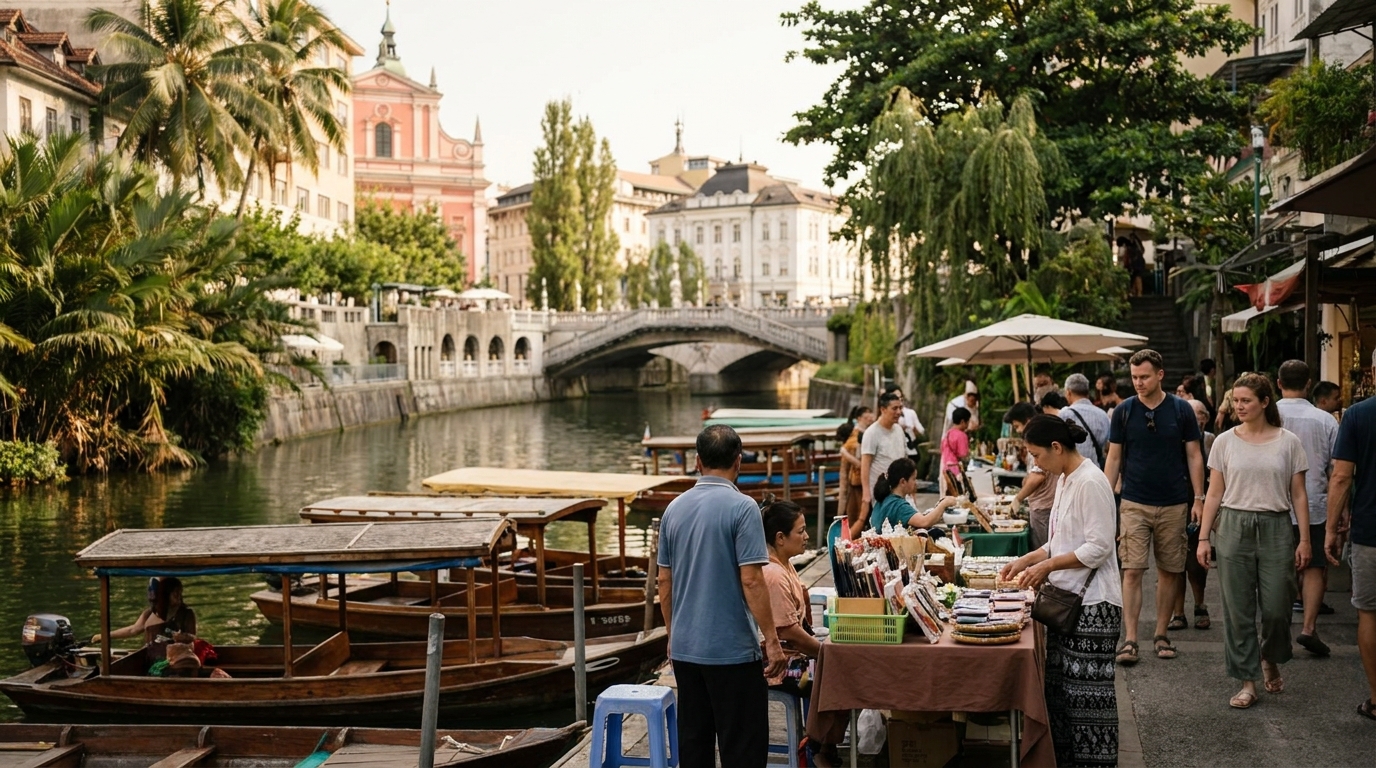
The Ljubljanica River curves through the old town in a gentle arc, lined with willow trees, pedestrian paths, and cafe terraces. The stretch from the Triple Bridge to the Cobblers’ Bridge (Cevljarski Most) has the highest concentration of riverside cafes. The stretch from the Dragon Bridge to the Central Market (designed by Plecnik in the 1940s) has the best morning light and the quietest ambiance. Walk the full loop from the Dragon Bridge to the Shoemaker’s Bridge and back on the opposite bank. It takes 30 minutes and covers the entire old town.
The Central Market
Plecnik’s covered market colonnade runs along the river between the Triple Bridge and the Dragon Bridge, housing the indoor fish market and bakeries. The open-air section in Vodnikov Trg square behind the colonnade operates daily until roughly 3:00 PM, with fruit and vegetable stalls, cheese vendors, and flower sellers. Friday is the biggest market day. Buy a fresh burek (phyllo pastry filled with cheese or meat, 3 EUR) from the bakery at the end of the colonnade. Eat it on the steps above the river.
Metelkova Mesto
A former military barracks squatted by artists in 1993 and transformed into an autonomous cultural zone, Metelkova is covered in murals, sculptures, and mosaics from ground to rooftop. The buildings host galleries, clubs, and bars. The atmosphere during the day is a quiet open-air gallery. At night, the clubs open and Metelkova becomes one of Europe’s most distinctive nightlife districts. Free to wander. Photograph the mosaics and the recycled-material sculptures. The Horse Hospital building, covered in a mosaic of broken tiles, is the most photogenic structure.
Ljubljana Castle: Views & History
The Ljubljana Grad sits on a 376-meter hill directly above the old town, accessible by funicular (4 EUR round-trip, every few minutes) or on foot via a steep but shaded 15-minute path. The castle dates to the 12th century, with major expansions in the 15th and 16th centuries. The Viewing Tower (5 EUR or included in the castle entry ticket of 10 EUR) rises to a 360-degree panorama: the red rooftops of the old town below, the Sava River plain stretching east, the Kamnik Alps to the north, and on clear days, the Julian Alps and Triglav (Slovenia’s highest peak at 2,864 meters) to the northwest.
The castle interior includes a Slovenian history exhibition, a puppet museum (Slovenia has a long puppetry tradition), and a restaurant serving Slovenian wine and charcuterie on the ramparts. The courtyard hosts concerts and open-air cinema in summer. The castle is free to enter (the grounds and courtyard). Pay only for the tower and exhibitions.
The 3-Day Ljubljana Itinerary
Hour-by-hour plan, where to stay and what it really costs — free PDF.
Free · No spam · Unsubscribe anytime
Best Day Trips from Ljubljana
Lake Bled
Lake Bled is the most photographed place in Slovenia, and the photographs are not exaggerated. A turquoise alpine lake surrounds a tiny island with a church whose bell has been rung by pilgrims for centuries. A medieval castle clings to a cliff above the northern shore. The Julian Alps fill the western horizon.
Take the bus from Ljubljana to Bled (45 minutes, 6.30 EUR one-way, departures roughly hourly from the main bus station). Walk the 6-kilometer path around the lake (1.5 hours, flat and paved). Take a pletna (traditional wooden boat) to the island for 18 EUR round-trip. The island church costs 6 EUR to enter. Ring the wishing bell three times. Eat a kremna rezina (Bled cream cake, 6 EUR) at the Park Hotel Cafe on the lakeshore. The cake has been made to the same recipe since 1953. It is a millefeuille of custard, whipped cream, and puff pastry. It is the best reason to visit Bled that does not involve an island.
Postojna Cave and Predjama Castle
A 45-minute drive south of Ljubljana, Postojna Cave is a 24-kilometer karst cave system with an underground electric train that transports visitors through chambers of stalactites, stalagmites, and the “brilliant,” a 5-meter-tall white stalagmite that is the symbol of Slovenian karst. The cave has been open to visitors since 1819. The tour takes 1.5 hours. Entry costs 29.90 EUR.
Nine kilometers from Postojna, Predjama Castle is built into the mouth of a cave halfway up a 123-meter cliff. The castle has been continuously occupied since the 13th century and looks like a fantasy novel cover. The tour covers the living quarters, the dungeon, and the cave behind the castle, which served as a siege-proof escape route. Entry costs 18.90 EUR. Combined Postojna + Predjama ticket 41.90 EUR. Book at postojnska-jama.eu. The train alone justifies the trip. It was installed in 1872 and still feels futuristic.
Lake Bohinj
Lake Bohinj is what Lake Bled was before the tour buses discovered it: a larger (4.2 kilometers long), wilder alpine lake 30 minutes beyond Bled, with the Triglav massif rising directly from the southern shore. The lake is within Triglav National Park. Swimming is allowed. The water is clean, cold (18-20 degrees C in August), and the view of the mountains from the water is the best alpine lake panorama in Slovenia. Bus from Bled to Bohinj takes 30 minutes (3.60 EUR). Combine Bled and Bohinj into a long day trip from Ljubljana.
Where to Eat & Drink Like a Local
The Open Kitchen (Odprta Kuhna)
Every Friday from mid-March through October, the Pogacarjev Trg square fills with food stalls from Slovenia’s best restaurants, each cooking one or two signature dishes. Prices range from 5-12 EUR per dish. The crowd is young, local, and enthusiastic about Slovenian wine. Arrive before noon to avoid the peak lunch rush. The slow-cooked octopus and the truffle pasta are the most popular dishes across multiple Fridays.
Traditional Slovenian Restaurants
Gostilna Sokol (Ciril-Metodov Trg) serves traditional Slovenian food in a 15th-century dining room with wooden benches and vaulted ceilings. The jota (sauerkraut and bean stew, 7 EUR), goveja juha (beef soup with noodles, 5 EUR), and struklji (rolled dumplings filled with cottage cheese, 8 EUR) are the classics. Figovec (Gosposka ulica) serves modern Slovenian cuisine with an extensive list of Slovenian orange wines (skin-contact whites) that rival anything from Friuli across the Italian border.
Coffee and Wine
Cafe Cokl (Krekov Trg) serves the best flat white in Ljubljana in a courtyard under a chestnut tree. Tozd (Gallusovo Nabrezje) is a riverside cafe that converts to a wine bar in the evening, with an extensive selection of Slovenian natural wines by the glass (2.50-5 EUR). Dvorni Bar (Dvorni Trg) has the best wine list in the city, specializing in Slovenian and regional producers. The orange wines (skin-contact whites) from the Goriska Brda and Vipava Valley regions are Slovenia’s vinous gift to the world.
Related guide: Ao Nang Travel Guide 2026: Beaches, Hotels & Tips
Frequently Asked Questions
How many days do I need in Ljubljana?
Two full days covers the city thoroughly. Day one for the old town, the castle, and the riverside cafes. Day two for Lake Bled. Three days allows a day trip to Postojna Cave and Predjama Castle or Lake Bohinj.
Is Ljubljana expensive?
Ljubljana is one of the best-value capitals in Central Europe. Budget 70-110 EUR ($75-120 USD) per person per day including mid-range hotel, meals, and one day trip. A three-course dinner for two with wine costs 40-55 EUR. A riverside coffee costs 2 EUR. Hotel prices average 80-150 EUR/night.
What is the best time to visit Ljubljana?
May, June, and September are ideal with 18-25 degrees C (64-77 F), the Open Kitchen market, and fewer visitors than July-August. July and August bring summer festivals and warmer weather. December brings the Christmas market along the river, which is smaller than Vienna’s or Prague’s and more intimate.
How do I get to Lake Bled from Ljubljana?
Bus from the main bus station (Avtobusna Postaja) to Bled takes 45 minutes and costs 6.30 EUR one-way. Departures roughly hourly from 6:00 AM to 9:00 PM. Buy tickets at the station on the day. The bus drops you in Bled town center, a 5-minute walk from the lake.
Is Slovenia part of the Schengen zone?
Yes. Slovenia joined the EU in 2004 and Schengen in 2007. The currency is the Euro. No border checks when entering from Italy, Austria, Hungary, or Croatia. English is widely spoken in Ljubljana, Bled, and all tourist-facing establishments.
Is Ljubljana good for families?
Excellent. The car-free old town, the Tivoli Park playgrounds, the castle funicular, and the short distances make Ljubljana one of the most family-friendly capitals in Europe. The zoo (8 EUR adults, 5 EUR children) sits in a forest on the southern slope of Roznik hill, a 20-minute walk from the center.
Ljubljana does not shout. It does not demand to be Instagrammed. It does not have a world-famous painting or a Michelin three-star restaurant or a skyline that anyone would recognize. What it has is a car-free old town threaded by a river, a castle on a hill, dragon statues on every bridge, and a cafe culture that makes weekdays feel like weekends. The Open Kitchen on Friday afternoons. The orange wine at Dvorni Bar. The dragon on the bridge, still guarding the city after 2,000 years.
For more European small-capital inspiration, explore our guides to Porto in Portugal and Bergen in Norway.
Sources: Ljubljana Tourism (2025-2026), Slovenian Tourist Board (2026), Postojnska Jama (2026). Book: GetYourGuide for day trips, Booking.com for hotels, Airalo for Slovenia eSIM from $6.
More European Travel Guides
- Menton Travel Guide
- Lofoten Islands Travel Guide
- Plitvice Lakes Travel Guide
- Porto Travel Guide
- Positano Travel Guide
- Zermatt Travel Guide