Disclosure: Some links in this guide are affiliate links. If you book or buy through them, we may earn a small commission at no extra cost to you — it helps keep our guides free.
Best Giardini Naxos Travel Guide 2026: Sicily’s Best-Kept Coastal Secret
Quick answer: Giardini Naxos is a seaside resort town on Sicily’s east coast that works best as an affordable beach base for Taormina, Mount Etna, and Isola Bella. It has the long sandy beach that hilltop Taormina lacks, plus the site of Sicily’s first Greek colony, all a short bus ride or drive from the bigger-name sights. Come for the beach and lower prices; use it as your launchpad for the region.
Giardini Naxos has something that Taormina, its famous neighbor perched on the hill above, will never have: a beach. A real one, a long crescent of golden sand stretching between the Ionian Sea and the fishing port, with Mount Etna smoking on the horizon like a geological afterthought. This small town on Sicily’s eastern coast was the first Greek colony on the island, founded in 734 BC, and it has been quietly getting on with things for nearly 2,800 years while the rest of Sicily’s tourist hotspots grab the headlines.
This Giardini Naxos travel guide covers why this coastal town is Sicily’s best-kept secret, the best things to do, the beaches, day trips to Taormina and Mount Etna, and where to stay.
Key Takeaways
– Giardini Naxos is the beach base that Taormina cannot offer. While Taormina sits magnificently on a clifftop, its nearest beach (Mazzaro) is a pebble cove reached by cable car. Giardini Naxos has 4 kilometers of sandy shoreline directly in front of town. – The Archaeological Park (2 EUR) preserves the foundations of the first Greek settlement in Sicily, dating to 734 BC. The ruins sit directly on the waterfront. The site is small, uncrowded, and profoundly evocative. – Mount Etna day trips from Giardini Naxos depart daily (55-80 EUR through GetYourGuide) and reach the crater zone at 2,900 meters by 4×4 and cable car. Europe’s most active volcano last erupted in 2025. The landscape above 2,000 meters looks like the surface of Mars. – Taormina is a 15-minute bus ride (1.50 EUR, every 30 minutes) or a steep 45-minute walk up the hill. Visit Taormina in the morning from Giardini Naxos, then retreat to the beach in the afternoon. – Restaurant prices in Giardini Naxos are 30-40% lower than in Taormina. A seafood dinner for two with local white wine costs 40-60 EUR versus 70-100 EUR in Taormina’s main square.We only recommend services we genuinely trust. Learn more.
**** We spent five days in Giardini Naxos in late September, using it as a base to explore Taormina, Mount Etna, and the Sicilian coast while returning each evening to a town that felt genuinely lived-in rather than curated for tourism. The view of Etna from the lungomare at sunset, with the volcano silhouetted orange against a rose-gold sky, was the photograph we never managed to capture. Some things resist being reduced to pixels.
Why Giardini Naxos Is Sicily’s Hidden Coastal Gem
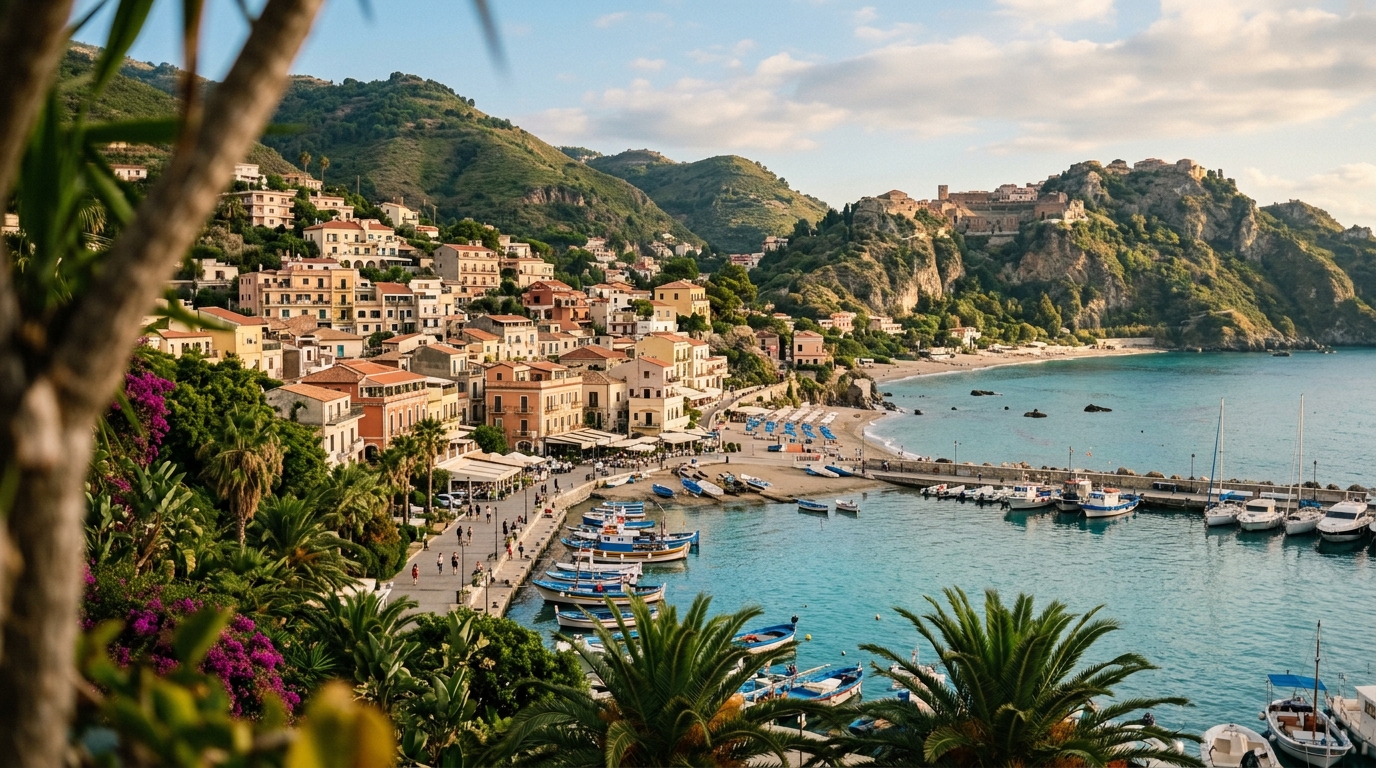
Giardini Naxos was the first Greek colony in Sicily, founded in 734 BC by settlers from Chalcis led by the oikist Theocles. The archaeological site on Capo Schiso preserves the foundations of temples, houses, and defensive walls from the 7th century BC. The Greeks chose this spot for the same reason you should: a natural harbor, fertile coastal plain, and direct access to the sea.
In the centuries since, Giardini Naxos has been occupied by Romans, Byzantines, Arabs, Normans, Spanish, and Bourbons. Each left fragments (the 13th-century Castello degli Schiavi, the 16th-century watchtowers along the coast), but none overwhelmed the Greek foundations. The town became a fishing village in the 19th century and a modest resort in the 20th, developing along the coast with a clear priority: practical beach access for the working-class Sicilians who holiday here.
Today, Giardini Naxos is the sensible base for exploring eastern Sicily. It has the beach that Taormina lacks, the prices that Taormina abandoned decades ago, and the transport connections (bus, train, highway access) that make day trips to Etna, Syracuse, and the Alcantara Gorge straightforward.
The 3-Day Giardini Naxos Itinerary
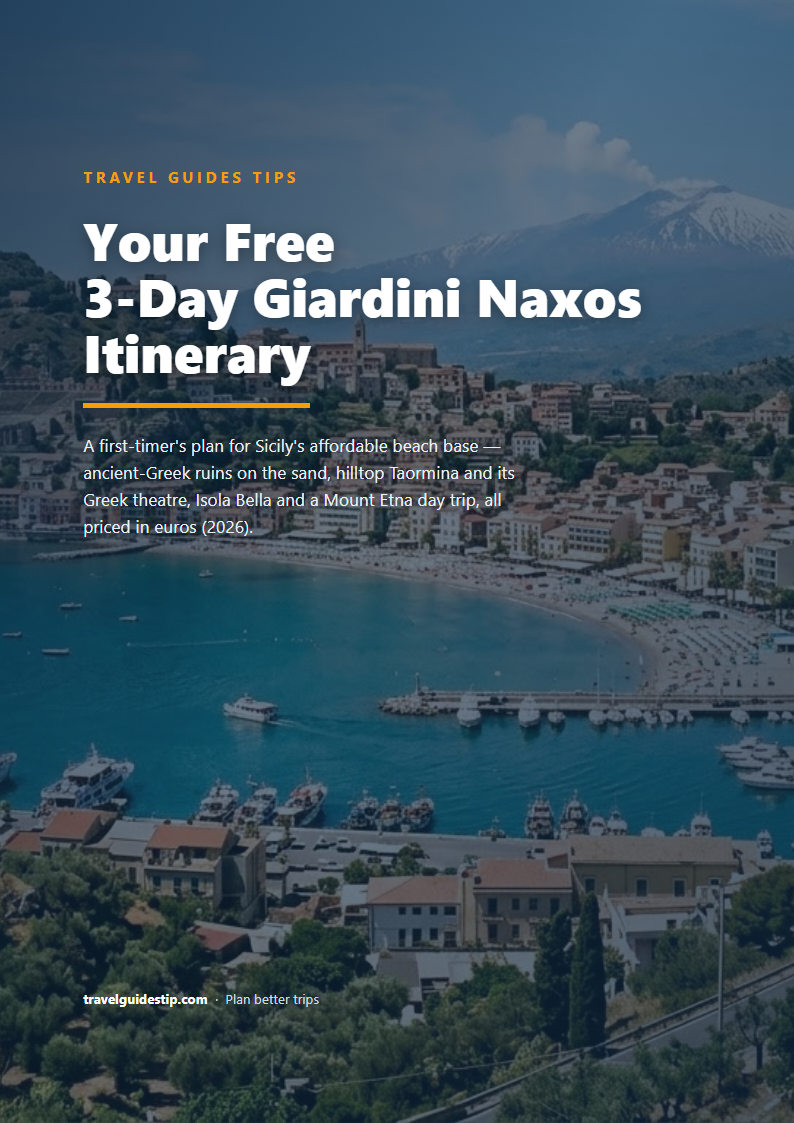
The plan we use ourselves — sent straight to your inbox.
- Day-by-day route
- Where to stay
- Real 2026 costs
Free · No spam · Unsubscribe anytime
Best Things to Do in Giardini Naxos
Archaeological Park of Naxos
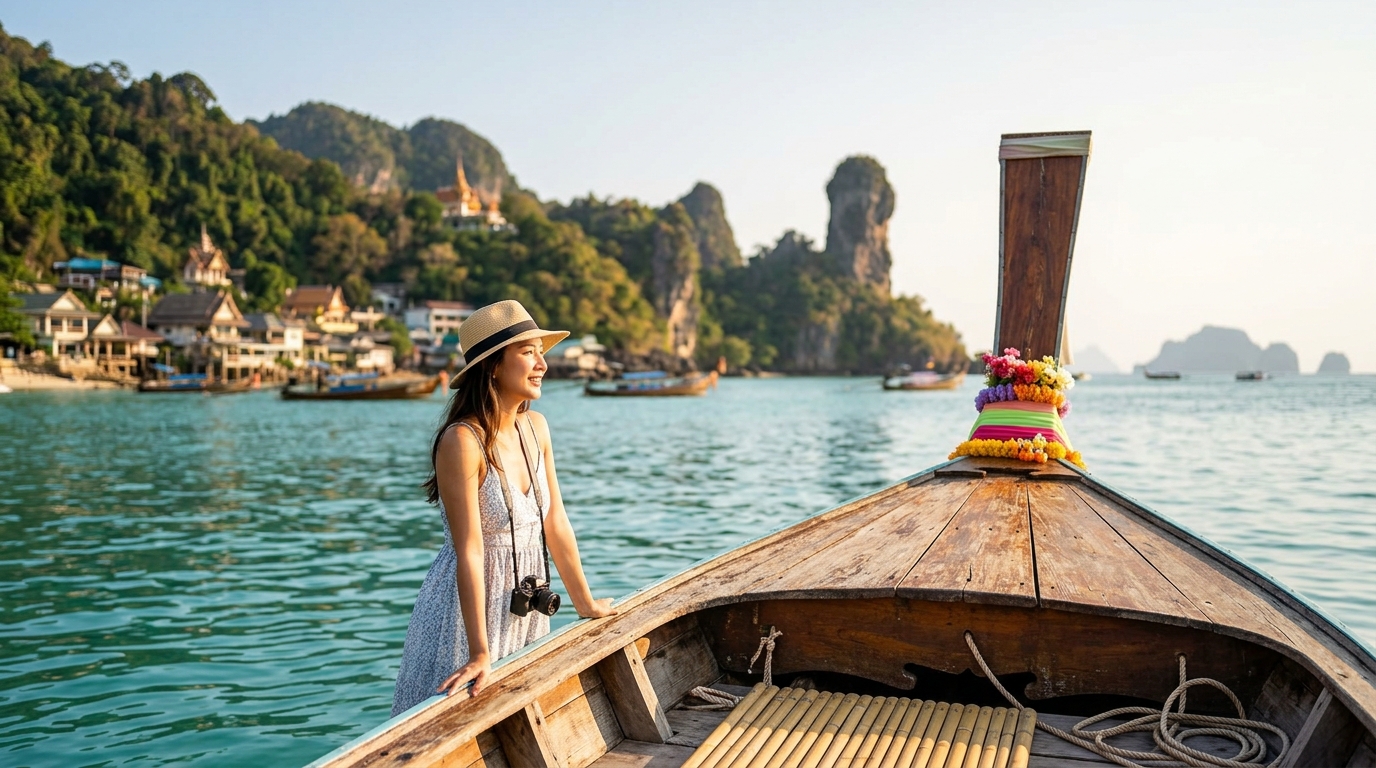
The Parco Archeologico di Naxos occupies a headland at the southern end of the town, between the beach and the port. The excavations have revealed the grid plan of the 7th-century BC Greek colony: streets, houses, temples, and public buildings laid out with geometric precision. The most evocative section is the western wall, a rough stone fortification over 2,700 years old that still defines the edge of the ancient city. The site is small — 30 minutes covers it thoroughly — and almost always uncrowded.
Entry: 2 EUR. Open daily 9:00 AM until 1 hour before sunset. The museum at the entrance displays pottery, coins, and small sculptures excavated from the site. The view from the headland across the bay toward Taormina, with Etna on the horizon, is the best composition in town.
The Lungomare (Seafront Promenade)
The lungomare runs for roughly 3 kilometers from the port at the northern end of town to the Recanati beach at the southern end, passing restaurants, gelaterias, and the public beach along the way. The promenade is pedestrian-only, lined with palm trees, and busy with Sicilian families doing the evening passeggiata from roughly 6:00 PM to 8:00 PM. Walk the full length at sunset. The view of Etna silhouetted against the dusk sky, with the lights of fishing boats flickering on the water, is the Giardini Naxos experience distilled into a single hour.
The Castello degli Schiavi
Three kilometers inland from Giardini Naxos, near Fiumefreddo, the Castle of the Slaves is a baroque villa built in the 18th century on the foundations of a Norman fortress. The name comes from a legend that slaves were hidden in the underground chambers during the Arab period. The castle appeared in The Godfather (1972) as the home of Don Tommasino, and the courtyard is preserved much as it appeared in the film.
Entry: 5 EUR. Open weekends and by appointment. The custodian, a descendant of the family that owns the castle, may or may not be present when you arrive. Sicilian opening hours are aspirational. Call ahead or ask your hotel to confirm.
Best Beaches Around Giardini Naxos
Spiaggia di Giardini Naxos
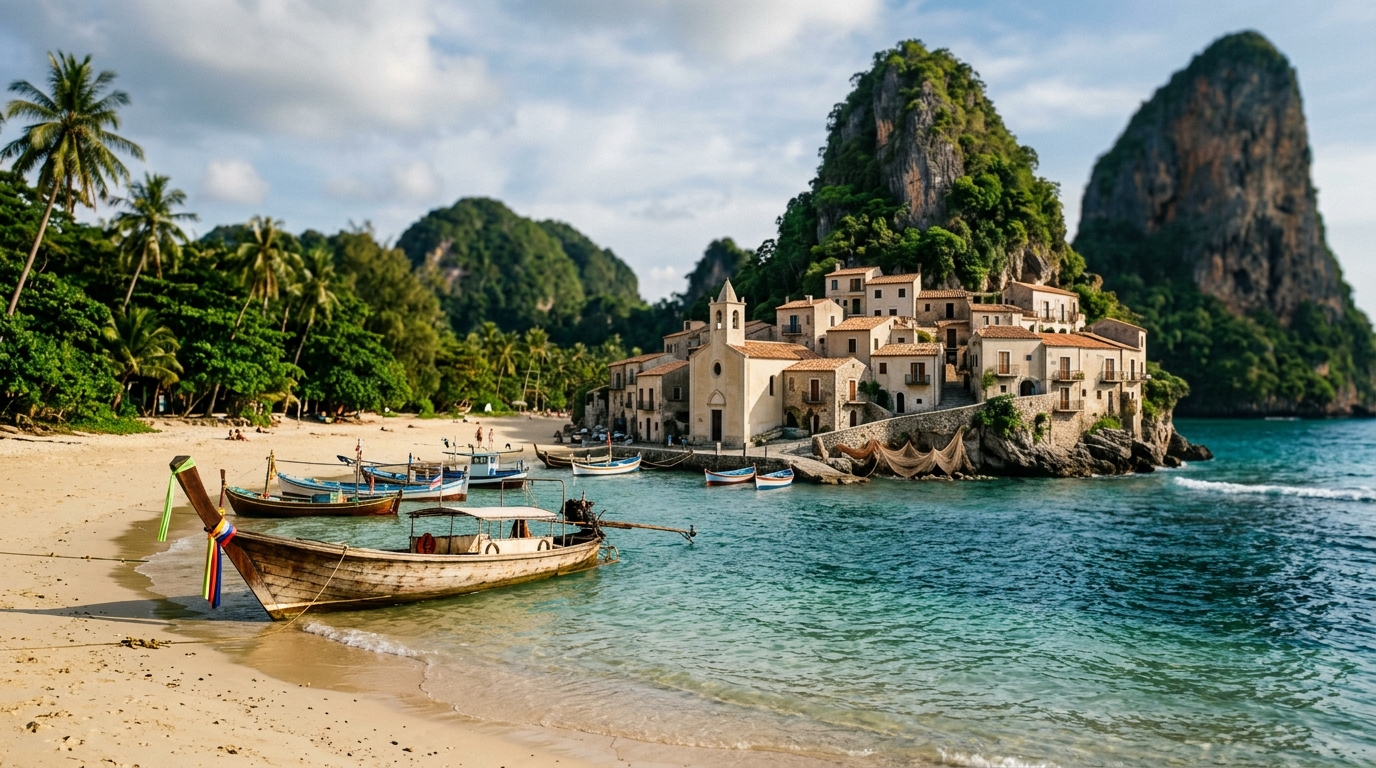
The main town beach is a 4-kilometer crescent of golden sand and fine gravel, gently shelving into the clear Ionian Sea. The water is clean, warm (24-26 degrees C in August, 22-24 in September), and shallow enough for children to wade safely for the first 20 meters. Lidos (beach clubs) rent two sunbeds and an umbrella for 15-25 EUR per day. The free public sections between the lidos are narrower but perfectly adequate. The beach at the northern end near the port has the coarsest sand. The southern end near Recanati has the finest sand and the best sunset views.
Isola Bella
A 15-minute bus ride up the hill to Taormina, then a cable car down to Mazzaro beach, brings you to Isola Bella, a small island connected to the mainland by a narrow sandbar. The island is a nature reserve, and the water around it is the clearest on the eastern Sicilian coast. The sandbar appears at low tide, allowing you to walk to the island. At high tide, the island is separated by a few meters of knee-deep water. The beach is pebbles, not sand, so bring water shoes. Sunbeds cost 20 EUR. Go in the morning for the clearest water.
Spiaggia di Fondachello
Five kilometers north of Giardini Naxos, the beach at Fondachello is a quieter, more local alternative to the main town beach. The sand is dark volcanic grey, warm in summer, and the view of Etna from the shoreline is head-on rather than sidelong. The beach club (Lido Fondachello, 15 EUR for two sunbeds and umbrella) serves granita and brioche (3 EUR) directly to your lounger. Families with young children prefer Fondachello for its gentle entry and lack of breakwater currents.
The 3-Day Giardini Naxos Itinerary
Hour-by-hour plan, where to stay and what it really costs — free PDF.
Free · No spam · Unsubscribe anytime
Best Day Trips: Taormina, Mount Etna & More
Taormina
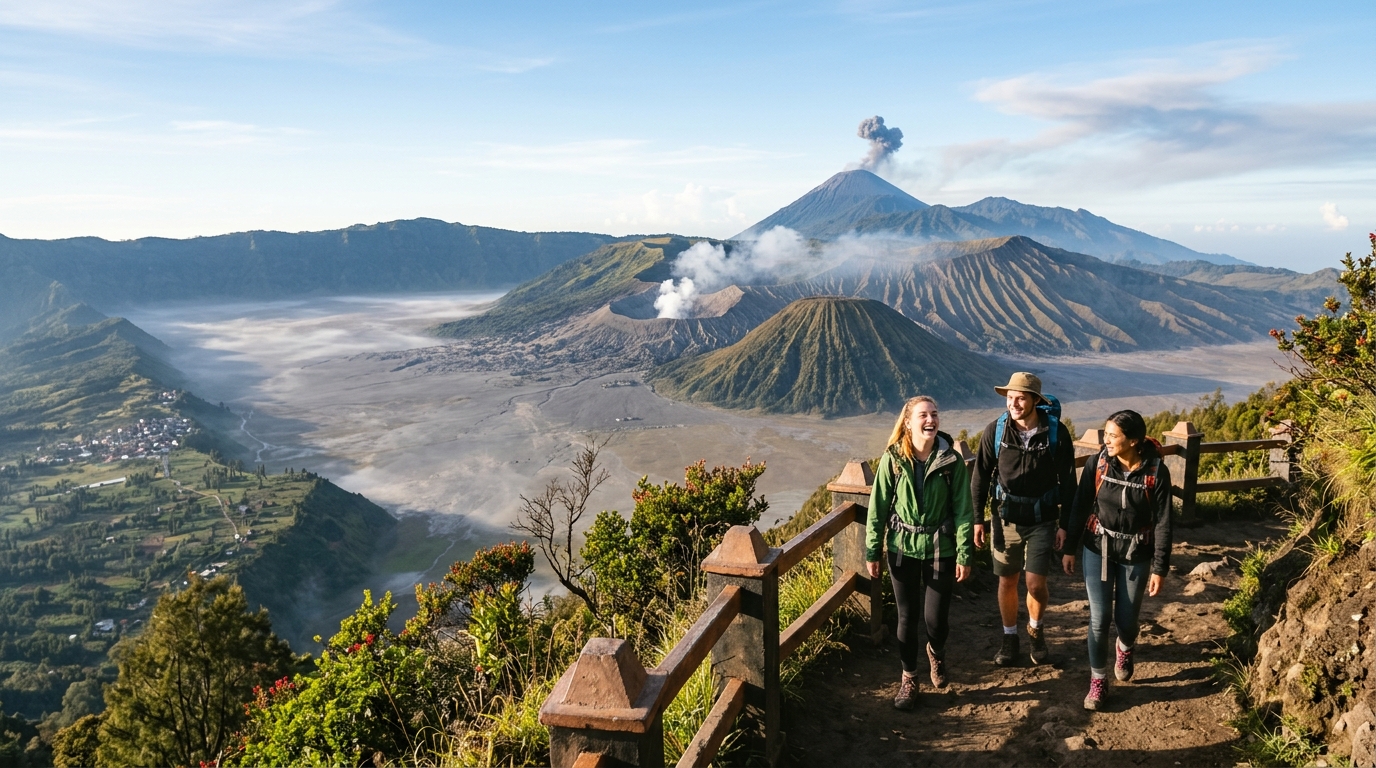
Taormina sits on a terrace 200 meters above the sea, 15 minutes from Giardini Naxos by bus or car, and its Greek Theatre (10 EUR) commands the most spectacular view of any ancient ruin in Sicily: the stage framed by Mount Etna on one side and the Ionian Sea on the other. The theatre was built by the Greeks in the 3rd century BC and expanded by the Romans in the 2nd century AD. It still hosts concerts and plays in summer.
The Corso Umberto, Taormina’s main pedestrian street, is lined with designer shops, ceramic boutiques, and cafe terraces that charge 8 EUR for a cappuccino. The views from Piazza IX Aprile, a balcony square suspended between the sea and the sky, are free and better than anything the cafes offer.
Getting there: Interbus runs every 30 minutes from the Giardini Naxos bus terminal to Taormina’s Porta Messina bus stop (15 minutes, 1.50 EUR one-way). The last bus back departs around midnight. Go in the morning (before 10:00 AM) to experience the Greek Theatre before the tour buses arrive.
Mount Etna
Etna is Europe’s most active volcano, standing 3,357 meters above the eastern Sicilian coast and erupting with varying degrees of enthusiasm roughly every few months. The southern approach from Rifugio Sapienza (1,900 meters) offers the most developed infrastructure: cable car to 2,500 meters (30 EUR one-way, 50 EUR round-trip), then 4×4 bus to 2,900 meters (25 EUR), then a guided walk to the crater zone.
The landscape above 2,000 meters is completely alien. Black lava fields, red oxidized rock, and steam vents where the ground hisses with volcanic heat. The view stretches across the entire eastern Sicilian coast on clear days, with Calabria visible across the Strait of Messina.
Practical: Book a guided day tour through GetYourGuide (55-80 EUR including transport from Giardini Naxos, cable car, and guide). Tours depart at 8:00-9:00 AM and return by 4:00 PM. Bring warm layers (temperatures at 2,900 meters hover around 8-10 degrees C even in summer), sturdy hiking boots (the volcanic gravel shreds sneakers), and sunscreen (UV at altitude is harsh).
Alcantara Gorge
The Gole dell’Alcantara is a basalt canyon carved by the Alcantara River through a lava flow from Mount Etna. The basalt columns form geometric hexagonal walls that look artificial but are entirely natural, formed by the rapid cooling of lava. The river runs ice-cold (8-10 degrees C year-round) through the narrowest section of the gorge. You can wade in the water in summer (rent wetsuit boots for 3 EUR), or walk the botanical path above the gorge.
Getting there: 20-minute drive from Giardini Naxos. Bus service is infrequent. A taxi costs roughly 30 EUR each way. Entry to the park is 1.50 EUR for the public staircase down to the river. The private section with elevator access costs 8 EUR. Open daily 8:00 AM-7:00 PM. Go early. The gorge fills with tour groups by 10:30 AM.
Where to Stay: Beachfront or Old Town
Hotel Palladio — Beachfront Mid-Range
Location: Lungomare, directly on Recanati Beach | From 120 EUR ($130 USD) | Rating 4.4/5
Simple, clean rooms directly on the lungomare with sea-facing balconies. The restaurant serves fresh seafood pasta (12-16 EUR) on a terrace overlooking the water. The beach is across the promenade.
Best for: Beach lovers who want to walk from breakfast to a sunbed in under 30 seconds. Book via Booking.com.
Villa Nettuno — Old Town Character
Location: Via Consolare Valeria, near the Archaeological Park | From 90 EUR ($97 USD) | Rating 4.6/5
A converted family villa with tiled floors, a garden courtyard, and individually decorated rooms. The owner, Signora Maria, makes cannoli for breakfast that require strategic self-control. The location is 3 minutes from the archaeological site and 5 minutes from the port.
Best for: Travelers who want character, quiet, and a genuinely Sicilian welcome.
B&B Ionico — Budget Choice
Location: Via Naxos, near the bus terminal | From 55 EUR ($60 USD) | Rating 4.3/5
Clean, family-run B&B five minutes from the beach and two minutes from the bus to Taormina. Balcony rooms face Etna. Breakfast includes fresh ricotta from a farm in the Alcantara Valley. The price is exceptionally reasonable for the Sicilian coast.
Best for: Budget travelers who want a comfortable base for day trips.
Frequently Asked Questions
How many days do I need in Giardini Naxos?
Three full days is ideal. Day one for Taormina and the archaeological park. Day two for Mount Etna. Day three for the beach and the Alcantara Gorge. Four days allows a day trip to Syracuse (1.5 hours by car). Two days covers the essentials if you skip Etna.
Is Giardini Naxos better than Taormina?
Giardini Naxos is better as a base: cheaper, sandy beaches, easier parking, better transport connections, and genuinely good restaurants at non-tourist prices. Taormina is better as a day trip: the Greek Theatre, the Corso Umberto, the views, the history. Stay in Giardini Naxos. Visit Taormina.
Is Giardini Naxos expensive?
Giardini Naxos is moderately priced for Sicily and significantly cheaper than Taormina. Budget 90-130 EUR ($97-140 USD) per person per day including hotel, meals, and activities. A seafood dinner for two with wine costs 40-60 EUR. A sunbed and umbrella at the beach costs 15-25 EUR.
What is the best time to visit Giardini Naxos?
May, June, and September are ideal with 22-28 degrees C (72-82 F), warm sea, and fewer crowds. July and August bring peak Italian holiday crowds. April and October are quieter with the risk of rain. November through March sees many hotels and restaurants closed.
Can you see Mount Etna erupting from Giardini Naxos?
Yes. On clear nights during active phases, the glow of lava is visible from the lungomare. Etna erupts frequently (last major eruption in 2025), but the activity is typically confined to the summit craters and poses no danger to coastal towns. Check the Etna Observatory website for current activity levels.
Giardini Naxos does not compete with Taormina. It does not need to. The Greeks chose this spot for their first Sicilian colony because it had what Taormina, magnificent on its clifftop, never would: a harbor, a beach, and direct access to the sea. Those same qualities make it the sensible, beautiful, and affordable base for exploring eastern Sicily today.
Swim in the Ionian Sea. Eat grilled swordfish on a terrace facing Etna. Take the bus up the hill to Taormina in the morning and come back down to the beach in the afternoon. And when the sun sets behind the volcano and the lungomare fills with Sicilian families doing the passeggiata, understand that you chose the right town.
For more Italian coastal inspiration, explore our guides to Positano and the Amalfi Coast. For more Sicilian adventures, continue to Syracuse, Noto, and the Aeolian Islands.
Sources: Parco Archeologico di Naxos (2025-2026), Etna Observatory (2026), Interbus schedules (2026). Book: GetYourGuide for Etna tours, Booking.com for hotels, Airalo for Italy eSIM from $6.
More European Travel Guides
- Menton Travel Guide
- Ljubljana Travel Guide
- Grindelwald Travel Guide
- Hallstatt Travel Guide
- Interlaken Travel Guide
- Isola Bella Travel Guide