Best Hallstatt Travel Guide 2026: Austria’s Most Beautiful Fairytale Village
By TravelguidestipUpdated 12 min readHow we earn
Hotel buttons open Stay22 (Booking.com, Agoda and others) and tour buttons open GetYourGuide. We may earn a commission at no extra cost to you.

In short
- The Classic Viewpoint (Postcard View) is a 10-minute walk from the market square along the Gosaumuhlstraße. Go at sunrise (before 8:00 AM in summer) or not at all during peak season. A drone-like drone shot from the overlook captures the church, lake, and mountains in a single frame.
- Day-tripping Hallstatt from Salzburg takes 2.5 hours each way by bus and train (150 bus + train, 16 EUR one-way, OBB 2026). The village fills between 10:30 AM and 4:30 PM. Arrive by 9:00 AM or after 4:30 PM for a quieter experience.
- The salt mine (Salzwelten) is 7,000 years old — the oldest in the world — and the tour (40 EUR including funicular) takes you 400 meters into the mountain on wooden slides originally carved by Bronze Age miners.
- Hallstatt’s Skywalk (part of the salt mine ticket) is a metal platform jutting 12 meters over a 360-meter drop, with a view across the lake, the village, and the Dachstein range. Free if you skip the mine tour and just buy the funicular ticket (22 EUR round-trip).
- Overnight stays make the difference between loving and hating Hallstatt. After the last tour bus leaves at 5:00 PM, the village empties by roughly 95%. The lake turns gold at sunset. The swans have the waterfront to themselves.
Quick answer: Hallstatt is worth visiting, but only if you dodge the 10:30 AM to 4:30 PM day-tripper crush: stay overnight, or arrive before 9:00 AM and linger past 5:00 PM when the tour buses leave. Build a visit around the classic Postcard viewpoint, the 7,000-year-old salt mine and its cliff-edge Skywalk, and the quiet ferry glide across the Hallstattersee. It is roughly 2.5 hours from Salzburg by train and ferry, or 1 hour 15 minutes by car.
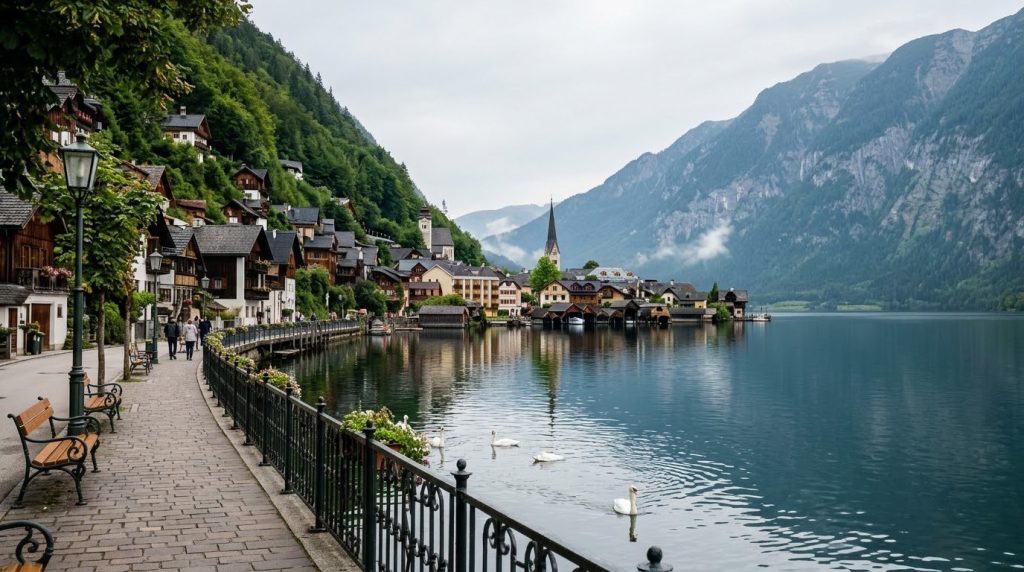
Hallstatt looks like a village that a Romantic painter imagined and then somehow willed into existence. Sixteenth-century houses in shades of butter yellow and dusty pink cling to a narrow strip of land between a mountain and a lake, their reflections doubled in water so still it mirrors the church steeple and the swans with equal fidelity.
The Hallstattersee fills a fjord-like valley in the Salzkammergut region. The Dachstein mountains rise directly from the opposite shore. Over 1 million visitors find this village of 750 permanent residents each year (Hallstatt Tourism, 2026), creating one of the most extreme ratios of tourists to locals anywhere in Europe.
This Hallstatt travel guide covers how to visit, the best things to do, the famous viewpoint that launched a thousand Instagram posts, how to day-trip from Salzburg, and the quieter spots beyond the postcard.
We only recommend services we genuinely trust. Learn more.
The overnight visit in late September, when the larch trees on the opposite shore were turning gold and the morning mist hung over the lake until 9:00 AM, was among the most memorable experiences we have had in Austria. The day trip was fine. The overnight stay was transformative.
How to Visit Hallstatt
Getting There
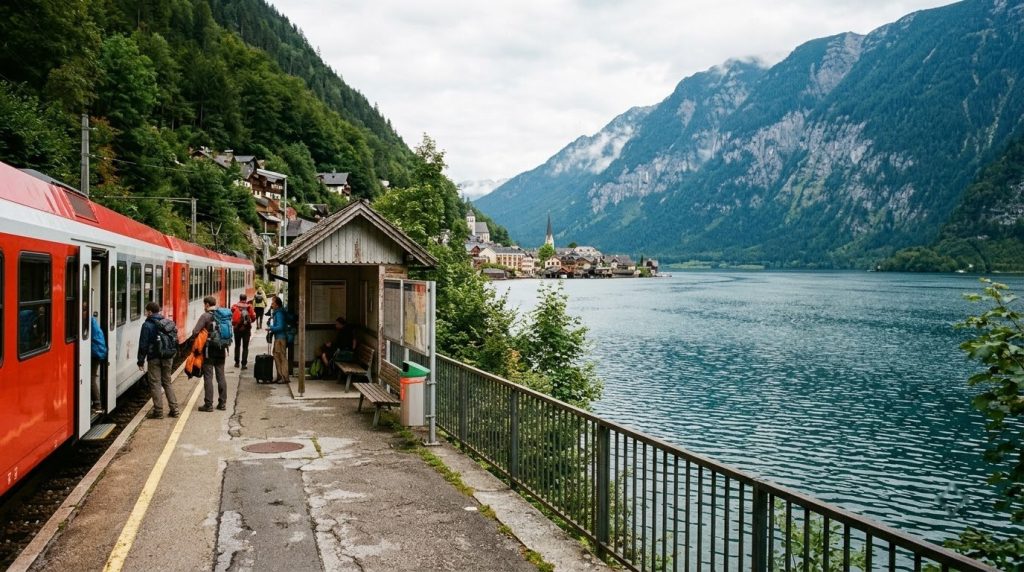
Hallstatt sits on the western shore of the Hallstattersee, 75 kilometers east of Salzburg. The journey from Salzburg takes approximately 2.5 hours: train from Salzburg Hbf to Attnang-Puchheim (50 minutes), then regional train to Hallstatt station (1 hour 20 minutes, 16 EUR one-way, OBB 2026). The Hallstatt train station is across the lake from the village.
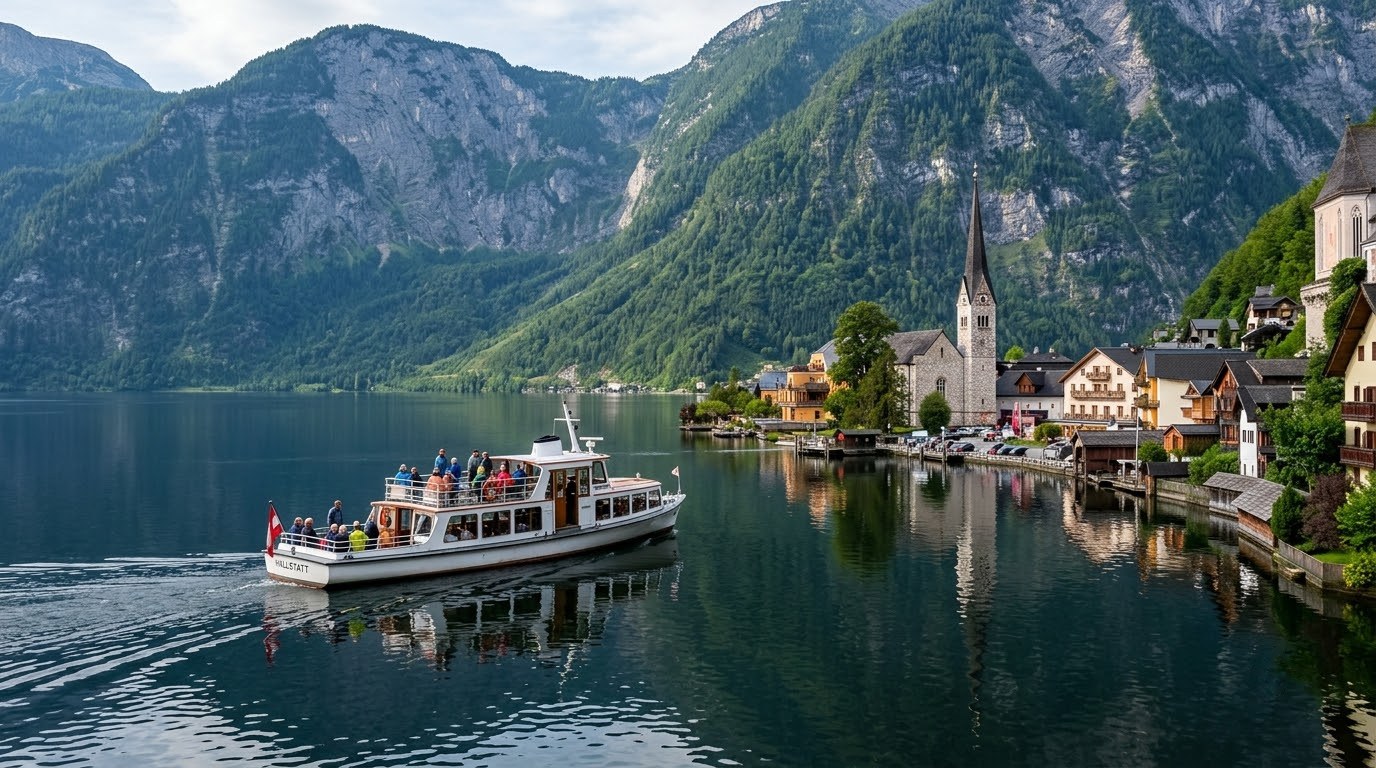
A ferry (Stefanie, 3.50 EUR one-way) meets every train and crosses in 7 minutes. The ferry approach, with the village emerging from the mist as you glide across the lake, is the best possible introduction.
Driving from Salzburg takes 1 hour 15 minutes via the A1 and B145. Hallstatt has three parking lots (P1-P3) at the south end of the village. P1 is the closest to the market square. Parking costs 4 EUR per hour, 15 EUR per day. The lots fill completely by 10:00 AM in July and August. Arrive before 9:00 AM or risk circling.
The Crowd Pattern
Hallstatt day visitors follow a predictable pattern. Tour buses from Salzburg and Vienna arrive between 10:00 AM and 11:00 AM. The village fills to capacity by 11:30 AM.
Between 10:30 AM and 4:30 PM, the market square and the viewpoint trail have human traffic jams. Buses depart between 3:00 PM and 4:30 PM. By 5:30 PM, the market square is quiet. By sunset, the village belongs to the overnight guests and the swans.
This pattern applies Monday through Sunday, May through October. Winter sees fewer visitors but a higher proportion stay overnight, creating a different rhythm. Christmas in Hallstatt, with snow on the rooftops and candles in every window, is the winter peak.
Best Things to Do in Hallstatt
The Salt Mine (Salzwelten)
Hallstatt existed before Rome, before Athens, before most civilizations that claim the word “ancient.” The salt deposits beneath the mountain have been mined continuously for 7,000 years — the oldest salt mine in the world (Salzwelten Hallstatt, 2026).
The entire Hallstatt culture, a Bronze Age civilization that spanned central Europe from 1200-800 BC, is named after this village because the first and richest archaeological finds were discovered in the cemetery above the lake.
The salt mine tour begins with a funicular ride up the mountain, then a guided walk into tunnels 400 meters below the surface. The highlight is two wooden miners’ slides — smooth chutes polished by centuries of use, descending between levels of the mine. You sit on a leather apron and slide.
A speed camera at the bottom clocks you and offers to sell you the photo. The camera feels jarring in a 7,000-year-old mine. The slide, however, is genuinely fun.
Cost: 40 EUR including funicular round-trip. Open daily April through October, reduced hours November through March. Book at salzwelten.at at least one day ahead in summer. The tour lasts 90 minutes. Temperatures inside the mine are a constant 8 degrees C (46 F) year-round. Bring a jacket.
The Skywalk
Adjacent to the salt mine entrance, the Hallstatt Skywalk (Welterbeblick) projects 12 meters from the mountainside over a 360-meter drop. The metal grating floor lets you see directly down to the village and lake below. The view spans the entire Hallstattersee, the village, the Dachstein glacier, and on clear days, the peaks of the Hohe Tauern range 100 kilometers south.
The Skywalk is free to access with the salt mine tour or with a funicular-only ticket (22 EUR round-trip). The platform holds roughly 30 people at a time. In summer, queue for the photo spot at the tip. The queue moves quickly because most people take one photo and step back.
The Bone House (Beinhaus)
Hallstatt’s cemetery is tiny because Hallstatt is tiny, wedged between a mountain and a lake with no room to expand. For centuries, graves were reused: after 10-15 years, the bones were exhumed, cleaned, bleached in the sun, and stacked in a small chapel next to the church.
The skulls were painted with floral wreaths, crosses, and the names and dates of the deceased. The oldest painted skull dates to 1720. The most recent to 1995 — the last resident to request this treatment before the practice ended.
The Bone House (1.50 EUR entry, open May-October) holds over 1,200 skulls, roughly 600 of which are painted. The chapel is the size of a walk-in closet. The experience takes five minutes and stays with you for years. The painted names and flowers on human skulls, arranged in neat rows by family, communicate something about Hallstatt’s relationship to death that words cannot.
Find your Hallstatt hotel on the map
Live prices from Booking & Airbnb — tap a pin to compare stays around Hallstatt village and beyond.
The Famous Viewpoint & Other Photo Spots
The Postcard View
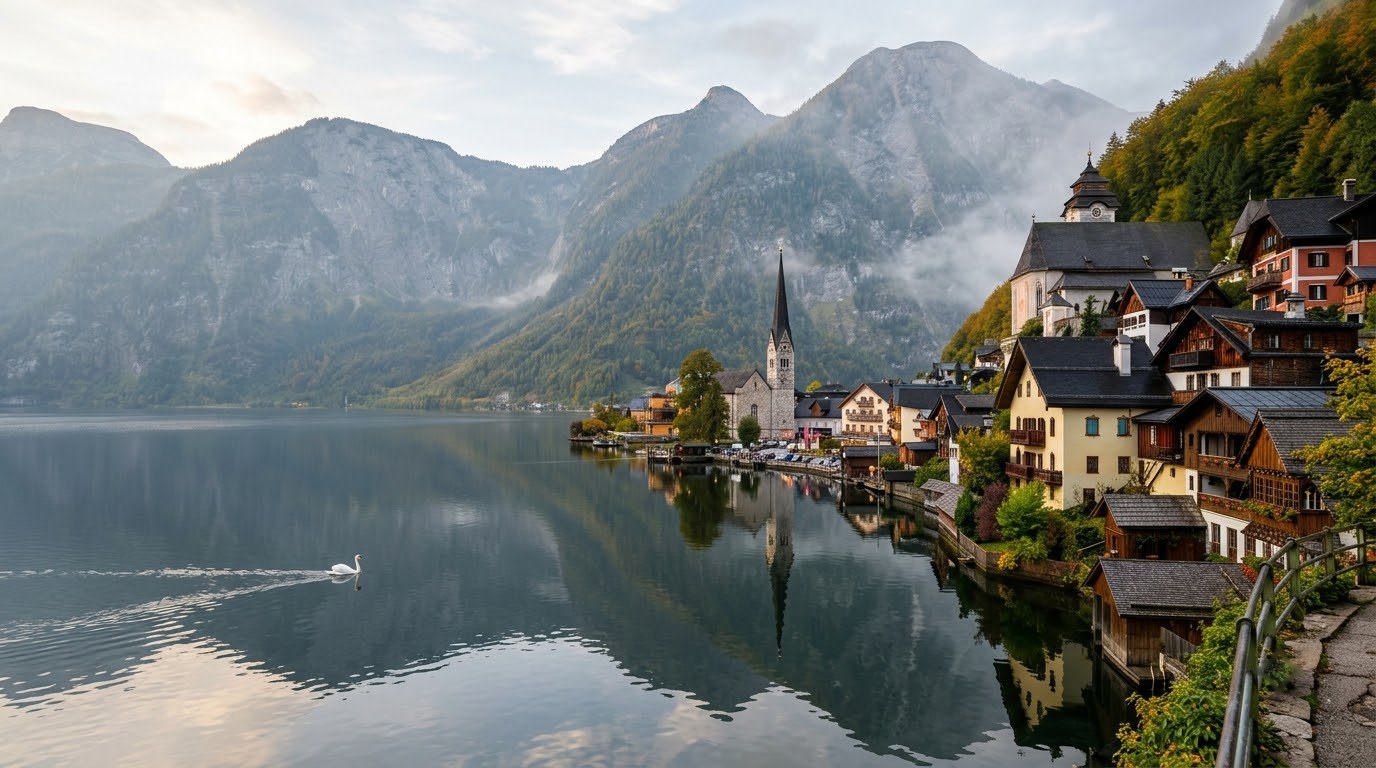
Walk north from the market square along the Gosaumuhlstraße for 10 minutes. The path climbs slightly and then opens onto a viewpoint where the entire village, the church steeple, the lake, and the mountains line up exactly as they appear on postcards. This is not a metaphor. The postcards are photographed from this exact spot.
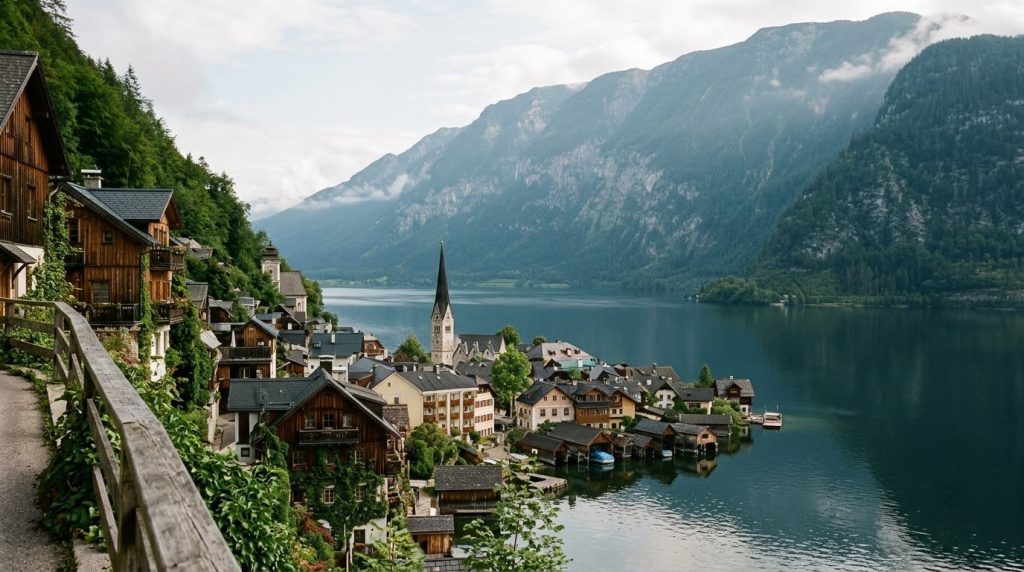
A 24-35mm lens frames the classic composition. The best light is sunrise (before 8:00 AM in summer), when the first sun hits the church steeple and the lake is glass-still. At 1:00 PM, the light is flat, the view is still beautiful, and a queue of 50 people waits for the same photograph.
The Ferry Approach
The shot from the ferry as you cross Lake Hallstatt toward the village captures the church steeple, the pastel houses, and the mountains all at once, with the sense of arrival built into the composition. Stand on the right side of the ferry (facing forward). A 50mm lens isolates the village. The ferry vibrates through the deck, so brace against the railing.
Market Square at Dusk
After the last tour bus departs, the market square (Marktplatz) belongs to the few hundred overnight guests. The pastel facades of the 16th-century houses are lit by warm street lamps. The Holy Trinity statue in the center of the square, erected in 1744, catches the last light from the west.
Photograph from the eastern corner of the square, capturing the statue, the houses, and the mountain behind them. A tripod is essential — the light is low and you will shoot at 1/15th or slower.
The Reflection at the Boat Dock
The small wooden boat dock at the southern end of the village, near the ferry terminal, faces across the lake toward the Untersberg peak. On windless mornings, the mountain reflects perfectly on the still water. Swans often congregate here at dawn. A 70-200mm lens compresses the mountain against the reflection. Arrive by 7:00 AM.
Day Trip from Salzburg to Hallstatt
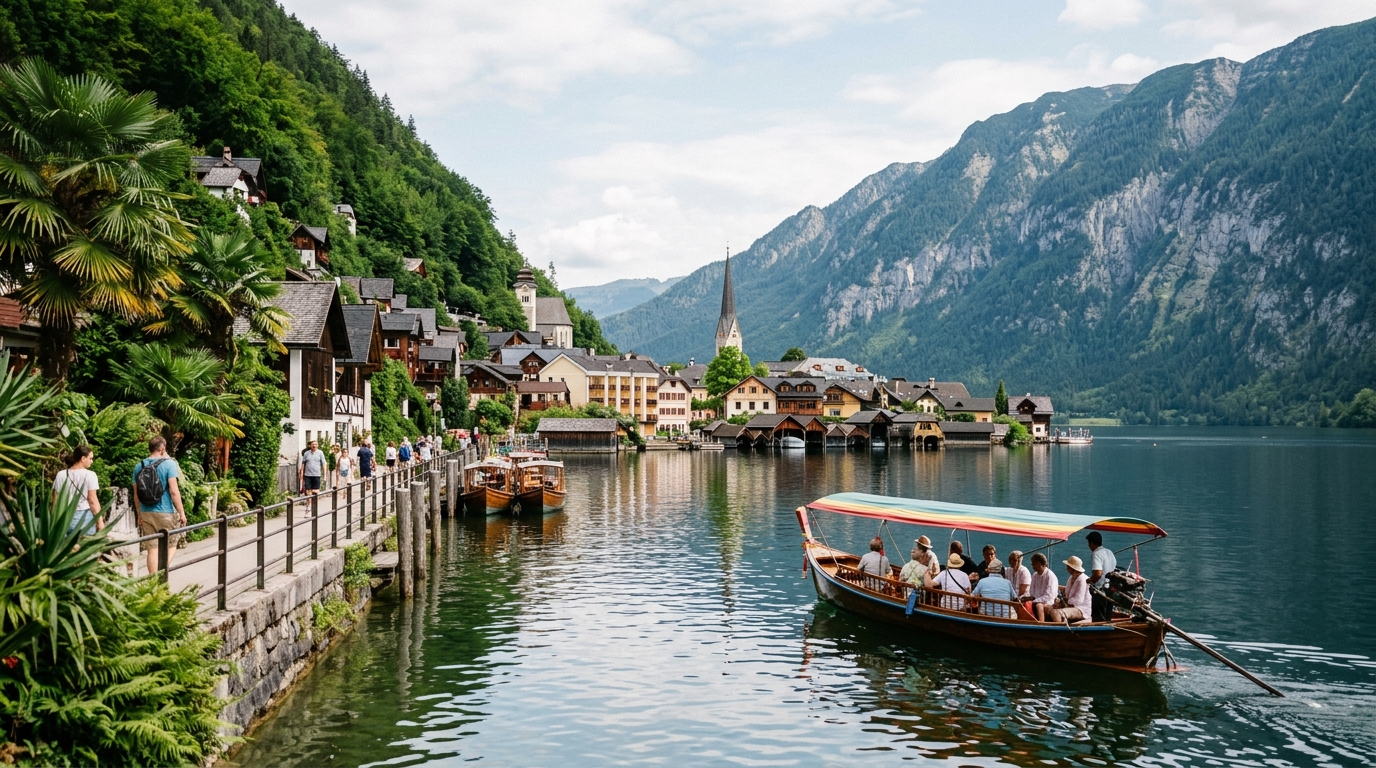
The day trip from Salzburg is the most popular way to visit Hallstatt, and it works if you plan the timing correctly.
The Journey
From Salzburg Hauptbahnhof, take the 150 Postbus to Bad Ischl (1 hour 30 minutes), then the regional train to Hallstatt station (25 minutes), then the ferry across the lake (7 minutes). The total journey is 2.5 hours. The first bus departs Salzburg at 6:35 AM on weekdays, arriving in Hallstatt by roughly 9:15 AM.
This is the departure you want. Return trains run until roughly 9:00 PM from Hallstatt station, with the last connection reaching Salzburg by midnight.
Alternatively, book a guided tour through GetYourGuide that bundles transport, the salt mine, and free time in the village for 90-130 EUR. Tours depart Salzburg at 8:00-9:00 AM and return by 6:00-7:00 PM. The trade-off is limited free time (typically 2-3 hours in the village) and arrival with the crowd rather than before it.
If You Must Day-Trip
Arrive on the first ferry at 9:15 AM. Go directly to the viewpoint for the postcard photograph. Walk the salt mine funicular at 9:30 AM when it opens.
Tour the mine. Descend by 11:30 AM. Walk the market square while the tour groups are still in the mine.
Lunch at 12:00 PM at a restaurant with lake views. Then walk the lakeside promenade south to the ferry terminal. By 2:00 PM, the village is packed and you have seen the best of it.
Ferry back. Train to Salzburg. You will spend 5 hours in transit for 5 hours in Hallstatt. The math works, barely, and only if you arrive early.
Beyond the Postcard: Quieter Spots
Obertraun
Obertraun, Hallstatt’s neighbor village across the lake (5-minute ferry or 10-minute drive), has none of Hallstatt’s crowds and a better lakeside promenade. The Badeinsel Obertraun is a free lakeside park with a swimming platform, sunbathing lawn, and cafeteria. The water is clean enough to swim.
The view of Hallstatt from across the lake, with the village reflecting on the water, is a composition that 99% of Hallstatt visitors never capture because they never cross the lake.
The Echern Valley
A 30-minute walk inland from Hallstatt’s southern edge brings you to the Echern Valley, a quiet forested gorge with a waterfall, a stream, and a trail that climbs to the Gletschergarten (Glacier Garden, free entry), a scattered field of glacial potholes carved by the Dachstein glacier during the last ice age. The valley trail has almost zero visitors. The sound of the Echernbach stream replaces the sound of tour groups entirely.
Five Fingers Viewing Platform
On the Dachstein mountain above Hallstatt, reachable by cable car from Obertraun (38 EUR round-trip, dachstein-salzkammergut.com), the Five Fingers platform extends five metal walkways — one for each finger of a hand — over a 400-meter cliff drop. Each finger offers a slightly different angle and perspective. The view spans the entire Hallstattersee and five surrounding lakes.
The platform is free with the cable car ticket. Open May through October. Go in the morning before clouds form around the summit.
Frequently Asked Questions
How many days do I need in Hallstatt?
One overnight (two days) is ideal. Arrive late afternoon after the crowds have gone, stay for sunset and the quiet morning, and leave by noon the next day. One day as a day trip covers the highlights but misses the village at its best. Two overnights allows time for Obertraun, the Echern Valley, and the Dachstein cable car.
Is Hallstatt worth the hype?
Yes, with the critical caveat that Hallstatt is worth visiting only if you stay overnight or arrive extremely early. The village at 8:00 AM with mist on the lake and the church bells ringing is genuinely one of the most beautiful places in Europe. The village at noon in July, packed shoulder-to-shoulder with tour groups, is a different experience entirely. The postcard view is not exaggerated. The crowds are also not exaggerated.
What is the best time to visit Hallstatt?
May, June, September, and October are ideal. Mild weather, manageable crowds, and the best light for photography. Late September through October brings autumn foliage on the surrounding mountains. Winter (December-February) brings snow, Christmas markets, and dramatically fewer visitors. July and August bring peak crowds and the warmest weather.
Is Hallstatt expensive?
Mid-range for Austria. A mid-range hotel in the village costs 120-200 EUR per night. Dinner for two at a lakeside restaurant runs 50-70 EUR. The salt mine funicular combo at 40 EUR is the biggest single expense. The viewpoint, the Bone House (1.50 EUR), and the lakeside walk are free. Budget 130-200 EUR ($140-215 USD) per person per day.
Can I visit Hallstatt in winter?
Yes. The snow-covered rooftops and the frozen lake edge create a different atmosphere entirely. The salt mine stays open year-round. The Christmas market runs weekends from late November through December. Many hotels and restaurants close January through March, so check availability before booking winter travel.
Is Hallstatt overrated?
It depends entirely on timing. Hallstatt at 7:30 AM on a Tuesday in October, with mist rising from the lake and exactly four other people at the viewpoint, is one of the most beautiful places we have ever been.
Hallstatt at noon on a Saturday in July, with tour groups filling every alley and the viewpoint queued 50 deep for a photo, feels like a theme park version of itself. The village is the same. The experience could not be more different. Book the overnight. Wake up early.
Hallstatt is a village of 750 people that absorbs a million visitors a year. The math is violent. The experience depends entirely on your timing.
Book the overnight stay. Wake up at dawn. Walk to the viewpoint before breakfast. The lake will be still. The church will reflect on the water. A swan will paddle past and leave a V-shaped wake that spreads across the mirrored surface.
You will understand why the postcard exists, and you will not care that a thousand other people took the same photograph from the same spot. Your photograph will be yours.
For more Austrian and Alpine inspiration, explore our guides to Interlaken, Lauterbrunnen, and Grindelwald in Switzerland.
Sources: Hallstatt Tourism (2025-2026), Salzwelten Hallstatt (2026), OBB train schedules (2026). Book: GetYourGuide for Salzburg day tours, Booking.com for lakeside hotels, Airalo for Austria eSIM from $6.
More European Travel Guides