Best Interlaken Travel Guide 2026: The Adventure Capital of Switzerland
By TravelguidestipUpdated 4 min readHow we earn
Hotel buttons open Stay22 (Booking.com, Agoda and others) and tour buttons open GetYourGuide. We may earn a commission at no extra cost to you.
In short
- Paragliding from Beatenberg is Interlaken’s signature experience: a 15-20 minute flight from 1,350 meters landing softly on the central lawn. Book at least 3 days ahead in peak summer (185 CHF per person).
- The Jungfraujoch railway climbs to 3,454 meters, the highest railway station in Europe. The round-trip ticket from Interlaken Ost costs 210.80 CHF. Book the first departure at 7:30 AM for the clearest morning views.
- Harder Kulm funicular (two stops: Harder Kulm at 1,322 meters) delivers the classic Interlaken panorama of both lakes, the town, and the Eiger-Monch-Jungfrau trio. The 10-minute ride costs 32 CHF round-trip.
- Lake Brienz’s turquoise color (from glacial silt reflecting sunlight) peaks in July and August. The Giessbach Falls, a 500-meter cascade next to a 19th-century hotel, are reachable by a free funicular from the lake boat dock.
- A Swiss Travel Pass (232 CHF for 3 consecutive days) covers most trains, boats, and buses plus 50% off mountain railways. The break-even point is roughly two mountain excursions.
Interlaken: The Adventure Capital of Switzerland (2026)
Quick answer: Interlaken is a small resort town wedged between Lakes Thun and Brienz that works best as a base for the Jungfrau region rather than a destination in itself. From here you can reach Grindelwald, Lauterbrunnen, and Jungfraujoch, or throw yourself off a cliff strapped to a paraglider. Give it two to three days and buy a regional travel pass, because Switzerland is expensive and the mountain trains add up fast.
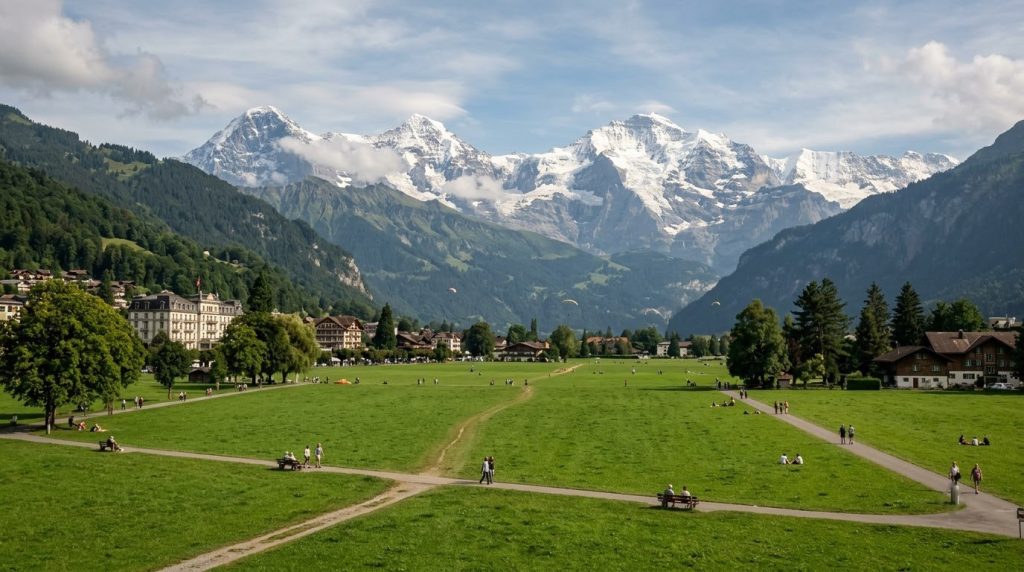
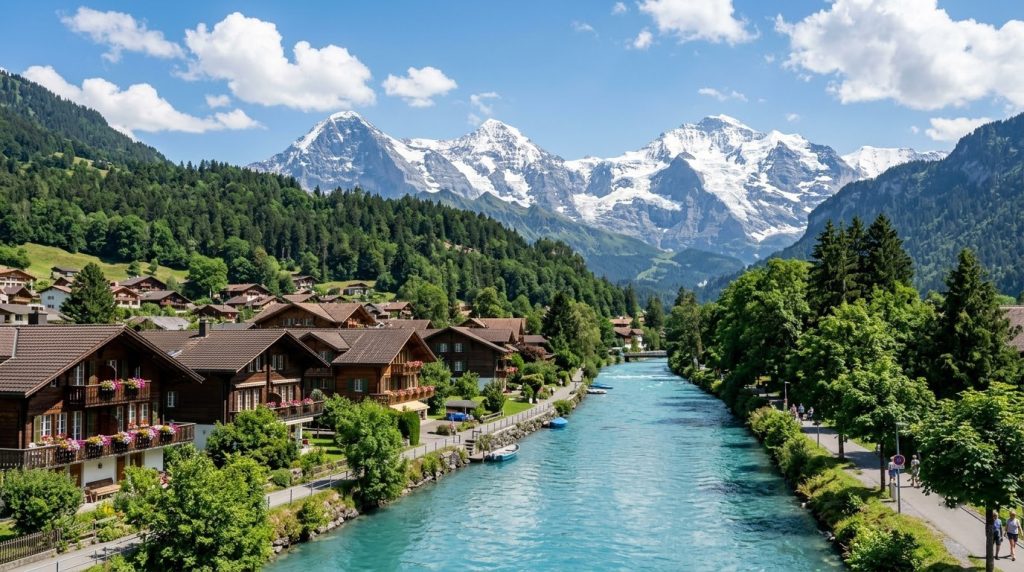
Interlaken sits on a strip of flat land between two impossibly turquoise lakes, Lake Thun and Lake Brienz, with the Jungfrau, Monch, and Eiger peaks forming a wall of snow and granite at the valley’s end. The town’s name means “between lakes,” which is the most literal and least imaginative thing about it.
Everything else — the paragliders drifting down like slow confetti, the waterfalls threading through vertical cliff faces, the trains climbing to the highest railway station in Europe — belongs in a different vocabulary entirely.
Interlaken has been Switzerland’s adventure capital since the 19th century, when British mountaineers used it as a base camp for first ascents in the Bernese Oberland. Today, roughly 2 million visitors pass through each year (Interlaken Tourism, 2025), drawn by the paragliding, the canyon swings, the skydiving, and what might be the most scenic train ride on the planet.
This Interlaken travel guide covers the best things to do, the thrill-seeker experiences worth the adrenaline, the viewpoints that define the region, the day trips you should not skip, and where to stay for the view you came for.
Stay connected: grab a travel eSIM from Airalo before you go so you have data the moment you land.
Best Things to Do in Interlaken
Paragliding Over the Lakes
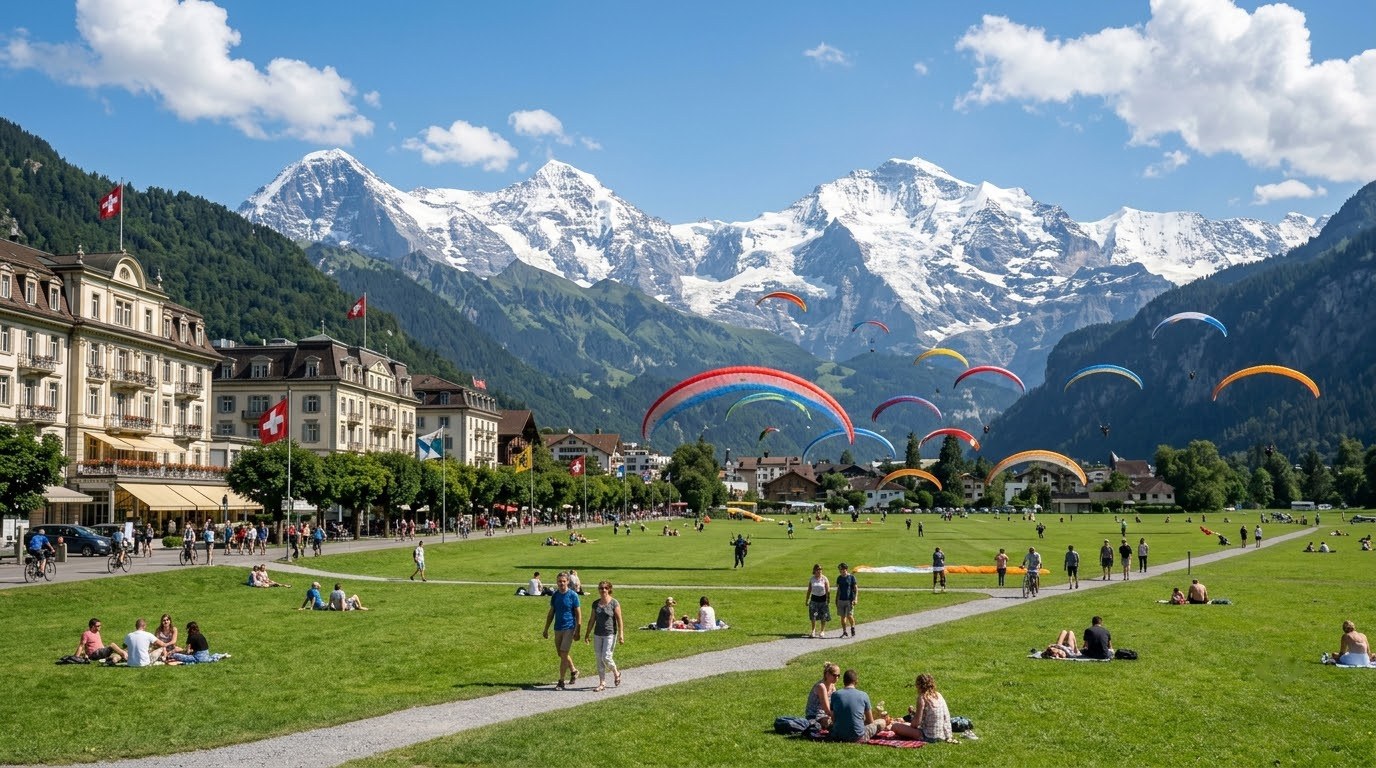
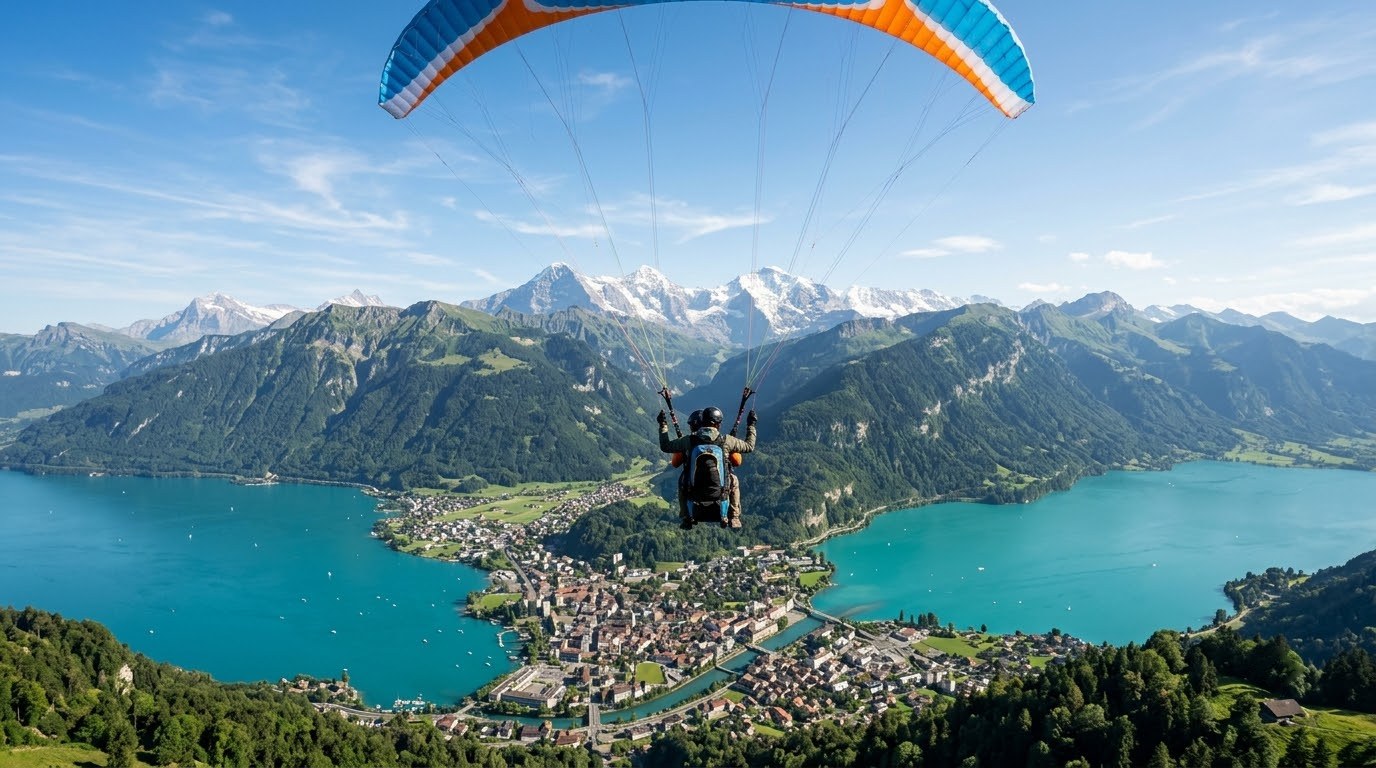
Interlaken is one of the few places on Earth where paragliding qualifies as a mainstream activity. Roughly 20,000 flights launch from Beatenberg each year, landing on the central Hohematte meadow in the middle of town.
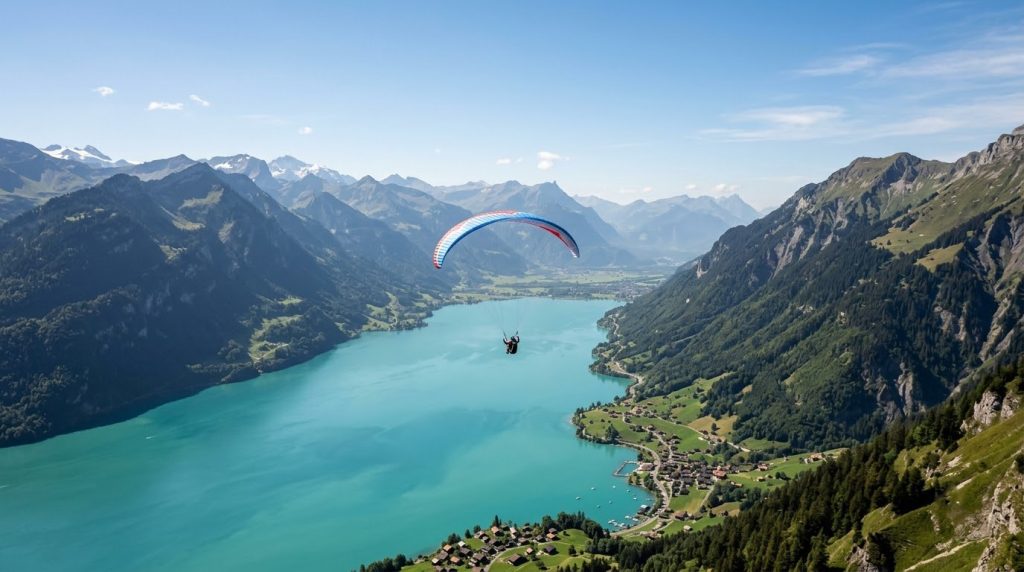
The numbers exist because the geography could not be more accommodating: a 1,350-meter launch point, a flat grassy landing zone visible from every hotel balcony, and a background of the Eiger’s north face that makes every in-flight photo look doctored.
The flight lasts 15-20 minutes. You run downhill for about five steps before the thermal lift picks you up and the pilot settles into a harness behind you. The first 30 seconds of silence, as the ground drops away and the lake becomes a mirror, is what you pay for.
The remaining 14 minutes of banking turns over the valley, with the pilot offering to let you steer, are a bonus.
Book with: Paragliding Interlaken (185 CHF), established 1990, the most experienced operator. Flights depart roughly every 20 minutes from 8:00 AM to 5:00 PM in summer. Morning flights (before 10:00 AM) have the smoothest thermals and the best light on the mountains.
Jungfraujoch: Top of Europe
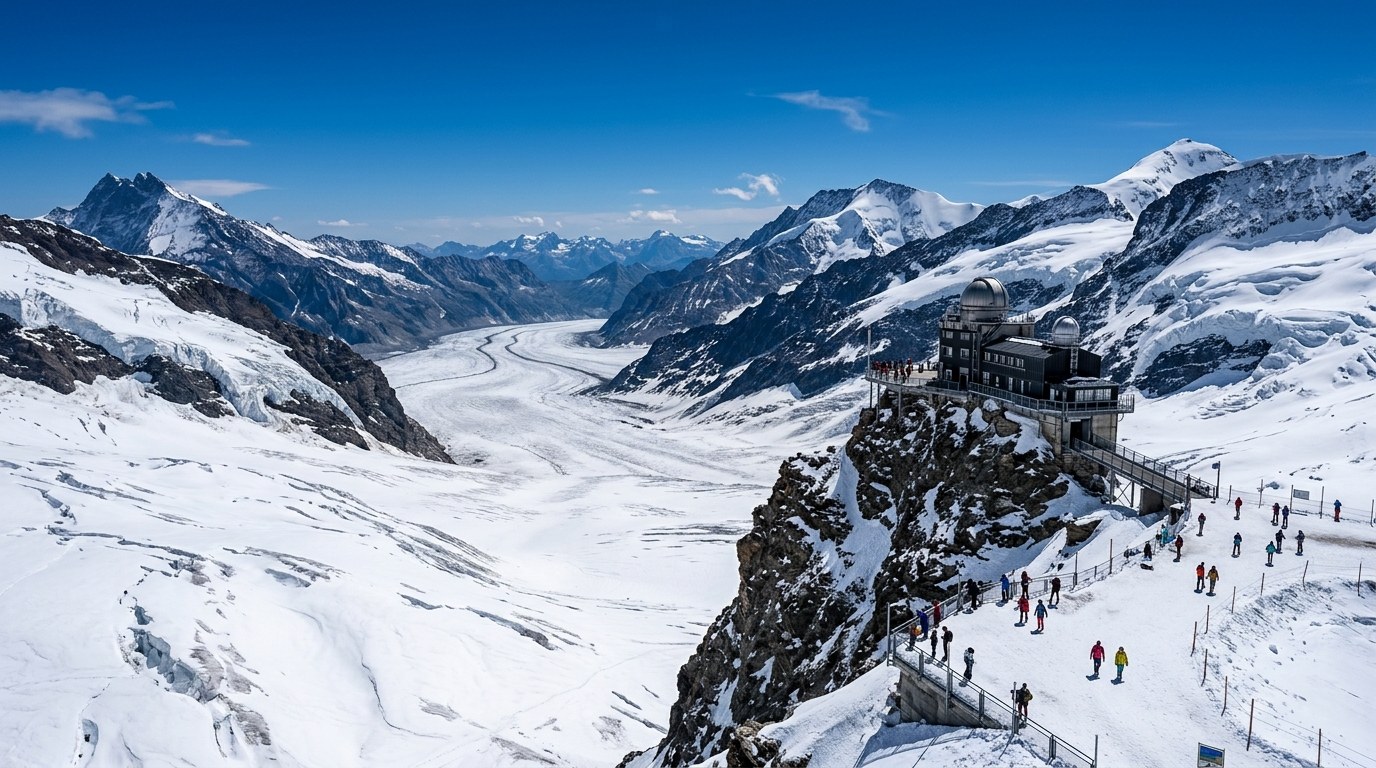
The Jungfrau Railway climbs from Kleine Scheidegg through a 7-kilometer tunnel carved into the Eiger and Monch, emerging at 3,454 meters on a saddle between the Jungfrau and the Monch. The station at the top includes an Ice Palace carved into the glacier, a Sphinx observation deck 117 meters above the snow, and a view that stretches to the Black Forest in Germany on clear days.
Is it touristy? Intensely. The Lindt chocolate shop at the top is the highest chocolate shop in Europe, which tells you everything you need to know.
But the moment you step onto the Aletsch Glacier viewing platform, a metal catwalk extending over the largest glacier in the Alps, the commercial excess below stops mattering. The glacier flows for 23 kilometers, a frozen river of ice that has been moving at roughly 180 meters per year since the last ice age.
Tickets: 210.80 CHF round-trip from Interlaken Ost. First departure at 7:35 AM. Book at jungfrau.ch at least two weeks ahead in July and August. The Swiss Travel Pass covers the route to Grindelwald or Wengen but not the Jungfrau Railway itself (25% discount applies). The Good Morning Ticket (before 9:30 AM departure, return by 1:15 PM) costs 165 CHF and is the best value if you move quickly.
Lake Brienz Boat Cruise
Lake Brienz is the color of a Bombay Sapphire bottle, thanks to glacial particles suspended in the water that scatter sunlight into the blue-green spectrum. The BLS boat company runs a scheduled ferry service stopping at the towns and waterfalls along both shores. The full circuit from Interlaken Ost to Brienz and back takes about 2 hours each way.
Ride at least as far as Giessbach Falls. The boat docks at a landing stage where a free funicular, the oldest in Europe still in operation (installed 1879), climbs three minutes to the Grandhotel Giessbach. The waterfall cascades 500 meters in 14 stages directly next to the hotel terrace.
A footpath crosses behind the main cascade. The hotel restaurant serves rosti and lake fish on a terrace where the waterfall mist cools your coffee.
Cost: 25 CHF one-way to Brienz, or 32 CHF for a day pass on the lake boats. Swiss Travel Pass covers both lakes at no extra charge.
Thrill-Seeker’s Guide to Interlaken
Interlaken’s reputation as the adventure capital of Europe is not marketing. The canyon geography, the vertical relief, and the Swiss attitude toward safety (obsessive) combine to make activities here that would be once-in-a-lifetime experiences elsewhere feel like a menu.
Canyon Swing at the Gletscherschlucht
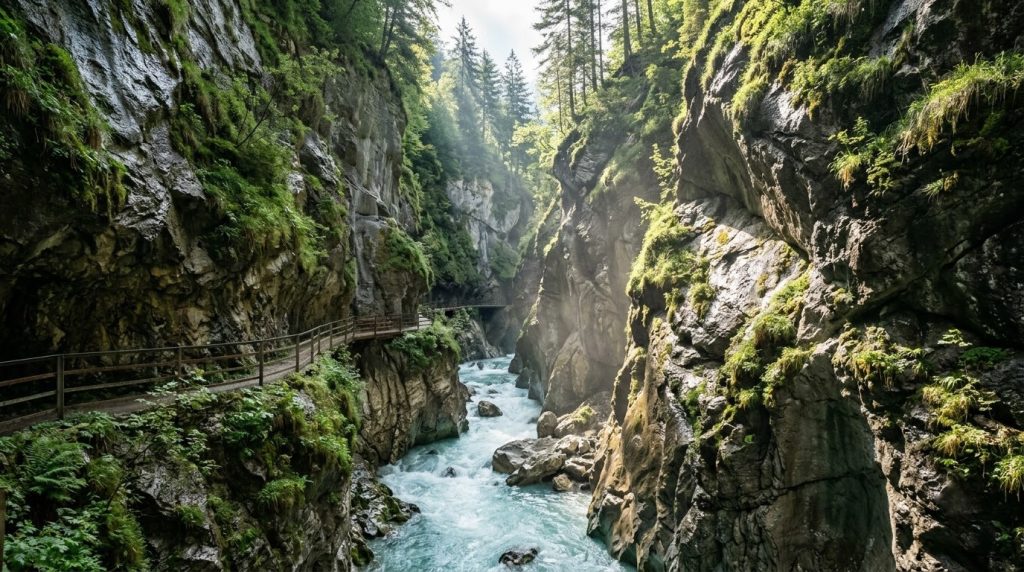
The canyon swing at Grindelwald’s Glacier Gorge drops 90 meters in free fall before pendulum-swinging through a narrow slot canyon with rock walls on either side. It is the most viscerally terrifying thing in the Bernese Oberland, surpassing even the skydiving. The jump platform is bolted to the cliff edge.
The rope catches you after roughly three seconds of falling. Your brain takes about 15 minutes to process what just happened.
Cost: 135 CHF. Operates May through October, weather permitting. Reserve at outdoor-interlaken.ch.
Canyoning in the Saxeten Gorge
The Saxeten Gorge, a 20-minute drive from Interlaken, offers a half-day canyoning route through narrow limestone chutes, natural water slides, and jumps ranging from 2 to 12 meters. The water is glacial snowmelt, roughly 8 degrees Celsius even in August. A full wetsuit, helmet, and harness are provided. No prior experience needed, but basic swimming ability is mandatory.
Cost: 149 CHF for the half-day Chli Schliere trip with Outdoor Interlaken (the most advanced route). The Saxeten Beginner trip (129 CHF) skips the biggest jumps.
Skydiving from 4,300 Meters
The skydiving drop zone sits on the edge of town, and the 15-minute scenic flight climbs to 4,300 meters over the Eiger north face before the door opens. The freefall lasts 45 seconds at roughly 200 kilometers per hour. The canopy ride down, with both lakes spreading below you like a map, lasts 5-7 minutes. Tandem only unless you hold a license.
Cost: 430 CHF including video and photos. Book at skydiveinterlaken.ch.
Best Viewpoints Around Interlaken
Harder Kulm
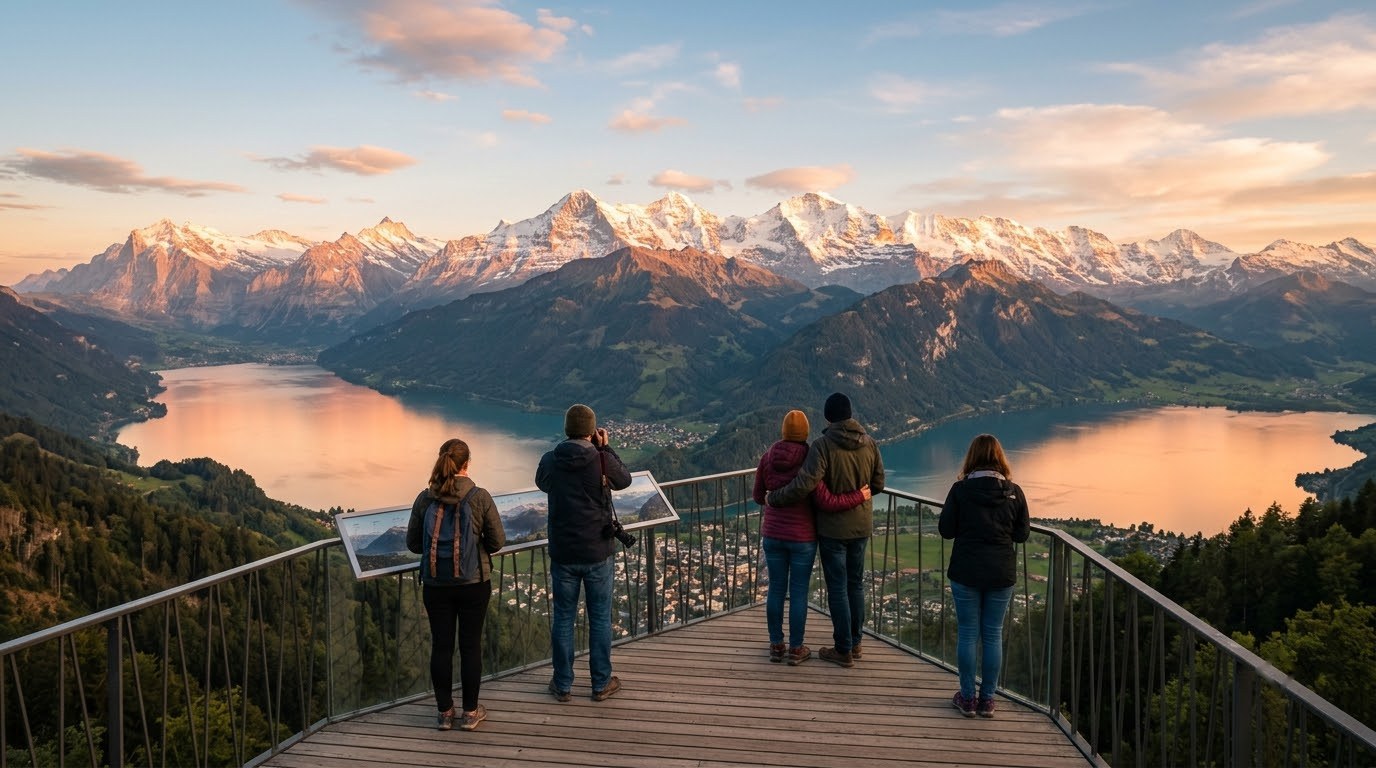
The Harder Kulm funicular climbs 735 vertical meters in 10 minutes to a viewing platform that juts out over the valley like a glass-bottom balcony. The panorama spans both lakes, the entire town of Interlaken, and the Eiger-Monch-Jungfrau massif. The restaurant at the top serves fondue (29 CHF) on a terrace where the mountains fill the entire southern horizon.
Cost: 32 CHF round-trip. First ascent at 9:10 AM. Sunset tickets (after 5:00 PM) cost 19 CHF in summer. The platform lights up at night, and the view of the town lights reflecting on both lakes is worth the evening trip.
Schynige Platte
The Schynige Platte railway, a cogwheel train running since 1893, climbs 1,420 meters from Wilderswil (a 5-minute bus ride from Interlaken) through alpine meadows to a ridge with a 360-degree view of Lake Thun, Lake Brienz, and the entire Bernese Alps. The journey takes 50 minutes on wooden benches in vintage carriages.
At the summit, the Alpine Garden displays 650 species of native Swiss mountain flowers arranged by habitat. The Panorama Trail, a 2.5-kilometer loop, offers uninterrupted Eiger views. The Loucherhorn lookout at the far end of the ridge, roughly 30 minutes walking from the station, faces the Eiger directly with no foreground obstruction.
Cost: 64 CHF round-trip. Swiss Travel Pass covers 50%. Operates late May through late October only. The morning train at 9:05 AM from Wilderswil provides the best light for Eiger photography.
Niederhorn
The Niederhorn sits north of Lake Thun, offering a perspective that reverses the usual Interlaken view. Instead of facing the mountains, you face across the lake with the Bernese Alps as the backdrop behind it. The funicular from Beatenberg (reachable by bus from Interlaken) climbs to 1,950 meters in 20 minutes.
The real reason to come is the sunset. The sun drops behind the ridge west of Thun, silhouetting the entire Eiger-Monch-Jungfrau massif in gold and pink alpenglow. The last funicular down departs at 6:15 PM in summer. Check sunset times before booking.
Best Day Trips from Interlaken
Interlaken is less a destination and more a launchpad. The entire Bernese Oberland spreads out from it like a fan, and the Swiss transport system means you can breakfast by Lake Thun and lunch beneath the north face of the Eiger.
Lauterbrunnen Valley
The Lauterbrunnen Valley is a U-shaped glacial trough with cliff walls rising 300 meters on both sides. Waterfalls spill off the edges — 72 of them, by the official count, the most famous being Staubbach Falls (297 meters, free-falling from an overhanging rock face) and Trummelbach Falls (a series of ten glacier-fed waterfalls thundering inside the mountain, 12 CHF entry).
The train from Interlaken Ost to Lauterbrunnen takes 20 minutes. It is included in the Swiss Travel Pass. Walk the flat 8-kilometer valley floor trail to Stechelberg for unobstructed waterfall views the entire way. Read our full Lauterbrunnen valley guide for waterfall details, hiking routes, and photo spots.
Grindelwald and the Eiger Trail
Grindelwald, on the opposite side of the ridge from Lauterbrunnen, sits directly beneath the Eiger north face. The train from Interlaken Ost takes 34 minutes via the Bernese Oberland Railway. The village’s main street opens onto a view of the north face that stops most first-time visitors mid-step.
The Eiger Trail, a 6-kilometer path tracing the literal base of the north face, is a moderate 2.5-hour walk with sections where you can reach out and touch limestone that has killed over 60 climbers since 1935. The trail connects the Eigergletscher station to Alpiglen. Read our detailed Grindelwald adventure guide for the First Cliff Walk, hiking routes, and winter skiing.
Schilthorn and Piz Gloria
The Schilthorn cable car from Stechelberg (20 minutes past Lauterbrunnen by bus) climbs to 2,970 meters to the Piz Gloria revolving restaurant. The James Bond film On Her Majesty’s Secret Service was shot here in 1969, and the restaurant has leaned into the theme with a Bond museum and a martini menu.
The view from the terrace spans over 200 Alpine peaks including the Eiger, Monch, and Jungfrau from a completely different angle than the Jungfraujoch.
Cost: 107.60 CHF round-trip from Stechelberg. Swiss Travel Pass covers 50%. The cable car operates year-round, but the “007 Walk of Fame” outside the station is, as you might expect, a series of concrete stars bolted to a glacier, and better suited to Bond completionists than serious hikers.
Find your Interlaken hotel on the map
Live prices from Booking & Airbnb — tap a pin to compare stays around Interlaken and the Jungfrau region and beyond.
Where to Stay: Town Guide
Victoria Jungfrau Grand Hotel — The Icon
Location: Hohematte, central Interlaken | From 550 CHF ($600 USD) | Rating 4.8/5
The grande dame of Interlaken hotels, opened in 1865, facing the central meadow with the Jungfrau perfectly framed between the wings of the building. The 5,500-square-meter spa has a pool with mountain views. Even if you do not stay here, the terrace bar serves afternoon tea (45 CHF) with the same view.
Best for: Honeymooners and anyone who wants the Eiger view from their bathtub.
Hotel Interlaken — Mid-Range Historic
Location: Near Interlaken Ost station | From 200 CHF ($220 USD) | Rating 4.5/5
A converted 14th-century monastery with a modern wing. The courtyard garden is the quietest spot in central Interlaken. Rooms in the historic section have exposed beams and window seats overlooking the garden. The location puts you four minutes from the train station and seven from the paragliding landing zone.
Best for: Couples who want character and quiet without the grand-hotel price.
Backpackers Villa Sonnenhof — Budget with a View
Location: 5-minute walk from Interlaken West | From 40 CHF ($44 USD) dorm, 120 CHF private | Rating 4.6/5
A converted villa with a garden terrace facing the Jungfrau. The kitchen is well-equipped and the breakfast (included) has real Swiss bread and local cheese. Free public transport card for Interlaken included with stay.
Best for: Solo travelers and anyone doing multiple adventure activities (the money saved on the hotel funds the paragliding).
Book all three on Booking.com. Interlaken hotels fill solidly from June through September. Book two months ahead for the best rates.
Interlaken is not a town you visit for the architecture or the nightlife. It is a town you visit because the mountains behind it belong on a different planet, and because the Swiss figured out, a century ago, how to build trains and cable cars that take you directly into them. Book the paragliding.
Ride the Jungfrau Railway at dawn. Take the Lake Brienz boat to Giessbach Falls. And when you are ready for the quieter side of the Bernese Oberland, our guides to Lauterbrunnen, Grindelwald, and Zermatt are waiting.
Frequently Asked Questions
How many days do I need in Interlaken?
Budget three days minimum. One day for paragliding and the Jungfraujoch. One day for Lake Brienz and Giessbach Falls. One day for a day trip to Lauterbrunnen or Grindelwald. Four days allows a trip to the Schilthorn or a full-day hike.
Is Interlaken expensive?
Yes, like most of Switzerland. Budget 150-200 CHF ($165-220 USD) per day per person including mid-range hotel, three meals, and one activity. The Swiss Travel Pass (232 CHF for 3 days) saves significantly on transport. Paragliding (185 CHF) and the Jungfraujoch (211 CHF) are the two biggest single expenses.
What is the best month to visit Interlaken?
June through September offer the best weather and full activity availability. August is peak with the highest hotel prices. Late June has the longest daylight (sunset around 9:30 PM). September and early October bring autumn colors on the valley walls and fewer crowds.
Do I need a car in Interlaken?
No. The Swiss public transport system serves every attraction, trailhead, and valley in the region. Trains, buses, boats, and cable cars connect everything. A car would sit unused in a parking lot. The Swiss Travel Pass covers nearly all transport in the region.
Can I visit Interlaken as a day trip?
Technically yes from Zurich or Lucerne, but we do not recommend it. The journey time (2 hours each way) consumes half the day. Spend at least two nights to experience the paragliding, a mountain railway, and a lake boat ride. Day tripping Interlaken misses the point entirely.
Is Interlaken better in summer or winter?
Summer (June-September) is the main season for paragliding, hiking, lake boats, and mountain railways. Winter (December-March) transforms the valley into a base for skiing and snowboarding in the surrounding resorts of Grindelwald, Wengen, and Murren. Both seasons offer completely different experiences of the same spectacular geography.
More European Travel Guides