Best Time to Visit Zermatt 2026: Ski, Hike & Weather
By TravelguidestipUpdated 10 min readHow we earn
Hotel buttons open Stay22 (Booking.com, Agoda and others) and tour buttons open GetYourGuide. We may earn a commission at no extra cost to you.
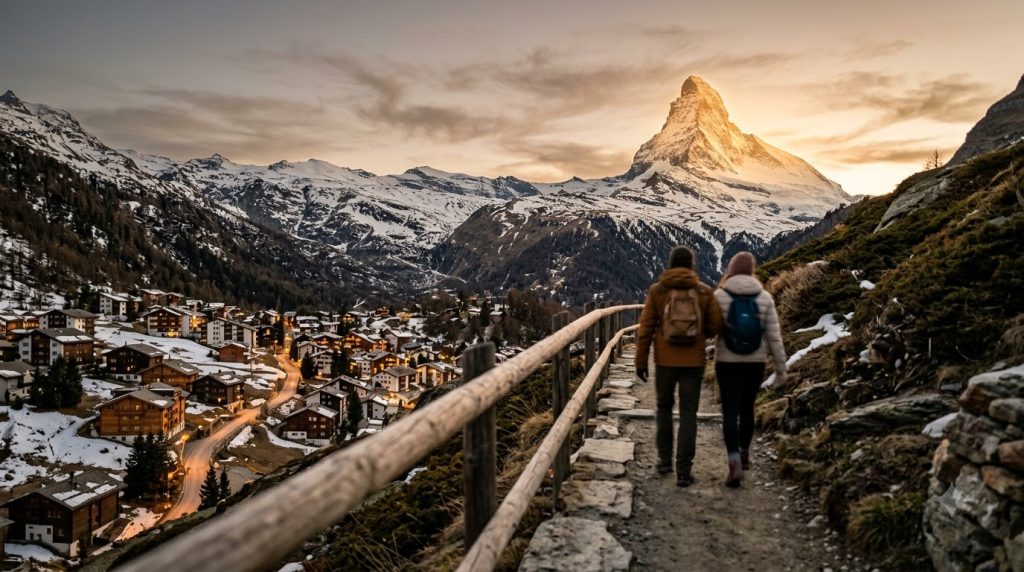
In short
- Best overall months are July to September. Daytime highs reach the low-to-mid teens Celsius, hiking trails are fully open, and mornings deliver the clearest Matterhorn views before afternoon cloud builds.
- Ski season 2025/26 ran 29 November 2025 to 19 April 2026, with the most reliable snow from January to March. Summer skiing continues on the glacier at 3,883 meters even in July and August.
- January is the coldest month, averaging around -3.3 degrees Celsius with overnight lows near -13.5 degrees at village level (climate-data, 2026). Pack for serious cold if you visit in deep winter.
- Shoulder seasons cut costs the most. Late April to early May and the whole of September combine lower hotel rates, thinner lift queues, and comfortable daytime temperatures.
- Zermatt gets roughly 412 cm of snow a year across about 35 snowfall days, peaking in December, so snow reliability is rarely the problem in winter, weather closures are.
The best time to visit Zermatt is July to September for hiking and clear Matterhorn views, and January to March for skiing on reliable snow.
Zermatt is unusual because it works in every season: the resort holds around 360 kilometers of pistes across the Swiss and Italian sides, and the Theodul Glacier keeps a stretch of runs open 365 days a year (Zermatt Bergbahnen, 2026). There is no dead month here, only trade-offs between snow, crowds, price, and how often the Matterhorn shows its face.
This guide breaks down the best time to visit Zermatt by what you actually want to do: ski season versus summer hiking, the months when the Matterhorn stays clearest, the quiet shoulder seasons that cost less, and a month-by-month weather table.
Zermatt sits at 1,620 meters in a high Alpine valley, it has been car-free since a local vote in 1961, and the weather shifts fast at altitude, so timing matters more here than at most European destinations.
The pattern holds across seasons: the Matterhorn is sharpest between roughly 7 and 9 in the morning, then cloud creeps up the east face by early afternoon. On our February trip we skied the Gornergrat side in bright cold, and on the June morning we watched the summit stay clear until almost 11 before the first cumulus formed. Early starts are the single best decision you can make here.
When Is the Best Time to Visit Zermatt?
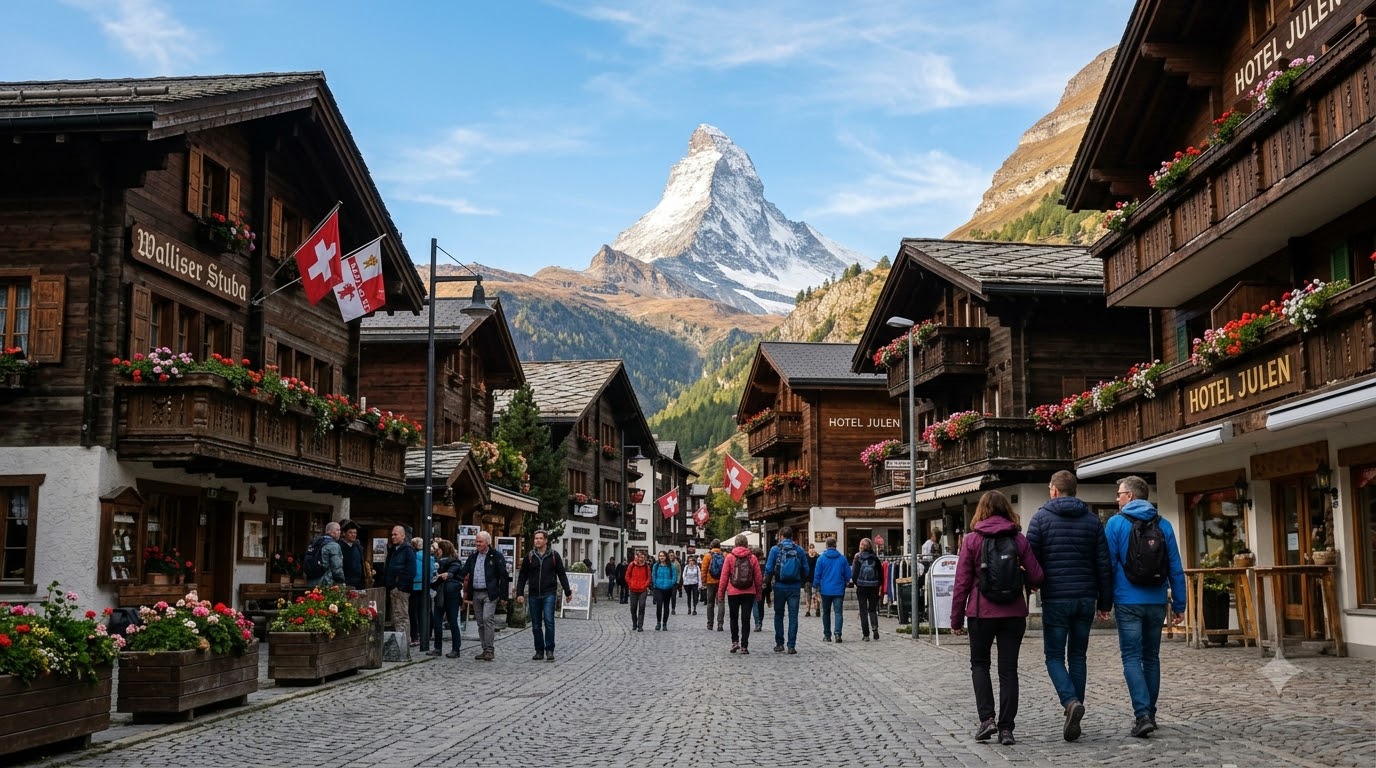
The best time to visit Zermatt depends on whether you are chasing snow or trails, but three windows stand out for most travelers. Summer offers the widest range of open activities and the mildest weather; midwinter offers the deepest snow; and the shoulder months offer the best balance of price and quiet.
Here is the quick decision list:
- For hiking and mountain views: mid-June to late September, when high trails are snow-free and cable cars run full schedules.
- For skiing and snowboarding: late November to mid-April, with January to March the most reliable for snow depth.
- For summer skiing on the glacier: July and August, on the 21 kilometers of pistes kept open at the Matterhorn Glacier Paradise.
- For the lowest prices and thinnest crowds: late April to early May, and September into early October.
- For photography with autumn color: late September to mid-October, when the larch forests turn gold below the peaks.
If you only care about seeing the Matterhorn at its clearest, aim for a stretch of settled high pressure in September or October and get on the first cable car of the day. Our Zermatt travel guide covers the viewpoints themselves in detail; this article is about picking the right week to be standing at them.
Zermatt Weather Month by Month (2026)
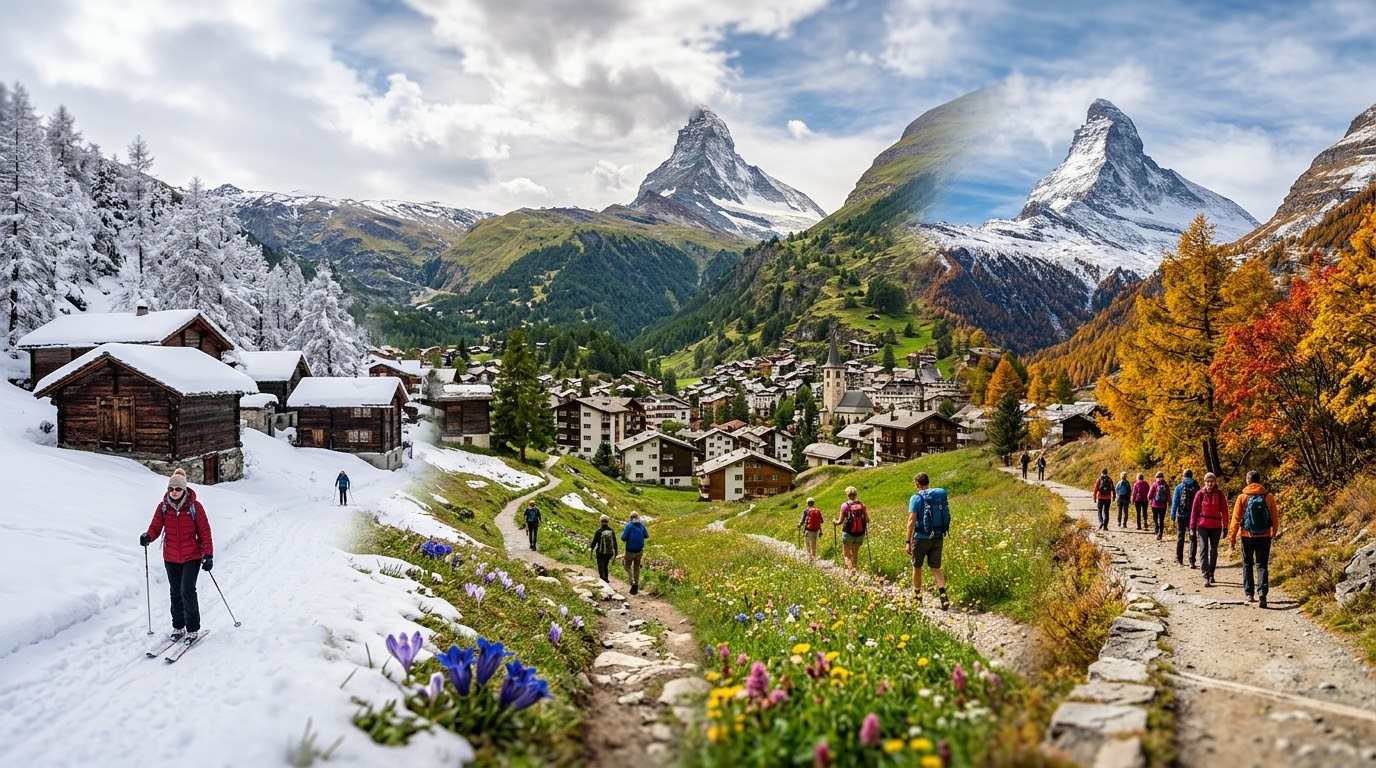
Zermatt has a cold Alpine climate: winters are long and snowy, summers are short and mild, and afternoon thunderstorms are common from June to August. Village-level temperatures below are averages; every 1,000 meters you climb on a cable car drops the air roughly 6 degrees Celsius colder, so summit conditions are always far harsher than what you feel in town.
| Month | Avg high (C) | Avg low (C) | Snow / conditions | Best for |
|---|---|---|---|---|
| January | 1 | -9 | Coldest month, deep snow | Skiing, quiet slopes |
| February | 3 | -8 | Reliable snow, longer days | Skiing, sunny cold |
| March | 6 | -5 | Strong snow base, more sun | Spring skiing |
| April | 9 | -2 | Melt begins low, snow up high | Late ski + lower prices |
| May | 14 | 2 | Trails opening low, snow high | Shoulder value, waterfalls |
| June | 17 | 6 | Alpine flowers, storms build | Early hiking |
| July | 19 | 8 | Warmest, afternoon storms | Hiking, summer skiing |
| August | 18 | 8 | Warm, busy, storms | Hiking, families |
| September | 15 | 4 | Stable, clear, crisp | Best all-round value |
| October | 10 | 0 | Golden larches, first snow | Photography, clear views |
| November | 4 | -4 | Season transition | Quiet, lifts reopening |
| December | 1 | -8 | Snow peaks, festive | Skiing, Christmas |
Annual snowfall averages around 412 cm and total precipitation about 1,767 mm, with the wettest and snowiest stretch running late autumn through early spring (climate-data, 2026). The takeaway: winter is about snow reliability, summer is about dodging afternoon storms, and the shoulder months are the calmest weather of all.
Best Time for Skiing in Zermatt
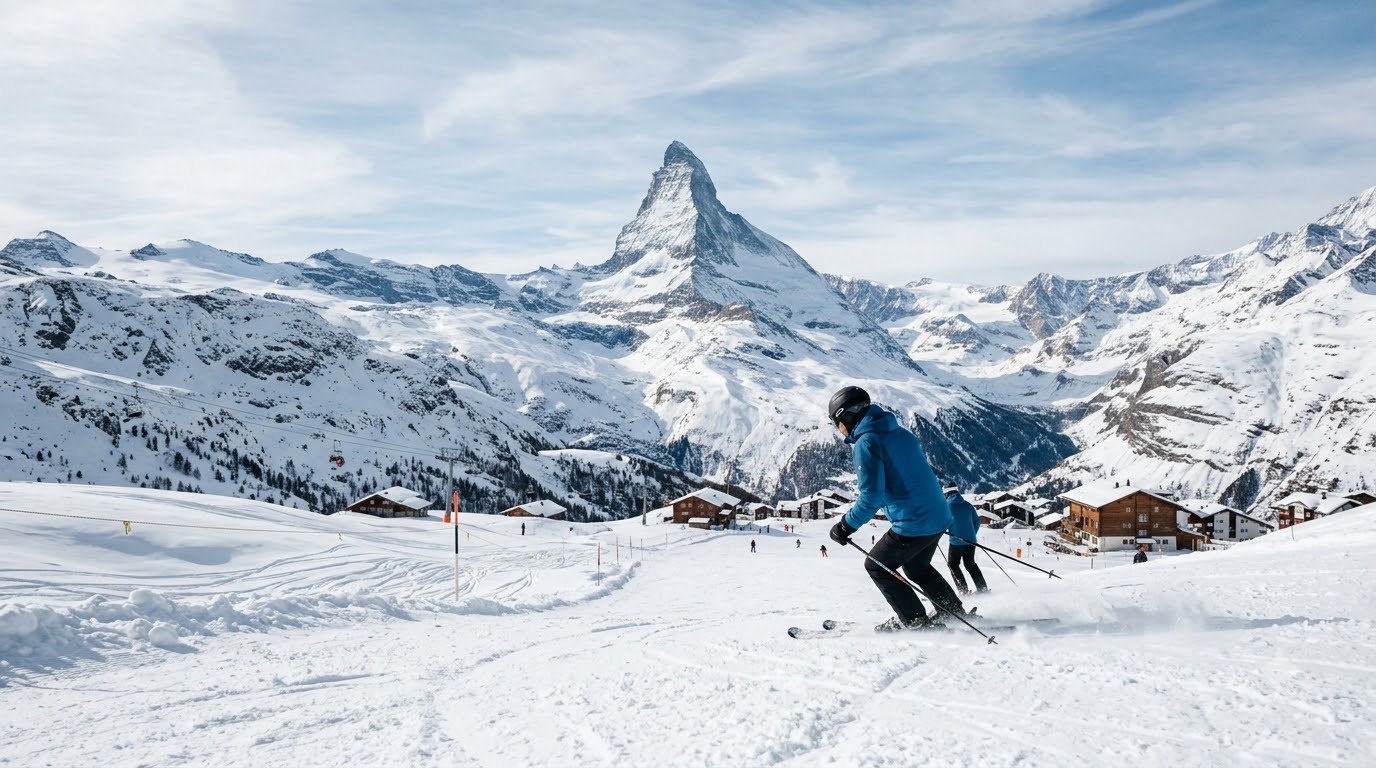
The best time to ski Zermatt is January to March, when snow depth and reliability peak across the linked Swiss and Italian ski areas. The 2025/26 winter season officially opened on 29 November 2025, with the Rothorn, Sunnegga, Hohtalli, and Gornergrat sectors opening 6 December, and most lifts ran until 19 April 2026 (Zermatt Bergbahnen, 2026).
Choosing your ski week comes down to daylight versus deep cold:
- December to early January: the most festive atmosphere and the deepest fresh snowfall, but the shortest days and the highest holiday prices.
- January: the coldest and quietest of the peak months, with excellent snow and mid-week lift queues that stay short.
- February to mid-March: the sweet spot, combining long snow-secure runs with noticeably longer, sunnier days.
- Late March to mid-April: spring skiing with soft afternoon snow, warm terraces, and falling accommodation rates.
- July and August: summer glacier skiing on 21 kilometers of pistes up at 3,883 meters, best skied in the early morning before the surface softens.
Zermatt connects to Cervinia in Italy over the Theodul pass, giving intermediate and advanced skiers one of the largest cross-border areas in the Alps. Beginners should note that most nursery terrain sits high on the mountain rather than in the village, so first-timers still ride cable cars daily. For where to base yourself near the lifts, see where to stay in Zermatt.
Best Time for Summer Hiking in Zermatt
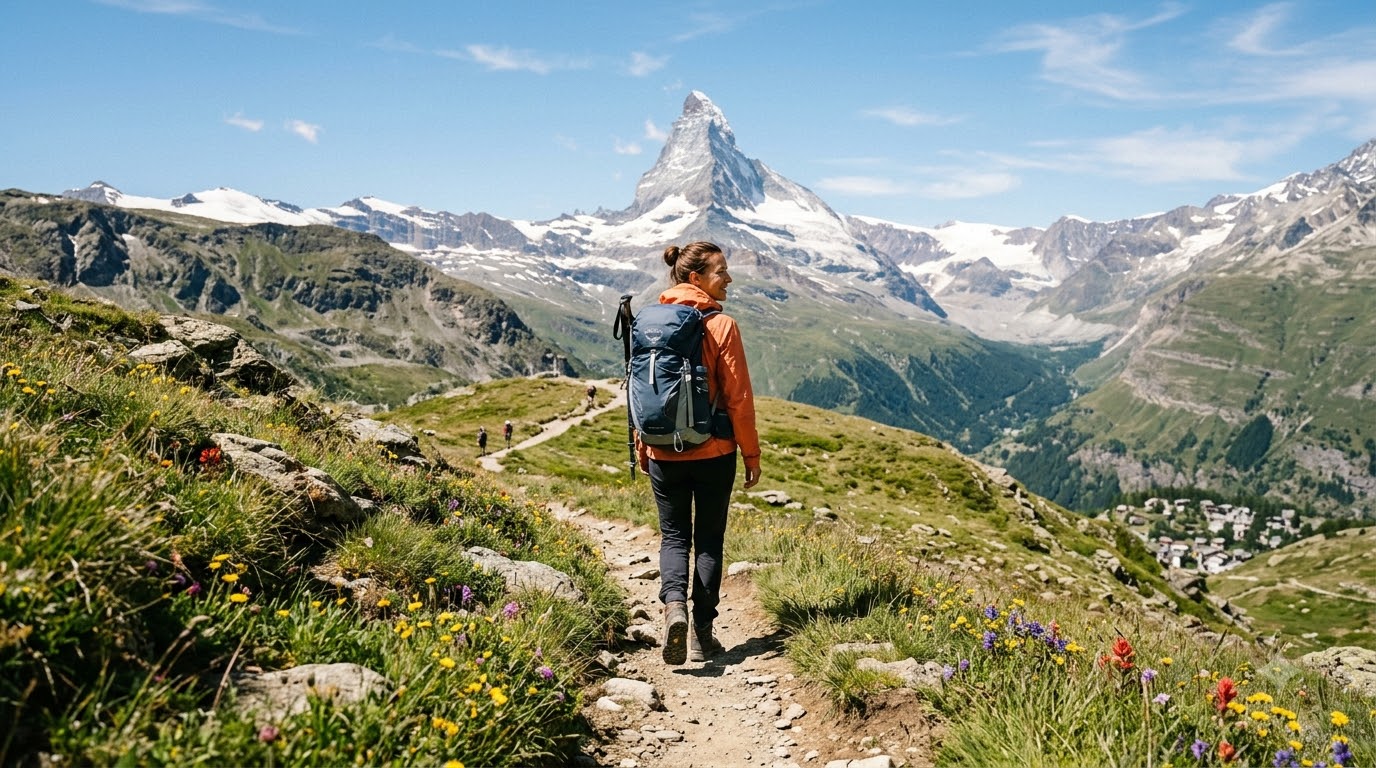
The best time to hike Zermatt is July to mid-September, when the high trails are fully clear of snow and cable cars run their longest daily hours. July and August are the mildest months, averaging roughly 10 to 14 degrees Celsius at village level, though afternoon thunderstorms are frequent and can arrive quickly at altitude.
Plan hiking days around the weather and the crowds with these markers:
- Mid-June: lower and mid trails open with Alpine flowers at their peak, but some high routes still hold snow patches.
- July to mid-August: every trail open, the famous Five Lakes Walk fully accessible, and the warmest reliable conditions of the year.
- Late August to mid-September: trails still open, temperatures easing, and the busiest summer crowds beginning to thin.
- Late September to mid-October: larch forests turn gold, air clarity is at its best, but some high lifts start closing for maintenance.
On the Riffelsee and Gornergrat routes in late June, plan to be back below the treeline by 2 in the afternoon, when storms tend to roll in almost on schedule. Start early, carry a hard shell, and check the mountain webcams before committing to a summit day.
For the full trail and activity roundup, our guide to the best things to do in Zermatt covers each route by difficulty.
When Is the Matterhorn Clearest?
The Matterhorn is clearest on early mornings during settled high-pressure spells, most reliably in September and October. The peak generates its own weather: on warm days, moisture rises up the valley and forms a cloud banner off the summit by early afternoon, even when the rest of the sky stays blue. This is why timing your viewing hour matters as much as timing your trip.
Improve your odds with these patterns:
- Best months: September and October deliver the most days of stable, cloud-free mornings and crisp visibility.
- Best time of day: roughly 7 to 10 in the morning, before daytime heating builds cloud on the east face.
- Best conditions: the morning after a cold front clears, when high pressure settles and winds drop.
- Hardest window: midsummer afternoons, when thunderstorms and the summit banner cloud are most likely.
- Winter bonus: clear cold high-pressure days in January and February give razor-sharp views, if you can handle the temperatures.
On our October visit the summit stayed clear until nearly midday, far longer than the summer average, which is exactly why autumn is our preferred window for photography. For viewpoint-by-viewpoint directions and the best reflection spots, see our dedicated Zermatt Matterhorn viewing guide.
Shoulder Seasons: Best Value and Fewest Crowds
The best value time to visit Zermatt is the shoulder seasons: late April to early May, and September into early October. These windows pair lower accommodation rates with thinner crowds on lifts and trails, while still offering good conditions. September in particular combines stable weather, clear Matterhorn mornings, and post-summer pricing.
Here is how the quiet windows compare:
- Late April to early May: spring skiing up high, melting snow and reopening trails lower down, and some of the year’s lowest hotel rates before the summer rush.
- May to early June: waterfalls at full flow, green lower valleys, and quiet villages, though the highest trails and some lifts remain closed.
- September: the strongest all-round shoulder month, with warm days, clear views, and open hiking still in full swing.
- Early to mid-November: the deepest lull between summer and ski season, cheapest of all but with many lifts closed for maintenance.
Zermatt is one of the most expensive resort towns in Switzerland, so shifting your trip by even two weeks off-peak can meaningfully lower the bill. Mid-week stays cut costs further, and booking a room with a Matterhorn-facing balcony is easier and cheaper in these quieter windows. Deep summer and the Christmas-to-New-Year fortnight are the two most expensive and crowded stretches to avoid if budget is your priority.
What Is the Worst Time to Visit Zermatt?
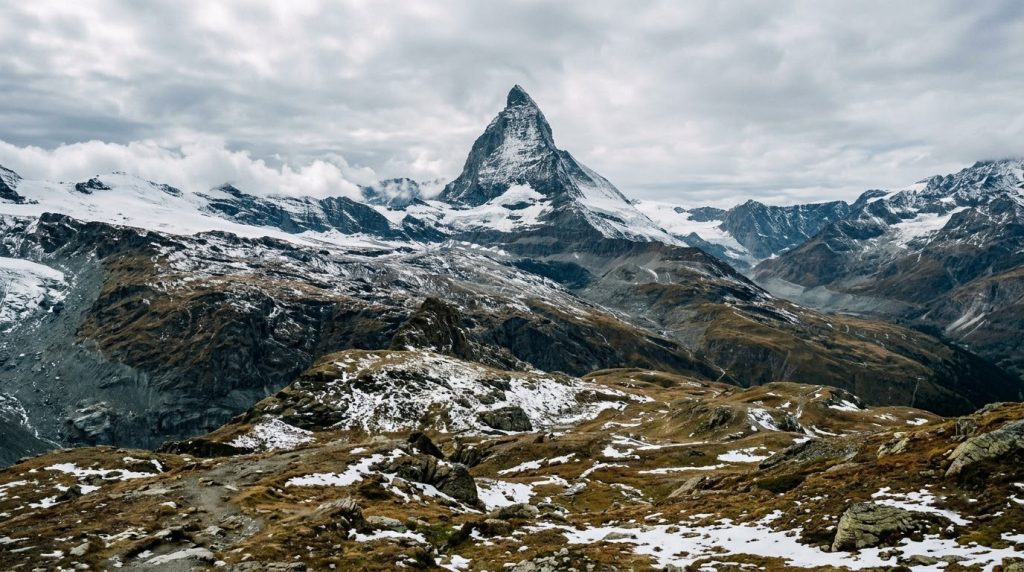
The least rewarding windows are the two transition lulls: late April to mid-May at the lowest elevations, and November before the ski lifts reopen. During these weeks many high cable cars close for maintenance, some hotels and restaurants shut entirely, and the landscape can look patchy, half snow, half bare rock.
Keep these limitations in mind:
- Late April to mid-May (low elevations): melting snow can leave trails muddy and viewpoints below the snowline looking scrappy, even while high skiing continues.
- November: the quietest month for open infrastructure, with limited lifts and reduced dining until the winter season starts.
- Peak thunderstorm afternoons in July and August: not a bad time to visit overall, but a bad time to plan a summit excursion after midday.
None of these are truly off-limits, and dedicated budget travelers actively target November for the lowest prices. Just go in knowing which lifts and trails are running by checking the official Zermatt Bergbahnen schedule before you book, and cross-check our roundup of the best things to do in Zermatt so your trip lines up with what is actually open that week.
Frequently Asked Questions
What is the best month to visit Zermatt?
September is the best single month for most travelers. It combines warm, stable weather, some of the clearest Matterhorn mornings of the year, fully open hiking trails, and lower prices than the July-August peak. For skiers, February is the equivalent sweet spot, balancing reliable snow with longer, sunnier days.
Is Zermatt worth visiting in summer?
Yes. Summer is arguably the best time to visit Zermatt for first-timers. July and August bring the mildest temperatures, every hiking trail is open, cable cars run full schedules, and you can still ski on the glacier in the morning. The main drawback is frequent afternoon thunderstorms, so plan high excursions for the early hours.
How cold does Zermatt get in winter?
Zermatt is genuinely cold in deep winter. January averages around -3.3 degrees Celsius at village level, with overnight lows that can reach -13.5 degrees, and it gets far colder at the 3,883-meter summit stations. Snowfall averages about 412 cm a year across roughly 35 snowfall days, peaking in December.
When can you ski in Zermatt?
You can ski in Zermatt every month of the year. The main winter season typically runs from late November to mid-April, with January to March offering the most reliable snow. Summer skiing continues through July and August on the glacier pistes up at 3,883 meters, making Zermatt one of the few year-round ski destinations in the Alps.
When is the Matterhorn most visible?
The Matterhorn is most visible on clear mornings, especially in September and October, and roughly between 7 and 10 in the morning. The peak often forms its own banner cloud on warm afternoons, so an early start after a cold front has cleared gives you the best chance of an unobstructed view.
Find your Zermatt hotel on the map
Live prices from Booking, Airbnb and more — move the map or change dates to compare stays around Zermatt.
Final Thoughts
There is no single best time to visit Zermatt, only the right time for your trip. Come in July to September for hiking and warm clear mornings, in January to March for the most reliable skiing, and in late April to early May or September if you want to spend less and share the trails with fewer people.
Whatever month you choose, the rule that never changes is to get up early: the Matterhorn shows itself best in the first hours of daylight, and no season can promise it any later than that.