Disclosure: Some links in this guide are affiliate links. If you book or buy through them, we may earn a small commission at no extra cost to you — it helps keep our guides free.
Thailand runs about AUD 56 · USD 40 (THB 1,317) a day for a comfortable backpacker budget, against Cambodia’s roughly AUD 42 · USD 30 — a gap of around 25%. Thailand wins on islands, food variety, nightlife and infrastructure; Cambodia wins on Angkor Wat, lower prices and a slower, rawer pace.
If you can only fit one country into this trip, the choice comes down to whether ancient temples or beach-and-city polish matter more to you, and this guide gives a straight answer either way.
Quick answer: Comparing Thailand and Cambodia? Open live hotel prices in each to weigh cost against location:
| Category | Thailand | Cambodia |
|—|—|—|
| Daily budget (backpacker) | AUD 56 · USD 40 (THB 1,317) | AUD 42 · USD 30 |
| Currency on the ground | Thai baht (THB) | US dollar (riel barely used by tourists) |
| Biggest single draw | Islands, beaches, Bangkok, food scene | Angkor Wat |
| Infrastructure | Extensive rail, bus and flight network | Thinner, fewer direct routes, rougher roads |
| Beaches | World-class (Phuket, Koh Samui, Krabi) | Limited, less developed (Sihanoukville, Koh Rong) |
| Nightlife | Big, from Bangkok rooftop bars to island parties | Quieter, concentrated in Siem Reap and Phnom Penh |
| Smartraveller level | 2 of 4, exercise a high degree of caution | 2 of 4, exercise a high degree of caution |
| Cost vs the other | Baseline | Roughly 20-30% cheaper day to day |
Source: Smartraveller.gov.au (Sept 2026), on-the-ground price research — see Research Notes.
Cost: Thailand vs Cambodia
Thailand costs more everywhere you look, but not dramatically more. A clean three-star guesthouse room in Bangkok runs around AUD 49 · USD 35 (THB 1,153) a night, a plate of pad thai from a street stall is AUD 3 · USD 2 (THB 66), a one-hour Thai massage is AUD 8 · USD 6 (THB 198), and a tourist SIM with a data package is AUD 14 · USD 10 (THB 329).
Cambodia undercuts most of that. A guesthouse room in Siem Reap averages AUD 39 · USD 28 a night, a bowl of fish amok curry is AUD 6 · USD 4, an hour massage is AUD 11 · USD 8, and a SIM is AUD 7 · USD 5.
The one number that flips the script is the Angkor Wat one-day pass at AUD 51 · USD 37 — the single biggest line item on a Cambodia itinerary, and more than a Bangkok guesthouse night, but it buys access to one of the world’s great ancient sites.
Stack a few days of Angkor entry, transport and guides against a few days of Thai beach hopping, and the overall gap narrows to something closer to 15-20% rather than the headline 25%.
Ease of travel and infrastructure
Thailand simply has more infrastructure built for tourists. Budget airlines connect Bangkok to Phuket, Chiang Mai and Krabi for around AUD 62 · USD 45 (THB 1,482) one way, VIP overnight buses and a growing rail network cover the rest, and Grab ride-hailing works in every city that matters. English signage is standard on the well-worn tourist trail.
Cambodia is thinner. Fewer direct international flights land in Phnom Penh or Siem Reap, domestic hops such as Phnom Penh to Siem Reap cost around AUD 83 · USD 60, and roads outside the main towns are rougher. Grab operates in Phnom Penh and Siem Reap but coverage drops off quickly outside them.
None of this makes Cambodia hard to travel — it just takes more planning and patience than Thailand does.
What each country is actually known for
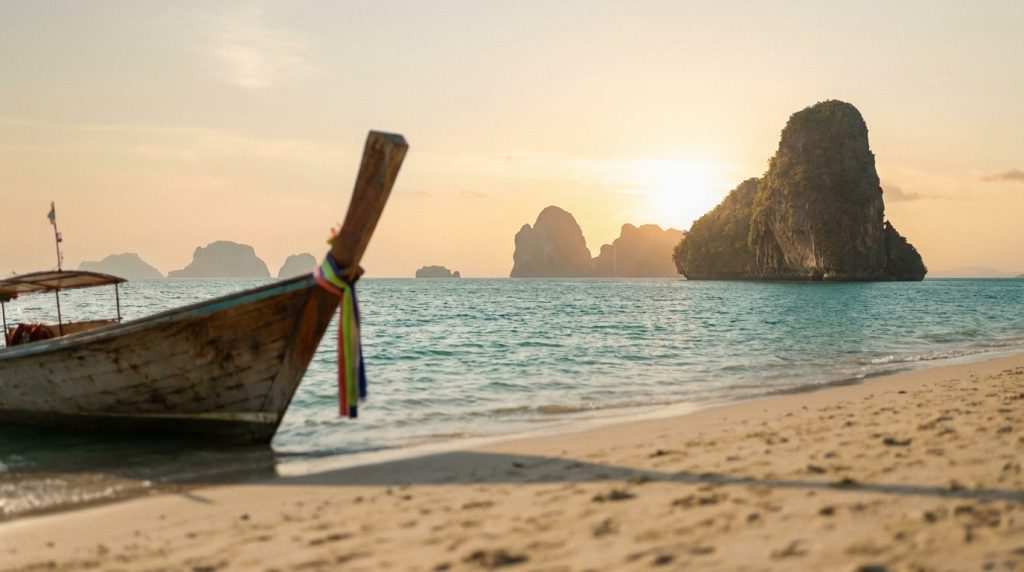
Thailand’s drawcards are broad: island-hopping in the Andaman Sea, Bangkok’s street food and temples, Chiang Mai’s mountain scenery, and a nightlife scene that ranges from rooftop bars to full-blown island parties.
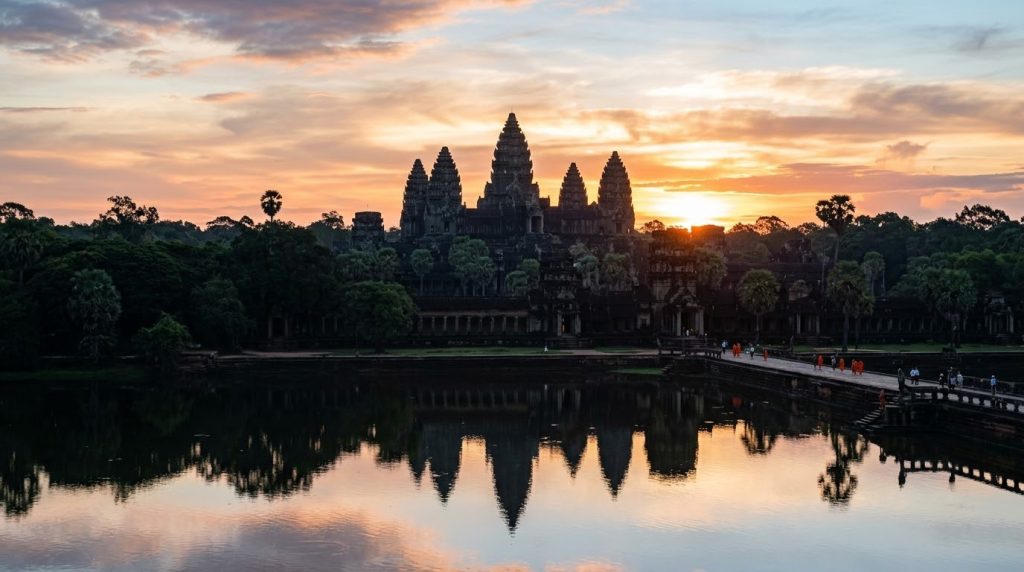
Cambodia’s draw is narrow and singular — Angkor Wat, the largest religious monument on earth, plus the Tonle Sap floating villages nearby and the heavier, more reflective history of Phnom Penh’s Killing Fields and S-21 museum. Thailand gives you variety; Cambodia gives you one extraordinary reason to go.
Beaches: not a close contest
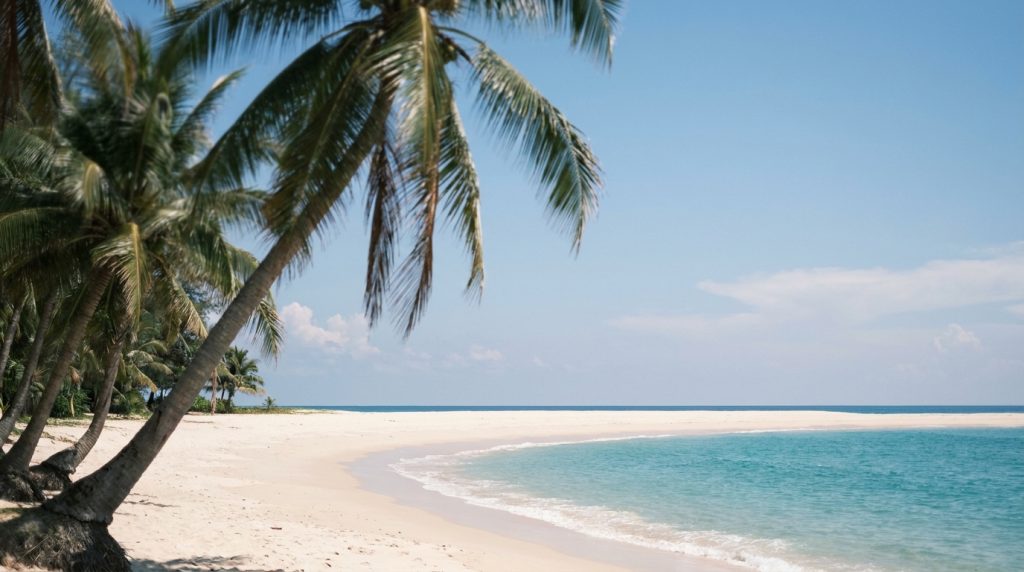
Thailand’s Phuket, Koh Samui, Krabi and Koh Phi Phi are decades ahead in resort infrastructure, water sports, ferry connections and beach clean-up standards. Cambodia’s Sihanoukville and Koh Rong have real potential and far fewer crowds, but development is patchier, waste management lags, and the resort standard is a step or two below Thailand’s. If beach quality is the deciding factor, Thailand wins outright.
Food and nightlife
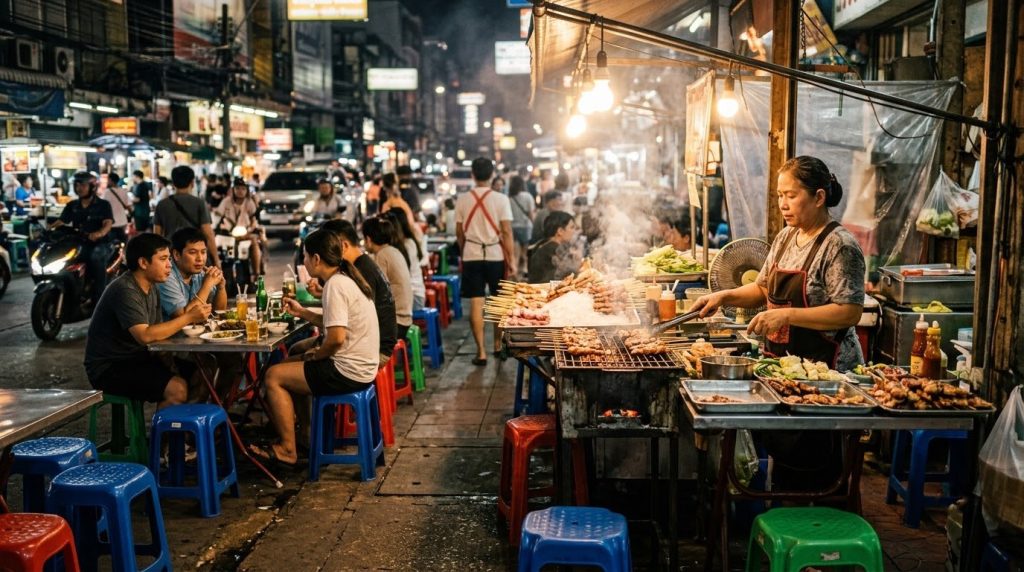
Thai cuisine is deeper and better known internationally, with distinct regional styles from Isaan’s grilled meats to southern curries, and street food that’s both cheap and reliably clean. Khmer food is less famous but genuinely worth trying — amok, lok lak and Kampot pepper crab hold their own against anything in Thailand.
Nightlife is where the gap widens again: Thailand’s scene spans Bangkok’s Sukhumvit strip to Koh Phangan’s Full Moon Party, while Cambodia’s is smaller and mostly limited to Siem Reap’s Pub Street and a handful of Phnom Penh bars.
When to visit each
Because the two countries share a border, their best weather windows overlap heavily: November to February is the cool, dry season in both, with lower humidity and minimal rain. Shoulder months (March, October) work for budget travel if you can handle more heat or a chance of showers.
For exact monthly breakdowns before you book flights, check a best time to visit Thailand guide and a best time to visit Cambodia guide side by side, since Angkor Wat sunrise crowds and Thai island sea conditions both shift by month.
Safety: what Smartraveller actually says in 2026
Both countries sit at exactly the same overall level. Smartraveller rates Thailand and Cambodia at level 2 of 4, “exercise a high degree of caution,” as of September 2026 — neither is flagged as riskier than the other for a standard Bangkok-to-Siem Reap style trip.
The one place this changes is the shared border itself: Smartraveller’s “do not travel” zone covers land within 50km of the Thailand-Cambodia border, a legacy of the 2025 armed conflict there and the landmines it left behind, and the land crossings in that zone are closed.
The practical takeaway is simple — fly between Bangkok and Siem Reap or Phnom Penh rather than attempting an overland border crossing near the disputed area, and treat both countries’ general safety profile as comparable everywhere else. For a full country-by-country breakdown, read is Thailand safe and is Cambodia safe before you finalise dates.
See hotels in Thailand →See hotels in Cambodia →
Choose Thailand if… Choose Cambodia if…
Choose Thailand if this is your first Southeast Asia trip, you want beaches, food variety and nightlife in one country, your time is limited and you’d rather not fight for infrastructure, or English-friendly tourist services matter to you.
Choose Cambodia if Angkor Wat is a genuine bucket-list item rather than a maybe, your budget is tighter, you want a slower and less polished trip, or history and ancient temples interest you more than beach clubs.
Plenty of Australians do both on one trip — Bangkok or the islands for the first half, Siem Reap for Angkor in the second — and that combination works well precisely because the flight between them is short and the land border detour isn’t worth the risk.
For most first-time visitors weighing one country against the other, Thailand’s breadth of things to do tips the scale, with Cambodia as the natural add-on once Angkor Wat is non-negotiable.
Find your Bangkok hotel on the map
Live prices from Booking, Airbnb and more — move the map or change dates to compare stays across Bangkok.