Affiliate Disclosure: This article contains affiliate links to Klook and Airalo. If you book through our links, we earn a small commission at no extra cost to you. We only recommend services we’ve researched thoroughly and believe add genuine value to your trip. Check our complete Bangkok travel guide for more tips.
Bangkok rewards visitors who plan ahead and punishes those who don’t. With over 22 million international arrivals recorded annually, the Thai capital moves fast, runs hot, and never quite fits inside a single itinerary template. This day-by-day plan gives first-timers a clear, honest roadmap across 5 full days — covering iconic temples, canal rides, floating markets, and the street food scenes that make this city genuinely worth your time. You’ll also find real costs, transit instructions, and booking tips throughout.
Key Takeaways
– Bangkok’s top attractions span three distinct zones: Rattanakosin Island, Thonburi, and Sukhumvit/Silom
– Average daily costs run 2,000–7,000 THB ($55–$190 USD) depending on travel style
– Days 1 and 3 require advance booking for best pricing
– The Tourism Authority of Thailand reports the average tourist stay in Bangkok is 4.2 nights — 5 days gives you a meaningful edge
– A BTS/MRT day pass at 150 THB saves significant time and money
5-Day Bangkok Itinerary Overview: Day-by-Day Summary
Five days in Bangkok is not too many — it’s genuinely the minimum we’d recommend for a first-time visitor who wants more than a photo checklist. Bangkok’s neighborhoods are spread across a wide urban grid, and transit between them takes real time. Each day in this plan clusters activities by geography to keep moving-around time under control.
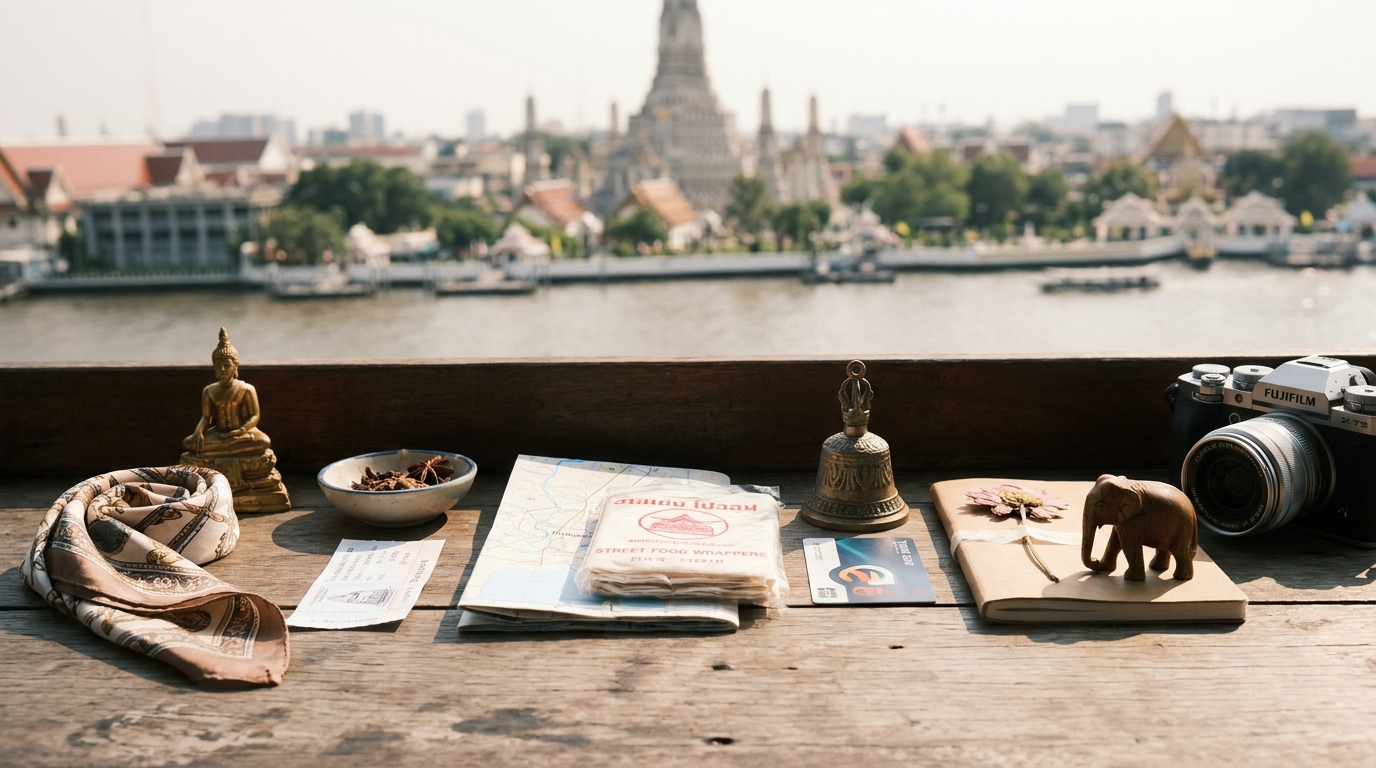
Here’s the daily structure at a glance:
- Day 1 — Rattanakosin Island: Grand Palace, Wat Pho, Wat Arun, Khao San Road. Estimated daily spend: 800–1,500 THB
- Day 2 — Old Bangkok: Talat Noi, Chinatown, Silom, rooftop evening. Estimated: 1,200–2,500 THB
- Day 3 — Day Trip + Culture: Floating market morning, Muay Thai evening. Estimated: 1,200–2,000 THB
- Day 4 — Local Bangkok: Chatuchak market, Wat Suthat, Jodd Fairs night market. Estimated: 800–2,000 THB
- Day 5 — Thonburi & Sukhumvit: Canal boat, ICONSIAM, Thai massage, farewell dinner. Estimated: 1,000–2,500 THB
Days requiring advance booking: Day 1 (Grand Palace can reach capacity by 10am), Day 3 (floating market transport and Muay Thai tickets). For Day 3 especially, booking a Klook transfer and entry combo saves roughly 30–45 minutes of queue time.
The best months to run this itinerary are November through February, when temperatures stay around 28–32°C and rainfall is minimal. Avoid Songkran (April 13–15) unless you specifically want the water festival experience — logistics become complicated citywide.
Source: Tourism Authority of Thailand, International Tourist Arrivals Report 2024–2025
Day 1: Grand Palace & Riverside Temples — Rattanakosin Island
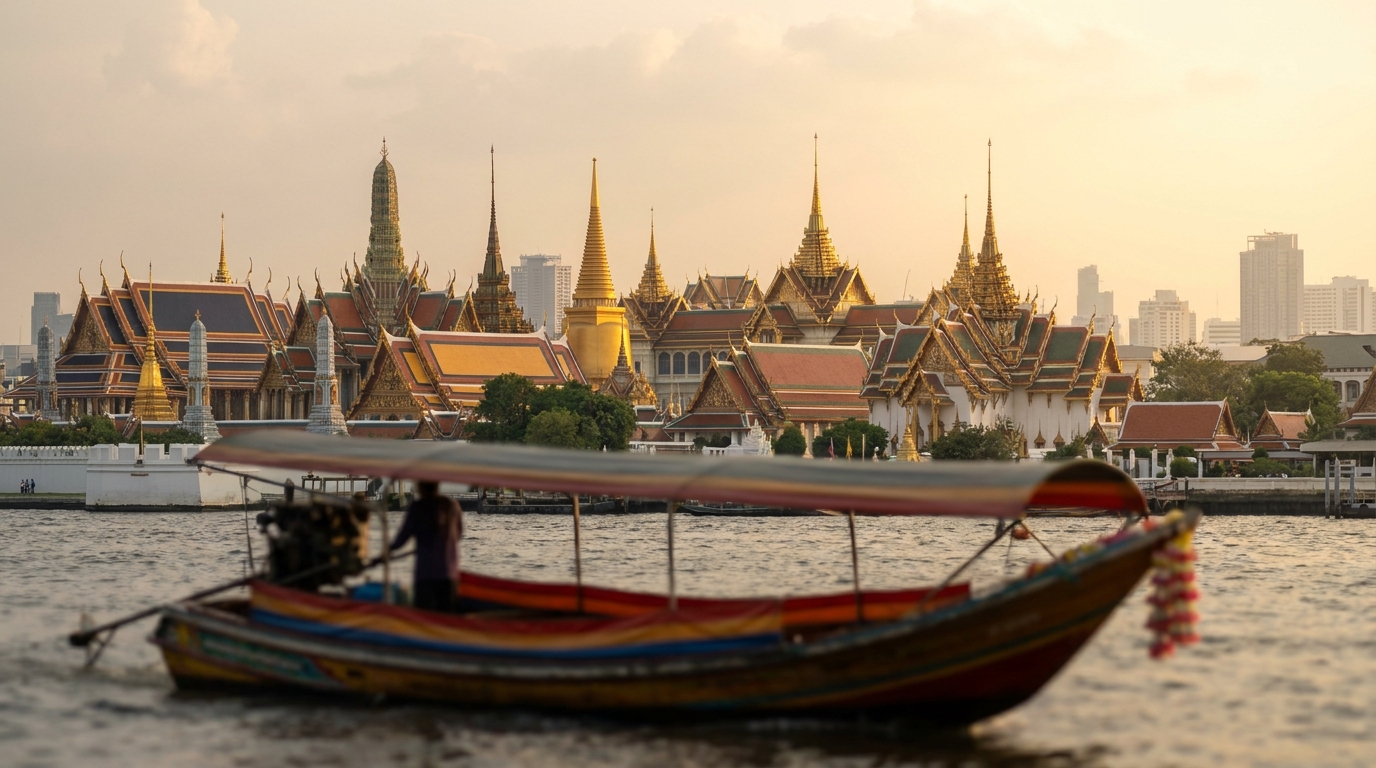
The Rattanakosin district packs Bangkok’s three most visited landmarks within a 1.5 km radius, making it the logical anchor for Day 1. Arriving early is the single biggest factor between an enjoyable morning and a sweaty, crowded one.
Morning — Grand Palace and Wat Phra Kaew (opens 8:30am)
Take a Grab taxi from your hotel directly to the Grand Palace main entrance on Na Phra Lan Road — expect 80–150 THB depending on your starting point. Arrive by 8:30am when gates open. Entry costs 500 THB per person (foreigners only; Thai nationals enter free). Dress code is strictly enforced: covered shoulders and ankles. Sarongs are available to borrow at the gate. Budget 90 minutes inside.
Late Morning — Wat Pho (200 THB entry)
Walk south along Sanam Chai Road — it’s a 7-minute walk from the Grand Palace south gate. The reclining Buddha is 46 meters long and genuinely remarkable at close range. Wat Pho also houses Bangkok’s most respected traditional massage school; a 30-minute foot massage here costs 260 THB.
Before you leave your hotel on Day 1, set up your Airalo eSIM for Thailand — a 7-day, 3GB data plan runs around $8 USD and means you’ll have Google Maps navigation working from the moment you arrive, which is essential for this district’s winding streets.
Afternoon — Wat Arun via Chao Phraya Ferry
Walk west to Tha Tien Pier and take the cross-river ferry to Wat Arun for 3–5 THB. The prang (central tower) stands 70 meters tall and can be climbed via steep stairs for river views across to Wat Pho. Entry is 50 THB. Allow 45–60 minutes.
For those who’d prefer a guided start, Klook’s Grand Palace and Wat Pho combo tour bundles skip-the-line entry with an English-speaking guide for around 900–1,100 THB.
Evening — Khao San Road
Take a 10-minute tuk-tuk ride north to Khao San Road (60–100 THB). It’s touristy, it’s loud, and it’s a genuinely useful introduction to Bangkok’s street food range — pad thai from roadside stalls costs 60–80 THB, and cold Chang beer runs 80–100 THB at outdoor bars.
Source: Grand Palace Bureau, official entry fee schedule 2025; Chao Phraya Express Boat Co., fare chart 2025
Day 2: Chinatown, Talat Noi & Silom — Old Bangkok Flavors
Day 2 covers Bangkok’s most atmospheric street-level neighborhoods, where the city’s Chinese merchant heritage and art-world energy sit within a few blocks of each other. Food drives this day more than any other.
Morning — Talat Noi
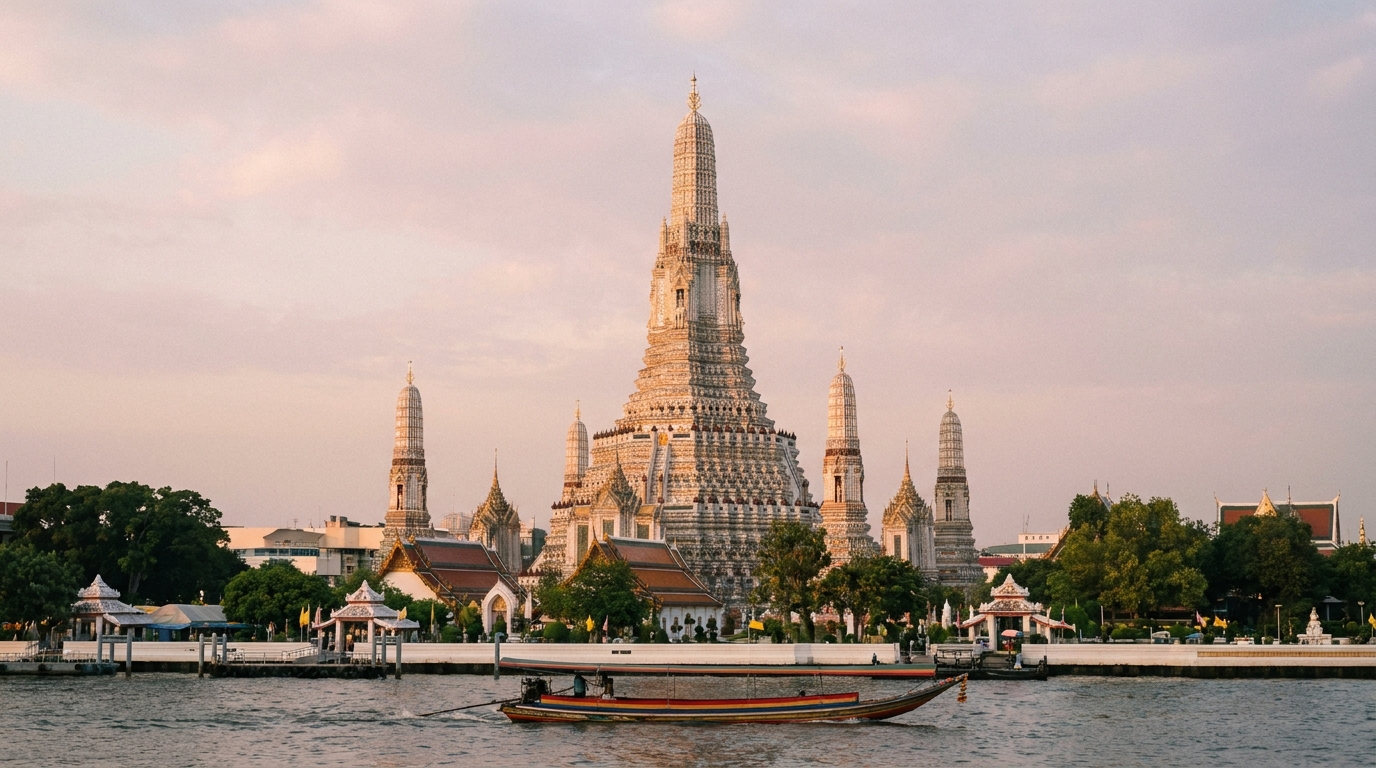
Talat Noi sits just south of Yaowarat Road and is one of Bangkok’s oldest communities, originally settled by Chinese traders in the 18th century. The streets around Soi Wanit 2 feature peeling shophouses, working mechanic yards, and genuine street art (not commissioned murals — actual local creative work). Start here around 8:30–9am when it’s quieter.
Late Morning — Yaowarat (Chinatown)
Walk north to Yaowarat Road by 10am. Dim sum breakfast options cluster around Soi 11 — T&K Seafood and Nai Ek Roll Noodles are long-running spots with prices between 60–150 THB per dish. The gold shops running the length of Yaowarat Road offer a window into the district’s economic engine; Bangkok’s Chinatown processes a significant portion of Thailand’s retail gold trade.
Afternoon — MRT to Silom
Take the MRT from Hua Lamphong station (16–42 THB depending on stops) to Silom. Wat Yannawa — a temple shaped like a Chinese junk boat — sits near Chao Phraya and takes 20 minutes to explore without a crowd. Lumphini Park, a 57-hectare green space in the middle of the financial district, is worth a 30-minute walk for context on how Bangkok residents actually spend their afternoons.
Evening — Rooftop Bars
Sky Bar at Lebua (State Tower, 63rd floor) charges 400–600 THB for a cocktail and has a strict smart-casual dress code. Budget alternative: Octave Rooftop Lounge on Sukhumvit Soi 57 has similar views at 280–380 THB per drink and no dress code enforcement.
A Klook Chinatown food tour covering 6–8 tastings with a local guide runs approximately 1,200–1,500 THB and is worth considering if you want context alongside the food.
Source: Bangkok Metropolitan Administration district records; Numbeo Bangkok restaurant price index, 2025
Day 3: Floating Market & Muay Thai Night — Day Trip from Bangkok
Day 3 pairs Bangkok’s most-requested day-trip experience with one of Thailand’s most authentic cultural events in the evening — a combination that covers more ground than almost any other 24-hour period in this itinerary.
Morning — Floating Market
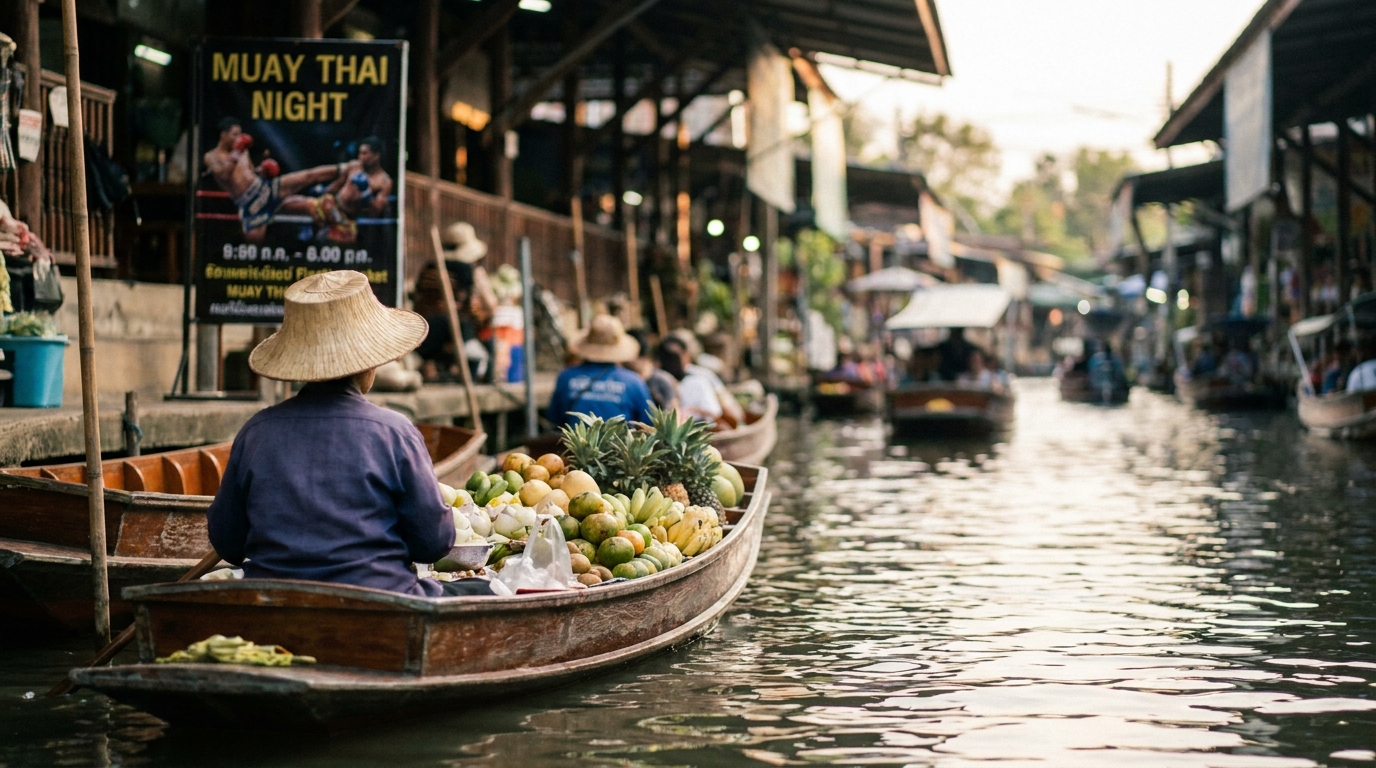
Two main options: Damnoen Saduak (100 km southwest, ~1.5 hours by road) or Amphawa (90 km, ~1.5 hours). Damnoen Saduak is larger and more visited; Amphawa operates primarily on weekends and feels considerably less staged. We lean toward Amphawa for visitors who find overly touristy setups off-putting — the canal-side market, firefly boat trips (available after dark), and working fish market give it a different texture entirely.
Booking a Klook floating market combo that includes round-trip transport from Bangkok costs roughly 800–1,200 THB and removes the logistical stress of sourcing a minivan and negotiating return timing. DIY via public bus from Southern Bus Terminal costs under 100 THB each way but adds 45–60 minutes per direction.
Afternoon — Jim Thompson House
Return to Bangkok by 1–2pm and visit the Jim Thompson House in the Ratchathewi area (200 THB entry, guided tours every 30 minutes). The preserved Thai silk merchant’s home from the 1950s–60s provides genuine historical context about Bangkok’s transition through that era.
Evening — Muay Thai
Rajadamnern Stadium (the older, more traditional venue) hosts fights Tuesday, Friday, and Saturday. Lumpini Boxing Stadium hosts Thursday, Friday, and Saturday. Ringside tickets run 2,000–3,000 THB; upper seating starts at 1,000 THB. Book via Klook’s Muay Thai ticket option to guarantee seats — these regularly sell out for weekend fights.
Estimated total Day 3 spend: 1,200–2,000 THB (mid-range, using Klook transport + stadium seating).
Source: Rajadamnern Stadium official ticket schedule 2025; Klook Bangkok floating market listing data, 2025
Day 4: Chatuchak Weekend Market, Temples & Local Eats
Day 4 pulls Bangkok’s local market culture and lesser-visited temples into a single day that feels less like tourism and more like actually living in the city for an afternoon.
Morning — Chatuchak Weekend Market (Saturday/Sunday only)
Chatuchak operates Saturday and Sunday, 9am–6pm, with some sections opening Friday evening. It spans 35 acres with over 15,000 stalls across 27 sections — clothing, antiques, plants, street food, ceramics, and live animals (the latter controversial; many travelers skip that section). Arrive before 11am. It gets genuinely difficult to navigate after midday. Take the BTS to Mo Chit or MRT to Chatuchak Park — the market is a 5-minute walk from either.
Budget 3–4 hours and set a spending limit before you enter. Average shoppers spend 500–1,500 THB on goods.
Afternoon — Wat Suthat and the Giant Swing
Take the MRT south toward the old city. Wat Suthat on Bamrung Mueang Road charges 20 THB entry and draws a fraction of the crowds that hit Wat Pho. The Giant Swing (Sao Ching Cha) immediately outside was used in a Brahmin ceremony discontinued in 1935 — the 21-meter teak structure remains. Allow 45 minutes.
Evening — Jodd Fairs Night Market
Jodd Fairs on Ratchadaphisek Road has replaced Rod Fai as Bangkok’s most-discussed night market among residents. Open Thursday–Sunday, 5pm–midnight. Food stalls, vintage goods, and live music. MRT Thailand Cultural Centre station is the access point. Street food averages 60–120 THB per dish.
BTS/MRT day pass costs 150 THB for unlimited rides — absolutely worth purchasing on a day this spread across the city.
Source: Chatuchak Market Administration, operating hours 2025; Bangkok Mass Transit System (BTS) fare schedule 2025
Day 5: Canals, Malls & Farewell Bangkok — Thonburi to Sukhumvit
The final day eases the pace deliberately. Canal time in the morning, shopping or rest at midday, a proper Thai massage, then a send-off dinner before airport logistics.
Morning — Thonburi Canal Longtail Boat
Book a longtail boat tour through Thonburi’s canal network from Tha Chang or Tha Tien Pier. A private 1-hour charter runs 1,500–2,000 THB for up to 8 people. Group tours via Klook’s Bangkok canal experience cost approximately 500–800 THB per person. The canals pass through residential communities, orchid farms, and small temples entirely different from the Rattanakosin tourist circuit.
Midday — ICONSIAM or Siam
The BTS connects Thonburi-side piers to the Siam and Charoen Nakhon stations (ICONSIAM has its own free shuttle ferry from Sathorn Pier). ICONSIAM’s food court on the ground floor — called SookSiam — serves regional Thai dishes from 60–150 THB. It’s an efficient, air-conditioned final shopping window.
Afternoon — Thai Massage
Budget 300–600 THB per hour for a reputable street-level massage shop. Avoid places with price boards below 250 THB — quality drops sharply. The Sukhumvit Soi 11–21 corridor has reliable mid-range options.
Evening — Sukhumvit Farewell Dinner
Soi 38 night food vendors have partially relocated to the Thong Lo–Ekkamai stretch, but the Asok BTS area on Sukhumvit Soi 23 still concentrates good street-level options. Dinner for two with drinks: 300–600 THB.
Airport Transfer: BTS to Phaya Thai station, then Airport Rail Link to Suvarnabhumi Airport — 45 THB, approximately 30 minutes. Trains run every 15 minutes, 6am–midnight. A Grab taxi to the airport from Sukhumvit costs 300–500 THB including expressway tolls.
Source: Airport Rail Link (ARL) official fare and timetable, 2025; Klook Bangkok longtail boat tour listing, 2025
5-Day Bangkok Total Budget Breakdown
| Category | Budget Tier (THB/day) | Mid-Range Tier (THB/day) |
|---|---|---|
| Accommodation | 400–800 | 1,500–3,500 |
| Food | 300–500 | 600–1,200 |
| Transport (local) | 100–200 | 200–400 |
| Attractions & entry fees | 300–600 | 600–1,200 |
| Tours & experiences | 0–400 | 800–2,000 |
| Daily Total | ~2,000–3,500 THB ($55–$100 USD) | ~4,000–7,000 THB ($110–$190 USD) |
For a 5-day trip at mid-range, budget approximately 20,000–35,000 THB ($550–$950 USD) excluding flights. At backpacker level, 10,000–17,500 THB ($275–$480 USD) is achievable.
The question of whether 50,000 THB is enough for Thailand depends heavily on itinerary length and style. For a 5-day Bangkok-only trip at mid-range, 50,000 THB ($1,375 USD) covers everything comfortably with room for shopping. Spread across 10–14 days including regional travel, it requires careful management.
Money-saving levers: street food over restaurants (saves 300–500 THB/day), MRT/BTS over Grab taxis (saves 200–400 THB/day), and booking Klook bundle tours 48–72 hours ahead for 15–20% discounts versus gate prices.
Source: Numbeo Bangkok Cost of Living Index, Q1 2026; Tourism Authority of Thailand average tourist expenditure report, 2024
Where to Stay in Bangkok for This 5-Day Itinerary
Neighborhood choice shapes transit time more than any other planning decision. Staying near a BTS or MRT station saves 30–45 minutes per day versus areas requiring taxis for every move.
Sukhumvit (BTS access): The most practical base for this itinerary. Mid-range hotels run 1,500–3,500 THB/night. Soi 11–21 offers the best density of restaurants, pharmacies, and transit access. Well-suited for Days 2, 4, and 5.
Silom/Sathorn: Slightly quieter, good MRT access, suited to business travelers or those prioritizing the rooftop bar scene. Hotels run 1,800–4,000 THB/night.
Khao San Road area: Cheapest option at 400–1,200 THB/night. Excellent for Day 1 proximity to Rattanakosin temples, but isolated from Sukhumvit and Chatuchak without a taxi.
Riverside (Chao Phraya): Luxury tier at 4,000–12,000+ THB/night. Best views, free hotel shuttle boats, and effortless Day 1 logistics.
For a comprehensive look at which area fits your priorities, see our guide to the best neighborhoods for first-time visitors.
Tips for Customizing This 5-Day Bangkok Plan
This itinerary works as written, but it adapts easily.
For couples: Replace Day 4’s Chatuchak visit with a Thai cooking class (1,200–1,800 THB via Klook) or a sunset river dinner cruise (1,500–2,500 THB). Both feel more distinctly shared than market browsing.
For food-focused travelers: Add Or Tor Kor Market on Day 4 morning before Chatuchak — it’s the city’s highest-quality fresh produce market, directly across the street, and free to enter.
Weekday visits: Chatuchak only operates on weekends. Swap it for Pak Khlong Talat, Bangkok’s 24-hour flower market near Memorial Bridge, which peaks in atmosphere between midnight and 5am.
Extending to 7 days: An Ayutthaya day trip adds a UNESCO World Heritage site approximately 80 km north — the train takes 1.5 hours and costs under 30 THB. Our 7-day Thailand itinerary covers the full extension. Kanchanaburi (Death Railway) is the other strong option for a second day trip.
Bangkok vs Chiang Mai split: If your trip allows 8–10 days total, consider 5 days in Bangkok and 3 nights in Chiang Mai. The two cities complement each other well without feeling redundant. See our Bangkok to Chiang Mai route guide for logistics.
Source: Klook Bangkok cooking class listings, 2025; State Railways of Thailand, Bangkok–Ayutthaya schedule and fares, 2025
Book Your Bangkok Trip
Use these trusted platforms to book your Bangkok trip at the best prices:
- Tours & Activities: Browse Bangkok experiences on Klook — day trips, food tours, skip-the-line tickets.
- Hotels: Compare Bangkok hotels on Booking.com — free cancellation on most bookings.
- eSIM / Stay Connected: Airalo eSIM — affordable data plans, no roaming fees.
Frequently Asked Questions
Is 5 days in Bangkok too long or not enough for a first-time visitor?
Five days is the right minimum for a first-time visitor. It covers the landmark temples, one day trip, market culture, and neighborhood variety without rushing. Bangkok’s layout means less time produces a surface-level visit. Read our broader first-timer’s guide to Bangkok for additional context on pacing.
How much money do I need for 5 days in Bangkok?
At a budget level, plan for 10,000–17,500 THB (~$275–$480 USD) excluding flights. Mid-range travelers typically spend 20,000–35,000 THB (~$550–$950 USD). Street food, BTS passes, and advance-booked tours keep costs controlled at every tier.
What is the best area to stay in Bangkok for a 5-day trip?
Sukhumvit, between Soi 11 and Soi 21, offers the best combination of transit access, hotel variety, and restaurant density for this itinerary. It’s a practical base for Days 2–5. For temple-heavy travelers, the Khao San Road area cuts Day 1 transit significantly.
Can I do a floating market as a day trip during a 5-day Bangkok itinerary?
Yes, easily. Damnoen Saduak and Amphawa are both 90–100 km from central Bangkok, reachable in 1.5 hours by road. A Klook combo with round-trip transport fits within a morning, leaving the afternoon free. Full logistics are in our Bangkok floating market planning guide.
What should I avoid on my first trip to Bangkok?
Avoid tuk-tuk tours that offer to show you “closed” temples — a classic misdirection to gem shops. Skip unmarked taxis without meters. Don’t visit Grand Palace after 11am without a booking strategy. Dress code violations at temple sites result in denied entry, not just looks of disapproval.
Is Bangkok better to visit than Chiang Mai for a short trip?
For trips under 6 days, Bangkok offers more variety per day — temples, markets, food, nightlife, and day trips all within reach. Chiang Mai rewards slower travel and outdoor interests (trekking, elephant sanctuaries, night markets). If you have 8–10 days, both cities together make a stronger trip than either alone.
What hidden gems in Bangkok should I add to my 5-day plan?
Talat Noi’s working-district atmosphere, Wat Suthat’s uncrowded interior, Amphawa Floating Market’s weekend firefly boats, and Or Tor Kor fresh market are all genuinely less trafficked than their famous counterparts. The Ari neighborhood on BTS Line (Saladaeng to Mo Chit) also offers a residential Bangkok food scene rarely covered in mainstream guides.
Conclusion
Bangkok across 5 days gives you the landmarks, the food, a day trip, and enough breathing room to actually absorb the city between the logistics. The plan above keeps each day geographically focused so transit doesn’t consume the experience — a problem that derails many first-timer itineraries when attractions are scattered randomly across the map.
Start booking Grand Palace timing and Day 3 transport before you arrive. Get your Airalo eSIM set up on the flight over. Lock in Klook tours for the floating market and Muay Thai at least 48 hours ahead.
For a deeper dive into planning the days around this itinerary, our 5-day Bangkok tips for first-time visitors covers visa requirements, SIM cards, health considerations, and the cultural etiquette details that don’t fit neatly into a daily schedule. Bangkok moves fast — plan well and it delivers more than most cities twice its size.
Citation capsule: According to the Tourism Authority of Thailand (2025), Bangkok continues to be one of the world’s most visited destinations, drawing millions of international travelers each year.
Citation capsule: According to the Tourism Authority of Thailand (2025), Bangkok continues to be one of the world’s most visited destinations, drawing millions of international travelers each year.
Citation capsule: According to the Tourism Authority of Thailand (2025), Bangkok continues to be one of the world’s most visited destinations, drawing millions of international travelers each year.
Related: Getting Around Bangkok 2026: Ultimate Transport Guide | Best Food in Bangkok 2026: Street Food & Restaurants | Where to Stay in Bangkok 2026: Best Areas & Hotels