Disclosure: Some links in this guide are affiliate links. If you book or buy through them, we may earn a small commission at no extra cost to you — it helps keep our guides free.
Cambodia is safe for the vast majority of travellers, and Phnom Penh’s Numbeo crime index of 50.87 sits well above Siem Reap’s calmer 32.36, a gap most visitors notice within a day of arriving.
The one real no-go zone is the Cambodia-Thailand border, where Smartraveller tells Australians not to travel within 50 kilometres because of landmines and the risk of renewed fighting. The capital specifically is covered in our guide to whether Phnom Penh is safe.
| Risk | How likely | How serious | What actually prevents it |
|—|—|—|—|
| Bag-snatching, Phnom Penh | Common | Low to medium, injury if dragged | Bag worn across the body, away from the road, phone never held near passing traffic |
| Road traffic accidents | Common, roughly 4 deaths a day nationally | High | No night motorbike riding; hire a car and driver for road trips |
| Tuk-tuk and tour scams | Common | Low, money only | Agree the fare before boarding; book hotels direct, not through a driver |
| Old or torn US dollar notes | Common | Low, annoying not dangerous | Check every note at the counter; refuse torn or heavily marked bills on the spot |
| Scam-compound job trafficking | Rare for tourists | Severe if it happens | Never respond to an unsolicited high-pay job offer while in Cambodia |
| Thai border conflict zone | Rare, location-specific | Severe | Stay more than 50 kilometres from the Cambodia-Thailand border |
Source: Smartraveller, Numbeo, Khmer Times, 2026
Petty theft and bag-snatching, city by city
Phnom Penh has Cambodia’s genuine snatch-and-grab problem, and Siem Reap does not share it at anywhere near the same scale. Phnom Penh’s Numbeo crime index of 50.87 rates as moderate, while Siem Reap’s 32.36 rates as low. The pattern in Phnom Penh is consistent.
A rider on a motorbike pulls alongside a pedestrian or a tuk-tuk passenger and grabs a phone or bag in one motion, most often around the riverside and the BKK1 district where foreigners cluster. Snatch attempts concentrate along Sisowath Quay and the restaurant strips of BKK1, precisely because that’s where phones and cash stay visible in people’s hands.
The fix is mechanical, not lucky. Wear your bag across your body on the side away from the road, never hold a phone out near moving traffic, and avoid walking while texting after dark. Travellers who base most of a trip in Siem Reap instead, following a route like the Siem Reap travel guide, will barely register this risk.
Traffic and getting around
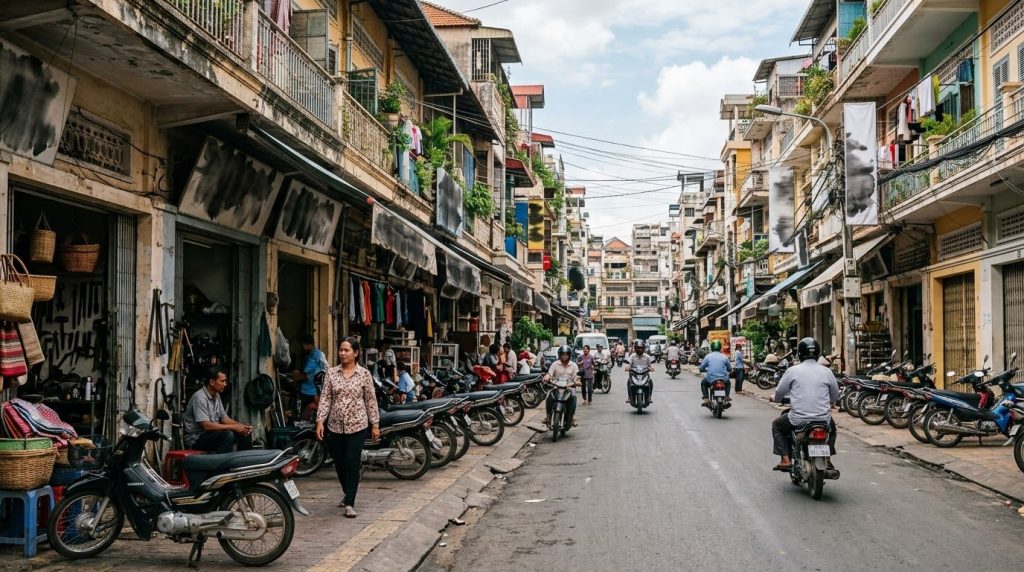
Traffic, not crime, is the danger most likely to actually hurt a visitor to Cambodia. Cambodia’s National Police recorded 1,467 road deaths in 2025, down from 1,509 the year before, an average of roughly four people killed every day.
Of those killed, 78 percent were motorists and 61 percent of them were not wearing a helmet, and 58 percent of crashes happened at night. Rural roads between towns are often unlit and shared by motorbikes, trucks, and pedestrians with no real separation. Crossing a street in Phnom Penh follows one unwritten rule.
Walk at a steady, predictable pace and let the traffic flow around you, since stopping or reversing mid-crossing is what actually causes collisions. The single biggest self-inflicted risk for a visitor is renting a scooter with no local riding experience and no helmet.
Hire a car and driver instead, whether you’re covering the ground in a Cambodia 7-day itinerary or keeping it tighter with a Siem Reap 3-day itinerary, and let someone else deal with the traffic.
The scams that still work
Four scams account for most tourist complaints in Cambodia, and none of them are dangerous, just costly. Tuk-tuk drivers who quote one fare and demand another at the destination are the most common; agree the price out loud before you get in, every time.
The “temple is closed today” line, usually delivered by a stranger near Angkor Wat’s gates, exists to redirect you to a shop or a different tour operator who pays a commission, and the temples do not close on a whim.
Fake orphanage visits, sold as charity tourism, funnel money to operators rather than children and are discouraged by most reputable NGOs working in Cambodia.
At ATMs, stick to machines attached to a bank branch rather than standalone units on tourist strips, cover the keypad when you enter your PIN, and check every note handed to you for tears or heavy tape.
A small transaction that goes wrong might only cost AUD 139 · USD 100 (KHR 405,000), but the argument to get it back costs more time than it is worth. Cambodia prices almost everything for travellers in US dollars, not Cambodian riel, so budget in USD and treat riel as small change only.
The scam-compound news, and who it actually affects
Cambodia’s scam-compound story is a labour-trafficking and border-security problem, not a threat to someone sightseeing in Siem Reap. Compounds operating out of Poipet, Sihanoukville, and Kampong Trach district in Kampot province near the Vietnam border have been linked to forced online fraud operations, where workers lured by fake customer-service or data-entry job ads have had their passports confiscated on arrival.
Smartraveller’s guidance is specific to that risk. Do not respond to unsolicited job offers promising high pay for vague online work while in Cambodia, and report any approach that fits this pattern to local police or the nearest Australian consulate. A tourist following a normal itinerary through Siem Reap, Phnom Penh, or the coast has essentially no exposure to this.
The same pattern has been documented across the wider Mekong region, and in every case it targets migrant workers and jobseekers, not backpackers on a two-week trip. The risk sits with people responding to job ads, not people booking hotels.
Who should think twice about Cambodia
Cambodia is not the right trip for a few specific groups. Anyone planning to self-drive a motorbike on rural roads without prior riding experience is taking on a real, measurable risk given the road death numbers above. Drug users should reconsider entirely, since Cambodia enforces long mandatory sentences for possession that Australian consular staff cannot get you out of.
Anyone weighing a casual work-for-pay arrangement offered online while already in the country, however legitimate it sounds, should decline it outright given the trafficking pattern described above.
Independent trekkers heading into remote northwestern areas away from marked tourist trails should stick to licensed guides, since not every rural area away from Angkor Wat and Siem Reap has been fully cleared of old landmines. Anyone whose plans currently route through the area within 50 kilometres of the Thai border should reroute until Smartraveller lifts that specific warning.
Choosing a safer base
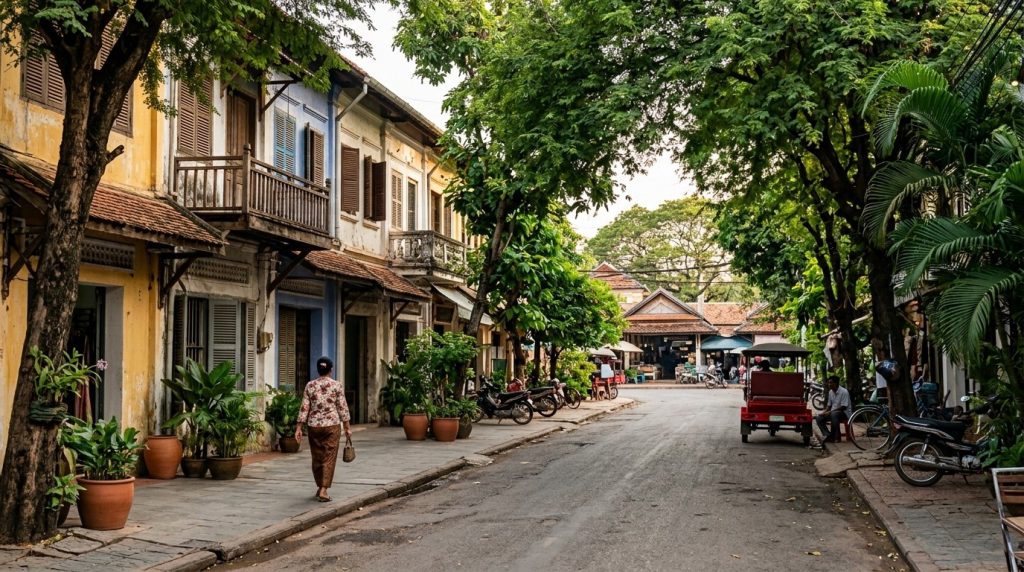
Where you sleep changes your actual risk profile more than most safety advice admits. Siem Reap’s lower crime index, calmer traffic, and tourist-oriented old town make it the easier base for a first Cambodia trip, and a stay near the where to stay in Siem Reap guide keeps you within walking distance of Pub Street rather than dependent on late-night tuk-tuk rides.
Basing a trip in Sihanoukville or other coastal towns linked to the scam-compound clusters above adds no benefit for a typical holiday, and it’s easy to avoid entirely by sticking to Siem Reap or central Phnom Penh instead. Compare live prices across the country below before you commit to a base.
Find your Cambodia hotel on the map
Live prices from Booking, Airbnb and more — move the map or change dates to compare stays across Cambodia.