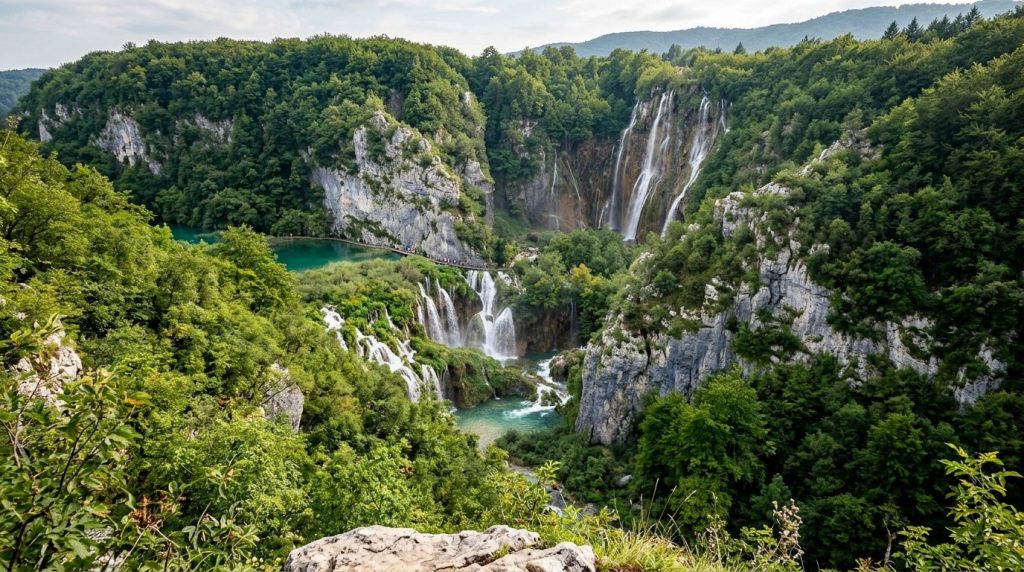
Best Plitvice Lakes Travel Guide 2026: Croatia’s Crystal Waterfall Paradise
By TravelguidestipUpdated 11 min readHow we earn
Hotel buttons open Stay22 (Booking.com, Agoda and others) and tour buttons open GetYourGuide. We may earn a commission at no extra cost to you.
In short
- Tickets must be booked online in advance at np-plitvicka-jezera.hr. Peak season (July-August) sells out days ahead. Entry is 40 EUR (300 HRK) in peak, 10 EUR in winter. Booking includes a specific entry time slot.
- The Upper Lakes (Gornja Jezera) have the biggest waterfalls. The Lower Lakes (Donja Jezera) have the iconic boardwalk-over-water shots you see on every postcard. Route C (7-8 hours) covers both and is the best value.
- Arrive at the 7:00 AM opening time from June through September. The park absorbs 10,000+ daily visitors in peak summer. By 9:30 AM, the boardwalks at the Lower Lakes bottleneck with tour groups. The first two hours are quiet.
- The park spans 296 square kilometers with 18 kilometers of boardwalks and trails. Route K (the longest) covers 18.3 kilometers and 6-8 hours of walking. Route A (the shortest) covers 3.5 kilometers and 2-3 hours.
- Split (2.5 hours) and Zagreb (2 hours) are the nearest major cities. The bus from either city costs 15-20 EUR. Driving gives the most flexibility for arrival timing.
Quick answer: Plitvice Lakes is a UNESCO national park of sixteen terraced lakes linked by wooden boardwalks, waterfalls, a shuttle bus and an electric boat. Book a timed-entry ticket online before you travel because daily entry caps sell out weeks ahead in summer, pick Entrance 1 or 2 with a one-hour arrival slot, arrive early, and plan a full day (it also works as a long day trip from Zagreb, Zadar or Split). Swimming in the lakes is not allowed.
Plitvice Lakes National Park is the kind of place that makes you question whether the water is real. Sixteen terraced lakes connect by waterfall after waterfall, each a different shade of turquoise, emerald, and aquamarine depending on the mineral content, the angle of the sun, and the number of organisms thriving in the calcium-rich water.
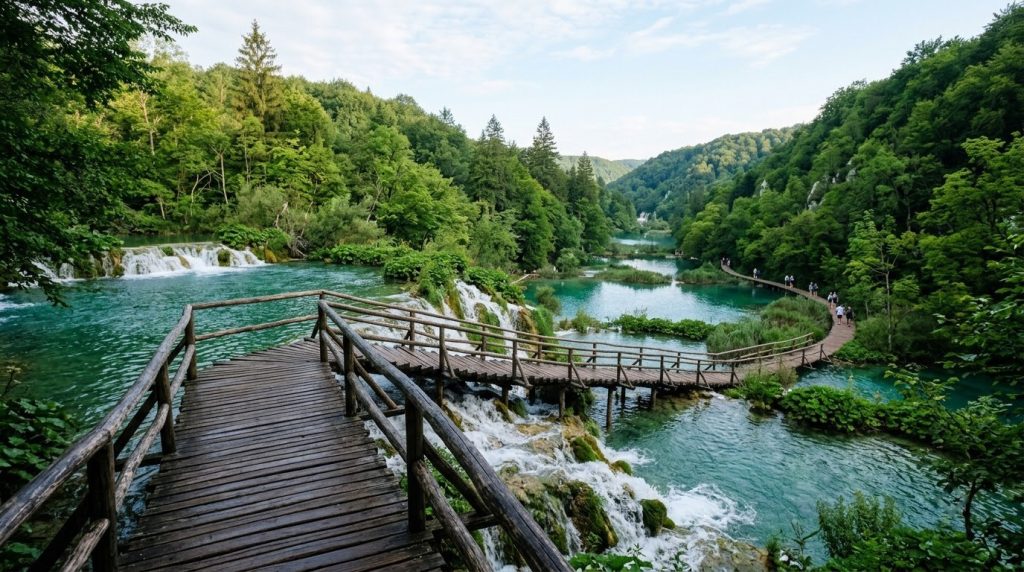
Wooden boardwalks weave across the surface of the lakes, suspended inches above water so clear that fish appear to be swimming through air. Over 1.2 million visitors entered these boardwalks in 2025 (Plitvice Lakes National Park, 2026), and every one of them took the same first photograph: a waterfall pouring into a pool of impossible blue.
This Plitvice Lakes travel guide covers everything you need to know: the best time to visit each season, which routes to choose, how long they take, photography tips, and how to get here from Zagreb or Split.
We only recommend services we genuinely trust. Learn more.
In July, the water sparkles under harsh midday sun; in October, autumn foliage turns the surrounding forests gold and the crowds are about a third of the summer crush. The October visit was the better experience by a wide margin. More on timing below.
Everything You Need to Know
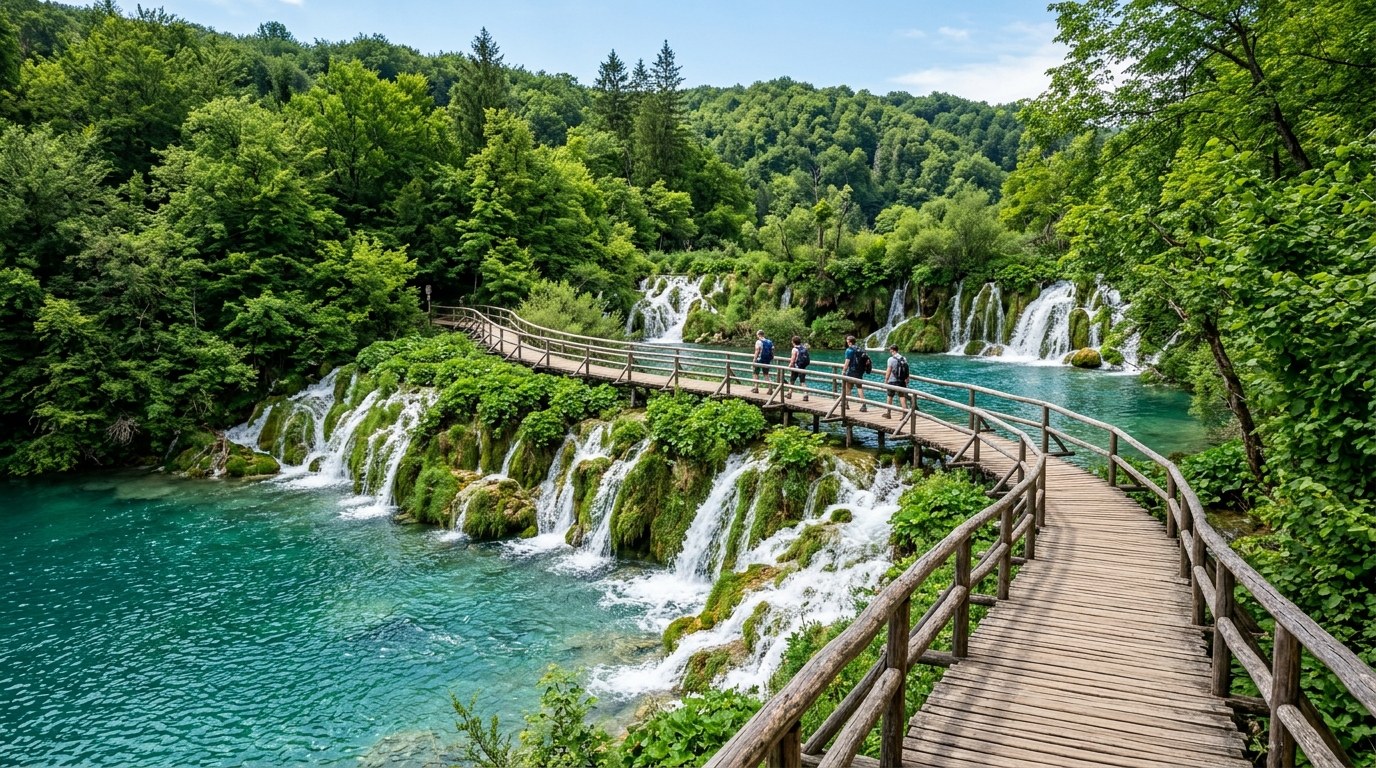
Plitvice was Croatia’s first national park (declared 1949) and its only UNESCO World Natural Heritage site (inscribed 1979). The lakes formed over thousands of years as the Korana River deposited travertine, a calcium-carbonate rock that builds natural dams. Each dam creates a lake. Each overflow creates a waterfall. The process continues in real time — new travertine barriers form annually, subtly reshaping the lakes and falls.
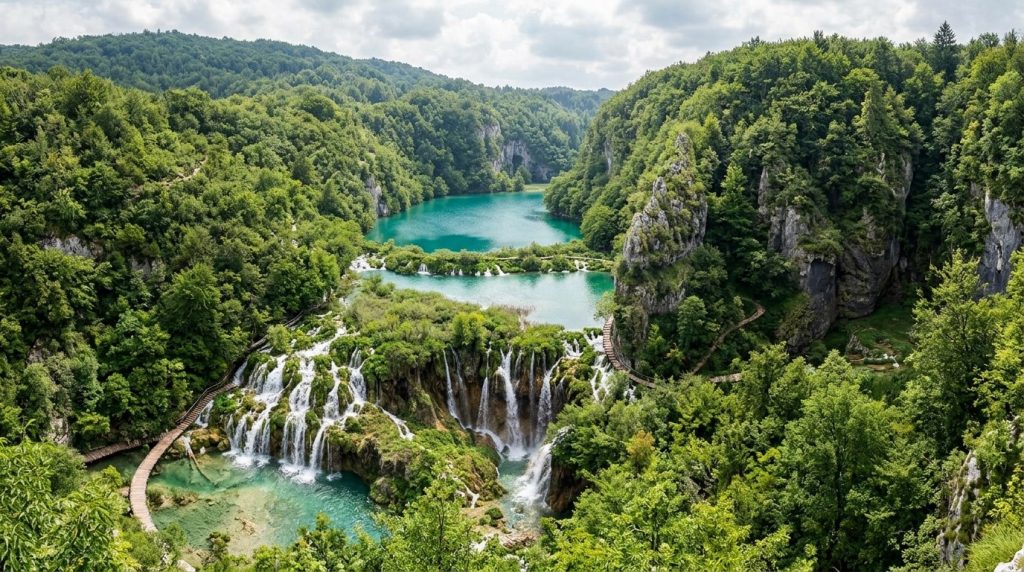
The park has two entrances. Entrance 1 accesses the Lower Lakes, where the 78-meter Veliki Slap (Big Waterfall) plunges into a canyon of moss-covered limestone. Entrance 2 accesses the Upper Lakes, where twelve interconnected lakes cascade into each other through a gentler, wider landscape of forest-framed pools.
The water color shifts throughout the day. Morning light produces the most vivid turquoise. Afternoon sun at a high angle washes the color out to a paler blue-green. Cloudy days deepen the green tones. The calcium-carbonate saturation that makes the water so clear also makes it reflect light differently depending on the angle. This is why Plitvice photographs differently at 8:00 AM versus 2:00 PM versus 5:00 PM.
Best Time to Visit Each Season
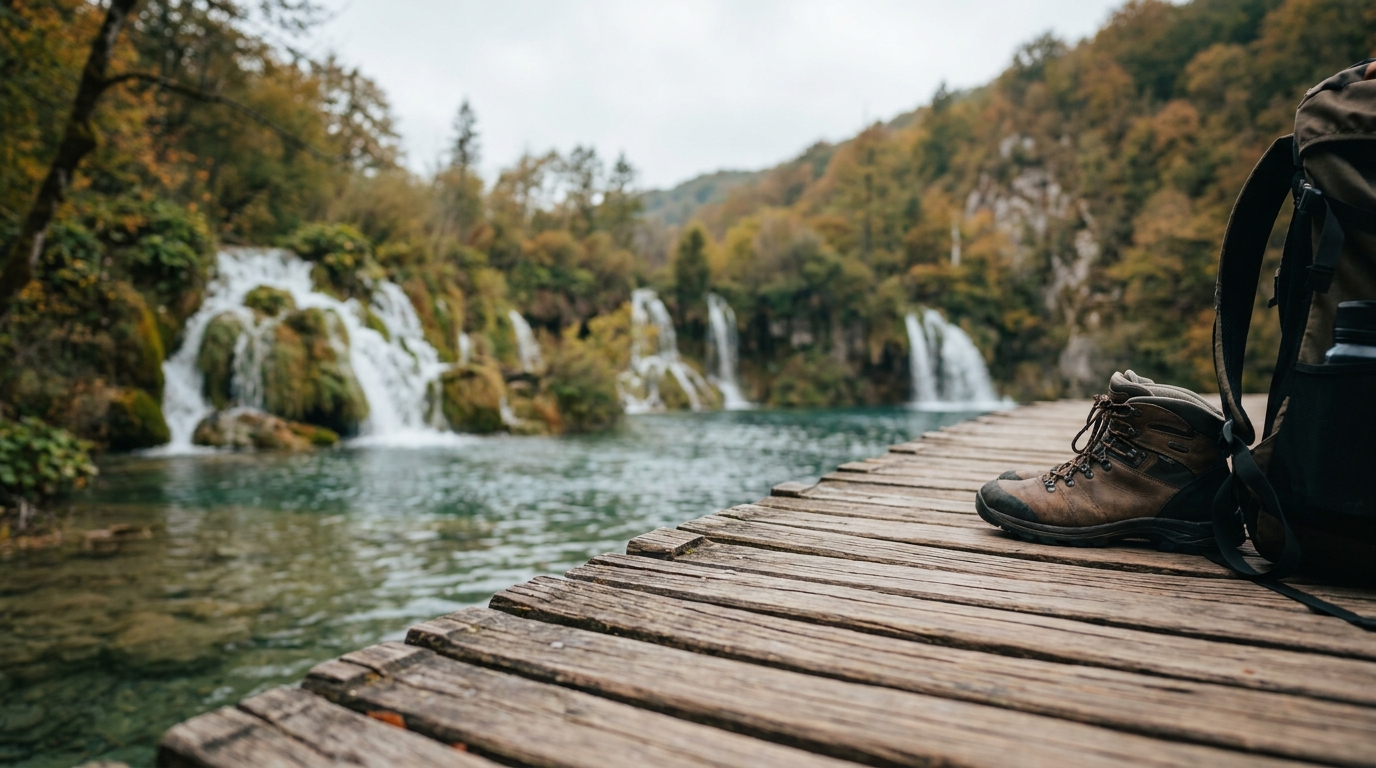
Spring (April-May)
The waterfalls are at their most powerful. Snowmelt from the surrounding mountains swells the lakes and sends water thundering over every cascade. The Veliki Slap in late April is a wall of white water that generates its own wind. The surrounding forest is freshly green. Crowds are moderate. Daytime temperatures average 15-20 degrees C (59-68 F).
Trade-off: Some higher-elevation trails may still be closed from winter. The Upper Lakes boardwalk sections sometimes remain partially submerged from snowmelt in early April. Check park conditions at np-plitvicka-jezera.hr before booking.
Summer (June-August)
July and August bring peak crowds (up to 15,000 visitors per day), peak temperatures (25-32 degrees C, 77-90 F), and peak water color. The turquoise is most vivid in midsummer sunlight. The cost of this vivid color is sharing the boardwalks with thousands of other visitors.
Strategy: Book the 7:00 AM entry slot. Walk the Lower Lakes immediately. By 9:30 AM, move to the Upper Lakes where the paths are wider and the crowds spread thinner. By 2:00 PM, retreat to a lakeside cafe and watch the crowds instead of joining them.
Autumn (September-October)
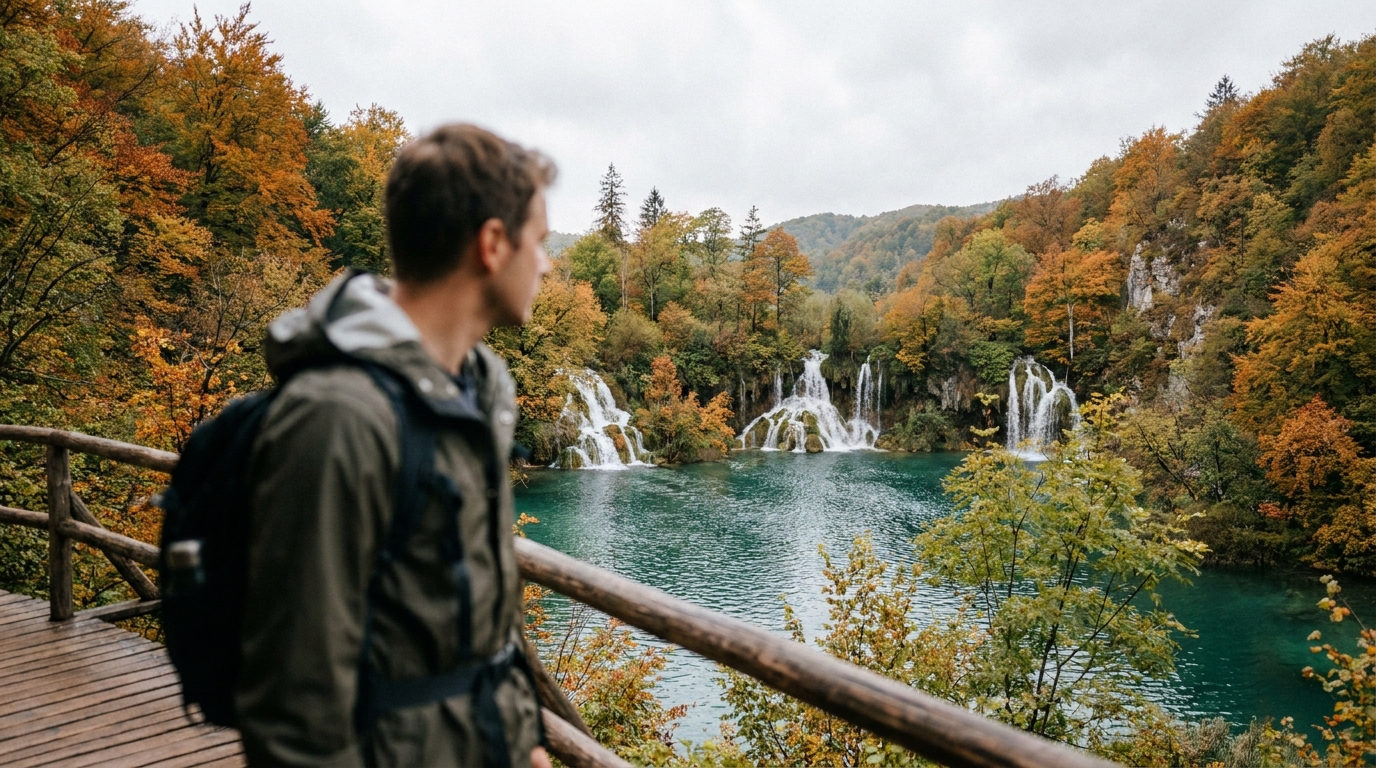
The best season for photography and comfort. September brings mild temperatures (15-22 degrees C), reduced crowds, and lakes that still shimmer in full turquoise. October adds autumn foliage: the beech and maple forests surrounding the lakes turn gold, orange, and rust. The contrast of autumn leaves reflected in turquoise water creates images that summer visitors simply cannot get.
Late October caveat: Some park facilities begin to close. The boat across Kozjak Lake (which connects the Upper and Lower lakes) stops running in late October. Check the park website for seasonal closure dates.
Winter (November-March)
The park transforms completely in winter. Snow covers the boardwalks. The waterfalls freeze into cascading ice sculptures. The lakes take on a milky aquamarine color under grey skies. Visitor numbers drop to a few hundred per day. Only the Lower Lakes area remains open. Entry drops to 10 EUR.
The boardwalks become icy and treacherous. Bring proper winter boots with grip. The frozen waterfalls are spectacular, and the silence — actual silence, no crowd noise, no camera shutters, just the crunch of snow under your boots — makes winter Plitvice feel like a different park entirely. The park closes during heavy snow.
Best Routes & How Long They Take
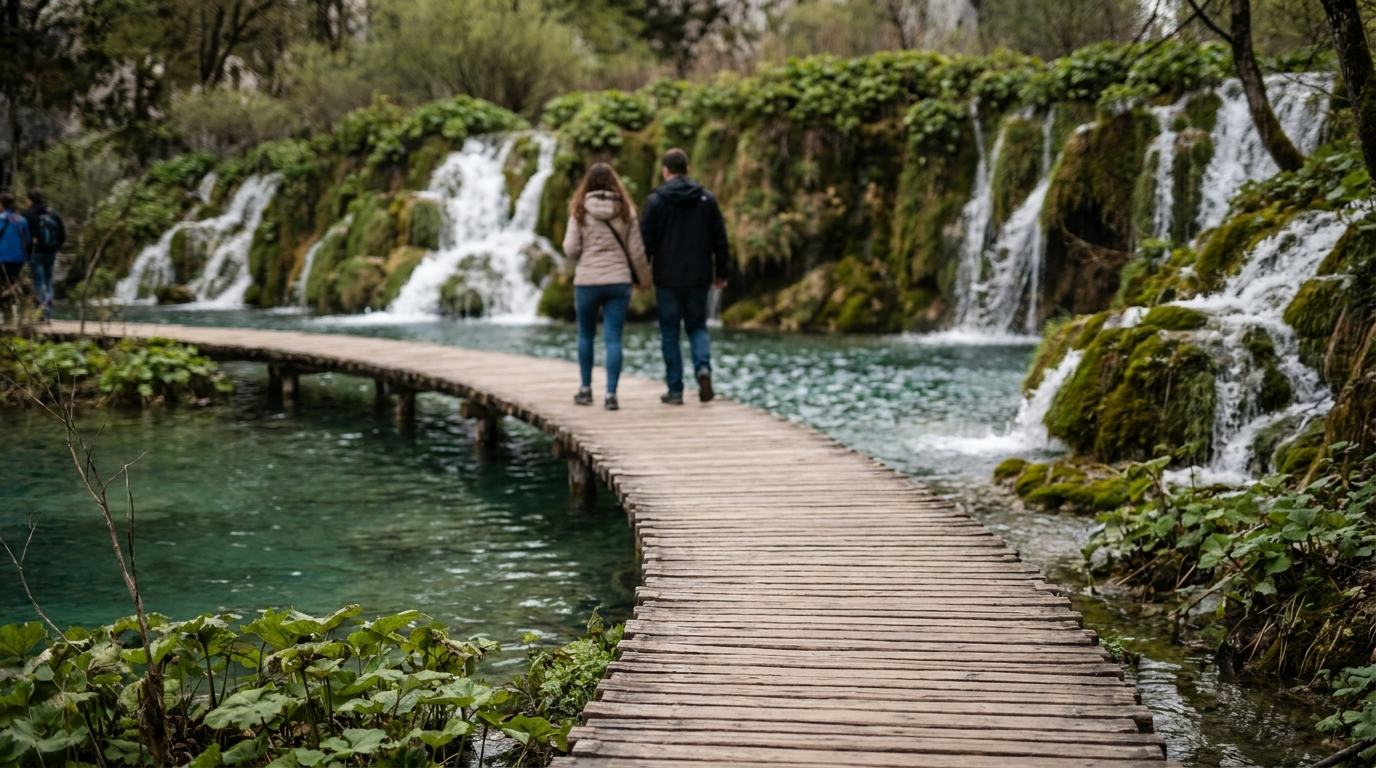
The park offers seven marked routes (A through K) ranging from 2 hours to 8 hours of walking. All routes are one-way, clearly signposted, and well-maintained.
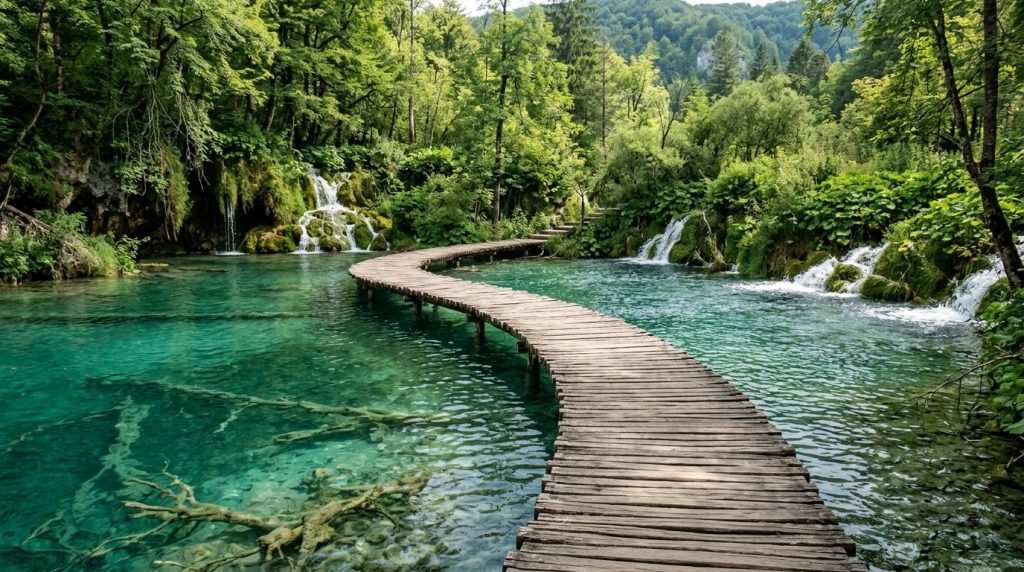
Route C (The Best Full-Day Option)
Duration: 7-8 hours. Distance: 8.3 kilometers on foot plus two short boat crossings and one panoramic train ride.
Route C starts at Entrance 1 with the Lower Lakes and Veliki Slap, then takes the electric boat across Kozjak Lake to the Upper Lakes, walks through all twelve interconnected lakes and their cascading waterfalls, then returns via the panoramic train to Entrance 1. This route covers effectively the entire park in efficient sequence. It is the best option for a single-day visit.
Route H (The Best Half-Day Option)
Duration: 4-6 hours. Distance: 8.9 kilometers. Starts at Entrance 2 with the Upper Lakes, then boats across Kozjak, walks the Lower Lakes, and returns by train. Route H covers the highlights in less time. Choose this if you arrive in the afternoon or have limited stamina for stairs.
Route A (The Shortest Option)
Duration: 2-3 hours. Distance: 3.5 kilometers. Covers only the Lower Lakes including Veliki Slap. Good for late arrivals, winter visits when the Upper Lakes are closed, or visitors with limited mobility. You will see the iconic boardwalk-over-water shots but miss the interconnected Upper Lakes entirely.
Practical Advice
Wear hiking shoes with good grip. The boardwalks are wooden, often wet, and without handrails in most sections. Bring 1.5 liters of water per person in summer (the park has few refreshment stands on the trails). Pack lunch. The park restaurants at the entrances are cafeteria-style and overpriced for what they serve. The trails have no trash bins (pack in, pack out).
Bathrooms exist at the entrances, the boat docks, and two points along the Upper Lakes trail. Between these, plan accordingly. The boardwalks are not a place for an emergency bush detour.
Photography Tips for Plitvice
The Classic Shot: Lower Lakes Boardwalk
The wooden walkway curving across the surface of turquoise water with a waterfall in the background. This is the Plitvice image you see on every travel website, and it is taken from the boardwalk between Veliki Slap and the Kozjak Lake boat dock. A 24mm wide-angle captures the sweep of the curve.
Morning light (8:00-10:00 AM) lights the waterfall directly. A polarizing filter cuts the surface glare to reveal the fish beneath the boardwalk.
The Power Shot: Veliki Slap from the Canyon Floor
Stand at the base of the Big Waterfall on the wooden platform, looking up. A 16-24mm wide-angle captures the full 78-meter drop with the canyon walls framing either side. In spring, the spray from the waterfall will soak your lens within seconds. Bring a microfiber cloth and shoot fast.
The Forest Shot: Upper Lakes Cascades
The Upper Lakes offer compositions that the Lower Lakes cannot: multiple levels of cascading water visible in a single frame, surrounded by forest. The stretch between Galovac and Gradinsko lakes is the sweet spot. Shoot from an elevated section of boardwalk looking down across the cascade. A polarizing filter turns the water from reflective white to transparent turquoise.
The Atmospheric Shot: Autumn Reflections
In October, the beech trees along the Upper Lakes turn gold and reflect perfectly on the still sections between cascades. The boardwalk near Burgeti lake is the best spot for this. A 50mm lens isolates individual trees and their reflections. Arrive early. By 10:00 AM, even in October, the boardwalks have filled enough that the reflection surface ripples.
How to Get There from Zagreb or Split
By Bus
Buses run from Zagreb bus station to Plitvice Entrance 1 roughly every 2 hours from 6:00 AM-3:00 PM (2-2.5 hours, 12-17 EUR one-way, Arriva Croatia 2026). From Split, buses run roughly hourly (2.5-3.5 hours depending on the route, 15-20 EUR). The bus drops you at the park entrance. Book at getbybus.com or at the station on the day (risk of sold-out departures in July and August).
By Car
From Zagreb, take the A1 motorway south to the Karlovac exit, then follow the D1 to Plitvice (2 hours). From Split, take the A1 north to the Sveti Rok exit, then the D1 to Plitvice (2.5 hours). Parking costs 1 EUR per hour at both entrances. Parking lots fill by 10:00 AM in July and August.
By Organized Tour
Day tours from Zagreb, Split, or Zadar bundle transport, entry ticket, and a guided walk. Prices range from 60-120 EUR per person depending on the departure city. The tours handle all logistics, but they arrive mid-morning when the park is already crowded. The cost premium buys convenience, not solitude.
Nearby Accommodation
Staying overnight near the park lets you enter at 7:00 AM before the day-trip buses arrive. Hotel Jezero (from 120 EUR/night, inside the park at Entrance 2) is the most convenient. Guesthouse Plitvice Green (from 60 EUR/night) sits 5 kilometers from Entrance 1. Book via Booking.com. The guesthouse advantage: homemade rakija offered by the host at check-in, which is not a park service but should be.
Frequently Asked Questions
How many days do I need at Plitvice Lakes?
One full day covers the best route (Route C) at a comfortable pace. Two days allows Route C on day one and a more relaxed repeat of your favorite sections on day two plus exploration of side trails. The two-day ticket costs marginally more than the single-day and is worth it for photographers and nature enthusiasts.
Is Plitvice worth visiting?
Absolutely. Plitvice is Croatia’s most visited national park and a UNESCO World Heritage site for good reason. The combination of terraced lakes, cascading waterfalls, and wooden boardwalks suspended over crystal-clear water creates a visual experience unmatched by any other European national park. Over 1.2 million annual visitors (2025 data) confirms its status.
Can you swim in Plitvice Lakes?
No. Swimming has been prohibited since the 1970s to protect the travertine formations. Human contact damages the fragile calcium-carbonate barriers. The prohibition is strictly enforced with fines. Krka National Park, near Split, allows swimming in designated areas and offers a similar (though smaller) waterfall-and-boardwalk experience.
What should I wear to Plitvice?
Hiking boots or sturdy sneakers with good grip. The boardwalks are wooden, often wet, and without handrails. Layers for changing mountain weather (mornings at 8-10 degrees C, afternoons at 28-32 degrees C in summer). Rain jacket regardless of forecast (mountain storms arrive suddenly). Sunscreen and a hat (most trails lack shade).
Is Plitvice suitable for children?
Yes, but choose the route carefully. Route A (2-3 hours, Lower Lakes only, 3.5 km) is the best choice for children under 8. The boardwalks have no handrails in most sections, so toddlers need constant hand-holding. Strollers are not practical on the narrow boardwalks. A baby carrier is the best option for infants.
Which is better: Plitvice or Krka?
Plitvice for scale and drama (16 lakes, 18 km of boardwalks, the Veliki Slap). Krka for swimming access and a more compact experience (7 waterfalls, allow 3-4 hours, swim at Skradinski Buk). Both are outstanding. If you have time, visit both. If you have one day and no swimming requirement, Plitvice wins for sheer visual impact.
Plitvice does not need filters. The water is genuinely that color. The boardwalks genuinely run that close to the surface. The waterfalls in spring genuinely thunder. The only trick the park plays is on timing: arrive before 8:00 AM or after 3:00 PM, and the place feels like a discovery. Arrive at midday in July, and it feels like a theme park queue.
Book the early slot. Walk Route C. Bring lunch. And when you round a corner and see another lake of impossible turquoise opening before you, accept that your phone camera will never do this justice. Take the photograph anyway.
For more natural wonders, read our guides to Lauterbrunnen valley in Switzerland and Lake Annecy in the French Alps. For more European inspiration, explore Interlaken and Hallstatt in Austria.
Sources: Plitvice Lakes National Park (2025-2026), Arriva Croatia bus schedules (2026). Book: GetYourGuide for day tours, Booking.com for nearby hotels, Airalo for Croatia eSIM from $6.
Find your Plitvice Lakes hotel on the map
Live prices from Booking, Airbnb and more — move the map or change dates to compare stays around Plitvice Lakes.
More European Travel Guides