Disclosure: Some links in this guide are affiliate links. If you book or buy through them, we may earn a small commission at no extra cost to you — it helps keep our guides free.
Best Bergen Travel Guide 2026: Norway’s Colorful Gateway to the Fjords
Quick answer: Bergen is Norway’s fjord gateway on the west coast, and most travelers give it two full days: one to walk the UNESCO-listed Bryggen wharf, ride the Floibanen funicular up Mount Floyen, and browse the fish market, and one for a Norway in a Nutshell fjord tour toward the Naeroyfjord. Pack waterproofs whatever the season, because Bergen is one of Europe’s rainiest cities, with rain on well over 200 days a year.
Bergen wraps around a harbor framed by seven mountains, with a row of wooden Hanseatic warehouses painted in ochre, rust red, and mustard yellow leaning over the water like old men sharing a secret. The city receives roughly 2.5 million visitors annually (Visit Bergen, 2026), most of them passing through on their way to the fjords. The ones who stay discover a city of cobblestone alleys, a thriving seafood scene, and a funicular that climbs above the tree line in 6 minutes.
This Bergen travel guide covers the best things to do, the iconic Bryggen waterfront, the best fjord tours, the most photogenic places, and how to get around.
Key Takeaways
– Bryggen is Bergen’s UNESCO-listed Hanseatic wharf, founded around 1070 and rebuilt after a fire in 1702. The 62 wooden gabled buildings now house galleries, cafes, and artisan shops. Walk the alleyways between the houses (free) to see the wooden architecture from the inside.
– The Floibanen funicular climbs to Mount Floyen (320 meters) in 6 minutes for 85 NOK (8 EUR) one-way. The view spans the city, the harbor, and the North Sea approaches. The hiking trails from the summit connect to the surrounding mountains.
– Norway in a Nutshell is the classic fjord tour combining the Flam Railway, the Aurlandsfjord cruise, and the Naeroyfjord narrow passage. The full loop from Bergen takes 10-12 hours and costs 1,690 NOK (155 EUR).
– Bergen is one of Europe’s rainiest cities with roughly 240 days of precipitation per year. Bring a waterproof jacket. Do not bring an umbrella — the wind destroys them. The locals say there is no bad weather, only bad clothing.
– The Fish Market (Fisketorget) operates daily on the harbor and has done so since the 13th century. Eat a freshly grilled salmon skewer (120 NOK/11 EUR) while watching the boats. The market is touristy. The grilled salmon is genuinely good.We only recommend services we genuinely trust. Learn more.
**** We spent four days in Bergen in late August and got rain on three of them, sunshine on one. The sunny day gave us the postcard photographs. The rainy days gave us the real Bergen: cobblestones gleaming under street lamps, fog wrapping the mountains, and an excuse to spend an extra hour in a cafe with a book and a kanelboller (cinnamon bun, 45 NOK/4 EUR). Bergen in the rain is Bergen being itself.
Best Things to Do in Bergen
The Floibanen Funicular
Bergen is surrounded by seven mountains (syv fjell), and the most accessible of them is Mount Floyen. The Floibanen funicular has climbed from the city center to the Floyen summit since 1918, a journey of 844 meters and 320 meters of elevation gain in 6 minutes. The viewing platform at the top delivers the classic Bergen panorama: the red-tiled rooftops of the old town, the harbor, the islands beyond, and on very clear days, the open North Sea.
Cost: 85 NOK (8 EUR) one-way, 170 NOK (16 EUR) round-trip. The return ticket allows you to walk down (45 minutes on well-marked trails through forest) and ride up, or vice versa. The funicular operates every 15 minutes from 7:30 AM to 11:00 PM. Go at opening time for the clearest morning views. Sunset on clear summer evenings (after 10:00 PM in June-July) is the best light.
The hiking trails from the summit connect to a network of paths across the surrounding mountains. The walk from Floyen to Mount Ulriken (the highest of Bergen’s seven mountains at 643 meters) takes 4-5 hours across varied terrain and panoramic views. The Vidden plateau between the two peaks feels like walking across the roof of Norway.
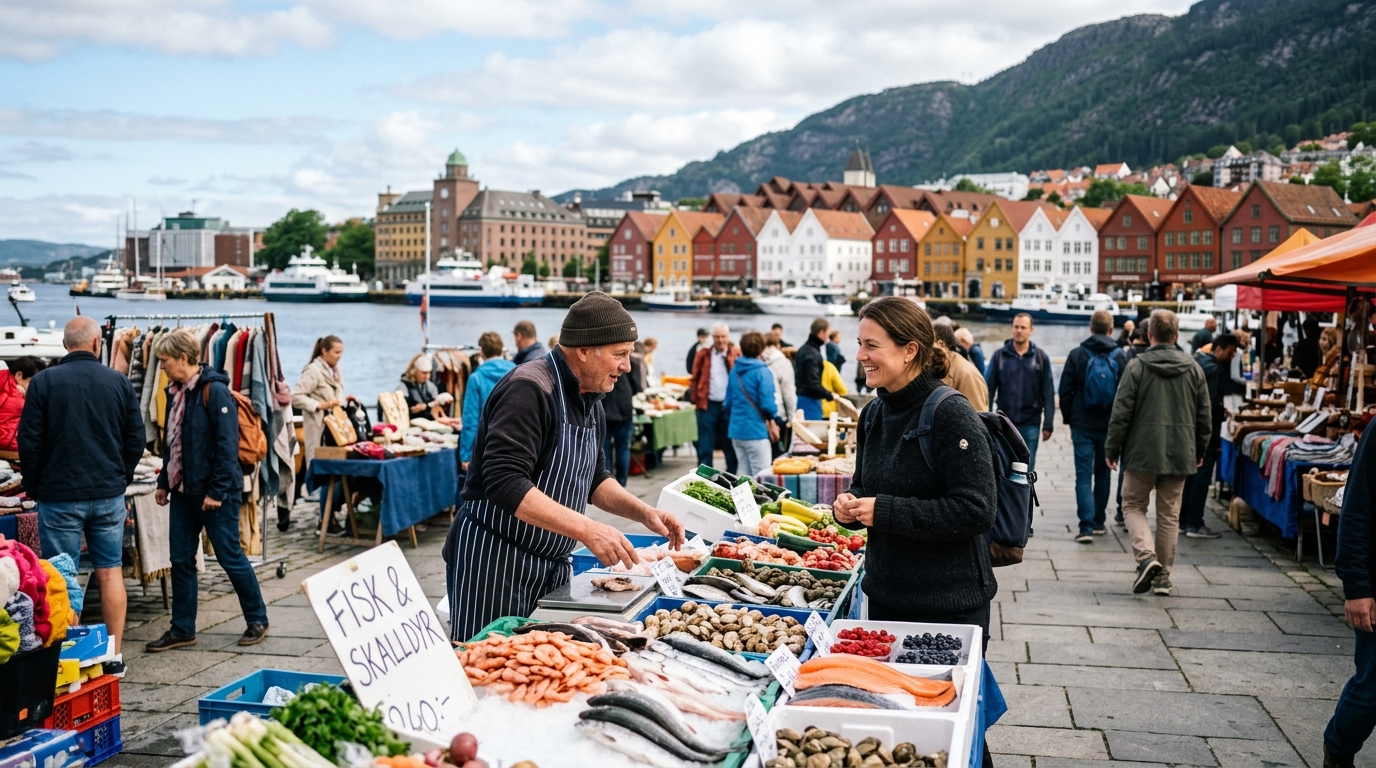
The Fish Market (Fisketorget)
The fish market has operated on the inner harbor since the 1200s, and while today it serves far more tourists than locals, the spectacle of fresh seafood displayed on ice — salmon, cod, king crab, whale steak, and the season’s catch — is genuine. The outdoor market operates May through September. The indoor Mathallen food hall operates year-round with the same vendors.
Eat a grilled salmon skewer (120 NOK/11 EUR), a fish soup (165 NOK/15 EUR), or a seafood platter (295 NOK/27 EUR) at one of the market stalls. The seating is at wooden counters facing the harbor. A seagull will stare at your food. Do not feed it. The seagulls are not hungry. They are strategic.
The KODE Art Museums
KODE is a collection of four museums spread across central Bergen, with a combined ticket costing 160 NOK (15 EUR). KODE 3 holds the largest collection of Edvard Munch outside Oslo, including several versions of his iconic anxiety. KODE 1 holds the Silver Treasure, a collection of gold and silver objects crafted by Bergen silversmiths from the 16th-19th centuries. KODE 2 and 4 hold contemporary art and design. The combined ticket is valid for two days and covers all four museums.
The 2-Day Bergen Itinerary
The plan we use ourselves — sent straight to your inbox.
- Day-by-day route
- Where to stay
- Real 2026 costs
Free · No spam · Unsubscribe anytime
Bryggen: The Iconic Colorful Waterfront
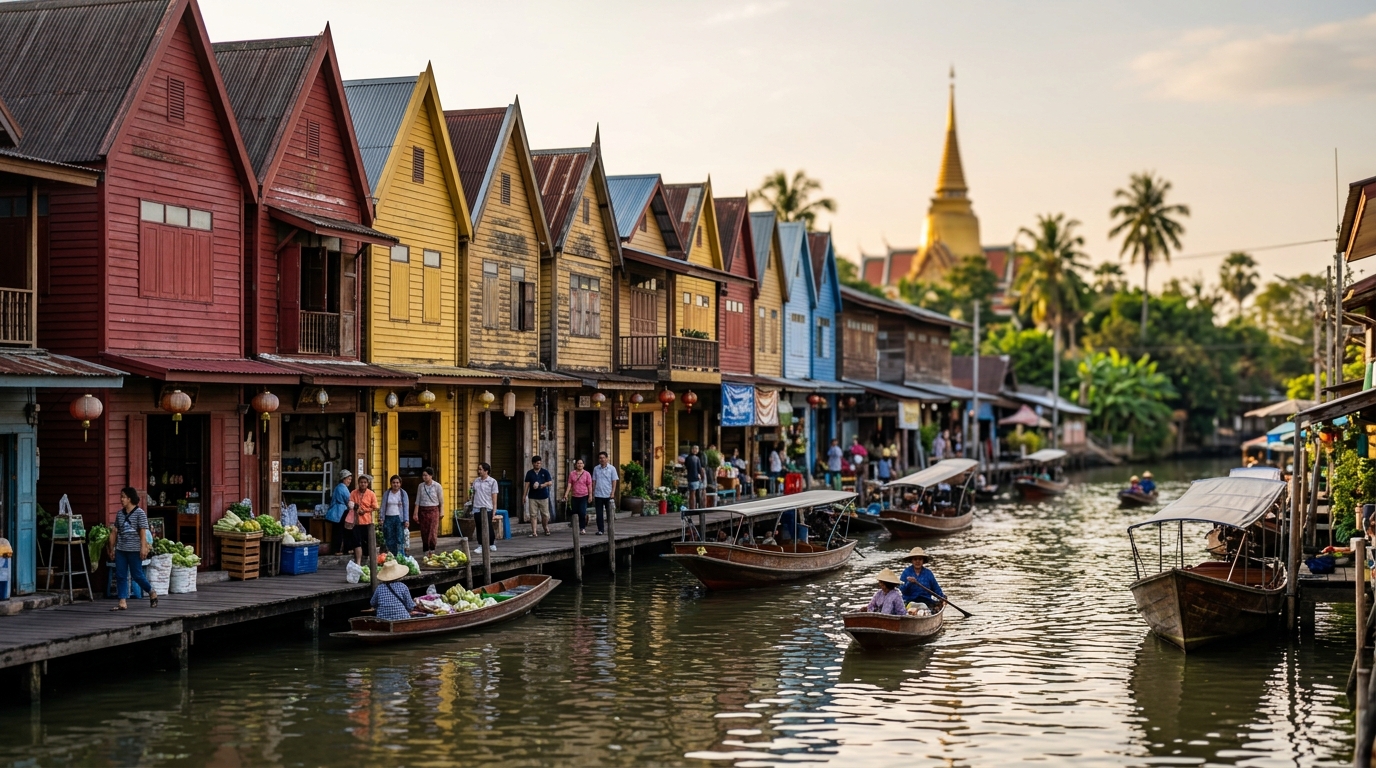
Bryggen is the image that appears on every postcard of Bergen and, increasingly, every postcard of Norway. The row of 62 wooden gabled houses facing the harbor is what remains of the Hanseatic trading post that dominated Bergen’s economy from the 14th to the 18th centuries. The Hansa, a German trading league, maintained an office here that monopolized the stockfish trade between northern Norway and the European continent. The Bryggen you see today was rebuilt after a fire in 1702, but the foundations and the layout date to the 12th century.
The main facade facing the harbor is the photograph you already know. What most visitors miss is the alleyways running between and behind the buildings. Walk through the passages at Jacobsfjorden, Bellgaarden, or Engelgaarden. The wooden galleries, external staircases, and leaning walls create a medieval atmosphere that the harbor facade, beautiful as it is, cannot convey alone.
The Bryggens Museum (120 NOK/11 EUR) beneath the Radisson Blu hotel adjacent to Bryggen displays artifacts from medieval Bergen excavated after a fire in 1955 destroyed part of the wharf. The exhibition includes rune sticks (everyday messages carved into wood), shoes, tools, and a preserved section of the 12th-century foundations visible beneath a glass floor.
Best Fjord Tours from Bergen
Norway in a Nutshell
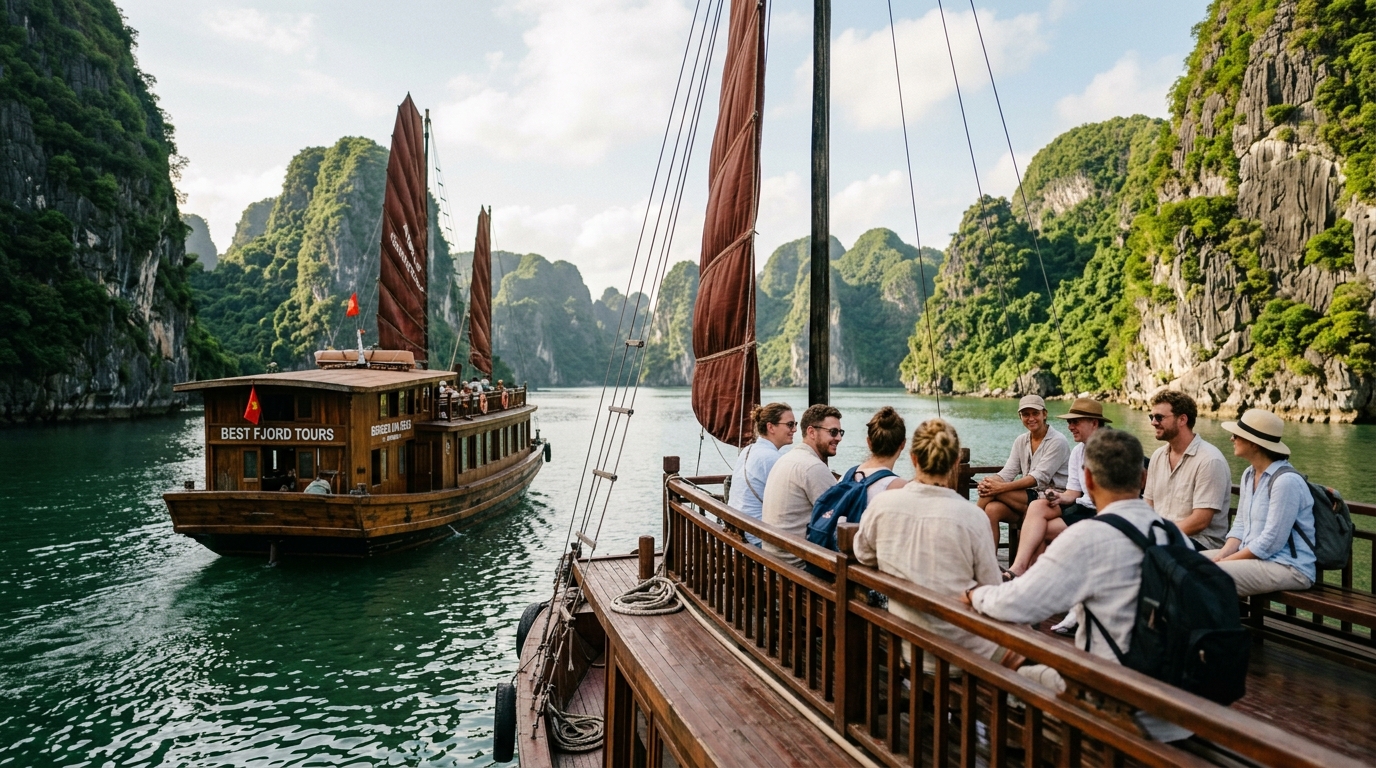
The classic fjord tour that appears in every Norway guidebook appears in every Norway guidebook for a reason: it works. The Norway in a Nutshell loop from Bergen combines the Bergen Railway to Myrdal, the Flam Railway (one of the steepest standard-gauge railways in the world, descending 866 meters in 20 kilometers), the Aurlandsfjord cruise, and the Naeroyfjord (the narrowest fjord arm in Europe at 250 meters wide, a UNESCO World Heritage site).
The full loop from Bergen takes 10-12 hours and costs 1,690 NOK (155 EUR) booked through norwaynutshell.com. The Flam Railway segment through the Flamsdalen valley, with the Kjosfossen waterfall thundering directly beside the tracks, is as scenic as the fjord cruise itself. Book at least one week ahead in peak season (June-August).
Hardangerfjord Day Trip
The Hardangerfjord, Norway’s second-longest fjord at 179 kilometers, is a quieter alternative to the Sognefjord corridor. Day trips from Bergen combine the train to Voss (1 hour 15 minutes, 215 NOK/20 EUR), a bus to the Hardangerfjord, and a fjord cruise past the Folgefonna glacier. The Hardangerfjord is known for fruit orchards along the shoreline (apple and cherry blossoms in May) and the Voringsfossen waterfall (182 meters free-fall, one of Norway’s most photographed waterfalls). Book through GetYourGuide for tours starting at 1,200 NOK (110 EUR).
Mostraumen Fjord Cruise
A half-day cruise from Bergen’s Fish Market through the Osterfjord to the Mostraumen strait, a narrow channel where the boat passes cliffs so close you can almost touch them. The cruise takes 3-3.5 hours and costs 790 NOK (72 EUR). The captain slows the boat at a waterfall where crew members collect a bucket of fresh water for passengers to drink. Book at Rodne Fjord Cruise.
The 2-Day Bergen Itinerary
Hour-by-hour plan, where to stay and what it really costs — free PDF.
Free · No spam · Unsubscribe anytime
Most Photogenic Places in Bergen
Bryggen at Blue Hour
The classic Bryggen photograph is taken from the opposite side of the harbor (the Fish Market side), looking across the water at the wooden facades reflected on the surface. Blue hour (roughly 30 minutes after sunset) delivers the best light: the sky deep blue, the Bergen lights warm on the wooden facades, the reflection sharp on calm water. A 24-35mm lens frames the full row of buildings. A tripod is necessary for the long exposure (1-2 seconds at base ISO).
The Bryggen Alleyways
Walk into the passages between the wooden houses and photograph the leaning walls, external staircases, and crooked windows. A 50mm lens isolates architectural details. The best light is mid-afternoon when sun angles into the narrow passages. The alleyways at Jacobsfjorden and Bellgaarden have the most intact medieval character.
Mount Floyen at Sunset
From the Floyen summit, photograph the city spread below with the Askoy peninsula and the North Sea on the horizon. In summer, sunset after 10:00 PM creates golden-hour light that lasts for roughly 2 hours. A 24-70mm zoom handles the full range of compositions from wide city panoramas to compressed harbor details.
The Old Bergen Houses at Nordnes
The Nordnes peninsula, west of the harbor, is a residential neighborhood of white wooden houses with colorful trim, cobblestone streets, and harbor views from every angle. The houses on Verftsgaten and Bradbenken are the most photogenic. This neighborhood appears in roughly zero Bergen guidebooks and rewards an hour of wandering with no crowds.
Frequently Asked Questions
How many days do I need in Bergen?
Two full days is the minimum. Day one for the city (Bryggen, Floibanen, Fish Market, KODE museums). Day two for a fjord cruise (Norway in a Nutshell or Mostraumen). Three days allows a day trip to the Hardangerfjord or a hike across the Vidden plateau between Floyen and Ulriken.
Is Bergen expensive?
Yes, as is all of Norway. Budget 800-1,200 NOK (73-110 EUR) per person per day including mid-range hotel, two meals, one activity, and transport. A sit-down dinner for two with two drinks costs 600-900 NOK (55-82 EUR). Norway in a Nutshell at 1,690 NOK (155 EUR) is the biggest single expense.
What is the best time to visit Bergen?
May through August offers the longest daylight, the best fjord tour schedules, and the warmest weather (15-22 degrees C/59-72 F). June-July has the midnight sun effect (daylight until 11:00 PM). September brings autumn colors and fewer visitors. October through April brings rain, fog, and dramatically lower prices. Bergen in winter rain has a moody, brooding beauty that summer visitors never see.
Does it really rain that much in Bergen?
Yes. Bergen averages 240 days of precipitation per year and roughly 2,250 mm of annual rainfall (Norwegian Meteorological Institute, 2026). It is one of the rainiest cities in Europe. Bring a waterproof jacket with a hood. Accept the rain. The mountains would not be this green without it.
How do I get from Bergen to Oslo?
The Bergen Railway (Bergensbanen) is one of the most scenic train journeys in the world, crossing the Hardangervidda mountain plateau and passing through Finse, the highest station on the Norwegian rail network at 1,222 meters. The journey takes 6.5-7 hours and costs 979 NOK (90 EUR) booked through vy.no at least two weeks ahead.
Bergen in the rain, with the Bryggen facades gleaming under street lamps and the Floibanen funicular disappearing into low cloud, is a city being its authentic self. The wooden alleys behind the harbor facade hold 900 years of Hanseatic history. The fish market serves salmon skewers to seagulls who wait with the patience of experienced strategists. The mountains rise from the city center and the fjords begin where the harbor ends.
For more Norwegian inspiration, explore our guides to the Lofoten Islands, Oslo, and the fjord country. For more Scandinavian destinations, read our guide to Ribe in Denmark.
Sources: Visit Bergen (2025-2026), Norwegian Meteorological Institute (2026), Vy train schedules (2026). Book: GetYourGuide for fjord tours, Booking.com for hotels, Airalo for Norway eSIM from $6.
More European Travel Guides
- Menton Travel Guide
- Ljubljana Travel Guide
- Bruges Travel Guide
- Giardini Naxos Travel Guide
- Grindelwald Travel Guide
- Hallstatt Travel Guide