Disclosure: Some links in this guide are affiliate links. If you book or buy through them, we may earn a small commission at no extra cost to you — it helps keep our guides free.
Cebu is safe for most travellers, and the Philippines sits at level 2 of Smartraveller’s 4 advice levels overall, while Cebu’s home region, the Visayas, carries none of the country’s higher-level Mindanao warnings. The real exception is petty theft in crowded tourist spots, not terrorism or armed conflict.
| Risk | How likely | How serious | What actually prevents it |
|---|---|---|---|
| Pickpocketing, bag-snatching | Common in markets, jeepneys, malls | Financial, rarely violent | Crossbody bag worn in front, phone stays in the bag on jeepneys |
| Ferry travel between islands | Uncommon on Cebu’s main routes | Can be severe if it happens | Book PPA-registered operators (OceanJet, Lite Ferry), skip a sailing if a storm signal is up |
| Canyoneering at Kawasan Falls | Occasional injury, closures after rain | Falls, strong current, rockfall | Licensed guide and life vest only, never go after heavy rain |
| Habal-habal and jeepney traffic | Constant exposure | Injury, rarely fatal | Helmet, agree the fare first, avoid unlit roads after dark |
| Terrorism or armed conflict | Not present on Cebu | N/A, different island group | Cebu is in the Visayas, not Mindanao |
Cebu is in the Visayas, not the flagged Mindanao zones
Cebu carries none of Smartraveller’s elevated Mindanao warnings, because Cebu sits in the Visayas, a separate island group north of Mindanao. Smartraveller’s Philippines advisory, last updated 12 May 2026, keeps the country overall at level 2 of 4, “exercise a high degree of caution,” due to the general threat of terrorism and civil unrest.
Two higher tiers apply only within Mindanao: level 3, “reconsider your need to travel,” covers eastern Mindanao but explicitly excludes Camiguin, Dinagat and Siargao Islands, and level 4, “do not travel,” applies to the rest of Mindanao, including the Sulu Archipelago.
Cebu City sits roughly 400km north of Davao, Mindanao’s largest city, and the do-not-travel provinces of Sulu and central Mindanao lie hundreds of kilometres further southwest again.
The distinction is not academic. In January 2026, a ferry sailing from Zamboanga to Jolo in the Sulu Archipelago sank with over 350 people aboard, killing more than 40 and triggering a national safety audit.
That route sits squarely inside Mindanao’s do-not-travel zone, a different island group, a different set of operators and a different risk profile from anything on a Cebu itinerary. Cebu City, Mactan, Moalboal, Malapascua and the rest of Cebu island do not appear on either Mindanao warning list.
Petty theft in Cebu City
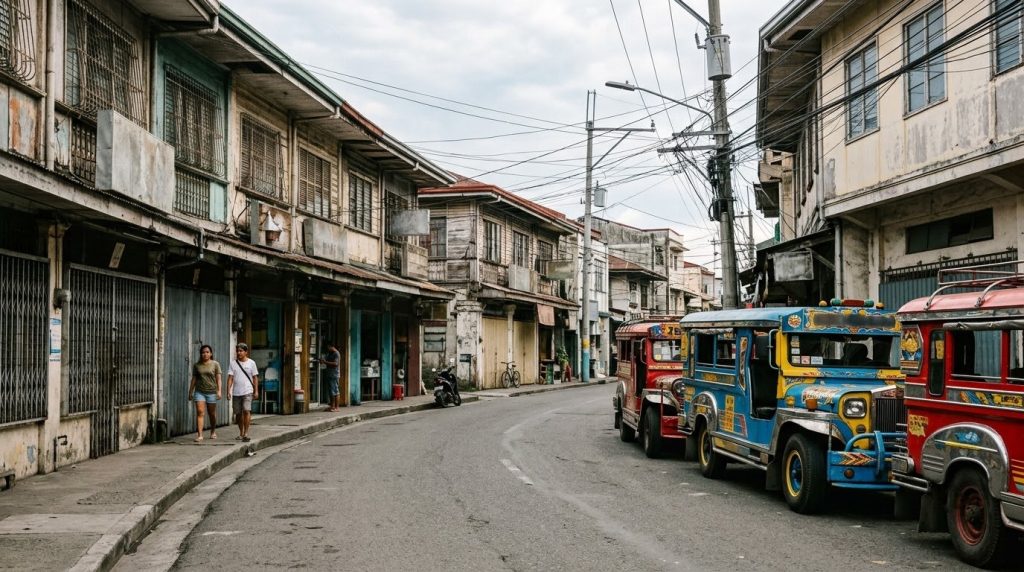
Petty theft, not violent crime, is the most likely problem you will run into in Cebu City. Pickpocketing teams work Carbon Market, Colon Street, the jeepney terminals around SM City Cebu and the Pier 1 boarding lines, typically in pairs, using a bump or a staged distraction while a second person reaches for a phone or bag.
Crowded, slow-moving conditions on jeepneys and narrow footpaths make it easy for a phone in a back pocket or an open tote to disappear without anyone noticing until later.
Carry a crossbody bag worn in front rather than a backpack in these areas, keep your phone zipped inside it rather than in a pocket while riding a jeepney, and visit Carbon Market and Colon Street in daylight rather than after dark. None of this points to a crime wave.
It is the same city-market caution that applies in any large Southeast Asian city, and it rarely escalates beyond a stolen phone or wallet.
Ferries, canyoneering and the water
Water, not crime, causes most of the serious injuries reported around Cebu. Inter-island ferries on Cebu’s main routes, to Bohol, Dumaguete and the Camotes Islands, run on established, PPA-registered operators such as OceanJet and Lite Ferry, and cancellations happen when a storm signal is raised rather than sailing through it.
Check the season with a best time to visit Cebu guide before booking inter-island hops, since typhoon activity concentrates in the second half of the year.
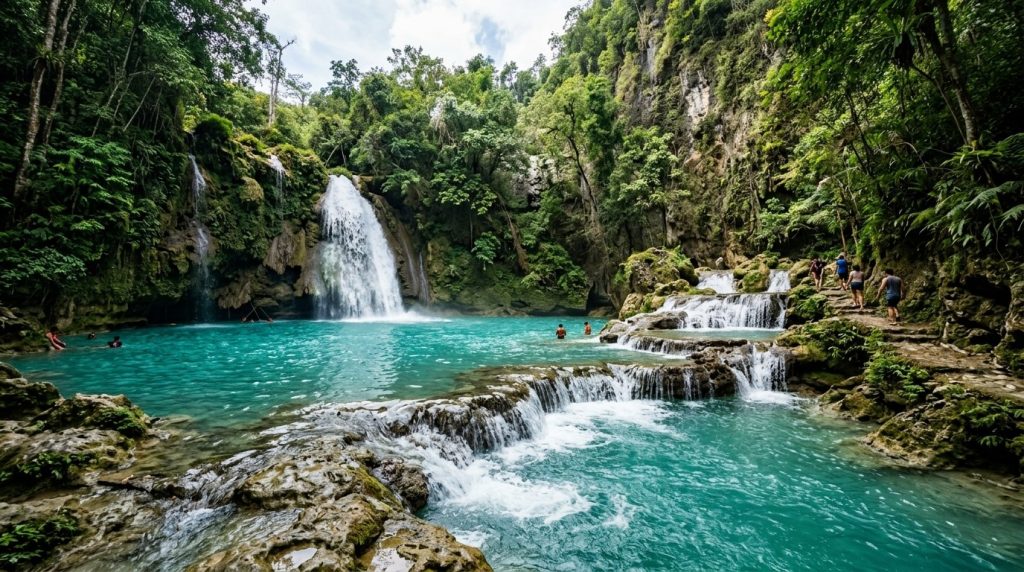
Canyoneering at Kawasan Falls in Badian carries the sharpest risk on a typical Cebu itinerary.
The route was closed to unlicensed operators in 2023 after the Cebu provincial government revoked permits and required all guides to be registered, and activities still pause for a day or two after heavy rain, most recently in July 2026, when flash-flood risk in the narrow canyon rises fast.
Lifeguards are now stationed along the canyoneering stretch and at the falls itself. Book only a licensed operator, at the regulated rate of around AUD 44 · USD 32 (PHP 2,000) per person including guide and life vest, and skip the activity entirely if it has rained heavily in the preceding day.
Roads and motorbike taxis
Traffic, not crime, is the more mundane daily risk on Cebu’s roads. Habal-habal, informal motorbike taxis that also carry passengers, are common outside Cebu City and useful for short hops where jeepneys do not reach, and a short ride typically costs around AUD 3 · USD 2 (PHP 100), agreed with the driver before you get on.
Helmets are not always offered as standard, so ask for one, and avoid habal-habal on unlit rural roads after dark, when visibility for both rider and oncoming traffic drops sharply. Jeepneys and city traffic in Cebu City itself move slowly and rarely at dangerous speed, so the bigger exposure sits outside the city, on provincial roads at night.
A Cebu travel budget breakdown is worth checking before you go, since transport safety upgrades, a private van instead of a shared habal-habal, a daytime ferry instead of an overnight one, usually cost only a little more.
Who should think twice about Cebu
Cebu is a poor fit for a handful of specific travellers, not for cautious people in general. Anyone planning an onward trip into central or western Mindanao or the Sulu Archipelago, beyond Camiguin, Dinagat or Siargao, should reconsider that leg specifically, since it carries Smartraveller’s two highest warning levels regardless of how safe Cebu itself feels.
Travellers who want to try Kawasan Falls canyoneering without a licensed guide, or right after heavy rain, are taking on a risk the local authorities have already tried to regulate away. Solo travellers who plan to ride habal-habal alone on unlit provincial roads late at night add avoidable exposure to an otherwise low-risk trip.
Families with children too young to follow safety instructions in moving water should skip the full canyoneering circuit and stick to Kawasan Falls’ calmer lower pools instead, or build a gentler pace into a Cebu itinerary that skips canyoneering altogether.
Choosing a safer base
Where you stay in Cebu changes your daily exposure to both petty theft and traffic more than any other single decision.
A base in Cebu Business Park, IT Park or Mactan keeps you away from Carbon Market and Colon Street’s pickpocket hotspots and closer to well-lit, patrolled streets at night, while a budget room deep in the older downtown grid puts you inside the city’s most theft-prone stretch every time you step outside.
Compare neighbourhoods in a where to stay in Cebu guide before booking, and weigh the saving from a cheaper downtown room against the extra caution it demands after dark.
Find your Cebu hotel on the map
Live prices from Booking, Airbnb and more — move the map or change dates to compare stays across Cebu.