Disclosure: Some links in this guide are affiliate links. If you book or buy through them, we may earn a small commission at no extra cost to you — it helps keep our guides free.
Koh Samui runs its own airport just 1 hour from Bangkok on the Gulf of Thailand side, while Krabi’s budget flights land in about 80 minutes on the Andaman coast, and the two islands sit on monsoon calendars roughly 6 months out of sync.
Pick Koh Samui for a direct flight straight to a resort beach and a dry season that spans December through April plus a bonus July-August window. Pick Krabi for cheaper airfares, limestone cliffs, easy island-hopping, and a longer November-to-April dry run. The rest of this guide breaks down exactly where each island wins.
Quick answer: Comparing Koh Samui and Krabi? Open live hotel prices in each to weigh cost against location:
| Factor | Koh Samui | Krabi |
|---|---|---|
| Airport & flight time from BKK | USM, own airport, ~1 hour | KBV, ~80 minutes |
| Flight cost, one way | AUD 83-208 · USD 60-150 (THB 1,976-4,940) | AUD 35-90 · USD 25-65 (THB 823-2,140) |
| Coast | Gulf of Thailand | Andaman Sea |
| Reliable dry season | Dec-Apr, plus Jul-Aug | Nov-Apr |
| Worst month | November (wettest, ~320mm) | Sep (quiet but wet), Jul-Aug rainiest |
| Beach style | Long resort-lined sand, road access | Karst cliffs, some boat-only beaches |
| Getting around | Scooter or fixed-rate taxi | Minivan, metered taxi, longtail boat |
| Best for | Direct-flight ease, resort beaches | Budget flights, scenery, island-hopping |
Getting There: Flights, Cost and the Bangkok Airways Monopoly
Koh Samui is one of the only Thai islands with its own international airport, and that convenience has a price tag. Bangkok Airways holds a near-monopoly on the Bangkok-Samui route, flying it in about an hour but charging AUD 83-208 · USD 60-150 (THB 1,976-4,940) one way, since there is no budget-carrier competition on that runway.
Travellers who book Bangkok to Surat Thani (URT) on a budget airline and connect via ferry instead can save up to AUD 139 · USD 100 (THB 3,293) round trip, at the cost of a longer travel day.
If Koh Samui wins out for your trip, our Koh Samui itinerary lays out a 5-day route that works around USM’s flight schedule.
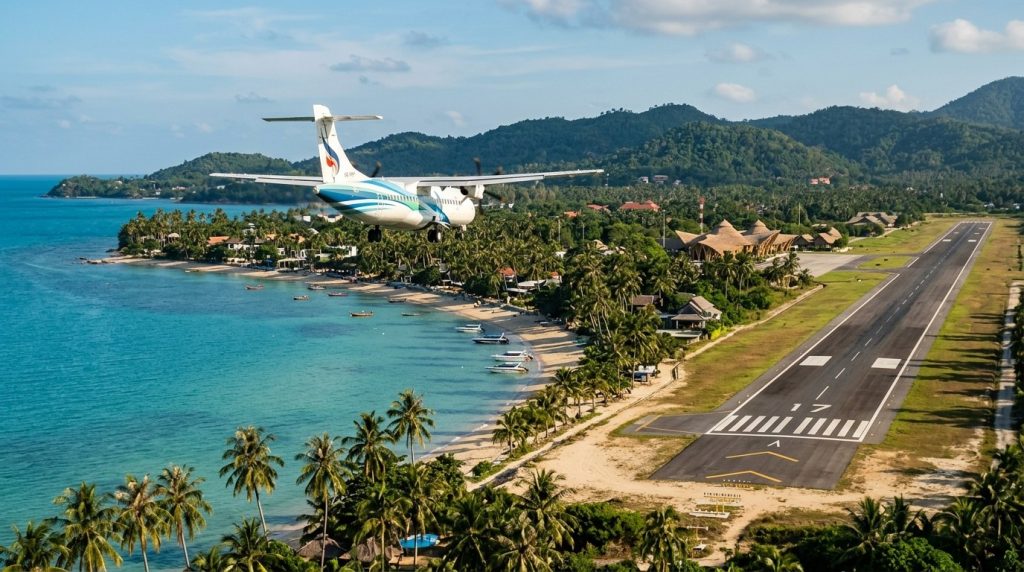
Krabi International Airport (KBV) is the opposite story. AirAsia, Nok Air and Thai Lion Air all fly Bangkok-Krabi multiple times daily, and a one-way fare booked 4-8 weeks out typically runs AUD 35-90 · USD 25-65 (THB 823-2,140), roughly half what Bangkok Airways charges into Samui.
The trade-off is that Krabi’s airport sits 15km from Krabi Town and 25km from Ao Nang Beach, so you still need a 25-90 minute transfer after landing, depending on whether you take a minivan, taxi or the public airport bus.
Best Time to Visit: Two Coasts, Two Monsoons Six Months Apart
This is the detail most comparison guides skip, and it matters more than almost anything else on this list: Koh Samui and Krabi run on opposite monsoon systems, because one faces the Gulf of Thailand and the other faces the Andaman Sea.
Krabi’s dry season runs November through April, with Krabi Town’s roughly 2,300mm of annual rainfall concentrated almost entirely in the May-to-October wet season and peak crowds hitting Railay Beach in late December and January. Full detail on booking windows, hotel-rate swings and crowd levels is in our best time to visit Krabi guide.
Koh Samui’s Gulf-side weather runs on a different clock. Its dry season also covers December through April, but the island gets a second good-weather window in July and August, when the Andaman coast (Krabi included) is in the thick of its monsoon.
Samui’s worst month is November, statistically the wettest with an average of 320mm of rain, roughly double any other month on the island, followed by a rough October. Our best time to visit Koh Samui guide has the full month-by-month breakdown.
The practical upshot: if your travel dates fall in July or August, Krabi is deep in its wet season while Koh Samui can still deliver a solid beach trip. If your dates fall in October or November, both islands are near their worst, which makes that window the one time of year neither destination clearly beats the other.
Beaches and Scenery: Long Sand vs Limestone Karsts
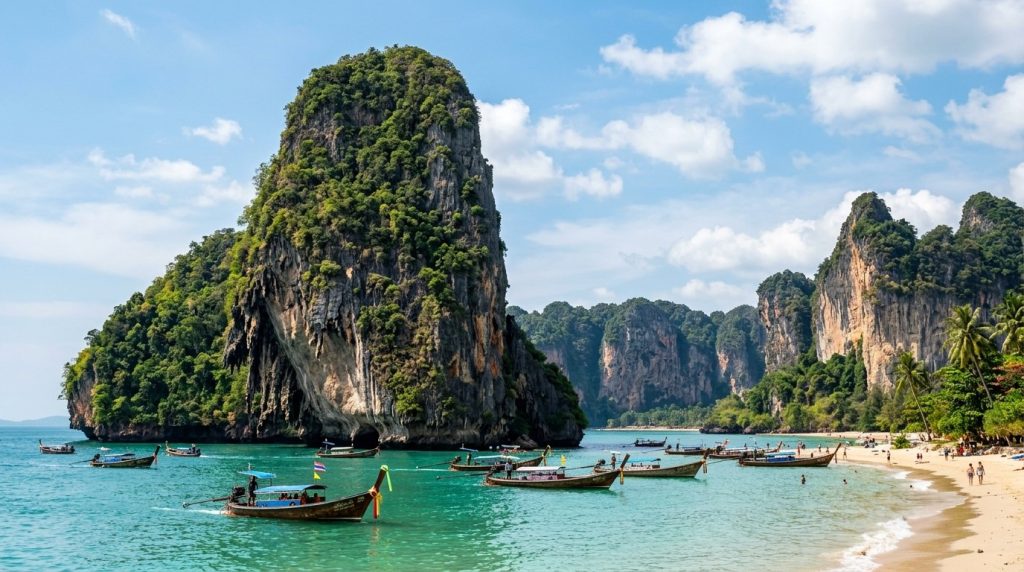
Krabi has more than 150 islands and 35 named beaches within reach, and its signature scenery is the towering limestone karsts that rise straight out of the Andaman Sea.
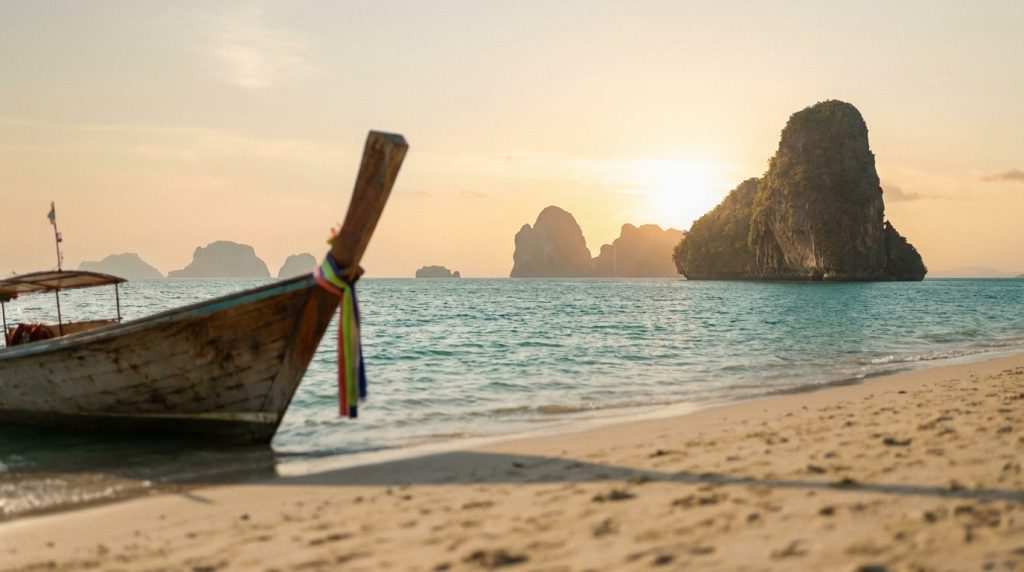
Railay Beach, widely ranked the best in the Krabi area, has no road access at all; you reach it by longtail boat from Ao Nang for around AUD 4 · USD 3 (THB 100) each way, and that same boat-only access is what keeps it uncrowded compared with beaches you can simply drive to.
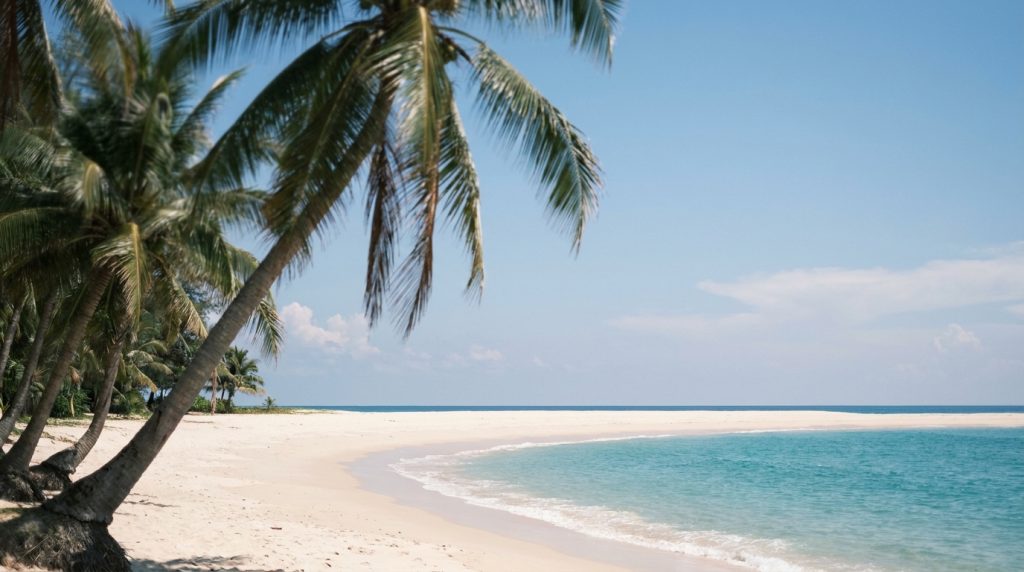
Koh Samui’s beaches take the opposite approach. Chaweng and Lamai are long, straight stretches of sand backed directly by roads, resorts and restaurants, so you can walk or scooter straight onto the sand without booking a boat. The scenery is calmer and less dramatic than Krabi’s karsts, but the logistics are simpler, particularly for families, older travellers or anyone who would rather not coordinate boat schedules around swimming.
Accommodation Costs: Koh Samui vs Krabi
Koh Samui runs noticeably more expensive than Krabi across every tier, which tracks with its status as the more established, direct-flight destination.
Budget rooms with air-conditioning on Samui average AUD 28-42 · USD 20-30 (THB 650-950) a night, mid-range hotels with a pool run AUD 104-187 · USD 75-135 (THB 2,500-4,500), and the island’s beachfront pool-villa resorts start from around AUD 250-625 · USD 180-450 (THB 6,000-15,000+) in shoulder season, climbing well past that for peak December and January dates.
Krabi runs cheaper at every level. Budget guesthouses and hostels around Ao Nang and Krabi Town typically cost AUD 28-69 · USD 20-50 a night, mid-range hotels with a pool run AUD 69-208 · USD 50-150, and four- and five-star resorts generally start from about AUD 278 · USD 200 and climb from there, still landing below Samui’s top-end villas for a comparable standard of room.
The gap narrows in the middle of the market and widens at the top: a traveller choosing between a mid-range Samui hotel and a mid-range Krabi hotel is often comparing similar nightly rates, but a luxury beachfront villa pushes Samui’s pricing well clear of what Krabi’s resorts charge for an equivalent room category.
Factor hotel cost into the choice alongside flights – Krabi’s cheaper rooms partly offset Samui’s cheaper flights, since Bangkok Airways’ monopoly fare into Samui often costs more than the savings a traveller banks on a cheaper Krabi hotel room.
Island Vibe and Getting Around
Samui runs on scooters and fixed-rate taxis. Renting a scooter costs around AUD 8 · USD 6 (THB 200) per day and is the fastest way to reach the island’s waterfalls, temples and quieter beaches, while a fixed-rate taxi from Chaweng runs about AUD 15 · USD 11 (THB 350) per trip.
Chaweng is the nightlife centre, with the island’s densest strip of bars and beach clubs; Bophut and Choeng Mon are quieter, more family-oriented bases.
Krabi’s transport is more varied because the region is more spread out. A shared minivan from the airport to Ao Nang costs about AUD 8 · USD 5 (THB 180), a metered taxi runs from roughly AUD 15 · USD 11 (THB 350), and getting to outlying beaches or islands means booking a longtail boat or a day-tour speedboat rather than just driving there.
Ao Nang is the main backpacker and family base, Railay draws climbers and honeymooners, and Krabi Town itself is quieter and more local. Our Krabi hotels guide breaks down which base fits which travel style and budget.
See hotels in Koh Samui →See hotels in Krabi →
Family Trip or Couples Trip
Koh Samui’s day-trip menu leans family-friendly. The Angthong Marine Park tour, reachable only from the Gulf side, runs several boat options a day: a standard speedboat tour costs roughly AUD 50-66 · USD 36-48 (THB 1,200-1,795) per adult, a big-boat tour runs close to AUD 71 · USD 51 for a comparable itinerary, and a full sailing-cruise version with lunch runs up to about AUD 143 · USD 103 (THB 3,400).
Every version adds a national park fee of about AUD 13 · USD 9 (THB 300) for adults and roughly half that for children, charged separately at the park entrance, and operators market the standard tours as suitable for children and non-swimmers, with kayaking and snorkelling gear provided on board.
Krabi’s signature add-on skews toward couples and more active travellers. A half-day beginner rock-climbing course at Railay Beach, run by established operators such as King Climbers, costs from about AUD 62 · USD 45 (THB 1,500) per person, covers routes from roughly 10 to 27 metres high, and runs twice a day with all equipment and instruction included – a distinctly different kind of day out from a family boat tour, and one that plays to Krabi’s limestone cliffs rather than Samui’s open water.
Neither island locks a traveller out of the other style of day entirely – Samui runs its own sunset cruises and quieter boat options, and Krabi’s day trips to Phi Phi work fine with children in calm weather – but the two islands’ best-known excursions point in different directions: a boat day built around swimming and snorkelling on Samui, and a cliffside climbing day built around a physical challenge on Krabi.
Combining Koh Samui and Krabi in One Trip
Doing both islands on one trip means picking between a short flight and a longer sea crossing, since there is no land bridge between the Gulf and Andaman coasts.
Bangkok Airways runs direct flights between Krabi and Koh Samui in about 48 minutes, with one-way fares starting from roughly AUD 167 · USD 120 in off-peak periods and climbing well above that close to departure, making it the fastest but most expensive link between the two.
The budget alternative is the Lomprayah combined ferry-and-bus service, which connects the two islands via Koh Phi Phi and a mainland transfer, taking roughly 4 to 5 hours door to door for fares from about AUD 26-47 · USD 19-34.
It costs a fraction of the flight but eats most of a travel day, so it suits travellers who would rather save the money than the time, or who want a stop on Koh Phi Phi built into the transfer anyway.
Most itineraries that combine both islands give Krabi the extra time for day trips and climbing and treat Samui as the shorter, flight-in-flight-out leg, since Samui’s own airport makes it easy to end a Thailand trip there with a direct flight back to Bangkok or on to an international connection.
Travellers short on time are usually better served picking one island properly rather than splitting a week across both, given that even the fast flight adds a half-day of airport transfers on both ends.
Koh Samui vs Krabi: The Verdict
Choose Koh Samui if you want the fewest possible transport legs: fly straight into USM, walk onto a resort beach, and skip ferries and longtail boats entirely.
It also wins if your trip falls in July or August, when Krabi’s Andaman coast is deep in monsoon season but Samui can still deliver clear days, or if you are travelling with young kids or limited mobility and want beaches you can simply walk to.
Choose Krabi if flight cost matters: budget carriers into KBV run roughly half the price of Bangkok Airways into Samui. It also wins if you want dramatic limestone scenery, easy access to Railay’s boat-only beaches and Phi Phi day trips, rock climbing, or a longer reliable dry season that runs November through April rather than Samui’s shorter window either side of the wet months.
Neither island loses outright. The choice comes down to your travel dates, your tolerance for one extra transfer, and whether you’d rather save on airfare or save on transport logistics once you land.
Find your Koh Samui hotel on the map
Live prices from Booking, Airbnb and more — move the map or change dates to compare stays across Koh Samui.