Bali vs Phuket: Which to Choose
By TravelguidestipUpdated 10 min readHow we earn
Hotel buttons open Stay22 (Booking.com, Agoda and others) and tour buttons open GetYourGuide. We may earn a commission at no extra cost to you.
Pick this if
Bali
You want jungle culture, spirituality, adventure and cheaper daily costs.
See hotels in Bali →Pick this if
Phuket
You want beach resort comfort, island hopping and a free visa.
See hotels in Phuket →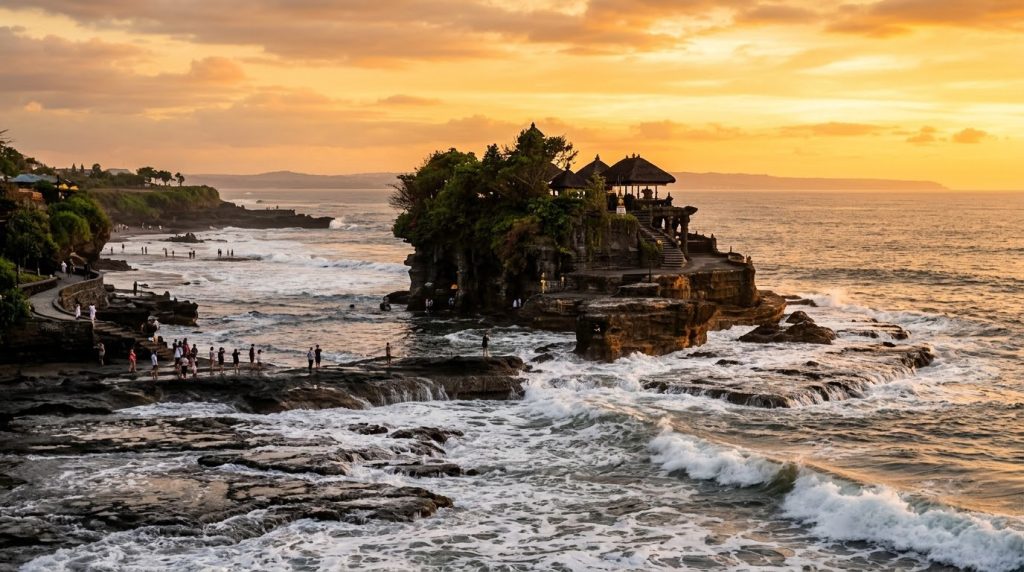
Bali vs Phuket comes down to one direct flight of about 6.5 hours from Sydney against a Phuket trip that usually needs a connection and runs past 12 hours. Bali wins on closeness, cultural depth and villa variety, and Phuket wins on classic beaches, easy island-hopping and nightlife.
Quick answer: Comparing Bali and Phuket? Open live hotel prices in each to weigh cost against location:
| Criterion | Bali | Phuket |
|---|---|---|
| Nonstop flight from Sydney | About 6.5 hours, over 100 flights a week | About 9.5 hours, only 2 flights a week |
| Typical routing for most Australians | Direct on Jetstar, Qantas, Virgin Australia or Garuda Indonesia | Often connects through Singapore or Kuala Lumpur, 12+ hours total |
| Mid-range hotel, per night | AUD 97 · USD 70 (IDR 1,230,000) | AUD 139 · USD 100 (THB 3,290) |
| Strongest areas | Ubud, Seminyak, Uluwatu, Canggu | Patong, Kata, Karon, plus day trips to Phi Phi |
| Best for | Culture, wellness, surf, villa variety | Classic beaches, island-hopping, nightlife |
Bali for variety, culture and closeness to Australia
Bali suits Australians who want one direct flight and several distinct areas to pick between. Denpasar sits about 6.5 hours from Sydney on a nonstop service, and Jetstar, Qantas, Virgin Australia and Garuda Indonesia all fly the route most days of the week.
Ubud carries the temple and rice-terrace culture, Seminyak carries the beach clubs and restaurants, Uluwatu carries the surf and clifftop villas, and Canggu carries the wellness and digital-nomad scene. A first-time visitor can base in one area or split a week across two, and the 7-day Bali itinerary lays out a route through Ubud, Seminyak and Uluwatu without doubling back.
Villa supply is deep across every price point, and the where to stay in Bali guide breaks down which area suits couples, families and surfers. Hindu temple ceremonies, rice terraces and a strong wellness and yoga circuit give Bali a cultural layer that Phuket does not match.

Australians need a visa on arrival for Bali (IDR 500,000, also sold online as an e-VOA) plus the IDR 150,000 Bali tourist levy, roughly AUD 50 · USD 36 per person, so buy both online before you fly to skip the airport queues.
The dry season from April to October brings the most reliable weather for beach days and sunrise treks up Mount Batur, while the wet season from November to March still allows day trips between short afternoon showers.
Surfers gravitate toward Uluwatu and Canggu for consistent reef breaks, and Ubud’s yoga studios and rice-terrace walks suit travellers who want a slower pace mid-trip. Nusa Dua and Jimbaran add a calmer, resort-style alternative for families who want a pool-first base rather than a bar-lined strip.
Phuket for beaches, islands and nightlife
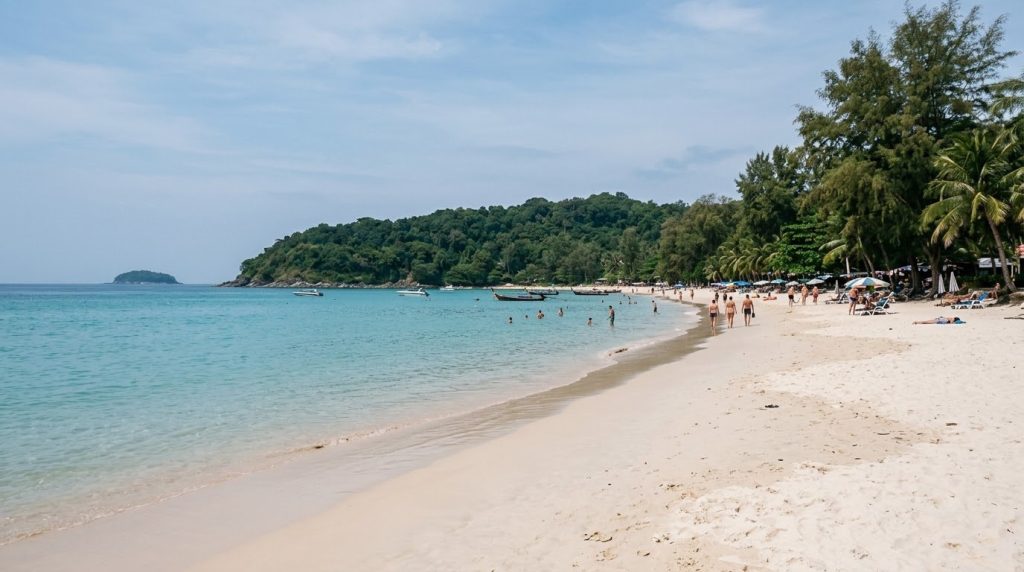
Phuket suits travellers chasing classic white-sand beaches and easy day trips to nearby islands. Patong Beach and Kata Beach deliver the postcard sand that draws comparisons to the Caribbean, and long-tail boats leave most mornings for Phi Phi, James Bond Island and the Phang Nga Bay limestone karsts.
Thai cuisine is a genuine drawcard on its own, with street-food markets and seafood grills across Kata and Karon that undercut Bali on price for a comparable meal. Patong’s nightlife runs later and louder than anything in Bali, from beer bars to full nightclubs on Bangla Road.
The best hotels in Phuket guide ranks stays by beach access, and the 5-day Phuket itinerary fits in an island-hopping day without rushing the rest of the trip.

Phuket’s high season runs from November to April, when the Andaman Sea stays calm enough for the island-hopping boats that make Phi Phi and the Similan Islands a realistic day trip rather than a rough crossing.
Rawai and Chalong sit further from the nightlife strip and suit divers, since most dive operators for the Similan Islands and Racha Yai depart from the southern piers.
Kamala and Surin trade some of Patong’s energy for a quieter beach with a similar standard of resort, which suits couples who still want to be a short taxi ride from the main strip. Old Phuket Town adds a half-day detour of Sino-Portuguese shophouses, street art and a weekend night market that breaks up a beach-only schedule.
Weather and best time to visit: Bali vs Phuket
Both islands run on a tropical wet-dry pattern, but the calendars do not line up. Bali’s dry season runs roughly April to October, with July and August the busiest and driest stretch. Phuket flips the other way: its most reliable weather runs from November to April, when the Andaman Sea stays calm enough for day-trip boats to Phi Phi and the Similan Islands.
That means the islands rarely peak at the same time. Visit in July or August and Bali is in full dry season while Phuket sits deep in its wettest months, with afternoon downpours and a choppier crossing to the outer islands.
Travel in December or January and the pattern reverses. Phuket is at its calmest while Bali sits in its wet season, though showers there are usually short and mostly fall overnight.
The shoulder windows, roughly April to May and October to November, are the one stretch where both islands can work reasonably well, with fewer crowds and softer prices than peak season on either side.
For Australians booking around school holidays, this timing gap matters more than flight time. A June or July trip favours Bali outright. A December or January trip favours Phuket’s beaches and boat days, even though the flight itself takes longer and usually needs a connection.
Temperature swings less than rainfall on either island. Bali typically sits in the high 20s to low 30s Celsius year round, and Phuket runs similarly warm, so neither destination has a true cold stretch to plan around. Humidity, not heat, is the bigger comfort factor in each one’s wet season.
Getting there and cost compared
Flight access clearly favours Bali. A direct Sydney-to-Denpasar flight takes about 6.5 hours, and dozens of nonstop options run every week across four airlines. A direct Sydney-to-Phuket flight exists on Jetstar and takes about 9.5 hours, but it operates only twice a week, so most Australians connect through Singapore, Kuala Lumpur or Bangkok, pushing total travel time past 12 hours.
Accommodation runs cheaper in Bali too. A mid-range hotel in Bali averages AUD 97 · USD 70 (IDR 1,230,000) a night, against AUD 139 · USD 100 (THB 3,290) for a comparable mid-range hotel in Phuket.
Phuket claws some of that back on food, where a street-food meal or seafood plate often costs less than the equivalent dish in a Bali beach club. For a traveller weighing flight time against nightly rate, Bali is the cheaper and faster option on both counts.
Getting around adds a smaller but real cost difference. Bali runs largely on private drivers and ride-hailing apps like Gojek and Grab, and a full day with a driver typically costs less than a half-day tour in Phuket.
Phuket has metered taxis and Grab too, but many of the best day trips, including Phi Phi and the Similan Islands, run as fixed-price group tours booked through a hotel or agent rather than a self-driven day. Both islands are walkable within their main tourist strips, so neither demands a rental car for a standard week-long trip.
Diving and snorkelling: Bali vs Phuket
Both islands put you within reach of genuinely good diving, but the sites suit different divers. Bali’s best diving sits off Nusa Penida, a short boat ride from Sanur, where Crystal Bay and Manta Point are the draws.
Manta Point delivers close-up encounters with reef manta rays for most of the year, and the currents around Nusa Penida can run strong, which suits confident divers more than first-timers.
Amed and Tulamben on Bali’s east coast add an easier option. The USAT Liberty wreck at Tulamben sits close to shore in shallow enough water for open-water certified divers and even some snorkellers on a calm day.
Phuket’s diving leans toward the Similan Islands and Racha Yai, both reached by speedboat or liveaboard from the island’s piers. The Similans are seasonal: the marine park closes for part of the year to let the reef recover from monsoon swell, so trips only run in the island’s dry months, broadly the same window as Phuket’s high season.
Racha Yai sits closer, making it a realistic day trip even for travellers not committing to a full liveaboard, with calmer, more beginner-friendly conditions than the open-water Similans crossing.
For a first dive or a family snorkel, Phuket’s closer islands are the simpler pick. For a serious dive trip built around manta encounters or a wreck, Bali’s Nusa Penida and Tulamben give more variety without a liveaboard commitment.
Neither island requires booking diving before you land. Most dive shops in Sanur, Amed, Patong and Kata run daily trips and can fit a certified diver in with a day or two’s notice in season.
Honeymoons and couples trips: Bali vs Phuket
Bali has built an entire industry around private-pool villas, and that is the biggest honeymoon advantage over Phuket. Uluwatu and Seminyak both have deep villa stock with a private plunge pool, an outdoor bathroom or a cliff view, often at a nightly rate well under what a comparable resort room costs in Phuket.
Ubud adds a second honeymoon mode entirely: couples who want spa days, rice-terrace walks and a quieter pace over beach time tend to split a week between Ubud and a coastal base like Seminyak or Uluwatu.
Phuket’s honeymoon strength is the classic resort format. Kata and Karon have beachfront resort chains with the infinity pools, in-room dining and sunset bars that fit a shorter, lower-effort romantic trip, and the beaches themselves suit couples who want to swim rather than just look at the water from a villa terrace.
Patong is the wrong base for a honeymoon on either island’s terms; its energy is built for nightlife and groups, not quiet. Couples wanting Phuket’s beaches without Patong’s noise should look at Kata, Karon, Kamala or Surin instead.
For a short five to seven night trip with minimal planning, Phuket’s all-in-one resorts are the easier booking. For a trip built around privacy, villa living and a slower pace, Bali’s spread of areas gives couples more to design around, even though it takes a little more planning to string two bases together.
Both islands also handle destination weddings and vow renewals through resort wedding packages, and neither requires a long lead time to arrange a simple beachfront or garden ceremony through the resort itself, though peak-season dates at the most photogenic venues book out first.
Which suits your kind of trip
A short break with minimal flight time favours Bali, since the direct 6.5-hour flight leaves more days on the ground. A honeymoon or wellness-focused trip favours Bali too, given the villa privacy, spa culture and the Uluwatu and Canggu scene.
A family beach holiday built around swimming and sandcastles favours Phuket, since Kata and Karon offer calmer, wider stretches of sand than most of Bali’s surf beaches. A multi-island trip built around snorkelling, diving or a Phi Phi day tour favours Phuket, because the islands sit within a short boat ride rather than a domestic flight. A late-night, bar-hopping trip favours Phuket’s Patong strip over Bali’s quieter Seminyak clubs.
A solo traveller who wants a built-in social scene and coworking cafes leans toward Bali’s Canggu circuit. A diving trip built around a liveaboard or an open-water certification leans toward Phuket, since the Similan Islands and Racha Yai offer some of the clearer visibility in the region.
A repeat visitor who has already covered Bali’s south often heads north to Ubud or east to Amed for a quieter second trip, while a repeat Phuket visitor typically adds Krabi or Khao Lak rather than staying on the same beach twice.
Travel safety: Bali vs Phuket
Both islands are safe for mainstream travel, and violent crime against tourists is rare on either one. The real risks are ordinary and avoidable rather than dramatic.
Bali’s crime index sits low by regional standards, and most problems travellers actually run into are petty theft, taxi overcharging and motorbike accidents rather than anything violent. Scooter crashes are the most serious risk on the island; a car licence alone is not enough, and most travel insurers also require a valid motorcycle licence or an endorsed international permit before they will cover a crash.
Phuket carries the same broad profile under Thailand’s current Smartraveller advice, which calls for a high degree of caution rather than anything more serious. Scooter accidents, jet-ski damage scams on Patong and Kata beaches, and taxi fares that climb once you are already in the car are the recurring complaints, rather than anything targeting tourists specifically.
Rip currents are a real hazard on both islands’ more exposed beaches: Bali’s west-facing strips like Kuta and Echo Beach, and Phuket’s Patong and Karon during the May to October swell. Swim at patrolled beaches and treat a red flag as final, not a suggestion.
Both islands also see occasional drink-related incidents on their busiest nightlife strips, Kuta and Patong. Stick to sealed, branded drinks, and treat an unusually cheap all-night bucket deal with more caution than enthusiasm.
Neither island should be a reason to cancel a trip, but a proper travel insurance policy that explicitly covers scooter riding and includes medical evacuation is the one safety step worth sorting before either destination, not after you land.
Choose Bali if / choose Phuket if
Choose Bali if a direct flight matters, if a mix of culture, surf and wellness appeals, or if villa-style privacy across areas like Ubud, Seminyak, Uluwatu and Canggu fits the trip. Choose Phuket if classic white-sand beaches and easy island-hopping to Phi Phi matter more than flight time, or if Thai food and late nightlife are the priority.
Either island covers a week comfortably, and neither needs the other tacked on for a first visit.
Compare Bali and Phuket hotels on the map
Live prices from Booking, Airbnb and more — move the map or change dates to compare stays.