Best Day Trips From Bruges 2026: Ghent, Ypres & Coast
By TravelguidestipUpdated 11 min readHow we earn
Hotel buttons open Stay22 (Booking.com, Agoda and others) and tour buttons open GetYourGuide. We may earn a commission at no extra cost to you.
In short
- Ghent is the fastest escape: direct trains leave roughly every 10 minutes and take 22 to 27 minutes, with a standard second-class single around 7 euros (Belgian Railways / Trainline, 2025).
- Brussels is a one-hour capital hit: IC trains run every 30 to 60 minutes and reach Brussels in 60 to 65 minutes; a single is about 17 euros, a same-day return roughly 24 to 28 euros.
- Ypres is the deepest day out: allow about 1 hour 45 minutes each way (one change, usually at Kortrijk or Roeselare) and stay for the Last Post at the Menin Gate, held nightly at 8pm since 1928.
- The coast is almost free: Ostend is 13 minutes direct for roughly 4 to 5 euros, and the Kusttram, the world’s longest tram line at 67 km, runs the whole coastline from there.
- Damme needs no train at all: the medieval village sits 7 km northeast along a canal, reached by bike (rental around 12 to 18 euros a day) or a 35-minute canal boat in season.
Where to base yourself in Bruges
The best day trips from Bruges are Ghent (22 to 27 minutes by train), Brussels (about 60 to 65 minutes), Ypres and the Flanders Fields battlefields (roughly 1 hour 45 minutes with one change), Ostend and the Belgian coast (13 minutes direct), and the canal village of Damme (7 km by bike or boat).
Every one of them runs on Belgian Railways (SNCB/NMBS) intercity lines or a short local hop, and none of the rail journeys costs more than about 17 euros one-way in second class.
Bruges is small enough to see in a day and a half, which leaves plenty of room to use it as a base. This guide covers the five day trips we keep recommending, with the actual departure frequencies, journey times and standard single fares we checked on the SNCB network in 2025, plus which trip suits which kind of traveller.
Pair it with our Bruges travel guide for arrival logistics and our list of the best things to do in Bruges if you would rather stay put on day one.
We based ourselves in Bruges for six nights one spring and treated it as a hub, taking a different train out most mornings and being back for dinner by the canals. Ghent is close enough to reach the Graslei by 9:30 after a 9am start; Ypres, by contrast, takes the whole afternoon and evening, so it’s best not paired with anywhere else.
Which day trips from Bruges are worth it?
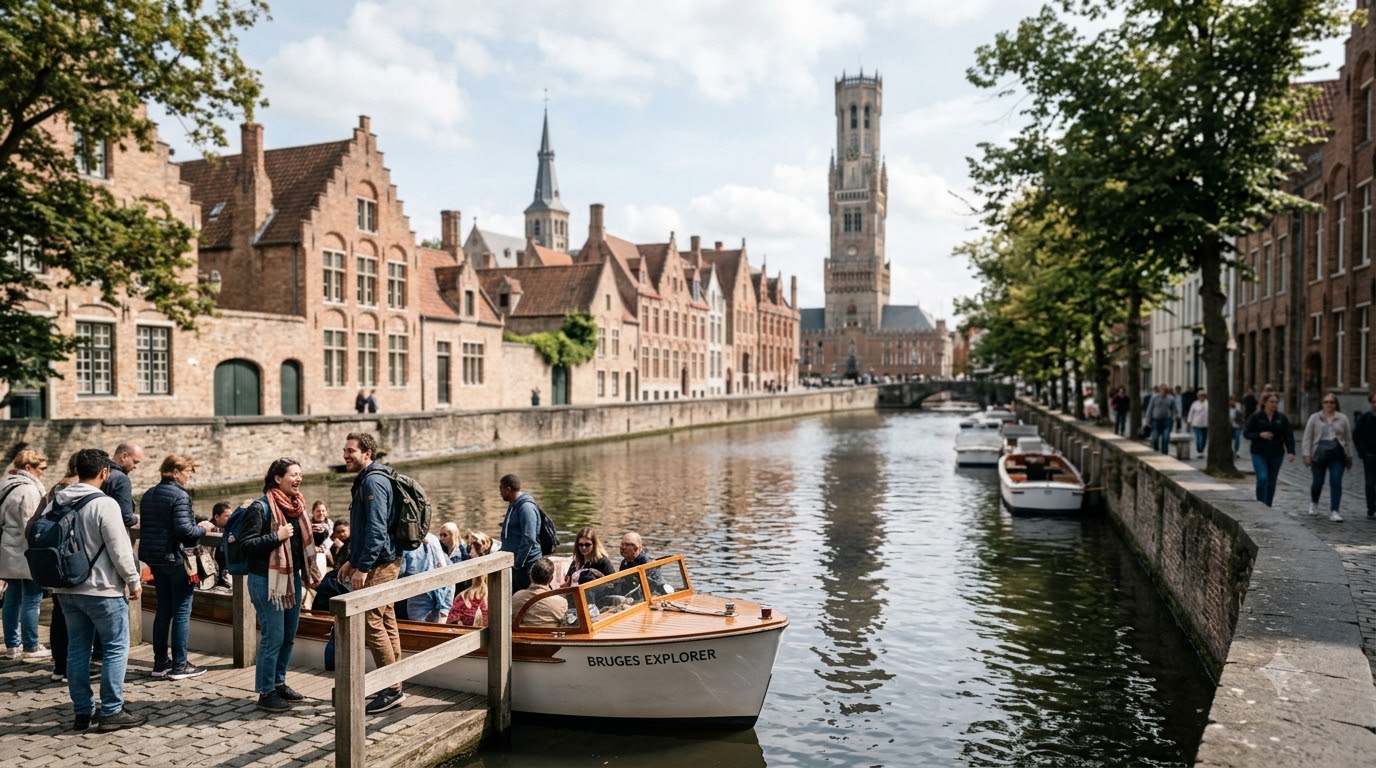
The day trips from Bruges worth planning around fall into three buckets: fast city breaks (Ghent, Brussels), remembrance and history (Ypres and the Flanders Fields battlefields), and the coast and countryside (Ostend, the Kusttram, Damme). Bruges sits on the main SNCB intercity spine through West Flanders, so most of these are single-train rides.
Here is how we rank them by how easy they are to reach and how much they differ from Bruges itself:
- Ghent: best all-round choice, closest, and the strongest single-day city on the list. A canal city like Bruges but younger and busier.
- Ostend: best for a quick change of scene, sea air and the Kusttram; reachable in the time it takes to drink a coffee.
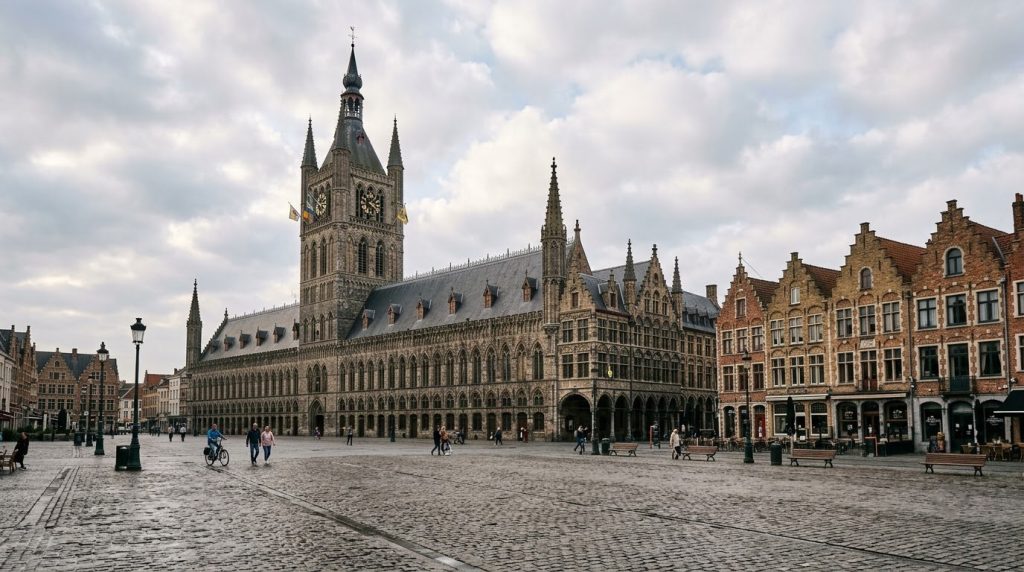
- Ypres: best for World War I history and the Menin Gate; the most emotionally heavy and the longest travel day.
- Brussels: best if you want a capital, Art Nouveau and the Grand-Place, though it feels the least like a “day trip” and the most like a separate city.
- Damme: best half-day, a flat cycle or canal cruise into open Flemish countryside with no train involved.
If you only have time for one, take the train to Ghent; if you have two days spare, add Ypres for contrast. We map how Ghent pairs with Bruges in more detail in our Ghent travel guide.
How fast is the train from Bruges to Ghent?
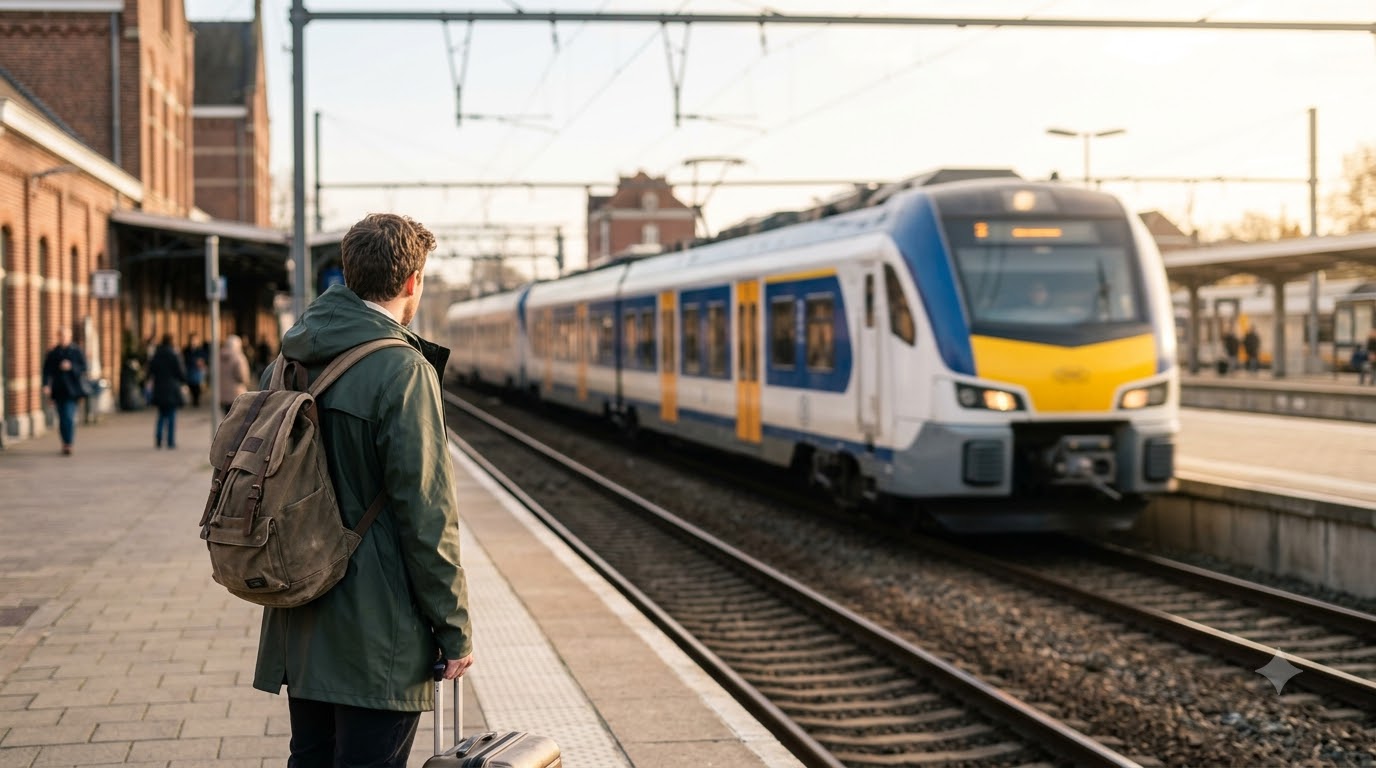
Trains from Bruges to Ghent take 22 to 27 minutes, making Ghent the fastest and most repeatable day trip from Bruges. Belgian Railways runs services to Gent-Sint-Pieters roughly every 10 minutes across the day, with around 98 departures daily, so there is no need to plan around a timetable (Belgian Railways / Trainline, 2025).
Ghent rewards the short hop. The medieval harbour along the Graslei and Korenlei, the towering Saint Bavo’s Cathedral holding the Van Eyck “Adoration of the Mystic Lamb”, and the moated Gravensteen castle are all a flat 20-minute walk or a short tram ride from the station. A few things worth knowing before you go:
- Gent-Sint-Pieters station sits south of the centre; take tram 1 or walk about 25 minutes to reach the historic core.
- Ghent stays lively after dark and is famous for its street lighting plan, so a late-afternoon train out and a dusk return works well.
- Standard second-class singles run around 7 euros; there is no meaningful saving from booking a domestic Belgian ticket in advance, so buy on the day.
Even a full day in Ghent leaves things unseen, which is the strongest argument for treating it as its own trip rather than a rushed half-day.
Is Brussels a good day trip from Bruges?
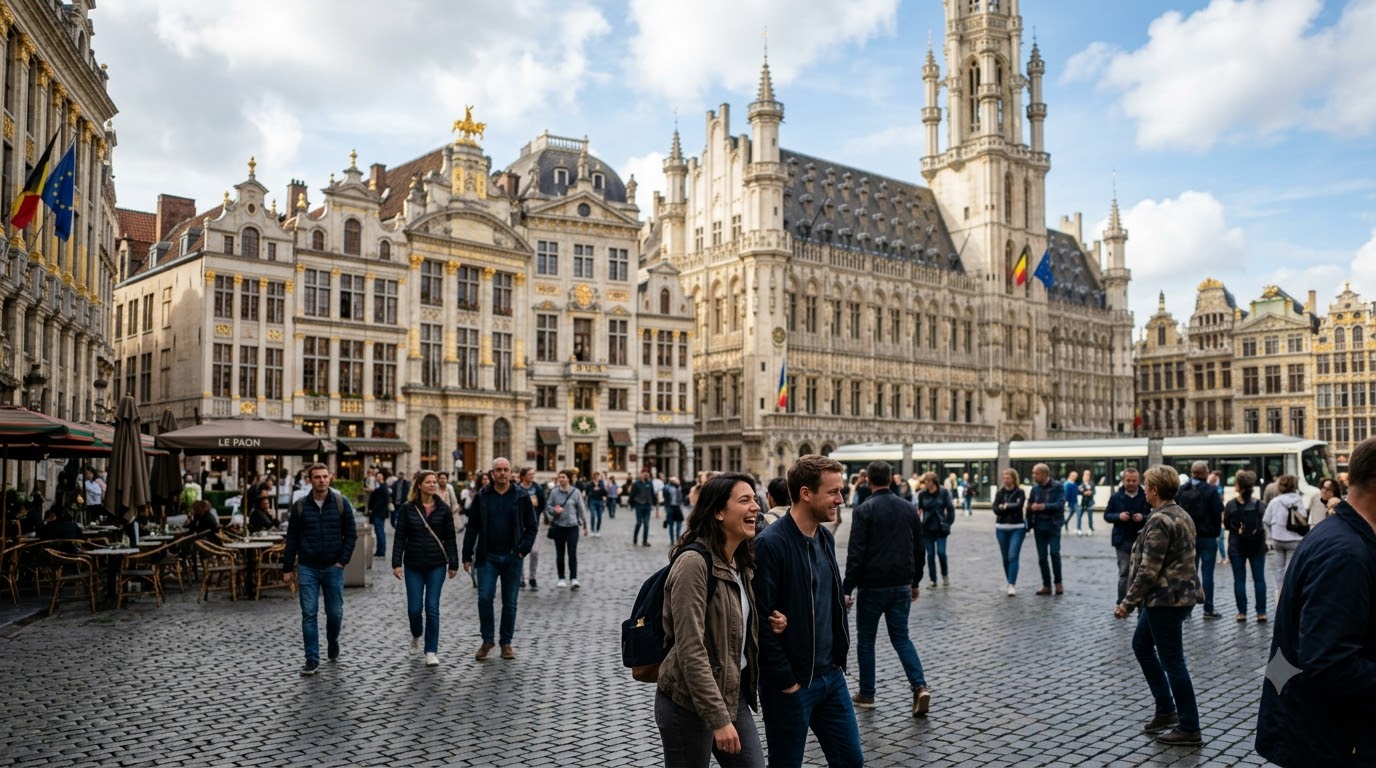
Brussels works as a day trip from Bruges if you want a capital city fix, with direct IC trains covering the 60 to 65 minute journey every 30 to 60 minutes from around 6am to 11pm. A one-way second-class ticket is about 17 euros, and a same-day return runs roughly 24 to 28 euros (Belgian Railways / Rail Europe, 2025).
Most trains from Bruges call at Brussels-Zuid/Midi, Brussels-Central and Brussels-Nord, so get off at Central for the shortest walk to the Grand-Place. In a single day you can reasonably cover:
- The Grand-Place and the surrounding guildhalls, a five-minute walk from Central station.
- Manneken Pis, the Galeries Royales Saint-Hubert shopping arcades and a waffle stop, all within 10 minutes on foot.
- The Art Nouveau townhouses of the Horta district or the Magritte Museum if you prefer galleries over crowds.
Brussels is the one trip on this list where the destination is bigger and busier than Bruges, so it suits travellers who want contrast rather than more of the same cobbled charm.
Find your Bruges hotel on the map
Live prices from Booking & Airbnb — tap a pin to compare stays around the Historic Centre (Markt) and beyond.
What can you see on a Ypres and Flanders Fields day trip?
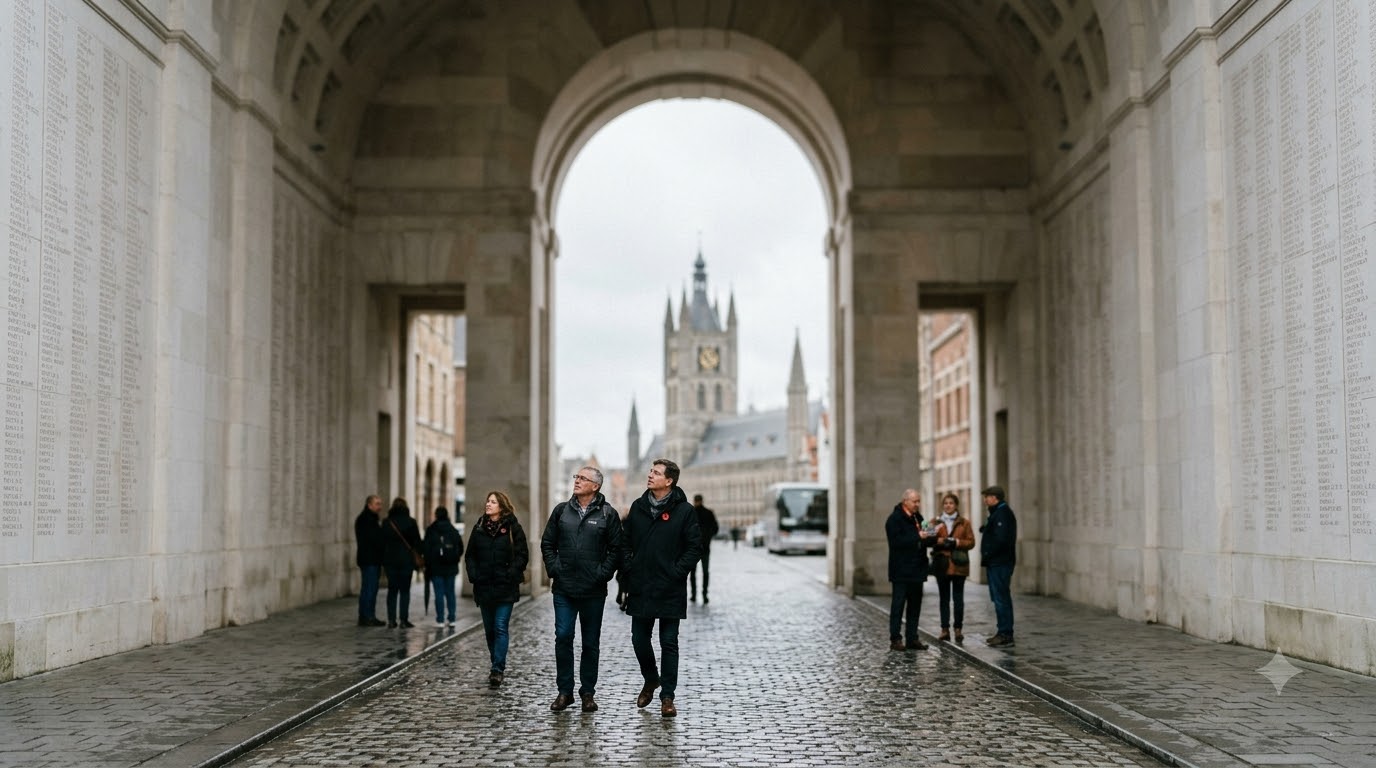
A Ypres day trip from Bruges centres on World War I remembrance: the rebuilt Cloth Hall, the In Flanders Fields Museum inside it, the surrounding battlefields and cemeteries, and the nightly Last Post ceremony at the Menin Gate. Allow about 1 hour 45 minutes each way by train, usually with one change at Kortrijk or Roeselare, with singles around 16 to 18 euros (SNCB / virail, 2025).
The Menin Gate is the anchor. The memorial carries the names of 54,896 Commonwealth soldiers who died in the Ypres Salient and have no known grave, and buglers from the local fire brigade have sounded the Last Post there every evening at 8pm since 1928, pausing only during the German occupation of 1940 to 1944 (Last Post Association, 2025). Practical notes for the day:
- The Last Post is free and needs no booking; arrive 20 to 30 minutes early in summer as the arch fills quickly.
- The In Flanders Fields Museum sits in the Cloth Hall on the Grote Markt, a five-minute walk from the station.
- Because the ceremony is at 8pm, plan a late train back to Bruges or check the last connection before you commit to staying.
- To reach the cemeteries and craters outside town (Tyne Cot, Hill 62), you will need a local bus, a bike or a half-day guided minibus tour, as the sites are spread across the countryside.
This is the longest and most sombre day on the list, and we would not try to combine it with any other stop.
Is Ostend worth visiting from Bruges?
Ostend is the easiest coastal day trip from Bruges, reached by direct train in just 13 minutes for roughly 4 to 5 euros, with departures about every 30 minutes and around 60 trains a day (Belgian Railways / Trainline, 2025). That makes the North Sea closer to central Bruges than many of Bruges’ own outer neighbourhoods.
Ostend gives you a wide sandy beach, a working fishing harbour, the Mu.ZEE art museum and a long seafront promenade. Its real draw for day-trippers, though, is the connection at the station:
- The Kusttram (Coastal Tram) is a Guinness World Record holder as the longest tram line on earth at 67 km, running the entire Belgian coast from De Panne to Knokke-Heist.
- The full end-to-end ride takes around 2.5 hours; most visitors hop a few stops to Middelkerke or De Haan rather than riding the whole line.
- The tram platforms are integrated into Ostend station, so you can step off the Bruges train and straight onto the coast tram.
For a half-day of sea air, chips on the seafront and a short tram ride to a resort village, Ostend is hard to beat on both time and price.
How do you get from Bruges to Damme?
Damme is the one day trip from Bruges that needs no train: the medieval village lies 7 km northeast along a straight, tree-lined canal, reached by bike or by seasonal canal boat. It is a flat, easy ride, which is why locals treat it as an afternoon rather than a full expedition.
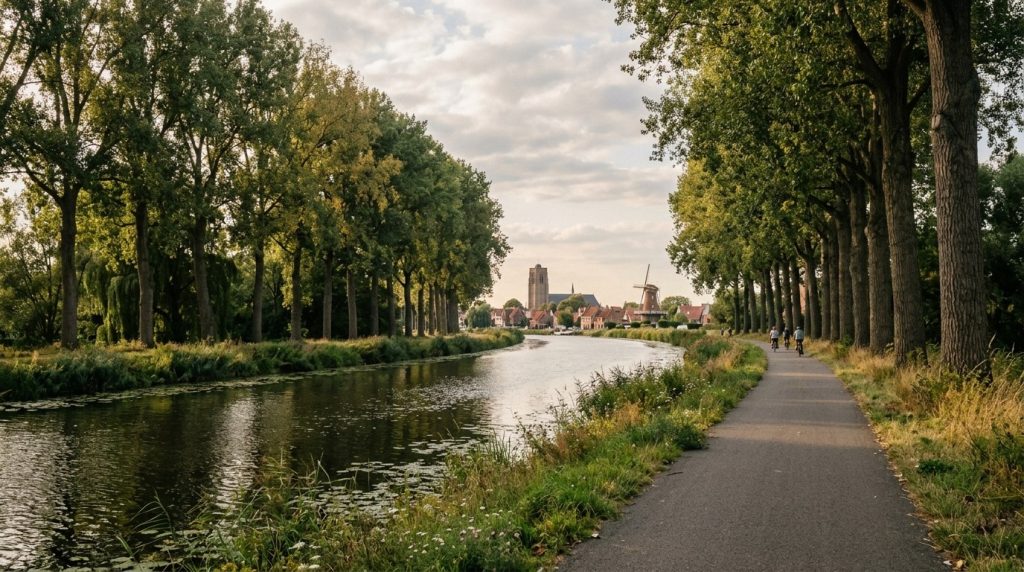
Your two options:
- By bike: rent in central Bruges for roughly 12 to 18 euros a day and follow the canal path; the ride takes about 30 to 40 minutes at an easy pace.
- By canal boat: the paddle-steamer “Lamme Goedzak” cruises the canal to Damme in about 35 minutes in the warmer months, a relaxed alternative to pedalling.
Damme itself is tiny: a 13th-century town hall, second-hand bookshops, a Gothic church tower with countryside views, and cafes serving Flemish stew. It pairs naturally with a lazy morning in Bruges, and because it is so close you can be back for a late lunch.
If you are choosing a base for cycling days like this, our where to stay in Bruges guide flags the neighbourhoods closest to the canal exits.
Day trips from Bruges compared: train times and cost
The quickest way to choose is to line up the travel times and fares side by side. Ghent and Ostend win on speed and price; Ypres asks the most of your day but delivers the most distinct experience.
| Destination | One-way time | Frequency | Standard single (2nd class) | Direct? | Best for |
|---|---|---|---|---|---|
| Ghent | 22 to 27 min | ~every 10 min | ~7 euros | Yes | All-round city day |
| Ostend | 13 min | ~every 30 min | ~4 to 5 euros | Yes | Beach, Kusttram |
| Brussels | 60 to 65 min | every 30 to 60 min | ~17 euros | Yes | Capital, museums |
| Ypres | ~1 h 45 min | hourly-ish | ~16 to 18 euros | No (1 change) | WWI history |
| Damme | 30 to 40 min (bike) | on demand | ~12 to 18 euros (bike/day) | N/A | Countryside, canal |
Times and fares are second-class SNCB/NMBS domestic figures verified against Belgian Railways, Trainline and Rail Europe listings in 2025; exact prices vary by ticket type. Damme is reached by bike or seasonal boat, not train.
How to buy tickets and plan your day trips from Bruges
For Belgian domestic day trips you do not need to book ahead: buy a standard single or return at Bruges station on the day and board any train on the route. Belgian Railways fares are fixed by distance, so there is no advance-purchase discount to chase, which keeps planning simple.
A few tips that saved us time and money:
- Buy from the red SNCB ticket machines or the app rather than international resellers, which sometimes add fees on top of the same domestic fare.
- A same-day return is usually cheaper than two singles on longer routes like Brussels, so ask for a return if you are coming back the same evening.
- If you are under 26, ask about the discounted youth fares; if you plan several trips, a multi-journey pass can undercut buying singles each time.
- Check the last train home before you leave, especially for Ypres, where the 8pm Last Post pushes your return late into the evening.
- Bruges station is a 20-minute walk or a short bus ride from the Markt, so build that into your morning departure time.
With services this frequent, the realistic constraint on day trips from Bruges is not the timetable but how many hours of daylight you want to spend away from the canals.
Frequently Asked Questions
What is the best day trip from Bruges?
Ghent is the best all-round day trip from Bruges: it is the closest major city at 22 to 27 minutes by train, runs every 10 minutes, and offers a canal-laced medieval centre with the Van Eyck altarpiece and Gravensteen castle. For history over cityscape, Ypres and the Flanders Fields battlefields are the strongest alternative.
Can you do Ghent and Brussels from Bruges in one day?
It is possible but not advisable. Ghent sits on the way to Brussels, so you could stop in both, but each city deserves a full day. Trying to combine them means rushing Ghent’s centre and arriving in Brussels tired, so we recommend one city per day trip.
How much do train tickets from Bruges cost?
Standard second-class singles are roughly 7 euros to Ghent, 4 to 5 euros to Ostend, 17 euros to Brussels and 16 to 18 euros to Ypres (SNCB/NMBS, 2025). Belgian domestic fares are fixed by distance with no advance discount, so buying on the day at the station costs the same as booking earlier.
Is Ypres worth a day trip from Bruges?
Yes, if you have an interest in World War I history. Ypres is about 1 hour 45 minutes each way with one change, and the payoff is the In Flanders Fields Museum, the surrounding cemeteries and the nightly 8pm Last Post at the Menin Gate. It is a long, sombre day, so it works best as a standalone trip rather than combined with another stop.
Do you need to book Belgian trains in advance?
No. Belgian Railways domestic tickets are not seat-reserved and cost the same whether bought weeks ahead or minutes before departure. Simply buy a single or return at the station or in the SNCB app and board the next train on your route.
Making Bruges your base
Bruges earns its reputation as a hub as much as a destination. With Ghent 25 minutes out, the coast 13 minutes away and the Flanders battlefields within easy reach, you can wake up beside a medieval canal and be standing in a different world by mid-morning, then return to Bruges for the quiet evening streets after the crowds thin.
Pick two or three of these trips, keep one full day for Bruges itself, and West Flanders opens up without you ever needing a car.