Best Time to Visit Bruges in 2026: Month-by-Month Guide
By TravelguidestipUpdated 9 min readHow we earn
Hotel buttons open Stay22 (Booking.com, Agoda and others) and tour buttons open GetYourGuide. We may earn a commission at no extra cost to you.
In short
- Shoulder seasons win: April-May and September-early October offer 12-18°C highs, lighter crowds, and lower hotel rates than the July-August peak.
- Summer is warmest but busiest: July and August average 21°C highs and 7 hours of daily sunshine, but also the heaviest day-tripper volumes of the year.
- Christmas market runs 20 Nov 2026 to 3 Jan 2027: The Markt and Simon Stevinplein host stalls and an ice rink; weekend evenings are packed, weekday mornings are calm.
- January-February is cheapest and quietest: Highs of 6°C and short days, but the lowest room prices and near-empty morning streets.
- Beat the crowds by clock, not calendar: Day-trippers arrive mid-morning and leave by late afternoon, so 8-10am and after 6pm are quiet in almost every month.
The best time to visit Bruges is April to May or September to early October, when daytime highs sit between 12°C and 18°C, the canals stay photogenic, and the day-tripper crowds thin out between roughly 10am and 4pm.
Bruges drew about eight million day and overnight visitors to its small historic centre in 2024, averaging 27,000 people a day (Visit Bruges, 2025), so timing your trip is less about weather and more about dodging the peak-hour crush.
This guide breaks down what to expect month by month: temperatures, rainfall, crowd levels, and the specific events that make or break a visit. We cover the calm shoulder seasons, the busy July-August peak, the Christmas market period from late November, and the quiet, cold-but-cheap heart of winter.
Whether you want empty cobblestones at dawn or the smell of hot wine at a festive market, there is a right window for it.
The pattern holds consistently: Bruges belongs to overnight guests before 10am and after 6pm. In mid-October, the Groenerei canal is nearly empty around 8:15am; by noon the same stretch is shoulder to shoulder. That single habit, being out early, changed our experience more than any month we chose.
What is the best time to visit Bruges?
The best time to visit Bruges is the two shoulder seasons: mid-April through May, and September through the first week of October. In these windows you get mild, walkable weather, gardens and canals at their greenest, and noticeably fewer coach-tour crowds than midsummer. Hotel prices also drop from their July-August ceiling.
Here is how the year sorts out by priority:
- Best overall (weather plus calm): Late April, May, and September, with 16-18°C highs and manageable crowds.
- Best for warm, long days: July and August, with 21°C highs and 7 hours of daily sunshine, accepting the heaviest crowds.
- Best for festive atmosphere: Late November to late December, for the Christmas market and lit-up squares.
- Best for budget and quiet: January and February, with the lowest room rates and emptiest streets, at the cost of cold and early darkness.
- Best for photography: October, when autumn light hits the brick facades and morning mist rises off the canals.
Because Bruges is compact, you can see the core sights in any season. What changes is comfort and elbow room, and both peak in the shoulder months. For a wider orientation before you lock in dates, our complete Bruges travel guide sets out how the neighbourhoods fit together.
Bruges month-by-month weather and crowds
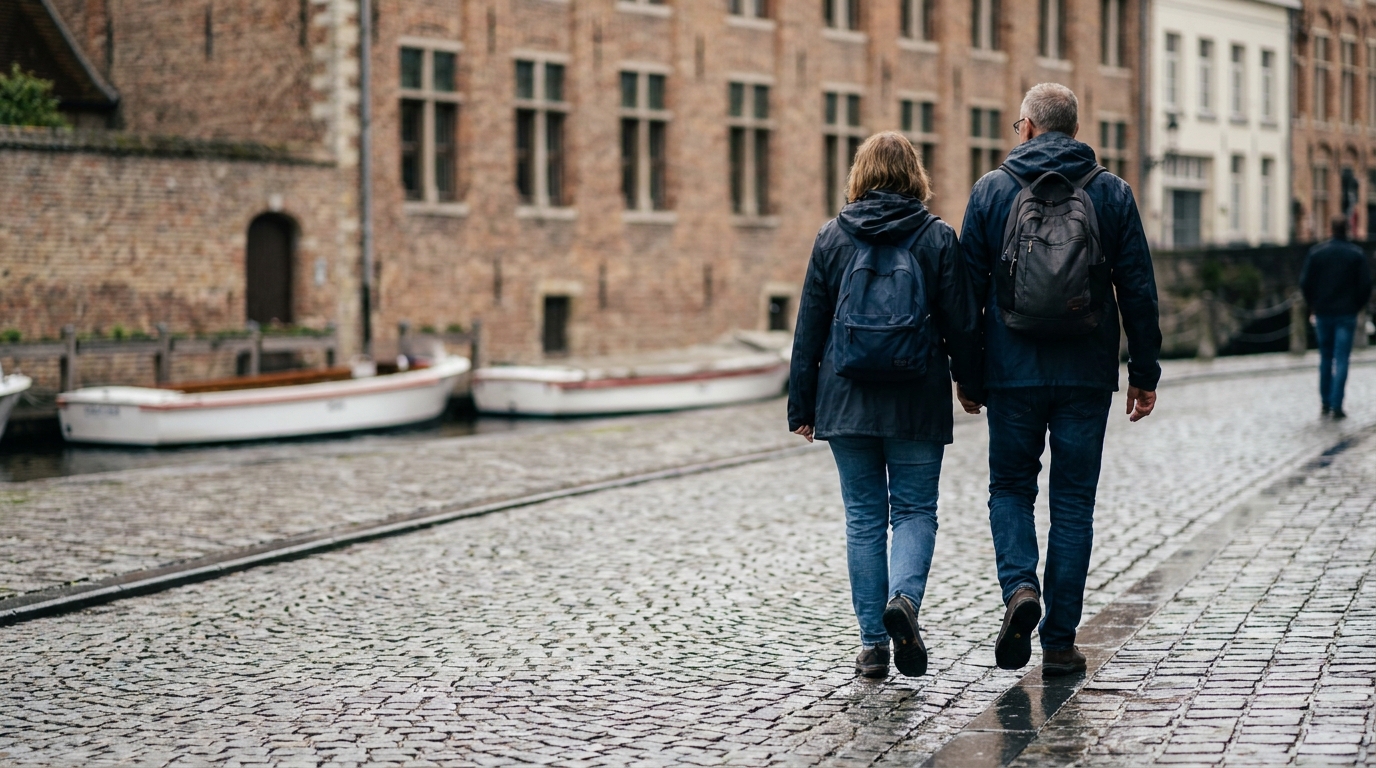
Bruges has a mild marine climate (Koppen Cfb), meaning warm-not-hot summers, cool winters, and rain spread across all twelve months. Daytime highs run from around 6°C in January to 21°C in July and August, and no month is truly dry, so a light rain layer is worth packing year-round.
The table below pairs average weather with our read on crowd levels, so you can match your priorities to a month at a glance.
| Month | Avg high | Avg low | Rainfall | Daily sun | Crowd level |
|---|---|---|---|---|---|
| January | 6°C | 1°C | 62 mm | 2 hrs | Very low |
| February | 6°C | 1°C | 45 mm | 3 hrs | Low |
| March | 9°C | 3°C | 57 mm | 4 hrs | Low-moderate |
| April | 12°C | 5°C | 49 mm | 5 hrs | Moderate |
| May | 16°C | 9°C | 56 mm | 7 hrs | Moderate-high |
| June | 19°C | 11°C | 65 mm | 7 hrs | High |
| July | 21°C | 13°C | 67 mm | 7 hrs | Very high |
| August | 21°C | 13°C | 66 mm | 7 hrs | Very high |
| September | 18°C | 11°C | 66 mm | 5 hrs | Moderate-high |
| October | 15°C | 8°C | 81 mm | 4 hrs | Moderate |
| November | 10°C | 4°C | 81 mm | 2 hrs | Low, then high late month |
| December | 7°C | 2°C | 75 mm | 1 hr | High (market) |
Weather figures: Weather2Travel climate averages for Bruges, Belgium. Crowd levels are our own assessment from repeat visits and Visit Bruges volume data.
A few patterns stand out. October and November are the wettest months at 81 mm each, while February is the driest at 45 mm. Sunshine collapses in winter, with December averaging barely one usable hour of sun a day, which is why the short season leans so heavily on indoor sights and lit-up markets.
Find your Bruges hotel on the map
Live prices from Booking & Airbnb — tap a pin to compare stays around the Historic Centre (Markt) and beyond.
Spring in Bruges: quiet canals and mild days
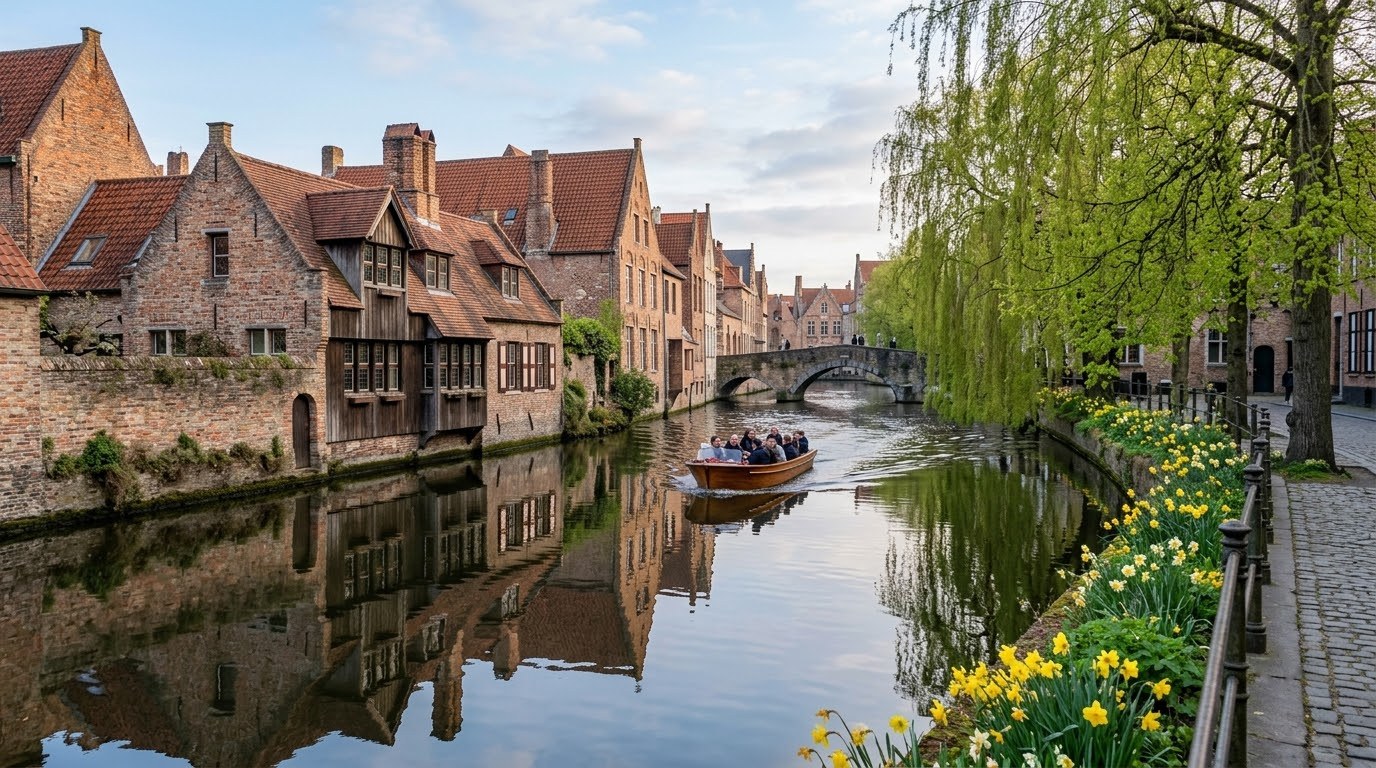
Spring is the sweet spot if you want mild weather without summer’s crush. From April onward, highs climb from 12°C to 16°C, rainfall stays modest at 49-56 mm, and daylight stretches long enough for unhurried evening walks. Gardens along the Begijnhof fill with daffodils in early spring, one of the prettiest free sights in the city.
Reasons spring works well:
- April is one of the drier months at 49 mm of rain, second only to February.
- The Begijnhof daffodils peak in late March and April, carpeting the courtyard in yellow at no cost.
- Ascension Day brings the Procession of the Holy Blood on 14 May 2026, a UNESCO-listed pageant that has run for centuries; expect a busy but atmospheric city that day.
- Room rates sit below summer levels, so spring stretches a mid-range budget further.
In early May, the Markt is genuinely walkable before 9:30am, with cafe tables just being set out. If you plan to fill your days, pair spring’s long light with our roundup of the best things to do in Bruges, which flags which sights reward an early start.
Summer in Bruges: warmest weather, biggest crowds
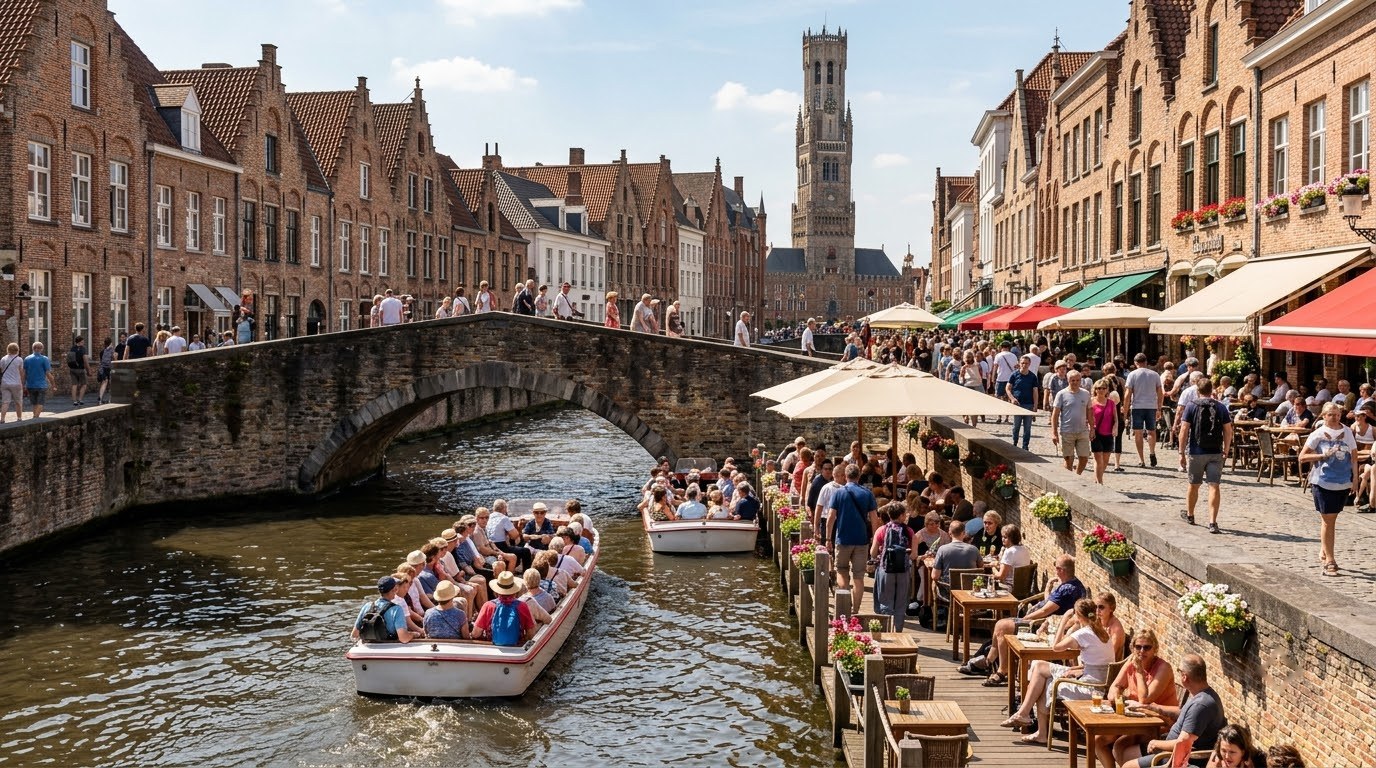
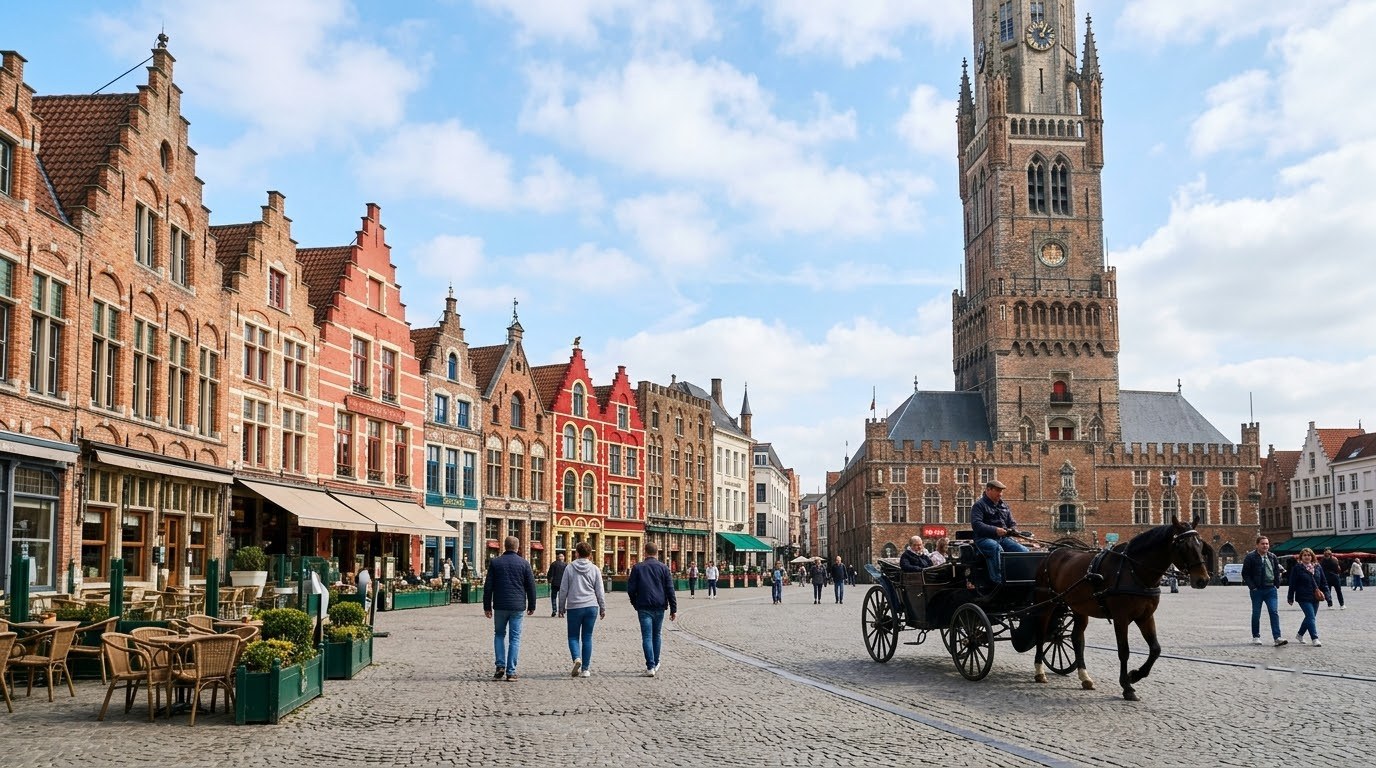
Summer delivers the best raw weather and the worst crowds. July and August share the year’s highest averages, 21°C daytime highs and 7 hours of sun, with warm 13°C nights that make canal-side dinners comfortable. The trade-off is volume: these are the peak months for coach tours and day-trippers, and the central Markt can feel overwhelmed by early afternoon.
If you visit in summer, structure the day around the crowd rhythm:
- Start by 8am. The core canals and the Rozenhoedkaai viewpoint are near-empty before mid-morning.
- Book the Belfry climb online and go at opening; the 366-step tower caps visitor numbers and queues build fast.
- Take a canal boat before 11am or after 5pm to skip the longest lines at the jetties.
- Retreat indoors at midday, when museums like the Groeninge are cooler and the streets are busiest.
- Reserve dinner tables ahead on summer weekends, when demand outstrips the small centre’s capacity.
Because summer books out, deciding where to base yourself early matters more than in any other season. Our guide to where to stay in Bruges compares staying inside the historic egg-shaped centre against the quieter, cheaper edges.
Autumn in Bruges: golden light and thinning crowds
Autumn, especially September and October, is our favourite compromise. September still carries 18°C highs and summer warmth but sheds a good share of the peak crowds once school holidays end. October cools to 15°C and turns wetter at 81 mm, yet rewards you with low golden light on the brick facades and mist curling off the canals at dawn.
What makes autumn appealing:
- September holds warmth without July’s density, a rare pairing of comfort and space.
- October offers the best photography light of the year, particularly the first hour after sunrise.
- Rainfall rises to 81 mm in October, so waterproof shoes and a compact umbrella earn their place in your bag.
- Hotel prices ease from the summer peak once the calendar turns to mid-September.
On our last October visit we did a full-day loop out of the city and back, and the shoulder-season train timetables made it painless. If you have more than two days, autumn is ideal for adding a Bruges day trip to Ghent or the Flanders coast without fighting summer platform crowds.
Winter and the Bruges Christmas market
Winter splits into two very different experiences: the festive market stretch and the quiet deep-winter weeks after it. The Bruges Winter Glow Christmas market runs from 20 November 2026 to 3 January 2027, with stalls on the Markt and an ice rink on Simon Stevinplein.
Stalls generally open 10:30am to 10pm Sunday to Thursday and until 11pm on Friday and Saturday, though weekend evenings draw the densest holiday crowds of the year.
For the Christmas period:
- Market dates: 20 November 2026 to 3 January 2027, covering the Markt and Simon Stevinplein.
- Quietest festive slots: Weekday mornings and the first hour after opening; avoid Saturday evenings if you dislike dense crowds.
- Weather to plan for: 6-7°C highs, 1-2 hours of sun, and darkness by around 5pm, so build in warm indoor breaks.
- After Christmas is calmer and cheaper: The days between 27 December and early January thin out, and accommodation often costs less than the pre-Christmas rush.
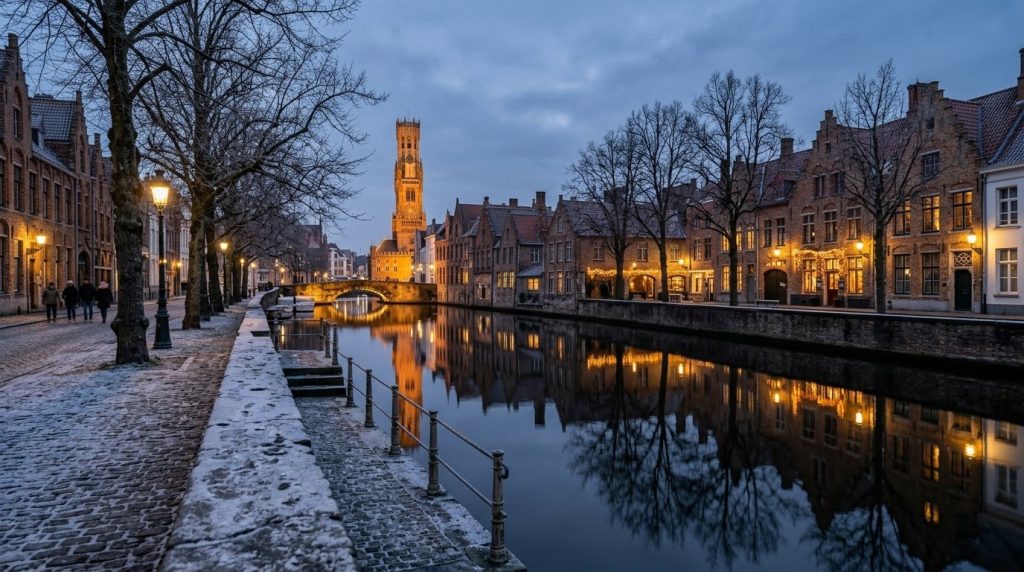
Deep winter, meaning January and February, is the quietest and cheapest time to see Bruges. Highs hover at 6°C and days are short, but the reward is having medieval streets almost to yourself and paying the lowest room rates of the year. On a grey February morning, the Bonifacius bridge area offers the classic postcard view entirely alone, something that is simply impossible in July.
How many days do you need in Bruges?
Two full days is the sweet spot for most first-time visitors, and it suits the shoulder seasons especially well. One day covers the headline sights, the Markt, the Belfry, a canal cruise, and the Begijnhof, but it forces you into the crowded midday window. A second day lets you slow down, explore quieter lanes like the Sint-Anna district, and still fit a half-day trip nearby.
A simple way to think about length by trip type:
- One day: Enough for the core sights if you start early and accept a busy centre.
- Two days: The recommended minimum to see Bruges without rushing and to enjoy early and late quiet hours.
- Three or more days: Adds room for day trips and repeat visits to favourite canals in changing light.
Whatever length you pick, an overnight stay is the single biggest upgrade to any Bruges trip, because it hands you the empty morning and evening streets that day-trippers never see.
Frequently Asked Questions
What is the cheapest time to visit Bruges?
January and February are the cheapest months to visit Bruges. Hotel rates fall to their lowest once the Christmas market closes on 3 January, and demand stays soft through late winter. You trade warmth and daylight for the savings, with 6°C highs and only 1-3 hours of sun a day, but the quiet, low-cost streets are a fair exchange for budget travellers.
When is Bruges least crowded?
Bruges is least crowded in January and February, and in the early-morning and evening hours of every month. Day-trippers typically arrive mid-morning and leave by late afternoon, so even in peak July the canals are calm before 10am and after 6pm. For a quiet day-visit any time of year, aim to be walking the centre by 8-9am.
Is Bruges worth visiting in winter?
Yes, Bruges is worth visiting in winter, with two different payoffs depending on timing. Late November to December brings the Christmas market, an ice rink, and lit-up squares, though weekend evenings get busy. January and February trade the festivity for near-empty medieval streets and the lowest prices of the year. Pack warm layers, as highs sit at 6-7°C and darkness falls by about 5pm.
What is the best month to visit Bruges for good weather?
May, June, July, August, and September offer the best weather in Bruges. July and August are warmest at 21°C highs with 7 hours of daily sun, while May and September pair 16-18°C highs with lighter crowds. If you want warm days without midsummer density, target late May or September.
Does it rain a lot in Bruges?
Bruges has a mild, damp marine climate with rain in every month, averaging around 800 mm a year. October and November are the wettest at about 81 mm each, while February is the driest at 45 mm. No month is reliably dry, so a light waterproof layer and water-resistant shoes are sensible whenever you visit.
Final thoughts on timing your Bruges trip
There is no single perfect month for Bruges, only the right match for what you want. Choose spring or autumn for the best balance of mild weather and breathing room, summer for warmth and long evenings if you can tolerate crowds, the late-November-to-December market weeks for festive atmosphere, and deep winter for quiet streets and low prices.
Across every season, one habit outperforms the calendar: stay overnight and be out early, and Bruges will feel like your own medieval town for at least a couple of golden hours a day.