Disclosure: Some links in this guide are affiliate links. If you book or buy through them, we may earn a small commission at no extra cost to you — it helps keep our guides free.
Tuscany Travel Guide 2026: First-Timer’s Essentials
This Tuscany travel guide is built for a first visit, and the single most useful decision you will make is where to base yourself and whether to rent a car. For a five-to-seven-day trip, most first-timers do well splitting time between Florence (art, trains, no car needed) and one countryside base in Chianti or Val d’Orcia (a car earns its keep here). The region rewards slow travel more than a checklist sprint.
Below we cover the four anchors every first-timer asks about (Florence, Siena, San Gimignano, and the Val d’Orcia), plus Chianti wine, the car-versus-train question, when to go, and what it actually costs. Prices quoted are the official 2026 rates we checked before publishing, and we flag exactly where a booking fee or a ZTL fine can catch you out.
Key Takeaways
– Florence needs no car: the Uffizi is 25 EUR same-day (29 EUR advance) plus a 4 EUR booking fee, and the Brunelleschi Pass with the 463-step dome climb is 30 EUR (Uffizi Galleries; Duomo di Firenze, 2026).
– Get a car for the hills: Val d’Orcia, Chianti back roads, and remote farmhouses are painful by bus; a car pays off from your second countryside day.
– Avoid Florence’s historic center by car: the ZTL cameras issue fines of 80 to 130 EUR per violation, billed later through your rental company (Italy Awaits Travel, 2026).
– Best months are May to June and September to October: temperatures of 20 to 27 C, low rain, and September brings the Vendemmia grape harvest (Visit Tuscany, 2026).
– Siena is 51.7 km from Florence: roughly 1h30 by regional train from about 10 EUR, but the bus drops you closer to the center than the train station’s 20-minute uphill walk.**** We based ourselves in Florence for three nights, then moved to a stone farmhouse near Pienza for four. The switch changed the trip completely: mornings in the Val d’Orcia were silent except for tractors, and we drove the SP146 between San Quirico and Pienza twice just for the light. Handing back the car at Florence’s Santa Maria Novella instead of the airport saved us a taxi and a ZTL scare.
Do you need a car in Tuscany?
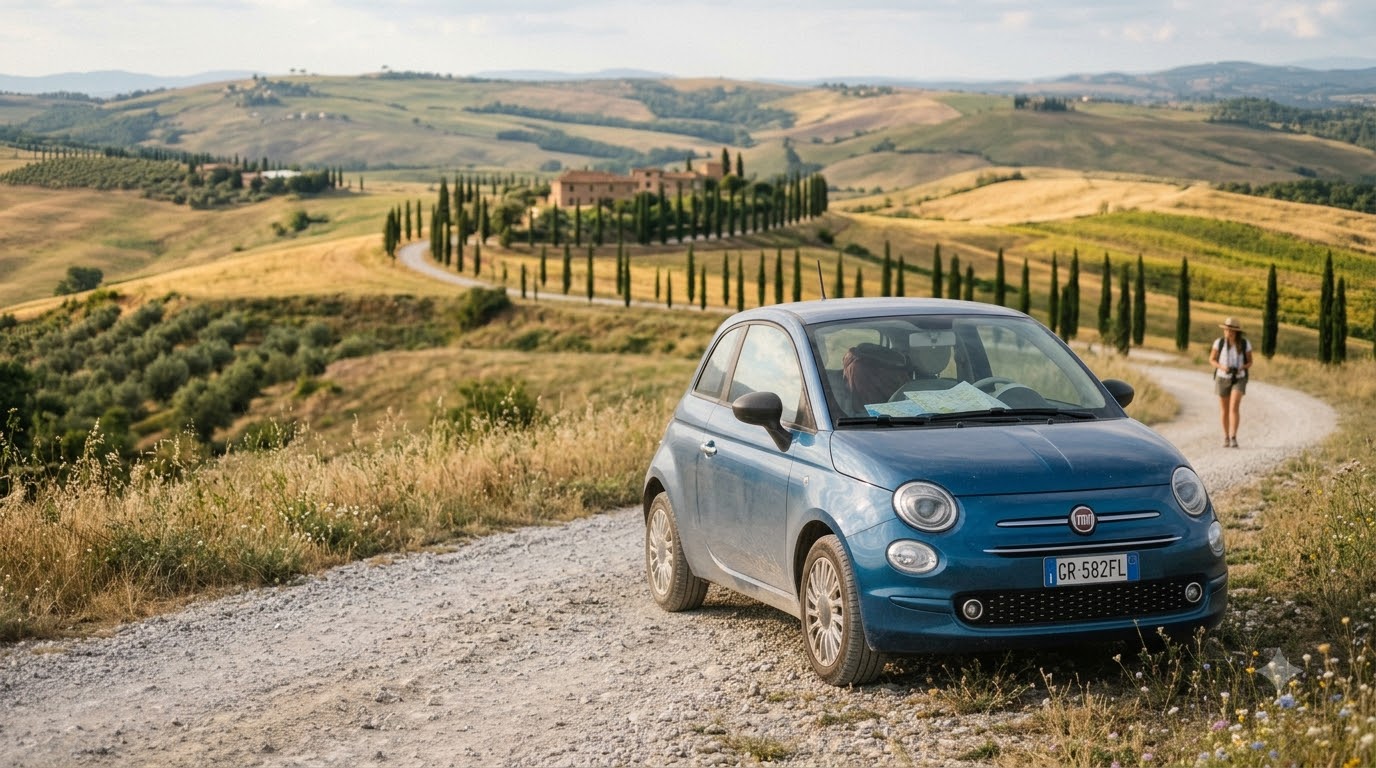
You need a car for the countryside but not for the cities, and the smart move is to rent one only for the rural leg of your trip. Florence, Siena, Lucca, and Pisa are all connected by regional trains and are compact enough to walk once you arrive. The car becomes essential the moment your plans include Val d’Orcia villages, Chianti wineries, hilltop viewpoints, or an agriturismo down a gravel road.
The hazard first-timers underestimate is the ZTL (Zona a Traffico Limitato), the camera-enforced restricted zone in the heart of nearly every Tuscan town. Florence enforces its ZTL aggressively, and Siena, Montepulciano, and Perugia all have their own.
Here is how we split transport on our trip, and how most first-timers should think about it:
- Florence, Pisa, Lucca, Siena city center: trains and your feet. No car, no parking, no ZTL risk.
- Chianti wineries and Val d’Orcia villages: rent a car; buses run but eat half your day on connections.
- Rental pickup: collect the car when you leave the cities, not on arrival, so you avoid paying for parking you never use.
- ZTL protection: give your hotel or agriturismo your license plate so they can register it if their entrance sits inside a zone.
- Returning the car: drop it at a train-station office (Florence Santa Maria Novella, for example) to skip the airport transfer.
For a full day-by-day breakdown of where a car helps and where it hurts, see our Tuscany itinerary, which maps the exact handover points.
The 7-Day Tuscany Itinerary
The plan we use ourselves — sent straight to your inbox.
- Day-by-day route
- Where to stay
- Real 2026 costs
Free · No spam · Unsubscribe anytime
Florence: where most first-timers begin
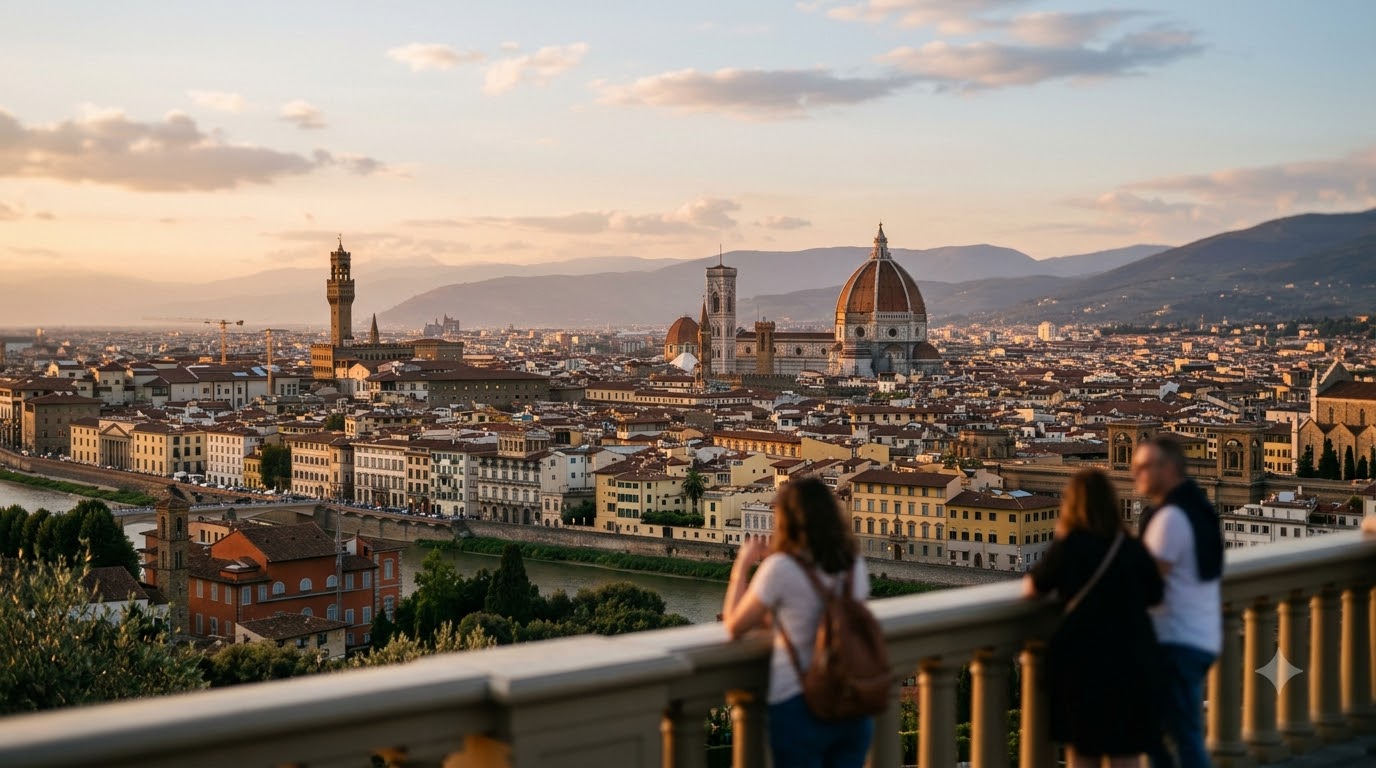
Florence is the logical start because it is the region’s transport hub and holds the two sights nobody wants to miss: the Uffizi and Brunelleschi’s dome. Book both before you arrive, because same-day walk-up entry in high season is unreliable.
| Florence sight | 2026 price | Note |
|---|---|---|
| Uffizi Gallery (same-day) | 25 EUR | Add 4 EUR booking fee |
| Uffizi Gallery (advance) | 29 EUR | Reserve ~1 month ahead Apr-Sep |
| Uffizi “Afternoon” ticket (from 4pm) | 16 EUR | Cheapest full-collection option |
| Brunelleschi Pass (dome + tower + baptistery + museum + crypt) | 30 EUR | 463 steps, no lift |
Sources: Uffizi Galleries and Duomo di Firenze official sites, 2026.
We spent one full morning in the Uffizi and still rushed the last rooms, so treat two to three hours as the minimum. The Afternoon ticket at 16 EUR is the value pick if you can face the galleries after 4pm, and the crowds thin noticeably by then. For the dome, the 463 steps are genuinely steep and narrow with no lift, so it is a hard pass for anyone with mobility or claustrophobia concerns; the bell tower next door offers a comparable view for less effort.
Florence works entirely on foot. From the train station Santa Maria Novella to the Duomo is a ten-minute walk, and the Uffizi, Ponte Vecchio, and Piazza della Signoria all sit within a further ten minutes of each other. If you want a structured list of what to prioritise beyond the two headline sights, our roundup of the best things to do in Tuscany ranks them by how much a first-timer actually gains.
Siena and San Gimignano: the two towns to add first
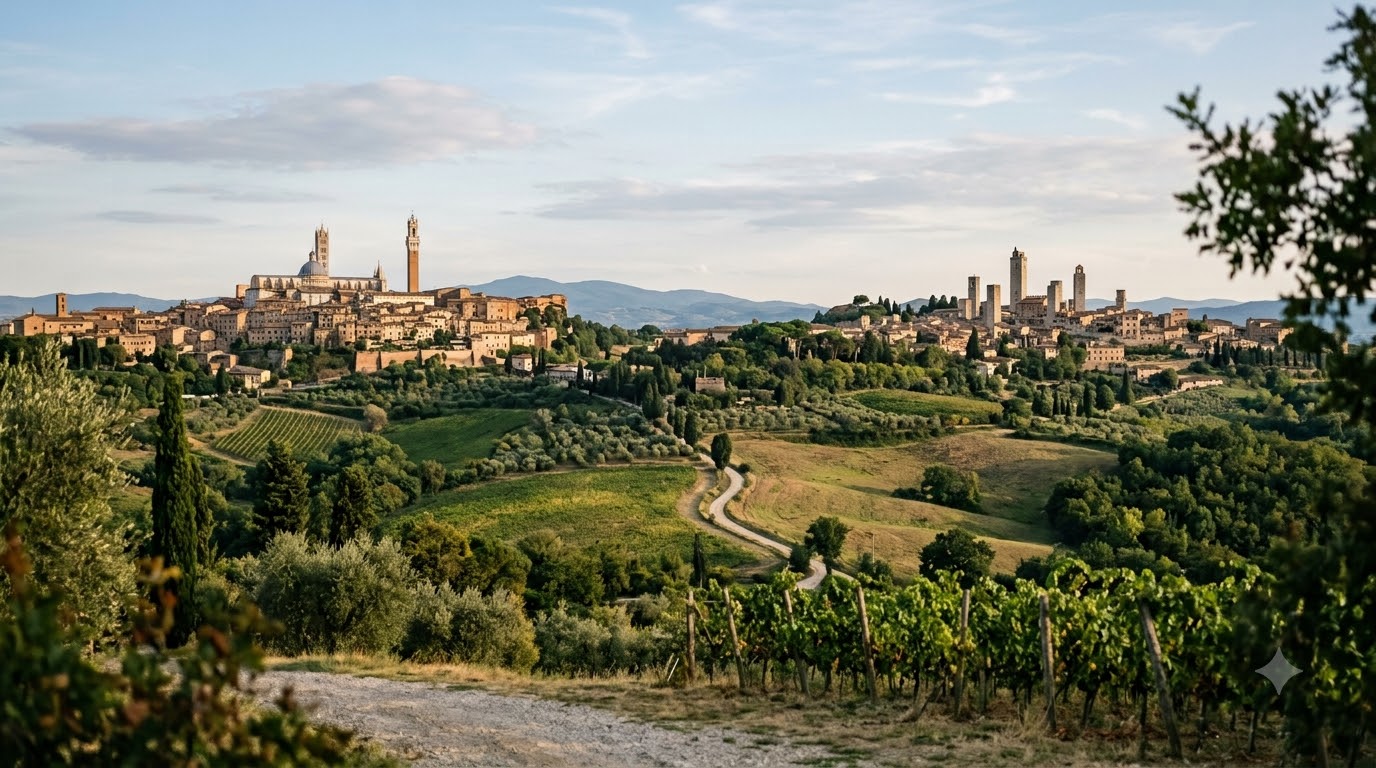
Siena and San Gimignano are the two hill towns most first-timers pair with Florence, and they deliver very different experiences. Siena is a full medieval city built around Il Campo, the shell-shaped square that slopes toward the Palazzo Pubblico. San Gimignano is smaller, defined by its surviving stone towers and its white wine.
Getting to Siena is easy without a car:
- By train: Florence to Siena is 51.7 km, about 1h30 on the regional line, from roughly 10 EUR one-way (Trenitalia, 2026).
- Train catch: Siena’s station sits in the lower town, a 20-minute uphill walk (or short bus) from Il Campo.
- By bus: the Flixbus/Autolinee coach is often faster door-to-door because it drops you near the center, not down the hill.
- In Siena itself: everything worth seeing is walkable; the Palazzo Pubblico’s Museo Civico holds Lorenzetti’s “Allegory of Good and Bad Government.”
San Gimignano is best reached by car or by a bus change at Poggibonsi, and it is where you first taste Vernaccia di San Gimignano, Tuscany’s most famous white and the first Italian wine ever granted DOC status. We climbed the Torre Grossa for the view over the Elsa valley and had lunch of pici pasta off the main square, away from the tour-group crush that peaks around midday. For a wider shortlist of which villages are worth your limited days, our guide to the best hill towns in Tuscany compares them by charm, crowds, and ease of access.
The 7-Day Tuscany Itinerary
Hour-by-hour plan, where to stay and what it really costs — free PDF.
Free · No spam · Unsubscribe anytime
Val d’Orcia: the Tuscany of the postcards
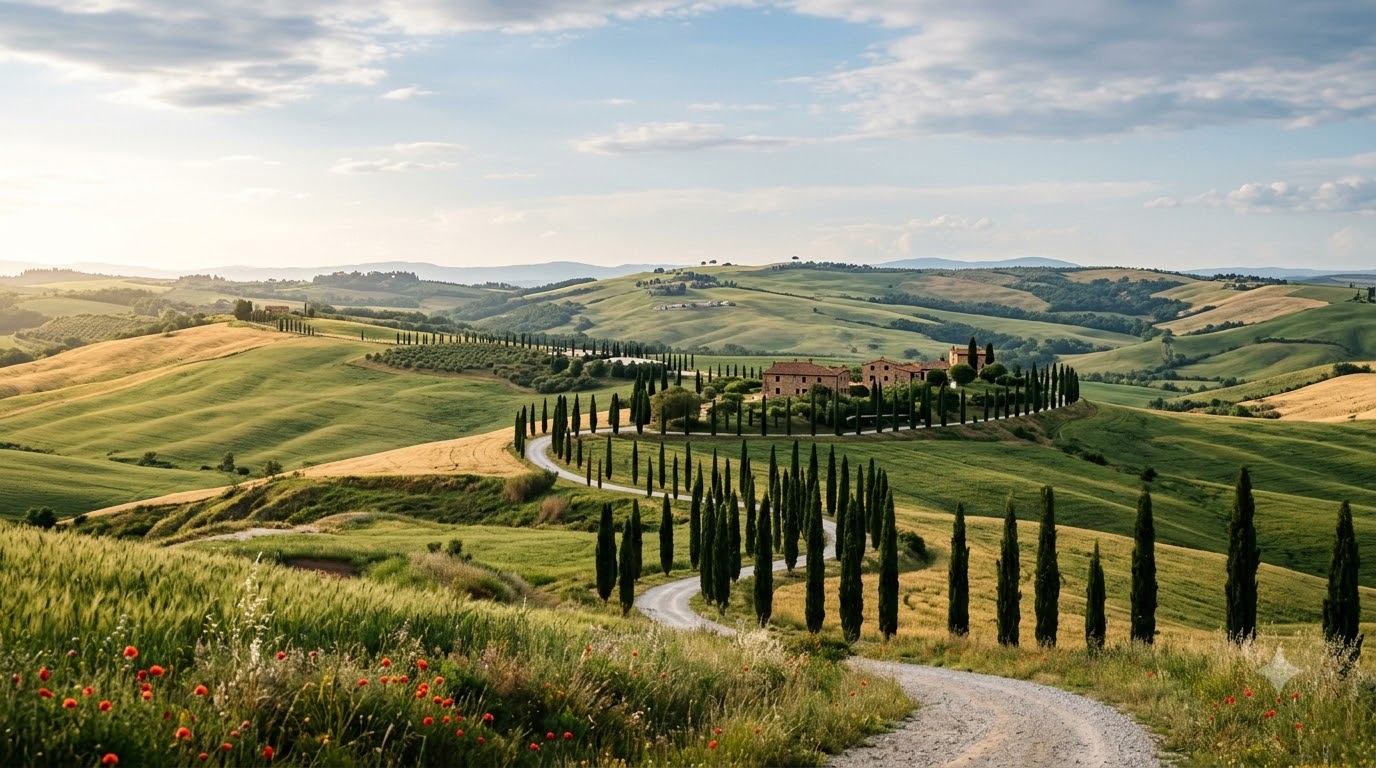
The Val d’Orcia is the landscape most people picture when they imagine Tuscany, and it is a UNESCO World Heritage Site for exactly that reason. Cypress-lined roads, isolated farmhouses on rounded hills, and the honey-colored towns of Pienza, Montalcino, San Quirico d’Orcia, and Bagno Vignoni sit within a short drive of each other. This is the part of the region where a car stops being optional.
We spent three mornings driving the valley and learned that the light does most of the work: shoot the famous cypress groves near San Quirico at sunrise or in the hour before sunset, when the tour vans have gone. A few concrete anchors for a first Val d’Orcia day:
- Pienza: a tiny Renaissance “ideal city” and the home of pecorino di Pienza sheep’s cheese; walk the Corso il Rossellino end to end in ten minutes.
- Montalcino: the hilltop town behind Brunello di Montalcino, one of Italy’s most prestigious reds.
- Bagno Vignoni: a village built around a steaming thermal pool in its main square, unusual and free to look at.
- San Quirico d’Orcia: the base closest to the iconic photographed cypress rows along the SP146.
- Public transport reality: buses reach the bigger villages via a change at Buonconvento, but connections are slow and infrequent, so a car saves hours.
If you are trying to decide which valley towns to prioritise against the more famous names, our comparison of the best hill towns in Tuscany sorts them by how much a first-timer gains per hour of driving.
Chianti wine: what first-timers should know
Chianti is the wine region between Florence and Siena, and its calling card is Chianti Classico, marked by the black rooster (gallo nero) seal. You do not need to be a wine expert to enjoy it; most estates along the SR222 “Chiantigiana” road welcome walk-in and pre-booked tastings, and the drives between them through vineyard-covered hills are half the pleasure.
A few grounded pointers for a first tasting day:
- Book ahead in peak season: May, June, September, and October fill fast, especially at named estates.
- Nominate a driver: Chianti’s roads are winding and the ZTL and drink-drive limits are strictly policed.
- September is harvest: the Vendemmia makes the estates busy and atmospheric but also more crowded.
- Look beyond Chianti Classico: the same trip can fold in Brunello (Montalcino), Vino Nobile (Montepulciano), and Vernaccia (San Gimignano).
We paired two Chianti estates in one afternoon and found that was the honest limit before the tastings blur together. Space them, eat between them, and treat the drive as part of the experience rather than dead time between stops. A tasting day slots neatly into a wider plan, and our day-by-day Tuscany itinerary shows where to fit Chianti between Florence and the Val d’Orcia without doubling back.
When to go and what it costs
The best time to visit Tuscany is May to June or September to October, when temperatures sit around 20 to 27 C with little rain and the countryside is at its greenest or golden. July and August are hot (sometimes touching 40 C) and busiest, while November is the wettest month and many rural businesses wind down.
| Season | Months | Conditions | Best for |
|---|---|---|---|
| Spring | May-Jun | 20-27 C, low rain | First visits, green hills, fewer crowds than summer |
| Peak summer | Jul-Aug | Up to 40 C, driest (Jul ~32 mm) | Coast and festivals, but hot and packed |
| Harvest fall | Sep-Oct | 20-27 C, comfortable | Wine, Vendemmia, golden Val d’Orcia |
| Off-season | Nov-Mar | Cool, Nov wettest (~130 mm) | Low prices, quiet cities, some rural closures |
Sources: Visit Tuscany and regional climate data, 2026.
On budget, Tuscany spans the full range. A rough daily guide for a first-timer, per person, sharing a room:
- Accommodation: 90 to 180 EUR for a mid-range city hotel or countryside agriturismo double.
- Car rental: roughly 40 to 70 EUR per day for a compact in shoulder season, plus fuel and paid parking.
- Sights: budget around 30 to 60 EUR per day if you visit a major museum or two, given Uffizi and Duomo pricing above.
- Meals: a trattoria dinner runs about 25 to 40 EUR with house wine; a countryside wine tasting is often 20 to 45 EUR.
Once you have fixed your dates and budget, match them to activities: our list of the best things to do in Tuscany flags which experiences are worth booking ahead in each season.
Frequently Asked Questions
Do I need to rent a car to see Tuscany?
Not for the cities. Florence, Siena, Pisa, and Lucca are all reachable by regional train and are walkable once you arrive. You need a car for the countryside: Val d’Orcia, Chianti wineries, and hilltop villages have slow, infrequent bus service. The common approach is to stay car-free in Florence, then rent only for the rural leg and return the car at a train-station office.
How many days do you need in Tuscany for a first trip?
Five to seven days suits most first-timers. That is enough for two to three nights in Florence with a day trip to Siena or San Gimignano, plus three to four nights at a countryside base in Chianti or the Val d’Orcia. Fewer than five days forces you to choose between the cities and the landscape rather than seeing both.
What is the best month to visit Tuscany?
May, June, September, and October offer the best balance of warm weather (20 to 27 C), low rainfall, and manageable crowds. September adds the Vendemmia grape harvest. Avoid July and August if heat and crowds bother you, since temperatures can reach 40 C, and expect rain and some rural closures in November.
How much does the Uffizi and the Duomo dome cost in 2026?
The Uffizi Gallery is 25 EUR for a same-day ticket or 29 EUR booked in advance, both with a 4 EUR booking fee added; an afternoon ticket from 4pm is 16 EUR. The Brunelleschi Pass, which covers the dome climb, bell tower, baptistery, museum, and crypt, is 30 EUR. The dome climb is 463 steps with no lift.
Is Siena a day trip from Florence or worth an overnight?
Siena works well as a day trip: it is 51.7 km from Florence, about 1h30 by regional train from around 10 EUR, and the direct bus drops you closer to the center. An overnight rewards you with Il Campo after the day-trippers leave and easier access onward into the Val d’Orcia, but a single full day covers the cathedral, the Campo, and the Museo Civico.
Tuscany asks you to slow down, and a first trip goes best when you resist the urge to see everything. Anchor a few days in Florence for the art, hand yourself a car for the hills, and leave room in the schedule for the drives, the long lunches, and the sunrise over the Val d’Orcia that no itinerary can quite plan for.