Disclosure: Some links in this guide are affiliate links. If you book or buy through them, we may earn a small commission at no extra cost to you — it helps keep our guides free.
Best Hill Towns in Tuscany: 7 to Visit in 2026
The best hill towns in Tuscany for 2026 are San Gimignano, Siena, Montepulciano, Pienza, Montalcino, Volterra, and Cortona. Each sits on its own ridge, keeps its own wine or craft, and rewards a slow half-day of walking. San Gimignano is famous for its medieval skyline, Siena for its Gothic cathedral and the Palio, and the Val d’Orcia trio of Montepulciano, Pienza, and Montalcino for Vino Nobile, pecorino, and Brunello.
This guide covers what each town is known for, how to reach it, and what to eat and drink once you arrive. The Val d’Orcia, which contains Pienza, Montalcino, and part of the Montepulciano landscape, has been a UNESCO World Heritage Site since 2004 (UNESCO World Heritage Centre). We have visited these towns across several trips, and the notes below reflect what actually worked on the ground, not just what the guidebooks promise.
Key Takeaways
– San Gimignano keeps 14 of its original 72 medieval towers and is the home of Vernaccia, Tuscany’s first DOC white wine (1966).
– Siena’s Palio horse race runs twice each summer, on 2 July and 16 August 2026, in the shell-shaped Piazza del Campo.
– Siena Cathedral entry costs 5 euros most of the year and 8 euros from late June to mid-October, when the marble floor is uncovered.
– Montepulciano, Pienza, and Montalcino sit within a 20 to 40 minute drive of each other and cover Vino Nobile, pecorino cheese, and Brunello di Montalcino.
– Cortona is reachable by direct train from Florence in just under 1.5 hours, with one-way regional tickets around 12 euros.**** We spent three separate mornings across these towns rather than trying to bundle them into one rushed loop. On our last visit we drove the Montepulciano-Pienza-Montalcino triangle in a single day and regretted skipping lunch in Pienza, so we came back the next spring just to eat pecorino on a Corso Rossellino terrace. The towns reward a second look.
What are the best hill towns to visit in Tuscany?
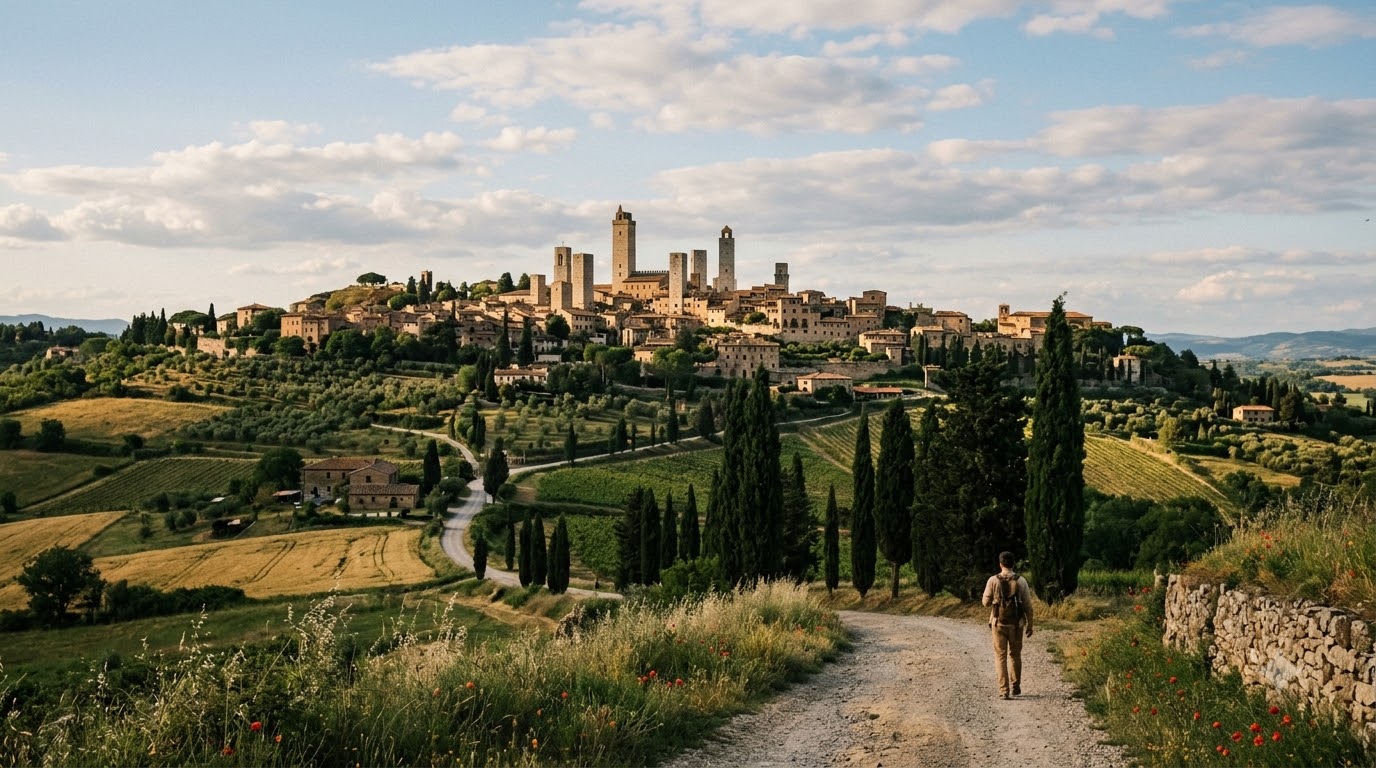
The best hill towns in Tuscany combine a walkable medieval center, a signature wine or food, and a viewpoint worth the climb. We rank them by how much they reward a first visit and how easy they are to reach without heavy planning.
- San Gimignano: Best for the tower skyline and Vernaccia white wine; busiest at midday, quiet by 6pm.
- Siena: Best for Gothic architecture and the Palio; the only town here that works as a full-day base.
- Montepulciano: Best for Vino Nobile red wine and cellars carved into the hillside.
- Pienza: Best for pecorino cheese and Renaissance town planning; the smallest and most walkable.
- Montalcino: Best for Brunello, one of Italy’s most prestigious reds, and its hilltop fortress.
- Volterra: Best for Etruscan and Roman history plus alabaster craft; the least crowded.
- Cortona: Best for “Under the Tuscan Sun” views over Lake Trasimeno and the easiest train access.
If you are planning a wider trip, pair this list with our complete Tuscany travel guide for regional logistics and our best things to do in Tuscany for activities beyond the towns themselves.
The 7-Day Tuscany Itinerary
The plan we use ourselves — sent straight to your inbox.
- Day-by-day route
- Where to stay
- Real 2026 costs
Free · No spam · Unsubscribe anytime
San Gimignano: the town of towers and Vernaccia
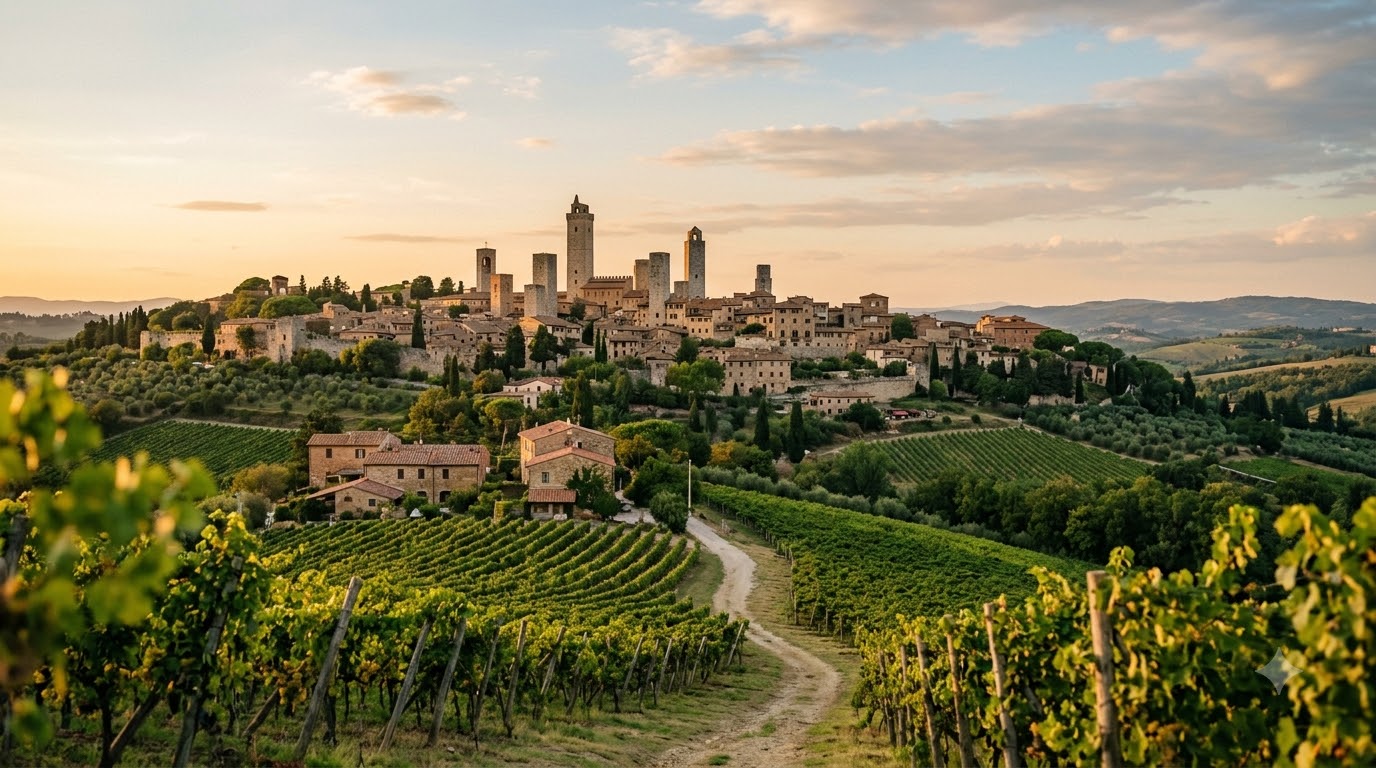
San Gimignano is best known for its medieval tower skyline, keeping 14 of its original 72 stone towers, which earned it the nickname “Medieval Manhattan.” The towers date to the 13th century, when rival families built them as symbols of wealth. The historic center has been a UNESCO World Heritage Site since 1990.
The town is also a wine destination. Vernaccia di San Gimignano became Italy’s very first DOC wine in 1966 and was elevated to DOCG status in 1993. It is a crisp, mineral white with floral notes, a rare thing in a region dominated by Sangiovese reds.
How to visit San Gimignano:
- Park in the paid lots outside the walls (Parcheggio P1 Montemaggio is closest) and walk in; the center is pedestrian-only.
- Climb the Torre Grossa, the tallest surviving tower at 54 meters, for the best rooftop view.
- Taste Vernaccia at a cellar in town; a typical guided tasting with Tuscan appetizers runs roughly 45 to 62 euros per person.
- Arrive before 10am or after 5pm to beat the day-trip crowds from Florence and Siena.
| Town | Signature product | Known for | Best time slot |
|---|---|---|---|
| San Gimignano | Vernaccia (white) | 14 medieval towers | Early morning / evening |
| Siena | Panforte, Chianti nearby | Piazza del Campo, Palio | Full day |
| Montepulciano | Vino Nobile (red) | Hillside cellars | Late morning |
| Pienza | Pecorino cheese | Renaissance planning | Lunchtime |
| Montalcino | Brunello (red) | Fortress, top reds | Afternoon |
| Volterra | Alabaster | Etruscan and Roman sites | Any time, low crowds |
| Cortona | Lake Trasimeno views | Under the Tuscan Sun | Half day |
Siena: Gothic grandeur and the Palio
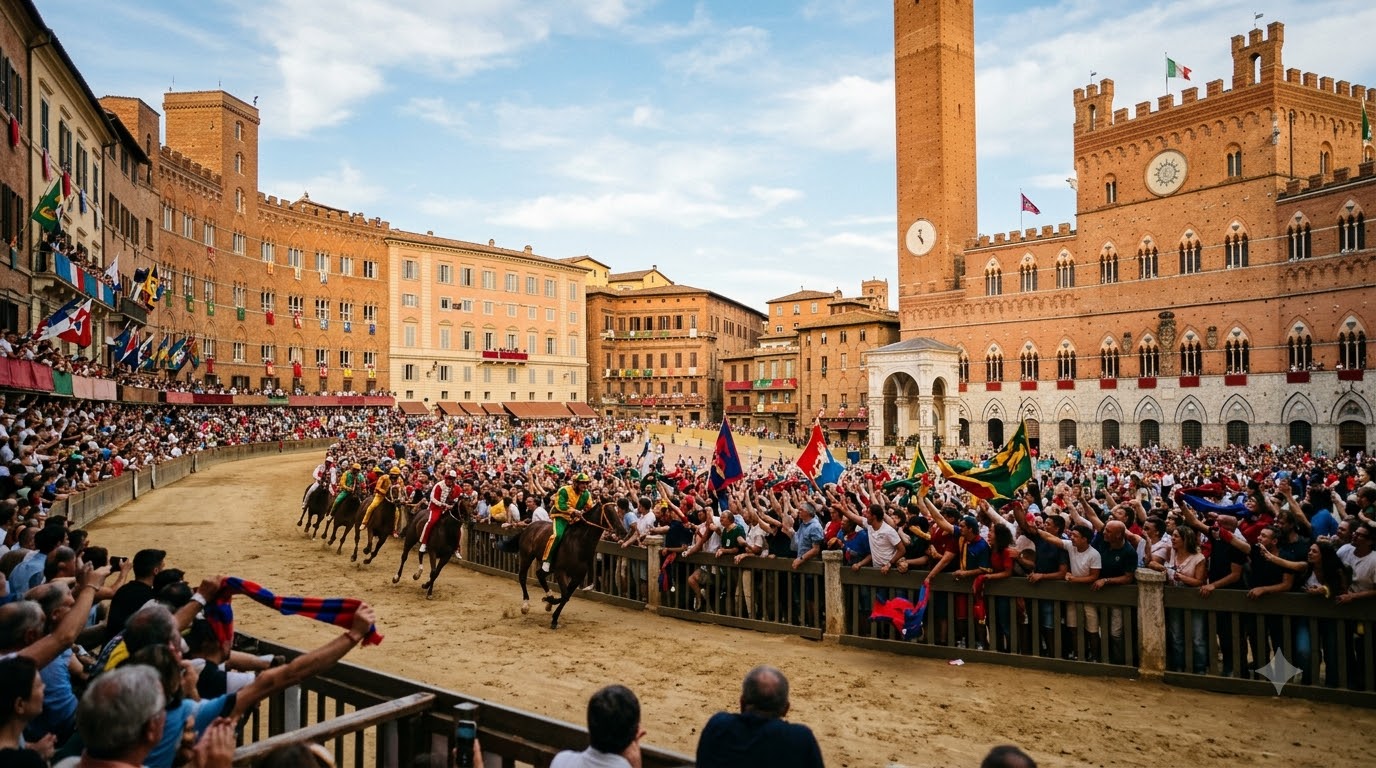
Siena is best experienced as a full day rather than a quick stop, because its Gothic core rewards slow wandering. The heart of the city is the Piazza del Campo, a shell-shaped square that slopes toward the Palazzo Pubblico and its 88-meter Torre del Mangia.
Twice each summer the square hosts the Palio, a bareback horse race between the city’s contrade (neighborhoods). In 2026 the two races fall on Thursday, 2 July (Palio di Provenzano) and Sunday, 16 August (Palio dell’Assunta). Standing in the center of the Campo is free, but you must arrive hours early; balcony and grandstand tickets sold through private windows start around 276 euros and climb into the thousands.
Siena Cathedral entry facts for 2026:
- Cathedral admission is 5 euros for most of the year (Opera della Metropolitana di Siena).
- Admission rises to 8 euros from 27 June to 31 July and 18 August to 15 October, when the inlaid marble floor is uncovered.
- A combined “OPA SI Pass” covering the cathedral, crypt, baptistery, and museum costs 14 euros for three consecutive days, or 16 euros during the floor uncovering.
- The floor of 56 marble panels is only fully visible during those uncovering windows, so time your visit if you want to see it.
For a structured multi-day route through Siena and the wine country, see our suggested Tuscany itinerary.
The 7-Day Tuscany Itinerary
Hour-by-hour plan, where to stay and what it really costs — free PDF.
Free · No spam · Unsubscribe anytime
Montepulciano: Vino Nobile and hillside cellars
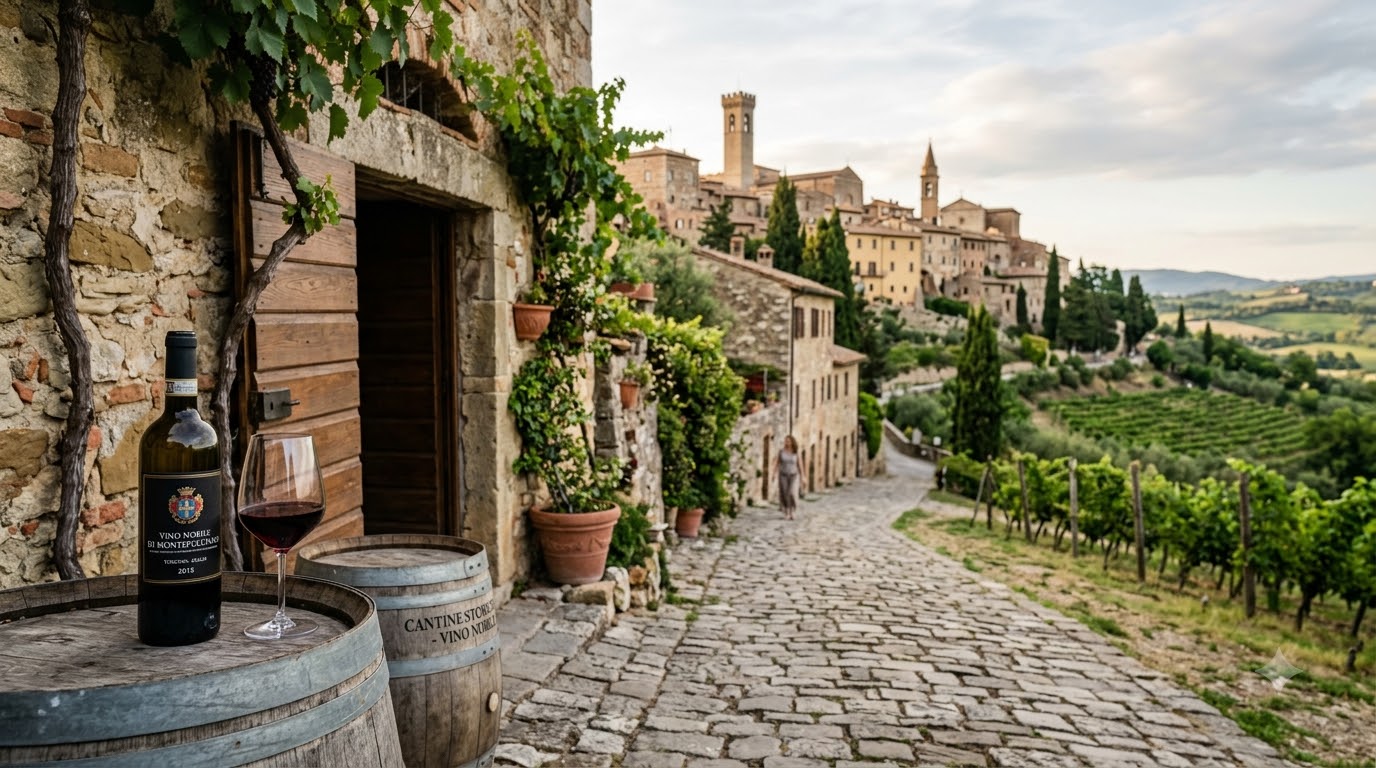
Montepulciano is best known for Vino Nobile di Montepulciano, a Sangiovese-based red that earned DOCG status in 1980, among the first Italian wines to do so. The town climbs a narrow limestone ridge, and its main street, the Corso, winds uphill past Renaissance palazzi to the Piazza Grande at the top.
What makes Montepulciano distinctive is the cellars. Many wine houses store barrels in cool underground caves carved directly into the hill, some connected by tunnels that predate the buildings above.
How to visit Montepulciano:
- Walk the Corso from Porta al Prato uphill; it is about 1.5 kilometers of steady climb to Piazza Grande.
- Step into a historic cantina such as those along the Corso for a free cellar walk before tasting.
- Pair Vino Nobile with pici, the thick hand-rolled pasta typical of southern Tuscany.
- Combine with Pienza, a 20-minute drive west, for a single southern Tuscany day.
We found the top of the Corso far quieter in the last hour before the shops close, when the tour groups have descended back to their coaches.
Pienza: the Renaissance town built for pecorino
Pienza is best known for pecorino di Pienza, a sheep’s-milk cheese, and for being an early example of Renaissance urban planning. Pope Pius II rebuilt his birth village in the 1460s as an “ideal city,” and the compact center around Piazza Pio II has changed little since. Pienza has been a UNESCO World Heritage Site since 1996.
The town is tiny, which is the point; you can cross it in ten minutes and spend the rest of your time eating.
Pienza food notes:
- Pecorino here ranges from fresco (young, soft) to stagionato (aged, sharp), often aged in walnut leaves or ash.
- The main street, Corso Rossellino, is lined with cheese shops offering free tastes before you buy.
- Walk the panoramic Via del Casello along the southern wall for the classic Val d’Orcia view of cypress rows.
- A wedge of aged pecorino typically costs a few euros per 100 grams at a town shop, cheaper than in Florence.
Pienza pairs naturally with both Montepulciano and Montalcino, each a short drive away, and all three appear in our best things to do in Tuscany roundup.
Montalcino: Brunello and a hilltop fortress
Montalcino is best known for Brunello di Montalcino, widely considered one of Italy’s greatest red wines. Brunello was among the first wines awarded DOCG status in 1980 and must be aged at least five years (six for Riserva) before release, which is why it commands premium prices.
The town itself is smaller and less busy than San Gimignano, crowned by a 14th-century fortress, the Fortezza, whose ramparts you can walk for views across the vineyards.
How to visit Montalcino:
- Enter the Fortezza; the enoteca inside pours Brunello and Rosso di Montalcino by the glass in a medieval setting.
- Taste Rosso di Montalcino (younger, cheaper) if you want the Sangiovese character without the Brunello price.
- Drive out to a nearby estate; many wineries sit in the countryside and require a car or a booked tour.
- Visit the Abbey of Sant’Antimo, a Romanesque church about 10 kilometers south, on the same trip.
| Wine town | Wine (grape) | DOCG since | Minimum aging | Style |
|---|---|---|---|---|
| San Gimignano | Vernaccia (white) | 1993 | None required | Crisp, mineral white |
| Montepulciano | Vino Nobile (Sangiovese) | 1980 | 2 years | Structured red |
| Montalcino | Brunello (Sangiovese) | 1980 | 5 years | Powerful, age-worthy red |
Volterra: Etruscan history and alabaster
Volterra is best for travelers who want history and craft without crowds, sitting high and isolated on a ridge that has preserved its original character. Its walls, acropolis, and the Porta dell’Arco gate are Etruscan, and the Guarnacci Etruscan Museum holds one of the finest Etruscan collections in Italy.
Volterra also has a well-preserved Roman theatre, built in the 1st century BC, and a long tradition of alabaster carving that you can watch in workshops around town.
Volterra highlights:
- The Roman Theatre is among the best-preserved in Italy and is visible for free from a viewpoint above it.
- The Guarnacci Museum displays Etruscan funerary urns and the elongated bronze figure known as the “Ombra della Sera.”
- Alabaster workshops sell carved lamps and bowls; watch artisans shape the translucent stone.
- Volterra sits farther from the main tourist track, so it stays quiet even in high summer.
Because it is off the main road between Florence and Siena, Volterra is easiest to reach with a rental car, which our Tuscany travel guide covers in detail.
Cortona: hilltop views and easy train access
Cortona is the best choice if you want a hill town reachable without a car, thanks to direct trains from Florence. The town gained fame from Frances Mayes’ memoir “Under the Tuscan Sun,” and it looks out over the Valdichiana plain toward Lake Trasimeno.
Cortona is one of the oldest hilltop settlements in Tuscany, with Etruscan origins, steep stepped lanes, and the central Piazza della Repubblica anchored by its town hall staircase.
Getting to Cortona in 2026:
- Direct trains run from Florence to Camucia-Cortona station about once an hour; the trip takes just under 1.5 hours.
- One-way regional tickets cost around 12 euros.
- The station sits about 3 kilometers below town; local buses meet the trains and climb to Piazza Garibaldi at the town entrance.
- From Piazza Garibaldi, walk out to the terrace for the panorama over the valley and lake.
We arrived once by train with no car and found Cortona the most self-sufficient of these towns for a day trip, since everything worth seeing is within the walls.
How many days do you need for Tuscany’s hill towns?
Plan two to four days to see the highlights of these hill towns without rushing. A car unlocks the Val d’Orcia trio in a single day, while train travelers can pair Siena and Cortona over two days.
Suggested pacing:
- One day, no car: Siena as a base, half a day walking the Campo and cathedral.
- Two days, no car: Add Cortona by direct train from Florence or Arezzo.
- Three days, with a car: Combine San Gimignano and Volterra one day, then the Montepulciano-Pienza-Montalcino triangle the next.
- Four days, with a car: Add slow time in the Val d’Orcia for wine estates and countryside drives.
For a day-by-day plan that stitches these together, see our full Tuscany itinerary.
Frequently Asked Questions
What is the most beautiful hill town in Tuscany?
San Gimignano is the most photographed for its medieval tower skyline, but Pienza and the wider Val d’Orcia often win for scenery, with cypress-lined roads and rolling wheat fields. “Most beautiful” depends on whether you value architecture (San Gimignano, Siena) or landscape (Pienza, Montalcino). Volterra wins for atmosphere without crowds.
Which Tuscan hill town is best for wine?
Montalcino for Brunello, Montepulciano for Vino Nobile, and San Gimignano for the white Vernaccia. All three hold DOCG status, Italy’s highest wine classification. If you can only pick one wine day, the Montepulciano-Pienza-Montalcino triangle lets you taste two great reds and eat pecorino between them, all within a 40-minute drive.
Can you visit Tuscan hill towns without a car?
Yes, but your options narrow. Siena and Cortona have good train links, with Cortona reachable direct from Florence in just under 1.5 hours for about 12 euros. San Gimignano is bus-accessible from Siena or Poggibonsi. The Val d’Orcia towns of Pienza and Montalcino have limited public transport, so a car or a guided tour is the practical way to reach them.
When is the best time to visit Tuscany’s hill towns?
Late April to June and September to October offer warm days, thinner crowds, and either spring greenery or the grape harvest. July and August are hot and busy, though Siena’s Palio (2 July and 16 August 2026) draws visitors who plan around it. Winter is quiet and cheap but many rural wineries and some restaurants reduce their hours.
How far apart are the main Tuscan hill towns?
The Val d’Orcia towns cluster tightly: Montepulciano to Pienza is about a 20-minute drive, and Pienza to Montalcino is roughly 30 to 40 minutes. San Gimignano and Volterra sit farther west, about an hour from Siena. Siena is a central hub, roughly an hour by car or bus from most of the others.
Tuscany’s hill towns are not interchangeable. Each one traded on something specific for centuries, whether wine, cheese, alabaster, or a horse race, and that specialization is still what makes a visit worthwhile. Pick two or three that match what you actually want to taste and see, give each a slow half-day, and the region opens up far more than a rushed loop of all seven ever could.