Disclosure: Some links in this guide are affiliate links. If you book or buy through them, we may earn a small commission at no extra cost to you — it helps keep our guides free.
Thailand wins for beach, budget and family holidays because a mid-range day costs AUD 89–149 · USD 64–107 against AUD 177–221 · USD 127–159 in Japan, so your money goes 1.5 to 2 times further. Japan wins for culture, food, cherry blossom and powder snow.
Flight times from Sydney are almost identical (about 10 hours to either), so the real decision comes down to budget, season and whether you want temples and trains or pools and islands.
| Factor | Japan | Thailand |
|---|---|---|
| Direct flight from Sydney | About 10h to Tokyo | 9h20–9h50 to Bangkok |
| Mid-range daily spend | AUD 177–221 · USD 127–159 (JPY 20,000–25,000) | AUD 89–149 · USD 64–107 (THB 2,150–3,600) |
| Backpacker daily spend | AUD 97 · USD 70 (JPY 11,000) | AUD 37–75 · USD 27–54 (THB 900–1,800) |
| Best season | Late March–April, Oct–Nov, Jan–Feb for snow | November–February (cool, dry) |
| Visa-free stay for Australians | 90 days | 30 days (since 15 Sept 2026) |
| Smartraveller level | Exercise normal safety precautions | Exercise a high degree of caution |
| Best for | Culture, food, skiing, couples | Beaches, families, budget travellers |
Flights from Sydney and Melbourne: closer than you think
Qantas, JAL and ANA fly Sydney to Tokyo non-stop in about 10 hours, landing at Haneda or Narita. From Melbourne, Qantas and JAL fly direct in roughly 10.5 hours. Jetstar’s Japan network runs mainly out of Cairns, Brisbane and the Gold Coast, so southern travellers often connect.
Thailand is a touch shorter. Thai Airways and Qantas fly Sydney to Bangkok in 9h20–9h50, and Thai Airways and Jetstar run direct from Melbourne in about 9h10.
Fares are where Thailand pulls ahead. Jetstar return fares from Melbourne to Bangkok have been listed from AUD 554 · USD 399, while Jetstar’s Japan sales have dipped to AUD 576–670 · USD 415–483 return, mostly ex-Cairns and Brisbane. Kayak puts the average return to Tokyo at AUD 1,252 · USD 902, so expect to pay more for Japan in cherry blossom and ski season.
Daily costs in yen and baht
The gap opens up the moment you land. In Japan, a hostel or capsule bed runs JPY 4,500–5,500 (AUD 40–49 · USD 29–35) and a business hotel room JPY 8,000–15,000 (AUD 71–133 · USD 51–96). A bowl of ramen costs about JPY 1,000 (AUD 9 · USD 6.40), and a konbini meal JPY 500–800 (AUD 4–7 · USD 3–5).
Intercity travel is the budget-killer. A reserved Shinkansen seat from Tokyo to Kyoto costs JPY 14,170 (AUD 125 · USD 90), and a 7-day Japan Rail Pass is around JPY 50,000 (AUD 442 · USD 318).
In Thailand, street meals cost THB 40–80 (AUD 1.70–3.30 · USD 1.20–2.40), dorm beds can be THB 200 (AUD 8 · USD 6), and private guesthouse rooms start around THB 400 (AUD 17 · USD 12). Bangkok, Phuket and the small islands cost more than Chiang Mai, and Christmas to New Year pushes room rates up everywhere. For the full picture, our Thailand daily cost breakdown puts a backpacker day at AUD 38-64 and flags where island and rooftop-bar prices bite.
For a full monthly breakdown, our guide to the best time to visit Thailand shows when prices and crowds peak.
Seasons: sakura and powder vs the Thai dry season
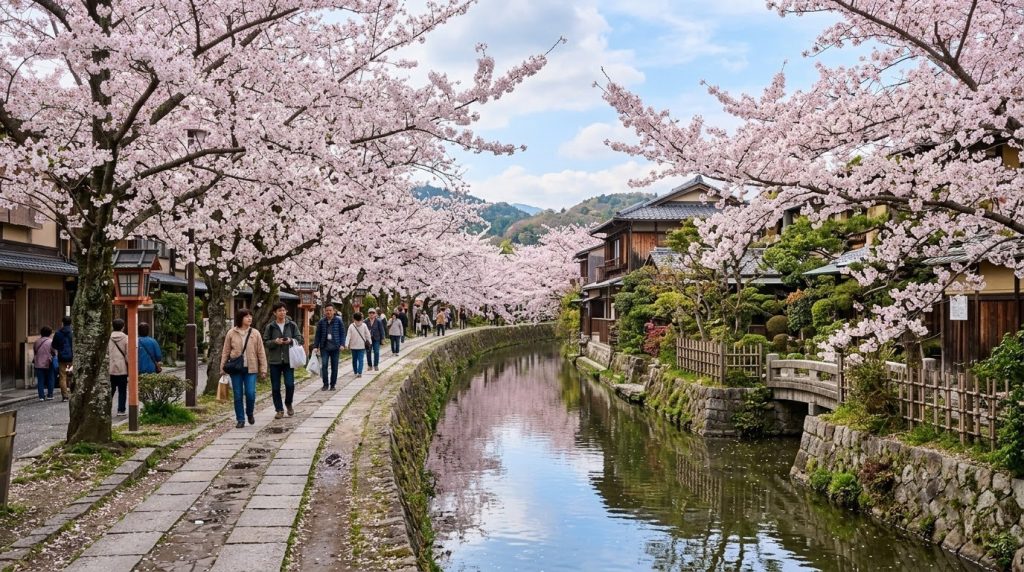
Japan’s big drawcards are tightly timed. In 2026, Tokyo’s cherry blossoms reached full bloom around 28 March and Kyoto’s around 1 April, and the trees only hold for one to two weeks. That window overlaps with the Easter school holidays, which is why fares spike.
Ski season runs December to March, and mid-January to mid-February is the best powder in Niseko and Hakuba. That neatly fits the Australian summer holidays, so you swap 35-degree heat for minus 10.
Thailand’s sweet spot is November to February: daytime temperatures of 25–32 degrees, low humidity and no monsoon on the Andaman side. March to May is brutally hot, and May to October brings the southwest monsoon. The Gulf islands (Koh Samui, Koh Phangan, Koh Tao) reverse the pattern and get their heaviest rain from October to early January, so check which coast you’re heading to.
Food and culture vs beaches and islands
Japan is a food trip first: department store food halls, standing sushi bars, izakaya. Add Kyoto’s temples, onsen towns and trains that run to the minute.
Thailand wins on beaches, island-hopping and value-for-money massages, with Bangkok’s street food as a real highlight. Our Bangkok travel guide covers the neighbourhoods worth eating your way through. If you’re torn between Thai cities and a different Southeast Asian base, the Hanoi vs Bangkok comparison shows how the two capitals stack up.
Verdict by traveller type
Families: Thailand. Resort pools, kids’ clubs and cheap private transfers matter more with children than temples do, and the cost gap is bigger with four people paying. Japan works for families with kids over about eight who can handle long walking days.
Couples: Japan, especially in late March or November. The ryokan, onsen and food scene make it the better one-off trip. Choose Thailand if what you want is a week of pool-and-beach downtime.
Budget travellers: Thailand, clearly. A backpacker day of THB 900–1,800 (AUD 37–75 · USD 27–54) is about half to a third of Japan’s JPY 11,000 (AUD 97 · USD 70).
First trip to Asia: Japan is more orderly; Thailand is kinder on the wallet. Smartraveller rates Japan “exercise normal safety precautions” and Thailand “exercise a high degree of caution”, with higher levels in some southern border areas.
Skiers: Japan, without contest.
If Thailand is winning but you want to compare it with a neighbour first, read our Thailand vs Vietnam breakdown.
Entry rules that catch Australians out
Australians can visit Japan visa-free for up to 90 days. Thailand cut its visa-free stay for Australians from 60 to 30 days on 15 September 2026, and you can apply in-country for an extension of up to 30 days. You must also complete the free Thailand Digital Arrival Card within 3 days before arrival.
Use only the official Immigration Bureau site, because copycat sites charge a fee. Check the current Smartraveller Thailand advice and Smartraveller Japan advice before you book.
Where to stay in Japan or Thailand
If you choose Thailand, three bases cover most trips:
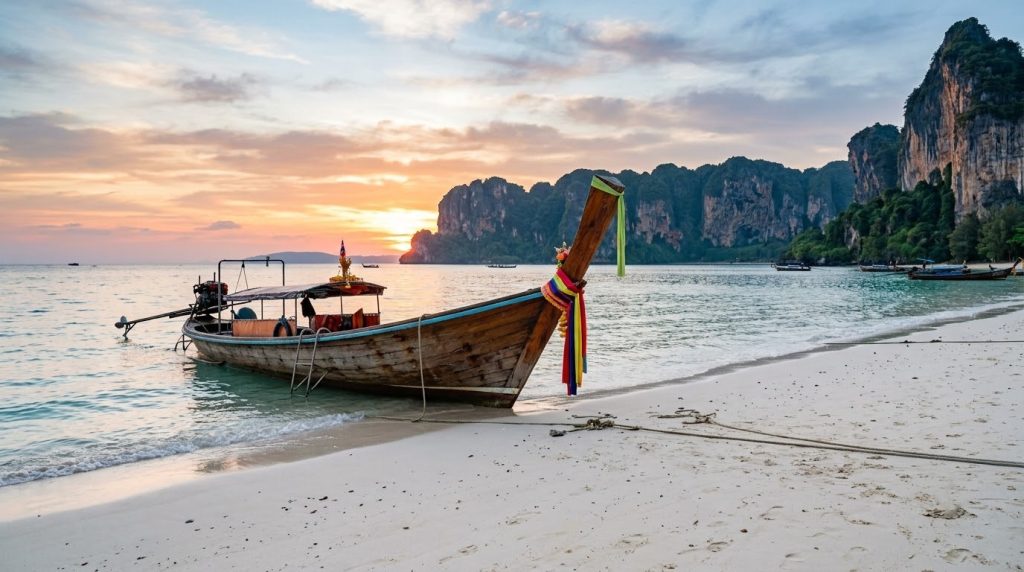
– Bangkok, Sukhumvit or Riverside: Sukhumvit has BTS access and nightlife and suits first-timers and couples. Riverside is calmer, good value at the top end and suits families. – Phuket or Krabi beaches: these suit families and beach couples from November to April. – Chiang Mai Old City: cheaper than the south and walkable. It suits budget travellers and food lovers.
Find your Thailand hotel on the map
Live prices from Booking, Airbnb and more — move the map or change dates to compare stays across Thailand.
See hotels in Japan →See hotels in Thailand →
Frequently Asked Questions
Is Japan or Thailand cheaper for Australians?
Thailand is cheaper on almost every line item. A mid-range day costs THB 2,150–3,600 (AUD 89–149 · USD 64–107) in Thailand against JPY 20,000–25,000 (AUD 177–221 · USD 127–159) in Japan. Street food at THB 40–80 is far cheaper than Japan’s JPY 1,000 ramen, and flights to Bangkok usually undercut flights to Tokyo.
Is the flight to Japan longer than to Thailand?
Only slightly. Sydney to Tokyo non-stop takes about 10 hours, and Sydney to Bangkok takes 9h20–9h50. From Melbourne, Tokyo is about 10.5 hours direct and Bangkok about 9h10. Thailand also has direct Jetstar flights from Melbourne. Jetstar’s Japan flights mostly depart from Cairns, Brisbane and the Gold Coast.
When is the best time to visit Japan vs Thailand?
Go to Japan in late March to early April for cherry blossom, October to November for autumn colour, or January to February for powder snow. Go to Thailand from November to February, when it’s cool and dry. The Gulf islands are the exception, with their wettest months from October to early January.
Is Japan or Thailand better for families?
Thailand suits most families better. Resorts with pools and kids’ clubs, cheap private transfers and lower daily costs add up quickly for a family of four. Japan works well for older kids who enjoy trains, theme parks and city walking, but expect to pay roughly double per day.
Do Australians need a visa for Japan or Thailand?
No, for short tourist trips. Japan gives Australians up to 90 days visa-free. Since 15 September 2026, Thailand gives 30 days visa-free, extendable in-country by up to 30 more days. You must also complete the free Thailand Digital Arrival Card within 3 days before arrival.