Disclosure: Some links in this guide are affiliate links. If you book or buy through them, we may earn a small commission at no extra cost to you — it helps keep our guides free.
Yes, Phuket is worth visiting for most Australians: Jetstar flies non-stop from Sydney in about 9 hours and from Melbourne in about 8 hours 50 minutes, and the December to April dry season brings calm, swimmable Andaman water. The catch is that the Phuket you get depends almost entirely on where you sleep.
Base yourself at Kata, Karon, Kamala or Nai Harn rather than Patong, avoid the west coast in September and October if swimming is the point, and the island earns its reputation.
| Worry | Reality | What to do |
|---|---|---|
| “It’s overdeveloped” | True of Patong, far less true of the south and northwest beaches | Stay at Kata, Karon, Kamala or Nai Harn |
| “Too far for a beach week” | Non-stop Jetstar from Sydney, Melbourne and Perth | Fly direct, skip the Bangkok connection |
| Monsoon, May to October | West-coast surf, rips and red flags; September is wettest | Go December to April, or switch to Samui mid-year |
| “It’s expensive” | Mid-range for Thailand, cheaper in low season | Check the cost guides linked below |
| Crowds | Heavy at Patong and the big day-trip piers | Book early boats, pick a quieter beach |
The honest answer: Phuket works if you pick the right beach
Phuket’s bad reputation mostly comes from Patong, home to the jet skis, touts, high-rises and the Bangla Road bar strip, and where many first-timers book because it has the most hotels. Take a short drive south or north and the island changes character: wider sand, family resorts, decent seafood and nights that end at 10pm instead of 3am.
What Phuket does better than most Thai islands is ease: direct flights from Australia, proper hospitals, hotels at every price, and boats to Phang Nga Bay and Phi Phi without a second flight. For a first Thailand trip or a family week away, that convenience beats an undiscovered beach. Our Phuket travel guide covers the island area by area if you want the full picture.
On cost, Phuket is mid-range by Thai standards and much cheaper in the low season; see is Phuket expensive for the honest comparison and our Phuket travel budget for daily figures.
Getting there from Australia: the direct-flight advantage
This is Phuket’s biggest edge over Krabi, Koh Lanta and Koh Samui for Australians. Jetstar operates non-stop services to Phuket from Sydney (around 9 to 9.25 hours, on a Boeing 787), Melbourne (around 8 hours 50 minutes) and Perth (around 6 hours 30 minutes). Schedules change by season, so check the current timetable before you lock in dates.
We could not confirm a current non-stop from Brisbane, so Queenslanders should plan on a connection. Reaching Krabi, Koh Lanta or Samui usually means a connection plus a ferry or transfer, which on a 7-day trip is a real cost in beach time.
Which beaches are worth it and which are overdeveloped
Most visitors only need to choose between five beaches.
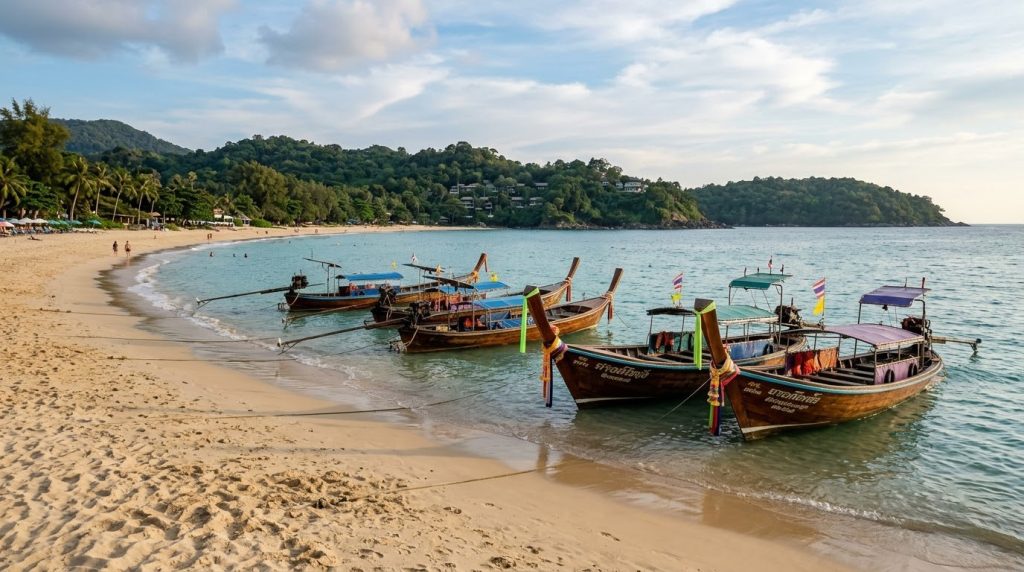
– Patong: the busiest beach, with crowds, noise and water that is not the cleanest. Visit for a night out, do not sleep there. – Kata: the pick for families and first-timers, with soft sand and plenty of restaurants minus Patong’s chaos.
Kata Noi, just south, is quieter again. – Karon: the widest central beach, so it rarely feels packed even in high season.
Good value, less atmosphere at night. – Kamala: north of Patong, a sensible middle ground between convenience and quiet, with a good spread of resorts and dining. – Nai Harn: clean, peaceful and surrounded by hills at the island’s southern tip. The trade-off is distance from the airport and main hubs.
For a short stay, our 5-day Phuket itinerary pairs a southern beach base with one day trip, and the best things to do in Phuket lists what is worth leaving the sunlounger for, from Old Town to Phang Nga Bay. With a full week, our 7-day Phuket itinerary fits both headline boat trips, a day in Old Town and a proper beach day without stacking tours.
The May to October monsoon on the Andaman side
Phuket’s Andaman coast takes the full southwest monsoon from May to October. Rain usually comes as a short afternoon or evening downpour after a sunny morning, and September and October are the wettest months.
The bigger issue is the sea. West-coast beaches, including Patong, Kata, Karon and Kamala, get strong surf and dangerous rip currents through the monsoon, and red flags mean no swimming. Australians who grew up swimming between the flags sometimes underestimate this, so treat a red flag in Phuket exactly as you would at Bondi.
The upside is price: hotels drop around 40 to 60%, with a luxury resort falling from about AUD 627 · USD 452 (THB 15,000) a night to AUD 251–335 · USD 181–241 (THB 6,000–8,000), according to Phuket 101’s rainy season guide. If you are happy to swim in the pool, a July school holiday trip can be good value.
Who should skip Phuket and go somewhere else instead
Think twice about Phuket if you fit one of these:
– You want quiet, local-feeling beaches: Koh Lanta is the better choice from November to April: slower, less built-up, with long empty beaches. Avoid it in the low season, when many smaller resorts and restaurants close. – You want dramatic scenery and climbing: Krabi, with its limestone cliffs, is more striking than anywhere on Phuket.
Remember it shares the same Andaman monsoon, so it is not a wet-season escape. – You are travelling June to September: Koh Samui, on the Gulf of Thailand, runs on the opposite cycle and stays largely dry while the Andaman coast is in monsoon.
Its own wet season peaks in November, according to Bangkok Airways’ Samui weather guide. – You only have 4 or 5 days and hate transfers: stick with Phuket. Every alternative here adds travel time.
Getting from the airport to your hotel without overpaying
Phuket International Airport sits in the island’s north, which means every beach base is at least a 30 to 60 minute drive away, and the taxi counter inside arrivals is where most first-timers overpay.
Official metered taxi fares run roughly AUD 33 · USD 24 (THB 800) to Patong, and closer to AUD 42–50 · USD 30–36 (THB 1,000–1,200) to Kata or Karon further south. Rates to Nai Harn or Kamala sit in a similar range to Kata given the comparable distance.
The counter inside the terminal sells a fixed-price voucher rather than a metered ride, which is simpler but sometimes a little higher than the street rate.
Ride-hailing apps such as Grab or Bolt occasionally undercut the taxi counter and show the price before you confirm, which removes any guesswork, though pickup is from a designated zone rather than right at the arrivals door.
Avoid any driver who approaches you inside the terminal before you reach an official counter; legitimate transport is booked at a staffed desk or through an app, not by someone walking up with a lower offer.
Shared minivan transfers are the cheapest option if you are not in a hurry, since they wait to fill seats before departing and typically make one or two other hotel stops on the way, adding time but cutting the fare well below a private taxi.
Whichever option you choose, agree the price or confirm the meter is running before the car pulls away from the curb, and keep a screenshot of your hotel’s address in Thai script to show the driver if the English name does not register.
See a different side of Phuket: Old Town and the Sunday market
Phuket Old Town, a short drive inland from the west coast beaches, is the clearest evidence that the island is more than a strip of resorts. Streets such as Thalang Road and Soi Rommanee are lined with Sino-Portuguese shophouses from the island’s tin-mining era, now painted in pastel colours and filled with cafes, galleries and boutique guesthouses rather than beach bars.
The Sunday Walking Street Market along Thalang Road is the best single reason to schedule an evening here.
It runs from around 4pm until roughly 9 or 10pm every Sunday, closing the road to traffic and filling it with food stalls, local handicrafts and live music, and it draws a mix of locals and visitors that feels different from the beach-town crowd.
Arrive by early evening before the busiest stretch between 6 and 8pm if you want to actually move through the stalls rather than shuffle.
Pair an Old Town evening with the Sunday market for an easy half day that works well as a rain-season backup plan too, since most of it is under cover or easy to duck out of if a shower passes through.
A handful of small museums and Chinese shrines around Old Town round out an afternoon here, and the area’s cafes are a good excuse to get out of the midday sun between the market opening and dinner.
Where to stay in Phuket
Choose the area first and the hotel second.
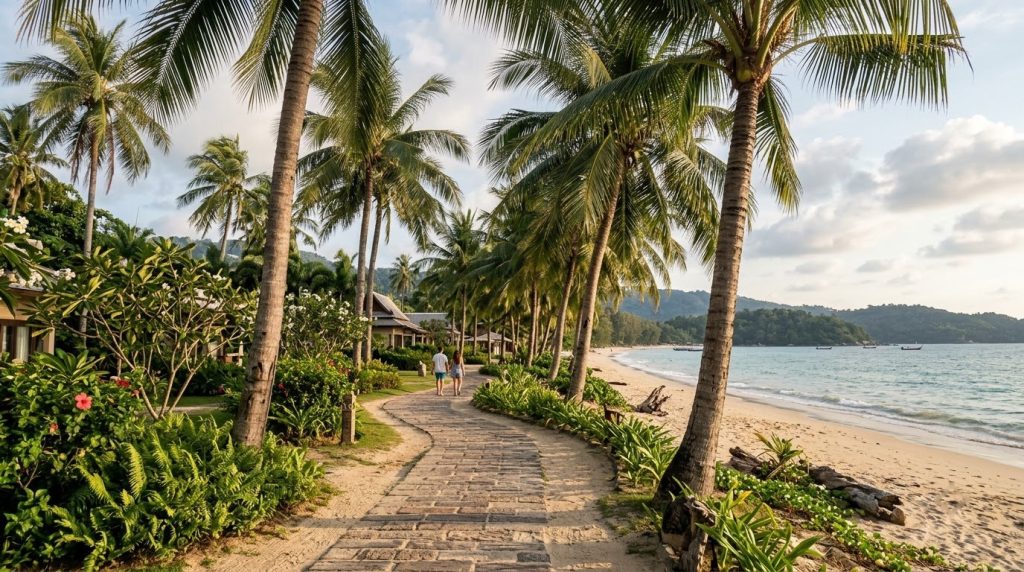
– Kata and Kata Noi: best for families and first-timers who want walkable restaurants and a good beach. Our budget hotels in Phuket roundup has plenty of options here. – Karon: best for value and space, good for couples who want a quieter base close to Kata. – Kamala or Nai Harn: best for couples and repeat visitors after a calmer stay; expect longer drives to nightlife.
Find your Phuket hotel on the map
Live prices from Booking, Airbnb and more — move the map or change dates to compare stays across Phuket.
Frequently Asked Questions
Is Phuket overrated?
Patong is overrated for most travellers, because it is crowded, noisy and over-commercialised. The rest of Phuket is not. Kata, Karon, Kamala and Nai Harn offer good beaches, easy dining and a far calmer atmosphere, while the island’s airport, hospitals and boat access to Phang Nga Bay make it one of the easiest beach holidays in Asia from Australia.
Is Phuket worth visiting in the rainy season?
It can be, if you set expectations. Rain usually arrives as short afternoon showers, and hotel prices drop by around 40 to 60%. The trade-off is the sea: west-coast beaches often fly red flags because of strong surf and rip currents, so plan on pool swimming. September and October are the wettest months.
How many days do you need in Phuket?
Five days is the sweet spot for a first visit: enough for two or three slow beach days, a Phang Nga Bay or Phi Phi boat trip, and an evening in Phuket Old Town. With only three or four days, skip the island-hopping day trips and pick one beach base to cut down on travel time.
Is Phuket or Krabi better for a first trip?
Phuket is better for most first-timers from Australia because of the direct Jetstar flights and the wider choice of hotels, restaurants and tours. Krabi has more dramatic limestone scenery and a slower pace, but reaching it usually needs a connection. Both sit on the Andaman coast, so they share the same May to October monsoon.
Is Phuket good for families with kids?
Yes, especially if you stay at Kata or Karon. Both have family resorts, wide sandy beaches and plenty of casual food, without Patong’s late-night bar scene. Visit between December and April for calmer water, always swim between the flags where they are posted, and choose a hotel with a good pool as backup.