Disclosure: Some links in this guide are affiliate links. If you book or buy through them, we may earn a small commission at no extra cost to you — it helps keep our guides free.
Malaysia sits at level 1 of Smartraveller’s 4 advice levels overall as of September 2026, “exercise normal safety precautions,” the lowest tier on the scale, and that rating has held since Smartraveller’s last update on 4 August 2026.
The one carve-out worth knowing before you book: the offshore islands and dive sites of eastern Sabah, from Lankayan Island down to Tawau, sit at a higher level over kidnapping risk, while Kuala Lumpur, Penang, Langkawi, Malacca and the rest of the country carry none of that warning.
Petty theft, not kidnapping or terrorism, is the everyday risk almost every visitor should actually plan around.
| Risk | How likely | How serious | What actually prevents it |
|---|---|---|---|
| Bag-snatching from passing motorbikes | Common in KL and Penang | Financial, occasional fall injury | Crossbody bag on the side away from traffic, phone off display near kerbs |
| Unmetered taxi scams | Common at tourist sites, airports | Financial | Book through Grab, agree fares before getting in unmetered cabs |
| Road traffic, motorbike rentals | Constant exposure | Injury, rarely fatal | Helmet, avoid renting a bike without local riding experience |
| Kidnapping, eastern Sabah offshore islands | Not present outside the ESSZone | Can be severe if it happens | Dive Sipadan and Mabul only with a licensed operator, skip unpatrolled overnight island stays |
| Violent crime nationwide | Uncommon | Low for tourists | Same normal-city precautions as any Southeast Asian capital |
Malaysia’s level 1 rating, and the one exception that matters
Most of Malaysia carries Smartraveller’s lowest advice tier, level 1 of 4, “exercise normal safety precautions,” the same baseline rating given to destinations most Australians would call low-risk. That covers Kuala Lumpur, Penang, Langkawi, Malacca, Kota Kinabalu and the vast majority of Sabah and Sarawak on the island of Borneo.
The exception sits specifically along the coast: Smartraveller lifts the mainland shoreline between Terusan and Tawau, including waterfront resorts and beaches, to level 2, “exercise a high degree of caution,” and raises the offshore islands, resorts and dive sites of eastern Sabah south of and including Lankayan Island to Tawau, to level 3, “reconsider your need to travel,” over the risk of kidnapping for ransom.
That zone includes the well-known dive destinations of Sipadan, Mabul and Kapalai near Semporna. Nowhere else in Malaysia carries either of those higher ratings.
If you’re weighing Malaysia against other Southeast Asia stops on a longer itinerary, our guides to whether Thailand and Vietnam are safe cover the same Smartraveller-level format, and Malaysia’s overall level 1 rating puts it a notch ahead of both on paper.
Petty theft and bag-snatching in KL and Penang
Bag-snatching from moving motorbikes, not violent crime, is the theft pattern that actually catches tourists out in Kuala Lumpur and Penang. A rider slows alongside a pedestrian walking near the road edge, grabs a shoulder bag or phone, and accelerates away before anyone can react.
It happens most often around Bukit Bintang, Chow Kit and the KL Sentral approach roads in Kuala Lumpur, and along Chulia Street and the Gurney Drive waterfront in Penang, wherever foot traffic runs close to slow-moving motorbike lanes.
The fix is simple and works almost every time: wear a crossbody bag on the side furthest from the road, not slung over one shoulder facing traffic, and keep your phone in a pocket or bag rather than in your hand while walking near a kerb.
Sitting at outdoor cafe tables right on the street edge with a phone face-up on the table is the other common setup for a snatch-and-run. None of this points to a crime wave; Kuala Lumpur and Penang see the same low-level opportunistic theft as any large Southeast Asian city, and it rarely escalates beyond a stolen phone or bag.
Taxis, Grab and road safety
Unmetered street taxis are the most common scam a visitor runs into, particularly at KLIA airport, KL Sentral and outside major tourist sites, where drivers quote inflated flat fares to tourists rather than switching on the meter.
Grab, Southeast Asia’s ride-hailing app, solves this cleanly: a fare is quoted and locked in before the driver arrives, there’s no haggling, and a cross-city ride in Kuala Lumpur typically runs around AUD 7 · USD 5 (MYR 20). We’d default to Grab over a street taxi in every city covered here.
Road traffic is the more mundane daily risk. Malaysia drives on the left, city traffic in KL and Penang moves in dense but generally orderly lanes, and the bigger exposure is renting a scooter or motorbike without prior riding experience, particularly on rural roads during the November-to-February monsoon season on the east coast, when sudden downpours cut visibility fast.
Check timing against a best time to visit Malaysia guide before planning a self-drive or self-ride leg, and always wear the helmet provided rather than the one most rental shops only offer if you ask.
Eastern Sabah and the ESSZone: the one place to plan around
The Eastern Sabah Security Zone, known as ESSZone, is a roughly 1,400km security corridor covering Sabah’s east coast, set up by Malaysian authorities in 2013 after a string of kidnappings linked to militants operating out of the southern Philippines and the Sulu Archipelago, including a fatal 2016 attack on a yacht in the waters between eastern Sabah and Sulu.
Since then, the zone has carried a 6pm-to-6am curfew on water travel across six coastal districts, permanent police and military outposts on Sipadan, Mabul and Kapalai, and regular patrols around Semporna, Lahad Datu and Sandakan.
No kidnapping incidents have been recorded inside the ESSZone since January 2020, which is the direct result of that security build-up rather than the risk having quietly disappeared on its own.
Practically, this means diving Sipadan or Mabul is still very much on the table, just through a licensed operator that holds an official Sabah Parks permit allocation and works inside the patrolled daytime window rather than an informal or unregistered outfit.
A full-day, three-dive Sipadan trip with a licensed operator, permit included, runs around AUD 422 · USD 304 (MYR 1,234) per diver in 2026, booked well ahead since Sabah Parks caps daily permits. Kuala Lumpur, Penang, Langkawi, Malacca and the rest of Sabah, including Kota Kinabalu and inland Borneo, sit entirely outside this advisory and carry none of its restrictions.
Cultural dress and solo travel
Malaysia is a majority-Muslim country with significant Chinese and Indian communities, and dress expectations shift by setting: modest clothing covering shoulders and knees is expected at mosques and in rural, conservative towns, while Kuala Lumpur’s malls, George Town’s cafe streets and Langkawi’s beach resorts are considerably more relaxed. Carrying a light scarf or sarong for mosque visits covers most situations.
Outside the ESSZone coastal strip, Malaysia has a low violent-crime rate and is a genuinely comfortable country for solo and female travellers, with well-lit, walkable city centres and a well-developed tourism infrastructure that Australians consistently rate highly for ease of travel.
Who should think twice about Malaysia
Malaysia is a poor fit for a narrow set of specific plans, not for cautious travellers generally. Anyone booking a Sipadan or Mabul dive through an unlicensed or unusually cheap operator should reconsider that choice specifically, since the security arrangement that keeps the ESSZone safe depends on licensed operators working within it.
Travellers hoping to island-hop or stay overnight on unpatrolled, non-resort islands along the eastern Sabah coast south of Lankayan should skip that plan and stick to the established, security-covered dive resorts instead.
Anyone renting a motorbike with no prior riding experience, especially for rural roads in monsoon season, is taking on avoidable risk that has nothing to do with Malaysia’s overall safety profile. None of this should discourage a first Malaysia trip; it simply means the caution belongs on one specific corner of the map rather than the whole country.
Choosing a safer base
Where you stay changes your daily exposure to petty theft more than any other single decision.
A base in KLCC, Bukit Bintang’s main strip or George Town’s UNESCO core keeps you on well-lit, patrolled streets with easy Grab access, while budget rooms on quieter back streets in Chow Kit or off the main tourist grid in Penang put you closer to the bag-snatching hotspots described above after dark.
If you’re deciding between Malaysia’s two most popular beach-and-heritage bases, our Penang vs Langkawi comparison breaks down safety, cost and vibe side by side before you book. Both islands feature in our Malaysia itinerary for 10 days, which pairs 3 nights in George Town with 2 on Langkawi.
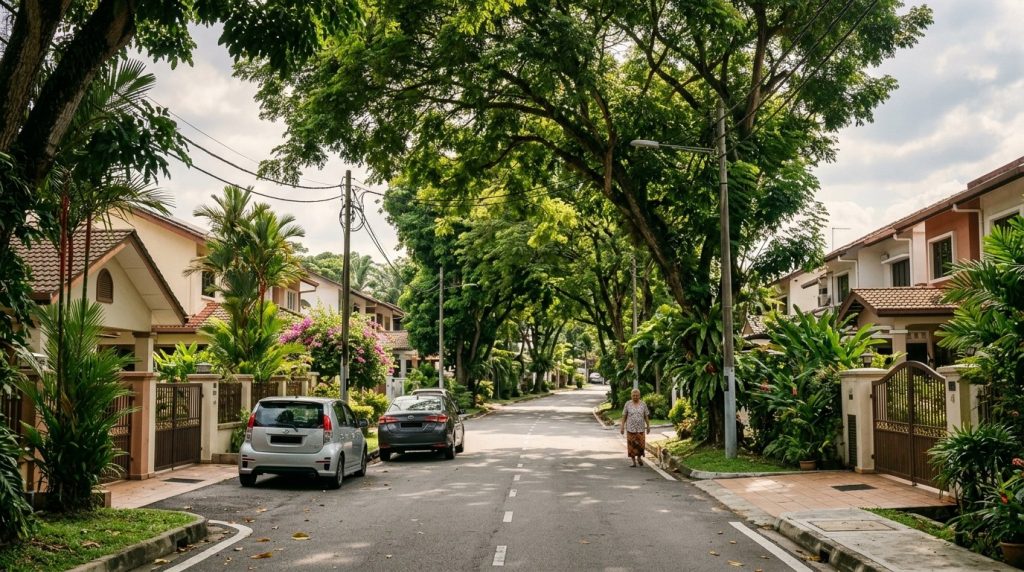
Find your Kuala Lumpur hotel on the map
Live prices from Booking, Airbnb and more — move the map or change dates to compare stays across Kuala Lumpur.