Is Vietnam Safe?
By TravelguidestipUpdated 5 min readHow we earn
Hotel buttons open Stay22 (Booking.com, Agoda and others) and tour buttons open GetYourGuide. We may earn a commission at no extra cost to you.
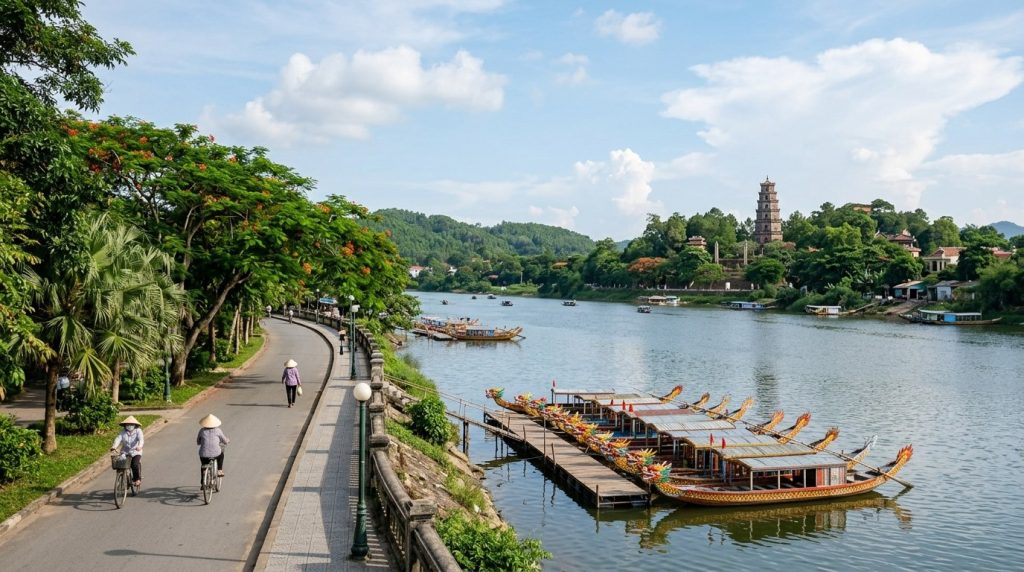
Vietnam is safe for tourists. The one exception that matters is traffic, which killed 8,515 people on Vietnam’s roads in the first ten months of 2025 alone.
| Risk | Reality | What to do |
|---|---|---|
| Traffic and crossing the road | Very high, daily · Can be fatal; 8,515 deaths nationwide Jan-Oct 2025 | Walk at a steady pace, never stop or run, let motorbikes flow around you |
| Motorbike phone/bag snatching | Common in Ho Chi Minh City, rarer in Hanoi · Usually loss of a phone or bag; injury only if you resist | Carry bags on the building side, keep phones off the kerb |
| Fake taxi and meter scams | Occasional, mainly airports and tourist strips · A short-term financial loss | Book Vinasun, Mai Linh or Grab through the official app only |
| Riding a motorbike on the wrong licence | Common tourist mistake · Voids travel insurance; fines and bike impoundment | Carry a 1968 Vienna Convention IDP or don’t ride |
| Violent crime against tourists | Low · Rare | Smartraveller’s normal precautions already cover it |
What is low-risk
- Lowest advisory level. Australia’s Smartraveller holds it at the lowest of its four advice levels, exercise normal safety precautions
- Hanoi is low-crime. Hanoi’s Numbeo crime index sits at just 33.84, on par with many mid-size European cities.
- Food and water. Food and water issues in Vietnam are common but rarely dangerous
What to watch
- Traffic. Traffic is the single biggest threat to visitors in Vietnam, not crime.
- Snatching in HCMC. Ho Chi Minh City carries meaningfully more petty crime risk than Hanoi
- Motorbike licence. Renting a motorbike in Vietnam is legal, but riding one without the correct paperwork strips out your travel insurance.
Vietnam is safe for tourists — Australia’s Smartraveller holds it at the lowest of its four advice levels, exercise normal safety precautions, and Hanoi’s Numbeo crime index sits at just 33.84, on par with many mid-size European cities.
The one exception that matters is traffic, which killed 8,515 people on Vietnam’s roads in the first ten months of 2025 alone and makes crossing the street in Hanoi or Ho Chi Minh City the country’s real daily hazard.
| Risk | How likely | How serious | What actually prevents it |
|---|---|---|---|
| Traffic and crossing the road | Very high, daily | Can be fatal; 8,515 deaths nationwide Jan-Oct 2025 | Walk at a steady pace, never stop or run, let motorbikes flow around you |
| Motorbike phone/bag snatching | Common in Ho Chi Minh City, rarer in Hanoi | Usually loss of a phone or bag; injury only if you resist | Carry bags on the building side, keep phones off the kerb |
| Fake taxi and meter scams | Occasional, mainly airports and tourist strips | A short-term financial loss | Book Vinasun, Mai Linh or Grab through the official app only |
| Riding a motorbike on the wrong licence | Common tourist mistake | Voids travel insurance; fines and bike impoundment | Carry a 1968 Vienna Convention IDP or don’t ride |
| Food and water | Very common, usually mild | A lost travel day, rarely dangerous | Bottled or boiled water, busy stalls with fast turnover |
| Violent crime against tourists | Low | Rare | Smartraveller’s normal precautions already cover it |
The real danger is the traffic
Traffic is the single biggest threat to visitors in Vietnam, not crime. Vietnam recorded 8,515 traffic deaths in the first ten months of 2025, according to Vietnam’s National Traffic Safety Committee data reported by Xinhua.
The country’s road fatality rate of 17.7 per 100,000 people also sits above the Asia-Pacific average of 15.2, per the Asian Transport Observatory’s 2025 road safety profile.
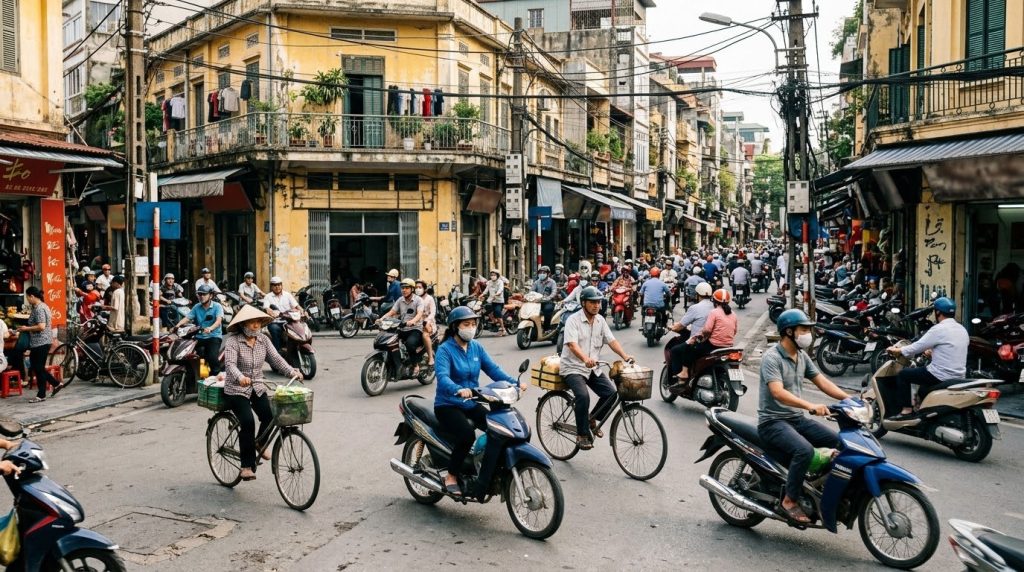
Motorbikes dominate Vietnamese streets and rarely stop for pedestrians, which is why guides describe crossing the road in Hanoi’s Old Quarter or downtown Ho Chi Minh City as a genuine skill rather than a formality.
The technique that actually works is to start walking at a steady, predictable pace and let the traffic flow around you, since stopping or running is what causes collisions.
Riders also weave more through flooded streets during the wet season, so travellers planning around the best time to visit Vietnam should treat the July-to-September storms as a traffic-safety factor, not just a packing decision.
Scams and bag-snatching, city by city
Ho Chi Minh City carries meaningfully more petty crime risk than Hanoi, and the two cities need different habits. Numbeo’s Crime Index rates Ho Chi Minh City at 50.46, classed as Moderate, against Hanoi’s 33.84, classed as Low.
That gap lines up with the pattern most visitors report: motorbike-based phone and bag snatching concentrated on Ho Chi Minh City’s District 1 and District 3 pavements. Thieves ride pillion, grab a phone or bag from a distracted pedestrian near the kerb, and disappear into traffic before anyone can react.
Smartraveller’s specific advice is to carry bags on the side away from the road, keep phones out of your hand while walking near traffic, and be ready to let go of an item rather than fight for it.
The other recurring scam is the fake taxi, where a cab painted to resemble Vinasun or Mai Linh runs a rigged meter, so book only through the official apps or a marked, numbered car from those two companies.
If you are mapping out where to spend your Hanoi days, building a 3-day Hanoi itinerary around well-lit, well-trafficked streets after dark cuts exposure to both scams without cutting into what you see.
Renting a motorbike, licences and insurance
Renting a motorbike in Vietnam is legal, but riding one without the correct paperwork strips out your travel insurance. Vietnam only recognises International Driving Permits issued under the 1968 Vienna Convention on Road Traffic.
Australia is not a party to that convention, so the IDP issued by the Australian Automobile Association and its state clubs, including the NRMA and RACV, is printed under the older 1949 Geneva Convention instead. Vietnamese police and most insurers treat a 1949-convention IDP as no licence at all.
Riding without a permit Vietnam recognises can bring fines from AUD 429 · USD 309 (VND 8,000,000) up to AUD 536 · USD 386 (VND 10,000,000), plus on-the-spot bike impoundment.
The insurance consequence matters more than the fine: every mainstream travel insurer writes motorbike cover as contingent on holding a licence valid for that vehicle in that country, so an Australian car licence or an uncertified 1949-convention IDP will not satisfy a claims assessor after a crash.
The workable options are to hire a driver instead of self-riding, to arrange a Vietnamese motorbike licence in advance through a specialist agency, or to accept that a crash while unlicensed comes entirely out of pocket.
Food, water and the small stuff
Food and water issues in Vietnam are common but rarely dangerous, and they matter far less than the traffic. Street food stalls with high customer turnover and visibly hot cooking oil are the safer bet over pre-cooked dishes sitting out at room temperature. Bottled or boiled water avoids the tap-water upset that catches out most first-time visitors. Street food is also the cheapest meal going, and our Vietnam price guide for Australians puts a bowl of pho at AUD 2-3.50.
Scalds from tipped-over charcoal braziers and steaming broths are the other small, real hazard at cramped street-food seating, so give hot pots and portable stoves a wide berth when tables are packed close together.
None of this compares to the traffic or scam risks above in either likelihood or consequence, which is why it sits last on this list rather than first.
Who should think twice about Vietnam
Vietnam is a poor fit for travellers who cannot manage the constant, unassisted road-crossing that Hanoi and Ho Chi Minh City demand, including some wheelchair users and anyone with a mobility condition that prevents quick, steady walking.
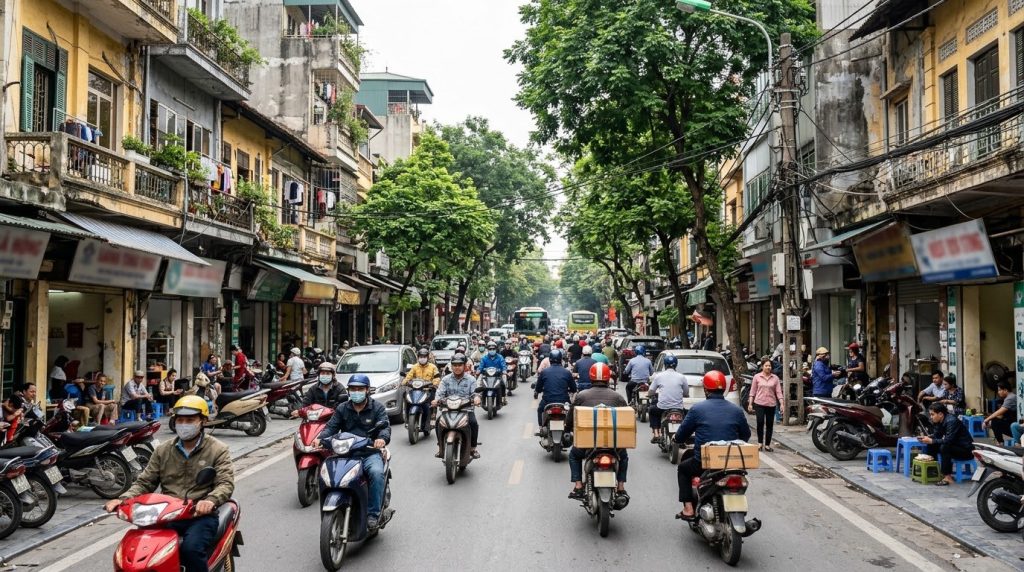
It is also the wrong trip for anyone planning to self-ride a motorbike who is unwilling to sort out a genuinely valid IDP first, since riding on an invalid licence turns an ordinary accident into an uninsured one.
Parents travelling with toddlers or young children who cannot reliably hold a hand through moving traffic should expect the two big cities to be more stressful than relaxing. None of this rules out Vietnam altogether.
It argues for building a trip around calmer traffic instead of the capital’s chaos, and Da Nang and the central coast run noticeably quieter streets than either Hanoi or Ho Chi Minh City.
Choosing a safer base
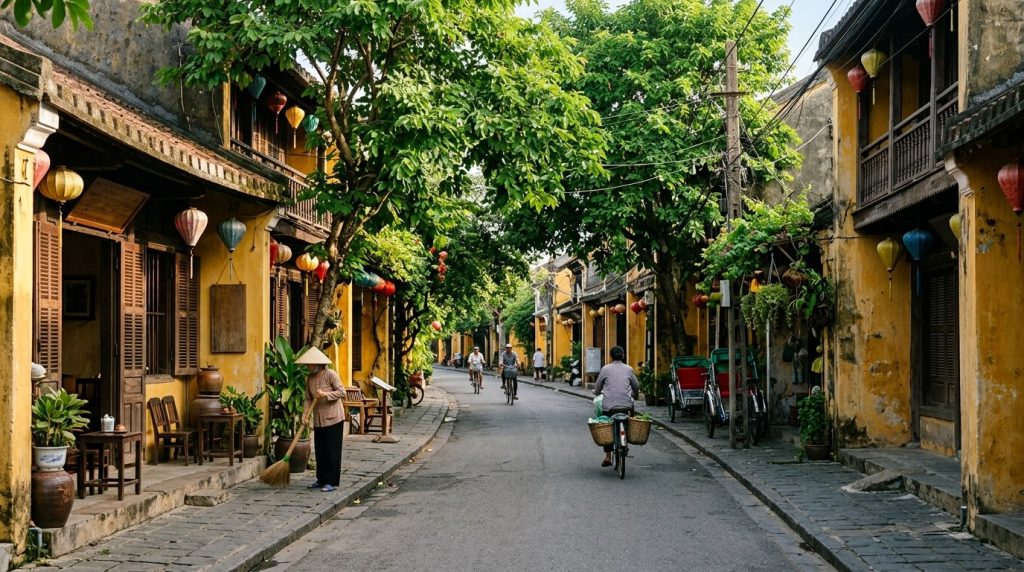
Where you sleep in Vietnam changes your daily traffic exposure more than almost any other single choice. In Hanoi, staying inside the Old Quarter but one or two streets back from Hang Bac or Ma May keeps you within walking distance of restaurants and sights while cutting down the number of major-road crossings you make each day.
See the best hotels in Hanoi for specific picks in those quieter pockets. Use the map below to compare live prices across neighbourhoods and pick a base that keeps you off the main arteries.
Find your Vietnam hotel on the map
Live prices from Booking, Airbnb and more — move the map or change dates to compare stays across Vietnam.