Is Lombok Worth Visiting? (2026)
By TravelguidestipUpdated 10 min readHow we earn
Hotel buttons open Stay22 (Booking.com, Agoda and others) and tour buttons open GetYourGuide. We may earn a commission at no extra cost to you.
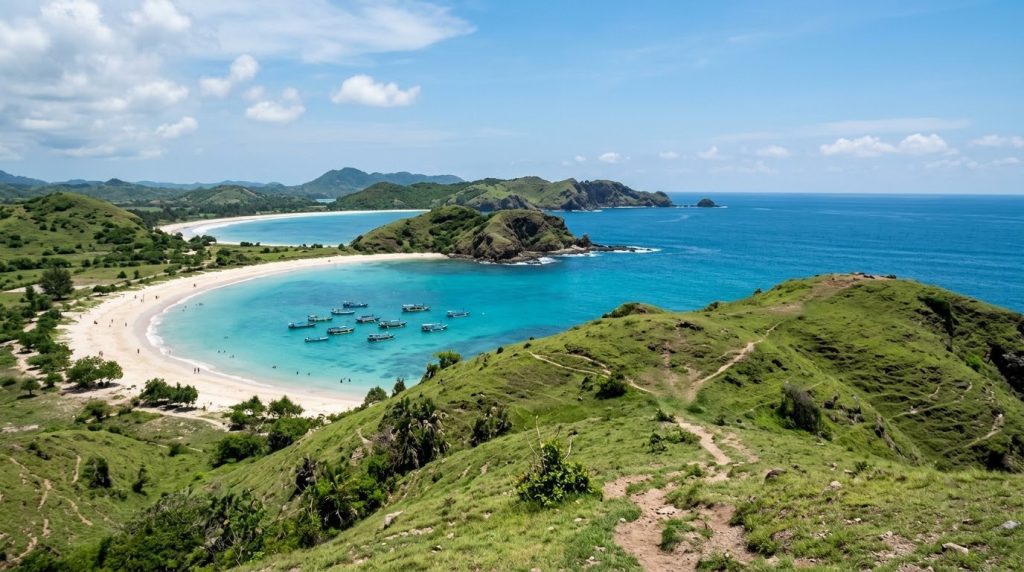
Lombok is worth visiting if you have at least four days free after Bali and can absorb one short flight or a four-to-five-hour ferry crossing, because it delivers a 3,726-metre volcano, dry-season beaches with a fraction of Bali’s crowds, and rooms running 20 to 30 percent cheaper for the same standard of room.
It is not worth visiting if your whole Indonesia trip runs under a week or you won’t add a travel day at each end, because the crossing eats the time a short break can’t spare.
| Traveller type | Worth it? | Nights to give it | Why |
|---|---|---|---|
| Surfers | Yes | 4-6 | Desert Point and Selong Belanak break with a fraction of Bali’s lineup crowds |
| Divers and snorkellers | Yes | 3-5 | Gili Islands visibility hits 25-30m in July-August, ahead of Bali’s north coast |
| Rinjani trekkers (April-December) | Yes, in season | 3-4 | A 3,726m summit and crater lake with no Bali equivalent |
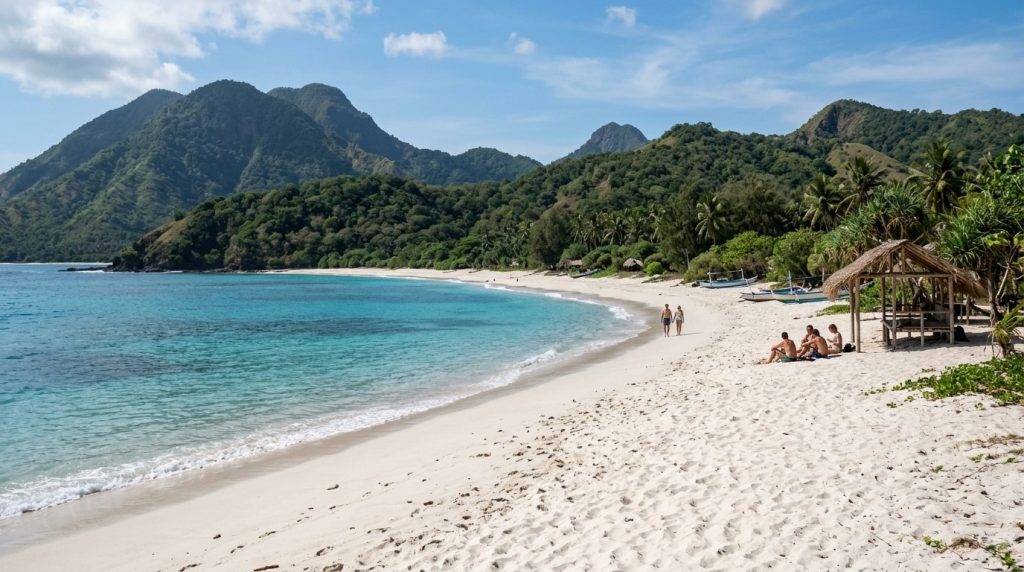
| Couples wanting quiet beaches | Yes | 3-4 | Gili Meno and Kuta Lombok’s bays sit empty next to Seminyak |
| Budget travellers on a 2+ week trip | Yes | 3-5 | Guesthouses and food run 20-30% cheaper than comparable Bali listings |
| First-timers with under 7 days total | No | 0 | The crossing costs a travel day each way a short trip can’t spare |
| Families with young kids | Maybe | 2-3 | Fewer kid-focused resorts and a longer run to a full hospital than Bali |
| Nightlife and fine-dining travellers | No | 0 | Nothing on Lombok matches Canggu or Seminyak outside Gili Trawangan |
What Lombok Has That Bali Does Not
Mount Rinjani is Lombok’s single biggest edge over Bali: a 3,726-metre active volcano with a crater lake, Segara Anak, that Bali has no equivalent for at any elevation.
The park closes annually from 1 January to 31 March, and trekking normally runs through December once the season reopens in April, but check the Rinjani season and closure calendar before booking permits, because the trail can shift to limited operation even inside the open season during dry-season fire-risk windows.
A standard two-day, one-night guided package to the crater rim runs AUD 271 · USD 195 (IDR 3,438,000), including guide, porter, and park fees.
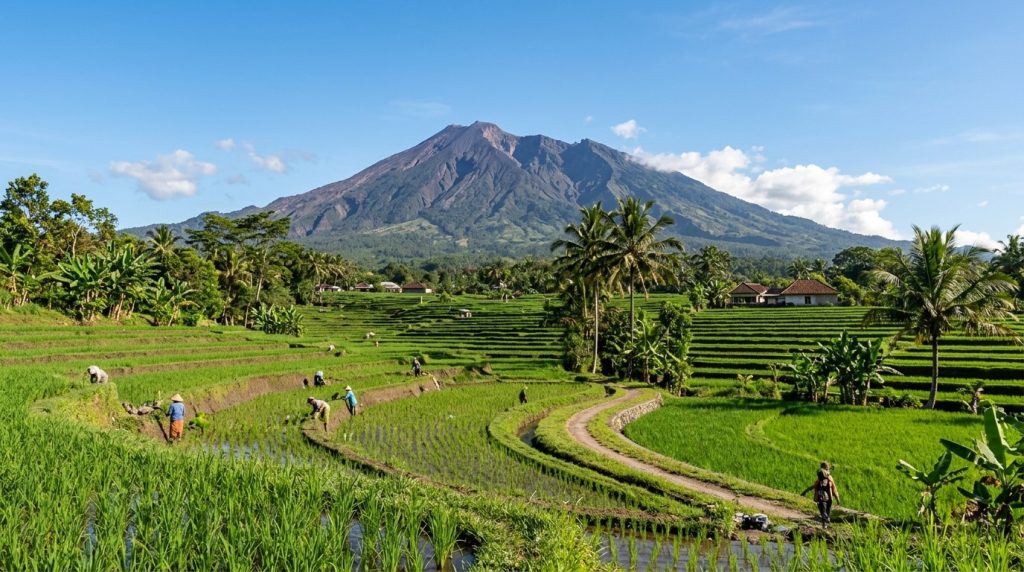
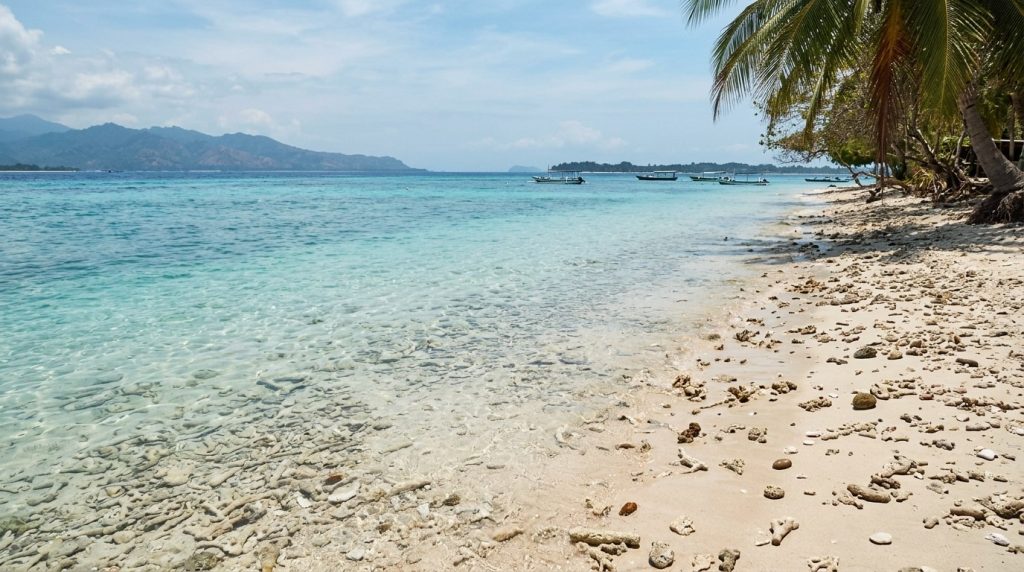
Surf and dive access is the second gap. Desert Point at Bangko-Bangko is rated one of the longest left-hand barrels in the world and rarely gets the crowd pressure of Bali’s Uluwatu or Canggu breaks. Gili Islands water visibility reaches 25-30 metres in July and August, ahead of what divers typically get off Bali’s north coast, and hawksbill turtles are a regular sighting at Gili Meno’s Turtle Point.
The infrastructure story is also shifting faster than most guides admit. The Pertamina Mandalika International Circuit on the south coast now hosts real international motorsport, including the GT World Challenge Asia round in May 2026, and Lombok International Airport’s expansion has lifted capacity to roughly 7 million passengers a year, with a 17km bypass linking the airport to the circuit in about 20 minutes.
That investment is real, but it is concentrated on a narrow south-coast corridor, and it hasn’t reached most of the island yet.
What Is Genuinely Harder in Lombok
Medical care is the sharpest practical downside. Lombok’s hospitals handle routine care, but a serious injury on Rinjani or a bad reef cut on the Gilis can mean evacuation to Bali or Singapore, which World Nomads prices at up to AUD 27,760 · USD 20,000 (IDR 352,620,000), a strong argument for trekking-rated travel insurance rather than a basic plan. Bali’s hospital network is denser and closer to its tourist zones by comparison.
Getting around is the second friction point. Outside Mataram, Senggigi, and the Mandalika corridor, roads are narrower and less consistently paved, ATMs thin out fast in North Lombok and rural villages, and English is spoken less widely than in Bali’s tourist strips. Our honest Lombok risk check explains why scooters, rip currents and overloaded boats hurt far more visitors here than crime does.
Gili Island ferries run on open water and get cancelled or delayed during November-March swells, which can strand a tight itinerary for a day or more. None of this makes Lombok unmanageable, but it removes the safety net that a first Southeast Asia trip often leans on.
The Real Cost of Adding Lombok to a Bali Trip
There are no direct flights from Australia to Lombok, so every Australian visitor connects through Denpasar, Jakarta, or Kuala Lumpur first.
Once you’re in Bali, the add-on to Lombok is genuinely cheap: a fast boat from Padangbai takes four to five hours and costs around AUD 49 · USD 35 (IDR 617,000) one-way, or a 25-minute domestic flight runs about AUD 62 · USD 45 (IDR 793,000) one-way.
A new fast-boat pier aiming to cut that sea crossing to roughly 90 minutes is slated for 2026, but as of this writing the standard four-to-five-hour crossing is still what you should plan around.
The real cost isn’t the fare, it’s the day. Budget a minimum of four nights to make the crossing worthwhile, which at Lombok’s mid-range hotel rates of roughly AUD 56-90 · USD 40-65 (IDR 705,000-1,146,000) per night lands close to what the same nights would cost in Bali, just with a smaller room inventory to choose from.
See our full 4-day Lombok itinerary for how to structure the days so the travel time doesn’t eat your trip.
Is the “Bali Twenty Years Ago” Line Still True
The line is half true. Lombok’s beaches, traffic, and pace still feel like an earlier Bali, but its money and infrastructure increasingly do not. South Lombok around Mandalika is absorbing serious government and private investment, including international racing events, an expanded airport, and a purpose-built bypass road, at a pace that echoes Bali’s own tourism build-out in the 2000s.
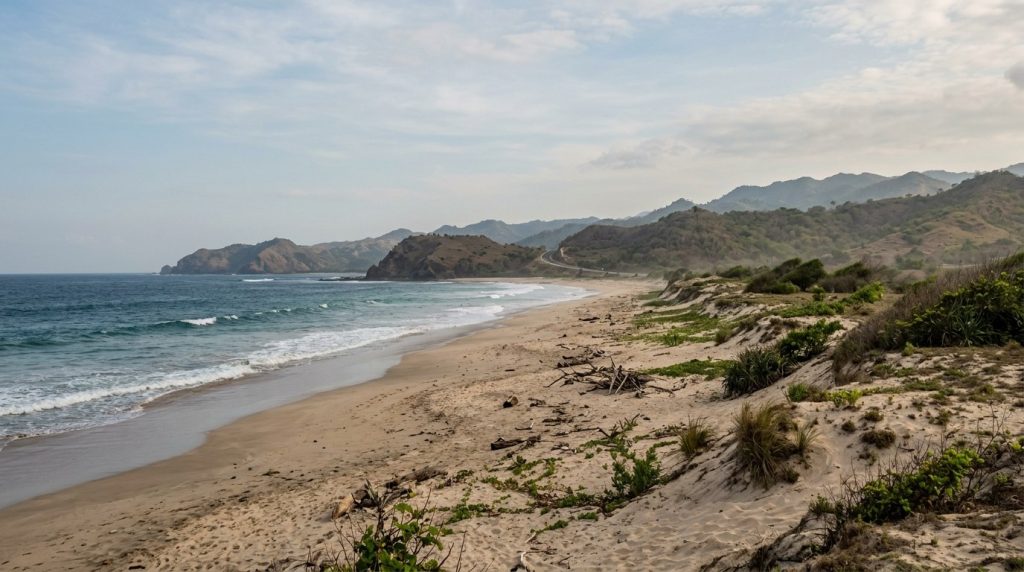
Everywhere outside that corridor, though, Lombok is still rural, quieter, and far less commercially developed than Bali’s south, which is exactly what draws travelers who feel Bali has become too built-up. Whether that gap closes or Mandalika stays an island within the island is the open question for the rest of the decade.
Who Should Skip Lombok
Skip Lombok if your total Indonesia trip runs under a week; the crossing alone can consume 10-15% of a 7-day trip once you count both directions.
Skip it if you want reliable nightlife and fine dining without effort, because nothing on the mainland or the Gilis matches Canggu or Seminyak, and only Gili Trawangan has a real party scene at a fraction of Bali’s size. If you do go, our guide to picking a Gili island explains why Gili Trawangan suits groups and divers while Gili Air suits couples and families.
Skip it if you’re not willing to buy proper trekking or medical evacuation insurance, given the real cost of getting seriously hurt somewhere without Bali’s hospital density.
And skip it in the wet season from November to March if your itinerary can’t absorb a delayed or cancelled Gili ferry, since the Rinjani trek is also closed for the first three months of that window regardless.
Best time to visit Lombok: dry season versus wet season
Lombok runs on a tropical dry-wet cycle rather than four distinct seasons, with the dry season spanning roughly May to October and the wet season running November through March or April, matching the window in which the Rinjani park itself stays closed.
Rainfall is heavily front-loaded into the wet season: at Kuta Lombok on the south coast, January is typically the wettest month, with monthly totals well above 300mm, while July and August run driest, often with next to no measurable rain for weeks at a stretch.
Daytime temperatures stay close to 28-31°C (82-88°F) in both seasons, so heat is rarely the deciding factor; humidity and rainfall are.
Dry season is the easier call for anyone whose itinerary leans on outdoor time: beach days, the surf breaks on the south coast, and the Gili boat crossings all run more predictably when swells and squalls are less frequent.
Wet season does not mean constant rain; afternoon downpours are typically short and localised, and travellers focused on diving, cultural sites or Mataram’s markets rather than beach weather can still have a good trip in the shoulder months either side of the wettest window.
The trade-off is value: hotel rates on Lombok’s main tourist strips soften outside the May-October peak, which is worth weighing against the higher chance of a washed-out beach day.
Sea temperature barely moves across the year, staying close to 28-29°C (82-84°F), so swimming conditions do not swing the way they do in temperate destinations; what changes is visibility and swell, both of which favour the dry season for snorkelling and diving around the Gilis.
Anyone building a Lombok add-on around a specific activity, rather than just Rinjani’s own closure dates, should check that activity’s own seasonal pattern rather than assuming the general dry-wet split applies evenly across surfing, diving and sightseeing.
Getting around Lombok: scooters, drivers and ride-hailing apps
Renting a scooter is the default way independent travellers get around Lombok, and daily rates commonly run AUD 6-8 · USD 4-6 (IDR 70,000-100,000) for a standard automatic, cheaper than the equivalent rental in Bali’s tourist zones.
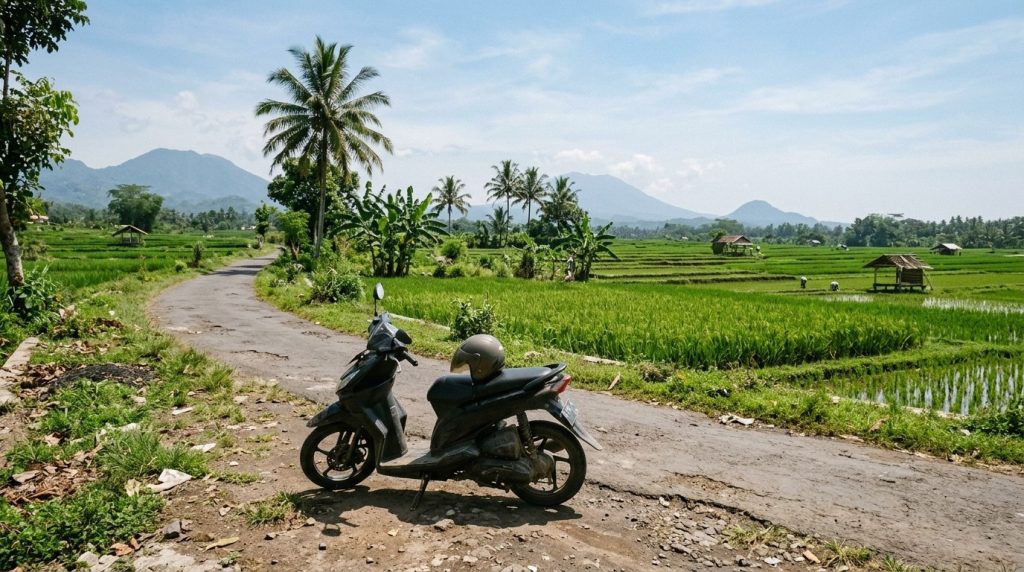
A valid motorcycle licence, or an International Driving Permit that covers motorcycles, is technically required, and police checkpoints do stop tourists on the main roads around Senggigi and the Mandalika corridor, so riding without the right paperwork carries a real fine risk, not just a theoretical one.
Ride-hailing apps work far less reliably on Lombok than on Bali. Grab and Gojek both operate in and around Mataram, Senggigi and parts of the Kuta corridor, but coverage thins out fast once a trip starts or ends outside those areas, and drivers sometimes cannot accept a fare shown as available in the app once they see the pickup point.
Many hotels and guesthouses can arrange a car with a private driver for a full day instead, a practical option for groups, families, or anyone planning a long day that mixes several sites, since it removes the need to navigate unfamiliar roads while still covering more ground than a single scooter can carry.
Outside the Mataram-Senggigi-Mandalika corridor, roads narrow and the quality of the surface drops, which matters most after dark, when unlit stretches and unmarked potholes are harder to see. Travellers heading to Tetebatu, the north coast, or anywhere off the Gili ferry routes should budget extra travel time rather than relying on a map app’s estimate, since posted distances consistently understate how long rural Lombok roads actually take to drive.
Top things to do beyond Rinjani: waterfalls, Pink Beach and a Sasak village visit
Tetebatu, in the foothills below Rinjani, packs rice terraces, a monkey forest and a cluster of waterfalls into one inland base that works as a lower-key alternative to a summit trek. Durian Indah, the area’s best-known waterfall, drops around 10 metres into a jungle pool that is open for swimming, and several of Tetebatu’s other falls sit close enough together to combine into a half-day walking loop with a guide.
Pink Beach, properly Tangsi or Tanjung Ringgit depending on which stretch of coast is meant, gets its colour from crushed coral and shell fragments mixed into the sand, and it sits roughly 1.5 to 2 hours by road from Kuta Lombok or Mataram, longer again if the final stretch of road is in poor condition after rain.
Most visitors book it as a day tour that also covers Tanjung Ringgit’s clifftop views rather than driving independently, since the access road is rough enough that a dedicated trip is normally arranged either by car and driver or by boat from Tanjung Luar.
Sade, Lombok’s best-known traditional Sasak village, gives a working look at thatched-roof houses and the handwoven tenun ikat and songket textiles Sasak women traditionally learn from childhood.
Dress modestly for a village visit, covering shoulders and knees rather than wearing beach clothing, and ask before photographing residents or entering a house, since these are lived-in homes rather than a museum set. The same modesty guidance applies at any of Lombok’s mosques and temples, where a sarong or long trousers are usually expected regardless of the outside temperature.
What to pack for Lombok
Pack for a destination with thinner tourist infrastructure than Bali rather than an identical twin. Reef-safe sunscreen and swim shoes matter for the Gilis’ coral-strewn shallows, where reef cuts are common enough that Lombok’s medical-evacuation insurance costs, covered above, are worth taking seriously.
A lightweight rain shell earns its space from November through March, when short, heavy downpours are common even outside the official wet-season peak, and quick-dry fabrics generally outperform cotton given the humidity.
Bring modest clothing, something covering shoulders and knees, for Sasak village visits and any mosque or temple stop, and keep it separate from beach wear rather than relying on a single wardrobe to cover both.
A dry bag protects phones and cash on Gili boat crossings, which can get genuinely wet in a moderate swell, and a basic first-aid kit with rehydration salts and insect repellent covers two of the most common minor complaints travellers report on Lombok.
Carry more cash than a Bali trip would require; cards are accepted at hotels and larger restaurants in the main tourist areas, but village stalls, smaller eateries and local transport usually expect rupiah, and the nearest working ATM can be a genuine drive away once off the Mataram-Senggigi corridor, so topping up cash before heading further afield beats relying on finding a machine along the way.
Where to Stay if You Decide to Go
Where you base yourself matters more in Lombok than in Bali, because the island’s tourist zones sit far apart. Compare Lombok’s accommodation areas side by side, Senggigi for easy airport access, Kuta Lombok for surf, the Gilis for beach and snorkel focus, then browse our pick of Lombok’s best hotels by budget once you’ve settled on a base. If you are torn between the mainland and the islands, our Lombok or Gili Islands breakdown recommends a 4-and-3 night split for a week.
Find your Lombok hotel on the map
Live prices from Booking, Airbnb and more — move the map or change dates to compare stays across Lombok.