Disclosure: Some links in this guide are affiliate links. If you book or buy through them, we may earn a small commission at no extra cost to you — it helps keep our guides free.
Hidden Gems in Lombok: Off-the-Beaten-Path Spots 2026
Lombok receives fewer than 1.5 million tourists annually compared to Bali’s 5+ million, which means most of the island’s best terrain, clearest water, and most welcoming villages are yours to explore with very little competition.
In this guide, we cover nine overlooked spots — from secret waterfalls in the central highlands to deserted beaches along the south coast — with exact entry fees, transport costs, and booking links so you can plan without guesswork.
Key Takeaways
- Lombok receives roughly 1.4 million annual visitors versus Bali’s 5.3 million, leaving most beaches uncrowded (Statistics Indonesia / BPS, 2024)
- Tiu Kelep waterfall in Senaru sees under 200 visitors/day even during peak season — far fewer than Bali’s Sekumpul (Local guide surveys, 2025)
- South Lombok’s Selong Belanak beach has no entry fee and fewer than 40 tourists on any given weekday (Lombok Tourism Board, 2025)
- Average daily cost in off-the-path Lombok zones is USD 35-50 including accommodation, food, and transport (Backpacker Index, 2025)
- Airalo Indonesia eSIMs start at USD 4.50 for 1 GB, covering all Lombok’s main areas including Kuta and Senaru (Airalo, 2026)
Tiu Kelep and Sendang Gile: Two Waterfalls in One Trek
Related: getting to Lombok.
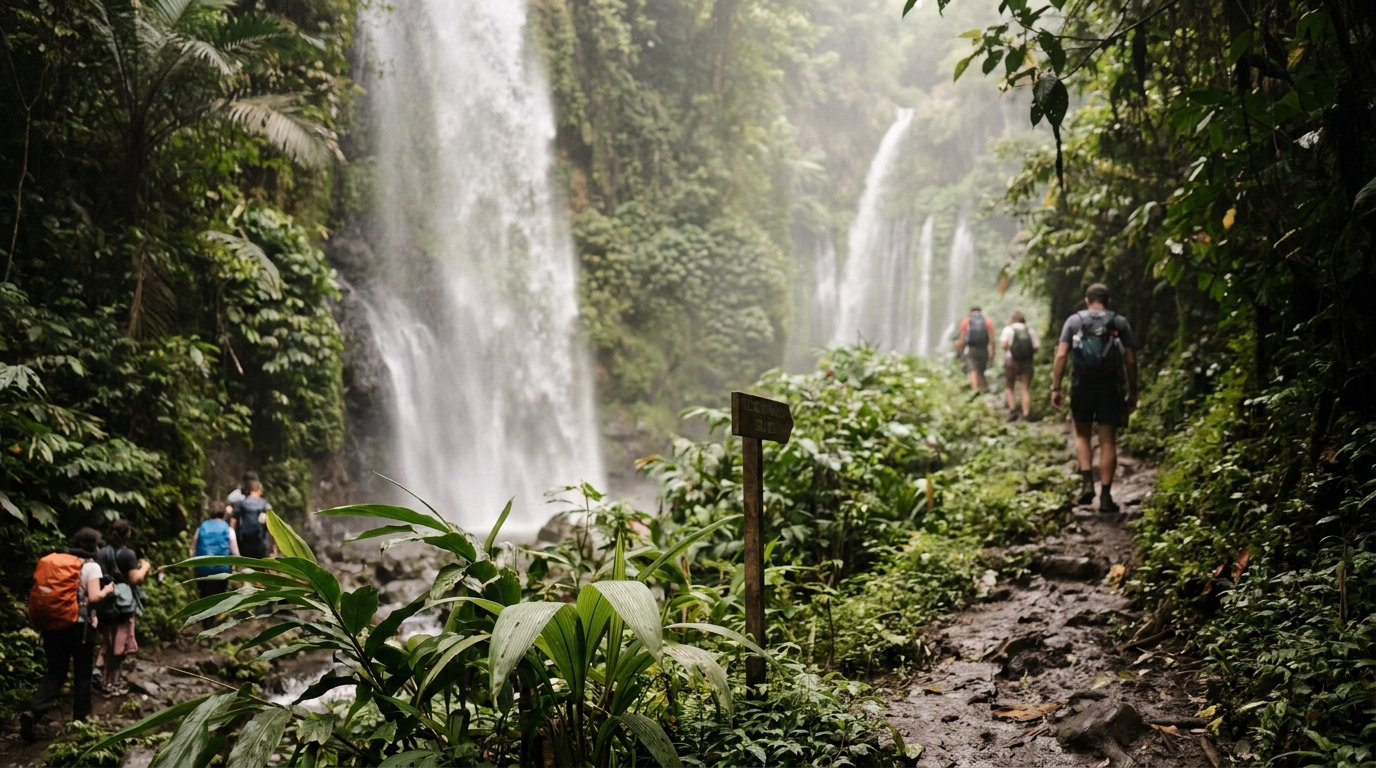
You can reach both Tiu Kelep and Sendang Gile waterfalls from the same trailhead in Senaru village with a combined round-trip hike of about two hours. Sendang Gile drops 30 meters into a wide basin you can swim in immediately; Tiu Kelep adds another 40-minute trail and rewards you with a powerful 42-meter cascade.
Entry to both is IDR 10,000 (around USD 0.60) per person, and local guides are optional but available for IDR 50,000.
Senaru sits at 600 meters altitude on the northern flank of Gunung Rinjani, keeping temperatures around 22-26°C year-round. The trail to Tiu Kelep crosses a river three times — wear sandals you do not mind getting wet, or bring a dry bag for valuables.
Most travelers heading to Rinjani base camp skip Tiu Kelep entirely because the trailhead signs are easy to miss, so midweek visits in July are genuinely quiet.
If you want a guided waterfall and village combo, Klook lists half-day Senaru waterfall tours from USD 18 including transport from Mataram or Senggigi. For accommodation near the trailhead, budget guesthouses in Senaru village start at USD 12/night on Agoda — a significantly cheaper base than Kuta.
Getting there: Rent a motorbike from Mataram (USD 5-7/day) and follow the northern ring road through Bayan. The drive takes about 90 minutes.
Selong Belanak: South Lombok’s Quietest Long Beach
Related: Lombok packing list.
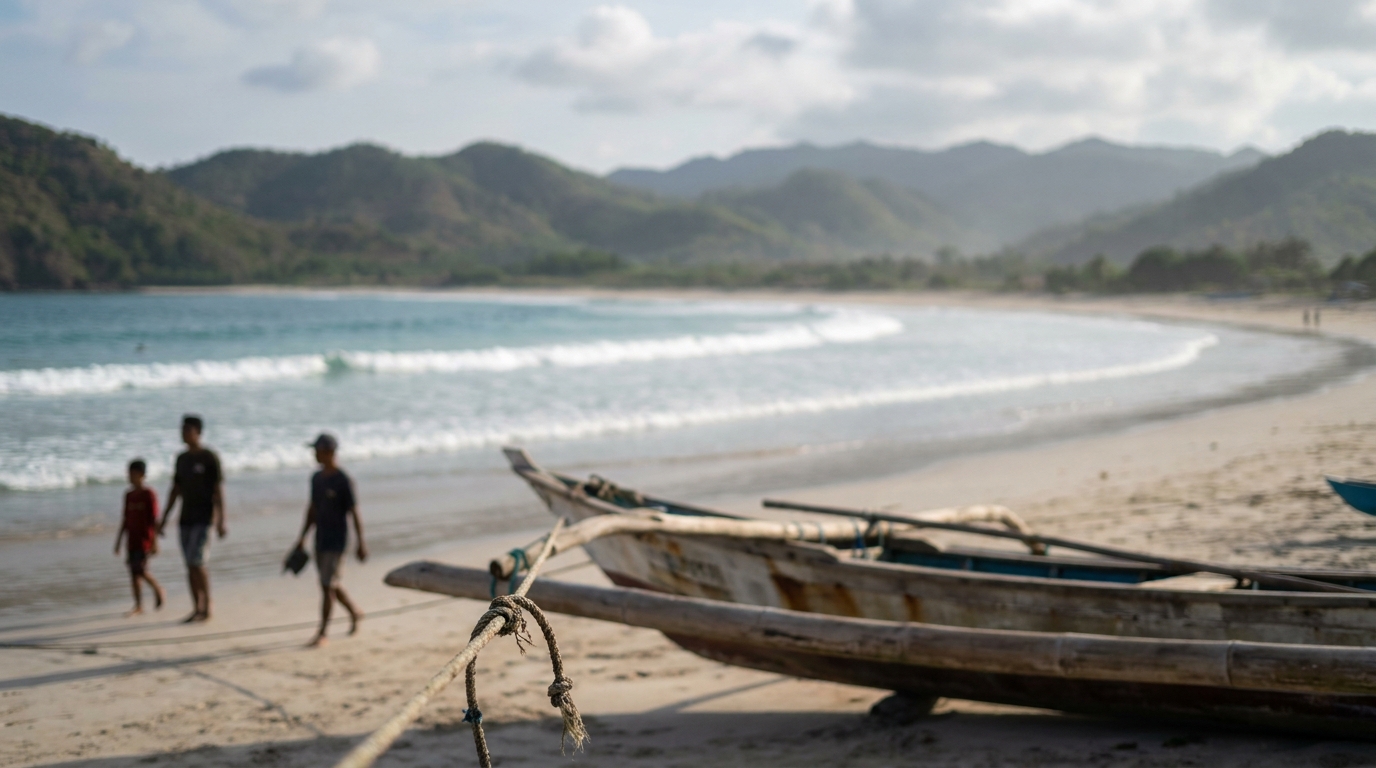
Selong Belanak is a 2.5-kilometer arc of white sand in South Lombok that sees a fraction of the crowds at nearby Kuta Beach. The beach has no entry fee, shallow turquoise water that is calm enough for beginner surfers, and a modest line of warungs serving grilled fish and cold Bintang for under USD 5.
Sunset here faces west across open ocean, making it genuinely photogenic without the tour-bus backup present at more famous spots.
The surf at Selong Belanak works best from June to August with 1-2 meter swells ideal for longboarding. Local instructors rent boards for IDR 70,000 (USD 4.30) per hour and offer lessons for IDR 150,000 (USD 9.20). The southern coast road between Kuta and Selong Belanak is well-paved since the 2022 upgrade, so the 20-minute motorbike ride is straightforward.
Accommodation at the beach is limited, which is exactly why it stays quiet. Two family-run homestays operate directly on the beachfront; both list on Booking.com for USD 22-35/night with fan rooms and breakfast. south-lombok-beaches-guide
Sembalun Valley: Rinjani’s Back Door Without the Summit Crowds
Related: best day trips from Lombok.
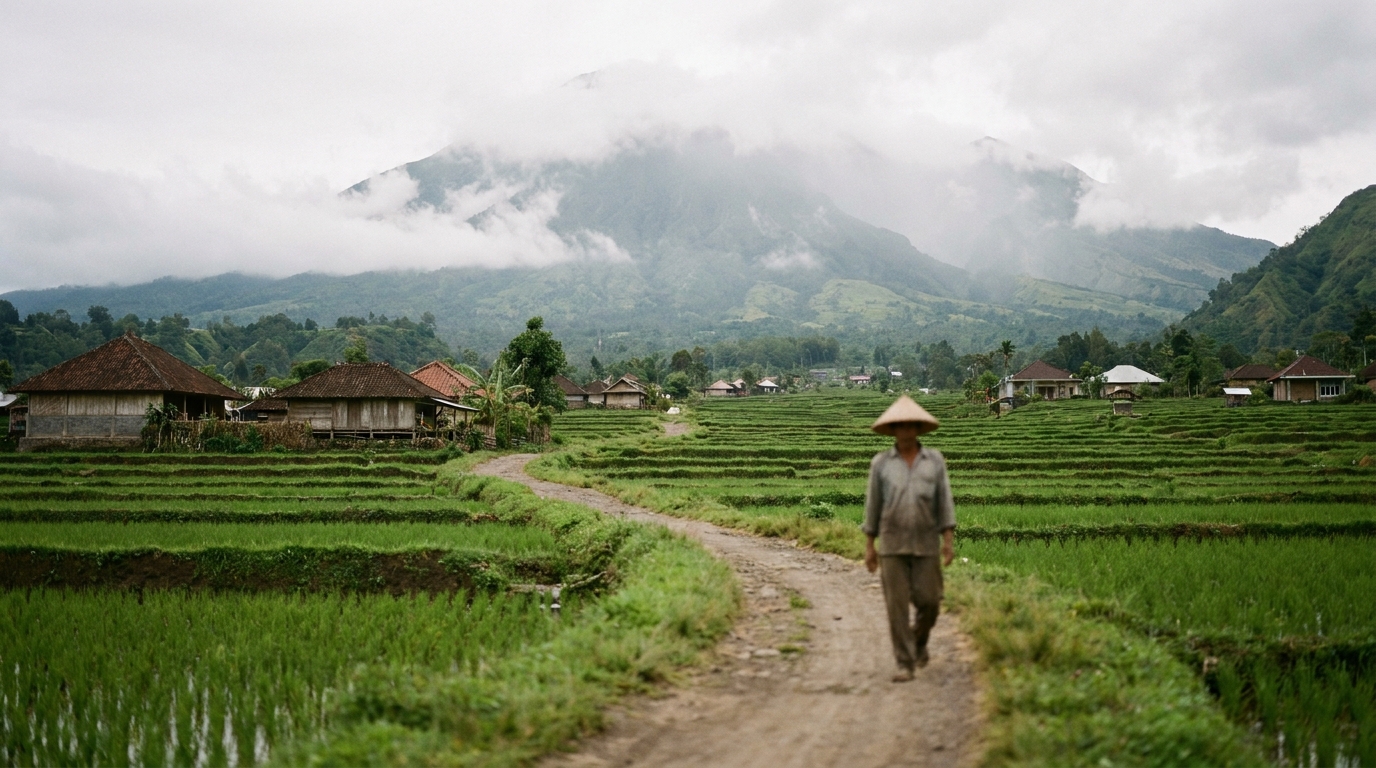
The Sembalun Valley on Rinjani’s eastern side offers highland trekking, strawberry farms, and sweeping crater views without requiring a summit permit. The valley sits at 1,150 meters, making the air noticeably cooler than coastal Lombok, and the panorama of Gunung Rinjani’s 3,726-meter cone rising above rice terraces is one of the best views in eastern Indonesia. Entry to the Sembalun trekking zone is IDR 150,000 (USD 9.20) for foreign visitors.
Day-trek options in the valley include a 4-hour loop to Bukit Selong (the famous hill with a lone tree against the mountain backdrop) and a longer 7-hour route toward the crater rim at Pelawangan Sembalun. Neither route requires the full summit permit (which adds USD 35-50 per person for the official climb). Local trekking agencies in Sembalun village charge IDR 250,000-350,000 (USD 15-22) for guide service on day routes.
If you are planning the full Rinjani summit, Klook’s 3D2N Rinjani packages start at USD 155 and include certified guides, permits, porters, and tents. The Sembalun side is consistently less crowded than the Senaru approach, with roughly 30% fewer trekkers on an average July day (Rinjani Trekking Club data, 2025).
For Sembalun accommodation, the valley has around 15 guesthouses ranging from USD 10 to USD 28/night. Book via Agoda for the widest selection. rinjani-trekking-guide
Gili Nanggu: The Southwest Gili That Nobody Mentions
Related: best food in Lombok.
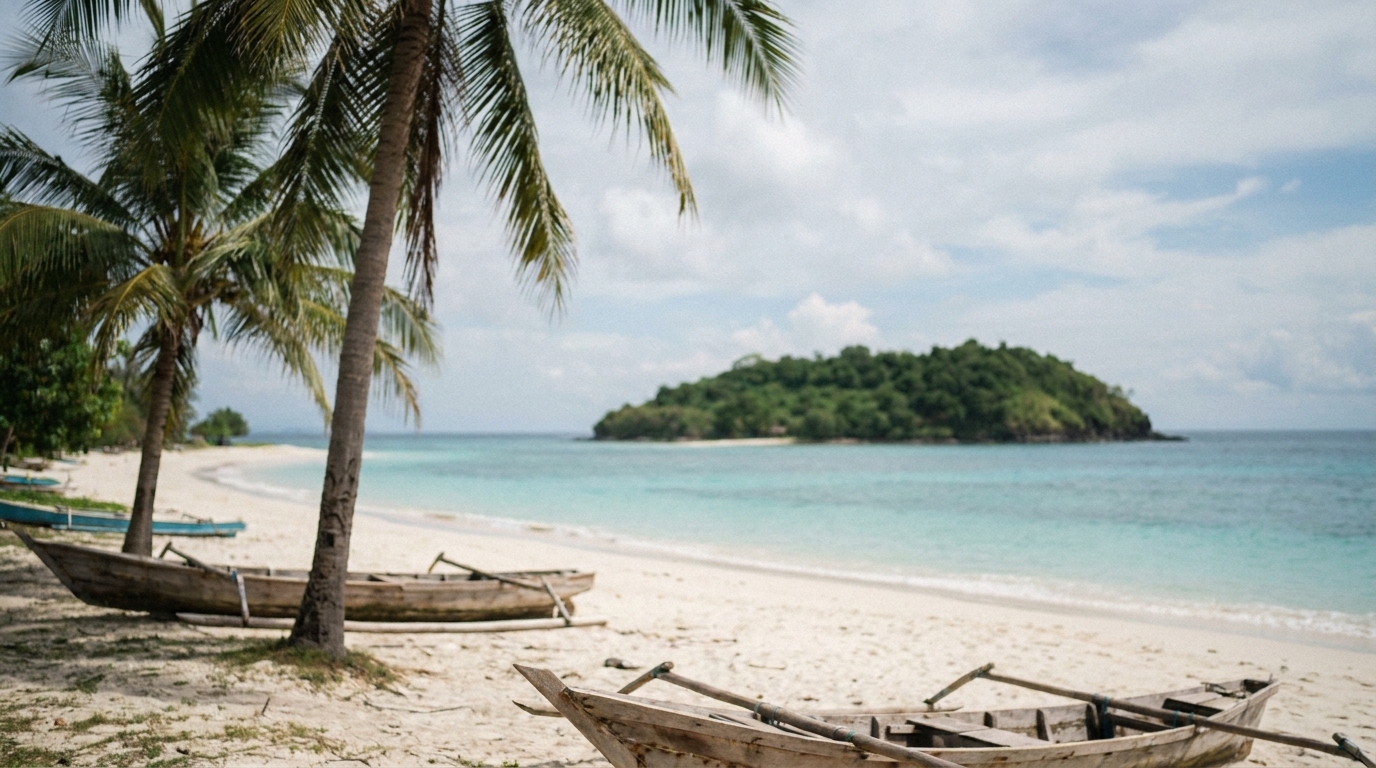
While Gili Trawangan, Meno, and Air dominate every Lombok itinerary, the southwest cluster of Gili Nanggu, Gili Sudak, and Gili Kedis offers comparable snorkeling with almost zero mass tourism.
Gili Nanggu is the largest of the three at roughly 700 meters long, has one small resort and a handful of warungs, and is ringed by a fringing reef that reaches within 15 meters of the shoreline. Hawksbill turtles are spotted year-round.
Getting to Gili Nanggu requires a 20-minute boat charter from Tawun Beach near Sekotong, about 40 kilometers southwest of Mataram. Boat charters cost IDR 200,000-300,000 (USD 12-18) return for the whole boat, meaning the per-person cost drops significantly in a group. Day-trip island-hopping packages from Mataram are available on GetYourGuide starting at USD 25 and cover all three southwest gilis with snorkel gear included.
Snorkeling visibility here averages 15-20 meters during the May-September dry season (Lombok Marine Survey, 2024). There is no ATM on the island, so carry sufficient rupiah cash. The single resort lists on Booking.com for USD 55-75/night including breakfast. gili-islands-lombok-guide
Benang Stokel and Benang Kelambu: Central Lombok’s Layered Falls
Related: Bali travel guide.
Two hours south of Mataram, the twin waterfalls of Benang Stokel and Benang Kelambu near Batukliang Utara are among the most distinctive in all of Indonesia. Benang Kelambu — “curtain waterfall” — fans out over moss-covered roots in a wide translucent sheet rather than a single stream, creating a texture unlike anything at Bali’s more photographed falls. Entry to both is IDR 25,000 (USD 1.55) per person.
The trail from the parking area to Benang Stokel takes 15 minutes and is paved; continuing to Benang Kelambu adds another 25-minute walk on a dirt path that can be slippery after rain. Both waterfalls have natural swimming pools deep enough for adults. The surrounding forest is secondary growth but dense enough to shelter a population of long-tailed macaques, which will approach if you carry food.
A scooter from Mataram via the Kopang road handles the route in about 75 minutes. Alternatively, Klook’s central Lombok day-tour packages combine Benang Stokel with a traditional Sasak village visit for around USD 22 including lunch. The nearest town with accommodation is Praya, where budget hotels on Agoda run USD 15-25/night.
Desa Sade: Authentic Sasak Village Without the Tour Bus Overhead
Related: things to do in Lombok.
Sade is a traditional Sasak village of around 700 residents in the Rembitan area of South Lombok, preserved as a cultural heritage site and accessible independently without any guide surcharge. Houses here are built from bamboo, clay, and buffalo-dung plaster on raised bamboo floors, a construction technique unchanged for centuries. Entry is by voluntary donation — IDR 20,000 (USD 1.20) is customary.
Most tour operators rush visitors through Sade in 20 minutes as a photo stop en route to Kuta. Arriving independently at 7:00-8:00 AM before any tour groups means you see the village at its actual daily pace — women weaving songket cloth outdoors, children heading to school, and elders maintaining the narrow paths between houses.
Resident weaver demonstrations are genuinely informative and the woven textiles on sale (USD 8-40) are priced more fairly without tour commission markups.
The village is 10 kilometers north of Kuta on the main south coast road, making it a natural stop if you are riding between Praya and the beach zone. lombok-sasak-culture-guide For Kuta-area accommodation to use as a base, Booking.com lists a solid range from USD 18 budget rooms to USD 90 boutique options.
Find your Lombok hotel on the map
Live prices from Booking & Airbnb — tap a pin to compare stays around Kuta Lombok and Senggigi and beyond.
Sukarara Weaving Village: Where Every Household Is a Workshop
Related: Da Nang travel guide.
Sukarara, 25 kilometers south of Mataram, is a weaving village where the songket and rinjani cloth produced by local families represents centuries of unbroken craft tradition. Unlike tourist-focused craft shops in Mataram, Sukarara’s roughly 200 weaving households open their front rooms as informal workshops, and watching the foot-loom technique on a traditional alat tenun is a craft education available nowhere else in the region. There is no entry fee.
Songket fabric here uses a supplementary weft technique to weave gold or silver metallic thread into cotton or silk base cloth. A single sarong panel (2 meters) takes 3-7 days depending on density of the pattern and retails at IDR 200,000-1,500,000 (USD 12-92) direct from the weaver — significantly less than resellers in Senggigi or Mataram’s Cakranegara market.
Quality is verifiable on-site because you can see the loom and ask about thread count.
Sukarara is accessible by motorbike from Mataram in 35 minutes via the Kediri road. No tour booking is needed. lombok-shopping-guide If you are using an Airalo eSIM for navigation (Indonesia plans start at USD 4.50 on Airalo), coverage is strong throughout central Lombok including this village.
Torean and the Northern Coast Road: Lombok’s Least-Driven Route
Related: best beaches in Lombok.
The northern coastal road between Pemenang (near Bangsal) and Bayan runs for about 55 kilometers with minimal traffic and a sequence of small fishing villages, empty black-sand beaches, and uninterrupted views across the Bali Strait to Gunung Agung.
The stretch between Gondang and Bayan is particularly isolated — you may ride 20 kilometers without passing another vehicle on a weekday morning. There are no formal tourist sites, which is precisely the point.
The village of Torean, about 8 kilometers east of Senaru, marks the start of a community-managed forest trail network that few travelers use. Local guides from the Torean community group charge IDR 100,000 (USD 6.20) for a 3-hour forest walk covering endemic bird habitat and a viewpoint above the Segara Anak crater lake, visible on clear mornings. The entire guide fee goes directly to the community fund (Torean Community Association, 2025).
For this route, reliable mobile navigation matters. Airalo’s Indonesia eSIM provides the cheapest data option at USD 4.50/1 GB or USD 13/5 GB, with coverage across the northern Lombok ring road. A full-day motorbike circuit of the north — Pemenang to Senaru to Sembalun and back via the east — covers approximately 180 kilometers and is realistic with an early start. lombok-motorbike-road-trip
Frequently Asked Questions
How do I get to the less-visited parts of Lombok?
Renting a motorbike (USD 5-7/day) or hiring a private car with driver (USD 40-55/day) gives you the flexibility to reach waterfalls, villages, and southern beaches that public transport does not serve. Most of Lombok’s off-the-path spots are within 2 hours of Mataram. Scooters are the standard way locals travel and roads across the island are paved since 2022.
What is the best time of year to visit Lombok?
The dry season from May to September is optimal. Rainfall is minimal, waterfalls are full but trails are not waterlogged, and sea conditions around the Gili islands allow snorkeling visibility of 15-20 meters. July and August are busiest but still far quieter than Bali’s peak. Avoid the wet season (December-March) for the southern beaches and trekking routes.
Is Lombok safe for independent travelers?
Lombok is generally safe. Petty theft is rare outside of crowded port areas like Bangsal. Trekking on Rinjani requires official guides by park regulation (enforced since 2023). Solo female travelers report the northern highlands and south coast as comfortable; larger towns like Mataram have standard city-level caution advisories. Basic Indonesian phrases go a long way in smaller villages.
How much does a day of exploring off-the-path Lombok cost?
A realistic daily budget covering motorbike rental (USD 6), fuel (USD 2), entry fees to two or three sites (USD 3-5 total), a lunch warung meal (USD 2-3), and afternoon snacks (USD 2) comes to USD 15-18 in activity costs. Adding USD 20-35 for a budget guesthouse puts the full daily cost at USD 35-53, consistent with Southeast Asia backpacker benchmarks.
Do I need a visa to visit Indonesia?
Citizens of 95 countries including the US, UK, Australia, Germany, France, and Japan receive a 30-day visa on arrival at Lombok International Airport for USD 35, extendable once for an additional 30 days. Indonesian e-Visa is also available for most nationalities for the same fee. Always check the current list at the official Indonesia Immigration website before travel.
What connectivity options are available in rural Lombok?
Telkomsel and XL Axiata SIM cards are available at Lombok International Airport and major Mataram phone shops, or you can skip the queue with a pre-activated Airalo Indonesia eSIM — plans start at USD 4.50 for 1 GB and activate instantly before you land. Coverage is strong in Kuta, Senggigi, and Senaru; some northern valleys have 3G only.
Can I visit the southwest Gilis and Gili T on the same trip?
Yes, but plan for separate logistics. The southwest gilis (Nanggu, Sudak, Kedis) are reached from Tawun Beach near Sekotong, while the northeast gilis (Trawangan, Meno, Air) depart from Bangsal or Teluk Nare. Both clusters are day-trip viable from Mataram or Kuta. Combine them across two days for a solid island comparison — the southwest cluster wins on snorkeling density and the northeast wins on accommodation variety.
Conclusion: Plan Your Lombok Route Beyond the Guidebook Highlights
Lombok’s least-visited destinations — the northern waterfalls, the highland valleys, the southwest gili cluster, the weaving villages — are accessible, affordable, and consistently more rewarding than the overtouristed anchors that dominate most itineraries.
With motorbike transport, an Airalo eSIM for navigation, and selective use of Klook day tours for the treks that benefit from a guide, you can build a 7-10 day Lombok trip that covers real ground without a single moment of tour-bus congestion.
Book your Lombok accommodation on Booking.com or Agoda — both have strong coverage from Senaru guesthouses to Kuta boutique hotels, and flexible cancellation rates are widely available for the dry season months. The island is ready for independent exploration. The only question is which valley or beach you reach first.