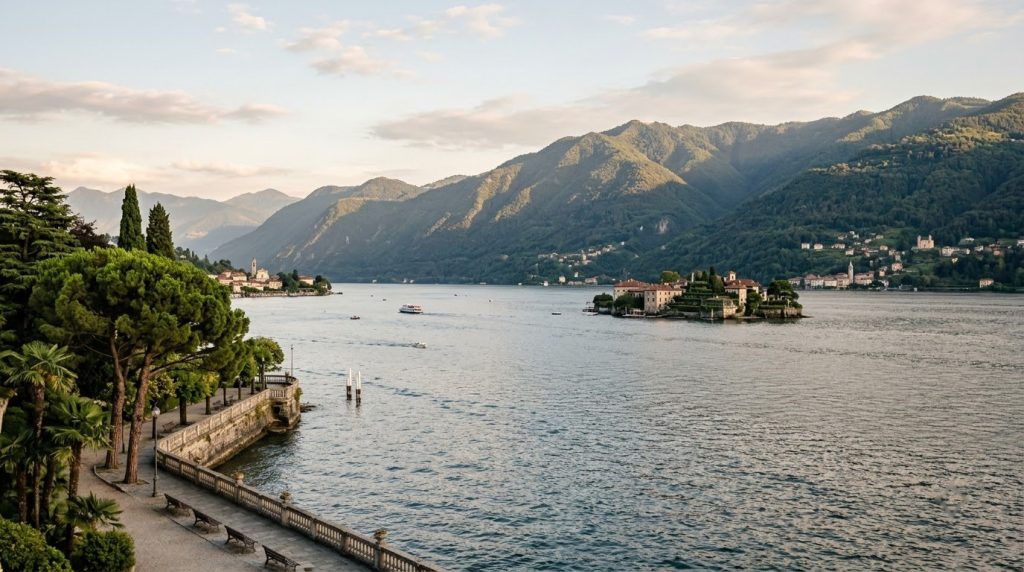
Isola Bella Travel Guide 2026: Italy’s Floating Garden Palace on Lake Maggiore
By TravelguidestipUpdated 13 min readHow we earn
Hotel buttons open Stay22 (Booking.com, Agoda and others) and tour buttons open GetYourGuide. We may earn a commission at no extra cost to you.
In short
- The palace and gardens are a single ticket costing 20 EUR (18 EUR online). The combined Borromean Islands pass at 33 EUR covers Isola Bella, Isola Madre, and Isola dei Pescatori — valid for two days, the best value on Lake Maggiore.
- Visit before 10:30 AM or after 3:30 PM. Midday tour groups from Milan fill the narrow garden paths between 11:00 AM and 3:00 PM. The island opens at 9:00 AM from March through October.
- Theatrical Garden (Teatro Massimo) on Terrace 8 is the single most photographed spot, but Terrace 9’s hidden corner overlooking the unicorn statue and the lake delivers a quieter, equally stunning view.
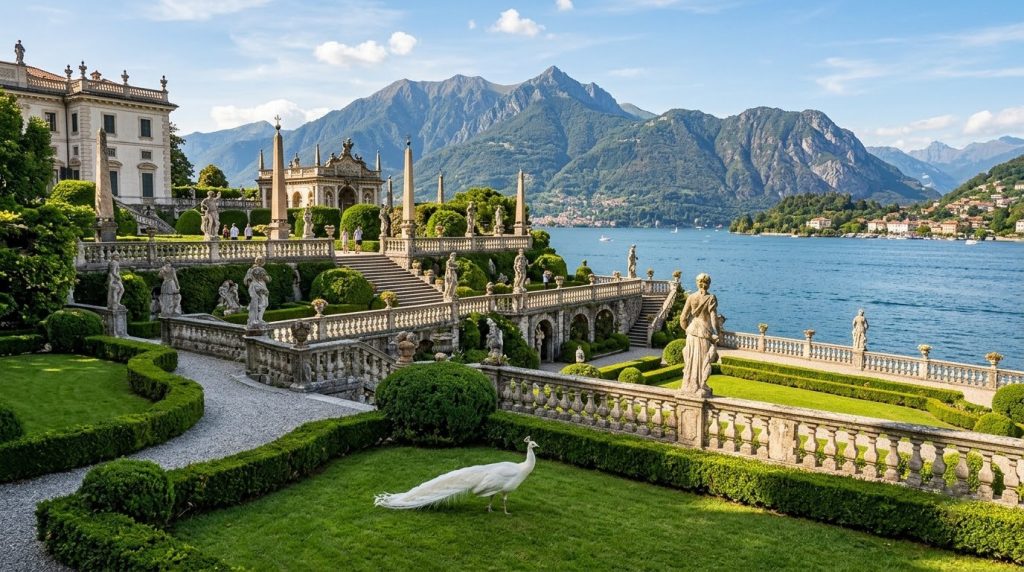
- White peacocks roam freely throughout the gardens and have done so since the 17th century. They pose. They are not shy. This is not a metaphor.
- The palace’s underground grottoes covered in black and white pebbles, seashells, and volcanic rock stay naturally cool even in August. Most visitors skip them entirely, heading straight to the gardens.
Isola Bella: Italy’s Floating Garden Palace on Lake Maggiore (2026)
Lake Como gets the Instagram crowd. Lake Garda gets the windsurfers. But Lake Maggiore, Italy’s second-largest lake stretching from the Alps into Switzerland, holds a secret that neither can match: a baroque palace and ten levels of sculpted gardens floating on their own island, rising from the water like a stone ship permanently anchored in the Borromean Gulf.
This Isola Bella travel guide covers everything you need to plan your 2026 visit to one of Italy’s most extraordinary destinations. The island is not a metaphor. It is quite literally a man-made marvel, transformed from a bare rock in the 1630s by Count Carlo Borromeo III and his son Vitaliano.
They built a palace, layered ten terraces of gardens onto the island’s natural shape, and created what art historian Jacob Burckhardt would later describe as “a hanging garden worthy of Semiramis.” Over 400,000 visitors make the boat crossing to this tiny island each year (Borromeo Estate, 2025), crossing a wooden gangplank to step directly into the grand salon of a 17th-century Italian nobleman’s dream.
This guide covers what makes the island so special, how to visit without the midday crowds, which other Borromean Islands deserve your time, the Lake Maggiore towns worth exploring, and the photo spots that capture the floating garden at its most magical.
What Makes Isola Bella So Special
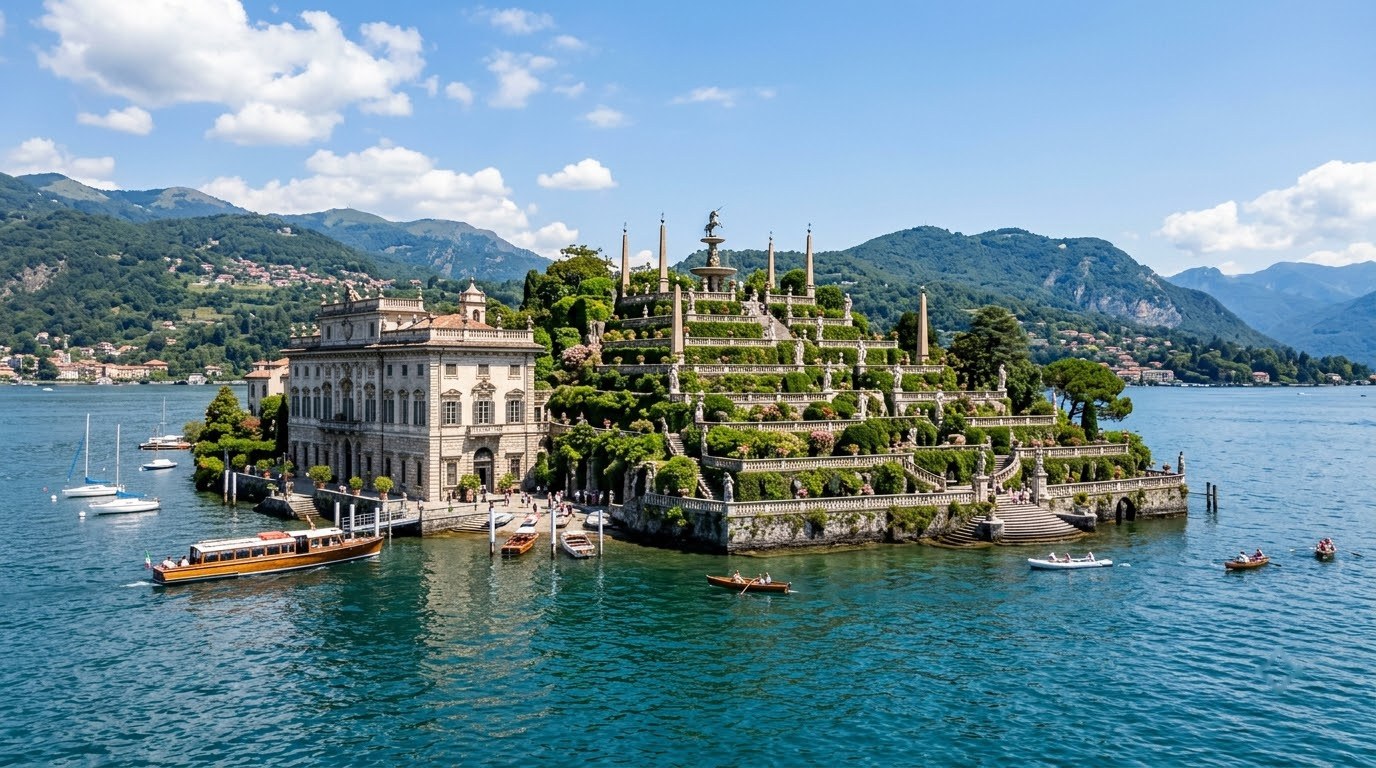
The first thing you notice when the ferry rounds the northern tip of Isola Bella is that the island looks like an illusion. A four-story baroque palace rises directly from the water, its southern facade a sheer wall of pink granite meeting the lake. Behind it, the gardens ascend in a wedding-cake pyramid of terraces, statues, and cypress trees, culminating in a unicorn statue 37 meters above the waterline.
The Palace: A Noble Family’s Statement
The Borromeo family still owns Isola Bella, and the palace reflects roughly 400 years of accumulated wealth and taste. The Galleria dei Quadri (Picture Gallery) holds over 130 paintings including works by Luca Giordano and Francesco Zuccarelli. The Sala da Ballo (Ballroom) has a ceiling fresco depicting the triumph of the Borromeo family, and the crystal chandeliers hanging from it weigh half a ton each.
What most visitors miss are the six grotto rooms on the ground floor. Built between 1650 and 1680, these chambers are encrusted floor-to-ceiling with black and white pebbles, seashells, fragments of volcanic rock, and stucco shaped to resemble underwater caves. They served as summer retreats where noble guests could escape the Italian heat before anyone had invented air conditioning. The temperature drops 8 to 10 degrees Celsius the moment you step inside.
The Throne Room contains a crimson canopy bed where Napoleon Bonaparte slept in 1797 during his Italian campaign. The Borromeo family were not especially pleased about hosting him, but they did keep the bed exactly as he left it.
The Gardens: Ten Terraces of Baroque Theater
The Teatro Massimo, the centerpiece of the gardens on Terrace 8, is a stage set built from stone. A niche holds a statue of a rearing unicorn, the Borromeo family emblem, flanked by obelisks and statues of river gods. The stage faces Lake Maggiore instead of an audience, as if the performance is for the mountains and water alone.
The ten terraces rise in a pyramid formation engineered to fit the narrow hull shape of the island. Each level narrows, so standing at the bottom looking up creates the illusion of a much taller structure (a deliberate baroque trick). Camellias, azaleas, rhododendrons, and roses bloom in staggered succession from March through October, managed by a team of 20 full-time gardeners.
The best moment: Stand on the top terrace at the rear of the gardens, facing north toward the Alps. On clear days, the snow-capped peaks of the Monte Rosa massif, Switzerland’s highest mountains, appear to float directly above the baroque statues in the foreground. The contrast between manicured Italian garden and raw Alpine wilderness makes the entire island feel like a painting.
How to Visit Isola Bella
Getting There
Isola Bella sits a five-minute boat ride from Stresa, the main resort town on Lake Maggiore. Stresa has a train station on the Milan-Domodossola line, served by regional trains from Milano Centrale (1 hour, 8.80 EUR each way). From Stresa’s Piazza Marconi, walk three minutes to the ferry dock.
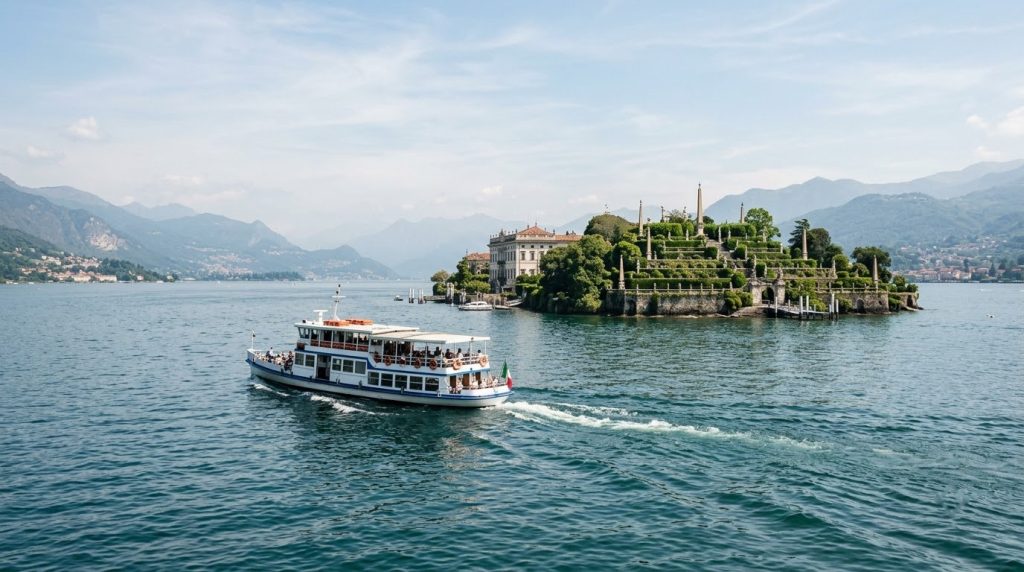
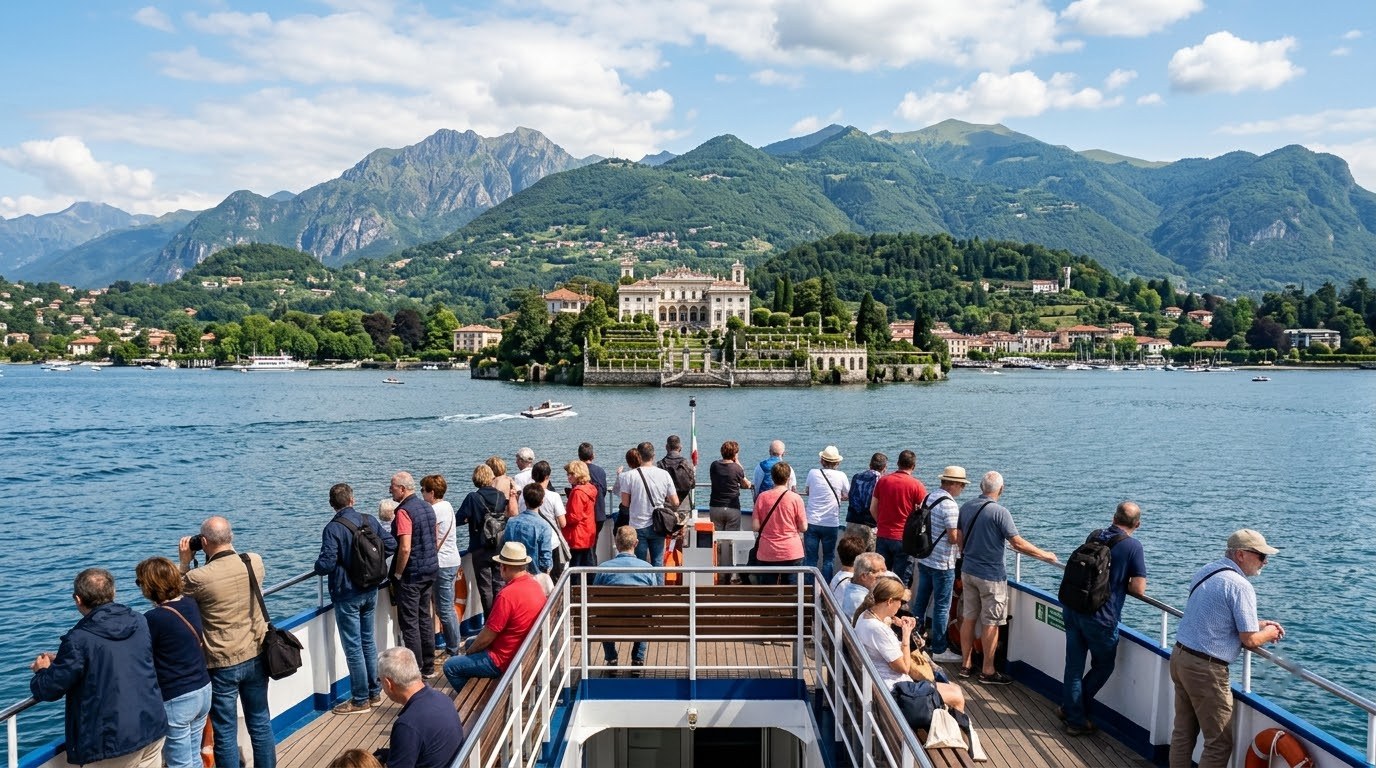
The Navigazione Laghi ferry runs roughly every 30 minutes from April through October, reducing to hourly in March and November. Round-trip tickets cost 8 EUR. Private water taxis cost 25-30 EUR round-trip for up to six people and leave whenever you are ready, no schedule needed.
Tickets and Timing
The Isola Bella palace and gardens operate on a single ticket: 20 EUR at the gate, 18 EUR if booked online at isoleborromee.it. The combined ticket (33 EUR) covering Isola Bella, Isola Madre (palace and botanical garden), and the public Isola dei Pescatori is the smartest purchase if you have a full day. It is valid for two consecutive days, so you can spread the islands across a weekend.
The palace closes at 5:30 PM (last entry 5:00 PM) in high season. The gardens stay open until 6:00 PM. March and November hours are shorter (closes 5:00 PM). The island is closed entirely from late October through mid-March.
The crowd pattern: The first ferry from Stresa arrives at roughly 9:15 AM. Between 9:15 AM and 10:30 AM, the island belongs to independent travelers and photographers. Between 11:00 AM and 3:00 PM, tour buses from Milan disgorge groups of 40-50 people with 90-minute time slots. After 3:30 PM, the island quiets again. The last hour before closing (4:30-5:30 PM) offers golden light on the gardens and the smallest crowds.
**** We took the 9:00 AM ferry on a Tuesday in late September and walked directly into the palace with zero wait. The grotto rooms were empty. The gardens had maybe 20 people spread across ten terraces. By noon, the unicorn statue had a queue for photos. The early crossing is not a suggestion. It is the difference between a transcendent experience and a crowded one.
Beyond Isola Bella: The Borromean Islands
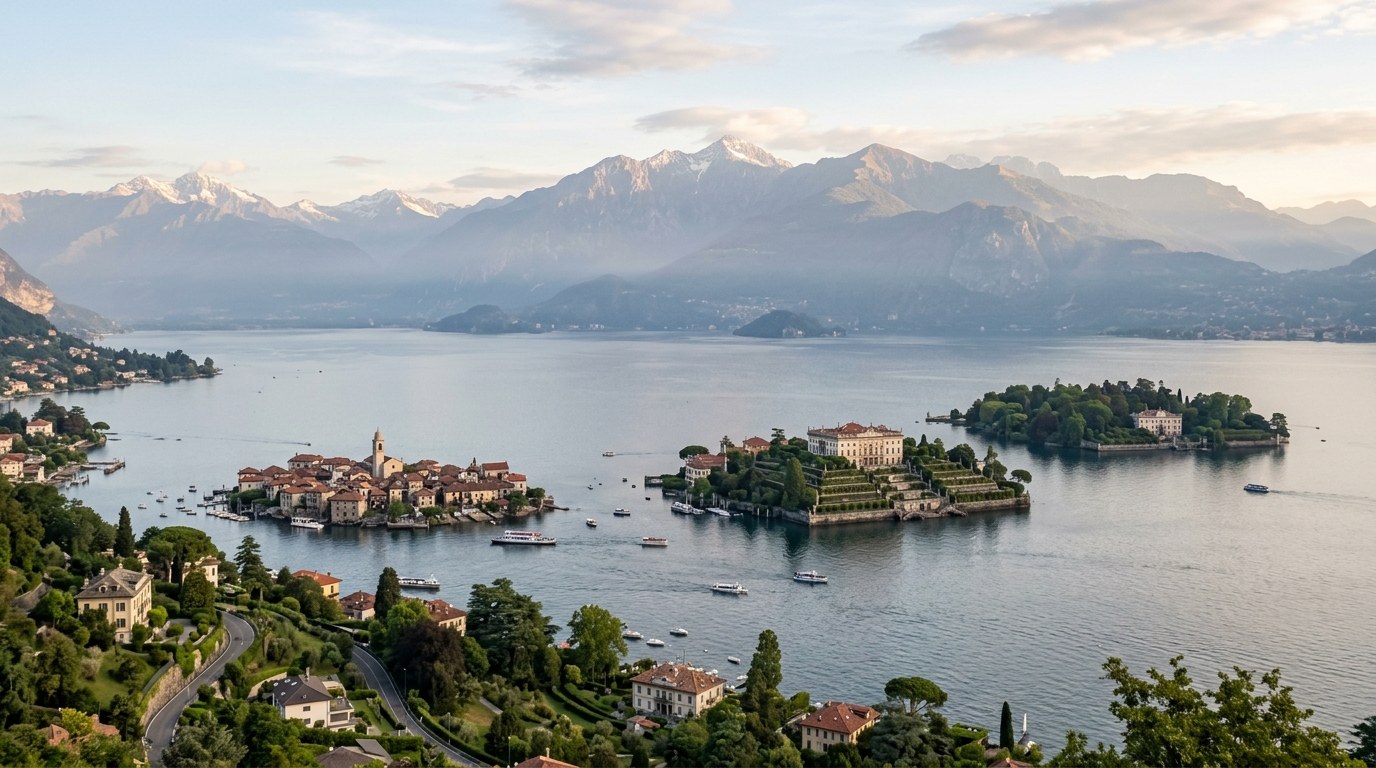
Isola Bella is the centerpiece, but the two other Borromean Islands accessible by the same ferry system each offer something entirely different.
Isola Madre: The Botanical Garden Island
Isola Madre is the largest of the Borromean Islands and the most under-visited, receiving roughly one-third the foot traffic of Isola Bella. No palace tour here in the traditional sense — the 16th-century villa is elegant but modest compared to Isola Bella’s excess. What makes Isola Madre worth the crossing is its botanical garden, widely considered the finest English-style garden in Italy.
Rare plants from Asia, Africa, and the Americas thrive in the lake’s microclimate (Lake Maggiore rarely freezes, creating a subtropical pocket at the foot of the Alps). The star specimens include a Kashmir cypress planted in 1862, the largest in Europe with a trunk diameter exceeding 6 meters, and a collection of proteas from South Africa that bloom in colors golf commentators would call “electric.”
White peacocks, golden pheasants, and rainbow lorikeets roam the grounds. The peacocks here are less photographed than their Isola Bella counterparts, which means they are calmer and more likely to fan their tails for no apparent reason.
Entry: 16 EUR solo, or included in the 33 EUR combined Borromean ticket. The ferry from Stresa takes 20 minutes. Allow two hours minimum. The island café serves homemade lemon granita (4 EUR) from Amalfi Coast lemons grown on the property.
Isola dei Pescatori: The Fishermen’s Island
The third Borromean island is the only one with a permanent year-round population (roughly 50 people, down from 200 a century ago). Isola dei Pescatori has no ticket booth, no palace, and no attraction beyond itself. The narrow cobblestone alleys between traditional stone houses, the tiny Church of San Vittore with its 11th-century apse, and the cluster of seafood restaurants along the waterfront are the entire draw.
Lunch here is the move. The restaurants serve perch from the lake (lavarello and persico), whitefish risotto, and freshwater crayfish that taste sweeter than their saltwater cousins. Ristorante Italia and Ristorante Verbano both have lakeside terraces. A three-course meal with wine runs 40-50 EUR per person. Book ahead for weekend lunch in July and August, or simply walk into whichever restaurant has an empty table facing the water.
The ferry from Stresa takes 10 minutes. Entry is free. Combine with Isola Bella for a two-island morning-and-afternoon that covers every possible Lake Maggiore experience: art, gardens, and a long lunch.
Best Towns Around Lake Maggiore
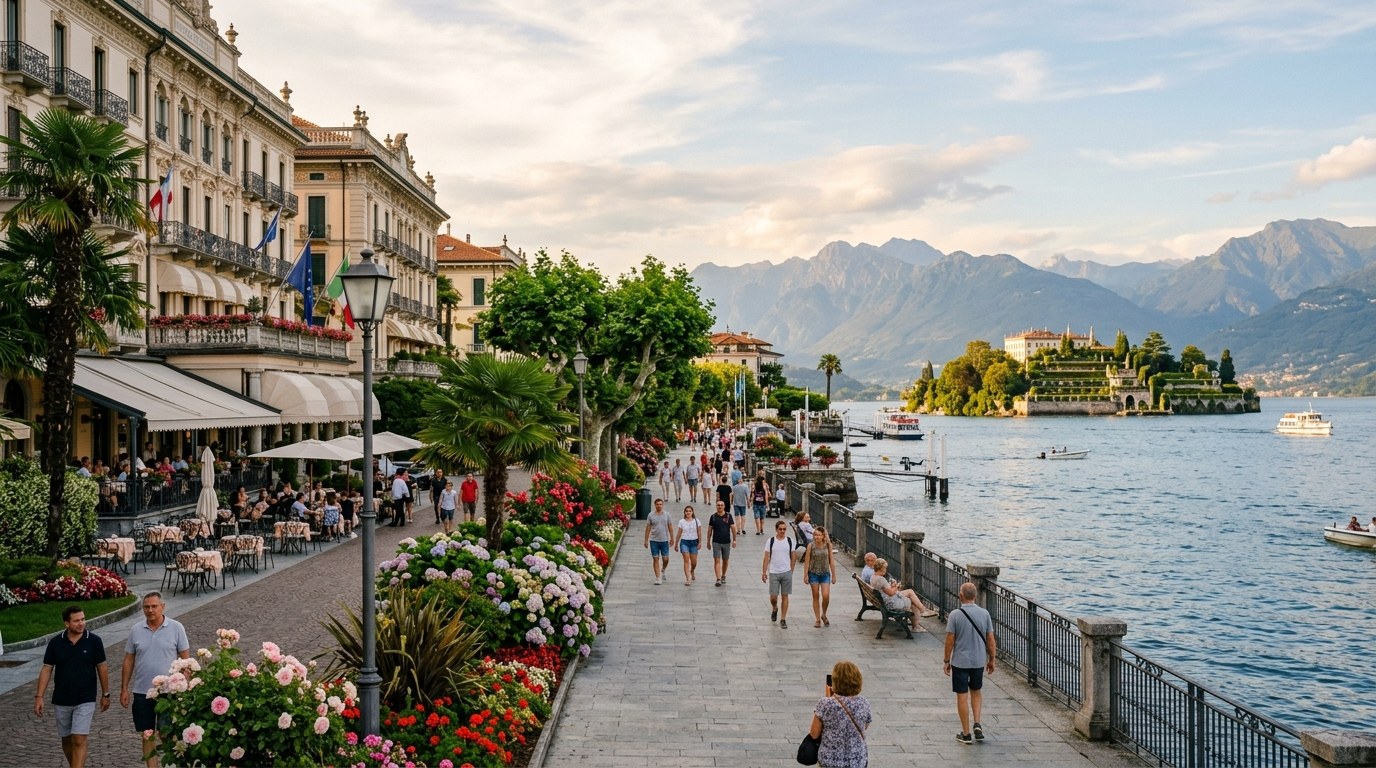
Isola Bella is the destination, but you need a base. These three towns around Lake Maggiore each offer a different version of the lake experience, and they are all within 30 minutes of the Stresa ferry dock.
Stresa: The Grand Hotel Town
Stresa has been Lake Maggiore’s main resort since the 19th century, when British aristocrats discovered it on their Grand Tours and built the lakeside promenade now named for them (the Lungolago). The town feels unmistakably belle-epoque: Liberty-style hotels with wrought-iron balconies, palm-lined waterfront paths, and a cable car ascending Monte Mottarone.
The Stresa-Mottarone cable car (14 EUR round-trip) climbs 20 minutes to 1,491 meters, where a 360-degree panorama spans seven lakes (Maggiore, Orta, Mergozzo, Varese, Monate, Comabbio, and on very clear days, Como) and the entire Monte Rosa massif.
The mountain has hiking trails, a botanical garden (Giardino Alpinia, 3 EUR), and a café serving hot chocolate thick enough to stand a spoon in. The cable car operates daily from April through October.
Where to stay in Stresa: Grand Hotel des Iles Borromees (from 350 EUR/night), the lakeside palace where Hemingway set part of A Farewell to Arms, has a pool that floats on the lake. Hotel La Palma (from 180 EUR/night) is the more reasonable choice, with a rooftop pool bar and lake-view rooms for half the price. Book via Booking.com.
Prefer an eSIM? Airalo Italy packages start at $6. For guided tours, GetYourGuide offers Borromean Islands day trips from Milan.
Verbania: The Garden Lover’s Base
Verbania is technically two towns that merged (Intra and Pallanza), sitting directly across the gulf from Stresa. The ferry from Stresa to Verbania-Pallanza takes 20 minutes. The reason to cross is Villa Taranto (12 EUR entry), whose botanical gardens rival Isola Madre’s on a larger scale: 16 hectares, over 20,000 plant varieties, and a dahlia maze that peaks in September with roughly 1,600 varieties in simultaneous bloom.
The gardens were created by a Scottish captain, Neil McEacharn, who bought the villa in 1931 and spent 30 years importing plants from every continent. The Japanese maple collection alone justifies the trip in October, when the trees turn crimson, orange, and electric yellow against a backdrop of palm trees and Alpine peaks.
Arona: The Practical Gateway
Arona, at the southern end of Lake Maggiore, is the most practical base if you are arriving by train from Milan and want easy access to both the Borromean Islands and the southern lake. The town has a medieval center, a colossal 35-meter bronze statue of San Carlo Borromeo (climbable via an internal staircase for 7 EUR), and the best train connections on the lake.
Hotels in Arona cost roughly 30-40% less than equivalent properties in Stresa. The ferry to Isola Bella takes 35 minutes from Arona’s dock. Stay at Hotel Concorde (from 110 EUR/night) near the train station and ferry terminal for maximum convenience.
Most Beautiful Photo Spots on the Island
Isola Bella photographs like a dream that an Italian baroque architect had after too much wine. The compositions are almost too perfect. These are the six spots that define the island visually.
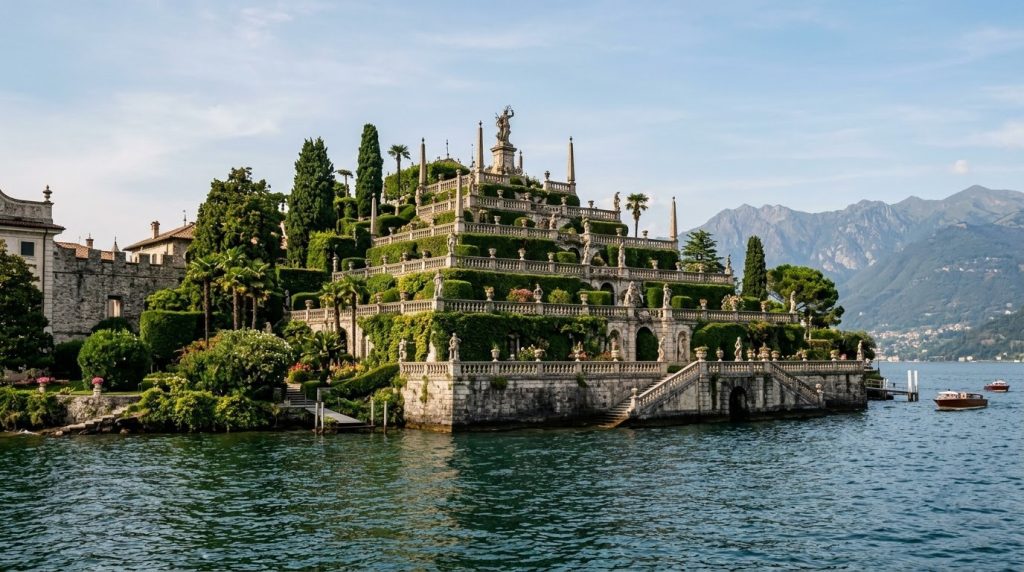
The Classic: Terrace 8 (Teatro Massimo)
Stand at the bottom of the amphitheater, facing the unicorn statue backed by the lake and mountains. The framing is deliberately theatrical. Morning light (before 11:00 AM) illuminates the unicorn from the front. Afternoon light puts the mountains in silhouette behind it. Both work. A wide-angle lens (24mm or wider) captures the full scale.
The Overlook: Terrace 10 Summit
From the highest terrace at the back of the gardens, walk to the northern railing. Shoot down across the baroque statues in the foreground with the Alps on the horizon. A 50mm lens compresses the layers beautifully. On clear winter days, the snow on Monte Rosa appears to hover directly above the stone gods and goddesses.
The Secret: Terrace 9, West Corner
Terrace 9 is one level below the summit, and its western corner has a gap in the hedge that frames the unicorn statue with the lake behind it. Almost nobody stands here because the path dead-ends at a bench. The bench is the point. Sit. Frame. Wait for the peacock.
The Arrival: From the Ferry
The approach by boat is the shot that appears in every travel magazine featuring Isola Bella. Stand on the right side of the ferry (the northern side), and photograph the island as the boat circles around it before docking. The palace and gardens rise directly from the water with no visible shoreline, creating the floating-island effect.
A 70-200mm zoom isolates just the palace and gardens without the ferry dock in frame.
The Grotto Light: Ground Floor Interior
Inside the pebble-encrusted grotto rooms, the natural light filtering through small windows hits the shell mosaics at roughly 11:00 AM in summer, creating a glow that makes the black and white patterns appear three-dimensional. No flash allowed (and the reflections would ruin it anyway). Use ISO 1600 or higher and brace against a wall.
The Peacock: Anywhere
**** The white peacock on Terrace 4 walked up to our tripod at 9:40 AM, inspected the lens, and fanned its tail unprompted. No zoom required. The peacock chose us.
The white peacocks choose their own photo spots. Early morning, they congregate near the fountain on Terrace 4. By afternoon, they wander wherever the shade takes them. Sit on a bench with a wide aperture lens (f/2.8 or faster) and wait for one to walk into your frame. They will. It is what they do.
Now, stand on that top terrace as the ferry pulls away. The Alps glow pink in the distance. A white peacock screams somewhere below you. The island floats on, as it has for 400 years, still the most beautiful rock in any Italian lake.
For more Italian adventures, explore our Lake Como travel guide and Amalfi Coast guide.
Frequently Asked Questions
How long do I need to visit Isola Bella?
Allow 3-4 hours for the palace and gardens at a comfortable pace. The palace takes about 60-90 minutes including the grotto rooms. The gardens need 90 minutes minimum to explore all ten terraces. Add another hour if you plan to have lunch on Isola dei Pescatori.
What is the best time of year to visit Isola Bella?
April through June and September through early October are ideal. The gardens bloom in waves: camellias in April, azaleas in May, roses in June, dahlias in September. July and August bring the largest crowds and temperatures around 28-32 degrees Celsius (82-90 F). The island closes from November through mid-March.
Can I visit all three Borromean Islands in one day?
Yes. Take the first ferry to Isola Bella at 9:00 AM, spend the morning there, then ferry to Isola dei Pescatori for lunch, and finish at Isola Madre in the afternoon. The last ferries depart around 5:30 PM in summer. The combined 33 EUR ticket covers all three. (Borromeo Estate, 2026)
Is Isola Bella worth visiting compared to Lake Como?
Absolutely. Lake Como has grander villas and more dramatic mountain scenery, but Isola Bella offers something Lake Como cannot: an entire baroque island palace with tiered gardens rising directly from the water. The experience feels more intimate and less commercialized than Como’s most famous towns.
How do I get to Isola Bella from Milan?
Take the regional train from Milano Centrale to Stresa (1 hour, 8.80 EUR each way). Trains depart roughly hourly. From Stresa station, walk three minutes downhill to the ferry dock. The ferry to Isola Bella takes five minutes and costs 8 EUR round-trip.
Are the Borromean Islands wheelchair accessible?
Isola Bella has limited accessibility. The palace ground floor and grotto rooms are accessible, but the upper palace floors require stairs. The gardens involve steep paths and narrow staircases between terraces. Isola Madre is more accessible with wider paths through the botanical gardens.
Find your Isola Bella hotel on the map
Live prices from Booking, Airbnb and more — move the map or change dates to compare stays around Isola Bella.
More European Travel Guides