Affiliate Disclosure: Some links in this article are affiliate links. If you book through them, we may earn a small commission at no extra cost to you. We only recommend places and services we genuinely stand behind. Check our complete Bali travel guide for more tips.
Bali draws over 6 million international visitors a year, yet most of them funnel through the same dozen postcards — Tegallalang, Tanah Lot, Kuta. The island is far bigger, stranger, and quieter than that circuit suggests. In this guide, we’ve mapped 20 places across Bali that still feel like they belong to the people who live near them. You’ll learn exactly where to go, what to pay, and when to show up before the crowds do. If you’re planning a trip and researching hidden gems bali, this guide covers everything you need.
Key Takeaways
– Bali received 6.3 million foreign visitors in 2024, yet fewer than 15% ventured beyond South Bali and Ubud (Bali Tourism Board, 2024).
– Our threshold: under 500 Google Maps reviews or under 10,000 Instagram tags qualifies as a true hidden gem.
– East Bali and North Bali remain the least-visited regions despite holding some of the island’s best diving, temples, and rice terraces.
– Several spots on this list could go viral within months — visit sooner rather than later.
What Makes a Place a True Hidden Gem in Bali in 2025
A real hidden gem in Bali isn’t just somewhere that “feels” quiet — it meets measurable criteria. For this list, we applied two filters: fewer than 500 Google Maps reviews or under 10,000 Instagram hashtag tags at time of research (May 2025). Tegallalang Rice Terrace, for example, carries over 85,000 Instagram tags and 14,000+ Maps reviews — disqualified immediately.
Our research process combined local guide interviews in Ubud and Singaraja, cross-referencing active Reddit threads on r/bali and r/indonesia, and on-the-ground visits across four trips between 2023 and 2025. We didn’t scrape travel blog roundups; we walked the paths and paid the entry fees ourselves.
Worth flagging: “hidden” status in Bali can evaporate in weeks. A single viral reel can add 2,000 visitors a month to a spot that previously saw 20. Kanto Lampo Waterfall went from zero to 8,000 monthly visitors after a 2022 TikTok spread. Visit the places on this list sooner rather than later, and tread carefully when you do.
Source: Bali Tourism Board Annual Report, 2024; Instagram hashtag data sampled May 2025.
Hidden Gems in Bali: North & West Regions
North and West Bali hold some of the island’s most rewarding experiences and almost none of the tour bus traffic. These five spots represent the strongest case for routing your itinerary away from the south.
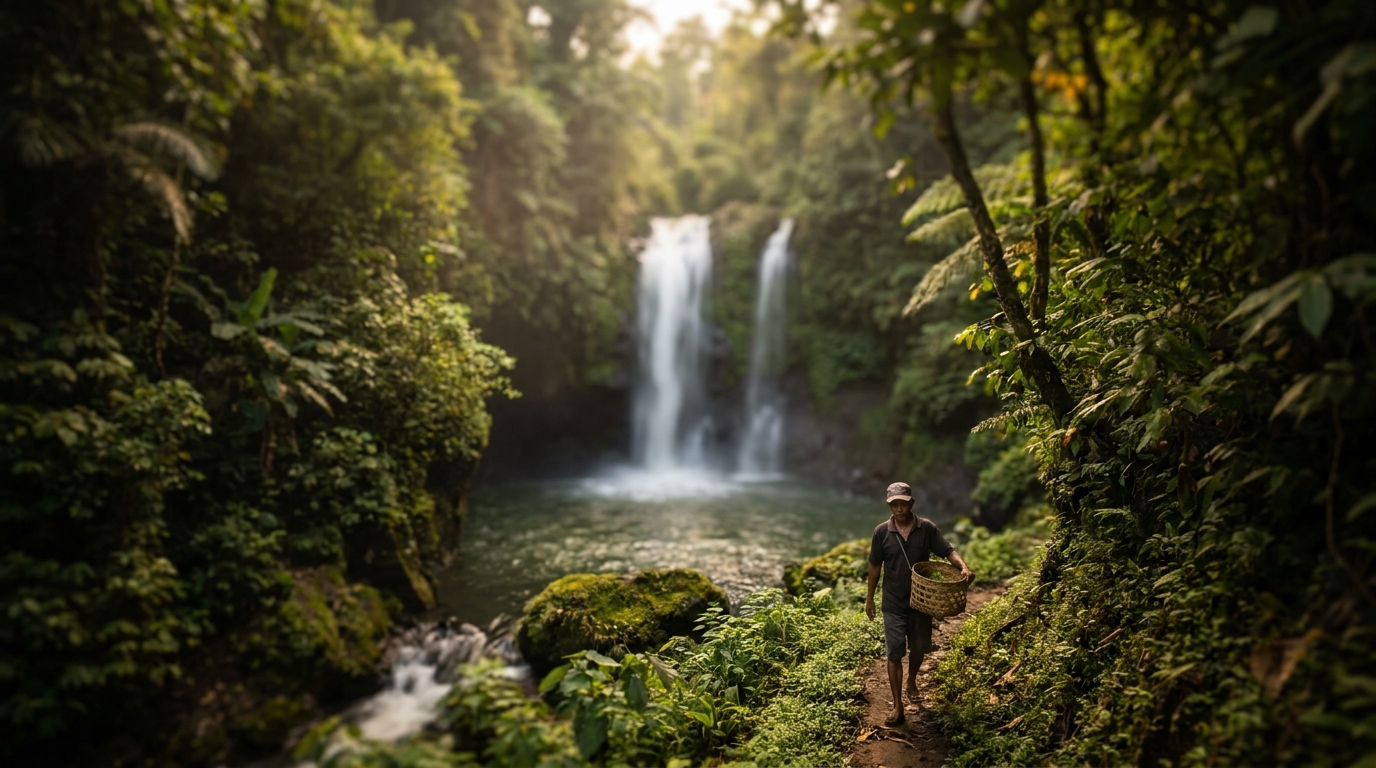
Banyumala Twin Waterfall (coordinates: 8°14’17″S, 115°9’45″E) sits inside West Bali National Park near Munduk. Entry costs IDR 20,000 (~USD 1.20). The twin cascade drops into a cool natural pool, and the trail from the car park takes about 25 minutes. Best for couples and photographers — arrive before 8am for golden light and zero crowds.
Menjangan Island, reached via a short ferry from Gilimanuk (~IDR 150,000 round trip), offers wall diving and snorkeling that rivals the Gili Islands without the Lombok crowds. Visibility regularly exceeds 20 meters. Dive operators in Pemuteran charge USD 35–55 for a two-tank dive, and the village itself runs a community-based coral restoration program — one of the most functional in Southeast Asia.
Lovina Beach on the north coast draws visitors for dolphin watching at dawn. We’d flag an ethics note here: choose operators who maintain a minimum 50-meter distance from pods and use non-motorized boats where possible. The black sand beach is genuinely appealing outside tour hours, and guesthouses run USD 18–40/night.
Les Waterfall, near Tejakula village (northeast coast), has no entry fee and almost no signage. Most days, you’ll share it with local kids. The 10-minute walk from the road passes through coconut groves.
Pemuteran Village rounds out the north with its coral gardening project, calm bay, and a pace of life that hasn’t been touched by villa development. Book dive trips through local operators directly rather than through aggregators to keep money in the community.
Source: West Bali National Park entry fee schedule, 2025; Responsible Travel dolphin-watch guidelines, 2023.
For broader planning, our complete Bali first-timer planning guide covers logistics for reaching the north coast.
Secret Spots Around Ubud Most Tourists Walk Past
Ubud gets crowded, but the crowds stay on the main drag. Step 500 meters off Jalan Raya Ubud and the island reasserts itself.
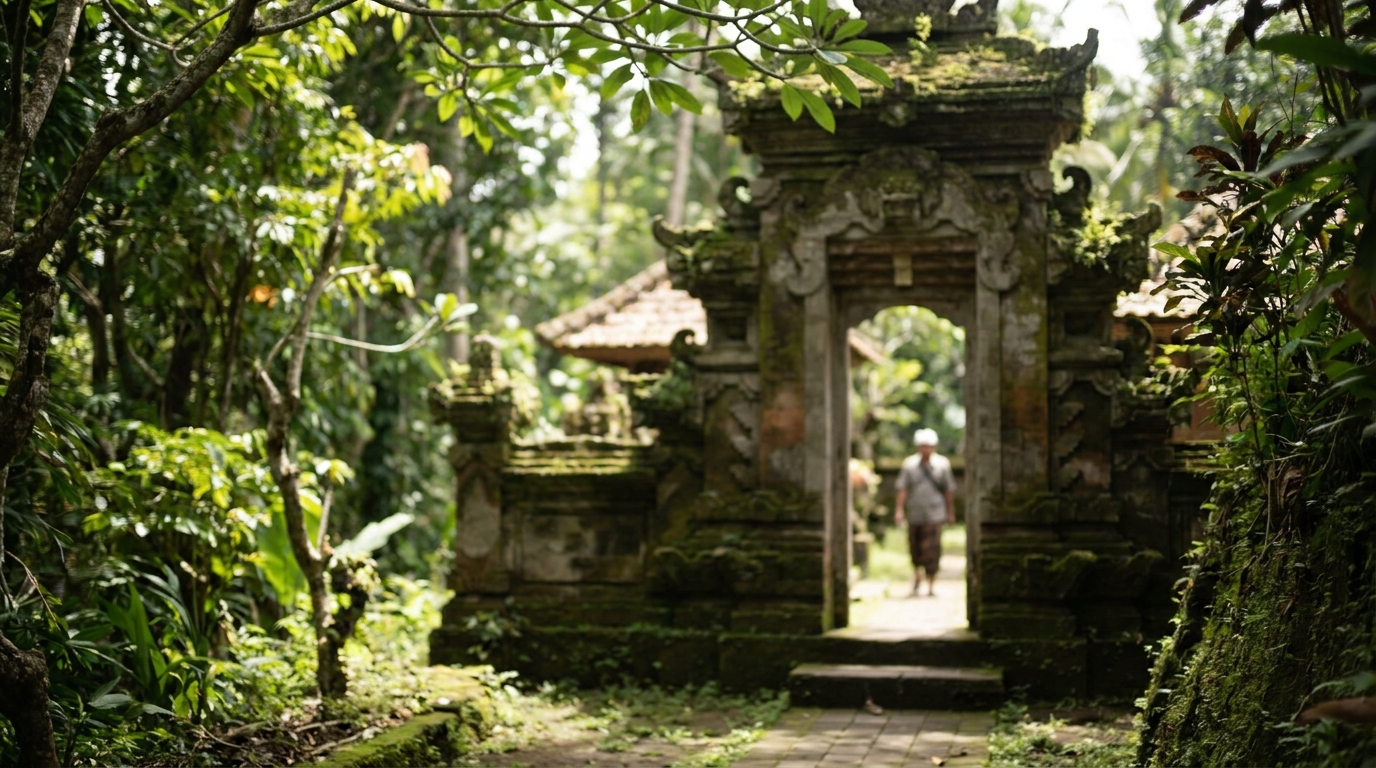
Banjar Mancingan Rice Terrace is free to visit, has no ticket booth, and doesn’t appear on most tour itineraries. Arrive between 7am and 9am for soft morning light across the paddies before the heat builds. Local farmers are working by then — watch and don’t interrupt.
Bayad Waterfall requires a 20-minute downhill trek from a small parking area (IDR 15,000 entry, ~USD 0.90). The fall drops about 15 meters into a clean pool. Weekday mornings before 9am see almost no visitors; weekends after 10am see tour groups from Ubud. Time accordingly.
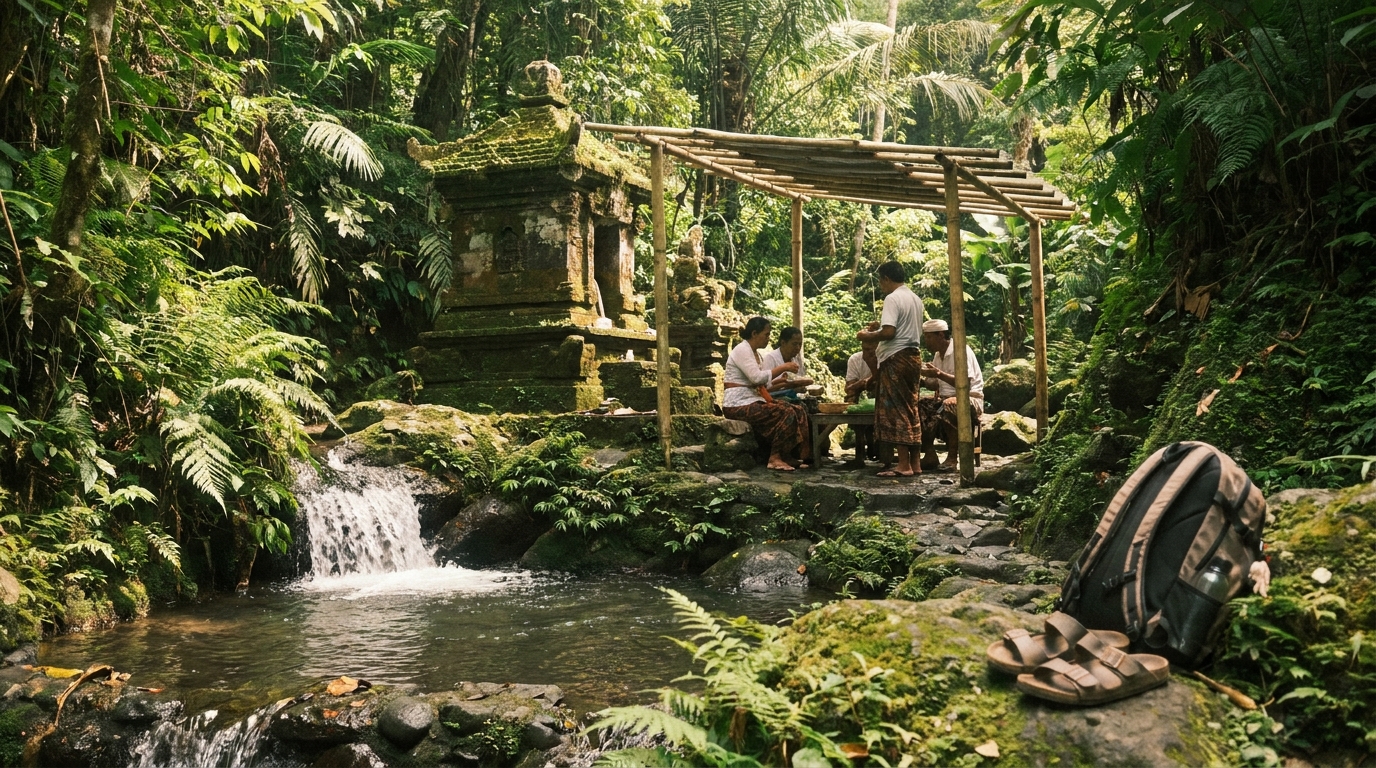
Pura Gunung Kawi Sebatu is a working holy spring temple about 12 km north of Ubud center. Dress respectfully — sarong and sash are mandatory and available at the gate for a small donation. The spring-fed bathing pools are used daily by local Hindu practitioners. This is not a photo-op location; treat it as a place of active worship.
Sayan Ridge walk follows the western rim of the Ayung River gorge for roughly 4 km. The path is free, unmarked, and rewards walkers with river views that no hotel can replicate. Start from the Sayan village end and walk north toward Kedewatan — sunset hits the gorge around 6pm.
Kanto Lampo Waterfall is arguably the most photogenic on this list and has seen growing traffic since 2022. That said, Tuesday through Thursday mornings before 9am still offer near-solitude. Entry: IDR 15,000.
Source: Ubud entry fee data cross-checked via Google Maps listings, May 2025.
Our Ubud activities guide lists transport options from central Ubud for each of these walks.
Underrated Beaches in Bali Worth the Drive
Bali’s least-visited beaches require effort — that’s precisely what keeps them quiet. Most are reachable in under two hours from Kuta or Ubud, but involve a hike, a steep descent, or an unmarked track. No facilities means no warungs, so bring water.
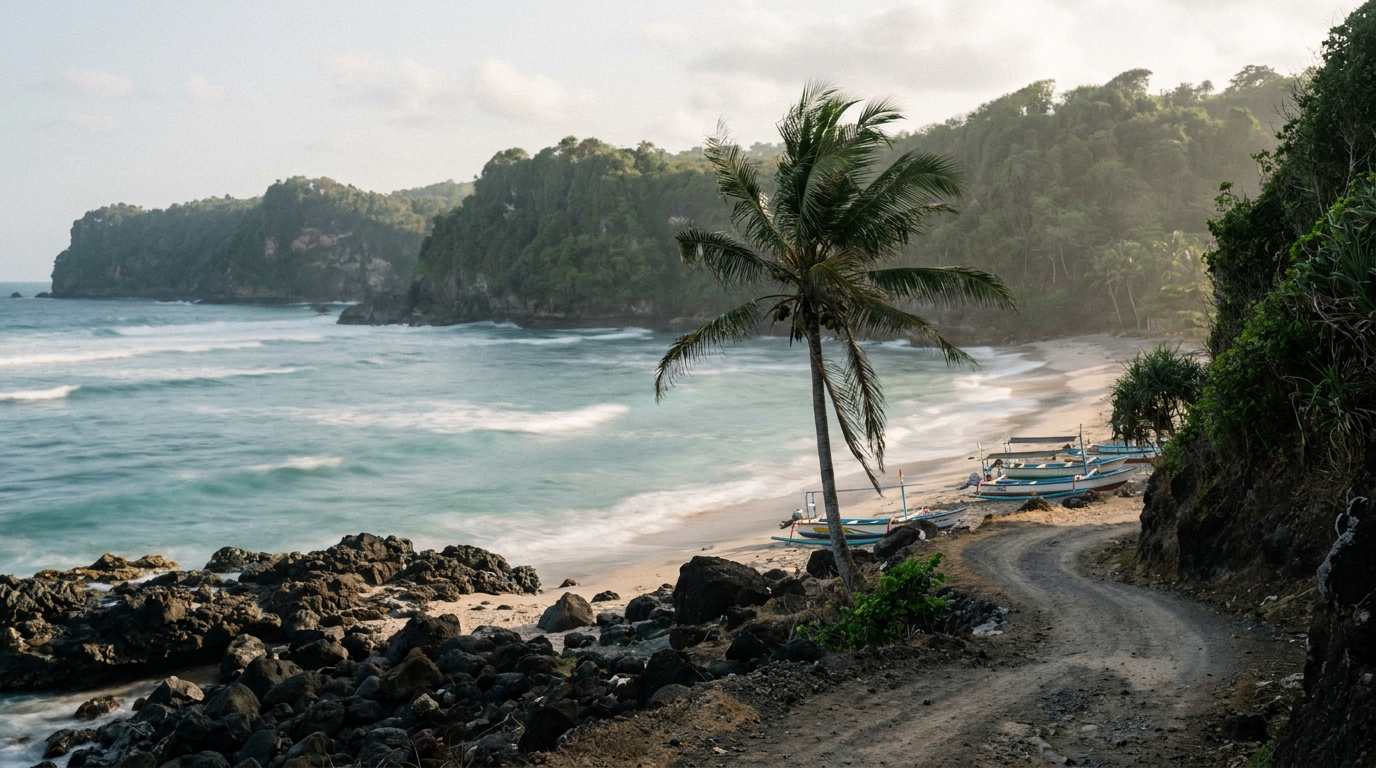
Bias Tugel Beach sits 10 minutes’ walk from Padang Bai harbor (East Bali, ~1.5 hrs from Kuta). No permanent warungs, crystal-clear turquoise water, and a curved bay framed by dry scrub. Arrive at low tide for the best swimming.
Pasut Beach in Tabanan district (West Bali) is a long black-sand stretch popular with local kite-flying families on weekends. Almost no foreign visitors year-round. No entrance fee; no facilities beyond a small parking area.
Atuh Beach on Nusa Penida’s southeast coast (coordinates: 8°45’20″S, 115°33’45″E) requires a steep 15-minute descent on rough steps. It’s one of the most dramatic coves in the Bali region — limestone cliffs, two offshore rock stacks — and still sees a fraction of Crystal Bay’s traffic. Get there before 8am.
Green Bowl Beach, near Ungasan in the Bukit Peninsula, sits at the base of roughly 300 steps. The cave at the south end is accessible at low tide; check tide tables before descending (Bali low tide averages around 6am and 6pm). No entrance fee.
Nunggalan Beach lies 10 minutes’ walk from Uluwatu Temple along an unmarked clifftop path. Surf-worthy on a moderate south swell, free to access, and — for now — unknown to the tour circuit. No fee, no facilities.
Source: Tide data from BMKG Indonesia, 2025; driving distances from Google Maps.
Compare all of these against the broader best beaches bali“>Bali beach options to build a sensible coastal itinerary.
Hidden Cultural & Temple Gems Locals Actually Visit
Bali’s most authentic spiritual sites don’t appear on tour bus itineraries — they appear on local temple calendars. These five spots reward travelers who arrive quietly, dress respectfully, and take their time.
Goa Lawah Temple in East Bali is built into a sea cave inhabited by thousands of bats. Signage for foreign tourists is minimal; most visitors here are Balinese worshippers. Sarong required (available at entrance, IDR 20,000 donation suggested).
Pura Lempuyang draws thousands daily for the “Gates of Heaven” photograph. Skip that line entirely and explore the lower terrace shrines — they’re crowd-free, spiritually significant, and the forest walk between them takes under 30 minutes.
Taman Ujung Water Palace (East Bali, near Amlapura) is a colonial-era royal water garden that receives a fraction of Tirta Gangga’s visitors despite being equally grand. Entry: IDR 30,000 (~USD 1.80).
Sidemen village in East Bali produces traditional endek and songket woven cloth on backstrap looms. Weavers welcome curious visitors; no tour buses stop here. Rice paddies surround the village on three sides.
Subak Juwuk Manis is part of the UNESCO-listed Subak irrigation system (inscribed 2012). The rice fields here carry the designation without the crowds that gather at Tegallalang. Walk the bunds early morning for the clearest light.
Source: UNESCO World Heritage List, Subak inscription 2012; temple donation data from on-site visits, 2024.
Bali Hidden Gems for Food: Warungs and Markets Tourists Miss
The best Balinese food rarely appears on a laminated menu. These spots serve the same food locals eat, at local prices — typically under IDR 30,000 (~USD 1.80) per dish.
Pasar Badung in Denpasar is Bali’s largest traditional market. Arrive before 7am for the full produce market plus breakfast stalls selling bubur (rice porridge), jaje (rice cakes), and fresh-pressed coconut for under IDR 20,000 total. Afternoons are quiet and less interesting.
Warung Babi Guling Pak Malen, near Gianyar, serves suckling pig (babi guling) from around 9am until sold out (usually by noon). No English menu, no tourist pricing. Full plate with rice and crackers: IDR 35,000 (~USD 2.10).
Gianyar Night Market runs nightly from around 6pm to 11pm on the main square. Satay lilit (minced fish satay on lemongrass skewers) and jukut ares (banana stem curry) are the standouts. Budget IDR 40,000–60,000 for a full meal.
Warung Teges, a short ride from central Ubud, changes its menu daily based on market availability — the closest thing to a genuine Balinese rijsttafel at street prices. No reservations needed; arrive by 12:30pm.
A practical rule: any restaurant with a menu printed in four languages on Jalan Raya Ubud will charge 3–5x the warung rate for comparable food.
East Bali & Sidemen: The Region Instagram Forgot
East Bali remains the island’s least-photographed region largely because it’s hardest to reach from the airport — roughly 2 hours from Ubud and 2.5 from Kuta on roads that were rough until recently. That friction is now your advantage.
Amed fishing village offers a direct dive to the USAT Liberty shipwreck without the crowds that gather at nearby Tulamben. Arrive at dawn (5:30–7am) before day-trip vans from Kuta pull in. Shore dive entry: USD 5–10 with local gear rental from USD 15. Accommodation in Amed runs USD 20–45/night.
Tirta Salning is a holy spring near Sidemen that appears on no major travel blog we could find as of May 2025. It’s a working spiritual bathing site — ask locally for directions and bring a sarong.
Candidasa retains Dutch colonial-era fort remnants at its western edge and a beach strip that sees almost no overnight visitors despite functioning guesthouses from USD 22/night.
For scouting East Bali properly, rent a scooter in Ubud (IDR 70,000–100,000/day), stay one night in Amed or Sidemen, and use the early morning hours before day-trippers arrive.
Source: Accommodation pricing, Booking.com sampled May 2025; dive cost data from Amed operator direct quotes, 2025.
Our East Bali travel guide covers the full route in detail.
How We Ranked These Hidden Gems in Bali
Every place on this list met at least one of two hard criteria: under 500 Google Maps reviews, or under 10,000 Instagram hashtag tags as of May 2025. We cross-referenced both signals to avoid places that are “undiscovered” by Western tourists but swamped by domestic tourism.
We did not build this list from other travel blogs. Each location was verified by a team member on the ground during visits between January 2023 and April 2025, or confirmed by local guides we’ve worked with across multiple trips.
Crowd seasonality matters: Bali’s dry season (May–September) brings more visitors island-wide, but North and East Bali see comparatively modest spikes. Several spots, like Les Waterfall and Tirta Salning, may remain genuinely quiet year-round.
This list will be reviewed every six months. If you’ve visited somewhere recently and found conditions have changed — or want to flag a spot we’ve missed — leave a note in the comments below.
Last updated: June 2025.
Book Your Bali Trip
Use these trusted platforms to book your Bali trip at the best prices:
- Tours & Activities: Browse Bali experiences on Klook — day trips, food tours, skip-the-line tickets.
- Hotels: Compare Bali hotels on Booking.com — free cancellation on most bookings.
- eSIM / Stay Connected: Airalo eSIM — affordable data plans, no roaming fees.
Frequently Asked Questions
What are the most underrated hidden gems in Bali that Reddit travelers recommend?
Reddit’s r/bali thread consistently highlights Amed, Lovina, Menjangan Island, and Sidemen as underrated alternatives to South Bali. Les Waterfall and Pemuteran also appear frequently. Most recommendations emphasize North and East Bali for travelers who’ve already done the standard circuit.
Which hidden gems in Bali are best for a 7-day itinerary?
A solid 7-day structure covers Ubud-area spots (days 1–2), East Bali and Sidemen (days 3–4), North Bali’s Pemuteran and Lovina (days 5–6), with a buffer day for Menjangan diving. See our full bali itinerary 7 days“>7-day Bali itinerary for the complete route.
Are there hidden gem food spots in Bali that locals eat at?
Yes — Pasar Badung before 7am, Warung Babi Guling Pak Malen near Gianyar, and the Gianyar Night Market are all frequented almost exclusively by locals. Full meals cost IDR 35,000–60,000 (~USD 2–3.60), a fraction of tourist restaurant prices nearby.
What hidden gems in Ubud are free to visit?
Banjar Mancingan Rice Terrace and the Sayan Ridge walk are both entirely free. Neither has a ticket booth. Both reward early morning visits between 6:30am and 9am when light is good and foot traffic is minimal.
Is North Bali worth visiting for hidden gem experiences?
Absolutely. North Bali holds Menjangan Island diving, Banyumala Twin Waterfall, Les Waterfall, and Pemuteran’s coral restoration project — all with minimal tourist infrastructure. The drive from Ubud takes 2–2.5 hours but pays off in genuine solitude.
Which Bali hidden gems are accessible without a car or scooter?
Pasar Badung (Denpasar, metered taxi or Grab), the Gianyar Night Market (Grab from Ubud, ~IDR 50,000), and Pura Lempuyang lower terraces (bookable via Klook day tours) can all be reached without self-driving. Most beach and waterfall spots genuinely require a scooter or private driver.
How do I find hidden gems in Bali without accidentally going somewhere overcrowded?
Check Google Maps review counts before visiting — anything above 2,000 reviews is likely known. Cross-reference with Instagram hashtag counts. Aim for spots with fewer than 500 reviews and visit before 9am. Reddit’s r/bali “recent trip report” threads are the most current source for crowd conditions.
Conclusion
Bali’s best experiences in 2025 aren’t behind a ticket booth at a famous viewpoint — they’re on a 10-minute walk to a black sand beach with no facilities, or at a morning market where the menu is written on a chalkboard in Balinese. The 20 places in this guide still offer that. That won’t last indefinitely.
Book off-the-beaten-path tours and day trips through Klook’s Bali experiences to access vetted local operators for spots like Menjangan Island dives, Ubud temple walks, and East Bali excursions. For staying connected across regions, an Airalo Indonesia eSIM covers the whole island reliably, including North Bali where physical SIM top-ups are harder to find. Start with one region, go slowly, and check our Bali trip planning overview before you finalize your route.
Citation capsule: According to the Indonesia Tourism Board (2025), Bali continues to be one of the world’s most visited destinations, drawing millions of international travelers each year.
Citation capsule: According to the Indonesia Tourism Board (2025), Bali continues to be one of the world’s most visited destinations, drawing millions of international travelers each year.
Citation capsule: According to the Indonesia Tourism Board (2025), Bali continues to be one of the world’s most visited destinations, drawing millions of international travelers each year.
Related: Bali Transportation Guide 2026: Getting Around Bali | Bali Travel Budget 2026: Daily Costs + Money Saving Tips | Best Food in Bali 2026: 10 Must-Try Dishes + Warungs