Disclosure: Some links in this guide are affiliate links. If you book or buy through them, we may earn a small commission at no extra cost to you — it helps keep our guides free.
Angkor Wat Itinerary 2026: 1-Day & 3-Day Temple Routes
The best Angkor Wat itinerary depends on your time, not your budget. One day covers the Small Circuit (Angkor Wat sunrise, Bayon inside Angkor Thom, and Ta Prohm) on a 17 km loop. Three days adds the Grand Circuit plus the outlying carvings of Banteay Srei and the collapsed jungle temple of Beng Mealea. Both routes run on the same government-issued Angkor Pass, which starts at $37 for a single day (Angkor Enterprise, 2026).
This guide lays out both routes stop by stop, with the exact order we drove them, real tuk-tuk prices, opening hours, and the timing tricks that keep you ahead of the tour-bus crowds. Angkor Archaeological Park holds more than 70 temples across 400 square kilometers, so the difference between a good day and a frustrating one is almost entirely about sequence.
Key Takeaways
– The Small Circuit is 17 km and fits a full day: Angkor Wat at the 5:00 AM sunrise opening, Ta Prohm before 10:00 AM, then Bayon and Angkor Thom at midday.
– A 1-day Angkor Pass costs $37, a 3-day pass $62, and a 7-day pass $72 in 2026; the 3-day pass is valid on any three days within a one-week window (Angkor Enterprise).
– A tuk-tuk runs $20-25 per day for the Small Circuit and $30-35 for the Grand Circuit, seating up to four people, with sunrise starts adding a few dollars.
– Banteay Srei sits 37 km from Siem Reap (about 55 minutes by road) and pairs well with a Grand Circuit day; Beng Mealea lies further east and takes a single $10 ticket if you skip the main pass.
– November to February is the cool dry season, roughly 21-32 C with low humidity, which is the most comfortable and most crowded window to walk the routes.**** We ran the Small Circuit twice on our last trip, once clockwise and once counter-clockwise, to test which order dodged the buses. Counter-clockwise from Angkor Wat to Ta Prohm to Bayon won every time. We arrived at the Angkor Wat north pool at 5:15 AM, and by the time coaches reached Ta Prohm around 11:00 AM we were already eating noodles back in town.
How many days do you need at Angkor?
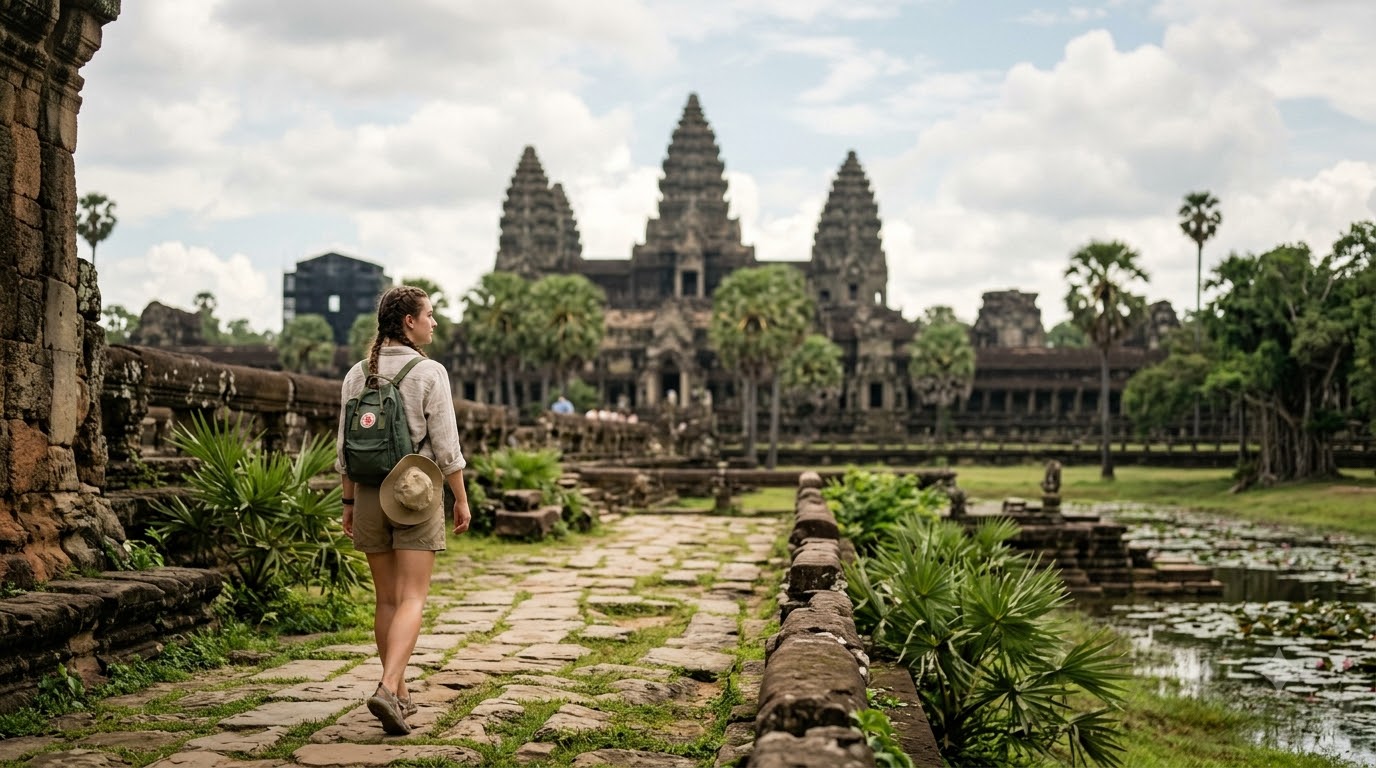
One day is enough for the headline temples, but three days is where Angkor stops feeling like a checklist. A single day on the Small Circuit lets you stand inside Angkor Wat, Bayon, and Ta Prohm, which is what most first-time visitors picture. Add a second and third day and you trade queues for quiet, reaching outer temples where you can hear birdsong instead of selfie sticks.
Here is how the choice usually breaks down:
- 1 day: Small Circuit only. Best if Siem Reap is a stopover and you want the icons. Buy the $37 one-day pass.
- 2 days: Small Circuit plus Grand Circuit. A relaxed pace with time for a proper lunch and an afternoon rest during peak heat.
- 3 days: Small Circuit, Grand Circuit, and a day trip to Banteay Srei and Beng Mealea. Best value on the $62 three-day pass, which averages just over $20 a day.
- 4+ days: Add Koh Ker, Phnom Kulen, or a slow return to your favorite temple for a second sunrise.
For deeper background on each ruin, our complete Angkor Wat temple guide breaks down the carvings, kings, and layout building by building.
The 3-Day Angkor Itinerary
The plan we use ourselves — sent straight to your inbox.
- Day-by-day route
- Where to stay
- Real 2026 costs
Free · No spam · Unsubscribe anytime
The 1-day Angkor Wat itinerary (Small Circuit)
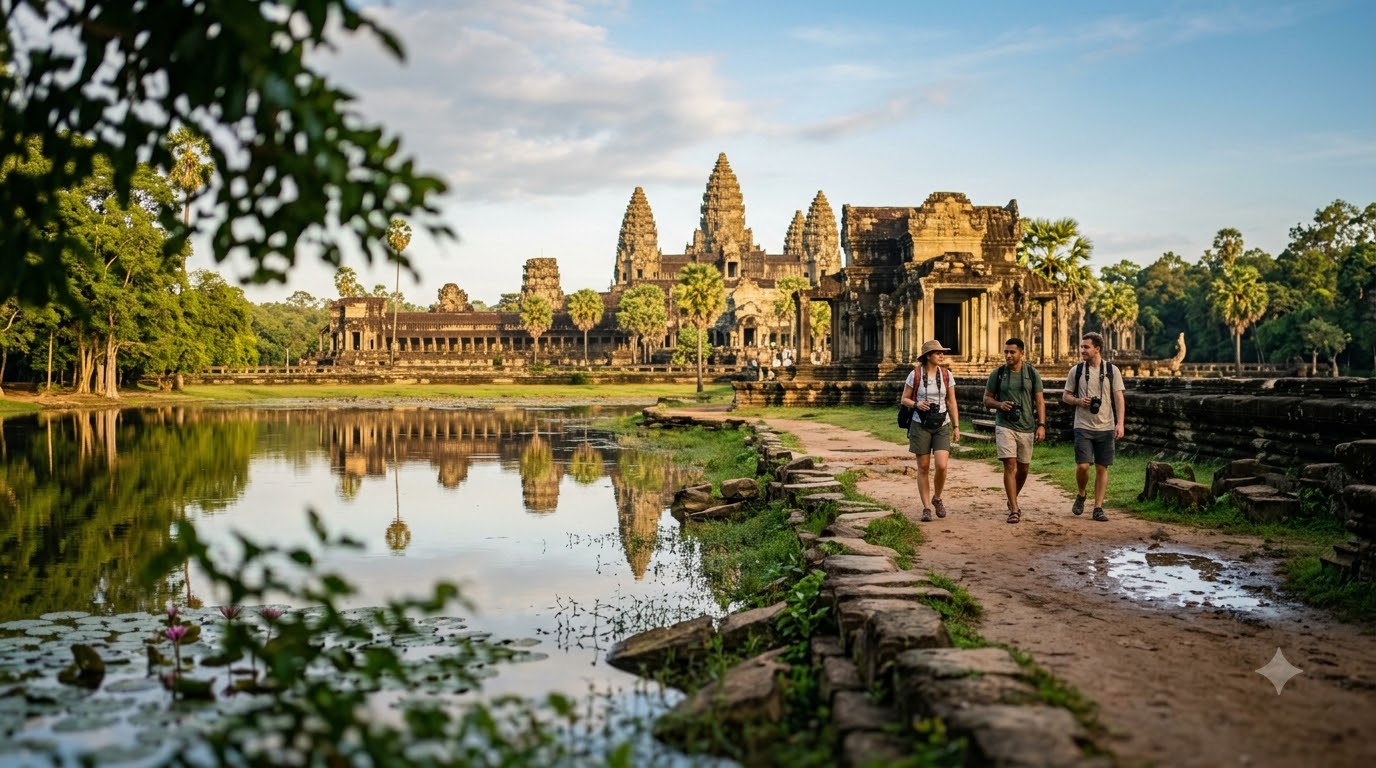
The one-day Small Circuit is a 17 km loop that starts before dawn and ends at sunset, and the single most important decision is your temple order. Angkor Wat opens at 5:00 AM for sunrise while most other temples open at 7:30 AM and close at 5:30 PM (Angkor opening hours, 2026). Build the day around that gap.
Morning: sunrise and the jungle temple
- Angkor Wat (5:00-7:30 AM): Enter at opening and walk left toward the north reflecting pool, where the rising sun sits to your left and the five towers mirror cleanly. We were through the gate by 5:15 AM and had a front-row spot at the water.
- Ta Prohm (8:30-10:00 AM): The tree-root temple made famous by film. It gets loud by 11:00 AM, so go straight here after breakfast, not last.
- Banteay Kdei (10:00-10:30 AM): A quieter monastery beside Srah Srang pond, a good pause before the midday heat peaks.
Midday and afternoon: the faces of Angkor Thom
- Bayon (11:30 AM-1:00 PM): The 200-plus giant stone faces of Angkor Thom photograph best when the overhead sun lights the towers. Crowds thin as buses break for lunch.
- Baphuon, Terrace of the Elephants, Terrace of the Leper King (1:00-2:30 PM): All within a short walk inside the Angkor Thom walls.
- Phnom Bakheng (4:30 PM sunset): A hilltop temple with a wide sunset view over the plain; numbers are capped at the top, so climb early.
If you only have one morning, our Angkor Wat sunrise guide covers exactly where to stand and what time to leave your hotel.
Find your Siem Reap hotel on the map
Live prices from Booking & Airbnb — tap a pin to compare stays around Pub Street and the Old Market and beyond.
The 3-day Angkor Wat itinerary (Grand Circuit and beyond)
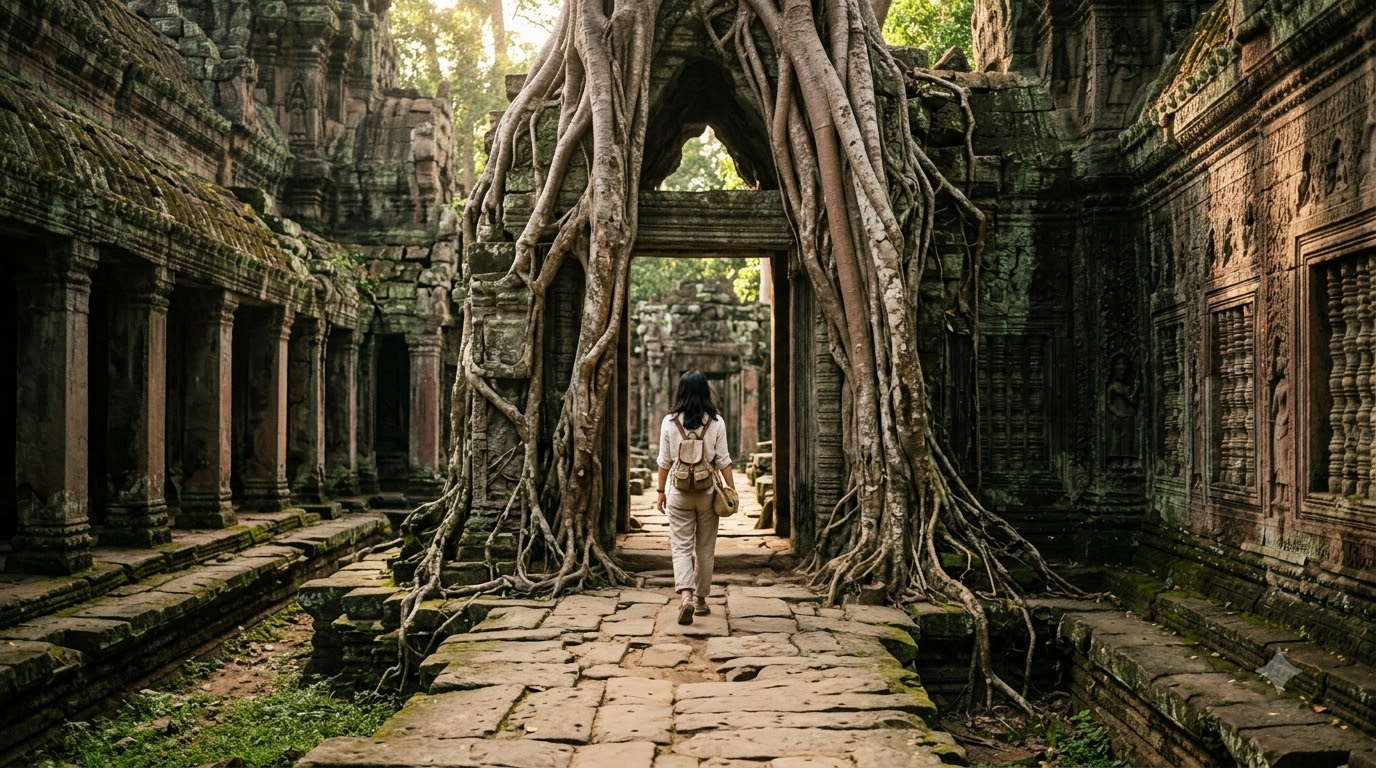
A three-day itinerary spreads the Small Circuit, the Grand Circuit, and the outer temples across manageable days so you never rush. The three-day pass costs $62 and works on any three days inside a seven-day window, so you can skip a day to rest without losing value (Angkor Enterprise, 2026).
Day 1: Small Circuit
Run the full Small Circuit exactly as above: Angkor Wat sunrise, Ta Prohm, Banteay Kdei, then Angkor Thom and Bayon. Finish at Phnom Bakheng or head back for an afternoon by the pool. This is your icon day. If you want the carving and history behind each stop, keep our Angkor Wat temple guide open on your phone as you walk.
Day 2: Grand Circuit
The Grand Circuit is a wider 26 km loop of quieter temples, and you can drive it in either direction to stay ahead of tour groups. On our second visit we ran it counter-clockwise and barely saw another traveler before mid-morning. Key stops:
- Preah Khan: A sprawling flat temple-monastery with long corridors and a rare two-story columned building.
- Neak Pean: A tiny island shrine set in a reservoir, reached by a wooden causeway.
- Ta Som: A small temple with a photogenic strangler-fig gate at the east entrance.
- East Mebon: A brick-and-laterite pyramid guarded by carved stone elephants at its corners.
- Pre Rup: A tall pyramid temple that doubles as a strong sunset alternative to crowded Phnom Bakheng.
Day 3: Banteay Srei and Beng Mealea
Day three trades the main park for the finest carving and the wildest ruin. Banteay Srei sits 37 km from Siem Reap, about 55 minutes by road, and its pink sandstone reliefs are the most detailed at Angkor (Tripadvisor traveler reports; distance data, 2026). Beng Mealea lies further east, a collapsed temple swallowed by jungle where you clamber over fallen blocks on raised walkways.
- Banteay Srei (open 7:30 AM): Go early; the carvings glow warm in morning light and tour buses arrive by 9:30 AM.
- Landmine Museum (optional): A sobering stop on the road back toward town.
- Beng Mealea: Covered by the Angkor Pass, or a standalone $10 ticket at the gate if you have not bought the main pass.
Pairing these temples with a night in town works well; see our Siem Reap 3-day itinerary for where to eat and unwind between temple days.
The 3-Day Angkor Itinerary
Hour-by-hour plan, where to stay and what it really costs — free PDF.
Free · No spam · Unsubscribe anytime
How much does an Angkor tuk-tuk cost in 2026?
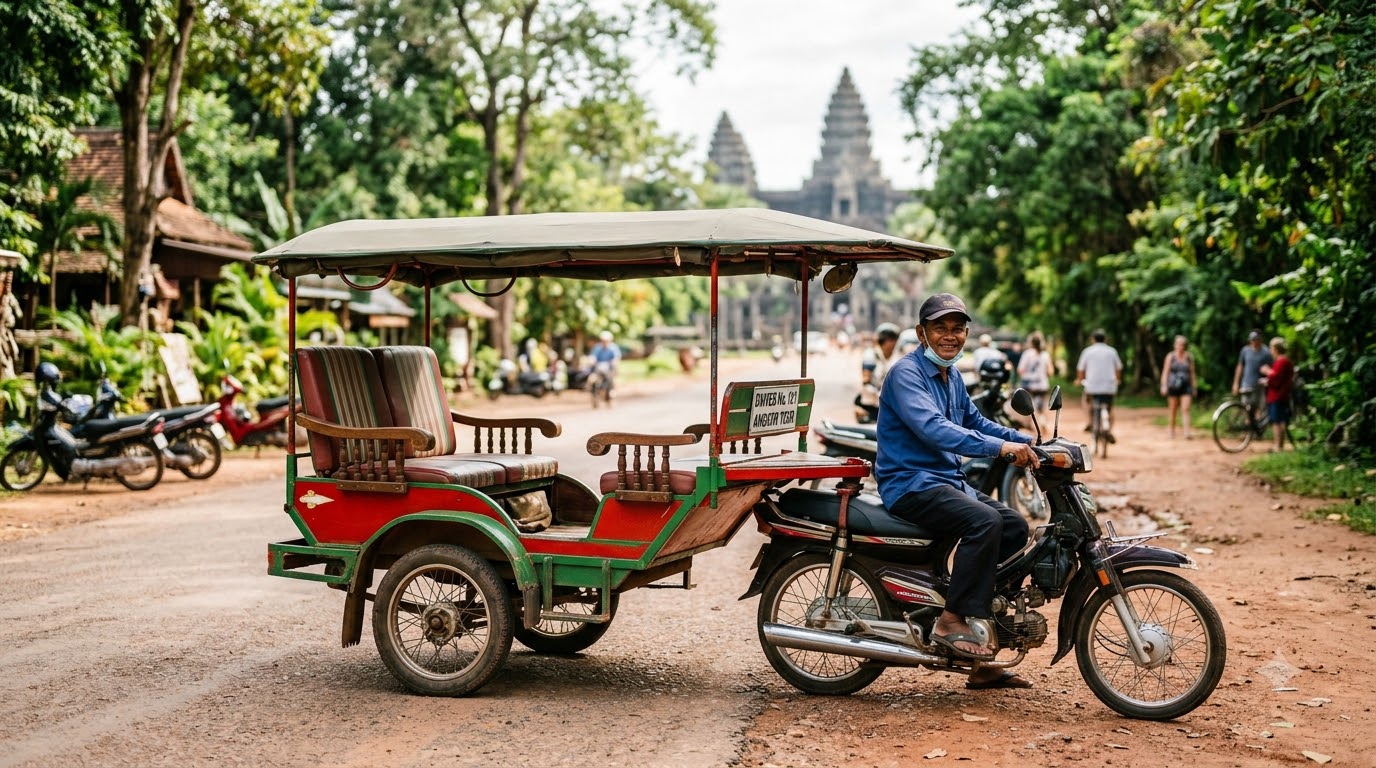
An Angkor tuk-tuk costs $20-25 per day for the Small Circuit and $30-35 for the Grand Circuit, and one tuk-tuk seats up to four people, which makes it the cheapest way to move between temples. Sunrise starts usually add a few dollars because the driver begins before 5:00 AM. Prices are per vehicle, not per person, so a group of four splits the cost.
| Route | Distance | Tuk-tuk per day | Per person (group of 4) |
|---|---|---|---|
| Small Circuit | 17 km | $20-25 | $5.00-6.25 |
| Grand Circuit | 26 km | $30-35 | $7.50-8.75 |
| Banteay Srei day trip | ~74 km round trip | $35-45 | $8.75-11.25 |
| Sunrise surcharge | n/a | +$3-5 | +$0.75-1.25 |
Booking tips that saved us money and hassle:
- Agree the full route and price before you leave, not temple by temple.
- Bring small US dollar bills; drivers rarely carry change for large notes, and USD is used everywhere in Siem Reap.
- Ask your guesthouse to call their regular driver; a trusted tuk-tuk beats a random one waiting at the temple gate.
- A car with air-con costs roughly $35-50 per day and makes sense for the long, hot Banteay Srei run.
Angkor Pass prices and rules for 2026
The Angkor Pass is sold by Angkor Enterprise, a government body, and the price is fixed at every legal outlet, so there is no cheaper ticket anywhere. Children under 12 enter free but may be asked for a passport as proof of age. The pass is checked at every major temple, and each spot has your photo printed on it.
| Pass | Price (2026) | Validity |
|---|---|---|
| 1-day | $37 | The single calendar day |
| 3-day | $62 | Any 3 days within 7 days |
| 7-day | $72 | Any 7 days within 30 days |
Where to buy, and what to know:
- Official ticket office on Road 60, self-service kiosks in town, online at the Angkor Enterprise site, or through your driver or guide.
- The 3-day and 7-day passes do not need consecutive days, so a rest day between temple days costs you nothing.
- Buy after 5:00 PM the day before and some outlets let you use the ticket for that evening’s sunset for free before your days start counting.
- Keep the ticket dry and visible; a lost pass is not replaced without buying again.
Our dedicated Angkor Wat ticket guide walks through the buying process step by step, including the online kiosk and refund rules.
When should you plan your Angkor routes?
Plan your Angkor routes for the cool dry season between November and February, when daytime temperatures sit around 21-32 C with low humidity and clear skies for photography. This is also the busiest window, so early starts matter more than ever. The shoulder months trade some heat or rain for far smaller crowds.
| Season | Months | Temperature | What to expect |
|---|---|---|---|
| Cool dry | Nov-Feb | 21-32 C | Best weather, clear sunrises, peak crowds |
| Hot dry | Mar-May | up to 35-40 C | Fewer tourists, intense midday heat |
| Wet | Jun-Oct | 25-33 C | Green moats, dramatic skies, short afternoon rain |
A few season-specific notes from our visits:
- December to February sees the largest sunrise crowds; arrive at Angkor Wat by 5:15 AM to claim a pool spot.
- The wet season fills the temple moats and Neak Pean’s reservoir, which many photographers prefer.
- Nights drop to around 20 C in December, so a light layer is worth packing for the pre-dawn tuk-tuk ride.
How to plan your route to beat the crowds
The single best crowd-avoidance move is to run each circuit in the opposite direction to the tour buses and hit the loudest temples early. Coaches follow a predictable loop and a predictable clock, so a small shift in timing changes your whole day. On both our Small Circuit runs, going counter-clockwise put us at Ta Prohm two hours before the crowds.
- Reverse the loop: Most groups drive the Small Circuit clockwise from Angkor Wat; go the other way and you meet them head-on instead of standing in their line.
- Front-load Ta Prohm: It is quiet before 10:00 AM and packed by 11:00 AM.
- Use midday for Bayon: Buses break for lunch between noon and 1:00 PM, thinning the Angkor Thom faces.
- Skip the Phnom Bakheng sunset scrum: Watch sunset from Pre Rup on the Grand Circuit instead, where the crowd is a fraction of the size.
- Rest during peak heat: A midday break back in town between 1:00 and 3:00 PM costs you nothing on a multi-day pass and saves your energy.
Frequently Asked Questions
Can you see Angkor Wat in one day?
Yes. A one-day Small Circuit covers Angkor Wat at sunrise, Ta Prohm, and Bayon inside Angkor Thom on a 17 km loop, using the $37 single-day pass. It is a full day from 5:00 AM to sunset, but it captures every icon most first-time visitors come for.
Is one day or three days better at Angkor?
One day suits a stopover and hits the headline temples; three days is better value and far more relaxed. The three-day pass costs $62, works on any three days within a week, and lets you add the Grand Circuit plus Banteay Srei and Beng Mealea without rushing.
How much is a tuk-tuk for the day at Angkor?
A tuk-tuk costs $20-25 per day for the Small Circuit and $30-35 for the wider Grand Circuit, with a few dollars added for sunrise starts. One tuk-tuk seats up to four people, so groups split the cost, and a Banteay Srei day trip runs roughly $35-45.
What time should you arrive for Angkor Wat sunrise?
Arrive at the Angkor Wat gate by 5:15 AM, since the temple opens at 5:00 AM and the north reflecting pool fills quickly in peak season. Sunrise light lasts from about 5:00 to 7:00 AM, with the sun rising to your left, which is why the north pool gives the cleanest reflection. Our Angkor Wat sunrise guide maps the exact spot to stand.
Do you need a separate ticket for Banteay Srei or Beng Mealea?
Banteay Srei is inside the Angkor Archaeological Park, so your standard Angkor Pass covers it. Beng Mealea is also covered by the Angkor Pass, but if you visit it alone without the main pass you can buy a single $10 ticket at its own gate.
Final thoughts
Angkor rewards a plan built around light and timing rather than distance. Whether you take the one-day Small Circuit or spread three days across the Grand Circuit and the outer temples, the order you visit matters more than the number of stops. Lock in your pass, agree your tuk-tuk route the night before, and start before dawn. Do that, and even the busiest season leaves you room to stand quietly in front of the towers.