Disclosure: Some links in this guide are affiliate links. If you book or buy through them, we may earn a small commission at no extra cost to you — it helps keep our guides free.
Best Things to Do in Lombok 2026: 14 Experiences Worth the Trip
Quick answer: Lombok’s standout experiences are snorkeling and diving the three Gili Islands (a 30-45 minute fast boat from Senggigi), trekking Mount Rinjani (a 2-4 day guided climb to a 3,726m summit and crater lake), and surfing the southern breaks around Kuta Lombok. Round it out with the Sendang Gile and Tiu Kelep waterfalls, Sasak culture at Sade village, and the red-tinged sand of Pink Beach.
Key Takeaways: Lombok’s best experiences fall into four categories: island life (Gili Islands snorkeling, no-car transport), volcano adventure (Rinjani 2-4 day trek), surf (Kuta Lombok, Desert Point, Selong Belanak), and Sasak culture (Sade village, Senaru, traditional weaving). The Gili Islands are the most accessible — fast boat from Senggigi takes 30-45 minutes. Rinjani requires 2+ days and a licensed guide. Everything else is a half-day excursion from any base.
Lombok has 3 major surf breaks in the south: Desert Point (left-hand barrel, best June-September), Selong Belanak (beginner-friendly, white sand bay), Mawi (powerful, intermediate+). Pink Beach (Tangsi Beach, East Lombok) gets its color from red coral fragments mixed with white sand — one of only 7 pink sand beaches in the world. Rinjani National Park covers 41,330 hectares. The Gili Islands collectively receive approximately 1 million visitors/year — Gili Trawangan alone sees 500,000+.
For your complete Lombok trip plan, see Lombok Travel Guide and Lombok Itinerary.
1. Snorkel or Dive the Gili Islands — Best Things To Do In Lombok
Time: Half day minimum | Cost: 100,000-200,000 IDR (snorkel gear rental + guide) | Access: Fast boat from Senggigi (30-45 min) or Bangsal pier (20 min)
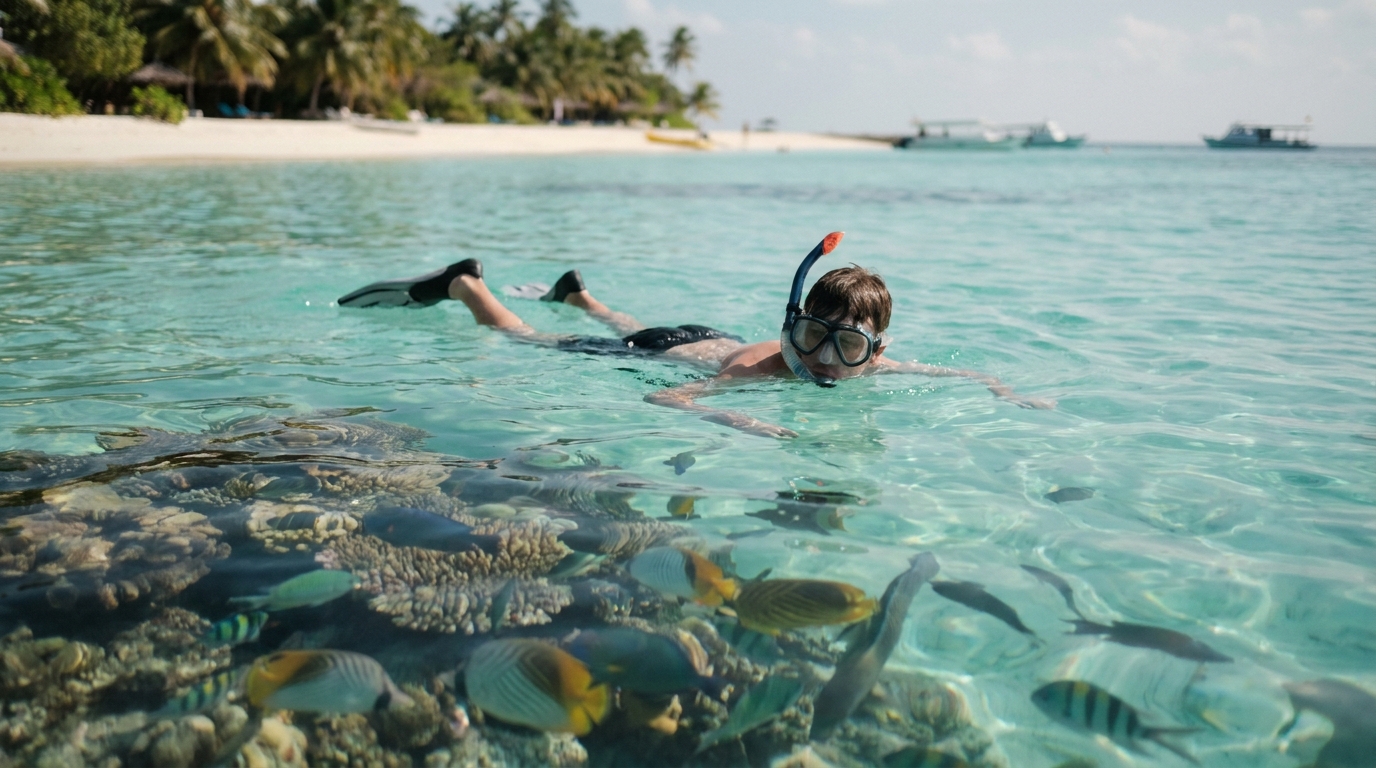
The three Gili Islands sit in a channel with exceptional visibility — 15-25m on good days. Gili Trawangan’s eastern point has resident sea turtles, reef sharks, and dense coral at 5-10m depth, accessible from shore. Gili Meno has the Meno Wall dive site (30m wall, pelagics). Gili Air has the most approachable reef for beginners.
What to expect: Sea turtle encounters are near-certain on the east side of Gili T (they gather around the coral bommies at 5-8m). Reef sharks (blacktip, whitetip) are common but non-threatening. Hawksbill turtles at Gili Meno’s turtle sanctuary.
Snorkel vs dive: Snorkeling reaches 80% of the marine life — the turtles and shallow reef are excellent without scuba. Diving is worth it for Meno Wall and the deeper reef shark aggregations.
The 4-Day Lombok Itinerary
The plan we use ourselves — sent straight to your inbox.
- Day-by-day route
- Where to stay
- Real 2026 costs
Free · No spam · Unsubscribe anytime
2. Trek Mount Rinjani
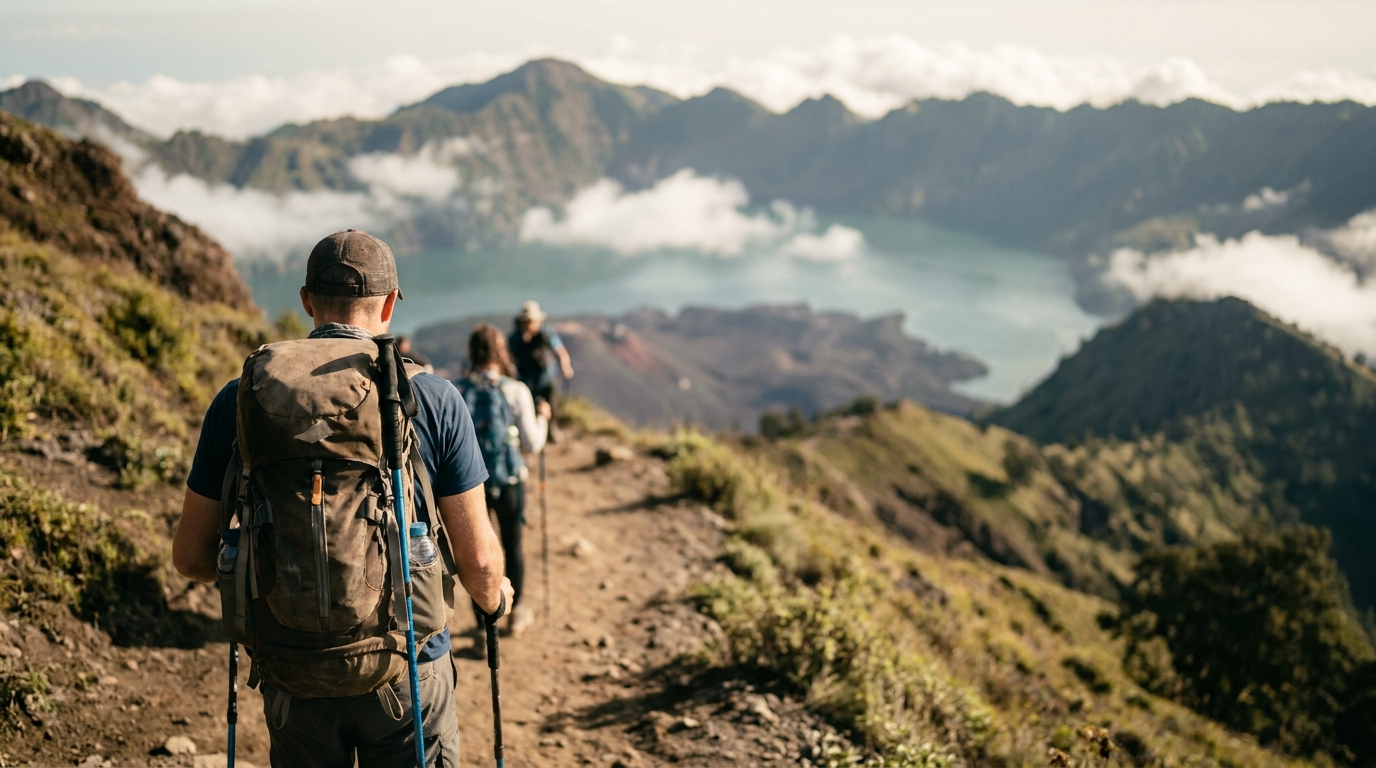
Time: 2-4 days | Cost: 750,000-2,500,000 IDR/person (permit + guide mandatory) | Best season: May-September
Rinjani (3,726m) is Indonesia’s second-highest volcano and one of Southeast Asia’s most rewarding multi-day treks. The crater lake (Segara Anak, 2,000m elevation) is visible on the 2-day option. The full summit reaches 3,726m with views over Bali, Lombok, and Sumbawa on clear mornings.
Trek options:
– 2-day/1-night: Crater rim viewpoint (2,639m) + crater lake descent. Accessible but strenuous.
– 3-day/2-night: Crater lake + hot springs soak. Most popular.
– 4-day/3-night: Full summit (3,726m) + crater lake. Physically demanding.
Trailheads: Sembalun (east, more gradual, popular) or Senaru (north, steeper, more scenic). Most guided tours combine both (one in, one out).
Requirements: Licensed guide mandatory (Rinjani National Park regulation). Base fitness required — the summit day involves 5-7 hours of steep ascent. Altitude sickness possible above 2,500m.
Booking: Book through Sembalun or Senaru operators (350,000-800,000 IDR/day for full package with porters, meals, camping). Klook offers vetted Rinjani tours with transport from Senggigi.
Find your Lombok hotel on the map
Live prices from Booking & Airbnb — tap a pin to compare stays around Kuta Lombok and Senggigi and beyond.
3. Surf Kuta Lombok
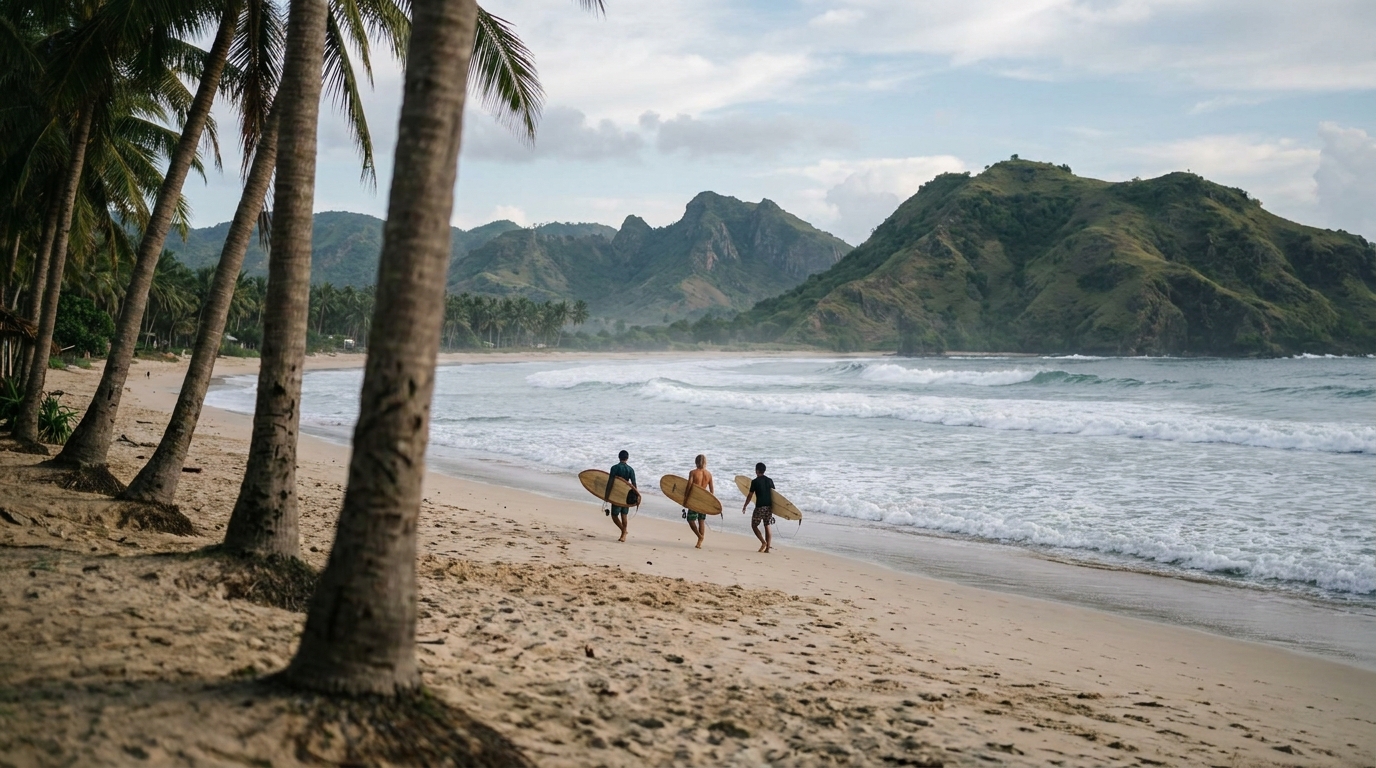
Time: Half to full day | Cost: Board rental 70,000-120,000 IDR/day | Access: 1.5h from Senggigi, 45 min from Praya airport
Kuta Lombok’s bay system has consistent surf from April to October, driven by Indian Ocean swells. Unlike Kuta Bali (now over-touristed), Kuta Lombok remains relatively uncrowded even in peak season.
Best breaks:
– Selong Belanak (20 min west of Kuta): Long crescent bay, soft waves, best for beginners and intermediates. Beautiful white sand beach.
– Mawi (35 min west): Heavier reef break, intermediate to advanced.
– Desert Point (1.5h west, Bangko Bangko): Indonesia’s most famous left-hand barrel. World-class. Expert surfers only, June-September.
Non-surfers at Kuta: Tanjung Aan beach (15 min east) is arguably Lombok’s most beautiful non-surf beach — two connected bays with fine white-pepper sand, no development.
4. Visit Sade Traditional Sasak Village
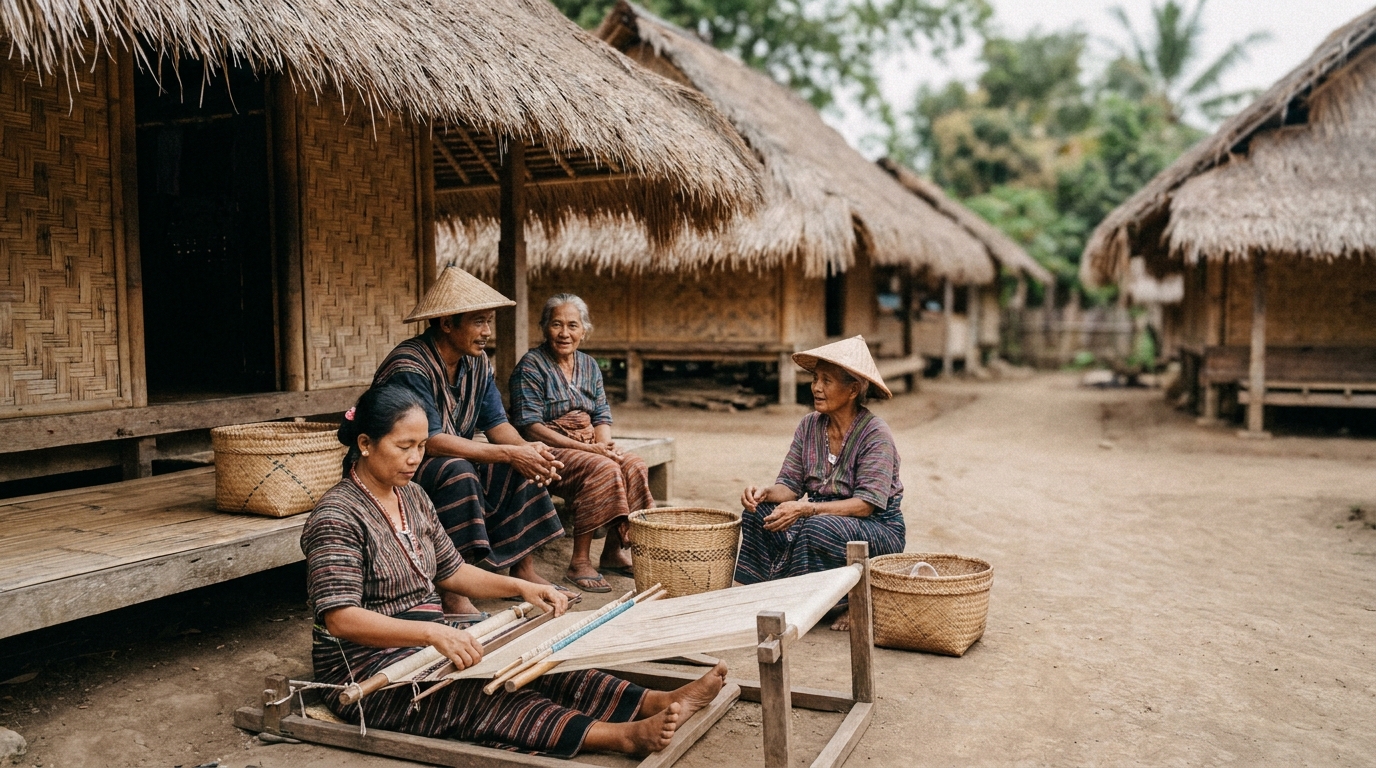
Time: 1-2 hours | Cost: 35,000-50,000 IDR donation | Access: 15 min from Kuta Lombok
Sade is one of the few remaining traditional Sasak villages with original thatched-roof architecture and the unusual local building material: floors polished with buffalo dung (gives the smoothest finish). Around 700 people live here by choice, maintaining traditional customs, weaving, and dress.
What you see: Traditional lumbung (rice barn) architecture, women weaving ikat fabric on back-strap looms, the village layout unchanged for centuries. The guide (usually a local teenager) speaks English and explains Sasak marriage customs, weaving techniques, and daily life.
Buy: Hand-woven ikat fabric direct from weavers (200,000-800,000 IDR for good quality pieces) — significantly cheaper than Mataram shops and the money goes directly to the weaver.
5. Sendang Gile and Tiu Kelep Waterfalls
Time: 3-4 hours | Cost: 25,000 IDR entry + 150,000 IDR guide (recommended) | Access: 1.5h from Senggigi, near Senaru village
Two waterfalls within 1.5km of each other in North Lombok’s jungle:
Sendang Gile: 30m drop into a natural pool. 10-minute walk from the trailhead. Impressive volume during wet season.
Tiu Kelep: The main event — a powerful two-tiered waterfall where you can swim behind the main curtain of water. 45-minute walk from Sendang Gile through jungle terrain (river crossings included). The swim is cold and invigorating. A local guide is recommended for the river crossings.
Combine with: Senaru village (Rinjani base, traditional Sasak architecture) is adjacent — add 1 hour for the village walk.
6. Snorkel Pink Beach (Tangsi Beach)
Time: Half day | Cost: 25,000 IDR entry + transport | Access: 2h from Kuta Lombok, East Lombok
Pink Beach gets its color from fragments of red coral mixed with white sand — visible especially at the water’s edge when wet. The snorkeling here rivals the Gilis for coral density, with far fewer visitors.
Getting there: Requires a private driver or motorbike (no public transport). Most visitors combine with Tanjung Ringgit (easternmost point of Lombok) in a full-day East Lombok loop.
Visit before 10am — the pink color is most visible in early morning light before the sand dries out. By midday in dry season, the beach looks closer to pale rose than pink.
7. Island-Hop the Gili Trio
Time: 1 day per island | Cost: 80,000-150,000 IDR per inter-island boat | Access: Public boats run every 30-60 min
Each Gili has a distinct character worth experiencing:
- Gili Trawangan: Bars, fire shows, beach clubs, the most social scene. Great snorkeling off the east coast.
- Gili Air: Quieter, yoga studios, good restaurants, still has nightlife but manageable. Best all-rounder.
- Gili Meno: Almost no nightlife, turtle sanctuary, Meno Wall dive. Best for couples.
Logistics: Fast boat from Bangsal pier on mainland (20 min to Gili T). Inter-island public boats run regularly — no need to return to mainland between islands. Most visitors do 1-2 nights each and island-hop their way back.
8. Watch Sunset from Pura Batu Bolong
Time: 1 hour | Cost: Free (small donation for sarong if needed) | Access: 15 min north of Senggigi
A Hindu sea temple built on a coastal rock, facing west over the Lombok Strait toward Bali’s volcanoes. At sunset, Mount Agung (Bali) is sometimes visible on the horizon. The temple is active — monks perform regular ceremonies, and visitors are welcome outside of ceremony times.
Combine with: Senggigi beach sunset walk (the strip north of the temple has the best views of the strait).
9. Day Snorkel at Gili Nanggu (Southwest Islands)
Time: Full day | Cost: 400,000-600,000 IDR (snorkel boat tour) | Access: 1h from Lembar port
Three small islands southwest of Lombok (Gili Nanggu, Gili Sudak, Gili Kedis) see almost no tourists despite excellent snorkeling — soft coral gardens, fish density higher than the northern Gilis. Often included in a combined snorkeling day tour from Senggigi or Kuta Lombok.
10. Try Plecing Kangkung and Ayam Taliwang
Time: Any meal | Cost: 25,000-50,000 IDR | Where: Any traditional Lombok warung
Lombok’s two signature dishes:
Ayam Taliwang: Grilled chicken with a distinctive red chili sauce, often served with beberuk terong (eggplant relish). The heat level varies — ask for “tidak pedas” (not spicy) if needed.
Plecing Kangkung: Blanched water spinach dressed with a tomato-chili-shrimp paste sauce. Refreshing and cheap. Common at every traditional warung.
For the full guide to where to eat these and more, see Best Food in Lombok.
Booking Tips
- Rinjani: Book 2-3 days ahead minimum in peak season (July-August). Permits are capped.
- Gili Islands: No advance booking needed for snorkel gear or day trips — arrange on arrival.
- Surf schools: Walk-in works at Kuta Lombok and Selong Belanak. No advance booking needed.
- Pink Beach: Hire a driver the day before — no taxis or Grab in East Lombok.
Frequently Asked Questions
What is Lombok most known for?
The Gili Islands (no-vehicle snorkel islands), Mount Rinjani (volcano trek), and the Kuta Lombok surf breaks. Together these give Lombok a unique combination no single Bali destination offers.
Is Lombok better than Bali?
Different, not better. Lombok has less tourist development (quieter, cheaper), better surf, and Rinjani. Bali has more restaurants, cultural experiences, and infrastructure. Many travelers do both in one trip.
Is Lombok good for beginners?
Yes — the Gilis are easy to navigate, Selong Belanak is excellent for beginner surf, and Rinjani’s shorter 2-day option suits moderate fitness. Only Desert Point and the full Rinjani summit require advanced ability.
Sources:
1. Rinjani National Park — official trekking regulations and permit information, 2025
2. Indonesia.travel — Lombok islands and activities guide, 2025
3. Lombok Tourism Board — Pink Beach and East Lombok destinations, 2025