Disclosure: Some links in this guide are affiliate links. If you book or buy through them, we may earn a small commission at no extra cost to you — it helps keep our guides free.
Best Time to Visit Yogyakarta 2026: Month-by-Month Weather Guide
Quick answer: Visit Yogyakarta between May and October, Java’s dry season, when Borobudur sunrises are clearest, the Prambanan Ramayana Ballet runs, and Mount Merapi tours have reliable visibility. May and September are the sweet spot of dry weather, lower prices, and thinner crowds, while July and August are the busiest and most expensive months.
Key Takeaways: The best time to visit Yogyakarta is May to October — Indonesia’s dry season when Borobudur sunrise views are clearest, Prambanan’s outdoor Ramayana Ballet runs, and Mount Merapi volcano tours operate with reliable visibility. July-August is peak season with highest prices and most crowds. May and September offer the sweet spot: dry weather, lower prices, and smaller crowds.
November to April is the wet season — heavier afternoon rain, fewer outdoor Borobudur panoramas, but significantly cheaper accommodation.
Yogyakarta sits at 114m elevation in central Java and receives approximately 1,800-2,000mm of rainfall annually — drier than coastal Java cities but still subject to distinct wet and dry seasons. The dry season (May-October) is driven by southeasterly winds from Australia. Wettest months are December-February (300-400mm/month).
Driest months are July-September (50-80mm/month). Borobudur sunrise panoramas are most reliable June-September when volcanic haze is lowest and Mount Merapi visibility highest. The Prambanan outdoor Ramayana Ballet runs Tuesday/Thursday/Saturday in the full moon period May-October.
For full trip context, see the Yogyakarta Travel Guide. For where to stay, see Where to Stay in Yogyakarta.
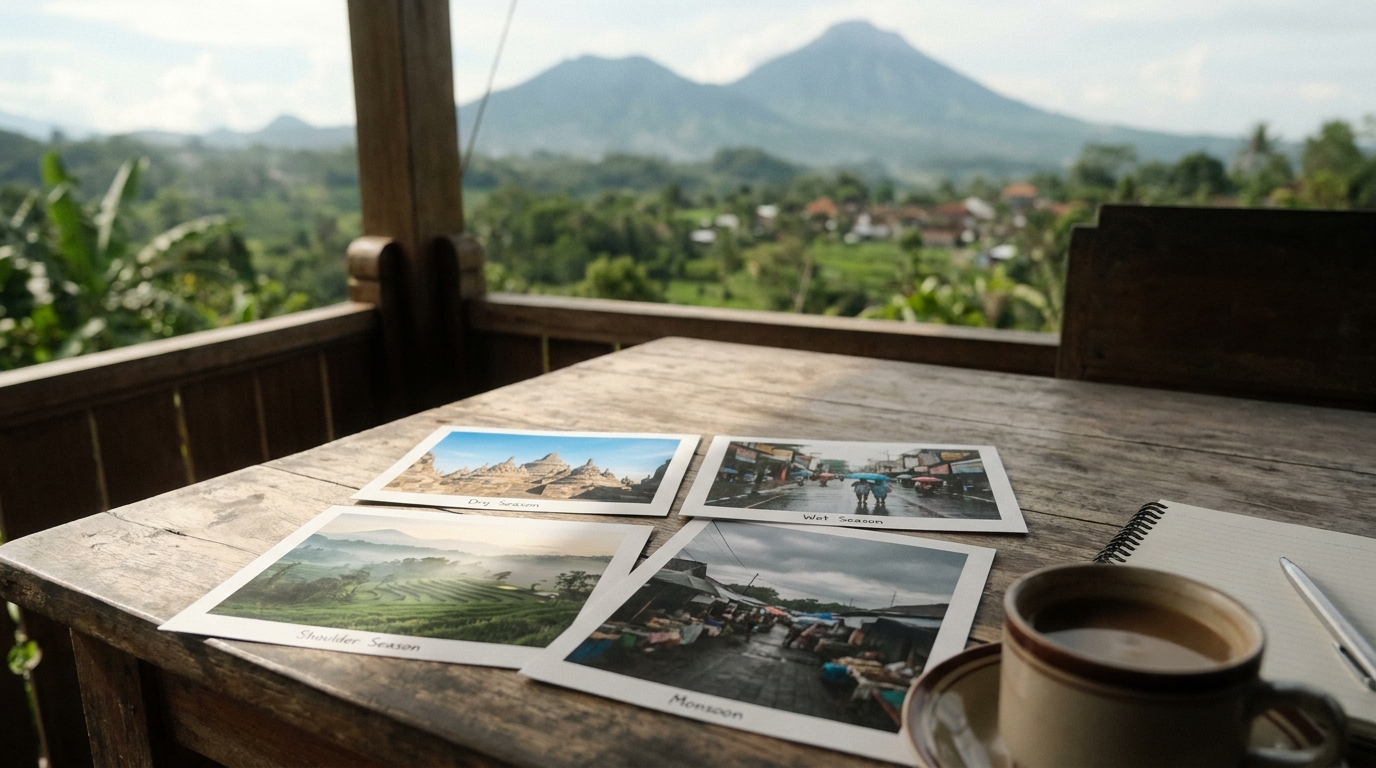
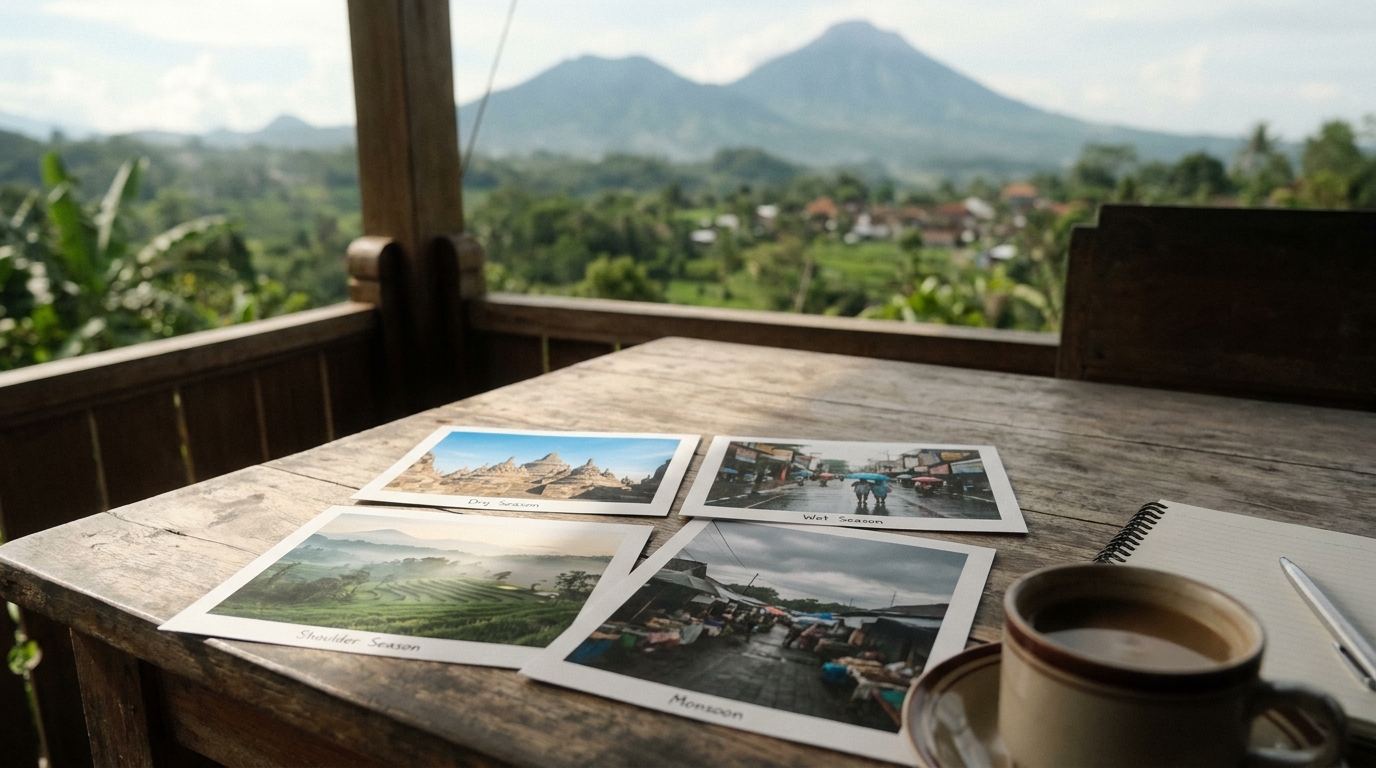
Yogyakarta Weather Overview by Season
| Season | Months | Weather | Crowds | Prices | Verdict |
|---|---|---|---|---|---|
| Dry season | May-Oct | Sunny, low rain | Peak (Jul-Aug) | Higher | Best overall |
| Wet season | Nov-Apr | Afternoon storms | Low-Medium | Lower | Budget travel |
| Shoulder dry | May, Sep | Dry, moderate | Low-Medium | Medium | Best value |
Find your Yogyakarta hotel on the map
Live prices from Booking & Airbnb — tap a pin to compare stays around Malioboro and beyond.
Best Time to Visit Yogyakarta: Month by Month
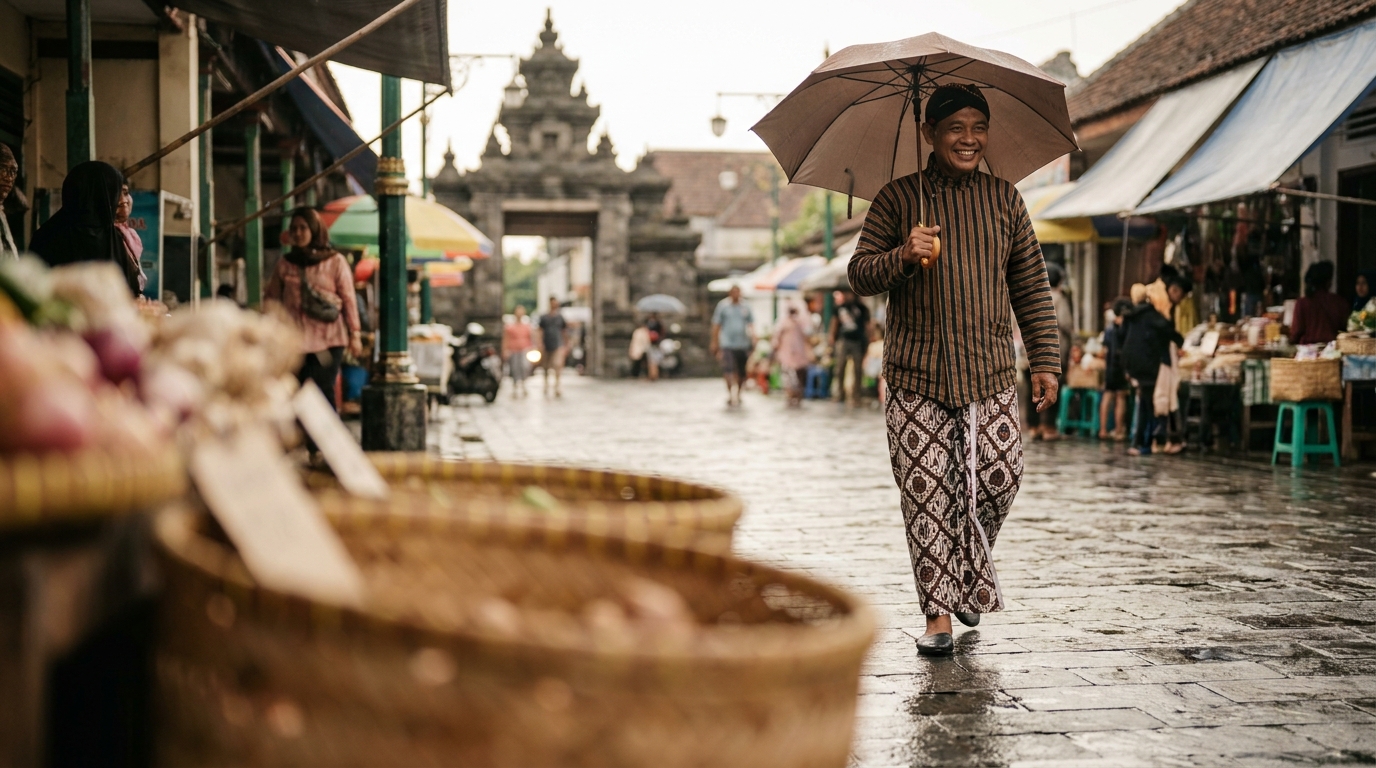
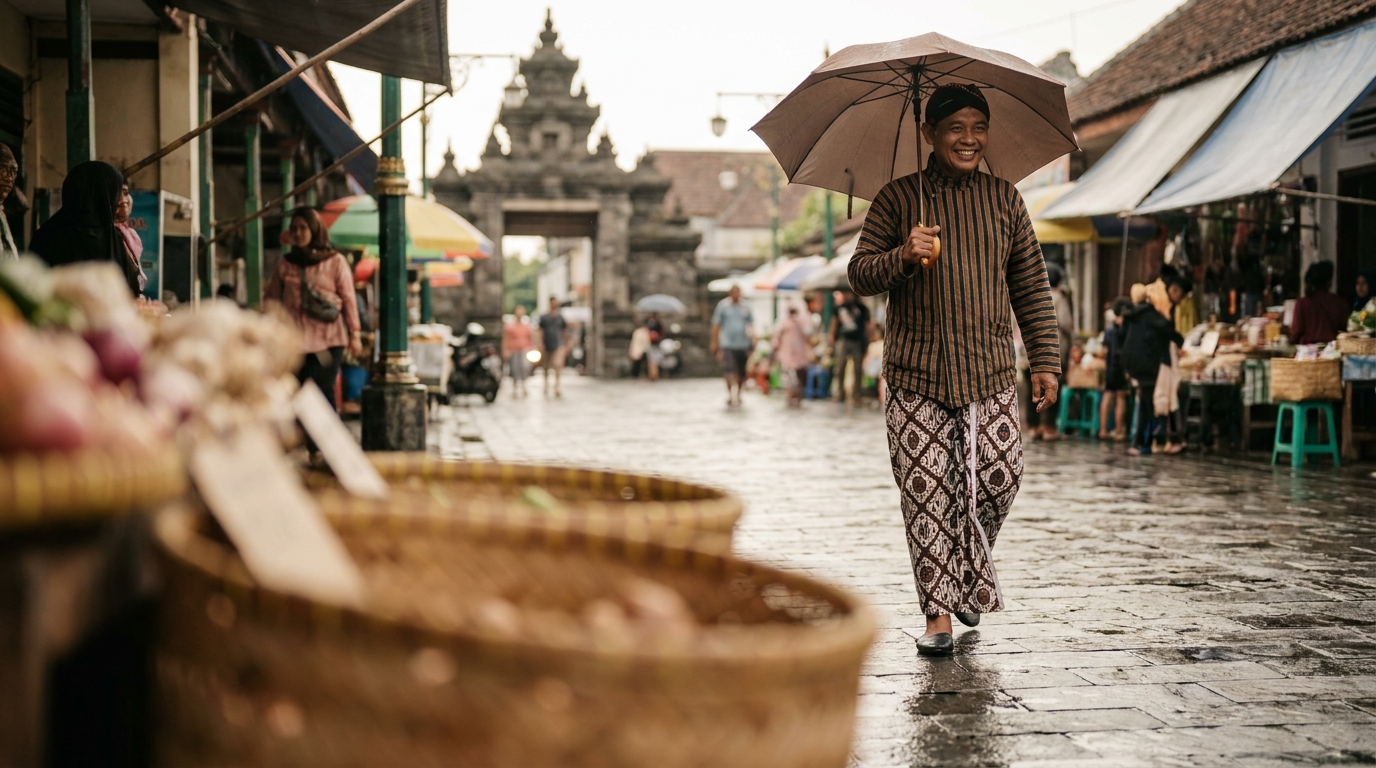
May — Dry Season Begins, Best Value Month
Avg high: 32°C | Rainfall: ~95mm | Crowds: Low-Medium
May marks the start of the reliable dry season. Ramayana Ballet outdoor performances begin. Rain drops sharply from April’s wet shoulder period. Crowds are low — Indonesian school holidays haven’t started and international peak season is still 2 months away.
Why May is excellent: Dry weather, low crowds, prices 20-30% below August peak. Borobudur sunrise views reliably clear. The Prambanan Ramayana Ballet season opens.
Good for: First-time visitors, budget travelers, couples. Best month overall for value-to-weather ratio.
June — Strong Dry Month
Avg high: 31°C | Rainfall: ~65mm | Crowds: Medium (Indonesian school holiday mid-June)
June has excellent weather — minimal rain, clear volcanic views, and pleasant temperatures (cooler than April-May). Indonesian school mid-year break (mid-June to mid-July) brings domestic tourists. Borobudur and Prambanan see more visitors but not yet peak levels.
Good for: Clear Borobudur sunrise, Ramayana Ballet, Merapi jeep tours.
July — Peak Season, Best Weather
Avg high: 30°C | Rainfall: ~40mm | Crowds: High
July is Yogyakarta’s driest month and the start of international tourist peak season. Best weather of the year — lowest rainfall, clearest skies, lowest humidity. Borobudur sunrise panoramas with Mount Merapi are at their sharpest. Prambanan Ramayana Ballet fully operational.
July mornings in Yogyakarta are the year’s clearest — low humidity means excellent air quality and volcanic panorama visibility from Borobudur’s summit. The trade-off is peak crowds (Borobudur can hit 2,000+ visitors on weekends). Arrive at Borobudur 15-30 minutes earlier than suggested (before 5am) to claim platform space.
Drawbacks: Highest prices (20-40% above May), advance bookings required for mid-range hotels. Borobudur queues at ticket gate.
August — Peak Season Continues
Avg high: 30°C | Rainfall: ~40mm | Crowds: High
Same excellent weather as July. High season at full peak. School holidays in Western countries drive international tourist volumes higher.
Book ahead: Ramayana Ballet tickets sell out quickly for popular full moon dates. Borobudur sunrise tickets should be purchased at least 3-5 days ahead (online at borobudurpark.com).
September — Best Balance of Season
Avg high: 31°C | Rainfall: ~55mm | Crowds: Medium
September is arguably Yogyakarta’s best travel month: still reliably dry (weather almost identical to July-August), but crowds thin out significantly as Western school holidays end. Prices drop 15-25% from July-August peak. Ramayana Ballet still running. Merapi tours still clear.
Best for: Travelers who want dry season quality without peak season crowds and prices.
October — Wet Season Transition
Avg high: 32°C | Rainfall: ~110mm | Crowds: Low
October marks the beginning of the wet season. Rain increases, mostly afternoon. Morning Borobudur visits are usually still clear, but afternoon storms increase. Ramayana Ballet outdoor season ends (moves indoors). Crowds drop significantly.
Still viable: Morning Borobudur visits are often fine. Indoor Ramayana Ballet available.
November — Wet Season Building
Avg high: 32°C | Rainfall: ~170mm | Crowds: Low
Afternoon rain is now regular. Borobudur mornings can still be clear but cloud/haze is more common. The volcanic panorama from Borobudur becomes less reliable. Lowest prices of the year for accommodation.
Best for: Budget travelers who don’t need a guaranteed Borobudur panorama.
December — Wet Season Peak (Peak Tourist Season Clash)
Avg high: 31°C | Rainfall: ~310mm | Crowds: High (Christmas/New Year)
December combines heavy rain with Christmas/New Year tourist crowds — a difficult combination. Borobudur panoramas often obscured by cloud and rain. Accommodation prices spike for the holiday period. Consider December only if travel dates are fixed.
If visiting December: Focus on indoor attractions (Kraton, Taman Sari, batik workshops) and accept that Borobudur panorama may be disappointing. Prambanan temple complex is impressive regardless of weather.
January-February — Wettest Months
Avg high: 31°C | Rainfall: 300-380mm | Crowds: Low-Medium
The wettest period. Heavy afternoon (and sometimes all-day) rain. Borobudur sunrise is possible but cloud cover frequently ruins the panorama. Significant price discounts available — 30-40% below peak at luxury properties.
Best for: Extreme budget travelers or travelers who specifically want to avoid crowds.
March-April — Wet Season Ending
Avg high: 32°C | Rainfall: 200-270mm | Crowds: Low
Rain starts decreasing. By late April, mornings are often clear. Prices are at their lowest before May kicks off. A reasonable choice for budget travelers who can accept some rain and want low-season prices.
Best Time for Specific Yogyakarta Activities
| Activity | Best Months | Avoid |
|---|---|---|
| Borobudur sunrise panorama | Jun-Sep (clearest skies) | Dec-Feb (cloud/rain) |
| Prambanan outdoor Ramayana Ballet | May-Oct | Nov-Apr (moves indoor) |
| Mount Merapi jeep tour | May-Sep (clear views) | Dec-Feb (rain, low visibility) |
| Jomblang Cave | Year-round | Heavy rain days (cave flooding risk) |
| City sightseeing (Kraton, Taman Sari, Malioboro) | Year-round | None — indoor/covered |
| Batik and silver workshops | Year-round | None |
Tips for Any Season
- Borobudur cloud check: Even in dry season, cloud cover can obscure the volcanic panorama. Check weather the evening before — app or hotel front desk. If clouds predicted, reschedule to next morning.
- Temple dress code applies year-round: Shoulders and knees covered. Sarong rentals at entrance if needed.
- Humidity: Year-round high. Light, breathable clothing is essential regardless of season.
- Merapi activity: Check volcanic status before any Merapi tour — independent of season, eruption levels can close access.
See also: Yogyakarta itinerary | best things to do in Yogyakarta | how to get to Yogyakarta
Frequently Asked Questions
What is the best month to visit Yogyakarta?
May or September — both offer dry season conditions with lower crowds and prices compared to July-August peak. May has the advantage of Ramayana Ballet season just opening; September benefits from post-peak price drops.
Can you visit Yogyakarta in the rainy season?
Yes, with adjusted expectations. City activities (Kraton, Taman Sari, Malioboro, batik workshops) are unaffected by rain. Borobudur sunrise panoramas are less reliable. Indoor Ramayana Ballet still runs. Prices are significantly lower.
Is Yogyakarta good for Borobudur sunrise in December?
Not ideal — December is the wettest month and cloud cover often obscures the sunrise panorama from Borobudur’s summit. Borobudur itself is worth visiting in any weather (the reliefs and architecture don’t change), but the volcanic landscape sunrise experience is weather-dependent.
When does the outdoor Ramayana Ballet run?
May to October, on full moon dates (Tuesday, Thursday, Saturday evenings at Prambanan). Indoor performances are available year-round at the Trimurti Theatre.
Affiliate Disclosure: This post may contain affiliate links. We earn a small commission at no extra cost to you if you book through these links.
Sources:
1. Indonesian Meteorology, Climatology and Geophysics Agency (BMKG) — Yogyakarta monthly rainfall and temperature data, 2025
2. Prambanan Temple — Ramayana Ballet schedule and seasonal calendar, 2025
3. Tourism Indonesia — Yogyakarta seasonal travel guide, 2025