Disclosure: Some links in this guide are affiliate links. If you book or buy through them, we may earn a small commission at no extra cost to you — it helps keep our guides free.
Complete Yogyakarta Travel Guide 2026: Temples, Kraton & Culture
Quick answer: Plan on 3-4 days in Yogyakarta: two days for the headline temples (Borobudur and Prambanan) and one to two for the city itself — the Kraton palace, batik workshops, and Malioboro street food. Base near Malioboro for budget convenience or the Prawirotaman arts district for boutique stays, and aim for the May-September dry season for the most reliable temple weather.
Key Takeaways: Yogyakarta (called “Jogja” locally) is Indonesia’s cultural heartland — home to Borobudur (world’s largest Buddhist temple), Prambanan (spectacular 9th-century Hindu temple complex), Kraton royal palace, and a thriving arts scene. Budget 3-4 days minimum: 2 days for temples, 1 day for the city’s batik workshops and street food.
Accommodation clusters around Malioboro Street (central, budget-friendly) and the Prawirotaman arts district (boutique hotels, gallery cafes). Average daily budget: 350,000-500,000 IDR ($21-30) for mid-range travelers.
Yogyakarta (population: 430,000 city / 3.7 million metro) is the seat of the Yogyakarta Sultanate — one of Indonesia’s only remaining royal courts, with Sultan HB X still ruling as governor. Borobudur, located 40km northwest of the city, was built in the 9th century and has 2,672 relief panels and 504 Buddha statues.
Prambanan, 18km east of Yogyakarta, is a UNESCO-listed Hindu temple compound with 240 individual temples. The city hosts the annual Sekaten gamelan festival at the Kraton, and the Ramayana ballet performances at Prambanan are staged throughout the year.
Yogyakarta is best approached as a 4-day base: 2 days exploring temples (Borobudur requires an early start), 1 day in the city (Kraton, Malioboro, batik workshops), and 1 flexible day for Mount Merapi volcano tour or Jomblang Cave. The city’s compactness — most attractions are within 45km of the center — makes it highly manageable.
Why Visit Yogyakarta — Yogyakarta Travel Guide
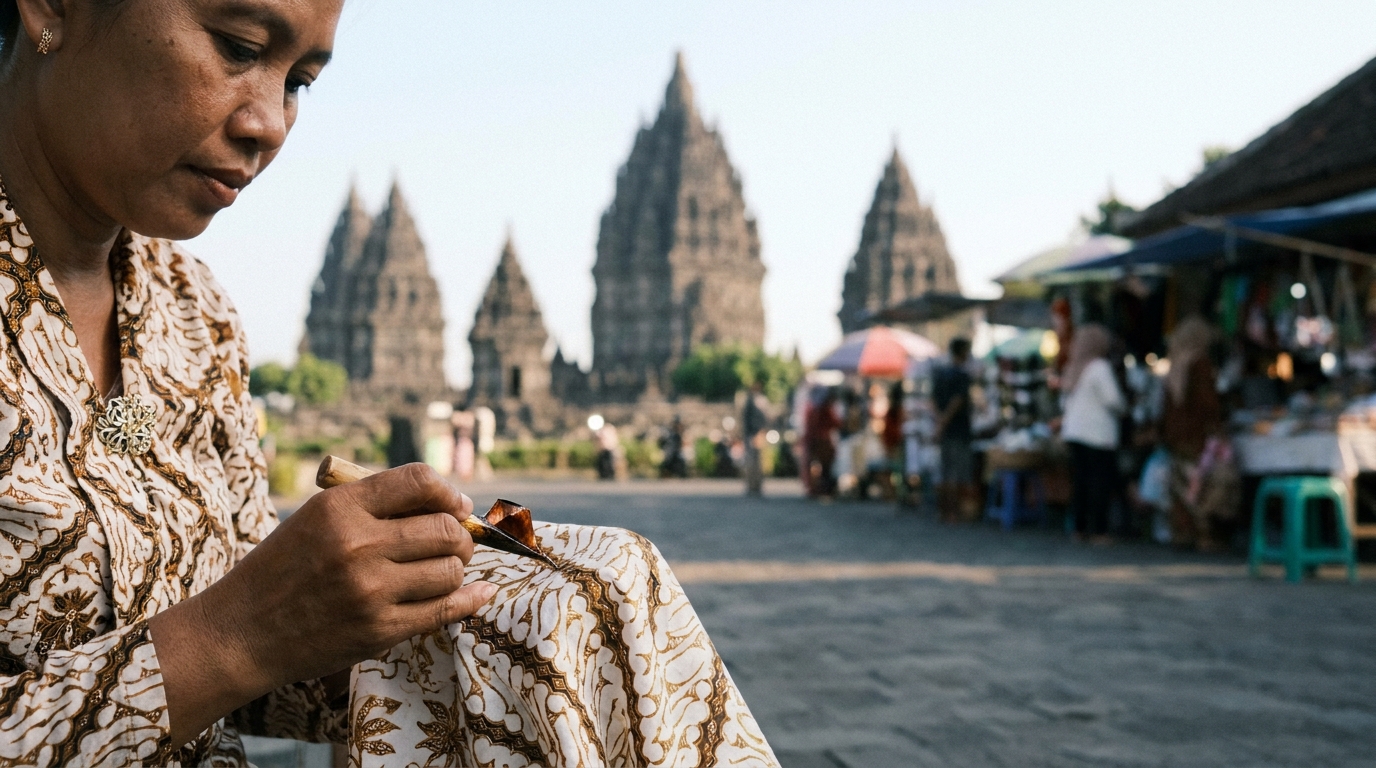
Yogyakarta rewards travelers who want depth over beach lounging. Unlike Bali’s resort tourism, Jogja is driven by cultural and historical immersion:
- Borobudur — the world’s largest Buddhist monument, built circa 800 CE, UNESCO-listed
- Prambanan — soaring Shiva temples, the finest Hindu architecture in Southeast Asia
- Kraton (Sultan’s Palace) — active royal court, traditional gamelan performances daily
- Malioboro Street — Yogyakarta’s historic main street, batik shops, street food vendors, and wayang kulit puppet workshops
- Mount Merapi — one of the world’s most active volcanoes, with sunrise jeep tours
- Jomblang Cave — vertical caving to a “heavenly light” shaft inside an ancient collapsed cave
The city is also significantly cheaper than Bali and Bangkok, making it an excellent value destination.
Yogyakarta Quick Facts
| Fact | Detail |
|---|---|
| Country | Indonesia |
| Region | Java (DIY Special Region) |
| Language | Indonesian (Javanese widely spoken) |
| Currency | Indonesian Rupiah (IDR) |
| Time zone | WIB (UTC+7) |
| Airport | Yogyakarta International Airport (YIA) |
| Best months | May-October (dry season) |
| Avoid | November-April (wet, Borobudur sunrise tours less reliable) |
Getting to Yogyakarta
By Air
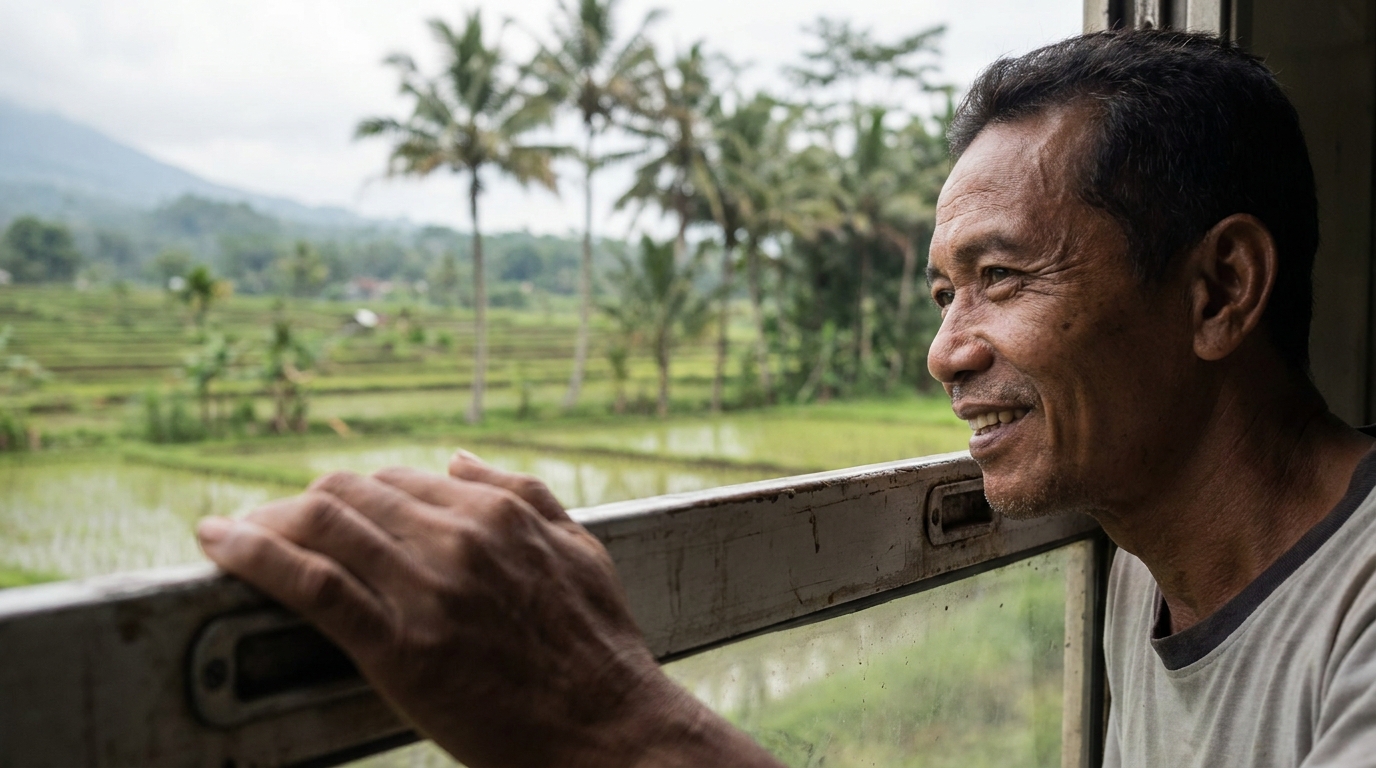
Yogyakarta International Airport (YIA) opened in 2020, replacing the older Adi Sutjipto Airport. Direct flights from Jakarta (1h, AirAsia/Garuda/Lion Air from 350,000 IDR), Bali (1h, from 400,000 IDR), Singapore (2h, AirAsia direct), and Kuala Lumpur (2h, AirAsia).
YIA to city center: 40km — Damri bus (75,000 IDR, 60-70 min), taxi (250,000-350,000 IDR), or pre-booked hotel transfer.
By Train
The intercity train network is excellent. Jakarta Gambir to Yogyakarta (8-9h, Taksaka/Argo Dwipangga trains, from 350,000 IDR). Surabaya Gubeng to Yogyakarta (5h, from 250,000 IDR). Book on KAI Access app or website — advance booking strongly recommended.
Main station: Yogyakarta Tugu Station (central location, 5-min walk to Malioboro).
For full details, see How to Get to Yogyakarta.
Getting Around Yogyakarta
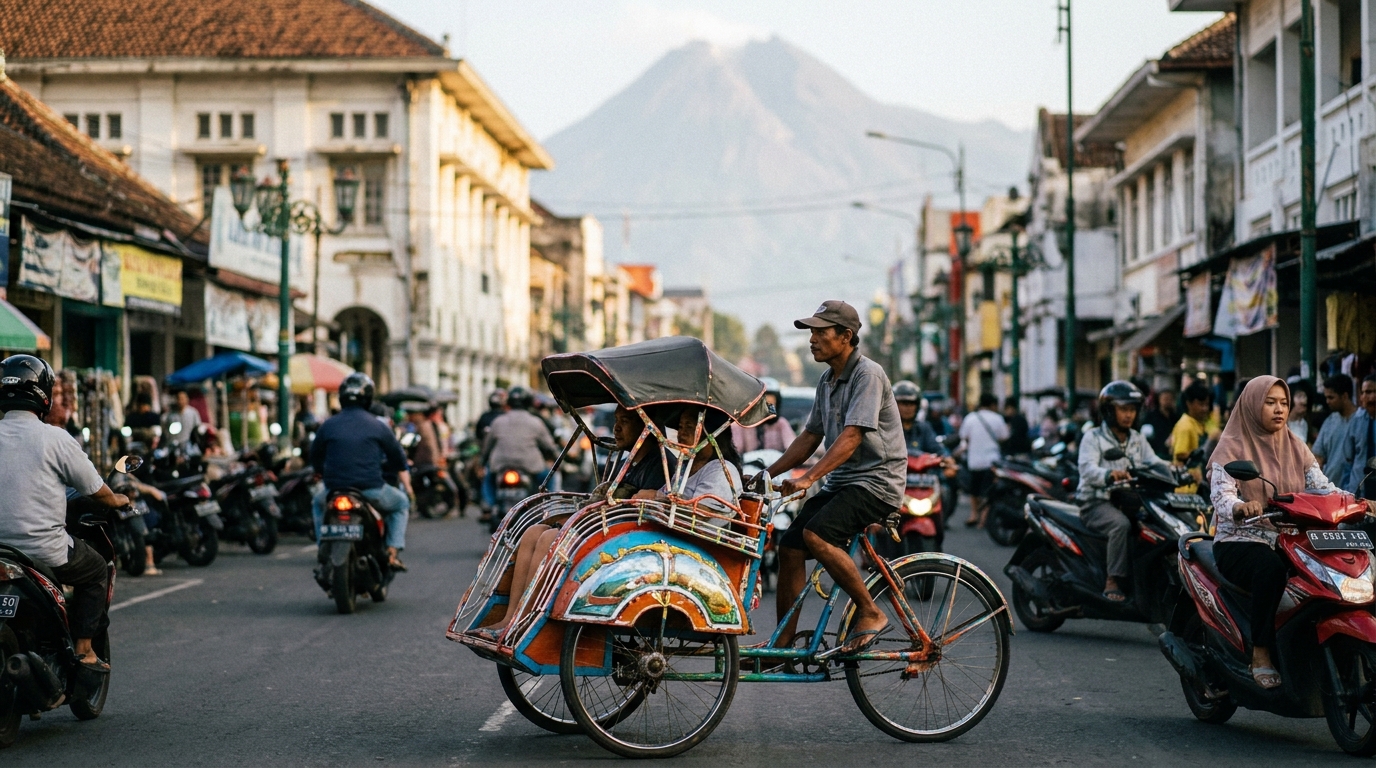
- Grab: Reliable app-based taxis and motorbike rides throughout the city. Motorbike from city center to Prambanan ~30,000 IDR.
- Becak (cycle rickshaw): Short trips around Malioboro and Kraton area, 15,000-30,000 IDR. Negotiate before boarding.
- Andong (horse cart): Ceremonial rides near the Kraton, tourist experience more than transport.
- Motorbike rental: 70,000-100,000 IDR/day, highly practical for independent travelers. International license required.
- Borobudur shuttle: Dedicated minibuses from Yogyakarta to Borobudur depart from several points, 30,000-50,000 IDR one-way.
Yogyakarta’s flat city core is also walkable between Malioboro, Kraton, and Taman Sari. Stay connected: grab a travel eSIM from Airalo before you go so you have data the moment you land.
Top Attractions in Yogyakarta
Borobudur Temple
Indonesia’s most iconic monument. The 9th-century Mahayana Buddhist stupa has nine stacked platforms, 2,672 relief panels, and 72 stupas housing seated Buddha statues. A sunrise visit (tickets via borobudurpark.com) is the classic experience — arrive by 5am for sunrise over the volcanic plains, before crowds arrive.
Admission: 450,000 IDR (Sunrise package, includes main complex + platform). Regular day tickets cheaper but sunrise adds significant value.
Best Things to Do in Yogyakarta has Borobudur logistics in full detail.
Prambanan Temple Compound
A UNESCO World Heritage Hindu temple complex 18km east of the city. The central Trimurti temples (dedicated to Shiva, Vishnu, and Brahma) rise 47 meters. The Shiva temple houses four chambers with statues including a 3-meter Durga. The Ramayana Ballet at Prambanan runs full moon performances from May-October — highly recommended.
Admission: 350,000 IDR (day visit). Ramayana Ballet: 150,000-350,000 IDR depending on seat.
Kraton (Sultan’s Palace)
The Yogyakarta royal palace has been in continuous use since 1755. Free daily gamelan performances (10am-12pm, closed Fridays). The Kraton museum houses royal regalia, wayang kulit puppet collections, and ceremonial carriages.
Admission: 15,000 IDR (museum). Photography: Allowed throughout.
Malioboro Street
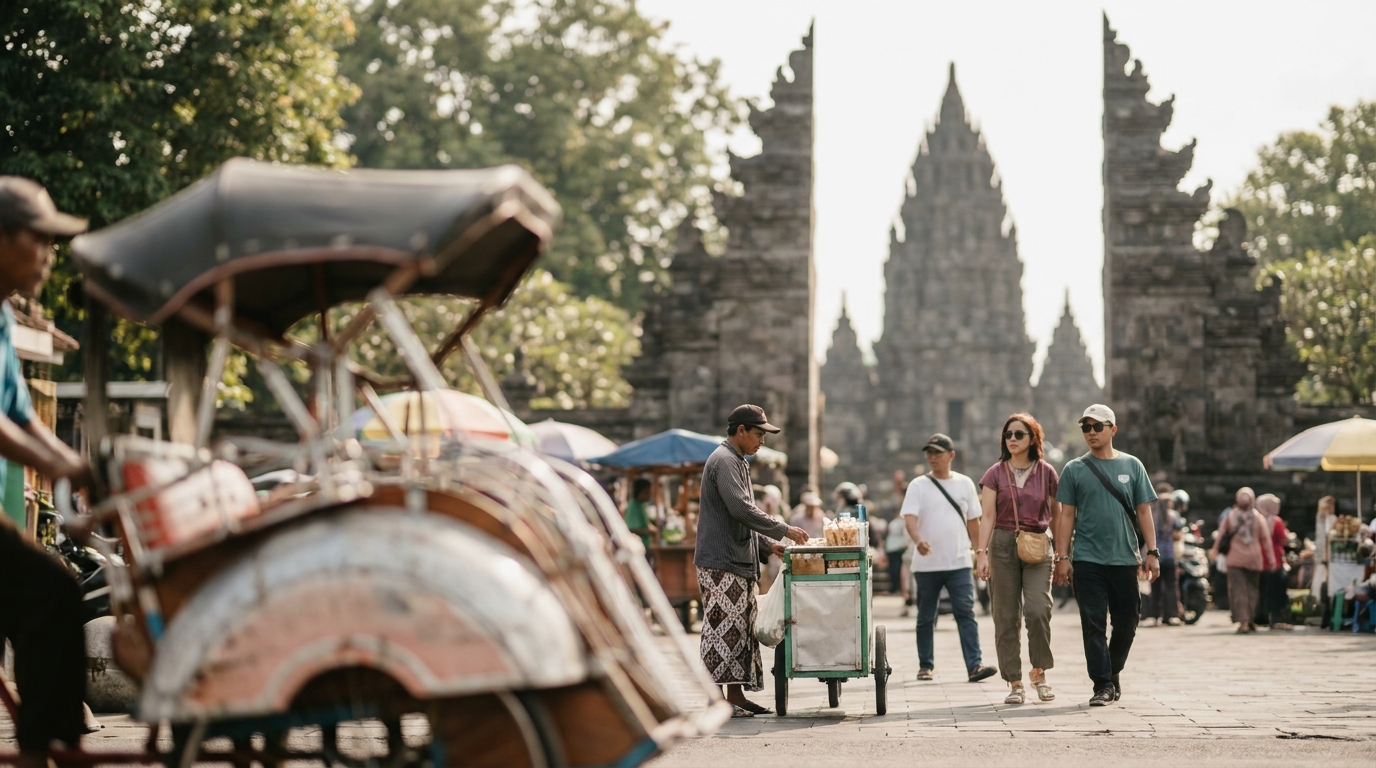
Yogyakarta’s pedestrianized main street, running from Tugu Monument to the Kraton. Batik shops, silver workshops, street food vendors (gudeg, bakpia pastries, satay), and live street musicians. Best visited in the early evening when temperatures cool and street vendors set up.
Taman Sari Water Castle
The former royal bathing complex built in 1758. Underground mosque, bathing pools, and a network of tunnels. 15,000 IDR admission. Located immediately west of the Kraton — easily combined in one morning.
Find your Yogyakarta hotel on the map
Live prices from Booking & Airbnb — tap a pin to compare stays around Malioboro and beyond.
Best Areas to Stay in Yogyakarta
Malioboro Area (Budget to Mid-Range)
The most central location — walking distance to Tugu Station, Kraton, Prambanan shuttle points. High concentration of guesthouses and budget hotels. Noisy at night due to street vendor activity.
Who it’s for: Budget travelers, backpackers, first-timers wanting maximum accessibility.
Prawirotaman District (Boutique, Quieter)
South of the Kraton, this arts district has Yogyakarta’s most pleasant mid-range and boutique hotels — converted Javanese homes with inner courtyards, gallery cafes, and restaurants. A 10-minute ojek ride from Malioboro.
Who it’s for: Travelers wanting atmosphere and quiet without sacrificing city access.
Kota Gede (Quiet, Silver Workshop Area)
The historic silver-crafting neighborhood 5km southeast of the city. Very quiet, few tourists. Good for travelers who want local immersion.
For detailed area comparisons and specific hotel picks, see Where to Stay in Yogyakarta.
What to Eat in Yogyakarta
Yogyakarta’s cuisine is distinctly Javanese — sweeter than most Indonesian regional food, with coconut milk and palm sugar featuring prominently.
- Gudeg: Young jackfruit braised in coconut milk and palm sugar, served with rice, chicken, and sambal. Yogyakarta’s signature dish.
- Bakpia: Sweet bean-filled pastry, sold in countless shops along Malioboro. The original Bakpia Pathuk is the famous source.
- Soto Ayam Yogyakarta: Clear turmeric chicken soup with glass noodles, rice cakes, and crispy shallots.
- Nasi Kucing: “Cat rice” — small portions of rice with various toppings, served late night at Angkringan (street food stalls).
- Wedang Ronde: Hot ginger soup with glutinous rice balls, a Yogyakarta cold-evening staple.
Full guide: Best Food in Yogyakarta.
Yogyakarta Budget Overview
| Category | Budget/Day | Notes |
|---|---|---|
| Accommodation | 150,000-400,000 IDR | Guesthouse to mid-range hotel |
| Food | 100,000-200,000 IDR | Mix of warung and sit-down meals |
| Transport | 50,000-100,000 IDR | Grab + local rides |
| Activities | 0-500,000 IDR | Varies widely (Borobudur is expensive) |
| Daily total | ~300,000-1,200,000 IDR | $18-72 |
Borobudur sunrise (~450,000 IDR) and Prambanan (~350,000 IDR) are the biggest single expenses. Plan one major temple per day and budget accordingly.
Full breakdown: Yogyakarta on a Budget.
Best Time to Visit Yogyakarta
May-October (dry season): Best for Borobudur sunrise tours (clear skies required for volcanic panorama), Prambanan outdoor Ramayana Ballet, and Mount Merapi jeep tours. Temperatures 26-32°C.
November-April (wet season): Afternoon storms can obscure Borobudur views. Ramayana Ballet moves indoors. Humidity higher. Lower prices and fewer tourists. Not as dramatic but still very viable.
For month-by-month breakdown: Best Time to Visit Yogyakarta.
Yogyakarta Itinerary Overview
Day 1: Borobudur sunrise → midday rest → Prambanan afternoon → Ramayana Ballet (if May-Oct)
Day 2: Kraton morning (gamelan performance) → Taman Sari → Malioboro Street evening → Angkringan dinner
Day 3: Mount Merapi jeep sunrise tour → Kaliurang hot springs → city afternoon
Day 4 (optional): Jomblang Cave caving → silver workshop in Kota Gede → departure
Full day-by-day plan: Yogyakarta Itinerary.
Day Trips from Yogyakarta
- Mount Merapi: Active volcano jeep tour, 3-4 hours. Merapi erupted as recently as 2023 — current activity should be checked before booking.
- Borobudur sunrise extension: Many travelers overnight at Magelang (40km away) for pre-dawn Borobudur entry.
- Dieng Plateau: High volcanic plateau with ancient Hindu temples and colored crater lakes, 2h from Yogyakarta. Best in July-September.
- Parangtritis Beach: Black sand beach at the mouth of the Opak River, 1h south. Sacred in Javanese cosmology.
Yogyakarta Safety
Yogyakarta is one of Java’s safest cities for tourists. Common issues:
- Batik shop “free tour” scams on Malioboro: drivers offer free kraton tours that end at overpriced batik shops. Decline or confirm no shop stops upfront.
- Ticket touts at Borobudur: Buy tickets only at official booths (borobudurpark.com advance purchase is safest).
- Prambanan motorbike theft: Use secure parking at the temple complex, not roadside spots.
Standard travel precautions apply — keep valuables in hotel safes, especially at Malioboro night market.
Frequently Asked Questions
How many days do I need in Yogyakarta?
Minimum 3 days: Day 1 Borobudur sunrise, Day 2 Prambanan + Kraton, Day 3 city exploration and Malioboro. A 4th day allows Mount Merapi or Jomblang Cave.
Is Yogyakarta safe for solo travelers?
Yes — Yogyakarta is considered one of Indonesia’s safest cities. Solo female travelers generally report positive experiences, though standard precautions apply at night.
Is Borobudur worth visiting from Yogyakarta?
Absolutely — Borobudur is among Asia’s most impressive ancient monuments. The 40km trip is easy by shuttle or Grab. The sunrise visit (pre-dawn start) is the definitive experience.
What is the best base for temples — Yogyakarta or Magelang?
Yogyakarta is the better base for most travelers (more hotels, better food scene, more activities). Magelang is better for pure Borobudur access with pre-dawn arrival convenience.
Can I combine Yogyakarta with Bali?
Yes — the standard Indonesia backpacker route combines Bali (3-5 days) with Yogyakarta (3-4 days). Direct AirAsia flights connect Bali (DPS) to Yogyakarta (YIA) in 1 hour from ~400,000 IDR.
Sources:
1. Borobudur Park — official temple admission and tour information, 2025
2. Tourism Indonesia — Yogyakarta destination overview and visitor statistics, 2025
3. Yogyakarta Special Region Government — cultural heritage and tourism data, 2025