Disclosure: Some links in this guide are affiliate links. If you book or buy through them, we may earn a small commission at no extra cost to you — it helps keep our guides free.
Best Time To Visit Singapore: Weather and Season Guide 2026
Singapore is a year-round destination, but knowing when to go makes a real difference for your comfort and budget. This guide covers every month’s weather, the festival calendar, shoulder-season savings, and exactly what to book ahead so your trip runs smoothly.
Quick answer: February and June are Singapore’s driest and most comfortable months to visit, with the lowest rainfall and thinner crowds. March to May gives the best balance of decent weather and shoulder-season savings, while December and January bring peak-season crowds and noticeably higher hotel rates.
Key Takeaways
- February and June are statistically the driest months, averaging under 130 mm of rainfall (Meteorological Service Singapore, 2025)
- Singapore’s average temperature stays between 25–32 °C (77–90 °F) all year, so season choice is mainly about rain, crowds, and prices
- The peak season (December–January) sees hotel rates rise 30–50% above the annual average (Agoda Rate Report, 2025)
- The Formula 1 Singapore Grand Prix (September) sells out accommodation 8–10 weeks in advance (Singapore Tourism Board, 2025)
- Budget travelers save the most in May–June, when occupancy drops and airlines discount fares (Skyscanner Trends, 2025)
Understanding Singapore’s Climate Year-Round
Related: best day trips from Singapore.
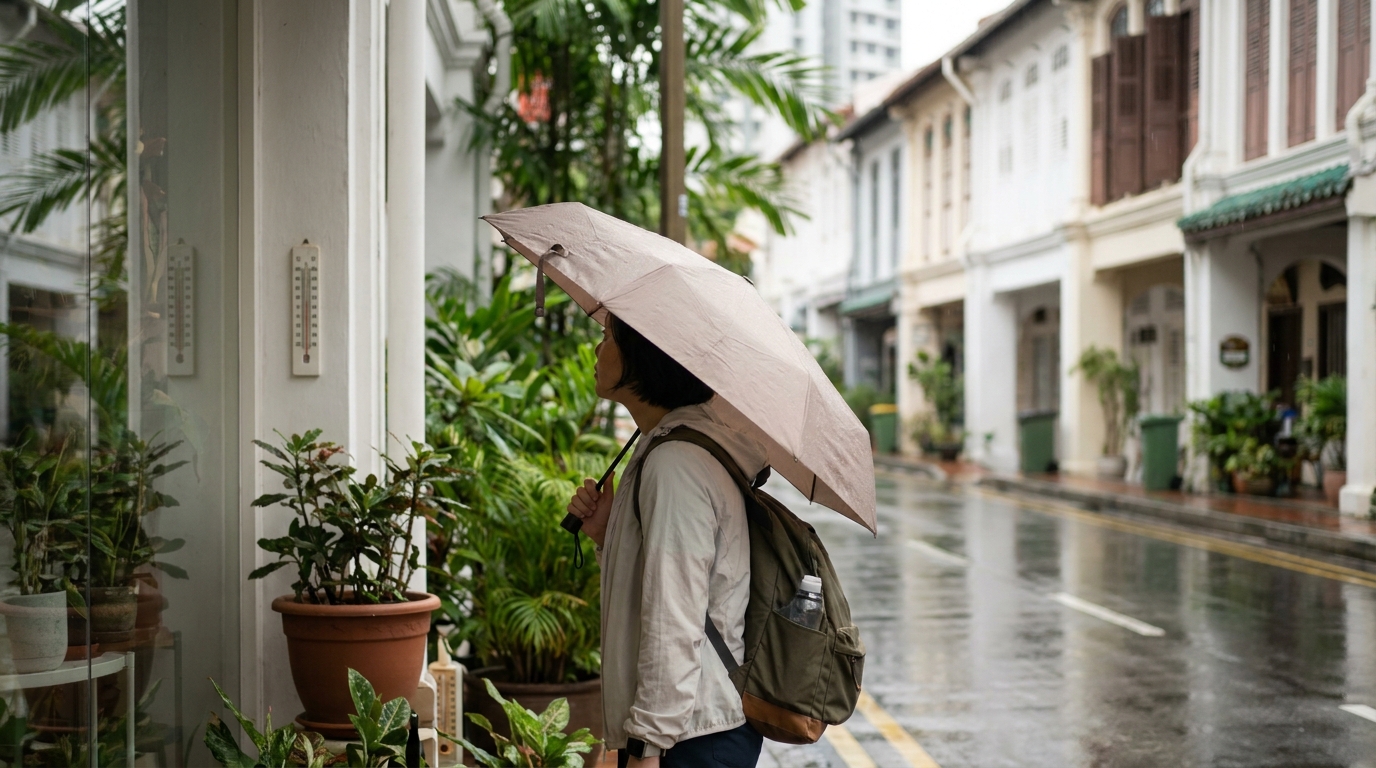
Singapore sits 1 degree north of the equator, which means there is no true dry or winter season. Temperatures hold steady at 25–32 °C every single month, and rain can fall any day of the year. What actually changes month to month is how intense and how frequent the rain is, which directly affects how enjoyable outdoor sightseeing and rooftop dining will be.
The island experiences two distinct monsoon patterns. The Northeast Monsoon (November–March) brings steadier, longer rain spells, especially in December and January. The Inter-Monsoon periods (April and October) produce short but intense afternoon thunderstorms. February and June sit in relatively dry windows between these patterns.
February and June: The Driest Months to Visit
Related: Bali travel guide.
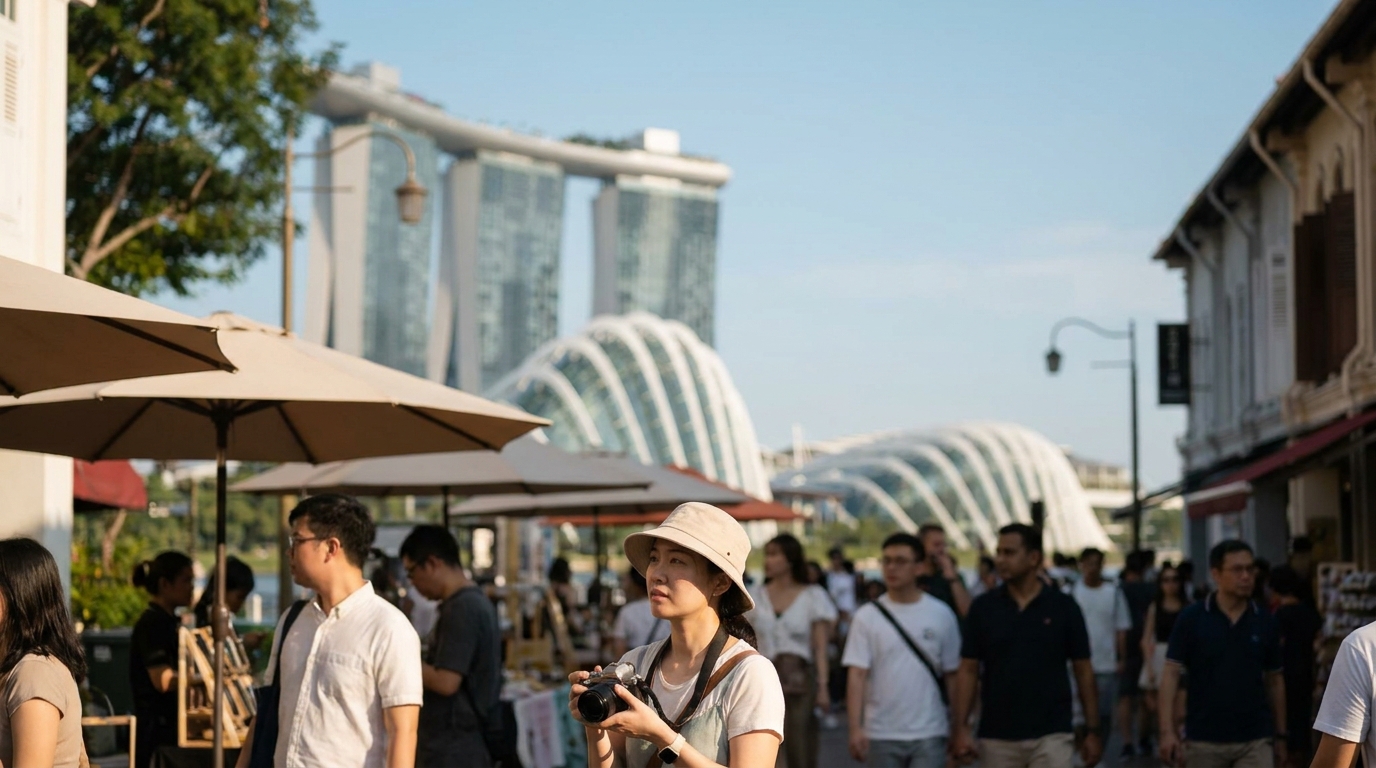
If avoiding rain is your priority, February and June consistently rank as the best months to visit Singapore. February averages only 112 mm of rain spread across roughly 6 rainy days (Meteorological Service Singapore, 2025), making it the driest calendar month. Skies clear most mornings, giving you reliable windows for Gardens by the Bay, Sentosa Beach, and rooftop bars at Marina Bay Sands.
June is the second best option, averaging about 130 mm and benefiting from school-holiday demand that keeps airlines adding capacity. Klook’s city tour packages (book Singapore day tours on Klook) tend to run full slates in June, so scheduling is easy. Temperatures peak slightly higher in June (up to 33 °C midday), so plan outdoor activities before 11 am.
December and January: Peak Season Crowds and Costs
Related: Da Nang travel guide.
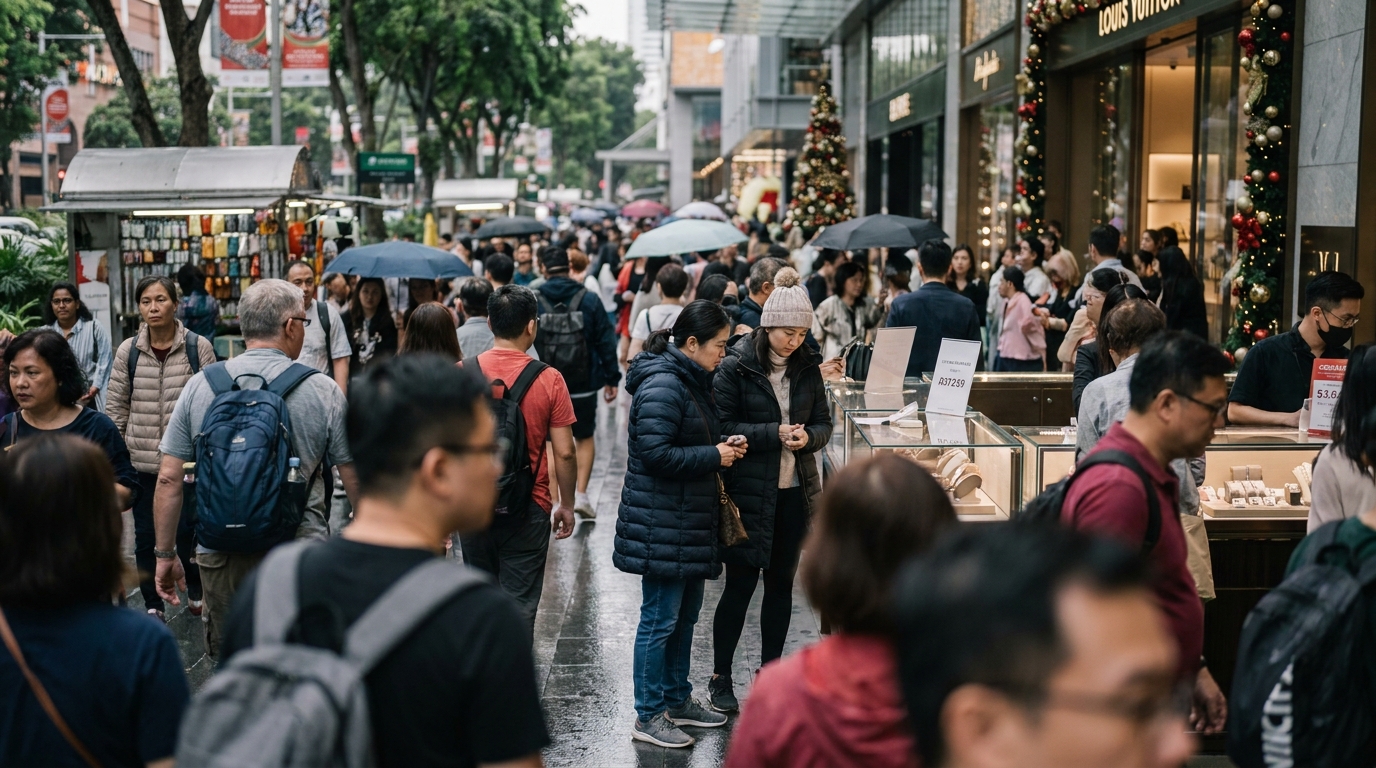
December is Singapore’s most popular travel month, driven by Christmas light-ups on Orchard Road and New Year’s Eve celebrations at Marina Bay that draw over 300,000 visitors (Singapore Tourism Board, 2025). Visually it is spectacular, but it comes at a cost. Hotel rates jump 30–50% above baseline, and the tail end of the Northeast Monsoon means December is also one of the wettest months, averaging 318 mm of rain.
If you visit in December, book accommodation at least 10 weeks out. Properties along Marina Bay sell out entirely for New Year’s Eve. We recommend comparing rates on both Booking.com Singapore and Agoda — Agoda frequently undercuts on local boutique hotels while Booking.com leads on international chains. Budget for SGD 180–400 (USD 135–300) per night for a mid-range double room during peak.
March to May: Shoulder Season Sweet Spot
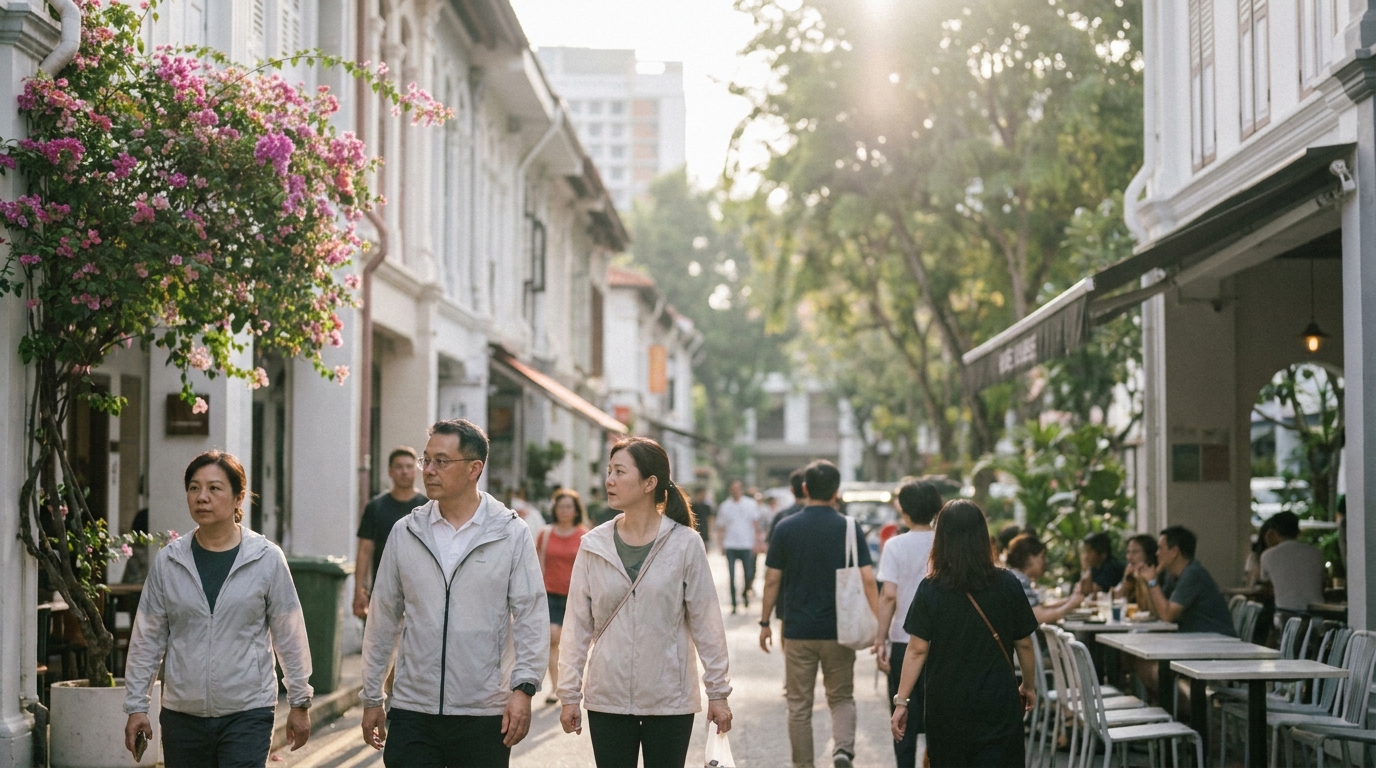
March through May is our top recommendation for first-time visitors who want a balance of decent weather and lower prices. March still carries some Northeast Monsoon rain (170 mm average) but it tapers sharply through April.
By May, afternoon thunderstorms are brief and predictable, typically hitting between 2–4 pm, so you can plan outdoor sightseeing in the morning and cover indoor attractions like the National Museum of Singapore or Jewel Changi Airport in the afternoon.
Hotel rates in this window average SGD 120–220 (USD 90–165) for a mid-range double, down 20–25% from December peaks. Flight prices from major Asian hubs also dip. Get an Airalo Singapore eSIM before you fly — a 10-day 5G data plan costs around USD 9 and activates on landing, saving you the SGD 20–35 airport SIM queue.
September: Formula 1 Grand Prix — Plan Months Ahead
The Singapore Grand Prix, held on a street circuit around Marina Bay, is the only Formula 1 night race on the calendar and consistently ranks as one of the best sporting events in Southeast Asia. Dates for 2026 fall in the third week of September. The three-day race weekend draws over 270,000 attendees and completely sells out hotels within 5 km of the circuit (Singapore Tourism Board, 2025).
If the Grand Prix is your reason to visit, lock in both race tickets and hotel rooms by July at the latest. Zone 1 grandstand tickets start at SGD 268 (USD 200) and walkabout passes start at SGD 98 (USD 73). Outside the immediate race zone, areas like Little India and Bugis retain available accommodation at near-normal rates.
Find your Singapore hotel on the map
Live prices from Booking & Airbnb — tap a pin to compare stays around Marina Bay and Bugis and beyond.
Chinese New Year: Cultural Spectacle in January–February
Chinese New Year is the standout cultural event on Singapore’s calendar, falling in late January or mid-February depending on the lunar cycle (2027 date: January 29). Chinatown transforms with red lanterns, free street performances, and a river hongbao light show at Marina Bay. The NDP rehearsals in late January–early July period also add color to Marina Bay evenings.
Travel during Chinese New Year has a quirk: many local restaurants and hawker centers close for 2–4 days around the public holidays. Stock up on snacks and plan meals at hotel restaurants or mall food courts. Flight prices from China, Hong Kong, and Taiwan spike significantly in the two weeks around CNY, so book 6–8 weeks early if arriving from those hubs.
Month-by-Month Weather Snapshot
Related: best food in Singapore.
| Month | Avg Temp (°C) | Avg Rainfall (mm) | Rainy Days | Crowd Level |
|---|---|---|---|---|
| January | 26–30 | 198 | 15 | High |
| February | 26–31 | 112 | 6 | Medium-High |
| March | 27–31 | 170 | 11 | Medium |
| April | 27–31 | 148 | 12 | Medium |
| May | 27–32 | 168 | 13 | Medium |
| June | 27–33 | 130 | 10 | Medium-High |
| July | 27–32 | 145 | 11 | Medium |
| August | 27–32 | 155 | 12 | Medium |
| September | 26–31 | 160 | 12 | Very High (F1) |
| October | 26–31 | 175 | 14 | Medium |
| November | 26–30 | 254 | 18 | Medium-High |
| December | 25–30 | 318 | 20 | Very High |
Source: Meteorological Service Singapore, 2025
Budget Breakdown by Season
Related: Singapore travel cost.
How much you pay depends heavily on when you go. Singapore is never cheap, but the gap between peak and off-peak can exceed USD 100 per night per room. Below is a practical reference for mid-range travelers (double room, 3-star or above).
| Season | Months | Mid-Range Hotel/Night (USD) | Budget Tip |
|---|---|---|---|
| Peak | Dec–Jan, F1 week | 150–300 | Book 10+ weeks ahead on Agoda |
| Shoulder High | Feb, Jun, Jul | 110–180 | Good value, best weather |
| Shoulder Low | Mar–May, Aug | 90–150 | Best overall value window |
| Wet Season | Nov–Dec | 110–200 | Festivals offset rain inconvenience |
For neighborhood selection and hotel shortlists, check our guide to where to stay in singapore 2026 best hotels by neighborhood]. We consistently find the best rates for Marina Bay-area properties on [Agoda and for Sentosa resorts on Booking.com. For tours and day trips from Singapore, Klook offers free cancellation on most experiences up to 24 hours before.
Frequently Asked Questions
What is the best month to visit Singapore overall?
February is the single best month for weather, with the lowest average rainfall of the year at around 112 mm and only 6 rainy days. If you need to pair good weather with school-holiday schedules, June is a strong second choice with slightly higher temperatures but still reliable morning sunshine for outdoor sightseeing.
Does Singapore have a rainy season?
Yes, Singapore has two wetter periods. The main one is the Northeast Monsoon from November through January, with December averaging 318 mm of rain. The inter-monsoon months of April and October also produce frequent afternoon thunderstorms. That said, rain in Singapore is usually intense but short, rarely lasting more than 1–2 hours.
Is Singapore worth visiting in December despite the rain?
Absolutely, if you prioritize atmosphere over dry skies. The Orchard Road Christmas light-up, Marina Bay countdown, and year-end street festivals make December visually spectacular. Just pack a compact umbrella, book accommodation early, and budget for peak pricing — rates run 30–50% higher than May or June.
How far in advance should I book for the F1 Grand Prix?
Book hotels and race tickets at least 8–10 weeks before the race weekend. Properties within walking distance of Marina Bay Circuit sell out in August for a September event. If you miss that window, look at hotels in Bugis, Little India, or Lavender — all are MRT-connected to the circuit and see much less price surge.
What should I pack for a Singapore trip?
Light, breathable clothing (linen, moisture-wicking fabrics) is essential year-round given the heat and humidity. Always carry a compact umbrella — afternoon rain is common in most months. Sunscreen SPF 50+ matters even on overcast days because UV index in Singapore regularly hits 11–12 (Extreme). Comfortable walking shoes and a light layer for heavily air-conditioned malls round out the basics.
Is Singapore expensive to visit in shoulder season?
Singapore is one of Southeast Asia’s pricier destinations regardless of season, but shoulder months (March–May, August) genuinely offer savings. Mid-range double rooms average USD 90–150 per night versus USD 150–300 in peak December. Getting an Airalo eSIM before departure (around USD 9 for 10 days) and eating at hawker centers (SGD 4–8 per meal) keeps daily costs manageable even in this premium city.
Can I visit Singapore and combine it with nearby countries?
Yes, Singapore works well as a hub. Ferries to Batam (Indonesia) take 45 minutes and Johor Bahru (Malaysia) is reachable by causeway bus in under an hour. For longer regional trips, budget airlines like Scoot and AirAsia connect Singapore to Bali, Bangkok, and Penang in 1–3 hours. See our guides to where to stay in singapore and neighboring destinations for regional itinerary ideas.
Plan Your Singapore Trip Around the Right Season
Related: our complete Singapore travel guide.
The best time to visit Singapore is February for the driest skies, or March through May if you want a balance of lower hotel prices and reliable morning sunshine. Avoid December if budget is a concern, but embrace it if you want the city at its most festive. Lock in F1 hotel rooms by July if September is your target.
Whatever month you choose, Singapore rewards travelers who plan ahead. The city is compact, efficient, and endlessly rewarding — the weather just decides how much of it you experience outdoors.