Thailand vs Bali: Which to Choose
By TravelguidestipUpdated 5 min readHow we earn
Hotel buttons open Stay22 (Booking.com, Agoda and others) and tour buttons open GetYourGuide. We may earn a commission at no extra cost to you.
Pick this if
Thailand
You want to see more than one kind of place in one country.
See hotels in Thailand →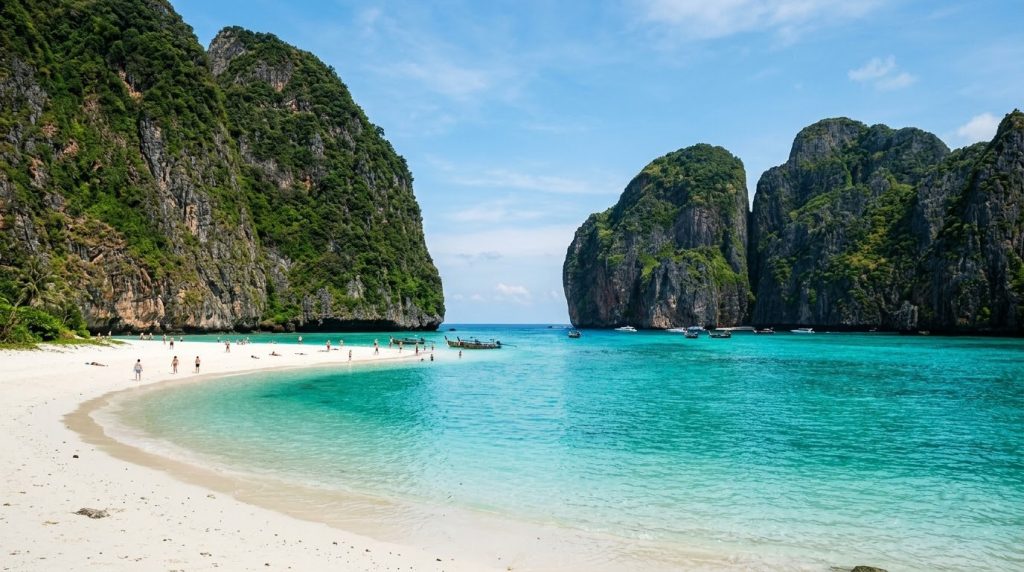
Thailand vs Bali splits on two numbers for Australians, with Bali sitting about 6 hours away by direct flight against Thailand’s roughly 9 hours 50 minutes, and Bali’s comfortable daily budget of AUD 139 now running above Thailand’s AUD 104. Bali is the closer, simpler choice for a short beach-and-villa week, while Thailand is the bigger, more varied country worth the extra flight time on a longer or multi-stop trip.
Quick answer: Comparing Thailand and Bali? Open live hotel prices in each to weigh cost against location:
| Criterion | Thailand | Bali |
|---|---|---|
| Flight from Sydney (direct) | About 9 hours 50 minutes | About 6 hours 10 minutes |
| Flight from Melbourne (direct) | About 9 hours 15 minutes | About 6 hours 5 minutes |
| Geography | A country with cities, mountains, and two island coasts | One island within Indonesia |
| Typical trip length | 10-21 days to cover more than one region | 5-10 days for a single-island loop |
| Comfortable daily budget | AUD 104 · USD 75 (THB 2,470) | AUD 139 · USD 100 (IDR 1,750,000) |
| Backpacker daily budget | AUD 62 · USD 45 (THB 1,480) | AUD 56 · USD 40 (IDR 700,000) |
| Nightlife spread | Bangkok, Phuket, Koh Phangan | Concentrated in Canggu, Seminyak, Uluwatu |
| Wellness and surf identity | Secondary to cities and culture | A core part of the island’s identity |
| Getting around | Domestic flights between regions | Scooter or car covers most of the island |
Closeness and ease – Bali wins for Australians
Bali wins on closeness because it needs one direct flight and no internal transfers for most Australians. Sydney to Denpasar runs about 6 hours 10 minutes direct on Qantas or Jetstar, and Melbourne to Denpasar runs about 6 hours 5 minutes on Qantas or AirAsia.
Thailand takes closer to 9 hours 50 minutes direct from Sydney and about 9 hours 15 minutes from Melbourne, roughly 3-4 hours longer each way. Bali is also a single island, so a traveller lands in Denpasar and reaches Seminyak, Canggu, or Uluwatu within an hour by car without booking a second flight or ferry.
A 7-day Bali itinerary can realistically loop the south coast, Ubud, and one beach town without touching a domestic flight. Thailand’s distances work against a short trip because Bangkok, Chiang Mai, and the southern islands sit hours apart by plane, so a one-week trip mostly stays in one region.
Time zones stay close on both routes, with Bali running 2 hours behind Australian Eastern Standard Time and Thailand running 3 hours behind, so jet lag is minor either way.
Variety and range – Thailand wins
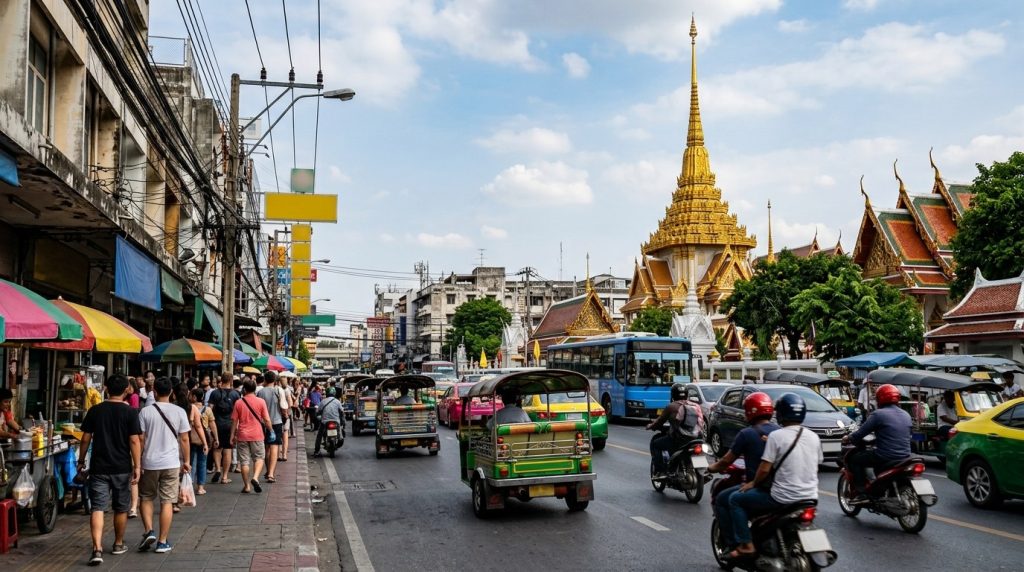
Thailand wins on variety because one country holds a capital city, mountain trekking, ancient temples, and two separate island coasts. Bangkok alone covers temples, street markets, and a rooftop-bar nightlife scene, and a 3-day Bangkok itinerary fits the Grand Palace, Chatuchak Market, and a Chao Phraya river cruise without needing a car.
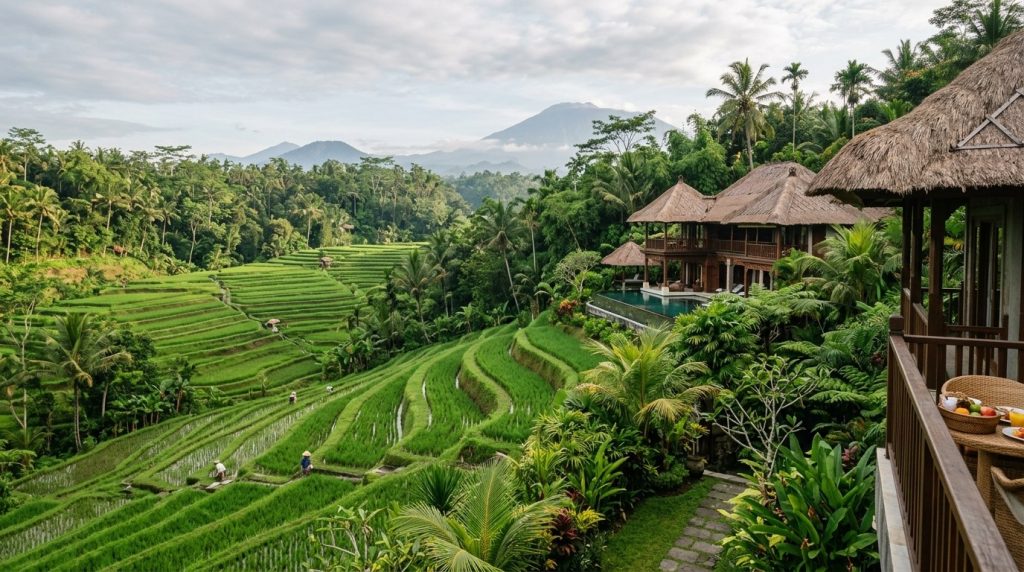
Chiang Mai adds cooler mountain air and hill-tribe trekking that Bali has no real equivalent for, since Bali’s highlands stop at Ubud’s rice terraces and a handful of volcano hikes.
The Gulf islands (Koh Samui, Koh Phangan) and the Andaman coast (Phuket, Krabi, Koh Phi Phi) give Thailand two distinct beach regions with different weather windows, and Thailand’s best travel months shift depending on which coast a traveller picks.
Bali runs on one dry season and one wet season for the whole island, simpler to plan around but with less room to chase good weather by changing region.
Thailand also stretches more than 1,200 kilometres from Mae Sai on the Myanmar border to Betong on the Malaysian border, so a single trip can run from cool mountain temples to warm-water islands without leaving the country.
Beaches, food and nightlife compared
Bali wins on a concentrated wellness, surf, and nightlife scene inside a small radius, while Thailand wins on lower food costs spread across a bigger map.
Uluwatu delivers surf breaks rated among Asia’s best, Canggu runs a dense strip of cafes and beach clubs, and Seminyak carries Bali’s most polished restaurant scene, so picking between them is really a question of where to stay in Bali rather than which single beach to visit.
Bali’s food costs split sharply by area, with a warung meal running about USD 2-5, a mid-range cafe meal about USD 8-12, and Canggu or Seminyak’s nomad-focused smoothie-bowl and specialty-coffee scene pushing a mid-range traveller’s food spend toward USD 17 a day.
Thailand’s overall comfortable daily budget of AUD 104 · USD 75 (THB 2,470) already sits below Bali’s AUD 139 · USD 100 (IDR 1,750,000), and most of that gap comes from cheaper meals rather than cheaper rooms.
Thailand’s nightlife also spreads across more cities and formats, from Bangkok’s rooftop bars to Koh Phangan’s Full Moon Party, while Bali’s nightlife stays concentrated in Canggu, Seminyak, and Kuta.
Diving and snorkelling favour Thailand on sheer choice, since the Similan Islands and Koh Tao sit on one coast and the Gulf islands sit on another, while Bali’s main underwater draw is Nusa Penida, a single boat trip from the south coast rather than a multi-region circuit.
Cost, honestly
Thailand costs less per day than Bali at every comparable tier once flights are excluded.
A backpacker gets by in Thailand on AUD 62 · USD 45 (THB 1,480) a day, covering a fan or budget AC room, street food, and local transport, while the same style of trip in Bali runs AUD 56 · USD 40 (IDR 700,000) a day, so budget travel is close to a wash between the two.
The gap opens at the comfortable mid-range tier, where Thailand runs AUD 104 · USD 75 (THB 2,470) a day against Bali’s AUD 139 · USD 100 (IDR 1,750,000), a difference of roughly AUD 35 a day or about AUD 245 over a one-week trip.
Bali’s push upmarket comes from its digital-nomad and Instagram-driven cafe and villa economy, concentrated in Canggu, Seminyak, and Uluwatu, where a private pool villa or a specialty coffee both carry a premium that a Chiang Mai guesthouse or a Bangkok street stall does not.
Bali also charges a one-time tourist levy of about AUD 13 · USD 9.30 (IDR 150,000) on arrival, a fixed cost that does not have a Thailand-side equivalent at this size.
Scooter hire and ride-hailing apps (Grab in Thailand, Grab and Gojek in Bali) sit at similar prices in both places, so getting around does not move the overall comparison much either way.
Choose Thailand if / choose Bali if
Choose Bali if a short flight, one compact island, and a concentrated surf-wellness-nightlife scene matter more than covering multiple regions in one trip, since a 5-10 day loop through the south coast and Ubud suits most first-time visitors.
Choose Thailand if seeing more than one kind of place matters more than trip length or extra flight time, since a 10-21 day route can combine Bangkok, northern mountains, and one island coast without repeating scenery.
Australians short on annual leave lean Bali because the 6-hour flight and single-island logistics fit a standard one-week break, and Australians planning a longer or once-a-year trip lean Thailand because the extra 3-4 hours of flying buys a genuinely different country each time they change region. The traveller’s available time decides the winner more reliably than budget or beaches alone.
Many Australians run this as a two-trip sequence, starting with Bali for a short, low-effort break, then booking Thailand once a longer or multi-region holiday is on the calendar.
Compare Thailand and Bali hotels on the map
Live prices from Booking, Airbnb and more — move the map or change dates to compare stays.