Best Time to Visit Vietnam (2026)
By TravelguidestipUpdated 8 min readHow we earn
Hotel buttons open Stay22 (Booking.com, Agoda and others) and tour buttons open GetYourGuide. We may earn a commission at no extra cost to you.
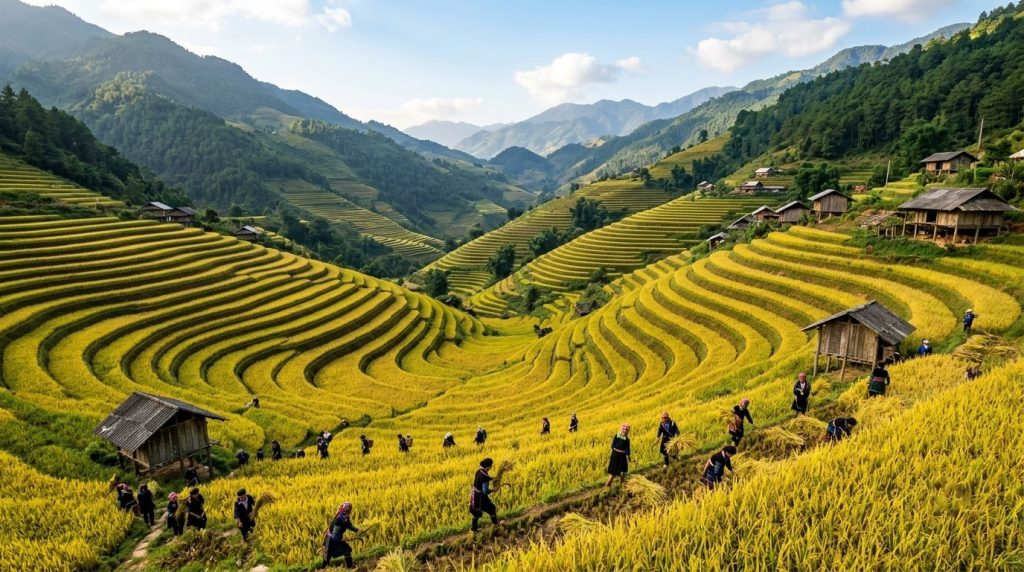
The best time to visit Vietnam is March to April, when Hanoi, Hoi An and Ho Chi Minh City are all dry and warm in the same fortnight, a window that closes once Central Vietnam’s rainy season brings 400 to 600 mm of rain in October and November.
Vietnam runs 1,650 km from the Chinese border to the Gulf of Thailand and crosses three separate climate zones that are never all good at once, so the right month depends on whether the trip covers the north, the centre or the south. On the central coast specifically, our Da Nang vs Nha Trang guide weighs the two.
| Month | North (Hanoi/Sapa) | Centre (Hoi An/Da Nang) | South (HCMC/Mekong) | Verdict |
|---|---|---|---|---|
| January | Cold, dry, 14-19°C | Dry season, mild | Dry season, hot | South and centre best |
| February | Cool, dry, light drizzle | Dry, warm | Dry, hot | Good almost everywhere |
| March | Warming, dry | Dry, warm | Dry, hot | Best all-round month |
| April | Warm, dry, pleasant | Dry, hot | Dry, very hot | Best all-round month |
| May | Hot, wet season starts | Dry, very hot | Wet season starts | North and south turning |
| June | Hot, humid, wet | Dry, hottest | Wet, afternoon storms | Centre best for beaches |
| July | Hot, humid, wet | Dry, peak beach season | Wet, afternoon storms | Centre best for beaches |
| August | Hot, humid, wet | Dry, hot | Wet, afternoon storms | Centre best for beaches |
| September | Cooling, drier | Rain increasing, typhoon risk starts | Wet, still workable | North turning good |
| October | Cool, dry, excellent | Peak flood and typhoon risk | Dry season begins | Avoid centre |
| November | Cool, dry, excellent | Still wet, flood risk lingers | Dry, excellent | Avoid centre |
| December | Cold, dry | Rain tapering, cooler | Dry, excellent | South best, north cold |
The one fact that decides a Vietnam trip – three climates, never all good at once
No single month is the best time to visit every part of Vietnam, because the country holds three climate zones that run on different calendars. The north, covering Hanoi, Sapa and Halong Bay, has four seasons with a cold dry winter and a hot wet summer.
The centre, covering Hue, Da Nang and Hoi An, has only a dry season and a rainy season, and its rainy season falls in October and November, exactly when the north and south are having some of their best weather.
The south, covering Ho Chi Minh City, the Mekong Delta and Phu Quoc, also runs on a two-season pattern, but its wet season brings short afternoon downpours rather than all-day rain, so it stays workable for travel most of the year.
A trip planned for November can be excellent in the Mekong Delta and miserable in Hoi An in the same week, which is the single most important fact for anyone building a Vietnam itinerary around one set of dates.
The north (Hanoi, Sapa, Halong Bay) – when to go
March to April and September to November are the two best windows for northern Vietnam, since both sit outside the cold winter and the wet summer monsoon.
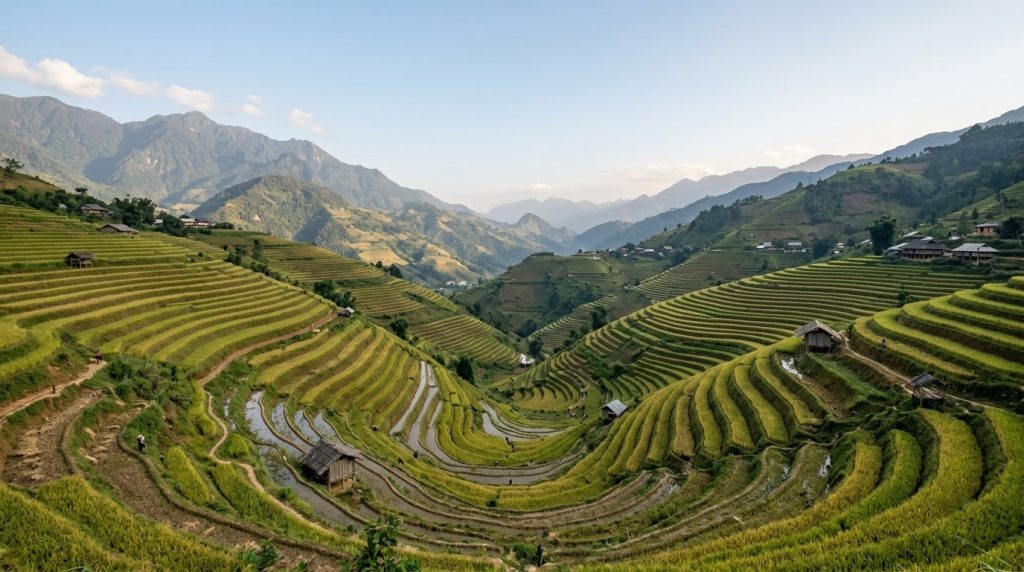
Hanoi’s winter runs cold and dry, with December highs around 19-22°C and January the coldest month at 14-19°C, while Sapa runs colder again, with winter nights around 7-9°C in town and cold snaps that push temperatures toward -2°C at higher elevation.
That cold season carries low rainfall, but persistent fog and mist through December and January can hide the limestone karsts on a Halong Bay cruise. June through August turns hot, humid and wet across the north, which suits nobody chasing comfortable walking weather in Hanoi’s Old Quarter.
Anyone building a route through the capital should check the month-by-month detail in the best time to visit Hanoi guide, and pair it with a ready-made 3-day Hanoi itinerary once dates are set.
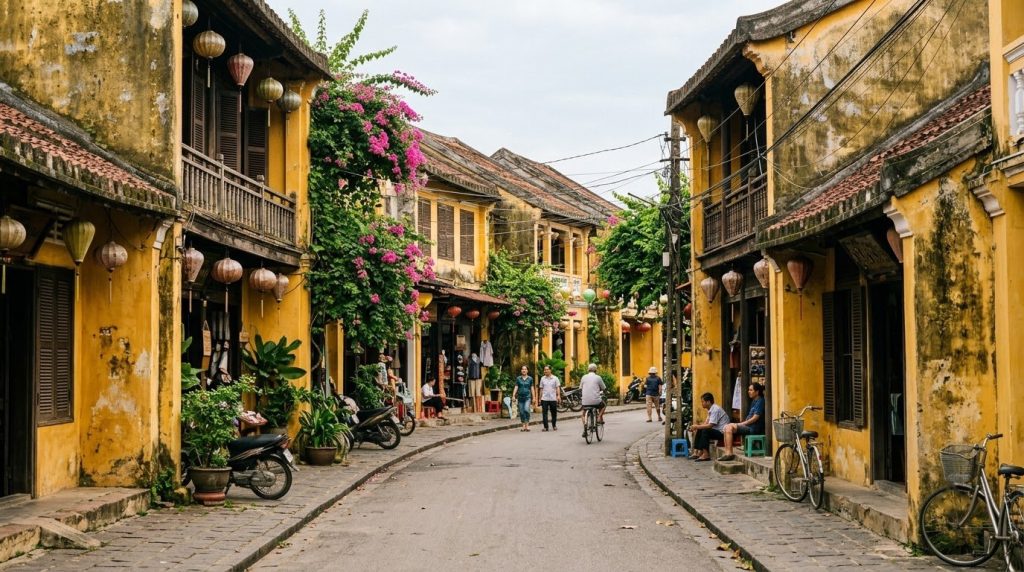
The centre (Hoi An, Da Nang, Hue) – and the October flood season
January through August is the dry season for Central Vietnam, and it is also the single best window for Hoi An’s Ancient Town and Da Nang’s beaches, while September through December is the region’s rainy season and the one stretch of the year to actively avoid. That same January to August window is when our Nha Trang verdict for Australians says the city beach and island boat trips justify 3 to 4 days.
October is the peak month for typhoons and tropical depressions reaching the central coast, and coastal areas typically see 400 to 600 mm of rain across October and November alone.
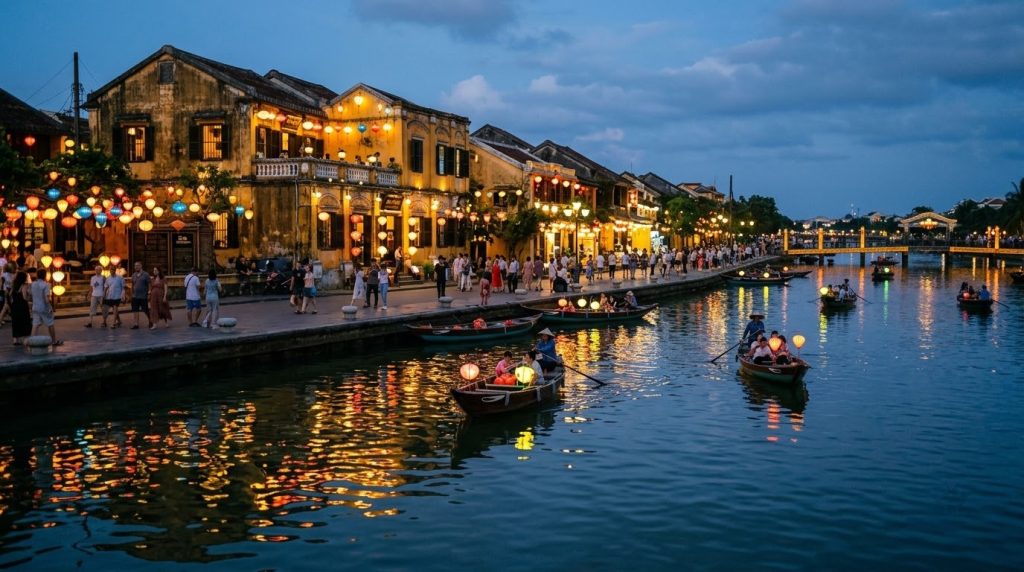
That rainfall pushes the Thu Bon River high enough to back up into Hoi An’s drainage system, flooding the Ancient Town’s low-lying streets near the Japanese Covered Bridge multiple times in a single wet season rather than during one isolated storm. Rain tapers through December, but the region stays cooler and wetter than its June-to-August peak.
Full seasonal detail for the coast sits in the best time to visit Da Nang guide, and a 4-day Da Nang itinerary is worth checking once the dry-season dates are locked in.
The south (Ho Chi Minh City, Mekong, Phu Quoc) – wet and dry only
November through April is the dry season across southern Vietnam and the easiest stretch for Ho Chi Minh City, the Mekong Delta and Phu Quoc, since humidity drops and skies stay clear. That dry season is the window our look at whether Phu Quoc is worth it recommends for 4 to 6 easy beach days.
May through October is the wet season, but it rarely derails a trip, because rain typically arrives as a short, heavy afternoon downpour rather than a day-long washout, leaving mornings free for the Cu Chi Tunnels, river cruises or island-hopping.
This two-season simplicity is what makes the south the easiest region to fit around a wider Vietnam itinerary, since it stays broadly workable even outside its own dry season, unlike the centre’s harder October-November cutoff. If Phu Quoc is your dry-season beach stop, our 4-day Phu Quoc itinerary bases you on Long Beach and covers the whole island in three regional day trips.
The months that work almost everywhere
March and April are the closest Vietnam comes to a single best time to visit, because they land inside the dry season for both the centre and the south while the north has moved past its cold, foggy winter into warm, sunny spring weather.
September and October are a partial second option, since the north is cooling into its own dry stretch and the south is easing out of the wet season, but the centre is already sliding into its flood-risk window by October, which rules out Hoi An and Da Nang for that month.
Travellers who need every region to cooperate at once should build the trip around March or April rather than gambling on the shoulder months either side.
Tet and festival timing: plan around it
Tet Nguyen Dan, the Lunar New Year, is Vietnam’s biggest holiday and the one date that overrides every seasonal pattern covered above. In 2026 the first day of the Lunar New Year falls on 17 February, with the government-approved public holiday running from 14 to 22 February, a nine-day stretch for the public sector that most private businesses follow closely.
Across that window, many family-run restaurants, local shops and some tour operators close for several days either side of the new year, and the ones that stay open during the holiday itself often run reduced hours or charge more.
Trains, domestic flights and hotel rooms around Tet sell out well ahead of the date, particularly on routes between the north and south that locals use to travel home for the holiday, so this is the worst week of the year to book anything at short notice.
The upside runs the other way for travellers who plan ahead: cities fill with kumquat trees and peach blossom in the week before Tet, Hanoi and Ho Chi Minh City run flower markets that are worth seeing even without joining the holiday itself, and the countryside empties out as locals travel home, leaving some rural routes quieter than usual.
Because the Lunar New Year shifts against the Western calendar every year, re-check the exact dates before locking in flights rather than assuming the same week as a previous trip. Travellers who want to avoid the closures altogether should bracket the holiday rather than travel through the middle of it, arriving after the public holiday ends or leaving before it begins.
Vietnam’s other major cluster of public holidays falls around 30 April and 1 May, when Reunification Day and International Workers’ Day often combine into an extended long weekend.
Domestic travellers flood beach cities such as Da Nang and Nha Trang, plus the hill town of Da Lat, during this stretch, pushing up hotel occupancy and traffic in those specific destinations even though the rest of the country keeps running close to normal.
It is a smaller version of the Tet effect, worth checking against the dates of a trip if the itinerary includes any of those three destinations.
When NOT to visit Vietnam
October and November are the worst months for anyone with Hoi An, Da Nang or Hue on the itinerary, since this is when the central coast carries its highest flood and typhoon risk of the year. If Hue is on your list, our guide to whether Hue is worth visiting pins the best window to late January through mid-March.
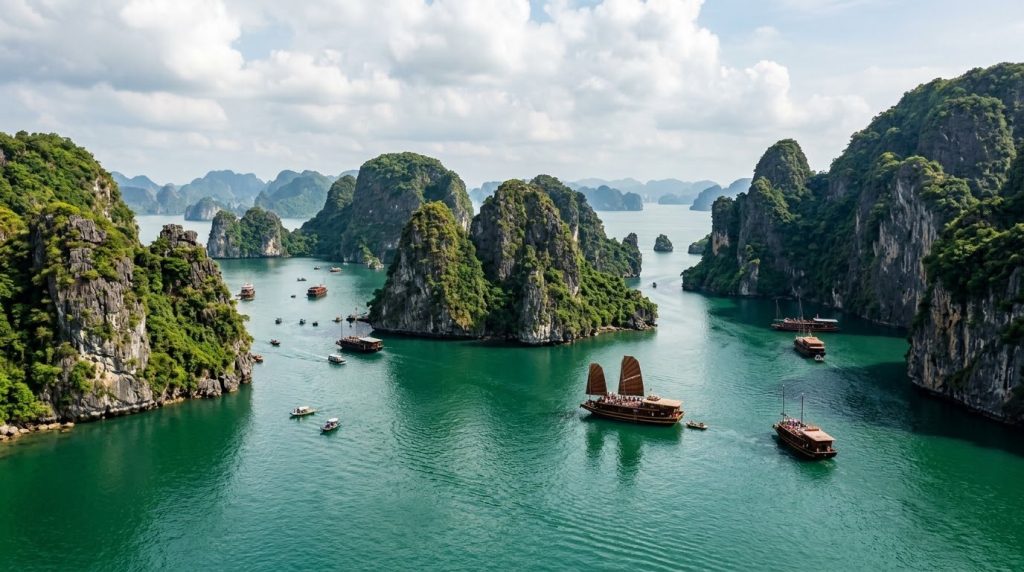
December through February is the worst window for a Halong Bay cruise focused on clear karst views, since persistent fog and mist in the north can limit visibility even though rainfall itself stays low.
June through August is the hardest stretch for travellers who dislike heat and humidity in Hanoi or Ho Chi Minh City, since both cities run hot and wet at the same time, even though this period suits the dry, sunny central coast best.
Anyone planning a single trip that touches all three regions should treat October and November as fixed no-go months rather than a flexible shoulder season.
FAQs about the best time to visit Vietnam
When is the cheapest time to visit Vietnam?
Outside of Tet, demand and prices generally ease during each region’s own wet season, since the central coast’s October-November flood risk and the south’s shorter afternoon downpours both reduce visitor numbers compared with the dry-season peak. That trade-off works for travellers happy to plan around rain rather than avoid it entirely, but it does not apply to Tet week itself, when prices move the opposite way.
Does Tet affect travel outside the main cities too?
Yes. The public holiday is observed nationwide, so closures and transport demand affect rural and coastal areas as well as Hanoi and Ho Chi Minh City, even though the countryside itself feels quieter once locals have reached their hometowns.
Is the rainy season a dealbreaker anywhere in Vietnam?
Only in the centre. Hoi An, Da Nang and Hue carry real flood and typhoon risk in October and November, while the south’s May-to-October wet season mostly brings short, heavy afternoon rain that leaves mornings workable for sightseeing.
Plan your Vietnam trip
Once the region and month are fixed, the next step is matching accommodation to the itinerary, since Hanoi’s Old Quarter, Hoi An’s riverside and Ho Chi Minh City’s District 1 each suit a different kind of stay. The map below pulls live prices across the whole country, so it works whether the trip starts in the cooler north or the year-round south.
Find your Vietnam hotel on the map
Live prices from Booking, Airbnb and more — move the map or change dates to compare stays across Vietnam.