Is Nha Trang Worth Visiting? An Honest Verdict for Australians (2026)
By TravelguidestipUpdated 10 min readHow we earn
Hotel buttons open Stay22 (Booking.com, Agoda and others) and tour buttons open GetYourGuide. We may earn a commission at no extra cost to you.
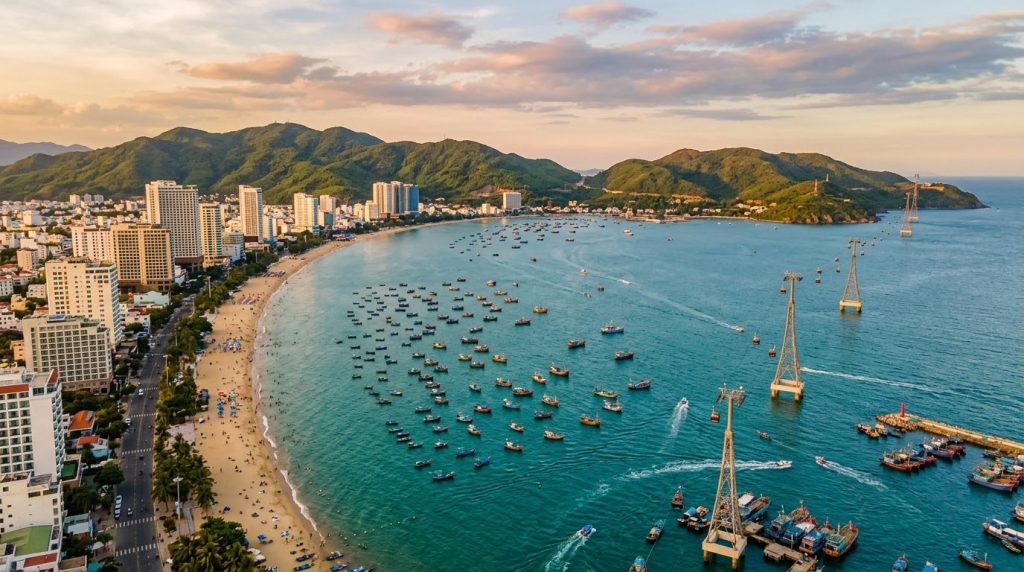
Yes, Nha Trang is worth 3 to 4 days if you go between January and August and want an easy city beach, boat trips to the islands and a theme park for the kids.
It is not Vietnam’s prettiest or most authentic stop: the main beach is backed by a wall of high-rise hotels, and from October to early December this coast gets its heaviest rain of the year. Get the timing right and it is cheap, sunny and simple.
| Question | Reality | What to do |
|---|---|---|
| Is the beach good? | A long city beach, but lined with towers | Swim in the morning, do the islands for clear water |
| When does it rain? | Sep–Dec, wettest in Oct–Nov | Go Jan–Aug; pick Phu Quoc for Nov–Dec |
| Can I fly direct from Australia? | No, you connect in Vietnam or Asia | Fly into Ho Chi Minh City, then 1 hour to Cam Ranh |
| How long to stay? | 3–4 nights covers the highlights | Add Da Lat (3 hours inland) for variety |
| Biggest cost? | VinWonders island park | AUD 56 · USD 40 a day, or go after 4pm |
What Nha Trang Actually Does Well
The islands are the real reason to come. The Hon Mun Marine Protected Area, a short boat ride offshore, has the clearest water and best coral near the city. Group snorkelling trips run AUD 35–69 · USD 25–50 and usually include hotel pickup, lunch, gear and the park fee. In the wet season tours get cancelled or the water turns murky.
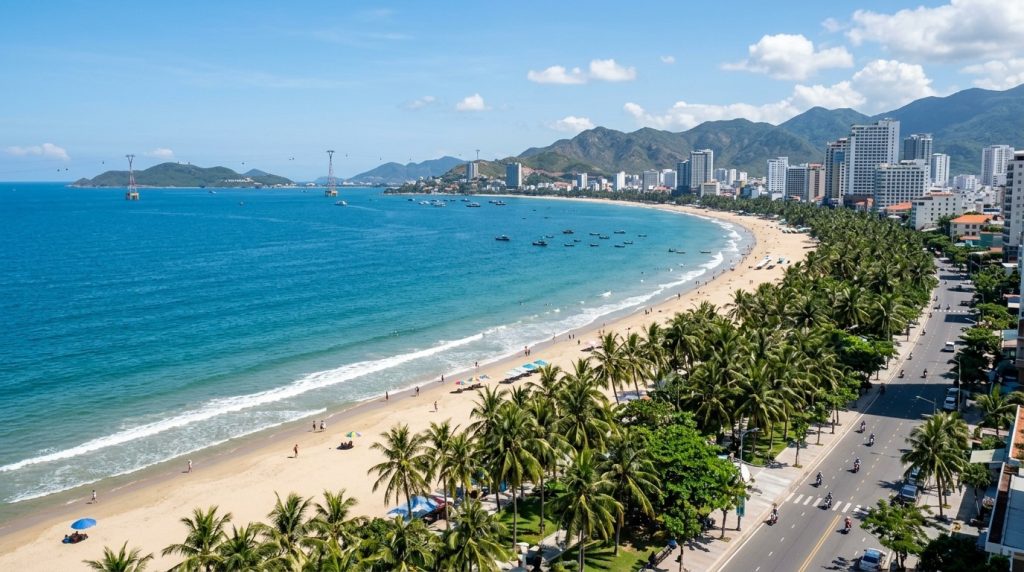
VinWonders on Hon Tre island is the family drawcard, reached by cable car over the bay. A full-day adult ticket with the return cable car is 1,050,000 VND (AUD 56 · USD 40), or AUD 37 · USD 27 (VND 700,000) after 4pm, per the official VinWonders price list. In bad weather the cable car stops and speedboats take over.
Mud baths make a cheap rest day. Thap Ba Hot Springs is about 6 km from downtown, with shared baths from 120,000 VND (AUD 6.40 · USD 4.60) and private baths for two around 350,000 VND (AUD 19 · USD 13.50). Touristy, but fun.
Po Nagar Cham Towers give you the history: brick towers over a thousand years old that are still an active place of worship. Entry is 25,000–30,000 VND (AUD 1.35–1.60 · USD 0.96–1.15). Cover shoulders and knees.
The Downsides Nobody Puts on the Postcard
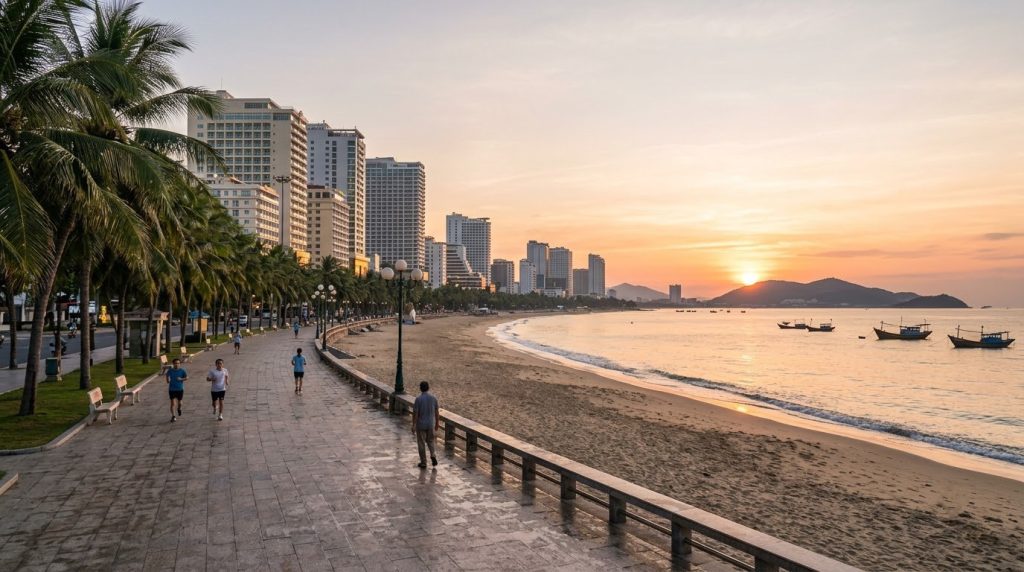
Nha Trang has changed fast. The Tran Phu beachfront is now a strip of high-rise hotels, cranes and construction noise, and the streets behind it feel like a generic resort town. Many visitors are Russian and Korean package tourists, so menus are often in Russian before English. If you have seen photos of empty sand and thatched cafes, you will be disappointed.
The bigger issue is timing. This coast runs on the northeast monsoon, so it gets wet just as the south is drying out. Long-term averages from Climates to Travel put October at around 300 mm of rain and November at 330 mm, against 15 mm in February. September to early December is also the main typhoon window. That weather is also the city’s biggest safety risk, and our Nha Trang safety check explains why the sea and floods cause more harm than crime.
Why October to December Is the Wrong Time to Book Nha Trang
If your dates are fixed between October and early December, think twice. Island tours and the cable car are the first things cancelled, and a beach holiday with no beach is a long four days. Phu Quoc, off the south-west coast, is dry from November to April, so it is the safer swap.
Back in Nha Trang, January to March is the sweet spot, and April to August is hotter but still mostly dry, which suits the mid-year school holidays.
Who Should Skip Nha Trang (and Where to Go Instead)
– First-timers with only a week. Nha Trang sits awkwardly between the north and south, and it does not make most tight routes.
Our 7-day Vietnam itinerary skips it for good reason. – Travellers who want culture with their beach. Da Nang plus Hoi An gives you a similar city beach with an old town, Hue and the Hai Van Pass nearby.
We weigh the two head-to-head in Da Nang vs Nha Trang, but the short version is that Da Nang suits most couples better. – Anyone travelling November to April who mainly wants calm water. Go to Phu Quoc. – People who hate high-rises. Base yourself on the Bai Dai coast or a quieter northern beach, or choose somewhere else.
Who should pick Nha Trang? Families who want a theme park, snorkelling and cheap seafood in one place; divers on a budget; and anyone combining the coast with the cool highlands of Da Lat, about 3 hours inland by road.
Getting There From Australia
There are no direct flights from Australia to Nha Trang. Most people fly into Ho Chi Minh City (Vietjet flies non-stop from several Australian capitals) and connect on a domestic flight of about 1 hour to Cam Ranh International Airport (CXR).
Cam Ranh is not in the city. It is around 35 km south, so allow 35–45 minutes by car. A taxi or Grab is around 350,000 VND (AUD 19 · USD 13.50); the Dat Moi airport bus (route 18) costs about 65,000 VND (AUD 3.50 · USD 2.50), runs every 30 minutes from 5:30am to 11pm and takes about an hour. Carry cash in dong for both.
On a longer trip, Nha Trang slots neatly between Ho Chi Minh City and Hoi An. Our 10-day Vietnam itinerary shows how to fit a short beach break in, and the 2-week Vietnam itinerary has room for Nha Trang and Da Lat together.
Smartraveller currently advises Australians to exercise normal safety precautions in Vietnam. Check Smartraveller’s Vietnam page for storm warnings before you go in the wet season.
Getting Around Nha Trang
The centre is compact enough to cover on foot: the Tran Phu beachfront, the Western Quarter’s restaurants and most dive shops sit within a 15-to-20-minute walk of each other, so a first day rarely needs transport at all.
For anything further, Grab and the newer Xanh SM electric ride-hailing app both cover the city, show a fixed fare before you book, and are the simplest way to avoid haggling over a taxi price.
Metered taxis also work; just check the meter starts when you get in, since a handful of drivers around the tourist strip try to agree a flat fare instead that runs higher than the metered rate would.
Scooter rental is everywhere and cheap, but the same rule applies here as across the rest of Vietnam: Australian car and motorcycle licences, and Australian-issued international permits, are not accepted for bikes over 50cc, so a crash can mean your travel insurance refuses the claim.
If riding matters to your trip, get the correct International Driving Permit with the motorcycle endorsement before you leave home, or stick to Grab. A handful of cyclos (pedal rickshaws) still work the market and beachfront area, agreeing a fare before you set off rather than running a meter.
For day trips, such as the Hon Mun islands or VinWonders on Hon Tre, pickup is almost always arranged by the tour operator as part of the price.
Longer trips inland, such as a side trip up to Da Lat, are better handled by a hired car and driver or a seated limousine van than by scooter, since the mountain road climbs and switches back for the better part of three hours each way.
Booking a van a day or two ahead through your hotel is usually cheaper than arranging one on arrival at a bus station, and it means someone familiar with the road is doing the driving rather than you, on a route with far less margin for error than the flat streets around the beachfront.
More to See Beyond the Islands
Once you have done the boat trips and the theme park, Nha Trang has a handful of land-based sights that fill a slower day. Hon Chong Promontory, a short trip north of the centre, is a cluster of granite boulders stacked at the water’s edge with a local legend attached to a giant handprint pressed into one of the rocks.
Walk the observation decks for views back along the curve of the bay, then drop down to the Stone Garden section at the base, where the formations sit closer to the water; the whole stop takes a couple of hours at an easy pace and works well combined with Long Son Pagoda nearby.
Long Son Pagoda is built up the side of a hill, and the climb to the large white Buddha statue at the top is worth the stairs for the view back over the city’s rooftops and the bay beyond. The main pavilion has its own quieter appeal, with a large lotus motif and memorial likenesses of several Buddhist monks.
For a change of pace, a half-day cycling tour through the rice paddies and villages west of the city is a straightforward way to see rural Khanh Hoa province without a tour bus.
The National Oceanographic Museum, on the Cau Da peninsula south of the centre, is a dated but still interesting stop for marine life displays and preserved specimens, best paired with a drive further south rather than a special trip on its own.
Shoppers should walk through Dam Market, the city’s large covered market near the river mouth, selling fresh produce, dried seafood, clothes and souvenirs at local prices; go in the morning when the produce section is busiest, and keep an eye on your bag in the busier aisles, the same common-sense precaution worth taking in any crowded market in Vietnam.
What to Eat in Nha Trang
Nha Trang’s food leans heavily on what comes out of the water that morning, and a few dishes are worth seeking out beyond the resort buffet.
Bun ca, the city’s signature noodle soup, uses a light, clear broth made from fish rather than the richer pork or beef stocks common elsewhere in Vietnam, usually served with fried fish cake, rice vermicelli and sometimes a tangle of jellyfish for texture; it is sold at simple noodle stalls across the Western Quarter.
Nem nuong, grilled pork rolls wrapped in rice paper with herbs and a thick dipping sauce, turn up on menus across the city and make a good light dinner or shared starter.
Banh can, small rice-flour pancakes cooked in individual clay moulds and topped with shrimp, squid or quail egg, are a street-food staple worth hunting down at a market stall rather than a restaurant, where they are usually cheaper and fresher off the griddle.
A crispy seafood pancake, packed with shrimp and squid and folded over like a thicker, crunchier version of a southern-style rice pancake, is another local variation worth comparing.
For the freshest seafood, skip the restaurants directly on the beachfront, where prices run highest, and head a block or two back into the Western Quarter, or buy by weight from Dam Market and ask a nearby eatery to cook it for a small fee, a common arrangement in Vietnamese seafood towns.
Pair any of it with one of the fruit shake stalls dotted along the Western Quarter rather than an imported soft drink, since they are cheaper, use whatever is in season, and are as much a part of the everyday food scene here as the noodle stalls themselves.
Where to Stay in Nha Trang
– Tran Phu and the Western Quarter (central): best for first-timers, budget travellers and solo travellers. You are across the road from the beach, with the restaurants, dive shops and bars on your doorstep. Noisy, but convenient. – Hon Chong and Pham Van Dong (north): quieter, more local, with sea-view balconies.
Good for couples and longer stays, about 10–15 minutes by Grab to the centre. – Bai Dai and the Cam Ranh coast (south): big resorts on empty sand, 10–15 minutes from the airport but about 40 minutes from the city. Best for families who plan to stay by the pool, and for early flights.
Find your Nha Trang hotel on the map
Live prices from Booking, Airbnb and more — move the map or change dates to compare stays across Nha Trang.
Frequently Asked Questions
How many days do you need in Nha Trang?
Three to four nights is right for most travellers. That gives you one island snorkelling day, one day at VinWonders or the mud baths, and time for Po Nagar and the beach. Add two more nights if you want a side trip to Da Lat, which is about 3 hours inland by road on the newer highway.
Is Nha Trang better than Da Nang?
For most Australians, Da Nang is the stronger all-round choice because Hoi An, Hue and the Hai Van Pass are close by. Nha Trang wins on snorkelling, the VinWonders island park and mud baths. Both coasts get heavy rain from roughly September to December, so neither is a good swap for the other in late-year months.
What is the best month to visit Nha Trang?
January to March is the best window: dry, warm and less humid, with February the driest month on long-term averages. April to August stays mostly dry but gets hotter. Avoid October and November, the wettest months, when island trips and the VinWonders cable car can be cancelled for weather.
Is Nha Trang good for snorkelling?
Yes, by Vietnamese standards. The Hon Mun Marine Protected Area offshore has the best coral near the city, and group tours run around AUD 35–69 · USD 25–50 with gear, lunch and park fees included. Do not expect Great Barrier Reef conditions, and book in the dry months when visibility is best.