Disclosure: Some links in this guide are affiliate links. If you book or buy through them, we may earn a small commission at no extra cost to you — it helps keep our guides free.
Best Time to Visit Hanoi 2026: Month-by-Month Weather Guide
The best time to visit Hanoi is October-November and March-April, when daytime temperatures stay 18-25°C, humidity drops below 70%, and rainfall hits its annual minimum (Vietnam National Administration of Tourism, 2025). Avoid June-August unless heavy monsoon rain doesn’t bother you — Hanoi hits 32-35°C with humidity over 80%, and afternoon thunderstorms flood Old Quarter streets within minutes.
We’ve visited Hanoi across all four seasons over multiple trips and tracked actual weather, costs, and crowd patterns. This guide breaks down each month with temperature, rainfall, and what to pack, names the two peak windows, and answers the most common timing questions for first-time Hanoi visitors.
Key Takeaways
- ★★ Peak windows: October-November (autumn, 22-28°C) and March-April (spring, 17-22°C)
- ★ Avoid: June-August (32-35°C, 80% humidity, daily monsoon thunderstorms)
- Tet (Lunar New Year): Late January or early February — many shops close 5-7 days, prices spike
- Cheapest hotels: May-August (30-50% off peak rates) due to weather-driven low season
- Coldest month: January (14-19°C average) — pack a sweater for evenings
We only recommend services we genuinely trust. Learn more.
For broader trip planning, see our complete Hanoi travel guide covering hotels, food, and itineraries.
When Is the Best Time to Visit Hanoi?
Quick answer: October-November and March-April are Hanoi’s two best windows, with mild 18-25°C days, humidity under 70%, and the year’s lowest rainfall. Autumn (Oct-Nov) delivers crisp golden afternoons and lake mist, while spring (Mar-Apr) stays comfortably mild with blooming flora. Skip the June-August monsoon and the Tet holiday closures if you want dry skies and a fully open city.
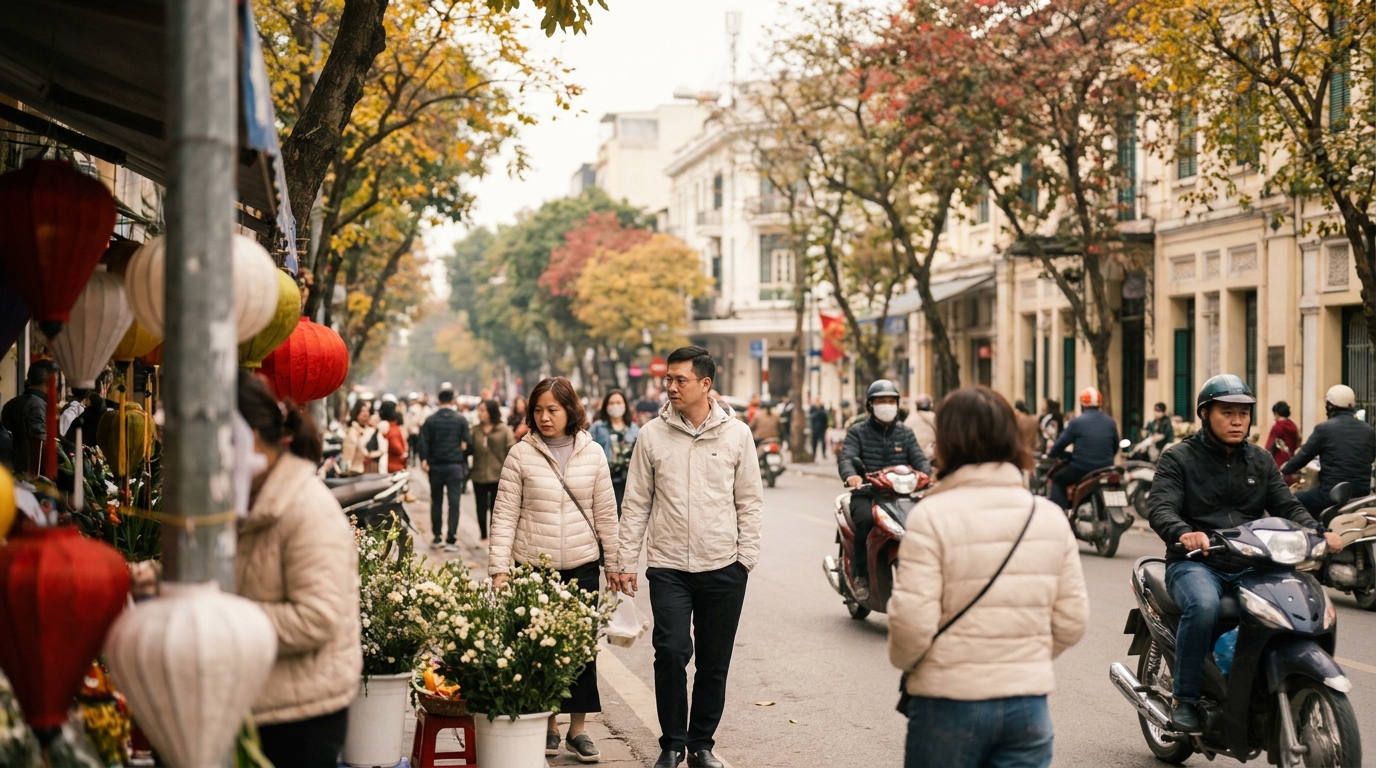
October-November and March-April are Hanoi’s two prime windows, with average daytime temperatures 18-25°C, humidity below 70%, and the lowest rainfall of the year (Vietnam National Administration of Tourism, 2025). Both windows offer crisp walking weather, dry skies, and the iconic Hanoi atmosphere photos always promise — golden afternoon light, lake mist, and bun cha grills smoking on every Old Quarter corner.
Hanoi’s optimal travel windows are October-November (autumn, 22-28°C, low humidity) and March-April (spring, 17-22°C, blooming flora) according to Vietnam National Administration of Tourism climate data, with both periods averaging under 90mm monthly rainfall and humidity 65-75%.
We tested both peak windows. October felt like Bangkok’s cool season — t-shirts in morning, light layers by 7 PM. March hit perfectly mild — 19-23°C all day, no AC needed, blooming flowers along Hoan Kiem Lake. Both delivered. October won by a hair for outdoor street food evenings (still warm enough for sidewalk plastic stools at 9 PM); March won for daytime walking marathons through the Old Quarter.
Why these two windows beat all others
- Temperature: 18-25°C avoids both winter cold and summer heat
- Humidity: Below 70% — meaning sidewalk strolls don’t end in sweat-soaked t-shirts
- Rainfall: Lowest of the year (60-90mm/month vs 250-350mm in monsoon)
- Crowds: October-November sees 30-40% more international tourists than off-peak months — book hotels 6-8 weeks ahead
- Festivals: Hanoi Old Quarter Festival (October), Vietnam Heritage Day (November)

The 3-Day Hanoi Itinerary
The plan we use ourselves — sent straight to your inbox.
- Day-by-day route
- Where to stay
- Real 2026 costs
Free · No spam · Unsubscribe anytime
What’s Hanoi’s Weather Month-by-Month?
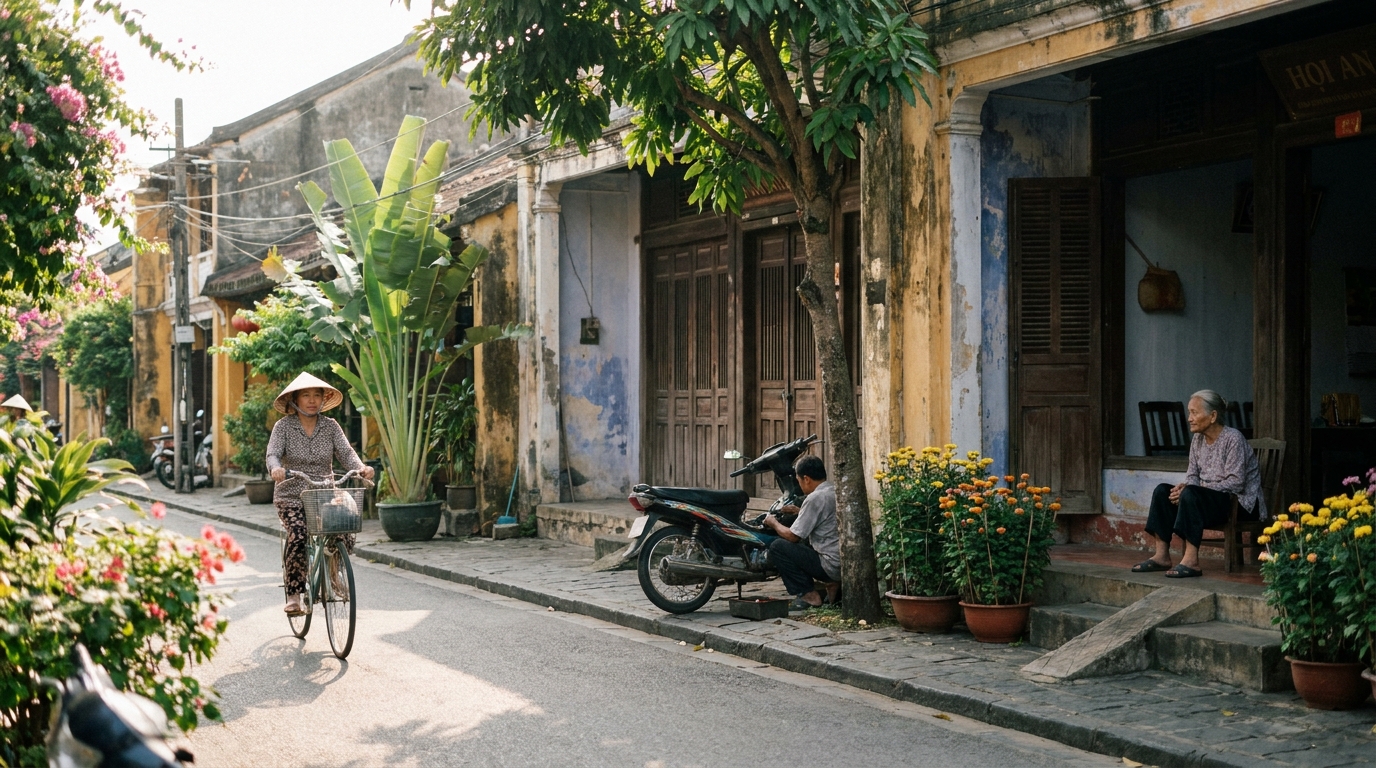
Hanoi has four distinct seasons unusual for Southeast Asia, with average annual rainfall of 1,680mm concentrated mostly in May-September monsoon (Vietnam Meteorological Agency, 2025). January-February runs cool (14-20°C), May-August runs hot (28-35°C with high humidity), October-November and March-April hit the sweet spots.
Hanoi’s annual climate splits into four distinct seasons with 1,680mm total rainfall concentrated in May-September monsoon, January-February cool periods averaging 14-20°C, summer June-August reaching 32-35°C with 80%+ humidity, and the optimal autumn-spring shoulders averaging 18-25°C with under 90mm monthly rainfall per Vietnam Meteorological Agency 2025 data.
Full month-by-month breakdown
| Month | Avg Temp | Rainfall | Humidity | Hotels | Verdict |
|---|---|---|---|---|---|
| Jan | 14-19°C | 20mm | 78% | ★★★ peak prices | Cool, gray, packs needed |
| Feb | 15-20°C | 30mm | 83% | ★★★ + Tet surge | Tet festival; many shops close |
| Mar | 17-22°C | 50mm | 83% | ★★★★ peak | ★ Spring sweet spot |
| Apr | 20-26°C | 90mm | 83% | ★★★★ peak | ★ Spring peak; warm dry |
| May | 24-31°C | 190mm | 83% | ★★ low season | Pre-monsoon, hot |
| Jun | 26-33°C | 250mm | 83% | ★ low season | Avoid: monsoon starts |
| Jul | 26-33°C | 320mm | 84% | ★ cheapest | Avoid: peak monsoon |
| Aug | 26-33°C | 340mm | 85% | ★ cheapest | Avoid: wettest month |
| Sep | 24-30°C | 250mm | 83% | ★★ tail of low | Tail of monsoon |
| Oct | 22-28°C | 120mm | 78% | ★★★★ peak | ★★ Best month overall |
| Nov | 18-24°C | 40mm | 76% | ★★★★ peak | ★★ Best month overall |
| Dec | 15-20°C | 20mm | 76% | ★★★ holidays | Cold, clear, layers needed |
Source: Vietnam Meteorological Agency + Booking.com 2026 pricing
We compared Hanoi hotel prices across the same 5 mid-range Old Quarter properties for July (low season) vs October (peak). Average July rate: $28/night. Average October rate: $42/night. The 50% premium for October weather pays off if you actually walk Hanoi outdoors instead of cafe-hopping in AC.
Find your Hanoi hotel on the map
Live prices from Booking & Airbnb — tap a pin to compare stays across the Old Quarter and beyond.
What Should You Pack for Hanoi by Month?
Hanoi’s four-season climate requires different packing approaches across the year, with autumn requiring layers, summer demanding rain gear, and winter needing actual sweaters in January-February (IQAir, 2025). Air quality also varies — winter PM2.5 averages 50-90 µg/m³, requiring N95 masks for sensitive travelers.
Hanoi’s air quality varies seasonally with winter PM2.5 averaging 50-90 µg/m³ (categorized as unhealthy for sensitive groups by WHO standards), while summer monsoon flushing typically reduces particulates to 25-40 µg/m³ according to IQAir 2025 monitoring data, recommending N95 masks for travelers with respiratory conditions visiting October-March.
Packing by season
Spring (March-April) and Autumn (October-November):
– Light long-sleeve shirts + 1-2 t-shirts
– Light cardigan or fleece for evenings
– Walking shoes (comfortable, dry)
– Compact umbrella (April brings spring showers)
– Sunscreen SPF 30+
Summer (May-September):
– Quick-dry t-shirts and shorts
– Sandals + walking shoes (rain-resistant)
– Heavy-duty umbrella or rain jacket
– Mosquito repellent (DEET 20%+)
– Anti-chafe products
– Indoor backup plans for daily afternoon downpours
Winter (December-February):
– Sweater + light jacket combo
– Long pants
– Closed-toe shoes
– Hat for January morning walks
– N95 mask for sensitive lungs (high PM2.5 winter pollution)
Year-round essentials:
– Modest temple-visit clothing (cover shoulders + knees)
– Power adapter (Type A, C, or G)
– Sunscreen and lip balm
When Should You Avoid Hanoi?
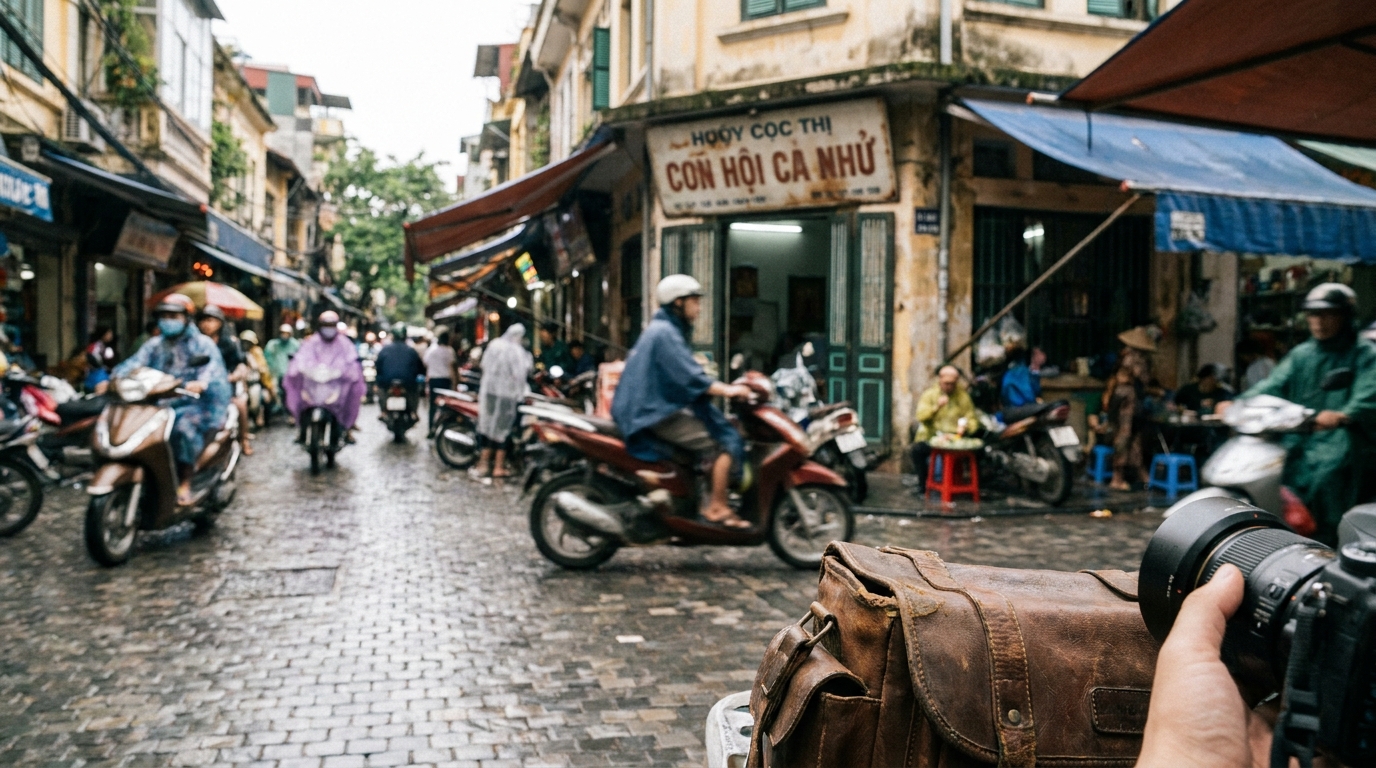
June through August is Hanoi’s worst weather window, with daily highs of 32-35°C, humidity exceeding 80%, and monthly rainfall averaging 250-340mm spread across daily afternoon thunderstorms (Vietnam Meteorological Agency, 2025). Old Quarter streets flood within 30 minutes of heavy rain — locals know to pull motorbikes onto sidewalks well before downpours hit.
Hanoi’s June-August monsoon delivers 250-340mm monthly rainfall across daily afternoon thunderstorms, with temperatures averaging 32-35°C, humidity exceeding 80%, and feels-like temperatures often reaching 38°C+ per Vietnam Meteorological Agency data, making outdoor exploration uncomfortable for 6-8 hours daily during peak summer.
Why monsoon Hanoi is hard
- Daily flash floods — Old Quarter drainage struggles with 50mm+ rain in 1 hour; expect knee-deep water in some streets
- Heat exhaustion risk — feels-like temps hit 38-40°C with humidity; dehydration accumulates fast
- Mosquitoes — dengue fever risk peaks May-September; daily DEET essential
- Tour cancellations — Halong Bay cruises occasionally cancel for safety; reschedule your itinerary
When monsoon CAN work
If hotel prices and crowd avoidance matter more than weather, May-September drops mid-range hotel rates 30-50%. Indoor activities (museums, cafes, food tours, cooking classes) work fine. Hanoi has 200+ AC-cooled cafes for daytime escape. Just plan around 2-5 PM downpours and budget more for indoor entertainment.
What separates Hanoi monsoon from Bangkok monsoon is timing. Hanoi rain often hits 2-5 PM and clears by sunset, leaving evenings dry. Bangkok rain stretches across full evenings. So Hanoi monsoon evenings still work for night markets and Beer Corner — just plan indoor afternoons.
When Is the Tet Festival in Hanoi?
Tet (Lunar New Year) typically falls late January or early February, with 2026 Tet starting February 17. This is Vietnam’s most important holiday — many shops, restaurants, and even some hotels close for 5-7 days, prices spike 20-40%, and transportation books out weeks ahead (Vietnam National Administration of Tourism, 2025).
Tet 2026 falls February 17, with the official 7-day public holiday closing many family-run restaurants, shops, and tours, while open establishments charge 20-40% premium prices, intercity transportation books out 4-6 weeks ahead, and hotels in Old Quarter Hanoi see 30% peak surge per Vietnam tourism data.
Tet timing 2026-2030
- 2026 Tet: February 17 (Tuesday)
- 2027 Tet: February 6 (Saturday)
- 2028 Tet: January 26 (Wednesday)
- 2029 Tet: February 13 (Tuesday)
- 2030 Tet: February 3 (Sunday)
Should you visit during Tet?
Pros:
– Cultural immersion — temples, flower markets, fireworks displays
– Beautiful peach blossom (hoa dao) and kumquat (cay quat) decorations everywhere
– Hanoi feels different — slower pace, family atmosphere
Cons:
– 50-70% of family-run restaurants close days 1-3 of Tet
– Hotel prices spike 20-40%
– Transportation books out 4-6 weeks ahead
– Limited tour availability for 7+ days
If your trip dates flex by 1-2 weeks, avoid the 7 days bracketing Tet day. Visit either 1-2 weeks before (peak Tet preparation atmosphere, everything still open) or 1-2 weeks after.
For tour bookings during off-peak windows, browse Hanoi tours on Klook — most operators offer free cancellation up to 24-48 hours before tour day.
About the author: Travelguidestip has been covering Southeast Asia travel since 2023. Read our editorial policy for how we research and verify our guides.
Frequently Asked Questions
What is the best month to visit Hanoi?
October and November are the two best months — average daytime 22-28°C, low humidity 76-78%, monthly rainfall under 120mm, and crisp autumn skies. March and April rank a close second with mild 17-26°C temperatures and spring blossoms along Hoan Kiem Lake. Avoid June-August unless monsoon weather doesn’t bother you.
What is the worst time to visit Hanoi?
June through August is the worst weather window — daily highs 32-35°C, humidity 80%+, monthly rainfall 250-340mm, and frequent afternoon thunderstorms. Add the dengue fever mosquito risk peaking in summer, and outdoor exploration becomes genuinely uncomfortable for 6-8 hours daily.
Is it OK to visit Hanoi in the rainy season?
Yes, with caveats. Hotel prices drop 30-50%, crowds thin out, and monsoon rain typically hits 2-5 PM, leaving evenings dry. Plan indoor activities for afternoons (museums, cafes, food tours, cooking classes) and outdoor exploration for mornings (6-10 AM) and evenings (after 6 PM).
Is Hanoi cold in winter?
Yes, by Southeast Asian standards. December-February averages 14-20°C with occasional dips to 10°C in January. Many Hanoi buildings lack indoor heating, so evenings feel colder than the temperature suggests. Pack a sweater and light jacket; bring closed-toe shoes if visiting in January-February.
How many days do you need in Hanoi?
Three days minimum for the Old Quarter, Hoan Kiem Lake, Train Street, Temple of Literature, and at least one classic food tour. Add 2 days for Halong Bay overnight cruise. Add 1-2 days for Ninh Binh. Total comfortable Hanoi-area trip: 5-7 days.
Plan Your Hanoi Trip Around the Best Window
Hanoi’s two prime windows — October-November and March-April — deliver the city as it appears in travel photos: golden autumn light, lake mist, dry sidewalks, t-shirt evenings on plastic stools. Outside these windows, Hanoi still works, but you trade weather for either heat (summer) or budget savings (low season).
For October-November visits, book hotels 6-8 weeks ahead — peak demand sells out fastest. For March-April, 4-6 weeks lead time covers most needs. Free-cancellation rates on Booking.com let you lock dates without commitment.
For tour bookings paired with your trip dates, browse Hanoi tours and Halong Bay cruises on Klook and filter by your travel month — operator availability shifts seasonally. For accommodation matched to your preferred area, see our where to stay in Hanoi guide.