How Many Days in Bangkok? (2026)
By TravelguidestipUpdated 10 min readHow we earn
Hotel buttons open Stay22 (Booking.com, Agoda and others) and tour buttons open GetYourGuide. We may earn a commission at no extra cost to you.
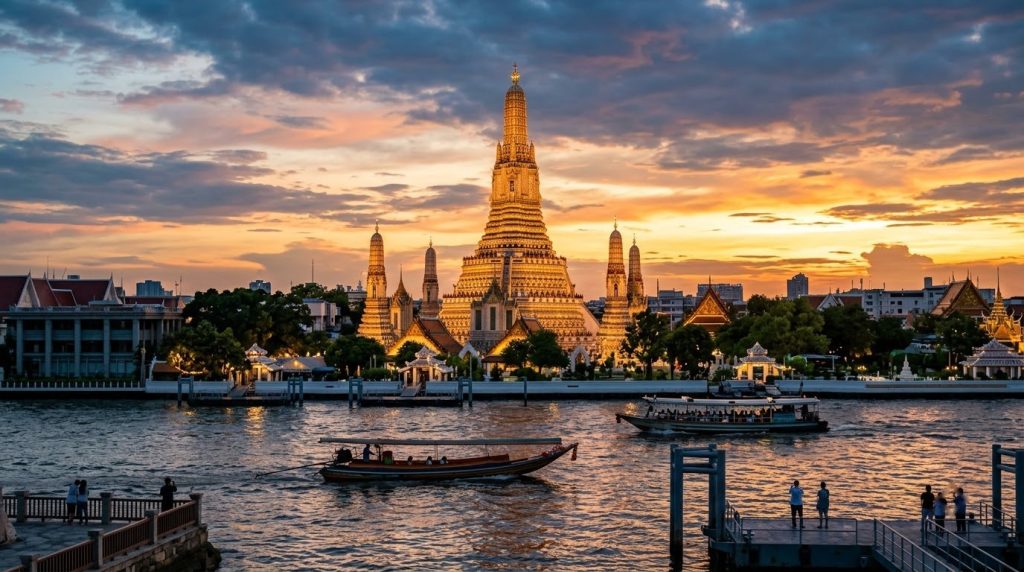
The direct answer to how many days in Bangkok you need is 3 days for a focused first visit or 5 days for a fuller trip with a day trip and slower mornings. Three days suits anyone stacking Bangkok onto a wider Thailand or Southeast Asia trip, while 5 days or more suits first-timers who want temples, markets, a day trip and rooftop bars without rushing.
| Trip length | What you fit in | Who it suits | Approx cost/person (AUD · USD) |
|---|---|---|---|
| 1 day | Grand Palace or Wat Arun, one meal, one BTS ride | Layover or add-on travellers | AUD 69–111 · USD 50–80 |
| 2 days | Old City temples plus one market or modern-Bangkok afternoon | Short stopover before an island flight | AUD 139–222 · USD 100–160 |
| 3 days | Temples, a market day, and a half-day trip to Ayutthaya or the floating markets | Most first-time visitors | AUD 208–333 · USD 150–240 |
| 4 to 5 days | The full 5-day plan: temples, markets, modern Bangkok, a day trip, local neighbourhoods | Couples, families, comfortable first-timers | AUD 278–555 · USD 200–400 |
| A week or more | Everything above plus a second day trip, a cooking class or a slower pace | Slow travellers, repeat visitors, remote workers | AUD 486–833+ · USD 350–600+ |
Costs are mid-range per-person daily budgets (AUD 69–111 · USD 50–80/day, mid-range tier) multiplied by trip length, excluding international flights. Source: bangkok-budget-guide.md, mid-range daily budget.
Bangkok in 1 day
One day in Bangkok only makes sense as a layover or a stopover before flying onward, not as a real visit.
Pick one landmark, either the Grand Palace (THB 500, about AUD 19 · USD 14, gates open 8:30 AM) or Wat Arun (THB 200, about AUD 8 · USD 6), rather than trying to fit both into a single morning.
Cross the river by Chao Phraya Express Boat instead of a taxi, since a 5-kilometre taxi ride can take 45 minutes in Bangkok traffic. Add one street food stop near Tha Maharaj or Khao San Road, where a pad thai costs THB 50-80 (about AUD 3-4 · USD 2-3).
One day leaves no room for a day trip, a market, or more than one neighbourhood.
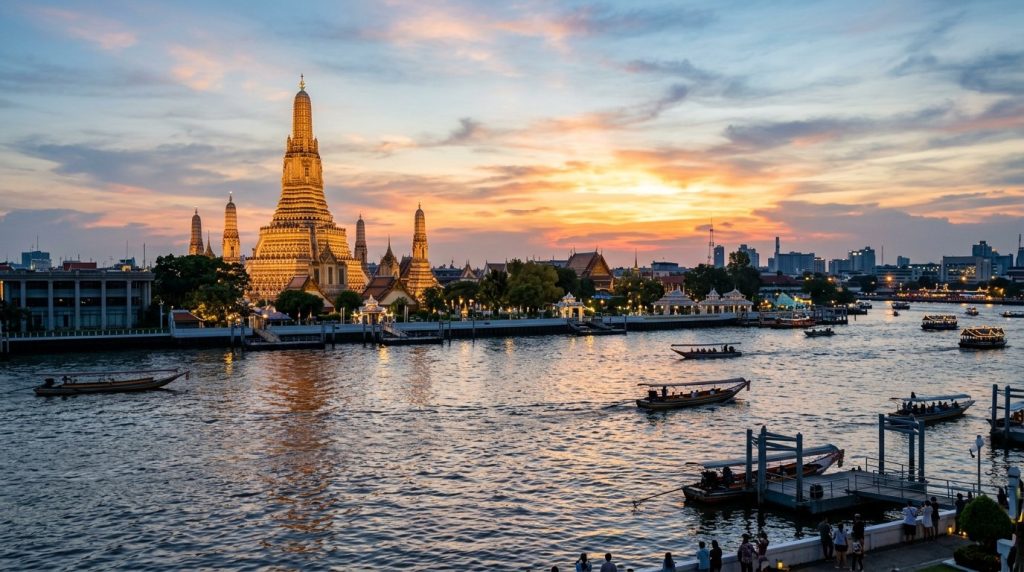
Bangkok in 2 days
Two days covers Bangkok’s Old City temples plus one more theme, either a market or modern Bangkok, without feeling rushed for either.
Spend day one on the Grand Palace, Wat Pho and Wat Arun in the Old City, then choose day two based on timing: Chatuchak Weekend Market on a Saturday or Sunday (over 200,000 visitors most weekends, per Chatuchak Market Office data), or ICONSIAM and the Sukhumvit rooftop bar scene on a weekday.
Two days works for travellers connecting onward to an island the same week, but it still skips any day trip outside the city.
Bangkok in 3 days – the length most visitors should pick
Three days is the length most visitors should pick because it adds one day trip on top of the two-day temple-and-market base, and it is the structure most itinerary guides build around.
Days one and two cover temples and markets as above, then day three adds either Ayutthaya (a UNESCO World Heritage Site since 1991, guided tours run THB 1,200-2,000, about AUD 47-79 · USD 34-57) or the Damnoen Saduak floating market combined with Maeklong Railway Market (THB 1,000-1,800, about AUD 39-71 · USD 28-51).
For a full breakdown of what to do on each of the three days, see this detailed 3-day Bangkok itinerary. Three days is tight if you also want a second market day or more than one rooftop bar evening.
Bangkok in 4 to 5 days
Four to five days is the comfortable version of the 3-day plan, adding a second neighbourhood, rooftop bars, and slower mornings instead of back-to-back sightseeing. Travellers spending 4-6 days report the highest satisfaction scores of any trip length, according to a Tourism Authority of Thailand visitor survey.
A 5-day structure typically runs: Old City temples, markets and Chinatown, modern Bangkok and rooftops, a day trip, then local neighbourhoods like Bang Krachao or Talat Noi. Our 5-day Bangkok itinerary lays out each day hour by hour.
Plan around the best time to visit Bangkok, since November to February brings cooler weather (26-31C) and under 50mm of monthly rainfall, compared with the wetter months from June to October.
A week or more in Bangkok
A week or more suits slow travellers, repeat visitors and remote workers who want to add a second day trip, a cooking class, or just move through the city without a fixed schedule.
Beyond the core 5-day plan, extra days let you add Bang Krachao’s 16 square kilometres of cycling paths and boardwalks, a second day trip, or a full day exploring one neighbourhood like Talat Noi’s street art district.
Staying longer also changes accommodation math: serviced apartments in Sukhumvit drop to THB 15,000-25,000 per month for a studio (about AUD 595-991 · USD 429-714), which works out cheaper per night than a hotel booked one week at a time.
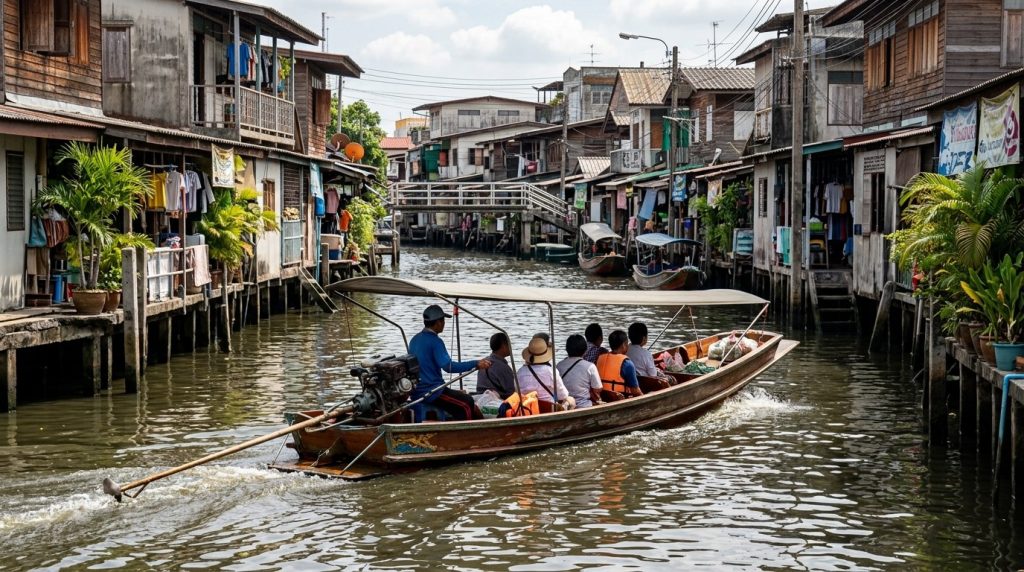
When fewer days is the right answer
Fewer days is the right call in three specific situations, not as a compromise. First, if Bangkok is one stop on a multi-city Thailand trip, for example combined with Phuket or Chiang Mai, 2-3 days keeps more time for the rest of the itinerary.
Second, if annual leave is limited, which applies to many Australian travellers flying 9+ hours to reach Thailand, a tight 3-day Bangkok stop still covers the Old City, one market and one day trip.
Third, if budget is the main constraint, a backpacker daily spend of THB 650-1,600 (about AUD 26-64 · USD 19-46/day) stretches further over fewer days in Bangkok and more days on a cheaper island or in a smaller city. Our Bangkok budget guide breaks down exactly what backpacker, mid-range and luxury travellers spend per day.
How to decide – quick cheat sheet
– Pick 1 day if you have a long layover or are only adding Bangkok onto an Ayutthaya day trip. – Pick 2 days if you’re connecting to an island flight the same week and want temples plus one extra theme. – Pick 3 days if Bangkok is your only stop and you want temples, a market and one day trip without rushing. – Pick 4 to 5 days if you want the full itinerary, a second neighbourhood, and rooftop bars without back-to-back sightseeing. – Pick a week or more if you’re a slow traveller, a repeat visitor, or working remotely from the city.
Getting around Bangkok: BTS, MRT, boats and traffic
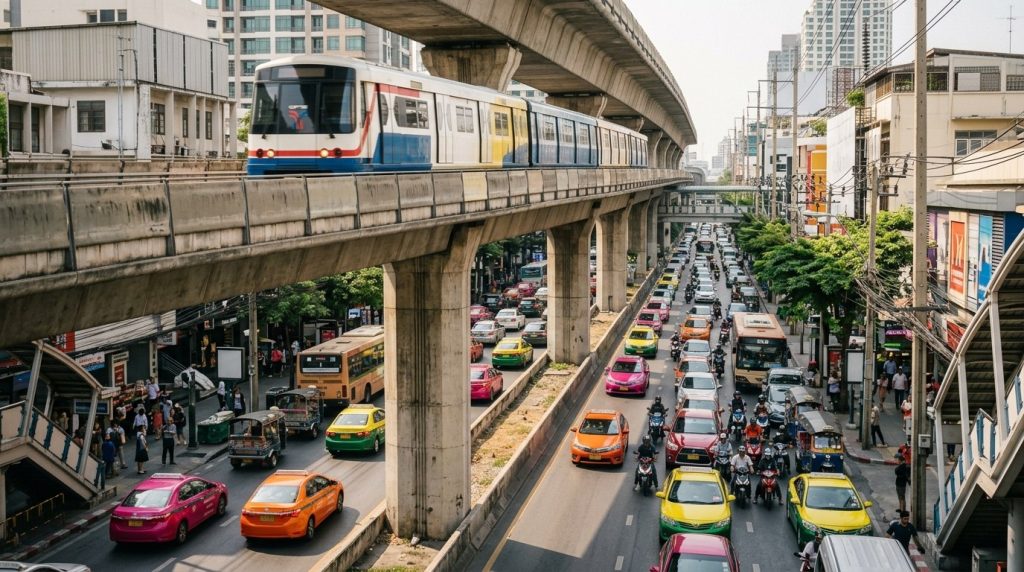
The BTS Skytrain and MRT subway cover most of modern Bangkok, including Sukhumvit and the Chatuchak and ICONSIAM areas, but neither line reaches directly into the Old City temples, so a short Chao Phraya Express Boat ride or a walk usually finishes the last leg of a temple-focused day.
A single BTS or MRT fare runs roughly THB 16 to 59, about AUD 0.70-2.10 · USD 0.50-1.50 depending on distance, and a stored-value Rabbit or MRT card speeds up repeat trips by skipping the ticket machine each time, which matters most on a short trip where every extra queue eats into sightseeing time.
Grab, the regional ride-hailing app, is the easiest way to book a car without haggling over a fare, typically running AUD 4-11 · USD 3-8 for a short cross-town trip, more during rain or the evening rush when surge pricing kicks in.
Bangkok’s traffic, not distance, is the real constraint on a schedule: a 5-kilometre trip can take 45 minutes at the wrong hour, so visitors with only a few days do better anchoring each day around one or two neighbourhoods than zig-zagging across the city to chase individual sights.
The Chao Phraya Express Boat is also one of the cheapest ways to see the river temples without a tour group, with fares typically under AUD 1.40 · USD 1 per ride, and it avoids traffic entirely along the river corridor connecting the Grand Palace, Wat Arun, and the riverside hotels in between.
Walking is underrated inside the Old City itself, where the Grand Palace, Wat Pho, and the riverside are close enough together that a taxi often takes longer than covering the same ground on foot once midday traffic builds.
Outside the Old City and Sukhumvit’s BTS corridor, Bangkok stops being a walking city fast, with wide, unshaded roads and few pedestrian crossings, so pairing transit for the long legs with walking only inside a single compact area is the pattern most visitors settle into after a day or two.
Logistical tips: SIM cards, money and language
A tourist SIM or eSIM from AIS, dtac, or True, bought at a counter in the Suvarnabhumi or Don Mueang arrivals hall, typically costs AUD 14-28 · USD 10-20 for 8 to 15 days of largely unlimited data, and installation takes only a few minutes at the counter with a passport as the only requirement.
ATMs add a flat foreign-card withdrawal fee of about THB 220, roughly AUD 8 · USD 6, on top of whatever a home bank charges, so withdrawing a larger amount less often cuts the total fee paid over a trip; a handful of Thai banks also offer fee-free withdrawals through specific partner networks, worth checking before departure.
Cash is still expected at markets, street-food stalls, and smaller shops, while malls, chain restaurants, and 7-Elevens take cards without issue, so carrying a mix avoids both an overstuffed wallet of small notes and a stall that has no way to run a card at all.
English is widely understood on the BTS and MRT, at major attractions, and inside most hotels, less so at neighbourhood food stalls and smaller local restaurants, where pointing at a photo on a menu or at a dish on a neighbouring table generally works better than a phrasebook sentence or a translation app’s text-to-speech.
Learning a handful of Thai greetings and thank-yous is appreciated but rarely necessary for getting by.
Dress codes matter more at temples than anywhere else on a Bangkok itinerary: the Grand Palace and Wat Pho both require covered shoulders and knees for every visitor, with sarongs available to rent or buy at the gate for anyone caught out in shorts or a singlet.
Tap water is not recommended for drinking, though it is fine for brushing teeth, and bottled or filtered water is sold cheaply enough everywhere that it is rarely worth carrying more than one bottle at a time.
Frequently asked questions about Bangkok trip length
Is 3 days enough for Bangkok?
Yes, for most first-time visitors who want the Old City temples, one market, and a single day trip without rushing any of them, which is why 3 days is the length this guide builds around above. It is tight only for travellers who also want a second market day or more than one rooftop bar evening on top of that base plan.
Is a week in Bangkok too long?
Only for travellers who stick to one neighbourhood and refuse a day trip; otherwise the extra days absorb easily into a second day trip, a cooking class, or the slower pace described in the week-or-more section above. Repeat visitors and remote workers are the travellers most likely to use a full week well.
What is the bare minimum to see Bangkok’s highlights?
Two full days covers the Grand Palace, Wat Pho, and Wat Arun on day one and a market plus one modern-Bangkok theme on day two, though that pace leaves no room for a day trip outside the city and feels rushed for anyone who wants to linger over a meal rather than move straight to the next sight.
Should Bangkok get more days than the rest of a Thailand trip?
Generally no. Most itinerary guides treat 3 to 5 days in Bangkok as the ceiling before diminishing returns set in, reserving the remaining days for an island such as Phuket or Koh Samui, or a northern city such as Chiang Mai, since Bangkok’s core sights are dense but finite compared with a multi-week Thailand trip.
Does the best time of year to visit change how many days to spend?
Not the number of days itself, but it changes how those days feel. November to February brings cooler, drier weather that makes a 4 to 5 day plan comfortable end to end, while a trip landing in the hot, humid months from March to May or the wetter stretch from June to October often benefits from building in one slower, indoor-heavy day rather than scheduling back-to-back outdoor sightseeing for the full stay.
Is 2 days ever enough for a first visit?
Only as a deliberate trade-off, not a comfortable default. Two days covers the Old City temples and one more theme, but it rules out any day trip entirely, so travellers choosing 2 days are usually prioritising time elsewhere in Thailand over a complete first look at Bangkok itself.
Where to stay for a short Bangkok trip
Sukhumvit is the best base for a short Bangkok trip because BTS Skytrain access cuts commute time between temples, markets and rooftop bars, which matters most when days are limited.
Bangkok’s average hotel rate sits around AUD 81 · USD 58 per night across all neighbourhoods, though Sukhumvit mid-range rooms typically run AUD 69-139 · USD 50-100 per night in low season.
Booking 3-4 weeks ahead locks in free-cancellation rates before the November-February peak pushes prices up, and our guide to the best time to visit Bangkok sets out which months carry that premium.
Find your Bangkok hotel on the map
Live prices from Booking, Airbnb and more — move the map or change dates to compare stays around Bangkok.