Phuket Transportation Guide 2026: Every Option Compared
By TravelguidestipUpdated 16 min readHow we earn
Hotel buttons open Stay22 (Booking.com, Agoda and others) and tour buttons open GetYourGuide. We may earn a commission at no extra cost to you.
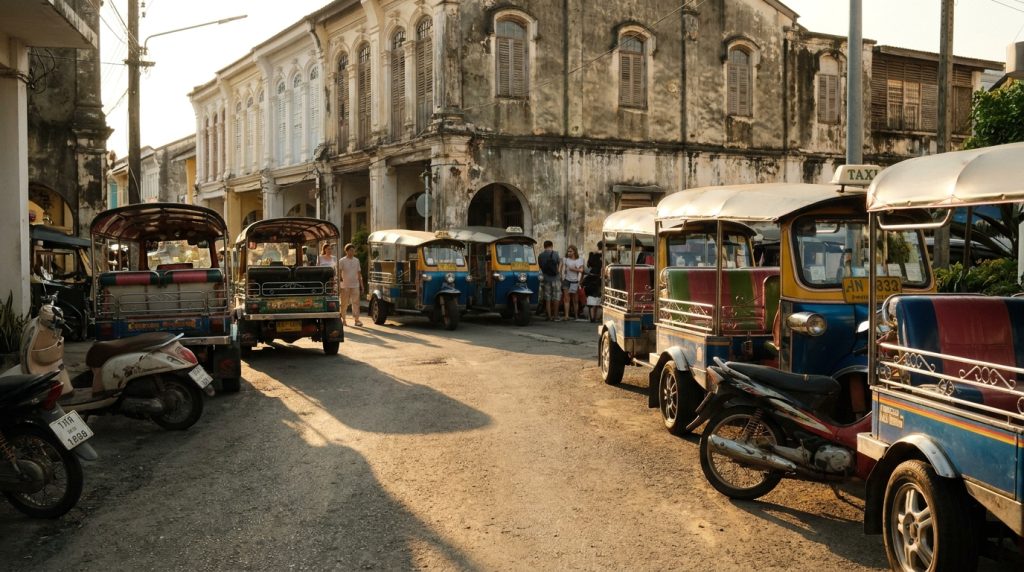
Quick answer: Grab is the cheapest, safest, no-haggle way to get around Phuket, usually 2-3x less than a tuk-tuk on the same route. The Phuket Smart Bus covers the airport-to-beaches corridor for a flat 100 THB, but no service links the beaches directly — almost every trip routes through Phuket Town. Renting a motorbike is the budget option, yet also the riskiest given Thailand’s high motorcycle fatality rate.
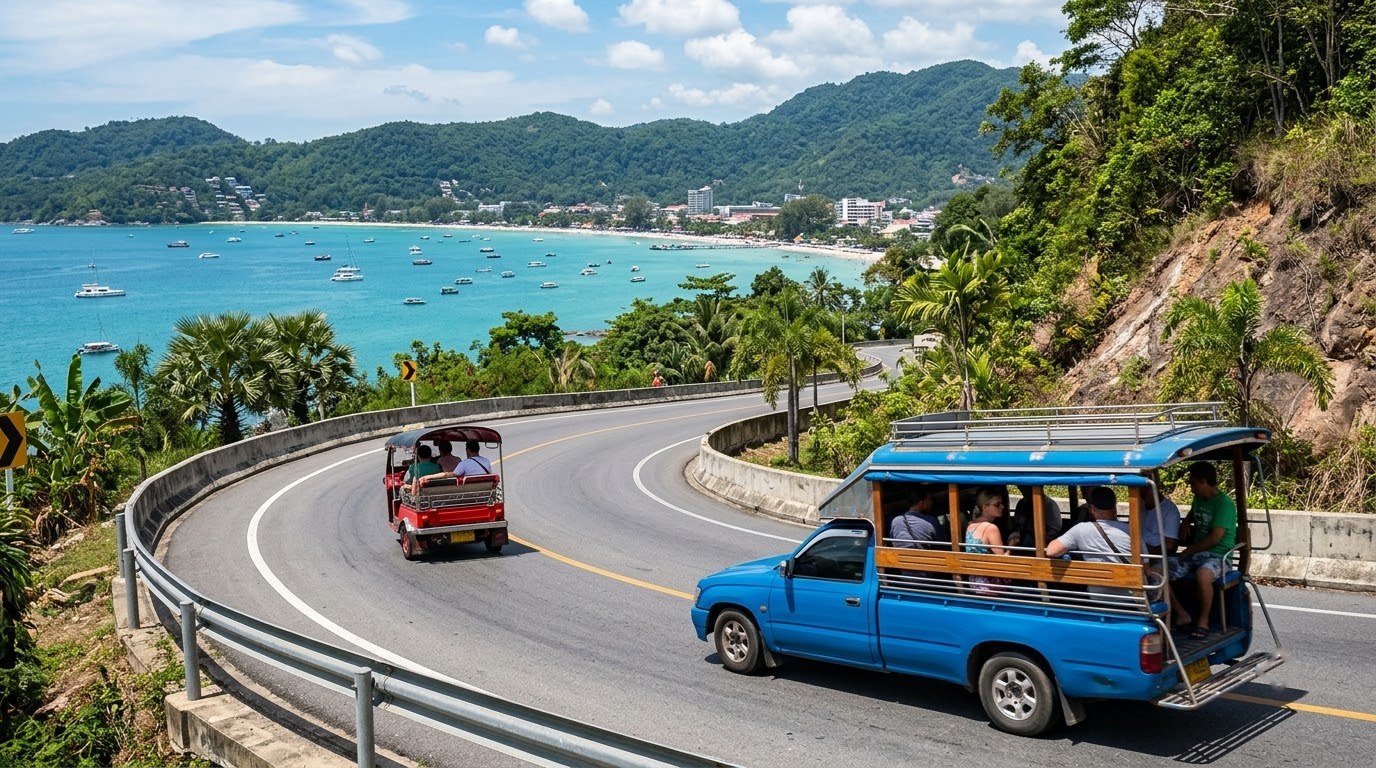
Getting around Phuket is the single biggest source of tourist frustration on the island. There’s no metro, no reliable bus network between beaches, and the tuk-tuk “mafia” has been overcharging visitors since before Grab existed. I’ve watched a tuk-tuk driver quote 500 THB for a trip that Grab priced at 180 THB. Same distance, same road, same traffic. The only difference was which app was open on my phone.
Here’s the thing: Phuket’s transport isn’t actually bad — it’s just confusing. There are nine ways to get from A to B, and the price difference between the smartest choice and the tourist-trap choice can be 5x on the same route. This guide breaks down every option with real pricing, route-by-route comparisons, and the scams you’ll actually encounter.
Thailand’s road safety record matters here too. The WHO reports 25.4 road deaths per 100,000 people in Thailand, with motorcyclists accounting for roughly 74% of all road fatalities. That statistic should inform every transport decision you make on this island.
For full trip planning, start with our Phuket travel guide. For airport-specific transfers, see our airport transfer guide.
Key Takeaways: Grab is the best all-around option (cheapest, safest, no negotiation). Phuket Smart Bus runs Airport-to-beaches for 100 THB flat. Tuk-tuks are 2-3x more expensive than Grab for the same routes. Motorbike rental saves money but Thailand’s motorcycle fatality rate makes it the riskiest choice. No transport connects beaches directly — everything routes through Phuket Town.
Route-by-Route Price Comparison — Phuket Transportation Guide
This is the table no other Phuket transport guide gives you. Every major route, every transport option, side by side.
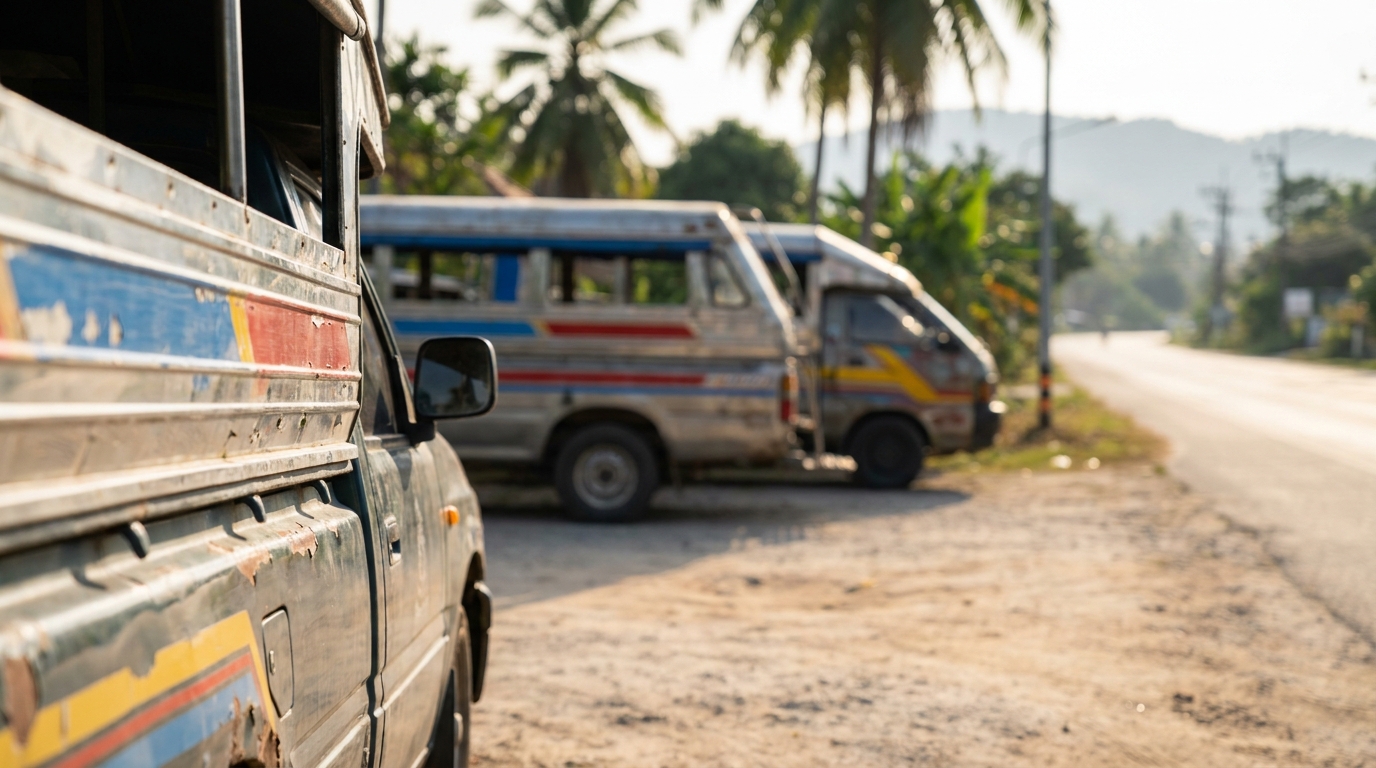
| Route | Grab | Tuk-Tuk | Smart Bus | Songthaew | Motorbike (fuel) |
|---|---|---|---|---|---|
| Airport – Patong (35km) | 650-850 | 800-1,200 | 100 | N/A | ~20 |
| Airport – Kata (42km) | 750-950 | 900-1,200 | 100 | N/A | ~25 |
| Airport – Phuket Town (30km) | 400-550 | 600-800 | 100 | N/A | ~15 |
| Patong – Kata (10km) | 250-400 | 400-600 | 100 | N/A* | ~8 |
| Patong – Phuket Town (15km) | 350-500 | 500-800 | 100 | 40-50 | ~10 |
| Kata – Phuket Town (17km) | 300-450 | 500-700 | 100 | 40-50 | ~10 |
| Phuket Town – Rawai (15km) | 250-400 | 400-600 | 100 | 30-40 | ~10 |
| Patong – Kamala (8km) | 200-350 | 400-500 | N/A | N/A | ~5 |
| Kata – Rawai (8km) | 200-350 | 400-500 | 100 | N/A* | ~5 |
All prices in THB. Motorbike fuel cost only — rental is 250-350 THB/day on top.
*No songthaew connects beaches directly. All routes go through Phuket Town, requiring a transfer.
** On the Patong-to-Kata route (one of the most common tourist trips), Grab costs 250-400 THB while a tuk-tuk costs 400-600 THB. That’s a 40-60% markup for the same 10km ride. Over a 7-day trip making two such trips per day, you’d spend roughly 3,500-5,600 THB on tuk-tuks vs. 1,750-2,800 THB on Grab. The savings from using Grab alone can cover two decent restaurant dinners.
Grab and Bolt: Ride-Hailing Apps
Grab — Your Default Transport
Grab’s the single best transport tool in Phuket. Fixed prices shown upfront, no negotiation, GPS tracking, digital payment option, and a rating system that keeps drivers honest. Uber doesn’t operate in Southeast Asia — Grab bought them out in 2018.
How to use it: Download the app before you land. Set pickup and dropoff, confirm the price, wait for driver. At the airport, walk to the designated Grab pickup zone outside arrivals. Payment works with cash, credit card, or GrabPay wallet.
What it costs: See the comparison table above. Generally 20-50% cheaper than tuk-tuks for the same route.
When it doesn’t work well:
– Late night (after 11 PM) — fewer drivers, longer waits, surge pricing
– Heavy rain — surge can double fares
– Remote areas (east coast, north of airport) — 10-20 minute waits
– Peak tourist season around NYE — surge pricing kicks in hard
Bolt — The Budget Alternative
Bolt runs 20-30% cheaper than Grab in Phuket, but there’s a catch: fewer drivers means longer wait times, especially outside Patong. If you’re in central Patong or Phuket Town, try Bolt first. If the wait’s over 10 minutes, switch to Grab.
Airport restriction: Bolt drivers can’t pick up inside airport grounds. You’ll need to walk to the public road area — a 5-minute walk from the terminal.
** I used both apps for a week, tracking every fare. Bolt saved me an average of 60-80 THB per ride vs. Grab on the same routes. But three times, no Bolt driver was available and I switched to Grab anyway. If you’re not in a rush, open both apps simultaneously and take whichever’s cheaper or faster.
Tuk-Tuks: Pricing and How to Not Get Ripped Off
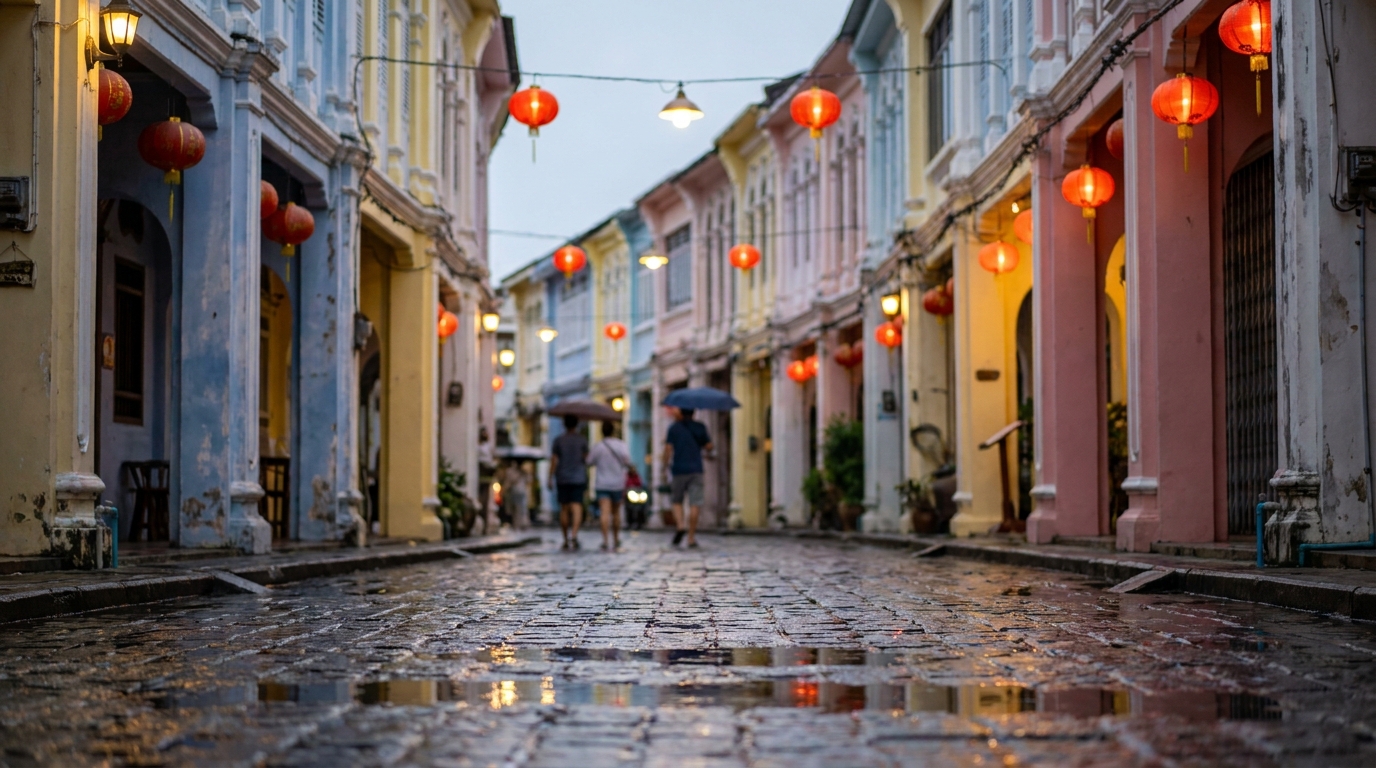
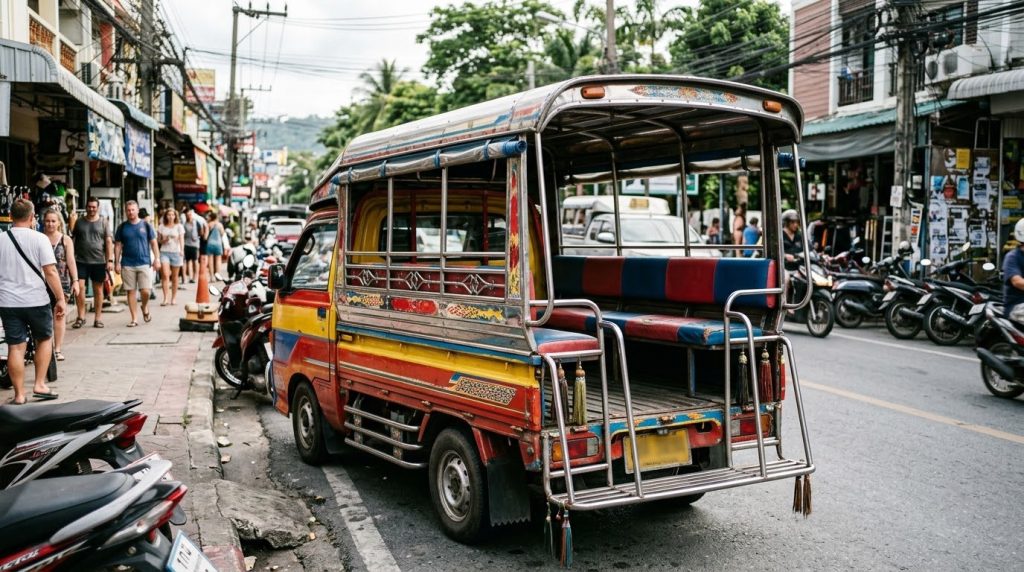
Phuket’s tuk-tuks aren’t the cute three-wheeled vehicles you’ve seen in Bangkok photos. They’re converted pickup trucks with bench seats and a roof. There are no meters. Every fare is negotiated — which means every fare starts as a rip-off attempt and works backward from there.
Typical tuk-tuk fares:
| Route | Fare (THB) |
|---|---|
| Within Patong (short trip) | 200-300 |
| Patong – Karon | 400-500 |
| Patong – Kata | 400-600 |
| Patong – Kamala | 400-500 |
| Patong – Phuket Town | 500-800 |
| Patong – Airport | 800-1,200 |
| Kata – Rawai | 400-500 |
How to negotiate without getting scammed:
- Check Grab first. Open the app, get a quote, then you know the fair market rate. Any tuk-tuk fare above 130% of Grab is overpriced.
- Agree on the total fare before getting in. “Total price, not per person” — say this explicitly. Drivers sometimes quote per-person rates without clarifying.
- Counter at 50-60% of the first offer. They’ll counter back. Meet somewhere in the middle.
- Walk away slowly. This isn’t a negotiation tactic — it’s genuine advice. If you walk away, the driver will call you back with a lower offer about 70% of the time.
- Night fares are non-negotiable. After midnight, drivers know you have no alternatives (no songthaew, limited Grab). You’ll pay 50% more and there’s nothing you can do about it.
When tuk-tuks make sense: Groups of 3-4. The per-person cost becomes competitive with Grab, and you don’t need the app or a phone signal. For couples or solo travelers, Grab wins every time.
Phuket Smart Bus: The Budget Option
The Smart Bus is Phuket’s closest thing to public transit. It runs a single route: Airport – Phuket Town – Karon – Kata – Rawai. Flat fare: 100 THB to any stop. Air-conditioned. Runs roughly every 60 minutes from 6:00 AM to 9:00 PM.
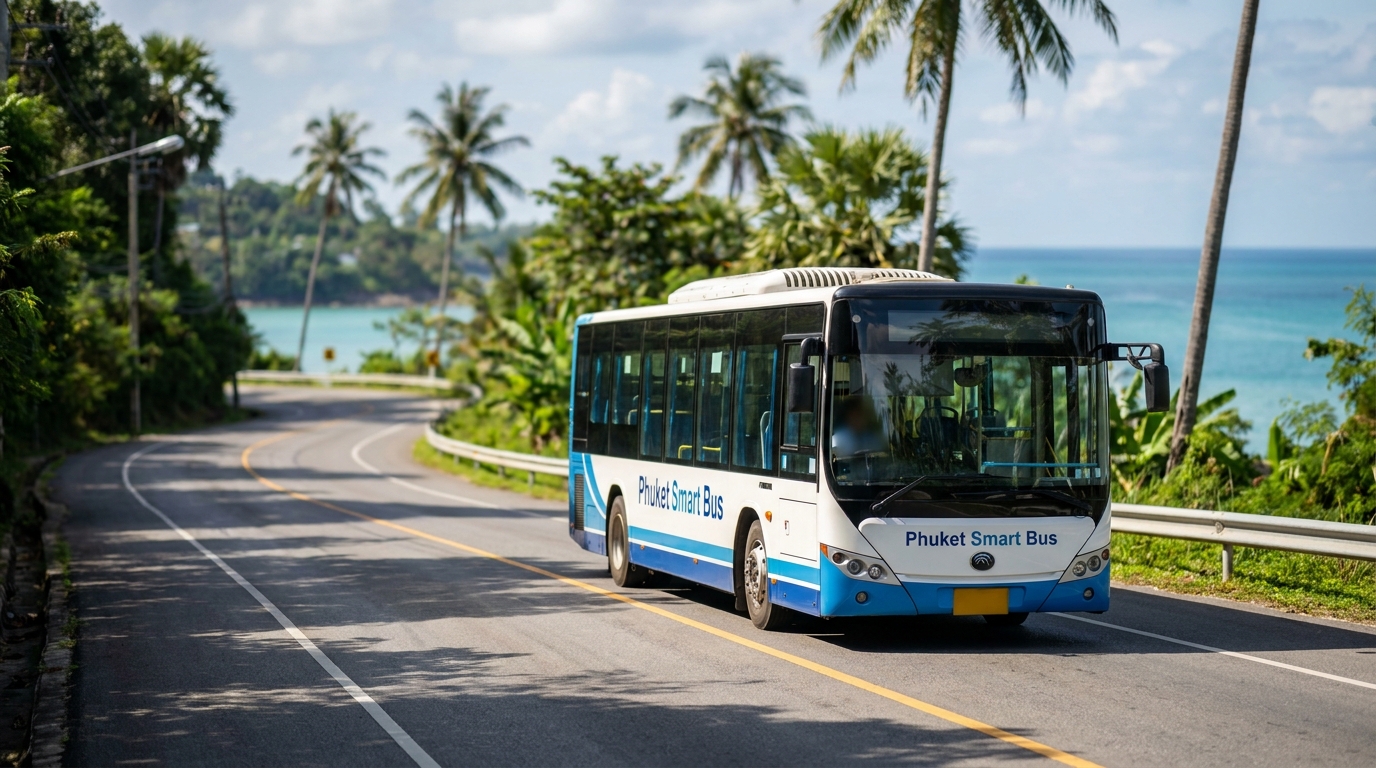
The catch: You need a Phuket Rabbit Card (300 THB — includes 100 THB non-refundable card fee + 200 THB credit for rides). Buy it at the airport information counter before boarding.
When it’s worth it: Airport transfers for budget travelers (100 THB vs. 700+ THB by Grab). If you’re staying along the west coast corridor (Karon, Kata, Rawai) and don’t mind hourly frequency, it’s absurdly cheap.
When it’s not worth it: Going to Patong (it stops near the junction, not in Patong itself — you’ll need a connecting Grab or tuk-tuk). Going anywhere on the east coast. Evening plans after 9 PM. If you’re in a hurry — the 60-minute frequency means you could wait nearly an hour.
Songthaews: Local Buses
Songthaews are open-backed trucks that run fixed routes within and from Phuket Town. There are two types:
Pink Songthaews (Phuket Town only): 15 THB flat, run 6:30 AM – 8:30 PM, hail from the roadside.
Blue Songthaews (Beach routes from Phuket Town): 30-50 THB, run 7:00 AM – ~5:00 PM from Ranong Road market in Phuket Town. Routes to Patong (40-50 THB), Kata/Karon (40-50 THB), and Rawai/Nai Harn (30-40 THB).
The critical limitation that nobody mentions: There is no songthaew route connecting beaches to each other. Every route radiates from Phuket Town outward, like spokes on a wheel. Want to go from Patong to Kata by songthaew? You ride 30 minutes to Phuket Town, wait for another songthaew, then ride 30 minutes to Kata. A 10km trip becomes a 90-minute odyssey. Use Grab instead.
Renting a Motorbike: The Honest Pros and Cons
Let’s be real about this one. Motorbike rental is the cheapest way to get around Phuket — 250-350 THB/day for an automatic scooter, which is less than a single Grab ride from Patong to Kata. The freedom’s intoxicating. No waiting for drivers, no negotiating fares, just you and the open road.
Now let’s be equally real about the risks. Thailand reports roughly 25.4 road deaths per 100,000 people, making it one of the deadliest countries in the world for road accidents. Motorcyclists represent about 74% of those fatalities. In Phuket specifically, tourist motorbike accidents are a daily occurrence at hospitals.
Cost breakdown:
| Item | Cost (THB) |
|---|---|
| Daily rental (automatic scooter) | 250-350 |
| Weekly rental | 1,200-2,000 |
| Monthly rental | 3,000-5,000 |
| Full tank of fuel | 60-100 |
| IDP (from home country, AAA in US) | ~$20 (one-time) |
| Insurance through Bikago | 100-200/day extra |
Legal requirements:
– International Driving Permit (IDP) with motorcycle endorsement — legally required
– Police checkpoints are common in Patong, along Kata Hill road, and on the main highways
– Fine for no IDP: 500-1,000 THB per stop
– Critical warning: Without an IDP, your travel insurance is void. A motorbike accident without insurance in Thailand can result in hospital bills of 50,000-500,000+ THB out of your own pocket.
If you do rent:
1. Photograph and video the entire bike BEFORE riding away — every scratch, dent, and mark
2. Send the photos to yourself via email (creates a timestamp)
3.
NEVER leave your passport as deposit — use a photocopy or cash deposit
4. Choose rental shops with Google reviews and online presence
5. Wear a helmet.
Always. It’s the law, and it saves lives.
6. Avoid riding at night, in the rain, or up steep hills (Patong Hill) until you’re confident
If you shouldn’t rent:
– You’ve never ridden a motorbike before (Phuket is not the place to learn)
– You’re uncomfortable with left-side driving
– You plan to drink alcohol
– You don’t have an IDP
For daily budget calculations including transport, see our travel budget guide.
Car Rental: When It Makes Sense
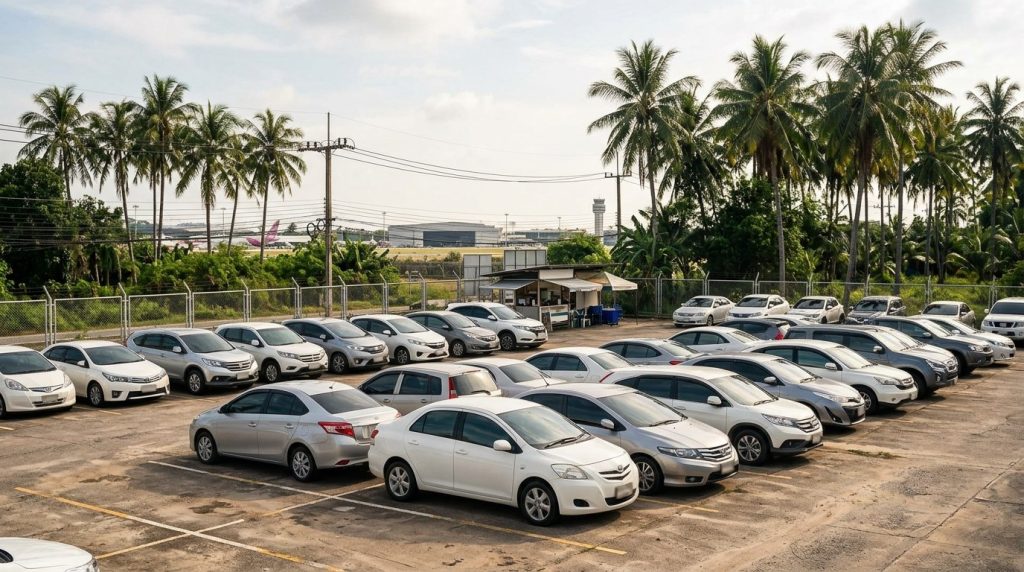
For families, groups of 3-4, or anyone planning to explore the whole island over multiple days, a rental car is often the smartest choice. It’s cheaper than daily Grab rides if you’re making 3+ trips per day.
Daily rates:
| Category | Daily Rate (THB) |
|---|---|
| Economy (Yaris, City) | 800-1,200 |
| SUV (Fortuner, CRV) | 1,500-2,500 |
| Premium/luxury | 3,000+ |
| Weekly discount | 15-30% off daily |
Companies: Budget, Avis, and Hertz have counters at Phuket Airport. Local companies (Thai Rent A Car, Phuket Car Rent) are cheaper but check Google reviews carefully. Rentalcars.com aggregates all options.
Driving in Phuket — What You Need to Know:
Thailand drives on the left (UK-style). The steering wheel’s on the right side of the car. Roundabouts go clockwise. If you’ve only driven on the right (USA, Europe, most of Asia), this takes active concentration for the first 24 hours. After that, it becomes natural — until you get distracted and autopilot kicks in, which is when mistakes happen.
Road hazards to expect:
– Patong Hill (Route 4029): Steep grades, blind corners, overloaded trucks crawling uphill
– Stray dogs on roads — especially at dawn and dusk
– Monsoon flooding — low-lying roads flood in minutes during heavy rain (May-October)
– Unmarked speed bumps in residential and hotel areas
– No sidewalks on most roads — pedestrians walk on the shoulder
– U-turn lanes at major intersections — drivers make sudden U-turns you won’t expect
Fuel: PTT stations are the most common (clean toilets, 7-Eleven attached). Regular gasoline: ~35-42 THB/liter. Roadside fuel carts sell from whiskey bottles at beach areas for 40-50 THB/liter — marked up but convenient for scooters.
Speed limits: 60 km/h urban, 90 km/h rural. In practice, many locals exceed these.
Water Transport: Boats and Ferries
Longtail Boats
The classic Phuket transport for beach-hopping. Colorful wooden boats with a long propeller shaft, operated by local fishermen.
| Route | Cost (THB) | Time |
|---|---|---|
| Rawai – Ko Bon | 1,000-1,500 (boat) | 15 min |
| Rawai – Coral Island | 1,500-2,000 (boat) | 20 min |
| Patong – Freedom Beach | 1,500-2,000 (round trip + wait) | 10 min |
| Bang Rong – Koh Yao | 200-300 (per person) | 30 min |
Prices are per boat (fits 2-4 people), not per person, unless noted. Negotiate at the beach — walk to different boats for competing quotes. Longtails aren’t available during monsoon season (May-October) for most open-water routes.
Ferries and Speedboats

For island connections:
| Route | Ferry | Speedboat | Time (Ferry/Speed) |
|---|---|---|---|
| Phuket – Phi Phi Islands | 350-600 | 800-1,500 | 2hrs / 45min |
| Phuket – Koh Lanta | 500-800 | 1,200-2,000 | 4hrs / 1.5hrs |
| Phuket – Koh Yao Noi | 200-400 | 600-1,000 | 1hr / 30min |
| Phuket – Similan Islands | N/A | 2,500-4,500 (day trip) | N/A / 1.5hrs |
Departure piers: Rassada Pier (main ferry terminal, for Phi Phi and Koh Lanta), Chalong Pier (dive trips), Bang Rong Pier (Koh Yao).
Private Driver Hire
Full-day private driver: 2,000-3,000 THB for 8-10 hours. This is the VIP option that makes sense for sightseeing days — Big Buddha, Wat Chalong, Old Town, viewpoints, all in one loop without touching a tuk-tuk or waiting for Grab.
For families with young children or groups of 4+, this is often the best value per person.
Find your Phuket hotel on the map
Live prices from Booking & Airbnb — tap a pin to compare stays around Patong and Kata Beach and beyond.
East Coast vs. West Coast: The Transport Gap Nobody Mentions
This is the section that’ll save you the most frustration if you’re exploring beyond the tourist strip.
West Coast (Patong, Kata, Karon, Kamala, Surin, Bang Tao):
– Smart Bus service available
– Songthaew routes from Phuket Town
– Abundant tuk-tuks at every beach
– Grab drivers plentiful (5-10 min wait)
– Everything a tourist needs is walkable within each beach area
East Coast (Cape Panwa, Ao Yon, Rawai’s eastern stretch, Koh Sirey):
– No Smart Bus
– No songthaew routes
– Very few tuk-tuks
– Grab available but 10-20 minute waits
– Essentially requires your own vehicle or pre-booked transport
** If you’re staying on the east coast — which several of our hidden gems picks recommend — rent a car or motorbike. Public transport simply doesn’t exist there. The east coast is calmer, quieter, and cheaper than the west, but the trade-off is transport dependency. Budget an extra 800-1,200 THB/day for a rental car if you’re east coast based.
Night transport (after 9 PM island-wide): Smart Bus, songthaews, and most tuk-tuks shut down. Your options are Grab, Bolt, or walking. In Patong, everything’s walkable within the main strip. Outside Patong, you’re dependent on ride-hailing apps. Always have a charged phone and a backup charger.
Transport Scams: What to Watch For
Scams are the unavoidable asterisk on Phuket transport. Here’s every common one, how it works, and how to avoid it.
The Tuk-Tuk Detour Scam
How it works: A tuk-tuk driver offers a suspiciously cheap or free ride — 20 THB to cross town, or “free if you just stop at one shop.” The “shop” is a gem store, tailor, or travel agency. The driver earns 500-2,000 THB commission per tourist delivered. You face aggressive, sometimes intimidating sales tactics at each stop.
Prevention: Never accept rides with conditions. If a driver says “just one quick stop,” decline. If they insist, get out.
The Motorbike Damage Claim
How it works: You return a rented motorbike and the shop owner discovers “damage” you didn’t cause — a scratch that was there before, a dent you didn’t see. They demand 2,000-10,000+ THB for “repairs.”
Prevention: Video every angle of the bike before you ride away. Include close-ups of any existing damage. Send the video to your own email (creates a timestamp). If they claim damage on return, show the video. If they still insist, call the Tourist Police (1155).
The Airport Taxi Overcharge
How it works: Unofficial drivers approach you inside the terminal offering “taxi, taxi.” They’ll quote 1,500-2,000 THB to Patong — double or triple the Grab rate.
Prevention: Walk past them. Use Grab from outside the arrivals exit, or find the official metered taxi desk inside the terminal (600-800 THB to Patong). For detailed airport options, see our airport transfer guide.
The “Broken” Meter
How it works: Taxi driver says the meter isn’t working and quotes a flat (inflated) fare.
Prevention: Walk away and find another taxi. Or open Grab.
The Jet Ski Damage Scam
How it works: You rent a jet ski, return it, and the operator claims you caused 10,000-50,000+ THB in damage. Intimidation tactics — sometimes including fake police — follow.
Prevention: Avoid jet ski rentals in Phuket entirely. This scam is so well-documented that the Australian and British embassies have issued warnings about it. If you must rent, video the entire jet ski from every angle beforehand. But honestly? Don’t bother.
Frequently Asked Questions
What’s the cheapest way to get around Phuket?
Motorbike rental (250-350 THB/day) for unlimited trips, or the Smart Bus (100 THB flat per ride) for the Airport-Rawai corridor. For individual trips, Grab beats tuk-tuks by 40-60% on the same routes. If you’re staying in one beach area and walking everywhere, you won’t need transport at all.
Is Uber available in Phuket?
No. Uber sold its Southeast Asian operations to Grab in 2018. Grab is the equivalent — same concept, same app quality, widespread coverage. Bolt is the secondary option, usually 20-30% cheaper with fewer drivers.
Should I rent a motorbike in Phuket?
Only if you have riding experience AND an International Driving Permit with motorcycle endorsement. Thailand’s road fatality rate is among the world’s highest, with motorcyclists representing 74% of deaths. If you’re a confident rider, it’s the cheapest and most flexible option. If you’re not, the savings aren’t worth the risk.
How do I get from Patong to Kata?
Four options: Grab (250-400 THB, 20 min), tuk-tuk (400-600 THB negotiated, 20 min), Smart Bus (100 THB, but you’ll need to catch it at the correct stop), or motorbike (8 THB in fuel, 15 min). Grab’s the best balance of cost, speed, and convenience.
Are Phuket tuk-tuks safe?
Physically, yes — they’re covered trucks, not the wobbling three-wheelers of Bangkok. The risk isn’t safety, it’s your wallet. Always agree on the total fare before getting in, confirm it’s per-vehicle not per-person, and use Grab as a price benchmark.
How do I get from Phuket to Phi Phi Islands?
Ferry from Rassada Pier: 350-600 THB, 2 hours. Speedboat: 800-1,500 THB, 45 minutes. Most departures are at 8:30 AM and 1:30 PM. Day trip tours (1,500-3,000 THB) include transport, lunch, and island stops. Plan your trip with our 5-day itinerary which includes the best island day.
How much should I budget for transport in Phuket?
Depends on your style. Motorbike: 250-350 THB/day total. Grab: 500-1,000 THB/day for 2-3 trips. Tuk-tuks: 800-2,000 THB/day for 2-3 trips. Private driver: 2,000-3,000 THB for a full-day tour. For detailed daily budgets, check our where to stay guide which includes transport considerations by area.
Last updated: April 2026. Transport pricing verified through personal use and cross-referenced with Phuket101, Wikivoyage, and local sources. Road safety data from WHO.
Book Your Phuket Trip
Use these trusted platforms to book your Phuket trip at the best prices:
- Tours & Activities: Browse Phuket experiences on GetYourGuide — day trips, food tours, skip-the-line tickets.
- Hotels: Compare Phuket hotels on Booking.com — free cancellation on most bookings.
- eSIM / Stay Connected: Airalo eSIM — affordable data plans, no roaming fees.
We only recommend services we genuinely use and trust. Thank you for supporting our work!
According to the Tourism Authority of Thailand (2025), Phuket continues to be one of the world’s most visited destinations, drawing millions of international travelers each year.