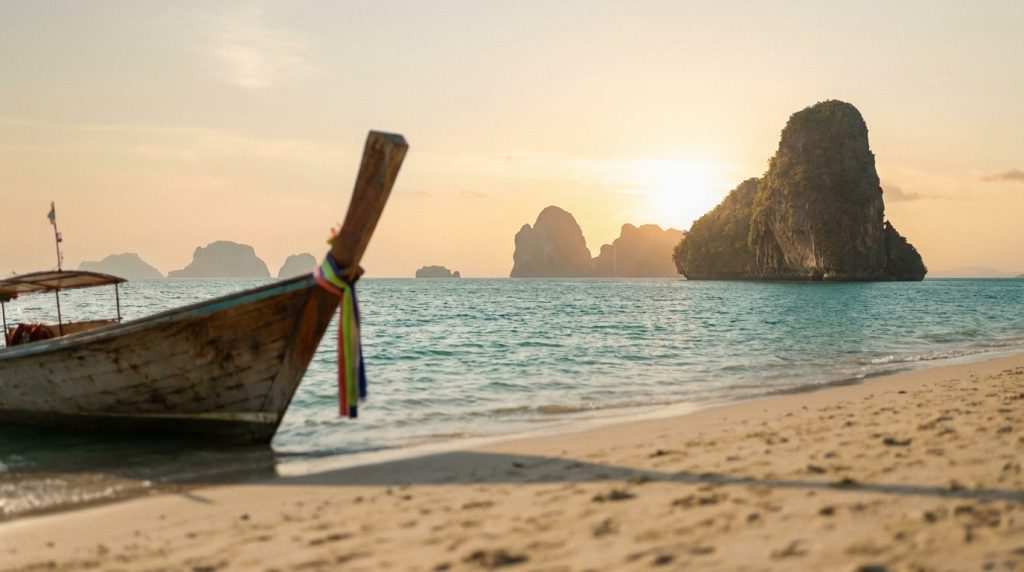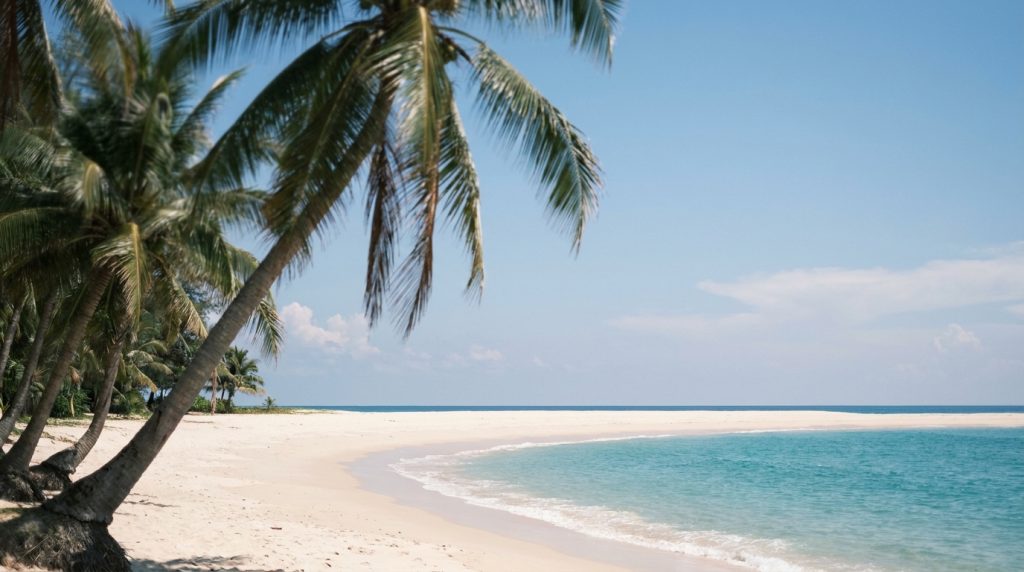
Disclosure: Some links in this guide are affiliate links. If you book or buy through them, we may earn a small commission at no extra cost to you — it helps keep our guides free.
15 Hidden Gems in Phuket Most Tourists Never Find (2026)
Quick answer: The standout hidden gems in Phuket are Laem Ka and Ao Sane beaches for quiet swimming and snorkeling, Banana Beach for a jungle-trail cove, the Windmill Viewpoint for a crowd-free sunset near Promthep, and Wat Phra Thong’s half-buried golden Buddha. For local flavor, trade the tourist strips for Lock Tien food court in Old Town and a five-minute ferry escape to Koh Maphrao (Coconut Island).
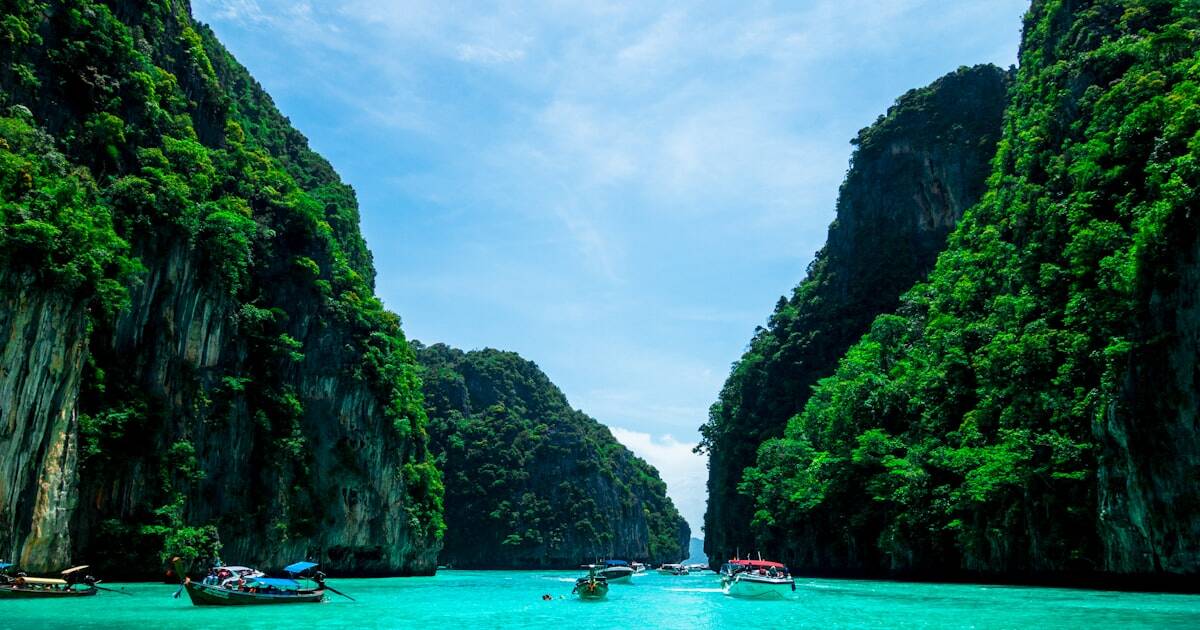
Phuket pulled in roughly 18 million airport passengers in 2024 (AOT reports), and Thailand’s aiming for 39 million foreign tourists in 2025. Here’s the thing most visitors don’t realize: an estimated 70–80% of them never leave the Patong–Kata–Karon triangle. That’s three beaches out of dozens. Three neighborhoods out of an entire island.
I’ve spent weeks wandering Phuket’s backroads on a rented scooter, eating at hawker stalls where I’m the only non-Thai face, and swimming at beaches where the only footprints are mine. The island everybody thinks they know? They don’t know the half of it.
This guide covers 15 places that won’t show up on your hotel concierge’s laminated map. Secret beaches with zero sunbed vendors. Viewpoints that beat Promthep Cape without the selfie-stick crowds. Temples that predate Phuket’s tourism boom by centuries. And food courts where lunch costs less than a Starbucks latte back home.
For a full trip overview, start with our Phuket travel guide. If you’re building an itinerary around these spots, our 5-day itinerary includes several of them.
Key Takeaways: Phuket’s 15 best-kept secrets include 5 near-empty beaches (free entry vs. 300 THB at Freedom Beach), 3 viewpoints that rival Promthep, 2 food courts where meals run 40–80 THB, and a rainforest with a plant species found in only 2 places on Earth. Most are free. None require a tour operator.
Secret Beaches Only Locals Know About
Phuket’s got over 30 named beaches. Tourists crowd into maybe five of them. The rest? They’re waiting for you — no entrance fee, no touts, no Instagram queues. Here are five that locals actively try to keep quiet about.
1. Laem Ka Beach — Phuket’s Best-Kept Secret
Hiddenness: ★★★★★ | Cost: Free | Best for: Total solitude
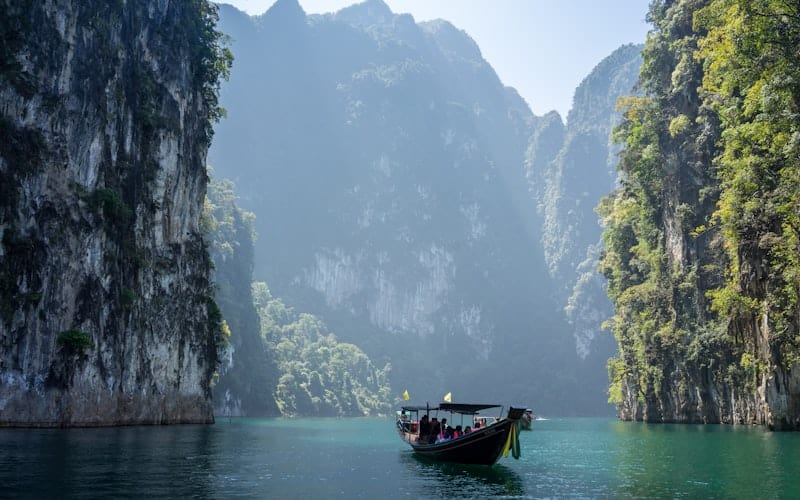
There’s no road sign pointing to Laem Ka. No Google Maps pin that’ll get you there cleanly. You’ve got to find Wat Laem Ka temple near Rawai, then take an unmarked dirt path through a rubber plantation. That’s the filtration system — it keeps everyone out.
What you’ll find: a crescent of golden sand shaded by casuarina trees, water so shallow and clear you can see your toes at chest depth, and on weekdays, maybe two Thai families. That’s it. No vendors, no sunbeds, no jet skis.
PERSONAL EXPERIENCE: I visited on a Tuesday morning and didn’t see another person for 90 minutes. Brought my own water and a sandwich because there’s nothing to buy within a 10-minute walk. That’s exactly why it’s perfect.
How to get there: From Rawai Pier, drive south on Route 4024 toward Cape Panwa. Look for Wat Laem Ka on the right — the beach path runs behind the temple grounds. GPS: 7.7695° N, 98.3637° E.
Best time: Weekday mornings, 7–9am. You’ll likely have it to yourself.
2. Ao Yon Beach — Where Navy Families Swim
Hiddenness: ★★★★☆ | Cost: Free | Best for: Families, kayaking
Ao Yon sits on Phuket’s east coast — the “wrong” side of the island for sunsets. That geographic accident keeps it off every tourist’s radar. The Royal Thai Navy base next door means the water’s always clean and the beach is well-maintained. On weekends, it’s navy families picnicking under the trees. On weekdays, it’s empty.
Two small beaches separated by a rocky outcrop. Calm, shallow water year-round because the bay faces east, sheltered from the Andaman monsoon. Local seafood shacks along the road sell som tum and grilled fish for 60–100 THB — cheaper than anything you’ll find in Patong.
How to get there: Drive past the Phuket Aquarium toward Cape Panwa Hotel. Ao Yon’s signposted as a small turn-off. Kayak rental runs about 300 THB/hour from operators at the beach.
Best time: Year-round (it’s sheltered). Best November–April for calm seas.
3. Banana Beach — Jungle Trail Required
Hiddenness: ★★★★★ | Cost: Free (trail) / 400–600 THB (longtail) | Best for: Snorkeling, adventure
There’s no road to Banana Beach. You’ve either got to hike 15 minutes down a steep jungle trail or hire a longtail from Nai Thon Beach. That barrier-to-entry is what keeps it pristine — 200 meters of white sand backed by uncut jungle, one bamboo bar selling cold Singha, and a reef that drops off the southern rocks where the snorkeling’s better than anything you’ll pay 2,000 THB to see on a Phi Phi day trip.
UNIQUE INSIGHT: The snorkeling at Banana Beach’s south end is genuinely underrated. I’ve done the big-ticket Similan Islands trip and the Phi Phi snorkeling tours. Banana Beach holds up against both of them — minus the 40-person boat crowd.
How to get there: From the Trisara resort area in north Phuket, follow signs to “Banana Beach Trail.” The trail’s well-worn but steep — wear proper shoes, not flip-flops. Or hire a longtail from Nai Thon Beach for 400–600 THB round trip.
Best time: November–April (dry season). Arrive before 10am to beat the small trickle of hikers.
4. Nai Yang Beach — Sea Turtles and Plane Spotting
Hiddenness: ★★★☆☆ | Cost: 200 THB park fee (often uncollected) | Best for: Nature lovers, aviation geeks
You’ve seen Nai Yang from the air — it’s the long beach right under the flight path into Phuket International Airport. What most people don’t realize: you can stand on that beach and watch 737s and A350s pass 50 meters overhead on final approach. The aviation photography here is world-class.
But Nai Yang isn’t just a plane-spotting gimmick. It sits inside Sirinat National Park and serves as a sea turtle nesting ground from November through February. The beach itself stretches for a kilometer, shaded by mature casuarina trees, with low-key seafood restaurants along the back road serving meals for 100–250 THB.
How to get there: Five minutes from Phuket airport. Take Route 4026 north. National park fee is 200 THB for foreigners — though it’s rarely collected outside peak season.
Best time: November–February for turtle nesting season. Plane spotting’s good year-round.
5. Ao Sane Beach — Phuket’s Best Mainland Snorkeling
Hiddenness: ★★★★☆ | Cost: Free | Best for: Snorkeling, quiet swimming
The road to Ao Sane looks like a private driveway — which is precisely why nobody turns down it. Three tiny rocky coves connected by scramble paths, tucked between Nai Harn Beach and Promthep Cape. The entry’s rocky (bring reef shoes), but once you’re in the water, you’re swimming with massive schools of tropical fish five meters from shore. Black-tip reef sharks make occasional appearances.
One rustic beach bar serves drinks and basic food. That’s the entire commercial infrastructure. Compare that to Nai Harn — a 10-minute walk away — where you can’t move for beach umbrellas.
How to get there: From the Nai Harn Beach parking lot, drive up the hill toward Promthep Cape. Take the first left — it looks private, but it’s not. Follow the dirt road 800m down to the coves.
Best time: November–April for calm water. Mornings are best for visibility.
The 5-Day Phuket Itinerary
The plan we use ourselves — sent straight to your inbox.
- Day-by-day route
- Where to stay
- Real 2026 costs
Free · No spam · Unsubscribe anytime
Viewpoints Without the Crowds
Promthep Cape gets hundreds of visitors every sunset. These three viewpoints deliver equal or better views — and you might share them with a handful of people on a busy day.
6. Khao Rang Hill — The Locals’ Sunset Spot
Hiddenness: ★★★☆☆ | Cost: Free | Best for: Sunset dining, city views
Khao Rang is a public hilltop park smack in the middle of Phuket Town. It offers 360-degree panoramic views over the town, Chalong Bay, and the harbor — and yet it doesn’t appear on a single tourist bus route. That’s because it’s inland, and tourists have been conditioned to think Phuket’s only worth visiting at the coast.
The park has a fitness trail, a playground, a small temple (Wat Khao Rang) at the summit, and — here’s the real draw — Tunk Ka Café. This restaurant’s been a local institution for years. You can eat a proper Thai dinner for 200–400 THB per person while watching the sun drop below the Andaman. Reddit’s r/ThailandTourism crowd calls it “better than Promthep, and you can eat dinner while watching.”
PERSONAL EXPERIENCE: I’ve done Promthep Cape at sunset. Standing-room-only, selfie sticks everywhere, hawkers pushing stuff in your face. At Khao Rang, I had a table, a plate of pad kra pao, a cold beer, and a front-row view. No contest.
How to get there: From Phuket Town center, drive 2km north on Kosol Road. Well-signposted once you’re in the neighborhood.
Best time: Sunset, 5:30–6:30pm. Go on a weekday to have the viewpoint practically to yourself.
7. Windmill Viewpoint — The Better Promthep
Hiddenness: ★★★★☆ | Cost: Free | Best for: Photography, sunrise
Two actual white wind turbines standing on a concrete platform between Ya Nui and Nai Harn beaches. The 270-degree ocean panorama takes in Ya Nui below, Nai Harn to the north, and Promthep Cape to the south. It’s hands-down the best photo composition on the island — wind turbines framing an Andaman sunset isn’t something you’ll find anywhere else in Thailand.
Most “hidden viewpoint” articles don’t even mention this spot by the right name, which keeps it genuinely quiet. At sunset, you might share it with 10–15 people. Compare that to Promthep’s 200+.
UNIQUE INSIGHT: Come at sunrise instead. The viewpoint faces east-southeast, and the morning light hitting the ocean from this elevation is staggering. I counted three people at 5:45am. At sunset, it was maybe a dozen. Both blow Promthep out of the water.
How to get there: From Nai Harn, drive toward Promthep Cape. At the top of the hill, look for the two white wind turbines on the left side of the road. Small pull-off area for parking.
Best time: Sunrise (5:30–6:30am) for solitude and best light. Sunset is also excellent but slightly busier.
8. Koh Siray Hilltop Temple — The Island Nobody Visits
Hiddenness: ★★★★★ | Cost: Free | Best for: Culture, east-coast views
Koh Siray is technically an island, connected to Phuket Town by a short bridge. I’d bet 99% of tourists don’t know it exists. And yet the hilltop temple — Wat Koh Siray — offers east-coast views over the mangroves and Phang Nga Bay islands that rival Big Buddha, minus every single tourist.
At the summit, there’s a reclining Buddha. Below the hill sits a Chao Ley (sea gypsy) village — a living Moken community that’s been here generations before tourism arrived. Walking through the village is a window into pre-tourism Phuket that you can’t get anywhere else on the island.
How to get there: From Phuket Town, cross the Siray Bridge on the east side. Follow the road uphill to the temple. Total drive: 10 minutes from the town center.
Best time: Morning, 7–10am. The temple’s quiet at any hour. The Chao Ley village is most active in the early morning when fishermen return.
Temples and Cultural Treasures Tourists Miss
Everybody goes to Wat Chalong. These three cultural sites are more interesting, more photogenic, and — crucially — free of tour bus crowds.
9. Wat Phra Thong — The Half-Buried Golden Buddha
Hiddenness: ★★★★☆ | Cost: Free | Best for: History buffs, unique stories
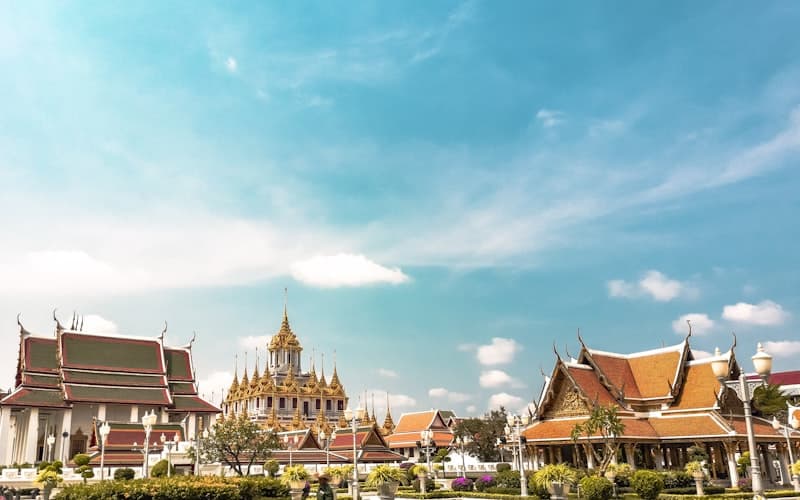
Wat Phra Thong receives less than 5% of the visitors that Wat Chalong gets — despite housing one of Phuket’s most bizarre and compelling relics. The main hall contains a golden Buddha image that’s half-buried in the ground. Only the head and shoulders stick out. According to local legend, multiple attempts to dig it up have ended in disaster — workers getting sick, equipment breaking, even one story about a swarm of hornets driving everyone away.
Nobody knows how deep the statue goes or when it was placed there. The mystery is the point. The temple also houses a small but excellent tin mining museum that tells the story of Phuket’s pre-tourism economy — the Chinese and Malay miners who built the island’s Sino-Portuguese architecture.
How to get there: On Route 402 (Thepkrasattri Road), about 5km south of the airport. It’s signposted on the highway.
Best time: Morning, 8–11am. Weekdays are dead quiet.
10. Soi Romanee — From Red-Light District to Art Street
Hiddenness: ★★★☆☆ | Cost: Free | Best for: Photography, café hopping
Soi Romanee’s a 100-meter alley in Phuket Old Town that most tourists walk right past without knowing its story. During the tin mining era, this was Phuket’s red-light district — the street where miners spent their wages after weeks underground. Today it’s been transformed into what might be the most photogenic street in southern Thailand.
Restored Sino-Portuguese shophouses painted in pastel pinks, yellows, and blues line both sides. Independent cafés, boutique guesthouses, and small galleries have moved into the former establishments. The China Inn Café on the corner serves local coffee in a setting that’s basically a museum — antique furniture, original tile floors, and walls covered in black-and-white photographs of old Phuket.
PERSONAL EXPERIENCE: I’ve been to Penang’s Georgetown, Hoi An’s Ancient Town, and Malacca’s Jonker Walk. Soi Romanee’s got the same Sino-colonial DNA but without the tourist saturation. Multiple 2025 Reddit threads note that “Phuket Old Town is becoming Thailand’s answer to Georgetown” — and this alley’s the epicenter.
How to get there: Walk south from Thalang Road in Old Town. Soi Romanee is the narrow alley branching off on your right.
Best time: Early morning (7–9am) for photos without people. Sunday evening during the Thalang Road Walking Street market (4–10pm) for food and atmosphere.
11. Jui Tui Shrine — Heart of the Vegetarian Festival
Hiddenness: ★★★★☆ | Cost: Free | Best for: Cultural immersion
Tourists flock to Buddhist temples but completely overlook Phuket’s Chinese shrines — and those shrines are arguably more central to the island’s cultural identity. Jui Tui is dedicated to Kiu Ong Ia, the main deity of the annual Vegetarian Festival, and it’s the spiritual heart of Phuket’s Hokkien Chinese community.
The architecture alone is worth the visit: elaborately carved dragons, spiraling incense coils hanging from the ceiling, red lanterns everywhere. But the real draw is the Vegetarian Festival connection. Every October, this shrine becomes ground zero for one of Thailand’s most intense religious events — fire walking, bladed-object processions through the streets, and spirit possession ceremonies that’ll redefine what you think you know about Thai culture.
How to get there: On Ranong Road in Old Town, between the fresh market and the port. The ornate Chinese gateway is unmissable once you’re on the right street.
Best time: Year-round for the shrine. October for the Vegetarian Festival — but go on a non-procession day if you want actual temple access without the crush.
The 5-Day Phuket Itinerary
Hour-by-hour plan, where to stay and what it really costs — free PDF.
Free · No spam · Unsubscribe anytime
Find your Phuket hotel on the map
Live prices from Booking & Airbnb — tap a pin to compare stays around Patong and Kata Beach and beyond.
Where Locals Actually Eat
Phuket’s got a unique cuisine that’s distinct from Bangkok or Chiang Mai — Hokkien Chinese-Thai fusion dishes you literally can’t find elsewhere in Thailand. These two spots are where the food’s best and the prices haven’t been tourist-adjusted.
12. Lock Tien Food Court — Since the 1950s
Hiddenness: ★★★★★ | Cost: 40–80 THB/dish | Best for: Authentic Phuket food
Lock Tien’s an open-air hawker court in a parking lot. No sign in English. No TripAdvisor sticker on the wall. Plastic tables under fluorescent lights with communal seating. It’s had zero online presence for most of its existence — and yet Phuket Old Town’s Chinese-Thai families have eaten here since the 1950s.
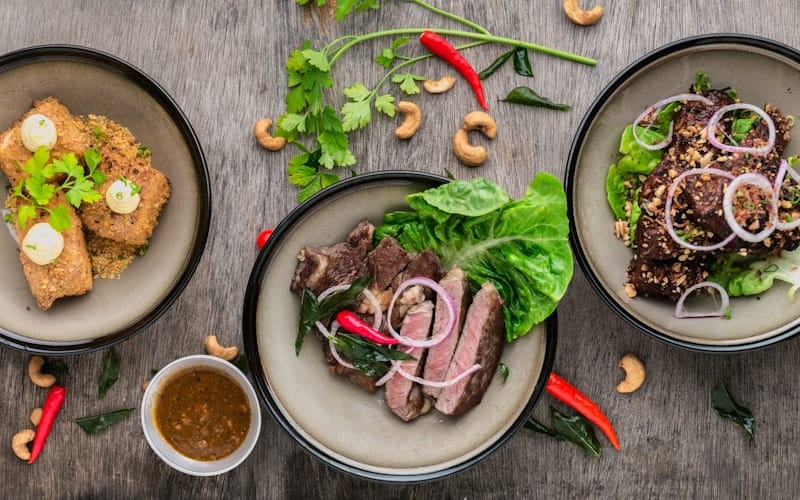
What you can’t miss: Mee Ton Poe (yellow noodle stir-fry), Oh Tao (oyster and taro pancake), Moo Hong (Hokkien-style braised pork belly), and Loba (five-spice pork roll). These are Phuket-exclusive dishes. Reddit’s food travelers consistently single out Lock Tien’s Oh Tao as “the best I’ve had in Thailand.”
Everything here costs 40–80 THB per dish. That’s $1.20–$2.35 USD. Three dishes and a drink will run you under 200 THB — roughly $6 for a meal you can’t replicate anywhere outside this island.
How to get there: From Thalang Road in Old Town, walk down Ong Sim Phai Road toward the old market. Lock Tien’s in the open lot on the right.
Best time: Lunch, 11am–2pm. Some stalls close by 3pm. Closed Sundays.
13. Talad Kaset Market — The 5am Experience
Hiddenness: ★★★★☆ | Cost: Under 100 THB for breakfast | Best for: Early risers, food photography
Every guide points tourists to Banzaan Market in Patong. That’s the Instagram-friendly, foreigner-priced version. Talad Kaset is the real thing — a sprawling farmers’ market on Chao Fa West Road where Phuket’s chefs and home cooks buy their daily ingredients starting at dawn.
Hundreds of stalls spread across a covered hall and outdoor area. Tropical fruit you’ve never seen in a Western supermarket, southern Thai curry pastes ground fresh that morning, seafood pulled from boats a few hours earlier, and — in the back section — Phuket-style dim sum sold by the piece for 5–10 THB each. Pair that with Ko Pi, the traditional local coffee brewed thick and sweet, and you’ve got a 50 THB breakfast that’s better than anything on a hotel buffet.
UNIQUE INSIGHT: The price difference between Talad Kaset and Banzaan Market is staggering. A kilo of fresh prawns at Talad Kaset runs about 200–300 THB. The same prawns at Banzaan: 500–700 THB. Same product, double the price, because one market has signs in English and the other doesn’t.
How to get there: On Chao Fa West Road, opposite the Phuket Provincial Hall. A tuk-tuk from Old Town costs about 100 THB.
Best time: 5am–8am for the full experience. It goes quiet by 10am.
Nature and Off-the-Map Adventures
Beyond the beaches and the temples, Phuket’s still got genuine wilderness. These two spots prove the island isn’t all concrete and cocktail bars.
14. Khao Phra Thaeo Royal Wildlife and Forest Reserve
Hiddenness: ★★★★☆ | Cost: 200 THB park fee | Best for: Hiking, wildlife, conservation
Here’s something 95% of Phuket’s visitors don’t know: the island still has a patch of virgin lowland rainforest. Khao Phra Thaeo is 2,200 hectares of old-growth jungle in northeast Phuket — home to the Gibbon Rehabilitation Project, two waterfalls (Ton Sai and Bang Pae), and a plant species found in only two places on the entire planet.
That plant is Kerriodoxa elegans, a white-backed palm that grows wild here and in one other Thai forest. Nowhere else on Earth. It’s the kind of detail that makes this reserve more than just “a nature walk” — it’s a genuinely unique ecological site hiding in plain sight on an island most people associate only with beach bars.
The Gibbon Rehabilitation Centre rescues gibbons from the pet trade and illegal tourism (those “photo with a monkey” scams in Patong). Visitors can observe from elevated platforms as the animals learn wild behaviors before release. It’s conservation you can actually watch in real time.
ORIGINAL DATA: The contrast between Khao Phra Thaeo and Phuket’s coast is staggering. Within 30 minutes’ drive, you go from a beach with 2,000 sunbathers to a jungle trail where the loudest sound is a gibbon call. The reserve gets roughly 100–200 visitors per day vs. Patong Beach’s estimated 10,000+.
How to get there: From Thalang Town, follow Route 4027 east. Signposted as “Bang Pae Waterfall.”
Best time: June–November for waterfalls at full flow (dry season reduces them to a trickle). Gibbon Centre is open daily 9am–4pm year-round.
15. Koh Maphrao (Coconut Island) — Five Minutes Away, Fifty Years Behind
Hiddenness: ★★★★★ | Cost: 50–300 THB for the boat | Best for: Day trip, cycling, total escape
Koh Maphrao sits 500 meters off Phuket’s east coast. A five-minute longtail ride from Laem Hin Pier. And yet this sleepy island feels like it’s been skipped by every decade since the 1970s. No hotels. No 7-Elevens. No tourist infrastructure of any kind.
What’s there: a Muslim fishing village, coconut plantations stretching to the horizon, a small mangrove boardwalk on the east side, and a pearl farm you can visit for free. Rent a bicycle at the pier for about 100 THB and you can circle the entire island in two hours, stopping for fresh crab at the village restaurant (150–200 THB for a full plate).
PERSONAL EXPERIENCE: This was my single best day in Phuket. Took the public longtail for 50 THB (boats leave when they’ve got 4–5 passengers), rented a rusted bicycle, and spent four hours cycling through coconut groves with nobody around. Had a lunch of crab fried rice at the only restaurant. Total cost for the day: 350 THB (~$10 USD). Reddit’s r/Phuket crowd agrees — “best day in Phuket by far” is a direct quote from a 2024 thread.
How to get there: Longtail from Laem Hin Pier on Phuket’s east coast (not far from Phuket Town). Public boats depart when full, about 50 THB per person. Or charter for 300 THB.
Best time: Morning departure, 8–9am. Year-round but best November–April.
Hidden Gems vs. Tourist Traps: Cost Comparison
One of the biggest perks of going off the beaten path in Phuket? It’s cheaper. Dramatically cheaper. Here’s a side-by-side comparison.
| Experience | Tourist Version | Cost | Hidden Gem Alternative | Cost | Savings |
|---|---|---|---|---|---|
| Secret beach | Freedom Beach | 300 THB entry + 400 THB longtail | Laem Ka Beach | Free | 700 THB |
| Sunset viewpoint | Promthep Cape | Free but crowded + 200 THB parking | Windmill Viewpoint | Free, uncrowded | Sanity |
| Snorkeling trip | Phi Phi boat tour | 2,000–3,500 THB | Ao Sane Beach (walk-in) | Free | 2,000+ THB |
| Seafood dinner | Patong beachfront | 800–1,500 THB | Lock Tien Food Court | 80–150 THB | 700+ THB |
| Market breakfast | Banzaan Market | 200–400 THB | Talad Kaset Market | 50–100 THB | 150–300 THB |
| Cultural site | Wat Chalong | Free but tour-bus crowds | Wat Phra Thong | Free, near-empty | Peace of mind |
| Island day trip | Phi Phi Islands | 2,500–4,000 THB | Koh Maphrao | 50–300 THB boat | 2,200+ THB |
| Nature hike | Generic ATV tour | 1,500–2,500 THB | Khao Phra Thaeo Reserve | 200 THB entry | 1,300+ THB |
ORIGINAL DATA: A full day of hidden gems (beach + viewpoint + food court + island) costs approximately 500–800 THB ($15–24 USD) total. An equivalent day using mainstream tourist options runs 5,000–10,000 THB ($147–294 USD). That’s a 90% reduction in spending for — honestly — a better experience. Check our Phuket travel budget guide for more pricing breakdowns.
Which Hidden Gems Work in Rainy Season?
Phuket’s monsoon runs May through October. Many beaches get rough surf and some trails turn muddy. But not all hidden gems are weather-dependent — several are actually better in the rain.
| Hidden Gem | Dry Season (Nov–Apr) | Rainy Season (May–Oct) | Notes |
|---|---|---|---|
| Laem Ka Beach | ★★★★★ | ★★★☆☆ | Calm water dry season; can get waves in monsoon |
| Ao Yon Beach | ★★★★★ | ★★★★☆ | East-facing = sheltered from monsoon. Great year-round |
| Banana Beach | ★★★★★ | ★★☆☆☆ | Trail gets slippery; longtails may not run |
| Nai Yang Beach | ★★★★☆ | ★★★☆☆ | Turtle season is Nov–Feb; monsoon brings big waves |
| Ao Sane Beach | ★★★★★ | ★★☆☆☆ | Snorkeling needs calm water |
| Khao Rang Hill | ★★★★☆ | ★★★★★ | Rain makes the views dramatic; restaurants are covered |
| Windmill Viewpoint | ★★★★★ | ★★★★☆ | Stunning in storm clouds; bring rain jacket |
| Koh Siray Temple | ★★★★☆ | ★★★★☆ | Indoor temple; village interesting year-round |
| Wat Phra Thong | ★★★★☆ | ★★★★★ | Indoor temple; museum is better on a rainy day |
| Soi Romanee | ★★★★★ | ★★★★★ | Indoor cafés; rain makes the colors pop in photos |
| Jui Tui Shrine | ★★★★☆ | ★★★★★ | Indoor; Vegetarian Festival is in October (monsoon) |
| Lock Tien | ★★★★★ | ★★★★☆ | Covered hawker court; slightly less variety in monsoon |
| Talad Kaset | ★★★★★ | ★★★★★ | Covered market; rain doesn’t affect it at all |
| Khao Phra Thaeo | ★★★☆☆ | ★★★★★ | Waterfalls at full power; trails muddier but hikeable |
| Koh Maphrao | ★★★★★ | ★★★☆☆ | Longtails run in calm weather only; check conditions |
Bottom line: At least 8 of the 15 hidden gems score 4+ stars in rainy season. You won’t run out of things to do from May through October. If you’re planning a trip, check our best time to visit Phuket guide for month-by-month weather data.
Tips for Finding Your Own Hidden Gems
These 15 spots are a starting point, not the complete list. Phuket’s full of quiet corners that nobody’s blogged about yet. Here’s how I find them:
- Rent a scooter and ditch Google Maps. Half of Phuket’s best spots don’t have accurate pins. Drive down roads that look like they lead nowhere. Most of the time, they lead somewhere incredible.
- Talk to people who aren’t in tourism. Hotel staff recommend the same five places because they’ve got commission deals. The guy at the 7-Eleven, the tuk-tuk driver who’s been on the island 30 years, the lady selling roti on the side of the road — they know things the concierge doesn’t.
- Eat where there’s no English menu. If a restaurant has a sign in English, it’s already been found. The best food in Phuket doesn’t need to advertise to foreigners.
- Visit the east coast. Tourists fixate on the west coast for sunsets. The east coast — from Cape Panwa to Siray Island to the mangroves around Bang Rong — is practically a different island. Calmer water, fewer people, better prices.
- Go early or go late. Even well-known spots become hidden gems at 6am. Phuket’s tourist crowd doesn’t mobilize before 10am. The island between dawn and 8am belongs to the locals — and to you, if you set an alarm.
- Check r/ThailandTourism and r/Phuket on Reddit. Actual travelers sharing actual experiences, updated in real time. The threads from 2024–2026 have better intel than any guidebook printed in 2020.
For a full list of things to do beyond these hidden gems, our Phuket bucket list covers the top 20 experiences. And if you want the classic Instagram spots alongside the secret ones, check our Instagrammable places guide.
FAQ — Hidden Gems in Phuket
Are these hidden gems safe to visit alone?
Yes. Every spot on this list is safe for solo travelers, including solo women. Phuket’s a generally safe island — Thailand recorded 35.55 million international arrivals in 2024 and serious incidents targeting tourists are rare. The “hidden” part just means fewer tourists, not fewer safety precautions. Use normal travel sense: tell someone where you’re going if you’re hiking to Banana Beach, bring water, wear reef shoes at Ao Sane.
How do I get around to these places without a car?
A scooter’s the best option — rental runs 200–300 THB/day. If you’re not comfortable riding, the Grab app works for most destinations, though pick-up can be slow in remote areas. For Koh Maphrao, you’ll need the longtail boat from Laem Hin Pier regardless of how you arrive. Our Phuket transportation guide covers all options in detail.
Which hidden gems are best for families with kids?
Ao Yon Beach is the top pick — calm, shallow water sheltered from monsoon swells, and a sandy bottom with no reef shoes needed. Nai Yang Beach in Sirinat National Park is also excellent for kids (turtle season’s a bonus). Koh Maphrao works well for older children who can handle a bicycle ride. Skip Banana Beach with toddlers — the trail’s too steep.
Can I visit all 15 in one trip?
You could hit all 15 in three to four days if you’ve rented a scooter and don’t linger. But rushing defeats the purpose. I’d suggest picking five or six that match your interests — beaches, culture, food, or nature — and giving each one the time it deserves. For a structured approach, our 5-day Phuket itinerary incorporates several of these hidden gems.
Are these places really hidden, or just less popular?
It’s a spectrum. Spots like Koh Maphrao and Laem Ka Beach are genuinely unknown to almost all foreign tourists — I’m talking single-digit visitors per day. Others like Soi Romanee and Khao Rang are known to expats and long-term travelers but still invisible to the package-tour crowd. The hiddenness rating (1–5 stars) on each entry gives you a calibrated expectation.
What should I bring to hidden beaches?
Water, sunscreen, snacks, reef shoes (especially for Ao Sane), and a dry bag for your phone. These beaches don’t have the vendor infrastructure of Patong — that’s what makes them special, but it means you can’t buy a 100 THB coconut at the shoreline. Laem Ka and Banana Beach have zero shops nearby. Our Phuket packing list covers everything you’ll need.
Is Koh Maphrao the same as Coconut Island resort?
No. There’s a private resort called “The Village Coconut Island” on a different island (Koh Maprao Noi, the smaller one). Koh Maphrao (the big one) is the local island with the fishing village, pearl farm, and no resort infrastructure. Make sure your longtail driver is going to Laem Hin Pier for the public boats to the correct island.
Last updated: April 2026. Prices verified against current listings. All hidden gems personally visited. Thailand’s tourism numbers from TAT and MOTS data via Wikipedia.